Why portrait cut diamond ring practicality comes down to the edges
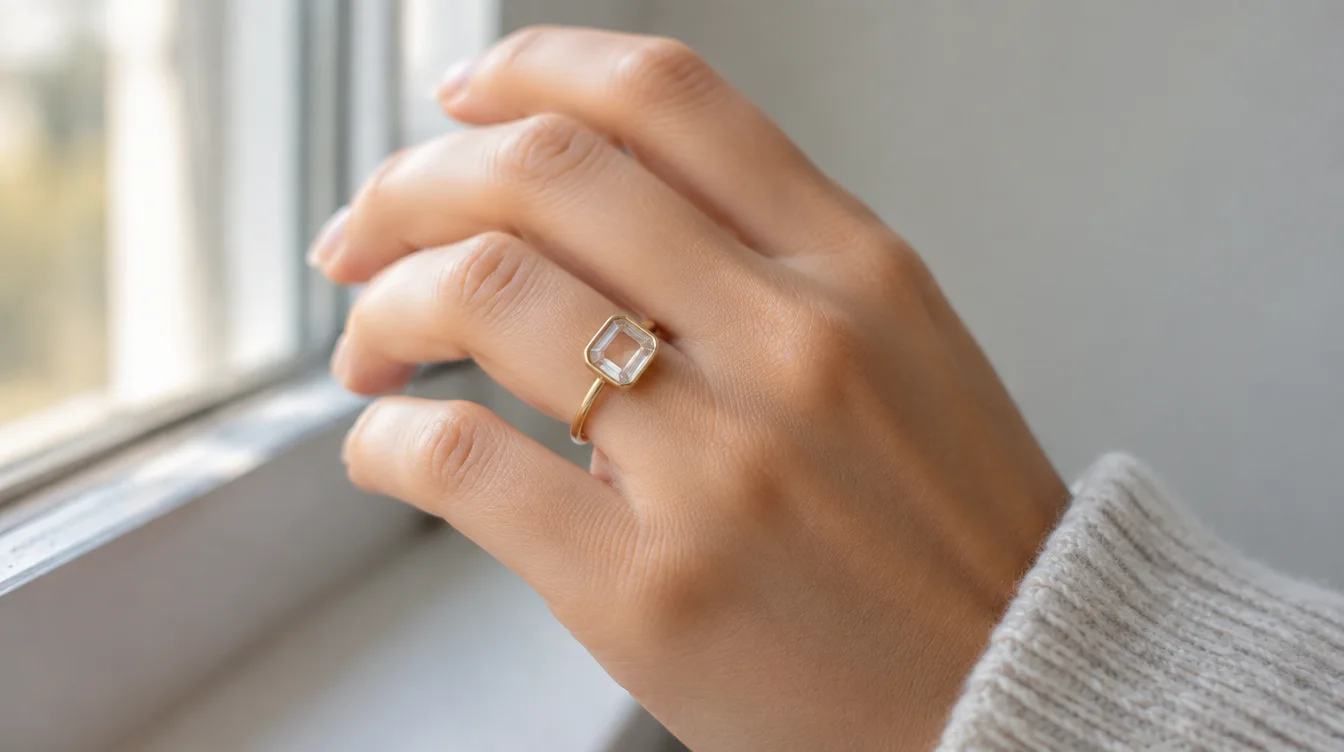
A portrait cut diamond can work in a ring worn every day, but only when the stone and setting suit your routine. Portrait cut diamond ring practicality depends less on diamond hardness than on the condition of its thin edges and how well the setting shields them. If you often strike your hands against hard surfaces, another cut may be easier to live with.
What makes a portrait cut look so different?
A portrait cut is thin, with a broad, flat face and few facets across its center. If you ask what is a portrait cut diamond, picture a clear window with small flashes at its edges. It does not give the steady sparkle of a round brilliant. You can see the open face and edge facets in Gem Breakfast’s guide to the cut.
That clear center makes the surface beneath it part of the design. Skin, metal, or a colored backing can change what you see. A portrait cut diamond ring may seem quiet in one room and catch a bright line of light in another. If you want constant sparkle, see the stone away from display lights before you commit.
The name comes from a use in jewelry history. Thin diamonds covered miniature portraits so the image stayed visible, as The Diamond Collective describes. Today, that same transparency is the appeal. It also means you should judge the whole ring, not a loose diamond alone. Next comes the harder question: how will that thin stone handle wear?
Are portrait cut diamonds durable enough for daily wear?

Portrait cut diamonds can be worn often, but their durability must be judged stone by stone. People asking are portrait cut diamonds durable usually mean, “Will mine chip?” Diamond resists scratches well, yet scratch resistance does not make a thin edge immune to a hard knock. A clean looking face cannot answer that question by itself.
Ask a jeweler to inspect the diamond’s edge under magnification before setting it. Ask about its thickness, any chips, and whether an inclusion or fracture reaches the edge. Those details matter more than a general promise that diamonds are tough. Gem Breakfast also notes that the cut’s broad, flat face is exposed.
Imagine two rings with the same clear look. One has a sound perimeter held inside a protective rim. The other leaves a thin corner uncovered. Both are diamonds, but they do not present the same risk on a hand that reaches into bags, drawers, and coat pockets all day. That difference is central to portrait cut diamond ring practicality.
A chip is not the only concern. A ring can catch on clothing, or its setting can loosen after an impact. The sensible next step is to consider how the metal supports the actual stone.
Which settings make a portrait cut easier to wear?
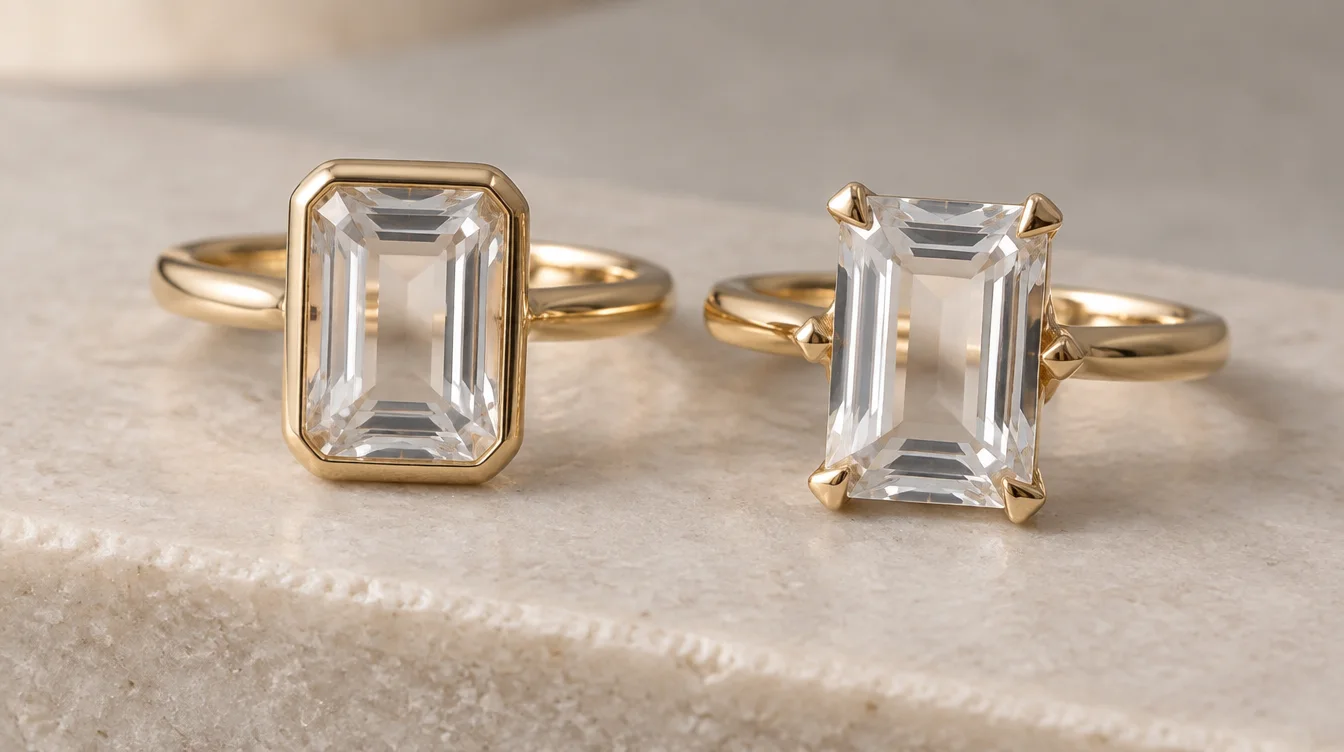
Protective portrait cut diamond settings cover thin edges without hiding the clear center. Start by asking about a bezel, a rim of metal around the stone. It can shield much of the edge and sit close to your finger. Whether it suits your diamond depends on its shape and how much edge the jeweler needs to hold.
Check corners before choosing a setting
On a rectangular, kite, or other pointed outline, ask how each corner will be covered. A low profile alone is not enough if a tip still takes the first hit. Prongs may leave more of the diamond visible, but they can also leave more edge exposed. Compare finished rings from the side as well as from above.
Look through the stone, not just at it
Portrait cut diamond settings affect color and contrast because the center is so open. Ask to see the proposed metal or backing beneath the stone in daylight. If the design leaves an open space, check how skin looks through it. You are choosing that view along with the diamond.
A portrait cut diamond engagement ring can feel comfortable when the setting is smooth and does not stand high. Still, comfort in a showroom is only one test. Your work and daily habits decide how often the ring meets a hard surface.
Does a portrait cut suit your actual routine?
A portrait cut suits regular wear best if you can take it off for rough tasks. Think about your own week, not an ideal one. Desk work may mean fewer knocks than handling tools, weights, or heavy boxes. Either person can choose this cut, but they may need different habits and settings.
Try a simple test. Notice when your hands hit counters, doorframes, or equipment. Could you take the ring off for those tasks? Would you still love its quiet look on a cloudy day, when it flashes less than a brilliant cut? If you hesitate, compare a protected portrait cut with a more conventional ring in the same light.
A portrait cut diamond engagement ring is a good fit for someone who wants transparency more than sparkle and accepts some care. If you want a ring you never have to think about during hands on work, its exposed geometry may be a poor match. That honest answer is more useful than calling any diamond suitable for everyone. It also gives you a clear basis for questions at the jewelry counter.
What should you ask a jeweler before buying?
Ask the jeweler to show you where the diamond is most exposed and how the finished ring will guard it. Have them point out any chips or surface reaching features they can see. Ask whether the proposed setting can hold this particular outline securely, not just a standard stone of similar size.
Next, ask to see the actual diamond over the proposed metal or backing. Check it in daylight and ordinary indoor light. A clear portrait cut shows what lies beneath it, so the set stone may look different from the loose one. Ask how to clean the ring and when to have the setting checked.
Discuss repairs before paying. Can the jeweler tighten the setting without pressing on a thin edge? If a corner is damaged, which options would need a closer look rather than a quick fix? No one can promise that a ring will never chip. Knowing its weak points makes portrait cut diamond ring practicality easier to judge.
Only after you understand the design should you compare quotes. A lower figure is not a bargain if it leaves out the setting work you need.
How should you think about the price?
Portrait cut diamond price cannot be reduced to a reliable single figure from these sources. The stone’s condition, appearance, origin, and the work needed to set its outline can change a quote. Ask for the diamond and setting costs separately, with any custom work identified, rather than judging the total against a different cut.
Price matters, but ask what the quote includes. Can you inspect the stone before it is set? What happens if its look changes against the chosen metal? Those answers lead to the final questions shoppers tend to ask.
Frequently asked questions
These answers help you decide if a portrait cut suits an everyday ring.
What is a portrait cut diamond compared with a rose cut?
A portrait cut has a broad, clear center. Light catches mainly near its edges. A rose cut has facets across its domed top, so it reflects light in a different pattern. See both in the same light before choosing by name.
Are portrait cut diamonds durable if they sit low?
A low setting can reduce snags, but it cannot make a thin or damaged edge sound. Ask a jeweler to assess the specific stone and show which parts the metal protects. Low and protected are not the same thing.
Can a portrait cut diamond ring be cleaned at home?
Ask the seller for care advice suited to the finished ring, especially if it has a backing or artwork beneath the stone. Dirt on either side of a transparent diamond may affect the view. Stop wearing the ring and seek a jeweler’s advice if the stone moves.
Does a higher portrait cut diamond price mean a safer ring?
No price alone tells you how well a thin edge is supported. Compare the stone’s condition and the proposed setting, then ask what the quote includes. That brings the choice back to the ring you will actually wear.
Choose the ring you can enjoy wearing
Portrait cut diamond ring practicality calls for a sound stone, protected edges, and care that fits your routine. A clear look cannot replace an edge inspection. Ask a jeweler to show you the stone and a finished setting in everyday light. If you love the view and accept the tradeoff, you can choose with confidence.