Resetting an Heirloom Diamond Ring: The One Mistake That Ruins Grandma's Stone
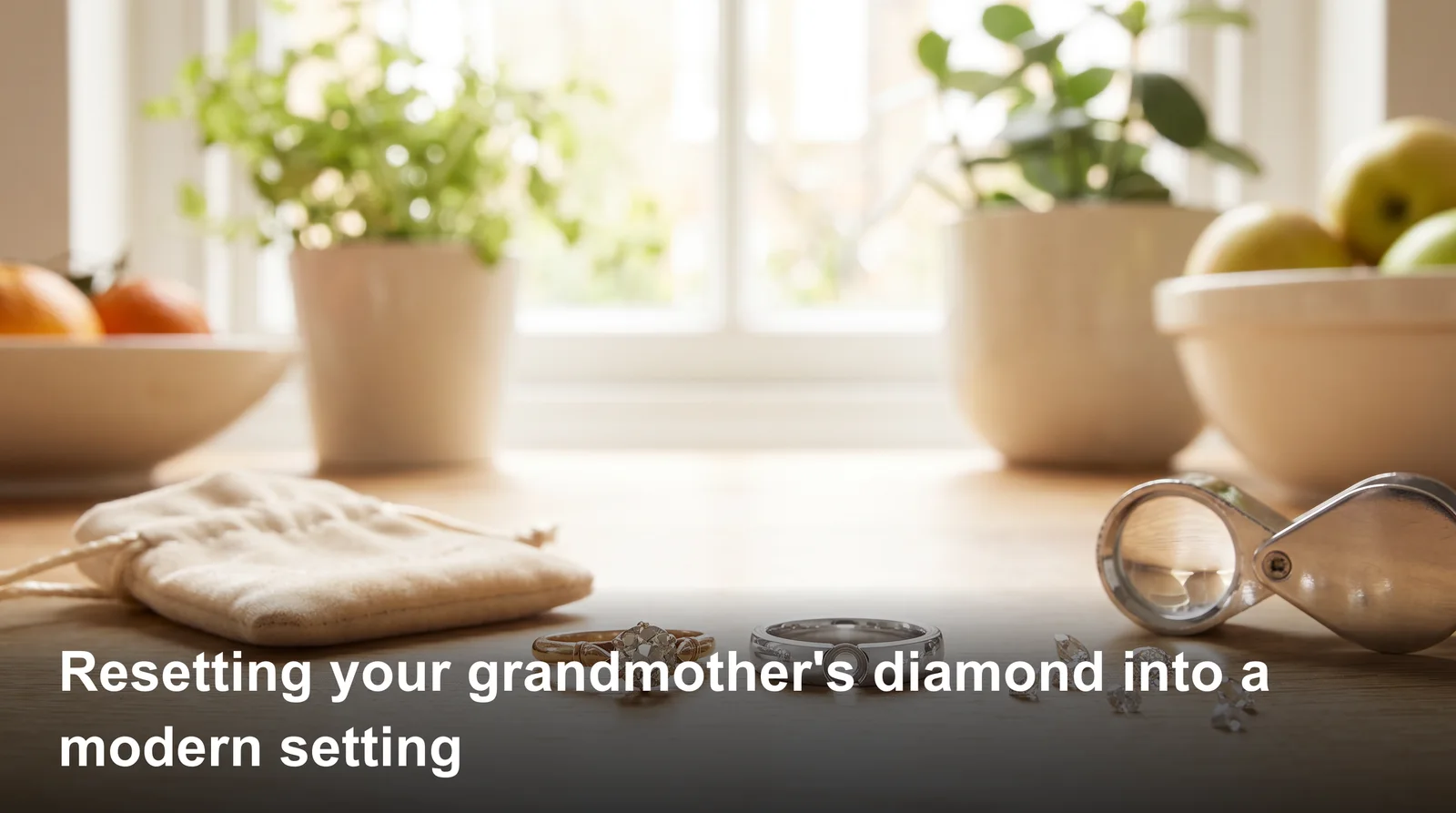
You inherited a ring. It's beautiful, but the style feels stuck in 1965. Here's the good news. Resetting an heirloom diamond ring lets you keep the stone that matters and update all around it. The bad news? One wrong move at the jeweler can crack or chip a diamond that's survived 60 years. Let's make sure that doesn't happen to you.
What Does Resetting an Heirloom Diamond Ring Actually Mean
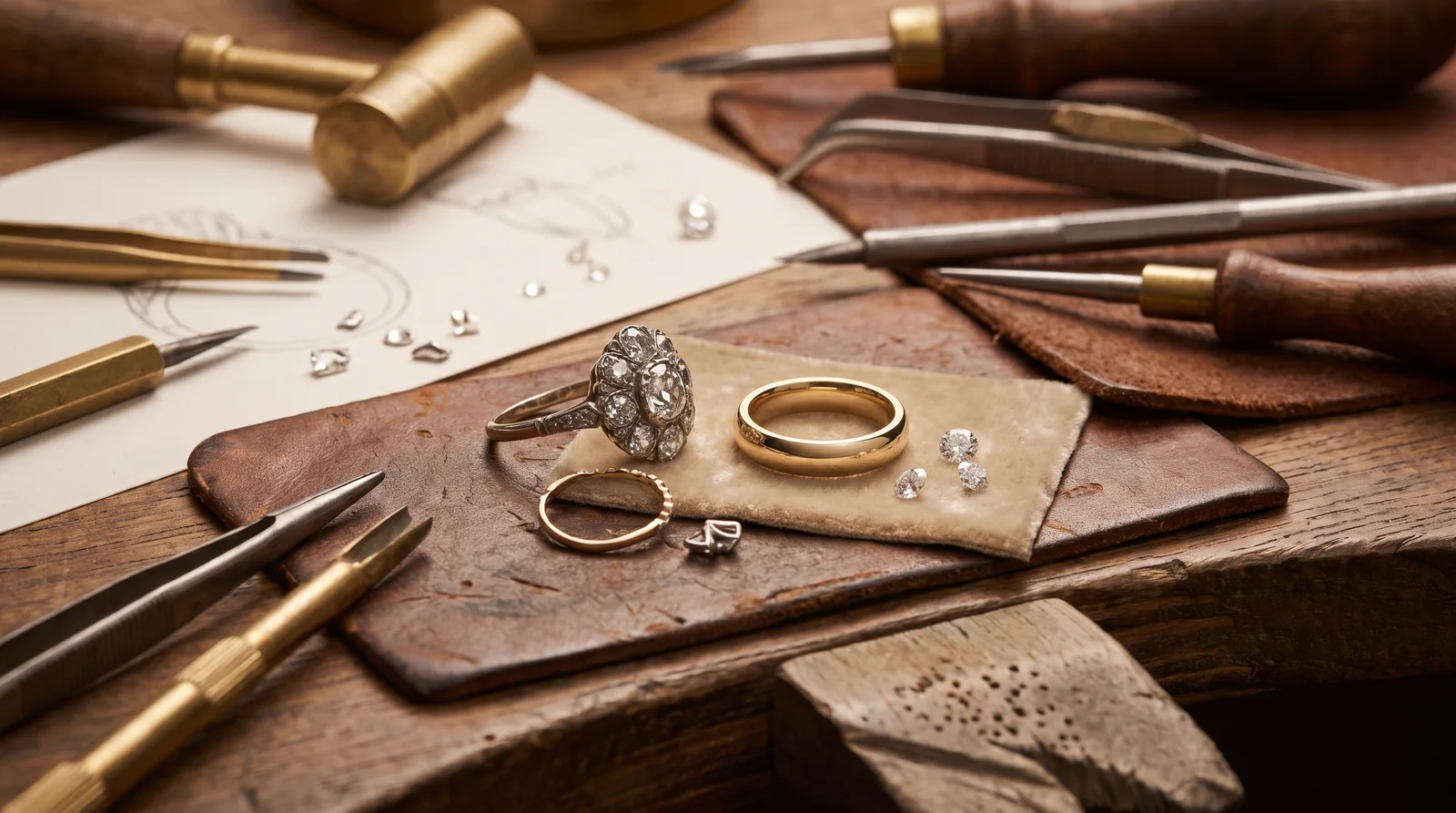
Resetting means taking the diamond out of its old band and putting it into a new one. The stone stays the same. Only the setting changes. Think of it like moving a great piece of art to a new frame. The art doesn't change. The frame does.
Most jewelers can do this in two to four weeks. A skilled setter removes the stone by hand, checks it for damage, then places it in the new mount. It's a common job. In fact, custom jewelers report that heirloom ring redesign work makes up a big chunk of their yearly orders, mainly around engagement season.
Now let's talk about why people actually do this in the first place.
Why People Choose to Reset Grandmothers Diamond Instead of Buying New
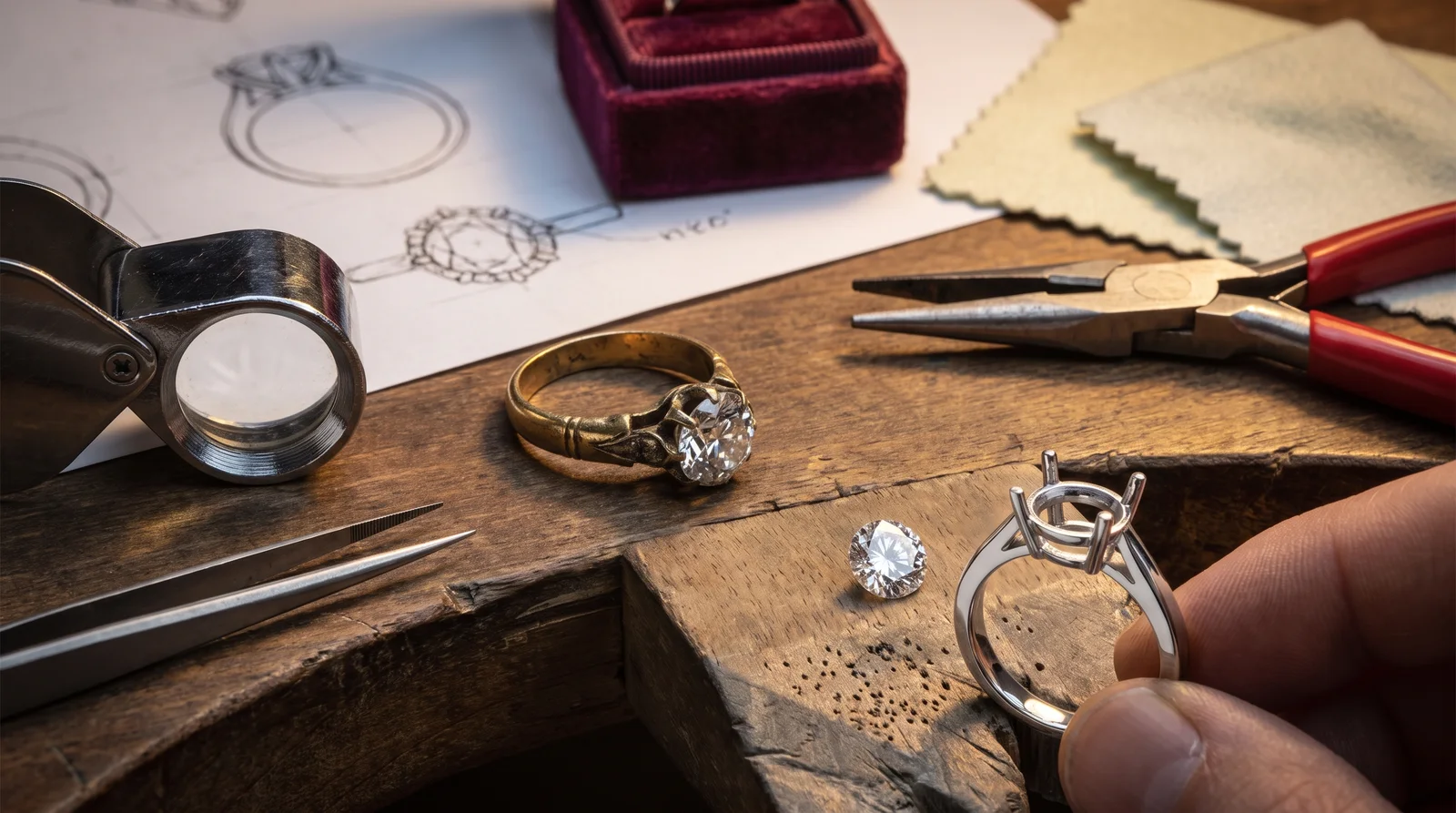
People reset grandma's diamond because the stone carries meaning that money can't buy. A new diamond is just a rock from a store. An old one holds a story. It watched a wedding. It sat through decades of dinners and arguments and Sunday mornings.
The Emotional Reason
Clients tell me the same thing again and again. They don't want a new diamond. They want their mom's diamond, or their grandmother's, just made new again. That's the heart of it.
The Useful Reason
There's also a money angle. A one carat antique diamond can cost $4,000 to $8,000 to replace today. Resetting the one you already own often costs a fraction of that. You get a modern setting for an old diamond without buying a new stone at all.
That brings us to a question everyone asks before they commit. How much does this actually cost?
Cost to Reset a Diamond: What You'll Really Pay
The cost to reset a diamond usually runs between $300 and $2,500. The range is wide because it depends on the setting style and metal you pick. A simple solitaire in yellow gold sits at the low end. A halo setting in platinum with side stones climbs much higher.
Factors That Change the Price
Metal Choice
Platinum costs more than gold. It's denser and pricier per gram. If you want platinum, expect to pay 20 to 40 percent more than a gold setting.
Setting Style
A basic prong setting is cheap to make. A bezel or halo setting needs more labor and more metal. That labor adds up fast.
Stone Inspection and Repair
Old diamonds sometimes have small chips near the girdle. If your jeweler needs to re-cut or polish the stone first, add $100 to $300 to your total.
Once you know your budget, the next step is figuring out if the stone can even handle the move.
Is Your Antique Diamond Into New Setting Move Actually Safe
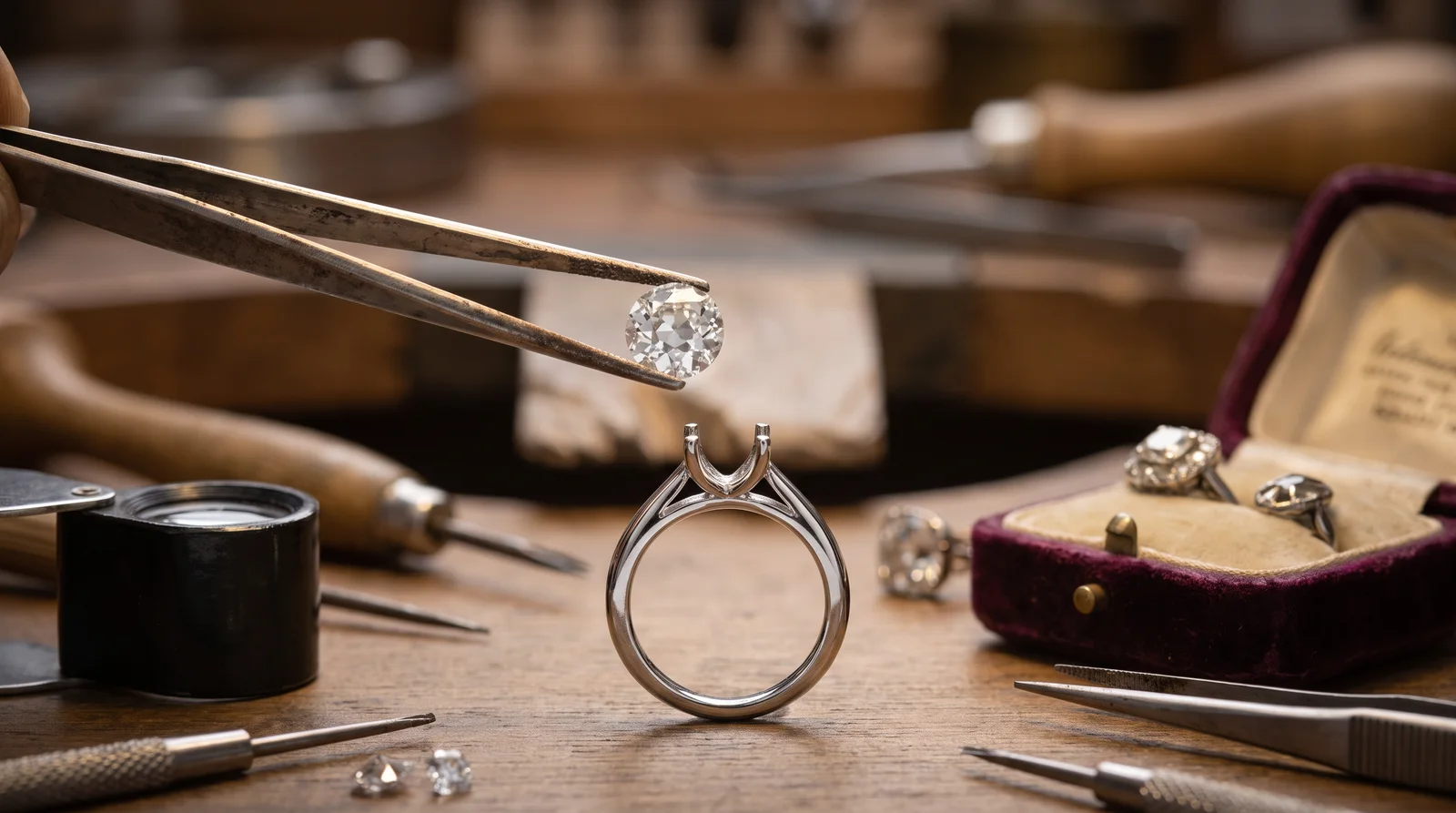
Yes, moving an antique diamond into a new setting is safe when a trained setter handles it. The risk comes from rushed work or an inexperienced jeweler. Diamonds are hard, but they're not indestructible. A sharp knock at the wrong angle can chip a girdle or crack an included stone.
What a Good Jeweler Checks First
Before touching the ring, a good jeweler looks at the stone under magnification. They check for existing chips, cracks, or inclusions near the surface. This step matters. I've seen setters catch a hairline fracture that the owner never knew existed.
A Real Case
A client brought in her grandmother's 1940s diamond last year. The stone had a small feather inclusion close to the edge. Our setter chose a protective bezel style instead of prongs. That choice kept pressure off the weak spot. Two years later, the ring's still perfect.
Speaking of style choices, let's look at what modern settings actually look like today.
Modern Setting for an Old Diamond: Popular Styles Right Now
The most requested modern settings right now are the East-West bezel, the hidden halo, and the thin pave band. Each one gives an old stone a fresh, current look without losing its character.
East-West Bezel
This setting turns the stone sideways. It's a subtle twist that feels modern and a little unexpected. Old European cut diamonds look great this way.
Hidden Halo
A hidden halo tucks small diamonds under the main stone. From the top, you just see one clean shape. It makes the center stone look bigger too.
Thin Pave Band
Thin bands are everywhere right now. They shift focus back to the center diamond, which is usually the whole point of an inherited diamond ring makeover in the first place.
Style matters, but so does trust. Let's talk about picking the right person for the job.
How to Pick a Jeweler for Your Heirloom Ring Redesign
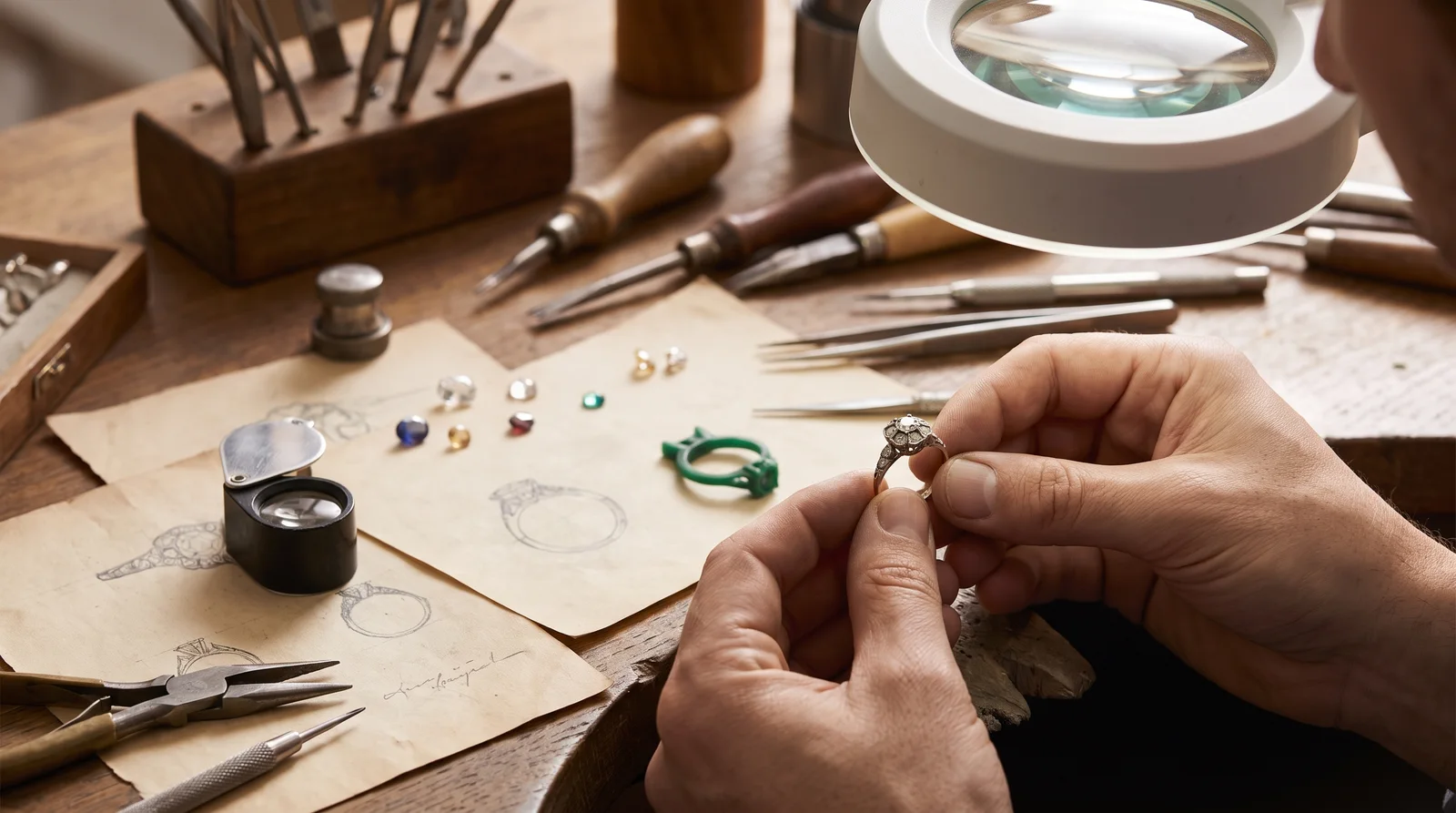
Pick a jeweler who specializes in custom work and has real photos of past heirloom ring redesign projects. Ask to see their setting bench. A shop that does this often will show you without hesitation.
Questions Worth Asking
Ask how they protect the stone during removal. Ask what happens if they find damage mid-process. A solid jeweler has a clear answer ready, not a vague one.
Red Flags to Watch For
Walk away if a shop won't let you watch the stone get pulled, or if they seem rushed. Your grandmother's diamond deserves patience, not a five minute turnaround.
With the right jeweler picked out, here's what the actual process looks like from start to finish.
The Step by Step Process of Resetting an Heirloom Diamond Ring
The process runs through five basic stages: inspection, design, stone removal, setting, and final polish. Each stage takes a few days, so the full job usually wraps in two to four weeks.
Step One: Inspection
The jeweler checks the diamond under a loupe or scope. They note any weak points before doing anything else.
Step Two: Design Sign-off
You'll pick a setting style, metal, and band width. Most shops show you a wax model or digital render first.
Step Three: Stone Removal
The setter carefully bends back the old prongs and lifts the stone free. This step takes real skill and steady hands.
Step Four: New Setting
The stone gets placed into the new mount and secured with fresh prongs or a bezel edge.
Step Five: Polish and Inspection
The finished ring gets cleaned, polished, and checked one more time before it goes back to you.
Now let's clear up a few quick questions people ask most often.
Frequently Asked Questions
How long does it take to reset an heirloom diamond ring?
Most resets take two to four weeks from start to finish. Complex custom designs can take up to six weeks.
Can any diamond be reset into a new setting?
Yes, almost any diamond can be reset, even old cuts like European or rose cuts. A jeweler may need a custom mount since old cuts don't match modern stone sizes exactly.
Does resetting a diamond lower its value?
No, resetting doesn't lower the diamond's value. Value comes from the stone's cut, clarity, color, and carat weight, not the metal around it.
What if the diamond has visible flaws or clouding?
A skilled jeweler can often choose a setting style, like a bezel, that hides minor flaws near the edge. Ask your jeweler to show you options before starting the work.
Why does the cost to reset a diamond vary so much?
Cost depends on metal type, setting style, and whether the stone needs repair first. Platinum and detailed halo designs cost more than a simple gold band.
Give Grandma's Diamond the Setting It Deserves
Your grandmother's diamond has already lived one full life. Give it a second one that fits how you actually live today. Find a jeweler who respects the stone's history and has the skill to handle it right. The ring will look new, but it'll still carry every bit of the story that made it worth keeping in the first place.