Why Is White Gold White If Pure Gold Is Actually Yellow?
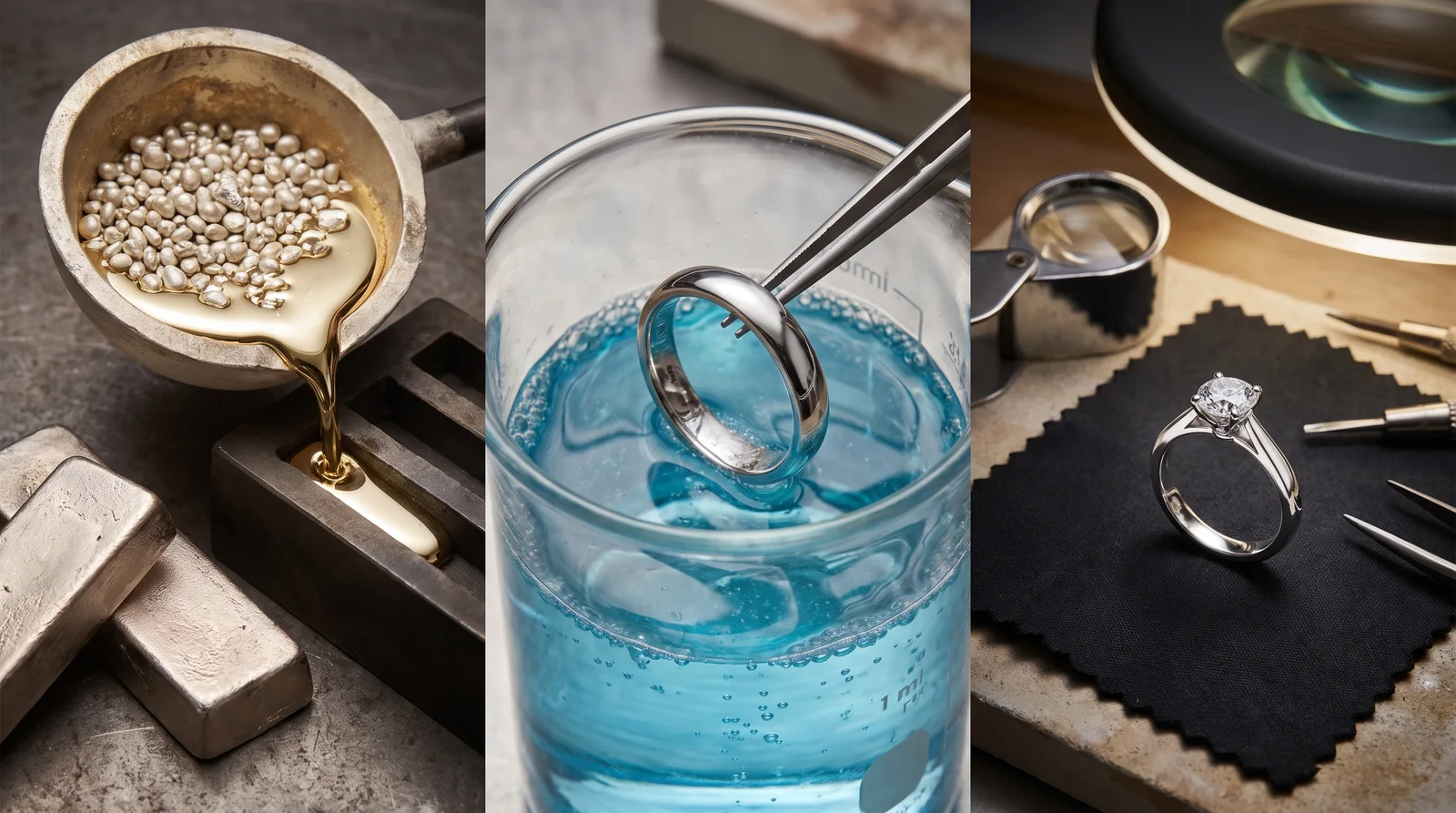
White gold looks white because of two separate things working together. First, an alloy mix dilutes gold's natural yellow color. Second, a rhodium coating plated on top gives it that bright, mirror-like finish. Pure gold is always yellow, no exceptions. So jewelers blend it with pale metals like palladium or nickel to soften that color first. Even then, the metal underneath still leans grayish or faintly yellow. The crisp white shine you see on a new ring comes almost entirely from the rhodium layer sitting on the surface.
Why Is White Gold White in the First Place?
White gold gets its pale appearance from mixing pure gold with white colored metals. Pure gold is naturally yellow, and these metals dilute and cool that yellow tone. Gold in its raw state, straight out of the ground, is soft and unmistakably golden yellow. It never occurs white in nature. Jewelers take that pure gold, melt it down, and combine it with metals like palladium, nickel, silver, or zinc. The result is an alloy that looks paler and behaves differently under stress.
The ratio matters a lot here. An 18k white gold piece contains 75 percent pure gold, with the remaining 25 percent made up of white metals. A 14k piece has 58.5 percent gold, leaving more room for the white alloy components to influence the final color. That's why 14k white gold often looks a shade paler than 18k before any plating happens. More gold in the mix means more yellow trying to push through.
This is the core reason people search for why white gold isn't naturally white in the first place. The alloying process softens gold's color but doesn't erase it. Understanding that distinction sets up everything else about how this metal is made and finished.
Pure Gold's Natural Color Explained
Pure gold is yellow because of how its atoms absorb and reflect light, a property tied to its electron structure. This isn't something jewelers can bleach out with polish or cleaning. It's a basic trait of the element itself, the same way copper is naturally reddish and silver is naturally, well, silver. Twenty four karat gold, the purest form used in jewelry making, is too soft for rings or bracelets anyway. It needs to be alloyed with other metals just to hold its shape through daily wear. That alloying process is what opens the door to changing its color at the same time.
What Actually Goes Into the Alloy
White gold alloy composition typically includes palladium, nickel, silver, or a combination of these blended with pure gold. Palladium tends to produce a cleaner, more neutral white gold. It's considered the premium option, partly because it rarely triggers skin allergies. Nickel is cheaper and still common in the United States. Still, plenty of people react to it with irritation or rashes. Silver shows up sometimes too, usually adding a slight grayish cast rather than true whiteness. None of these combinations produce a bright white metal on their own. That brightness comes later.
White Gold Alloy Composition Breakdown by Karat
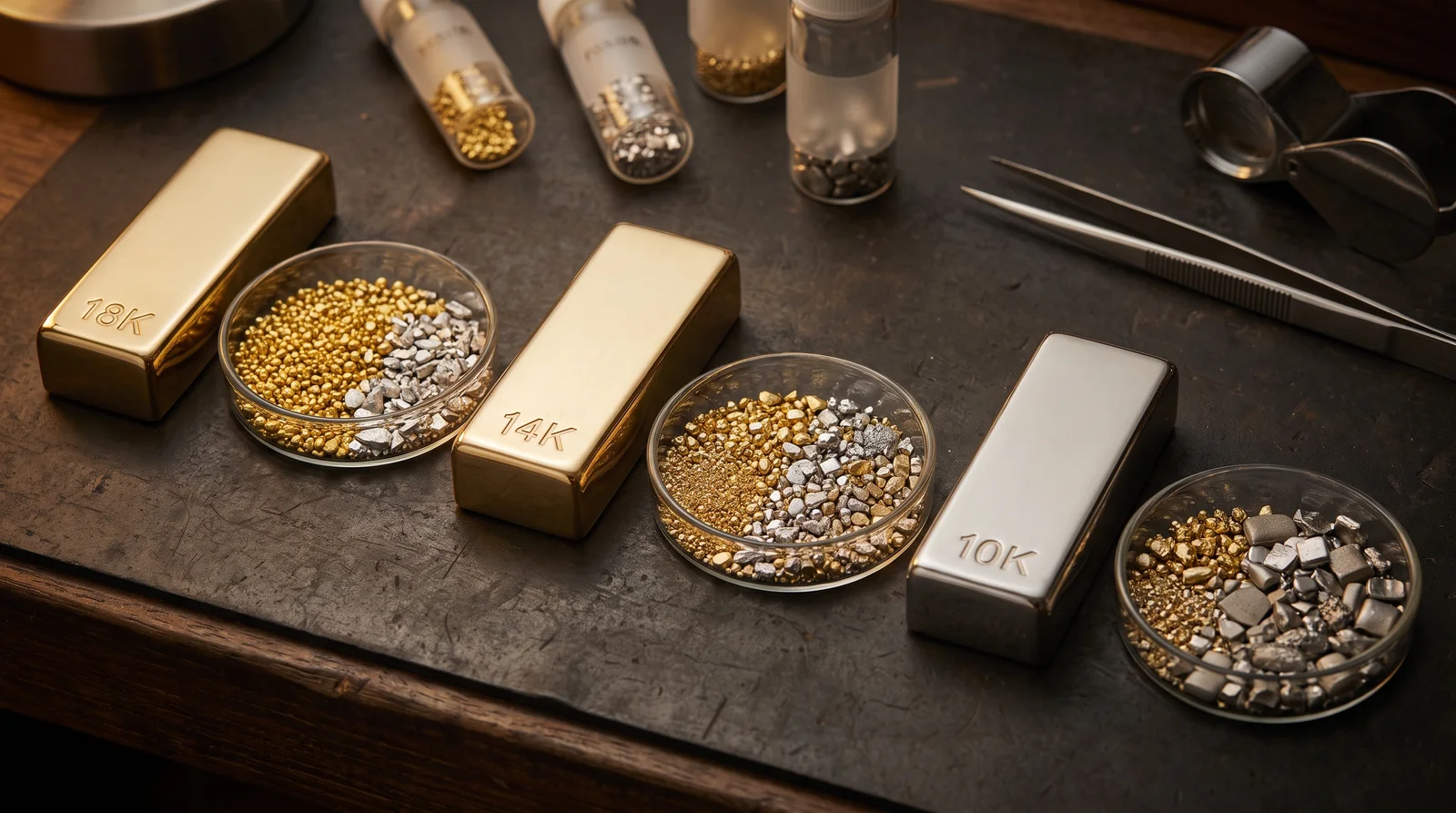
White gold alloy composition changes significantly depending on karat. That shift directly affects both color and durability before any rhodium is applied. Higher karat gold contains more pure gold, which sounds like a good thing. But it also means more of that stubborn yellow influence sticking around in the base metal. Lower karat gold contains less pure gold and more white alloy material, so it starts out paler on its own.
14k vs 18k White Gold Composition
Fourteen karat white gold contains 58.5 percent pure gold, while 18 karat contains 75 percent. That 16.5 percentage point difference changes more than just the price tag. The higher gold content in 18k pieces means the underlying metal, before plating, often has a warmer, slightly deeper tone compared to 14k. Some jewelers describe 18k white gold's natural color as almost champagne or light gray, while 14k can look a bit closer to a soft off white. Neither one is bright white without help.
10k White Gold and Lower Purity Options
Ten karat white gold contains just 41.7 percent pure gold, with the remaining 58.3 percent made up of white alloy metals. Because there's less yellow gold in the mix, 10k white gold tends to start out closer to white before plating than its higher karat cousins. It's less common in fine jewelry, partly because lower gold content is seen as less prestigious. But the tradeoff is a paler natural base color. This matters if a piece ever gets recreated or repaired without replating right away.
Karat choice ends up being a balancing act. It weighs purity, cost, and how much the base metal needs rhodium to look convincingly white. That balance leads directly into the actual finishing step that makes white gold recognizable.
How Rhodium Plating Creates White Gold's Bright Finish
Rhodium plating is what gives white gold its signature bright, reflective white color. Without it, the metal would look noticeably duller and warmer. Rhodium itself is a rare metal from the platinum family. It happens to be one of the whitest, most reflective metals available for jewelry work. Jewelers apply it through electroplating. The white gold piece gets submerged in a rhodium solution while an electric current runs through it. That current causes rhodium particles to bond tightly to the surface of the metal.
The layer itself is thin, typically somewhere between 1 and 5 microns, according to information from rbmatrix.net. For comparison, a human hair is roughly 70 microns thick. So this coating is genuinely microscopic. Despite being so thin, it completely changes the look of the piece. It turns a pale grayish alloy into something that looks like polished chrome or platinum.
Why Manufacturers Choose Rhodium Specifically
Rhodium gets chosen because it's exceptionally white, extremely hard, and resistant to tarnishing or oxidation. Other white metals exist, but few combine brightness with durability the way rhodium does. It's also part of the platinum group, which gives it a certain marketing appeal. It links white gold visually with platinum, without the platinum price tag. The hardness helps too. A harder coating resists surface scratching better than the softer gold alloy underneath, at least for a while.
What the Metal Looks Like Before Plating
Before rhodium goes on, white gold's natural color sits somewhere between pale yellow, champagne, and light gray, depending on the alloy. It is not ugly or unfinished looking, just noticeably warmer than the icy white most people expect. Some independent jewelers actually skip the rhodium step entirely. They sell natural, unplated white gold as its own product, marketed as a more honest and lower maintenance option. Side by side against platinum or a freshly plated piece, natural white gold reads as softer and creamier rather than stark white.
This is the piece of the puzzle that explains rhodium plating wear off, since the coating sitting on top is always thinner than people assume. Once you understand it's a surface treatment and not a permanent color change, the way white gold ages over time starts to make a lot more sense.
Rhodium Plating Wear Off and What Happens Underneath
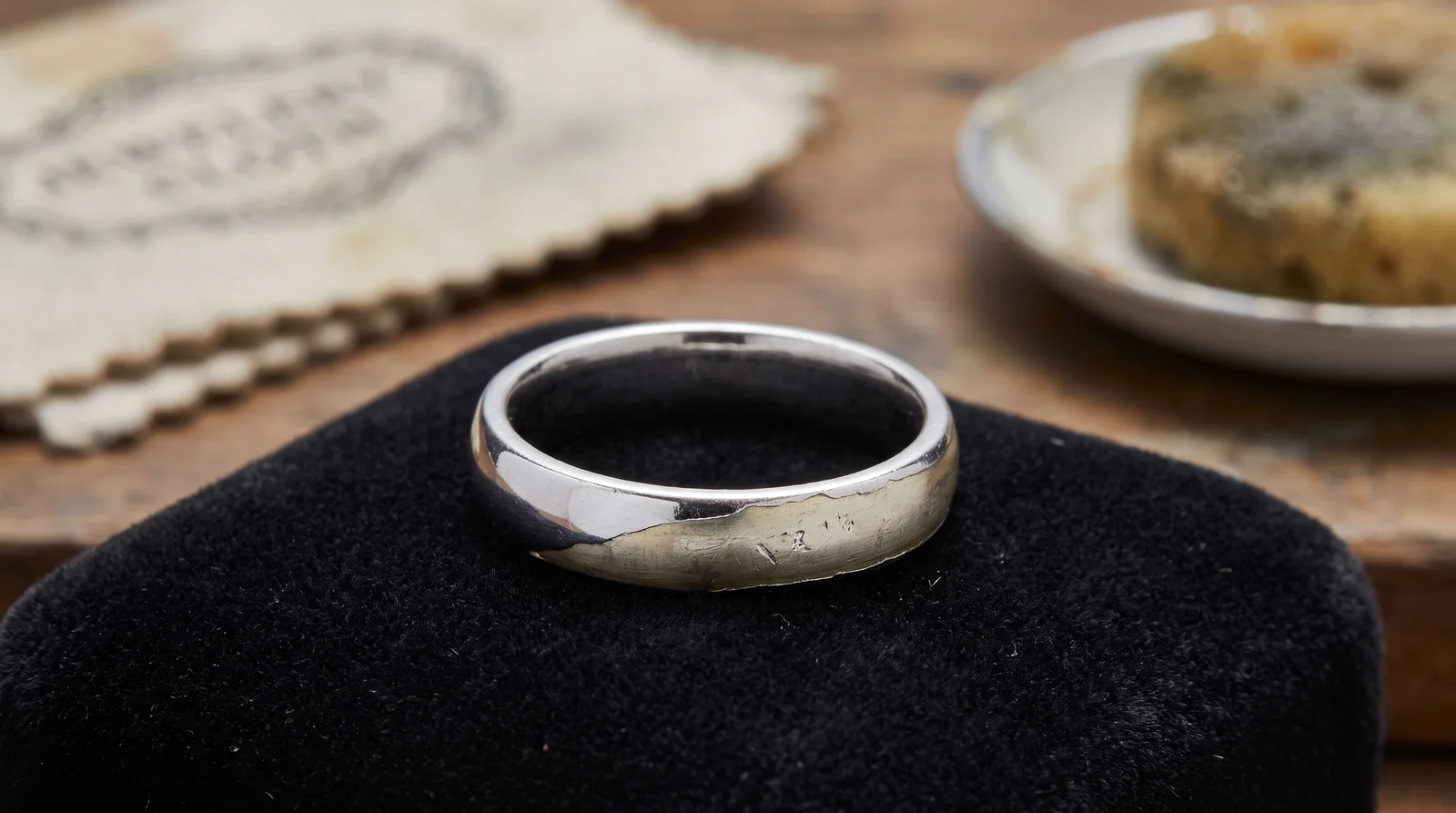
Rhodium plating wears off because the coating is only a few microns thick. Everyday friction against skin, fabric, and surfaces wears it away over time. As the layer thins out, the natural color of the alloy underneath starts showing through. This usually looks like a warmer or slightly yellow tint, compared to the bright white finish the piece had originally. This isn't damage in the sense of something breaking. It's simply the surface treatment wearing thin, similar to how a clear coat on a car gradually dulls with age and sun exposure.
Ring undersides and prong tips tend to show wear first since they rub against fingers, tools, and surfaces constantly. Earrings and pendants generally hold their plating longer because they experience far less friction. None of this means the jewelry is defective or the gold underneath is somehow lower quality. For readers curious about the maintenance side of this, our guide on how often does white gold need replating breaks down realistic timelines based on how a piece gets worn.
Why This Isn't a Manufacturing Defect
Every piece of rhodium plated white gold is designed to wear this way eventually. The coating is intentionally thin, for practical reasons. Making the layer thicker sounds like an obvious fix. But thicker rhodium coatings can crack or peel rather than wearing evenly. Rhodium itself is expensive enough that piling it on isn't cost effective. Even luxury brands with high price points plate their white gold pieces the same thin way, and expect them to need attention eventually. It's built into how the metal works, not a flaw specific to lower cost jewelry.
Natural White Gold vs Rhodium Plated Comparisons
Natural white gold vs rhodium plated comes down to a tradeoff between authenticity and brightness. Natural, unplated white gold keeps its slightly warm, creamy tone permanently, since there's no coating to wear away. Rhodium plated white gold starts out brighter and more dramatic looking. But it will gradually reveal its warmer base tone as the coating thins. Neither version is more real gold than the other. They're the same underlying alloy, just finished differently.
Some independent jewelers push back against rhodium plating altogether. They argue that natural white gold ages more honestly and doesn't require the periodic upkeep that plated pieces do. Others point out that most people expect white gold to look bright white like platinum. Rhodium is really the only practical way to deliver that look on a gold based alloy. Both positions have merit depending on what someone wants from their jewelry long term.
How the Two Options Actually Look Side by Side
Placed next to each other, rhodium plated white gold looks noticeably cooler and brighter, almost silvery. Natural white gold reads warmer and softer, sometimes described as champagne or light gray. Against diamonds, the rhodium finish creates a sharper contrast, since the metal color sits closer to the stone's own icy brilliance. Natural white gold blends more gently. Some people find this more flattering against warmer skin tones. Personal preference plays a bigger role here than most people expect walking into a jewelry store for the first time.
White Gold vs Platinum at the Elemental Level
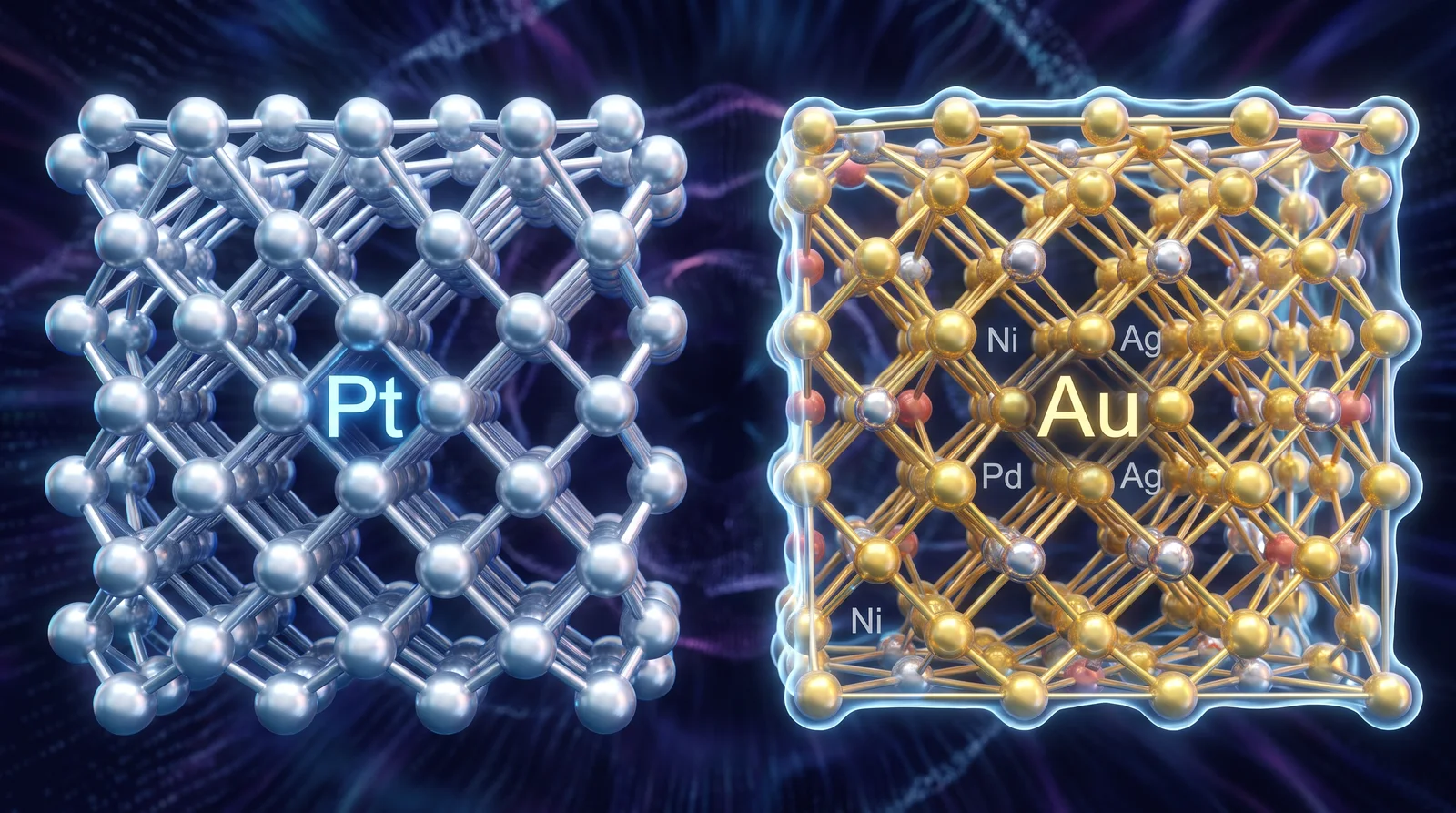
White gold vs platinum comes down to one basic fact: platinum is naturally white, while white gold needs an alloy blend and usually a rhodium coating to get that same look. Platinum doesn't need plating, because it's white straight out of the refining process. It stays that way permanently, since there's no coating to wear off. It does develop a soft surface patina over years of wear. But that's a different thing from rhodium wearing thin.
Density is another real difference. Platinum is significantly denser than gold. That's part of why platinum jewelry tends to weigh more and cost more per piece, even though the price per ounce between the two metals can shift with market conditions. White gold offers a lighter, often more affordable way to get a similar bright white look, especially freshly plated. The tradeoff is that white gold's brightness is temporary in a way platinum's simply isn't.
Readers weighing these two metals against each other for color reasons alone might also find it useful to see how white tones compare against warmer options. Our piece on wearing white gold and yellow gold together covers how these color differences play out visually when pieces are worn side by side.
Frequently Asked Questions About White Gold's Color
Why is white gold white instead of gold colored like pure gold?
White gold is white because pure yellow gold gets mixed with white metals like palladium or nickel during the alloying process, then coated with a thin layer of rhodium. The alloy alone only lightens gold's color to a pale grayish or champagne tone. The bright white finish people recognize comes almost entirely from that rhodium topcoat.
Why isn't white gold naturally white without rhodium?
Pure gold is chemically yellow. Alloying it with white metals only dilutes that color rather than eliminating it completely. Without rhodium, white gold settles into a pale yellow, gray, or champagne tone depending on the specific alloy used. That's simply the natural resting color of the metal itself.
Does rhodium plating wear off on every piece of white gold jewelry?
Yes, rhodium plating wears off on all white gold jewelry eventually since the coating is only a few microns thick. Rings tend to show wear faster than earrings or necklaces because of constant friction against skin and surfaces. This is expected and doesn't indicate a defect in the piece.
Can white gold look white without any rhodium plating at all?
Natural, unplated white gold does look pale, but it leans toward cream, champagne, or light gray rather than bright white. Some jewelers sell it this way intentionally, marketing it as a lower maintenance option with a softer tone. It won't match the icy brightness of freshly plated pieces or platinum.
What determines white gold alloy composition in different jewelry pieces?
White gold alloy composition depends on the karat. It also depends on the jeweler's chosen mix of white metals, usually palladium, nickel, or silver. Higher karat pieces like 18k contain more pure gold, 75 percent specifically. That can leave a warmer undertone before plating. Lower karat pieces contain more white alloy metal. They often start out paler on their own.
Getting Comfortable With What's Really Under the Shine
White gold's bright finish is really a two part system: an alloy that softens gold's yellow color, and a rhodium coating that finishes the job with genuine brightness. Once that clicks, the wear patterns, the occasional yellowing, and the choice between natural and plated versions all make a lot more sense. None of it means the jewelry is lower quality or somehow fake. It just means you're looking at a metal built in layers, chemically and literally. If you're shopping for a new piece, or trying to understand one you already own, ask your jeweler directly about the alloy mix and plating thickness before you buy. That single conversation tells you almost everything you need to know about how the piece will age.