Why Ethiopian opal turns transparent when wet (and when to worry)
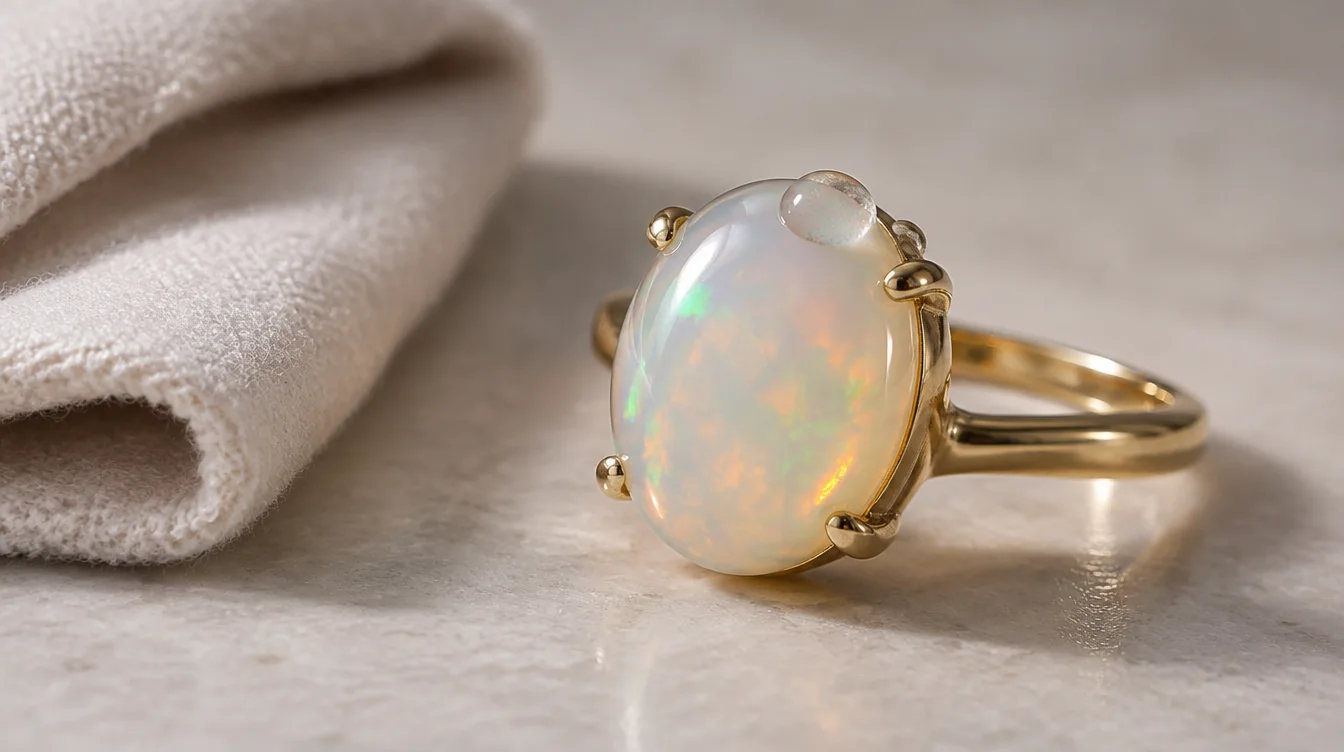
Water enters tiny pores in many Ethiopian opals and changes how light passes through them. That is why Ethiopian opal turns transparent when wet and may show less play of color. Color that returns as the stone dries is reassuring. Cracks or lasting stains still need a jeweler’s assessment. Let the opal dry naturally before judging it.
Why Ethiopian opal turns transparent when wet
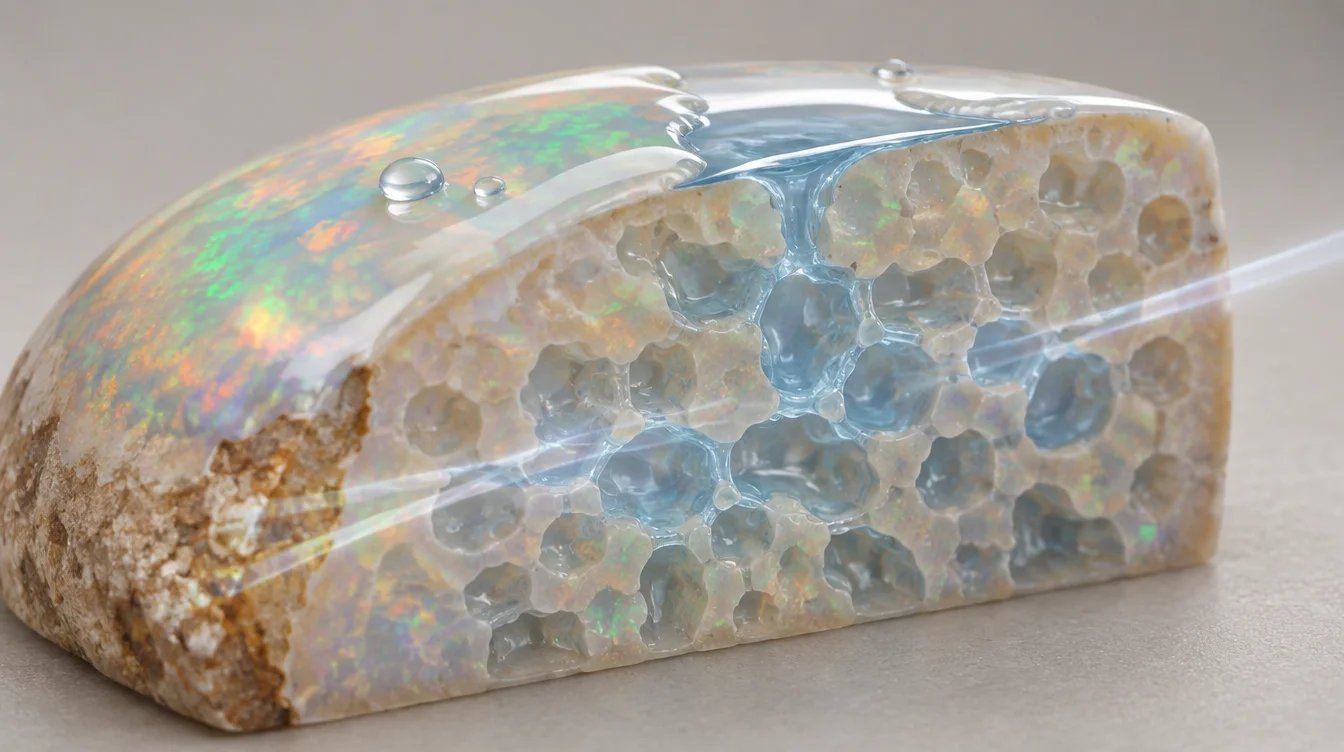
Many Ethiopian opals absorb water through fine pores. Water in those spaces changes how light passes through the stone. Its body may look clearer, darker, or more glassy. Flashes of color may become harder to see. This is called hydrophane opal behavior.
Play of color comes from how silica is arranged inside the opal. Water can change what you see without removing that structure. It changes how light moves through the stone. The Bead Traders describes stones that look clearer or show fewer flashes after getting wet. The change differs from stone to stone. Its account of Ethiopian opal in water also notes that appearance often shifts again as the stone dries.
Picture a pale stone with red and green flashes when dry. After a long wash, it might look nearly clear, with faint flashes. That change alone cannot show whether the stone is damaged or genuine. Start by noting when and how its appearance changed.
What a wet opal can and cannot tell you
A wet appearance shows that moisture may affect an opal. It cannot explain every change. One stone may turn almost clear. Another may look milky, yellowish, or dull. What you see depends on how much water it absorbed and its pore structure.
That variation helps explain why does Ethiopian opal turn clear in one ring while a matching pendant barely changes. Even stones sold together may respond differently. Polish and time in water may affect how soon you notice a change. Do not soak your stone to compare it with another. A soak test adds risk and cannot tell you whether an existing mark will fade.
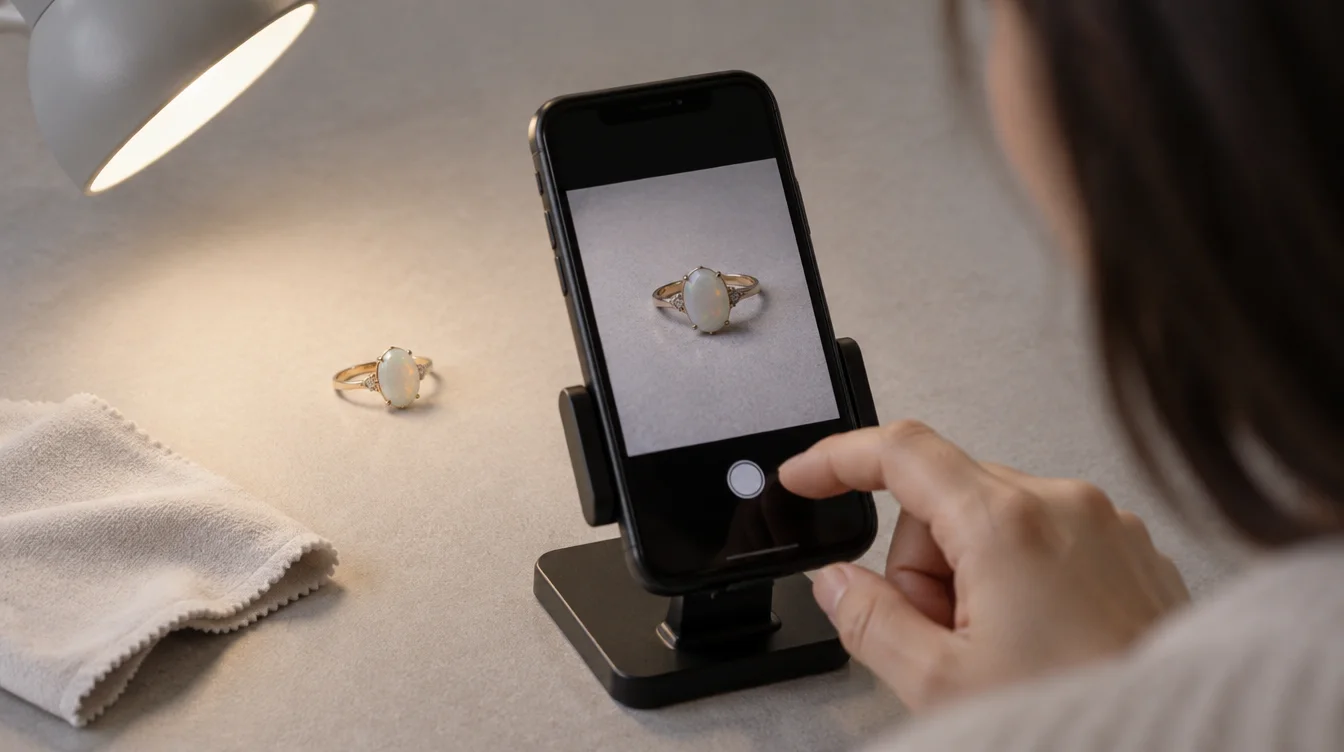
Light matters, too. A flash seen under a bright lamp may look weak in a dim room, even when the opal is dry. Before deciding an Ethiopian opal lost color, find an earlier photo taken in similar light. View the stone from a similar angle. Look for a change you can see again, not one disappointing glance.
If the surface is intact and the change followed water exposure, you can watch the stone for now. First, let it dry safely.
How to dry Ethiopian opal without rushing it
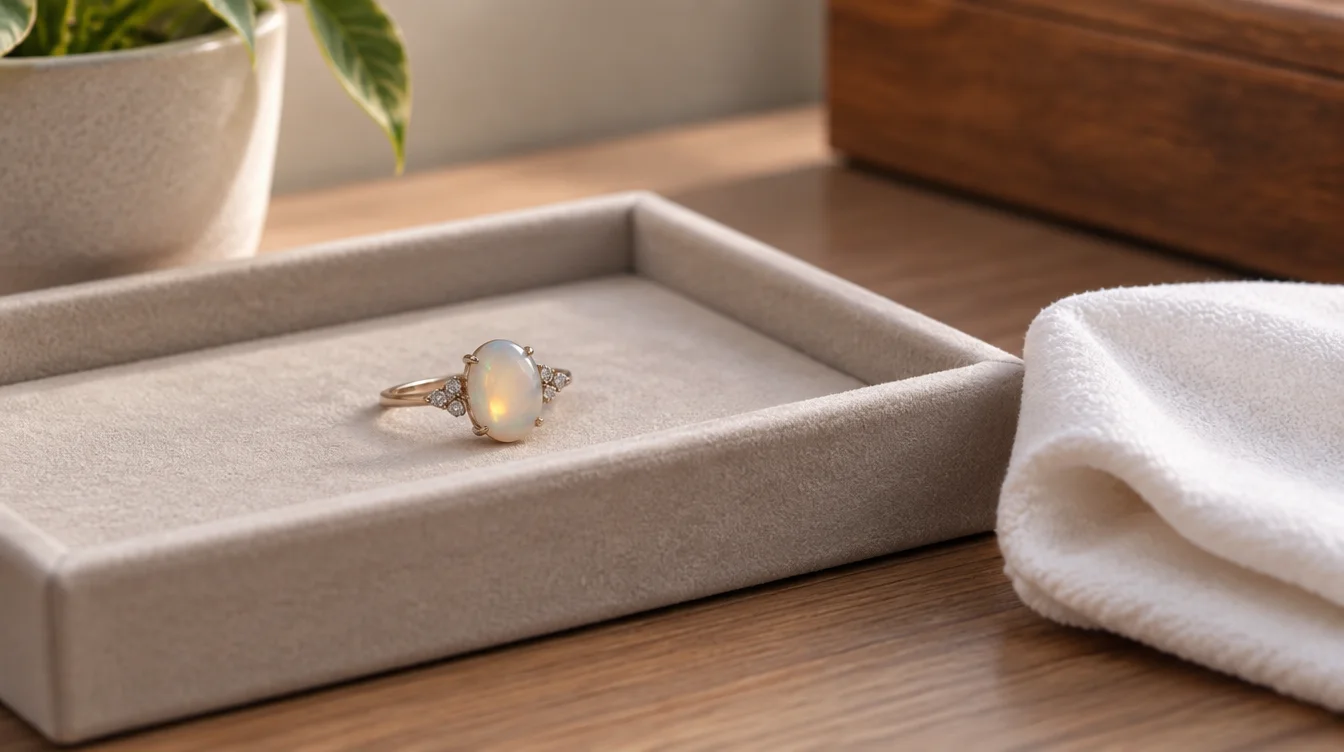
Blot a wet Ethiopian opal with a clean, soft cloth. Then leave the jewelry in a dry place at room temperature. Keep it away from direct heat and strong sun. La More Design’s documented water exposure example warns against a hair dryer or hot sunlight because rapid temperature change can crack an opal.
Leave the stone in its setting
There is no need to remove a soundly set stone just to let it dry. Set the piece where air can reach it, away from sinks and damp towels. Do not press on the opal, scrape its surface, or try to draw water out with a household product. Those steps can create a new problem while leaving the original question unanswered.
Use a consistent check, not a deadline
If you wonder how long does Ethiopian opal take to dry, there is no set time for every gem. A brief splash is not the same as a long soak. Pore structure, stone size, setting, and room conditions also vary. In La More Design’s reported example, stones soaked for eight hours took more than 24 hours to look as they had before. That single demonstration is not a promise for your jewelry.
Take a photo now. Then check the opal in the same light as it rests. Changes between checks tell you more than watching it minute by minute. If its look is still shifting, let it keep drying naturally. When the change stops, assess what remains.
How to assess an opal after it stops changing
Assess the dry stone by separating optical change from possible damage. Clarity and play of color may return as absorbed water leaves. A fixed dark patch, a new crack, or a loose setting calls for a different response. None of those findings can be explained away just because the opal was wet.
Look for a gradual return
Compare the stone with a photo from before it got wet, if you have one. Use similar light and tilt the jewelry through the same angles. Check its body tone and its flashes. If it looks less clear and shows more of its former play of color, that change is consistent with drying.
Do not expect two phone photos to match exactly. Camera exposure, background, and light can change how the color looks. Check whether the same parts of the opal seem to recover. Do not judge by a pixel match.
Check for signs that need another explanation
An Ethiopian opal cloudy after drying is not always ruined. First, check whether its look has stopped changing. View it in similar light, too. If a cloudy area stays fixed, ask a qualified jeweler to inspect it. Do the same if a new stain remains after the rest looks dry. Oils, cosmetics, and other liquids may affect a wet opal. Plain water is not the only possible cause of a lasting mark.
Cracks are a separate concern
Look for a fine line that stays in the same place as you turn the stone. Do not test it with a fingernail. If you suspect a crack, stop wearing the piece until a jeweler checks the opal and its setting. Drying may change its color, but it will not mend a fracture.
Check the setting as well as the gem
Water may have reached the jewelry during a knock, a repair, or routine wear. Do not wear the piece if the stone moves or a prong looks bent. A jeweler can check the setting without getting the stone wet again. Treat its look and its setting as separate questions. That helps you decide what to do next.
When to watch and when to see a jeweler
Watch a recently wet opal if its surface looks sound and its appearance is still changing as it dries. Seek an assessment if you see a crack or movement in the setting. Do the same if discoloration remains once the appearance stops changing. Bring earlier photos and explain what touched the stone. Those details help more than saying it “lost its fire.”
The phrase Ethiopian opal lost color can describe several things. It may mean muted play of color during water absorption, a change in body tone, or a persistent mark. Those are not the same finding. Tell the jeweler which one you see, when it began, and whether the stone has changed since.
Do not try to make the answer arrive faster with heat, a soak, or repeated cleaning. Careful observation gives you better evidence and avoids adding another cause to sort out. The questions below cover the points owners most often face while waiting.
Questions about wet Ethiopian opal
The answers depend on what entered the stone and how its look changes. They also depend on whether its surface remains sound.
Why does Ethiopian opal turn clear after washing my hands?
Water can enter the pores of a hydrophane opal and change how light passes through it. A brief wash may cause little change in one stone and a visible shift in another.
Can I tell whether the color will return?
A quick look cannot promise that the color will return. A gradual return as the stone dries is a good sign. A fixed stain or crack needs a professional assessment.
How long does Ethiopian opal take to dry completely?
No single drying time fits every stone or exposure. Compare the opal in the same light over time. Do not use heat to meet a deadline.
What if my Ethiopian opal is cloudy after drying?
Check whether its look has stopped changing. See whether different light explains part of the change. If the cloudy area remains, have a jeweler examine it. That matters especially if the stone touched products other than water.
Let the stone dry naturally and note what changes. Seek help for what does not.
Give the opal time, then judge what remains
Water entering the stone’s pores is usually why Ethiopian opal turns transparent when wet. It changes how the opal looks. Still, not every change is harmless. Nor will every opal recover on a set schedule. Let the piece dry at room temperature. Then compare it fairly with its earlier look. Stop wearing it if you see a crack or loose setting. If a mark remains, take the jewelry and your photos to a qualified jeweler. You can then explain what changed and ask what needs attention.