Ask why does andalusite change color Before Choosing Your Stone
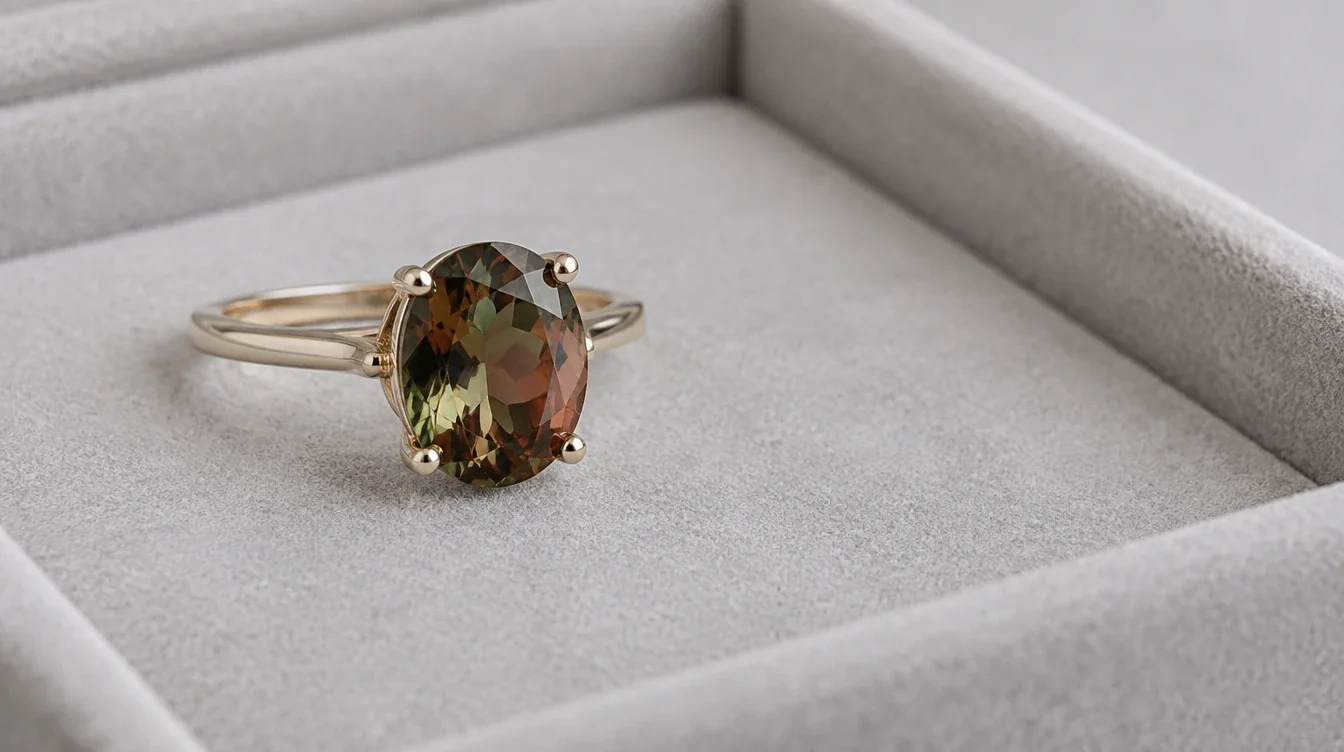
Andalusite shows green and reddish brown as you turn it because light absorption changes with direction. The effect is called pleochroism. That answers “why does andalusite change color,” but cut and viewing angle also shape the mix. The International Gem Society explains that several colors can show at once. Judge the stone itself, rather than expecting a full color switch.
What makes green and brown appear together?
Andalusite can show several colors at once. Its facets send light along different paths to your eye. Green and brown need not come from separate patches in the stone.
The Plumb Club’s explanation of pleochroism explains how crystal structure shapes light absorption along different paths. Some wavelengths are absorbed more than others. The light left gives the color you see.
What trichroism means in plain language
Trichroism means a gem can show three colors when viewed from different directions. According to the IGS andalusite reference, green, brown and red can show. The mix depends on your view, the cutting and the stone’s orientation.
That does not mean every stone displays three equally clear colors. Nor must each turn produce a neat sequence of green, red and brown.
Think of the visible mix as part of the gem’s character. One stone might look mostly olive with warm corners. Another may show small areas of several shades across its face.
Knowing that mix helps you tell two things apart: turning the gem under one light and changing the light itself.
How pleochroism differs from changing the light
Pleochroism depends on viewing direction. True color change depends on the light source. Keep that in mind if a seller calls andalusite a color changing gem.
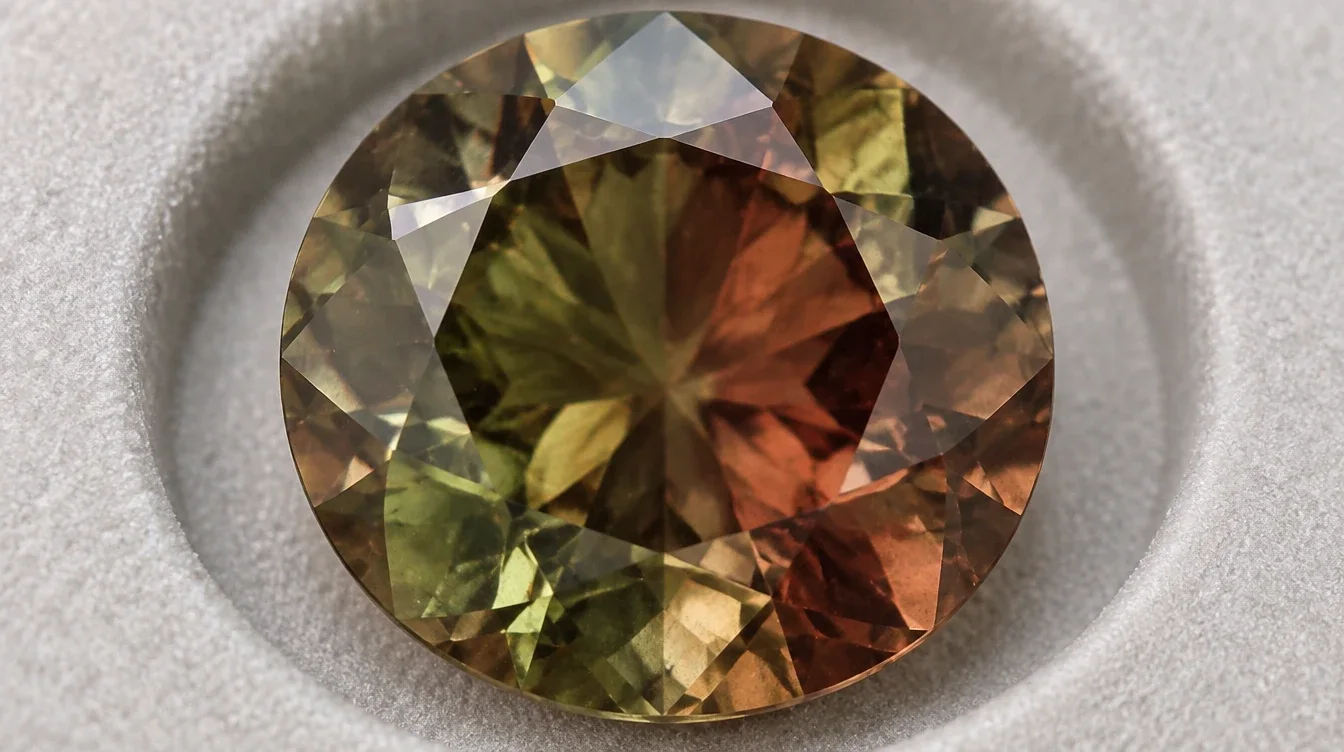
The Plumb Club distinguishes these effects and also sets them apart from color zoning. With color zoning, parts of a crystal have different colors. Those shades alone cannot tell you which effect you see.
For buyers, pleochroism vs color change means changing one thing at a time. Keep the lamp still while you tilt the gem. Then compare different lights from much the same viewing position.
Do not expect either check to identify the stone. These are ways to understand its appearance, not laboratory tests.
Next, look at how cutting shapes that color mix.
How cutting shapes the color mix
Cutting orientation helps decide which andalusite colors stand out from above. Shape matters too. But a shape name cannot promise a set pattern.
Long shapes versus blended patterns
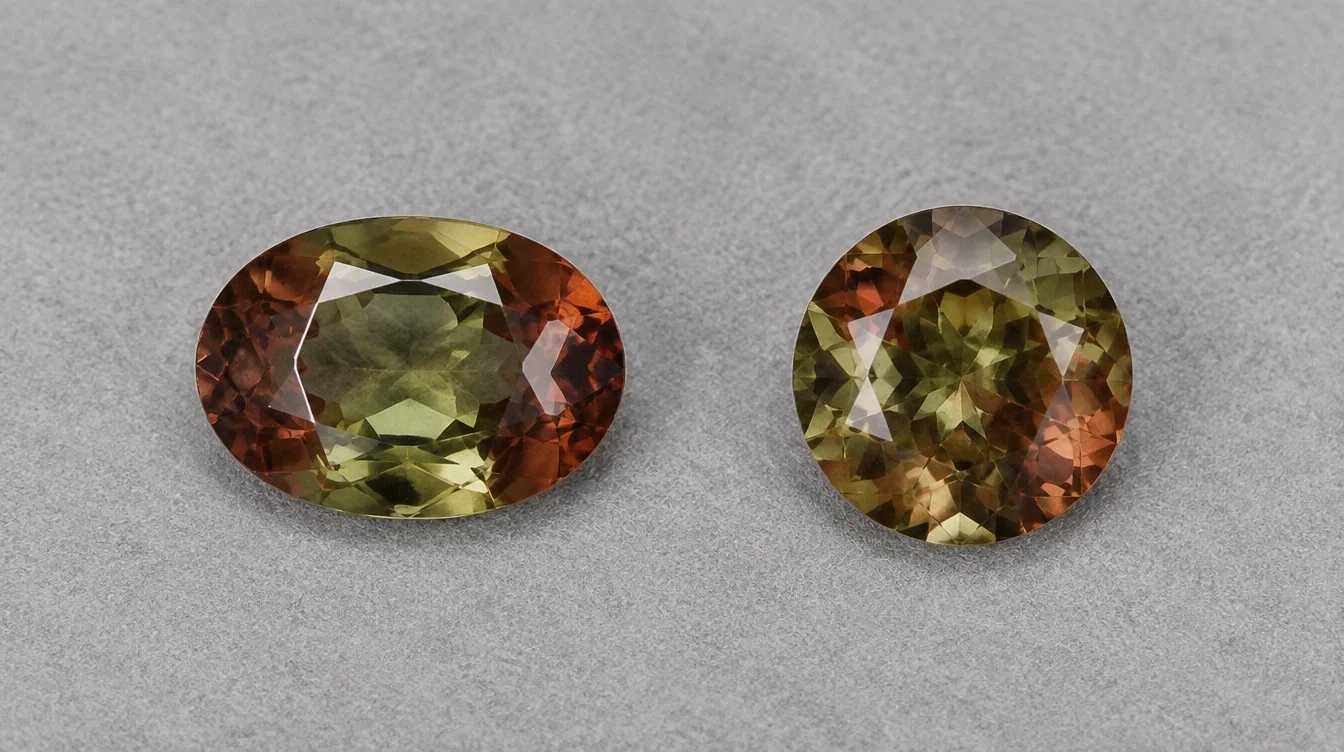
The IGS describes a useful tendency: long shapes can show one color near the center. Another may show near the ends. Round and square shapes often blend colors into a mosaic.
An oval with a green center and brown tips may suit someone who likes clear contrast. A round stone with smaller mixed areas may suit someone who likes a blended look. Neither is better for everyone.
The best cut for andalusite shows a mix you like in the view you will wear. Compare actual stones, not just sample photos of each shape.
Also look beyond the strongest flash. GemSelect recommends assessing color balance and brightness from above, noting that poor cutting can leave dull or washed out areas.
Now compare the stones under the same conditions.
A practical andalusite buying guide for checking color
Judge andalusite first under one steady light. Make the same movements under another light you use often. This helps you judge more than your first view. You can then assess the look to expect.
Start with a steady view
Keep the light and background still
Ask the seller to place the stone over a plain neutral background. Use one broad light rather than moving between several spotlights. Keep your head in roughly the same position.
Before turning anything, describe what you see. “Olive center with warm brown edges” is more useful than “nice color.” Note whether you like the mix when the stone is still.
Tilt gently in two directions
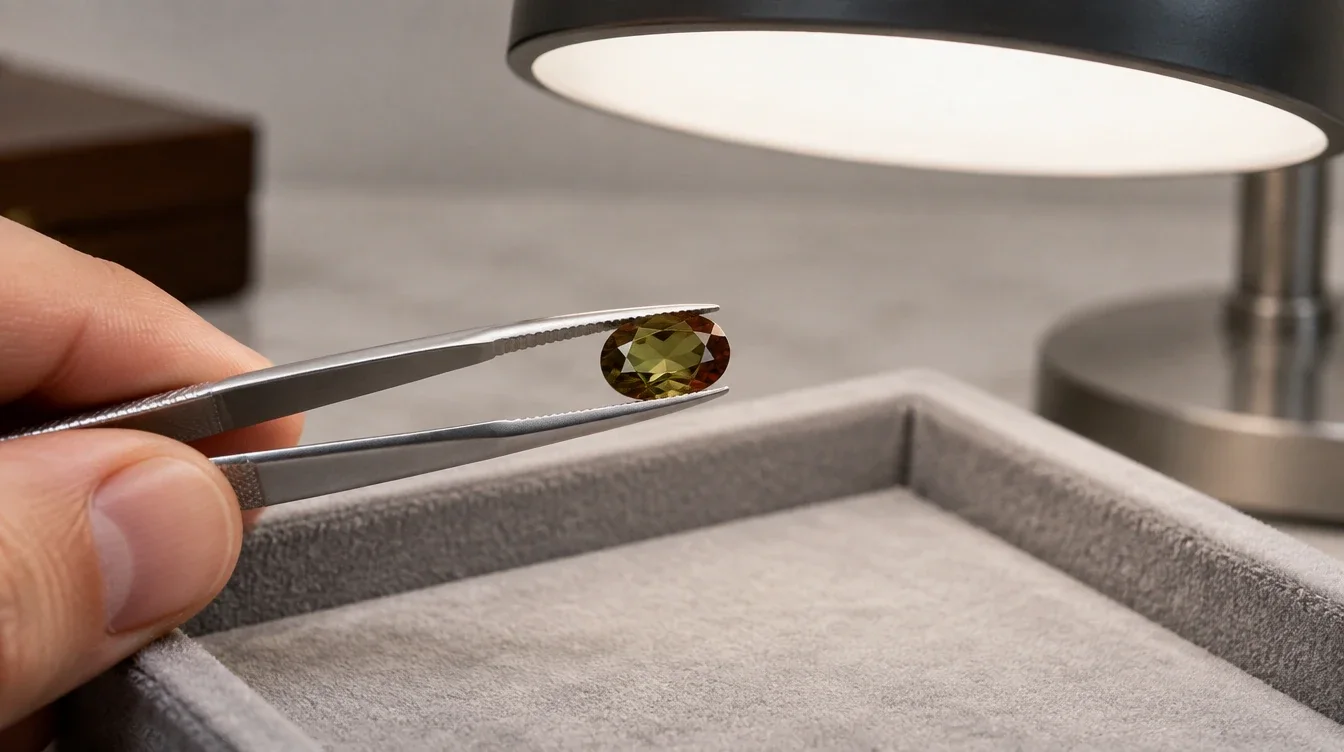
Ask the seller to tilt the gem slowly forward and back, then sideways. Let them hold a loose stone securely over a tray. Do not try to balance it on your hand.
Watch where green grows stronger and reddish brown appears. Then return to the starting view. Give less weight to a color seen only at an extreme angle.
Repeat in ordinary room light
Try the same check near a window without direct sun, then under an indoor lamp. GemSelect advises comparing daylight equivalent and indoor lighting because people prefer different color mixes.
Ask whether you like both looks. Choose jewelry you enjoy, not just the stone with the largest shift.
Use what you saw to compare two stones fairly.
Which color mix should you choose?
Choose the color mix you like in the stone’s normal wearing position. Its most striking tilted view should not decide the purchase.
Here is an example, not a documented customer case. Stone A looks olive from above. Brief red flashes appear when it is tipped steeply. Stone B shows green and warm brown together during small movements.
Stone B better suits someone who wants contrast during everyday wear. Someone who wants a quieter green look may prefer Stone A. Choose by the look you want, not a fixed ranking.
Make three notes for each stone. Note its color at rest and during gentle movement. Then note the view you like least. These notes help you compare andalusite colors, not just one striking flash.
When shopping online, ask for a continuous video of the actual item. Ask for a pause with the top facing the camera. Check the return terms before you pay. Take extra care if the stone will be set after you buy it.
For a ring, ask to view the finished piece on a hand. For a pendant, ask for a view hanging upright rather than lying flat. Compare both candidates in the same position. That gives each stone a fair chance and keeps the decision tied to the jewelry you plan to wear.
A useful andalusite buying guide helps you ask better questions. It should make clear what looks alone cannot prove.
Common questions about andalusite’s shifting colors
Andalusite’s shifting colors help give it charm. But they cannot answer all your questions before you buy.
Why does andalusite change color when the lamp stays still?
Andalusite can show different colors as your view changes. Pleochroism causes this effect, as IGS explains. For buyers, pleochroism vs color change means turning the gem versus changing the light source.
What is the best cut for andalusite with visible green?
No shape promises green you can see. Cutting orientation and the stone itself both matter. Ask to view the actual stone from above.
Can andalusite colors prove the stone is genuine?
No, green and brown alone cannot prove what the stone is. IGS warns that tourmaline and cleverly cut simulants can cause confusion. Ask for gemological identification when the claim needs support.
Keep those limits in mind as you make your final choice.
Buy the view you will actually wear
Choose andalusite you like both still and in slight motion. Strong pleochroism may catch your eye. But it cannot replace a look you enjoy each day.
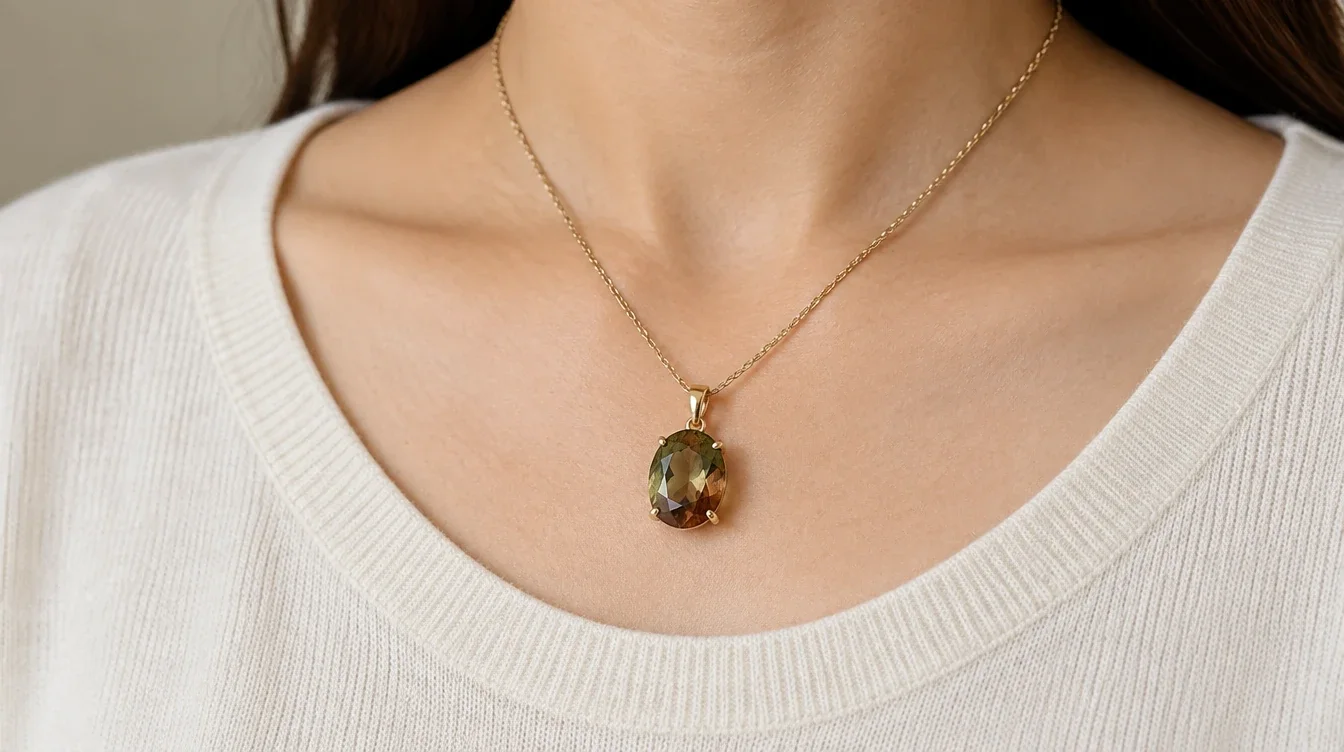
Take your time under steady light. Compare the green and warm tones in the finished position. Ask for clear identification. Have your jeweler show two stones side by side before buying. View them in ordinary light. Choose the mix that feels right.