What Is Mother of Pearl Jewelry Made Of (And Are You Buying a Pearl)?
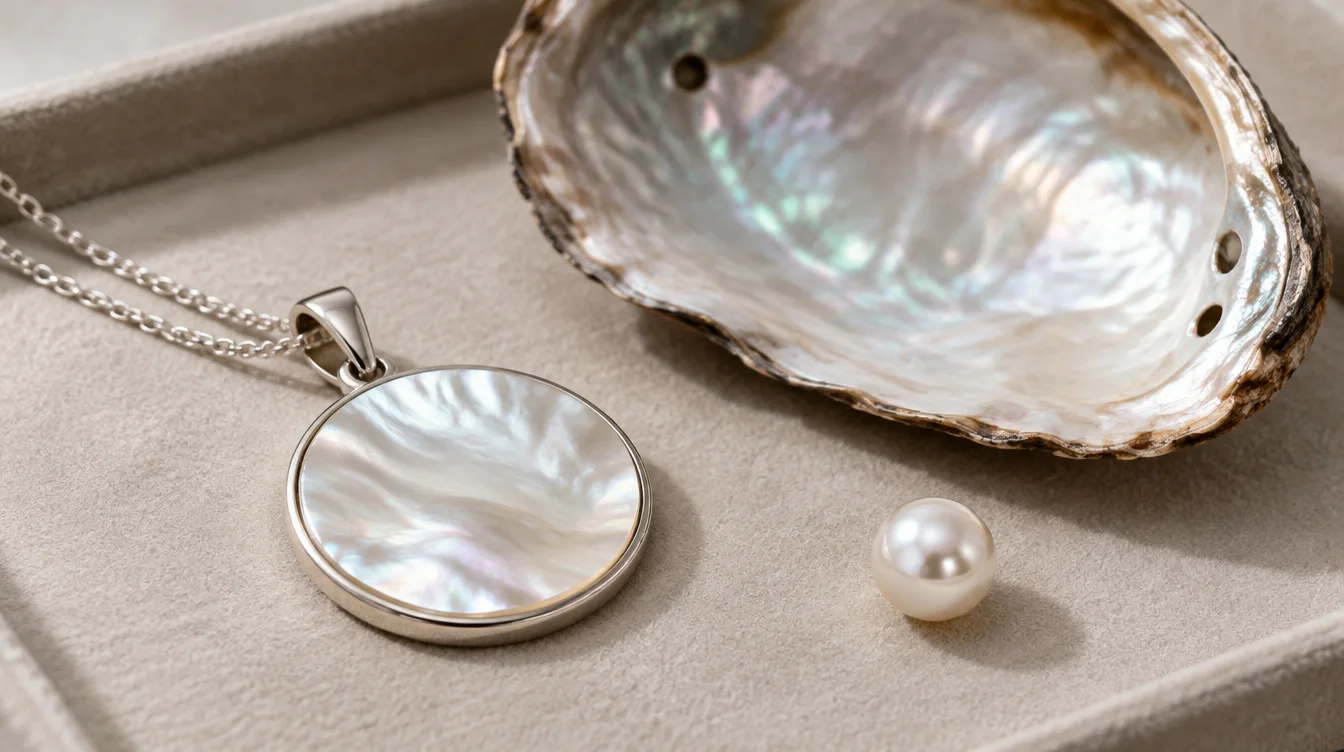
What is mother of pearl jewelry made of? It is made from the nacre lining of certain mollusk shells, cut and shaped for jewelry. It is real shell material, not a separate pearl. Still, a product name alone cannot tell you whether a piece is solid shell, a thin inlay, or a coated imitation, so check the material details before you buy.
What is mother of pearl jewelry made of inside the shell?
Mother of pearl is the smooth, lustrous nacre that lines the inside of certain shells. A mollusk makes that lining as part of its shell. Jewelers can cut it into small pieces, shape it, and set it in metal. The result may be a pendant, an earring insert, a ring detail, or a watch dial.
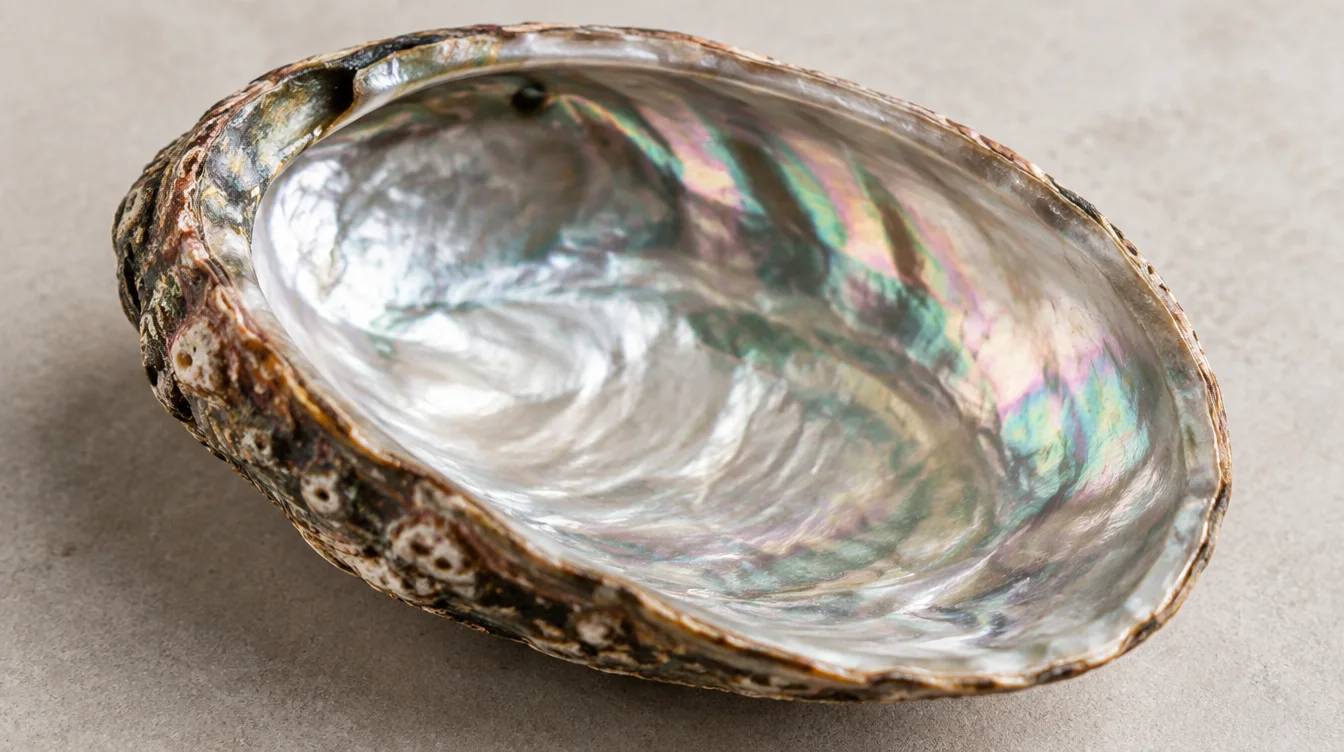
If you have seen the inside of an abalone shell, you know the effect. Color seems to move across its surface as the light shifts. White shell can have a quieter glow. In either case, the material began as part of a shell, not as a loose gem found inside the animal.
What is nacre?
Nacre is a layered material made mainly of calcium carbonate, held together with organic matter. Its fine structure gives mother of pearl its changing color and shine. Not every mollusk makes a nacreous shell lining. Pearl oysters, some freshwater mussels, and abalone are familiar sources, as explained in this overview of nacre and pearl formation.
That shared nacre explains why shell and pearls can look related. It does not make them the same item, which is the distinction that matters most on a jewelry listing.
Mother of pearl vs pearl: what does the listing actually describe?
Mother of pearl describes shell lining; a pearl describes a separate formation made by a mollusk. Many familiar pearls are nacreous, but some pearl types are not. A cultured pearl is also a real pearl: “cultured” tells you that people initiated its growth, not that the finished pearl is an imitation. These distinctions are covered in the material and labeling comparison from FeelOri.
Form is often your first clue. A pearl is a separate object that may be round, oval, drop shaped, or irregular. Mother of pearl often appears as a flat disc, a carved shape, or a panel fitted into a setting. Its broad surface can show shifting color across the whole piece.
Do not treat shape as proof. Shell can be carved into rounded forms, and a pearl can be quite flat on one side. Photos may hide the back of a pendant or the edge of an insert. When the description is vague, ask what the visible piece is made from rather than trying to settle the question from one image.
For a strand of rounded beads, a pearl description needs its own details. For a shell pendant, you need to know how the shell is mounted. That difference leads straight to how mother of pearl jewelry is built.
How does shell lining become a jewelry inlay or cabochon?
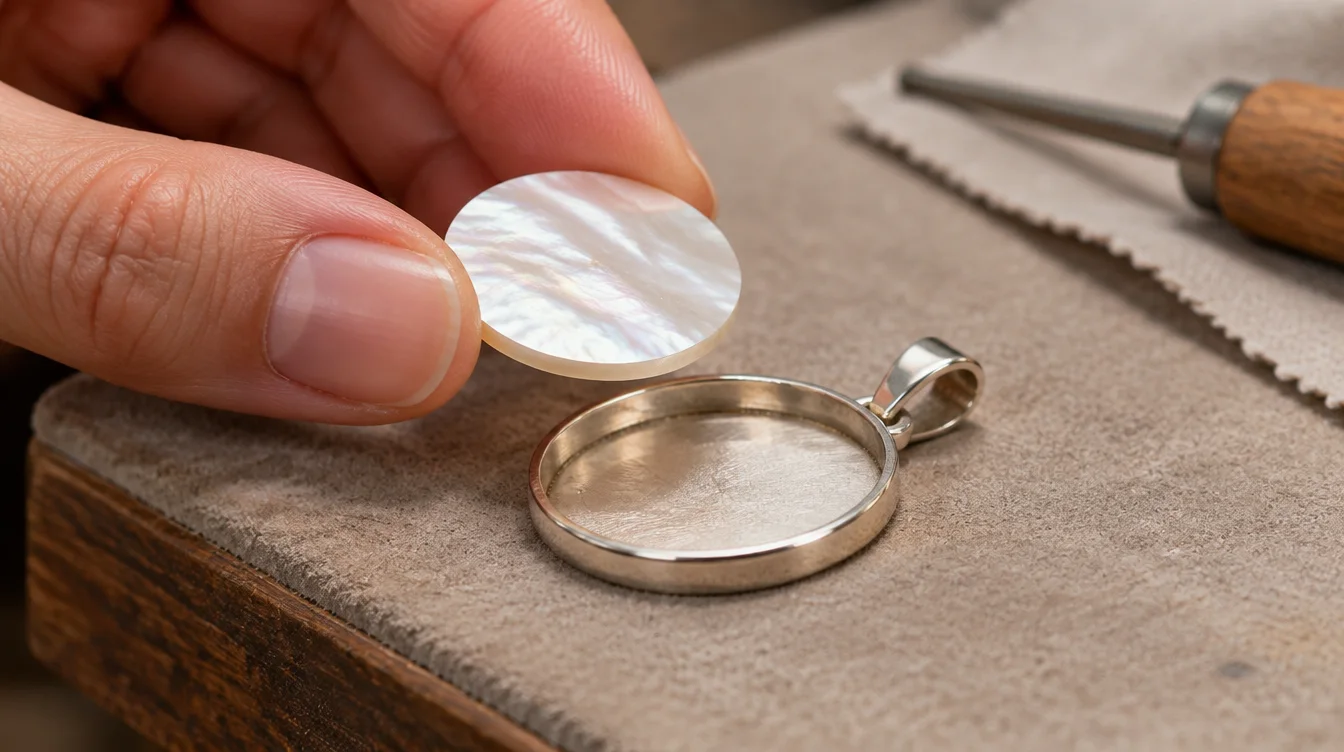
A maker cuts nacreous shell into a usable shape, then fits it into a design. A thin piece may sit inside a metal outline as an inlay. A larger piece may form the face of a pendant or earring. A shaped, polished piece with a domed top may be sold as a cabochon.
“Cabochon” names a cut and shape, not a guarantee that the material is a gemstone or a pearl. Likewise, “inlay” tells you where a piece sits in the design. Neither word tells you how thick the shell is, what supports it, or whether its color has been treated.
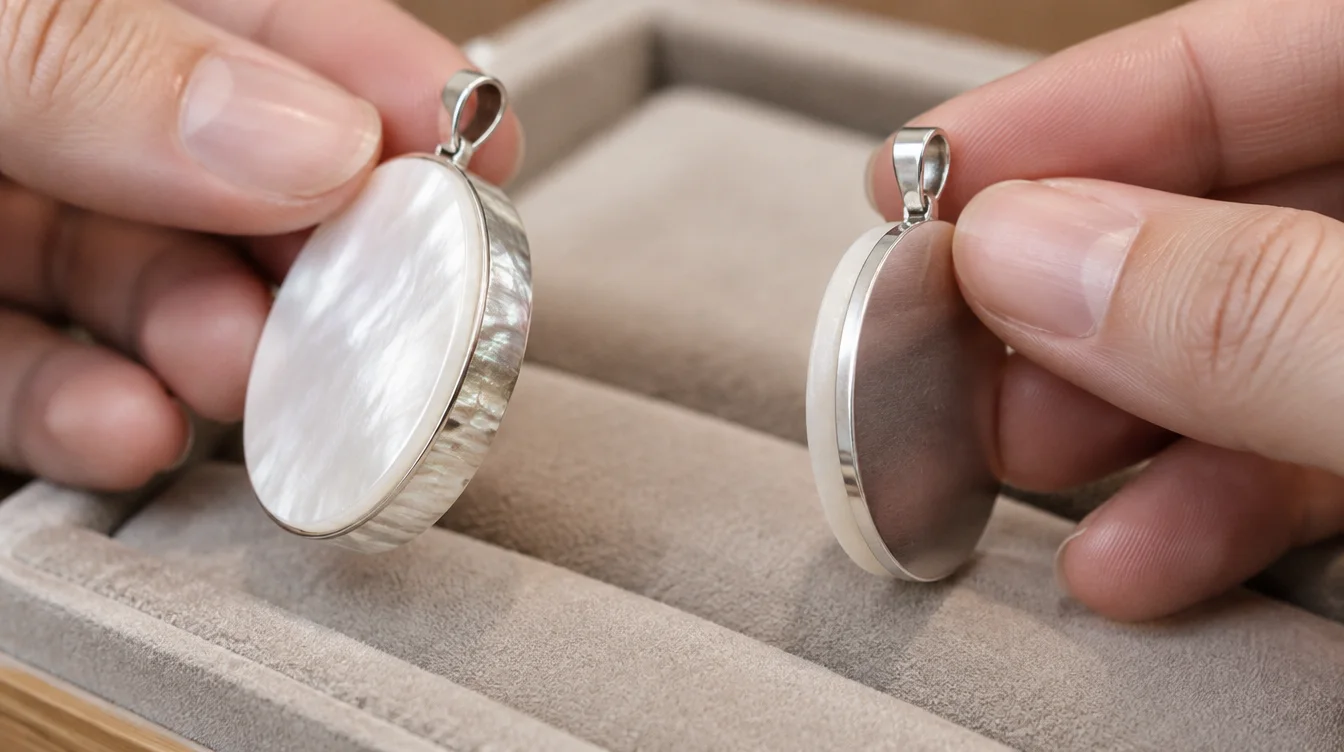
Picture two white pendants with the same front view. One has a shaped shell piece visible at the edge. The other has a thin shell face fixed to a backing. Both may contain genuine mother of pearl, yet their construction is different. You cannot judge that difference from the front photograph alone.
A backing is not automatically a flaw. It may be part of the intended design. You should simply know it exists, especially if a listing calls the whole pendant “solid mother of pearl.” Once you understand the construction, the product wording becomes much easier to test.
Which material details should you request before buying?
Ask the seller to name the visible material and describe how it is attached. A useful answer should separate the shell from the metal, backing, coating, or other parts. “Pearl finish” and “pearl look” describe an appearance; they do not confirm nacreous shell or a genuine pearl.
Start with the shell claim
Ask, “Is the visible white or iridescent part cut from genuine nacreous shell?” If the seller says yes, request the shell type if known. A seller who does not know the species can say so. A confident species claim with no supporting product information is less helpful than an honest description of the material.
Check the edge and back
Ask for clear photos of the side and back, along with a close view of the front. The edge may show whether the nacre is a thin insert or a thicker shaped piece. A photo alone will not verify authenticity, but it can reveal construction that a straight on image misses.
Ask about treatments and support
Find out whether the shell has been dyed, coated, assembled with a backing, or covered by a clear layer. Also ask what metal holds it and whether the shell is glued or held by the setting. Those answers tell you more about the item you will wear than a vague promise of “premium pearl shine.”
Read the whole product description
Look for separate entries for the decorative material, metal, plating, and any backing. If a listing says “mother of pearl earrings” but the detailed materials only say “resin,” ask which part is shell. If no shell is present, the title has not answered your question.
Here is a practical test: can you explain the visible piece and its support from the seller’s answer? If not, ask for a clearer description before paying. Once you know the materials, you can judge the design and value rather than rely on a name.
Is mother of pearl valuable, and what are you paying for?
Mother of pearl can be worth buying, but its name alone does not set its value. Nacreous shell is commonly used for decorative pieces, while pearls are often assessed as individual gems. Shell quality, size, color, cutting, design, metal, and workmanship all affect what a finished piece may cost.
A neat inlay with clean edges takes skill. So does a carved design with a good finish. Those features may matter more to you than the amount of shell in the piece. By contrast, a high price attached only to the word “pearl” calls for a closer look at what the seller means.
Compare like with like. If two pendants have the same metal and similar designs, ask whether each uses genuine shell, an imitation, or a coated surface. Then compare the finish, setting, and seller’s return terms. Do not use the price of a cultured pearl pendant as a direct benchmark for a shell inlay. They are different products, even when both have nacre.
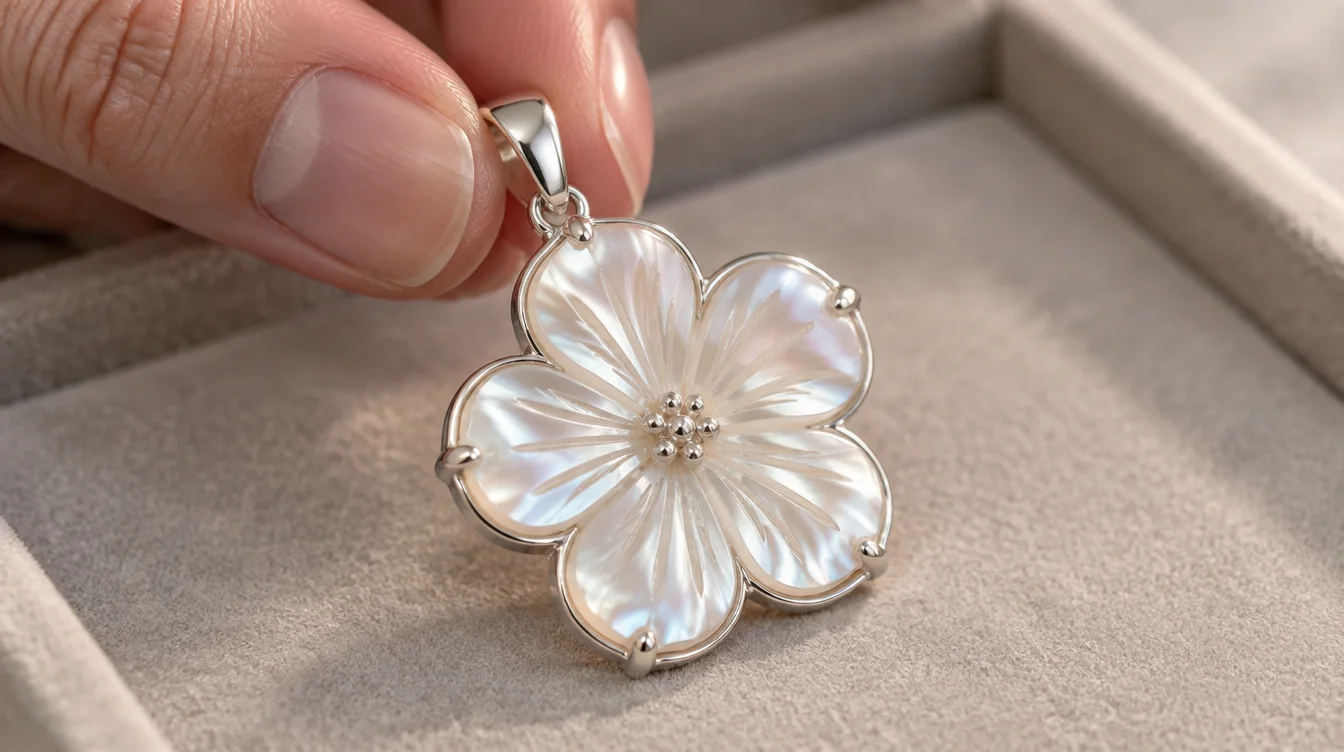
There is no sound price estimate without a specific piece, currency, size, metal, and condition. The better question is whether the description supports the asking price. After that, think about where and how you plan to wear it.
How should you wear and care for mother of pearl jewelry?
Mother of pearl needs gentle wear and cleaning because shell can scratch or crack. A solid metal rim may help shield an inlay’s edge, but it cannot make the exposed surface resistant to knocks. A ring worn through daily chores faces more contact than earrings worn for an evening.
Put jewelry on after perfume, hair spray, and skin products have dried. Take it off before cleaning, swimming, or work that could strike the shell. Store it apart from harder jewelry so a clasp or chain does not rub across the nacre. The pearl and mother of pearl care comparison also warns against harsh chemicals and abrasion.
For a piece you wear often, inspect the setting now and then. If an inlay moves, leave it alone and ask a jeweler to examine it. Cleaning cannot fix a loose insert. That brings us to the care questions shoppers ask most.
Questions shoppers ask before buying
These answers cover the common points a product title may leave open. If the answer for a specific piece is unclear, the seller’s material description should settle it.
Is mother of pearl a real pearl?
No. Mother of pearl is genuine nacreous shell lining, not a separate pearl formed by a mollusk. A piece can contain both materials, but the listing should identify each one.
How can I tell whether a listing means shell or imitation?
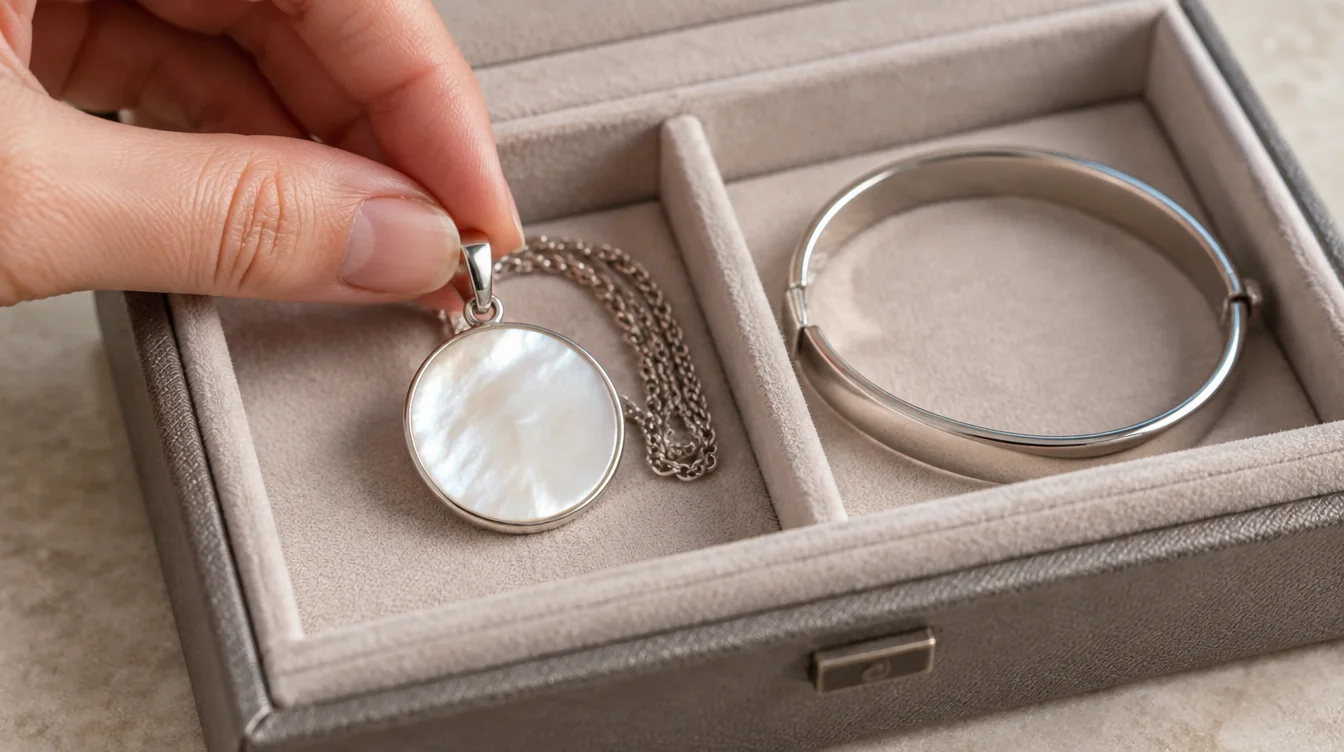
Look for a clear statement that the visible part is cut from genuine nacreous shell. Ask for edge and back photos, plus details of any backing or coating. Appearance alone is not a reliable final test.
Does a cultured pearl contain mother of pearl?
Many familiar cultured pearls have nacre, but “mother of pearl” usually names the shell lining used as decorative material. Some pearl types are not nacreous, so the terms should not be treated as interchangeable.
How to clean mother of pearl without harming the setting?
Wipe the piece gently with a soft, slightly damp cloth, then dry it with another soft cloth. Do not soak it or use harsh cleaners, especially when you do not know how the shell is attached.
A clear listing lets you enjoy the design without guessing what you bought. If the shell, support, and treatments are not named, ask before you order. When the answers are plain, you can choose the piece for what it is: beautiful shell work, a genuine pearl, or a design that uses both.