Is your watch bracelet too loose but removing a link makes it too tight? Try a smaller adjustment
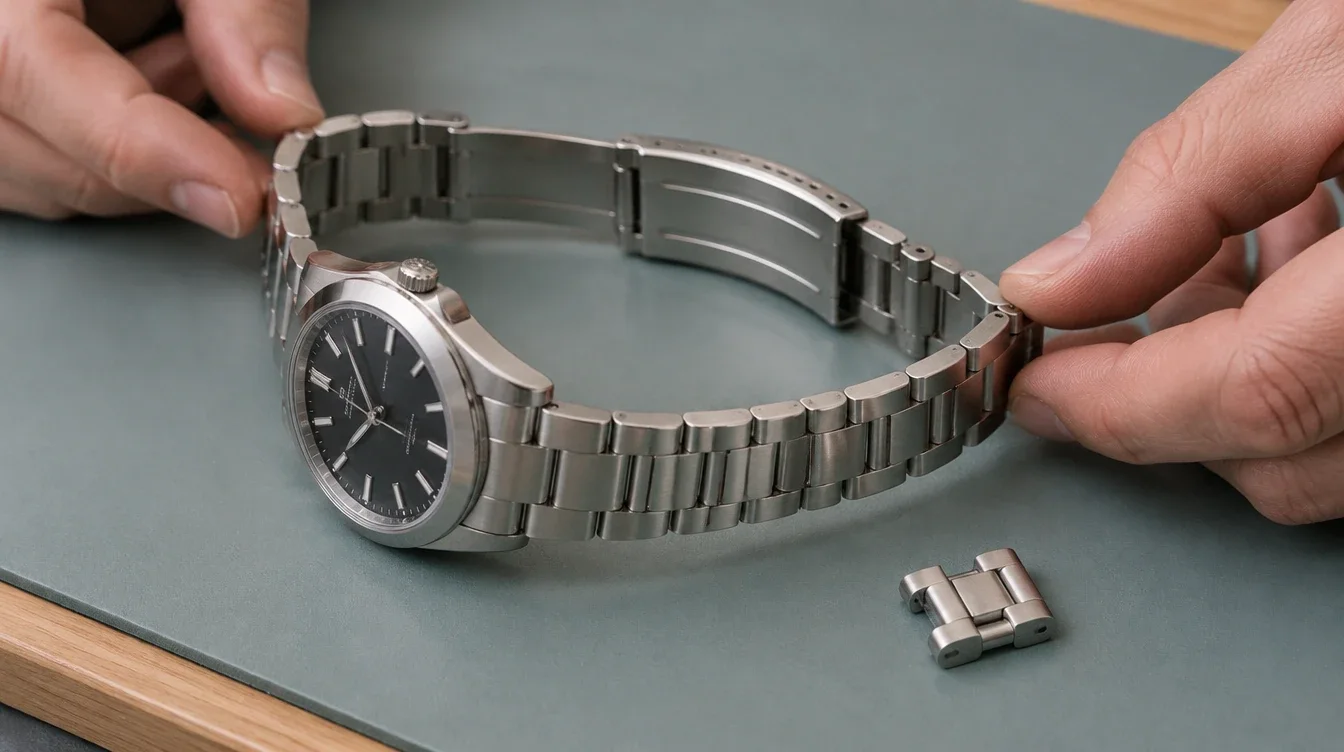
Check the clasp for a smaller adjustment before removing another link. If none exists, ask about a compatible half link. The problem “watch bracelet too loose but removing a link makes it too tight” usually calls for finer sizing, not a tighter squeeze. Fixes depend on your bracelet and clasp; never force unfamiliar parts or keep wearing a watch that pinches.
Check what a comfortable fit feels like
A comfortable watch bracelet lets your wrist move without constant sliding. Check the fit while moving your wrist, not just holding it still.
When asking how should a watch bracelet fit, start with simple checks. Rest your hand on a desk, then bend your wrist. Next, let your arm hang. Note whether the clasp presses or the crown digs in. Check whether the case slides toward your hand.
Do not tighten the bracelet just to stop every small movement.
If you find your watch bracelet too loose or too tight, record when each happens. A fit that changes through the day needs a different approach from one that always feels wrong. Those notes help separate a sizing gap from changing wrist size.
Why is your watch bracelet too loose but removing a link makes it too tight?
A full link can change bracelet length by more than your wrist needs. Your best fit then falls between two settings.
Steel Reef explains that link changes set the basic bracelet size. Smaller adjustments fine tune the fit. Its guide also notes that heat and activity can change wrist size during wear. These are separate problems, but both can affect the same watch.
Separate a fixed sizing gap from daily changes
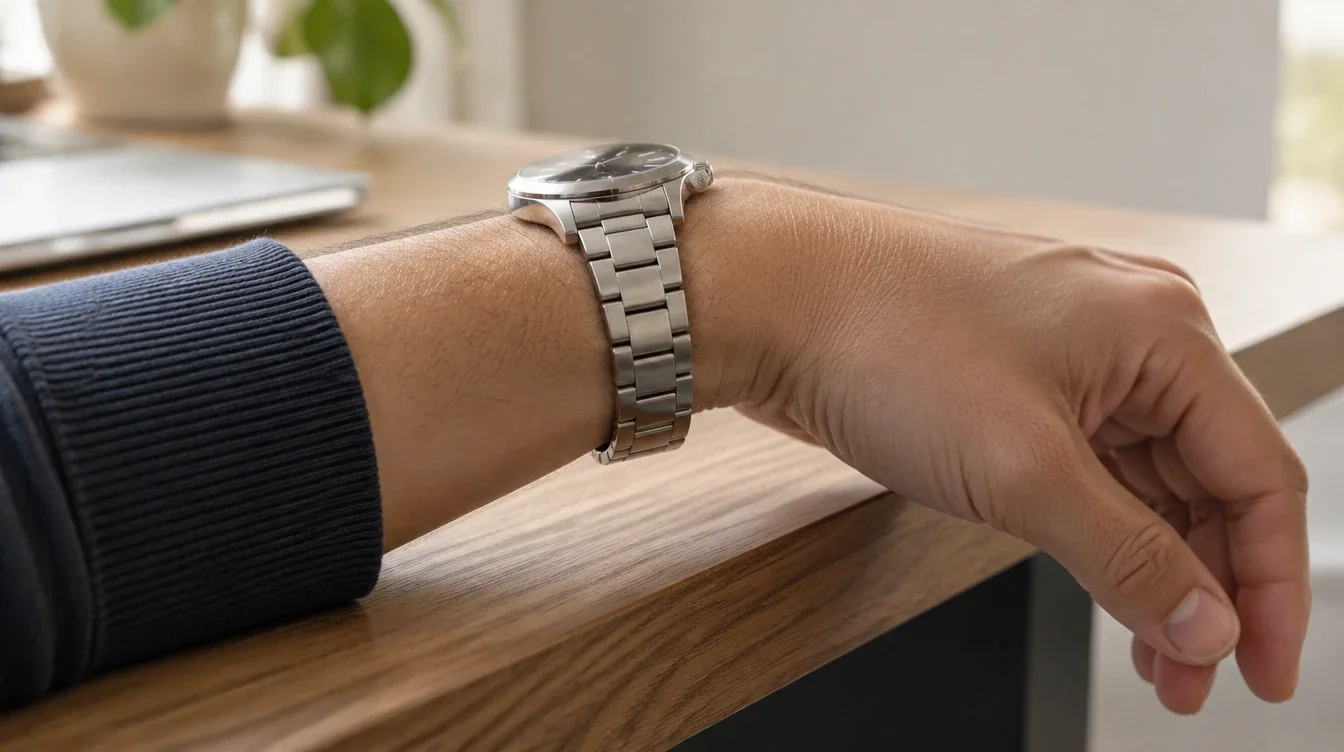
Try the watch during normal indoor wear, then check it later. Do not judge fit only after exercise or in unusual heat.
If both link settings feel wrong under similar conditions, seek a length between them. Does one setting feel good until your wrist expands? An adjustment you can make during wear may help more. First, check what your clasp offers.
Start with watch bracelet micro adjustment
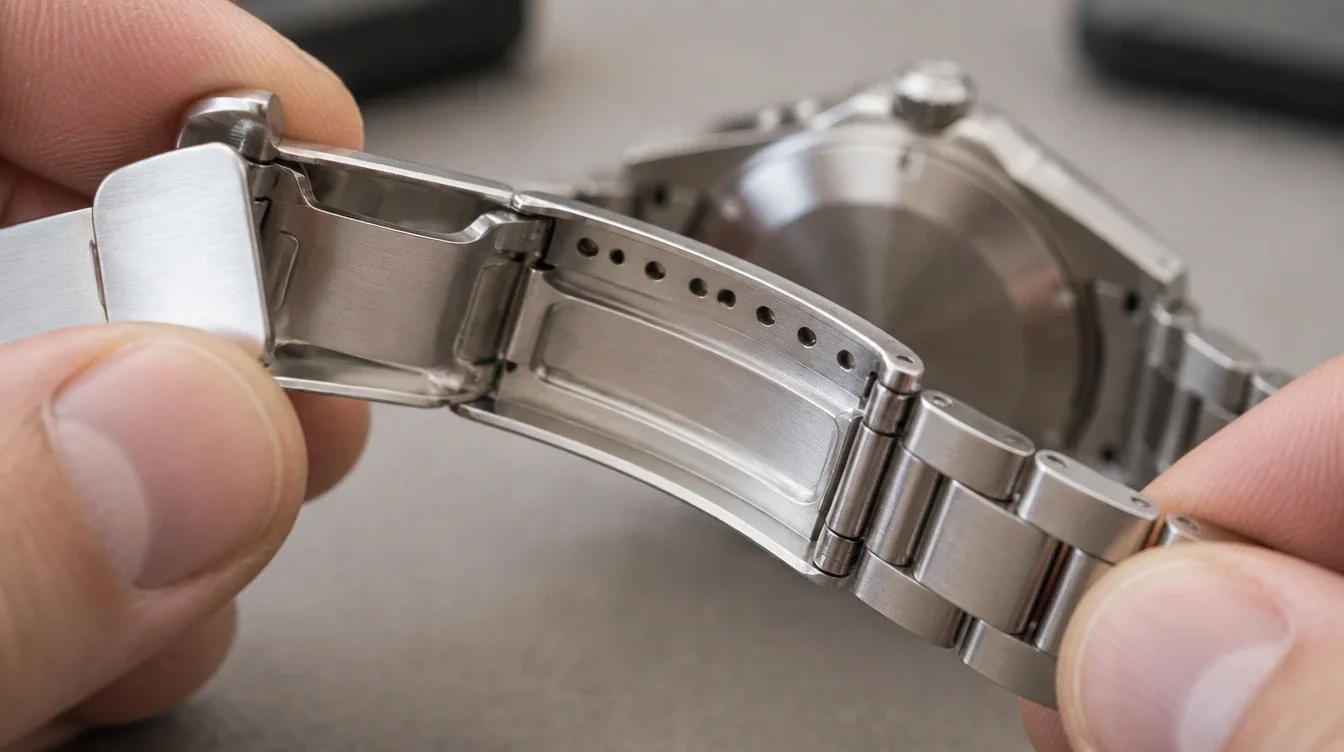
Check clasp adjustment first. It may change the fit without changing the link count. Not every clasp has this feature.
For anyone asking how to tighten a watch without removing links, Linx describes two common options: moving a spring bar between clasp holes or using an adjustment system that needs no tools. Check your watch instructions before trying either.
Identify the mechanism before moving anything
Open the clasp and check it against your exact bracelet's instructions. Ask a watchmaker to explain anything unclear. Clasps can look alike but work in different ways.
For a clasp with adjustment holes
Have the spring bar moved to the right position with the correct tool. Ask the watchmaker to check both ends are seated before wear.
For adjustment without tools
Follow the maker's release and locking method rather than pulling against resistance. Confirm that the setting holds before putting the watch back on.
For useful watch bracelet micro adjustment, check two things. Look at the total range and the size of each step. If those positions still miss your fit, compare them with shorter links.
When watch bracelet half links make sense
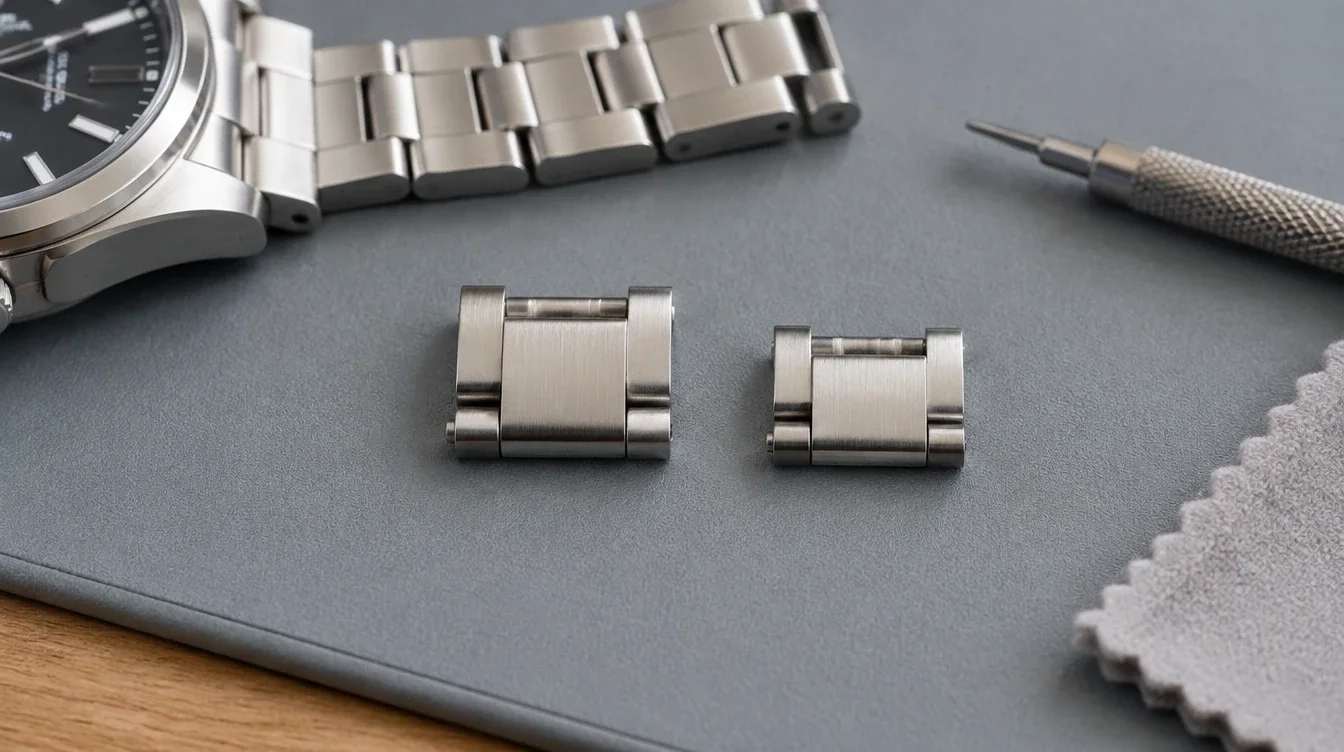
A compatible half link may help when a full link changes bracelet length too much. Its purpose is to refine the basic size, rather than provide adjustment throughout the day.
Steel Reef's guide explains this difference between fixed half links and adjustable links. Choose based on what you need. That may be one better setting or several during wear.
Compare actual lengths rather than names
Ask for the fitted length of the proposed part. Do not assume a part called “half link” gives the exact change you need.
These numbers show how the change works. They are not a specification for any brand. Suppose a full link adds 10 millimetres. A compatible shorter link adds 6 millimetres. Swap the full link for the shorter one. The length drops by 4 millimetres, rather than 10.
That difference makes watch bracelet half links worth checking first. Check them before removing another full link. Before you order, confirm compatibility and check the fastening hardware and finish. Ask how much the length will change. If no part fits, look at the other options.
What if the clasp has no fine adjustment?
For a bracelet without fine adjustment, check which replacement parts fit. Do this before you buy. Searching “watch bracelet no micro adjustment” may give you ideas. It cannot tell you for sure which parts fit your watch.
Compare an adjustable link with a cushion
Steel Reef describes adjustable links that keep the original clasp. They fit only certain compatible bracelets. Ask the supplier to check your exact bracelet version. Check the adjustment range and what you need to fit the link.
Linx offers adhesive cushions to fill a small amount of spare space. That is a seller's proposed fix. It is not proof that cushions suit every watch or wearer. Before using one, ask where it goes and how to remove it. Also ask about contact with your watch finish.
A cushion occupies space; an adjustable link changes bracelet length. Neither should hide loose hardware or an insecure clasp.
A “watch bracelet no micro adjustment” search may leave you unsure which parts fit. If so, ask a watchmaker about a strap that suits your watch instead. Work through the common questions below before you spend money.
Common questions about watch bracelet fit
To answer watch bracelet fit questions, check the actual hardware. Note when the watch starts to feel uncomfortable, too.
How should a watch bracelet fit during normal wear?
Allow enough ease to move your wrist without pinching, while keeping the watch reasonably stable. Treat comfort and control as the goal, rather than a rule based only on finger clearance.
Why does my bracelet feel different later?
Heat and activity can change wrist size, as Steel Reef explains above. You may find your watch bracelet too loose or too tight at different times. If so, compare adjustable options instead of changing full links each time.
How can I learn how to tighten a watch without removing links?
Check your exact clasp's instructions for its adjustment positions. Those details may be unclear or missing. If so, ask a watchmaker which other parts fit before you buy.
Can I get used to a bracelet that pinches?
Do not use pain to judge a good fit. Take the watch off if it causes pain or numbness, and arrange a fit check before wearing it again.
Once those points are clear, bring a description of the problem to your appointment.
Get the smaller change your watch needs
Start with the clasp, then check compatible shorter links and adjustable parts. Bring your spare links and watch reference to a watchmaker. Include notes on when the fit changes. Ask them to show how much the length will change. Test the fit on your wrist before you leave.