Why total carat weight vs center stone weight can fool ring shoppers
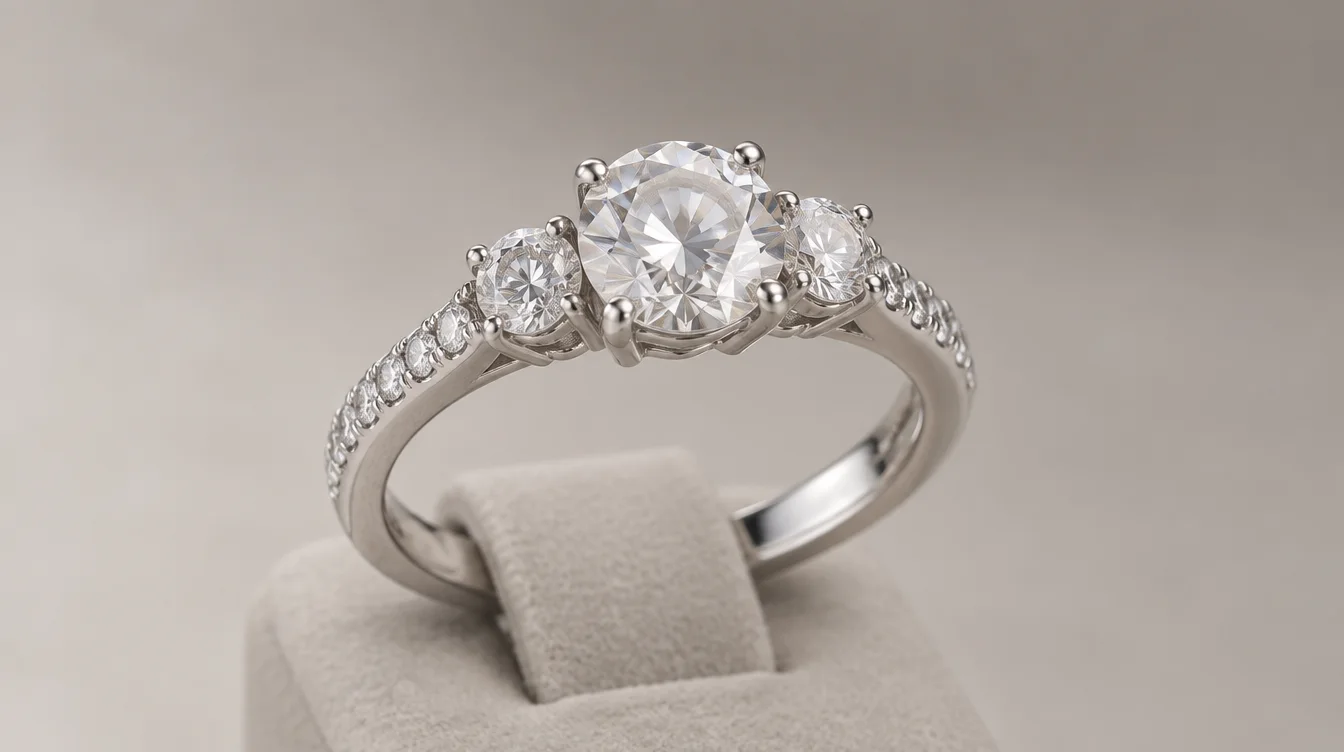
Compare the center diamond’s weight with the ring’s total diamond weight before judging two listings. That is the key to total carat weight vs center stone weight. A 1.50 carat total ring may have a 1.00 carat center, a smaller center, or no single center at all. If a listing gives only the total, ask for separate weights before you compare rings.
What total carat weight vs center stone weight actually tells you
Center stone weight describes one diamond. Total carat weight adds the weights of the diamonds covered by the listing. A carat measures weight, not visible width. One metric carat equals 0.20 grams, according to the Gemological Institute of America.
Read ct vs ctw as one stone versus a sum
In a ring listing, ct often gives the weight of one diamond. CTW means carat total weight. It usually adds the weights of all diamonds in the piece. Retailers also use CTTW and TW. Check what “TW” covers if the ring has other gems. Fink’s explanation of diamond weight labels explains the difference between one stone’s weight and the combined weight.
So, what does cttw mean on a ring? It means carat total weight, not the weight of its largest diamond. The label tells you how much diamond weight is present in all. It does not tell you how that weight is split among the stones.
A ring marked “1.50 ct center, 1.80 ctw” gives you both figures. One marked only “1.80 ctw” leaves the center weight unknown. You also need to know which stones the total covers.
Does total carat weight include the center stone?
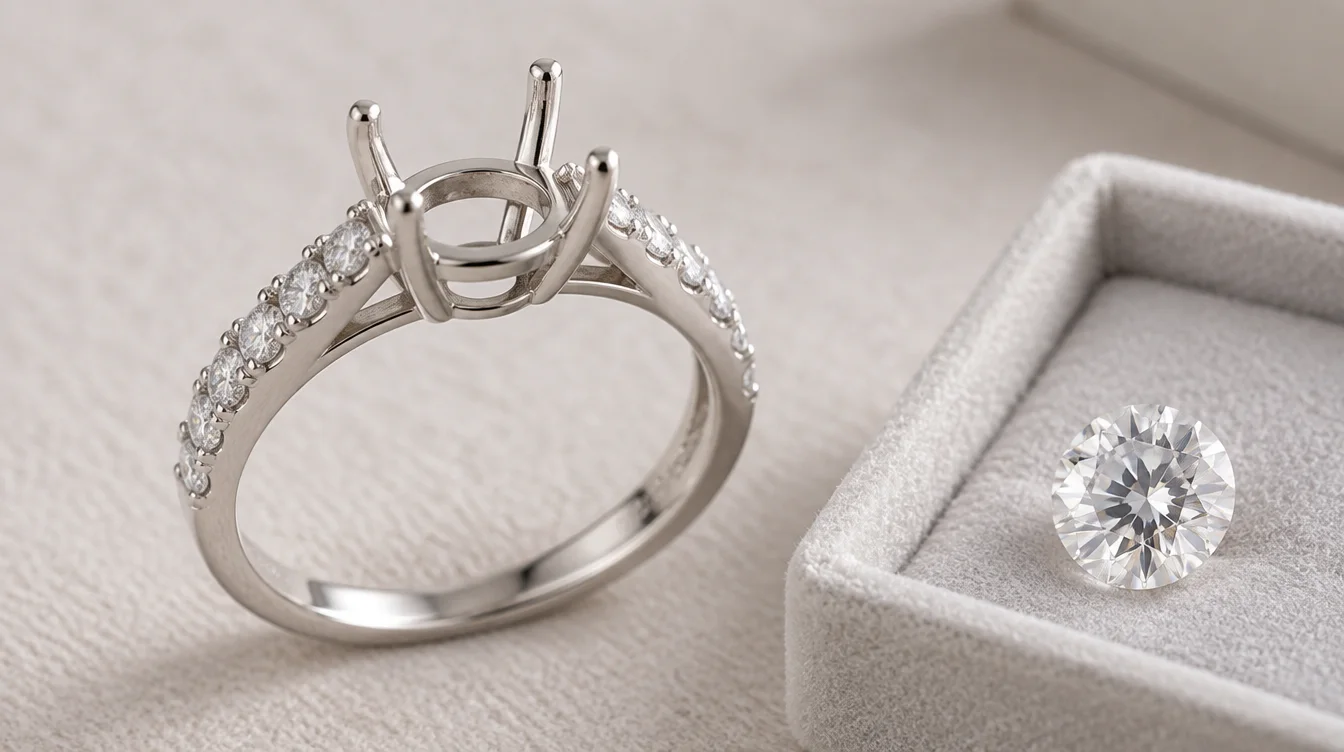
Yes. The total diamond weight of a complete ring normally includes the center diamond. It also includes the accents. A separate setting may list only its mounted diamonds. Its total may leave out the center stone you have yet to choose.
The answer to does total carat weight include the center stone depends on what the listing covers. Is it a finished ring? A setting without its center? Or a center diamond priced alongside a setting? Ask which stones the advertised figure covers. A product photo cannot tell you.
Rings with different gems need one more check. If a ring has a sapphire center and diamond accents, “total diamond weight” should count only the diamonds. A less specific “total weight” label may need clarification. Ask for each type of gem’s weight. Do not treat them all as one diamond total.
Once the scope is clear, simple arithmetic shows whether the numbers agree.
How to calculate total carat weight without counting twice
To calculate total carat weight for a complete diamond ring, add the stated weights of the center and accent diamonds. Count each diamond once. If the listing already gives a total, do not add the center again. It should already be included.
Work through a center and accent example
Consider an illustrative ring with one 1.00 ct center diamond. It also has two side diamonds weighing 0.20 ct each and ten small diamonds weighing 0.01 ct each. The side pair adds 0.40 ct. The ten small diamonds add 0.10 ct. With the center, the ring has 1.50 ctw of diamonds.
Here is the same calculation in one line: 1.00 ct + 0.40 ct + 0.10 ct = 1.50 ctw. These are assumed weights for an example, not figures from a real listing. The result says nothing by itself about cut, color, clarity, or the width of the center diamond.
When the center weight is missing
You can subtract a stated accent total from a stated complete ring total. For example, 1.50 ctw minus 0.50 ctw of accents leaves 1.00 ct for the center. That works only if there is just one other diamond and both totals cover the same ring. Use the result as a check, not a replacement for the seller’s written center weight.
When the accent weights are estimates
Some listings give an approximate total for small mounted diamonds. Rounded figures may not add up to the center weight to the hundredth of a carat. Ask if each number is measured, reported, or estimated. That matters most when two listings look nearly equal.
Knowing how to calculate total carat weight helps you check a listing. It cannot tell you how an unstated total is split among stones. For that, compare the weight distribution.
Why equal totals can describe very different rings
Two rings can have the same total diamond weight but different center diamonds. That is the trap in total carat weight vs center stone weight comparisons. The total adds the weights. It does not show how those weights are split.
Imagine two complete rings, each advertised at 1.50 ctw. Ring A has a 1.20 ct center and 0.30 ctw of accents. Ring B has a 0.75 ct center and 0.75 ctw of accents. The totals match. Ring A puts far more weight into one diamond. Ring B spreads more weight around the center.
Neither arrangement is always better. Ring A suits someone who wants one clear focal diamond. Ring B may appeal more if you want the surrounding diamonds to stand out. You still need to check the stones’ quality and the finished ring’s appearance.
Weight distribution also limits what a total tells you about value. One large diamond is not the same as several small diamonds with the same combined weight. Larger diamonds tend to be rarer. Cut, color, and clarity also affect value, as the GIA’s carat weight guide explains. A total alone is therefore too thin a basis for a price comparison.
Even the center weight is not a promise of visible size. In the diamond carat weight vs size question, cut proportions matter because some weight can sit below the visible face of the stone. GIA notes that a deeper diamond may weigh more without looking wider from above. Compare actual measurements when size matters to you.
The fair next step is to put both listings in the same format.
How to compare two listings on equal terms
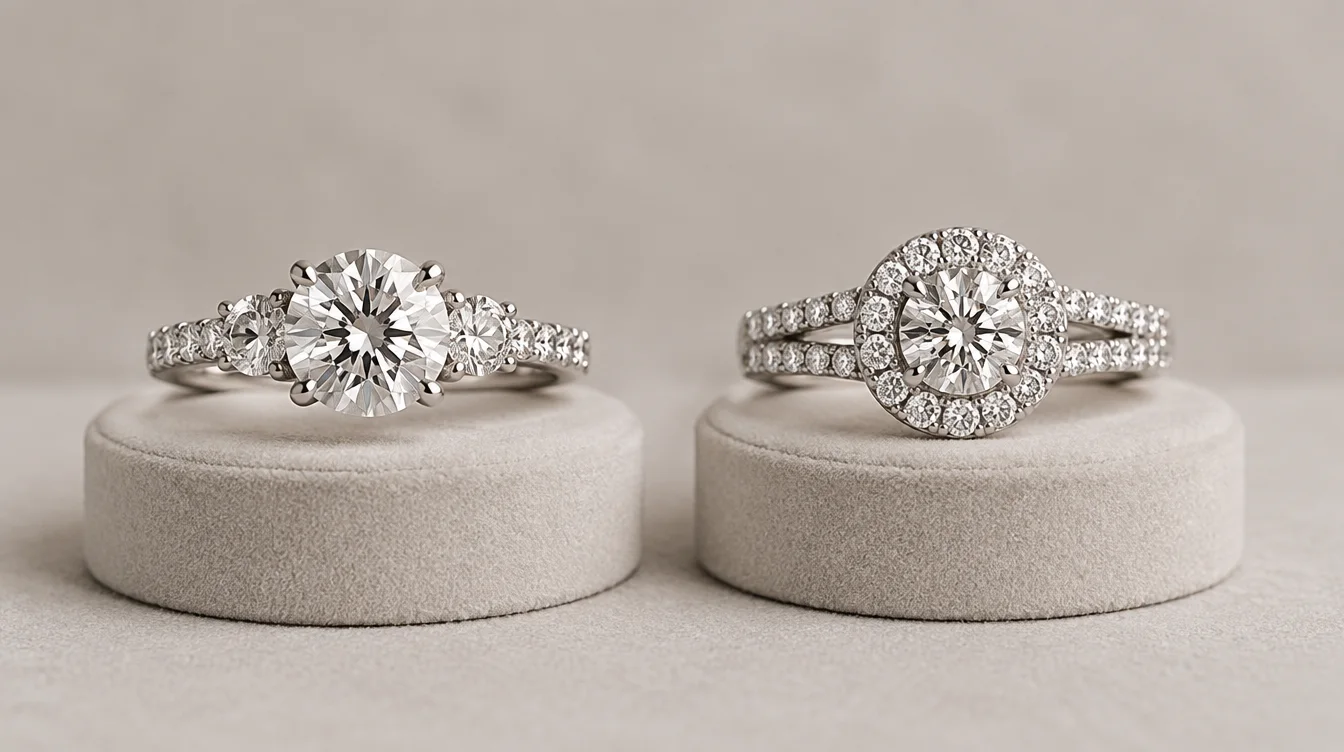
Compare complete rings by separating the center diamond, all other diamonds, and the finished ring details. Start with the advertised total, then find the center weight. Subtract it to see how much weight remains in the accents. If either figure is absent, the comparison is incomplete.
For each listing, write down the center weight, accent total, stated overall total, and number of diamonds. Note whether the center is included in the price. This is not busywork. A “ring” listing may be a finished piece, while a “setting” listing may require a separate center purchase.
Next, compare like with like. Check the same details for both center diamonds: stated weight, shape, measurements, color, and clarity. Check cut information where available. Note whether each diamond is natural or lab grown. If a grading report is advertised, ask for its number. A center diamond’s report does not automatically grade every tiny accent diamond.
Keep diamond carat weight vs size separate in your notes. Put weight in one column and visible dimensions in another. A setting can change how much of the center diamond you see once it is mounted. If that concerns you, read more about why a diamond may look smaller after setting.
Use ct vs ctw with care when sorting search results. A “1 ct” filter may show a 1 ct center in one listing. Another result may have 1 ctw spread across several diamonds. Check the specifications before comparing them.
Once both rings are described in the same terms, you can ask a seller for the few missing facts that matter.
What to request before buying a multi diamond ring
Ask for the center diamond’s weight and the combined weight of all other diamonds. Then ask whether the advertised total includes the center. A useful written reply might say, “Center diamond: 1.00 ct. Other diamonds: 0.50 ctw. Complete ring: 1.50 ctw.”
If the ring has two prominent side stones, ask for each weight. “0.50 ctw in accents” could mean two 0.25 ct stones, many much smaller stones, or a mix. Separate weights show which design you are comparing.
Ask whether the weights are exact or approximate. Check whether the center diamond comes with the stated grading report. For a mounted or older ring, the seller may not know each small diamond’s weight. An estimate with clear limits is more useful than a precise looking number with no explanation.
Ask the seller to confirm in writing what the sale includes. Does the quoted price cover the pictured center diamond, the setting, and all accent stones? A clear answer can reveal what the product description leaves out.
Those requests also resolve the questions shoppers tend to ask at the last minute.
Common questions about ring weight labels
Most ring weight questions come down to one issue: which diamond, or group of diamonds, does the number describe? These quick answers can help when a listing is short on detail.
What does cttw mean on a ring listing?
CTTW means carat total weight. For a complete diamond ring, it generally adds the weights of all its diamonds, not just the center. If the ring is sold as a setting, confirm what the total covers.
Does total carat weight include the center stone in a setting?
Not necessarily. A setting sold without its chosen center may count only the diamonds already mounted in it. Ask whether the quoted total covers the finished ring or just the setting.
How can I tell whether “1 ct” means the center diamond?
Look for wording that names the stone, such as “1.00 ct center diamond.” If the listing only says “1 ctw” or “1 ct total,” ask for the center weight. Do not assume the largest number belongs to one stone.
Can I work out the center weight from ctw alone?
No. You need the accent weight as well, and you must know that both figures cover the same finished ring. Even then, ask the seller to confirm your calculation.
With those answers in hand, the advertised total becomes useful instead of misleading.
Choose the ring, not just the biggest number
To compare total carat weight vs center stone weight, start with two numbers. Get the center weight and combined accent weight for each finished ring. Then check the stone details, measurements, and what the price includes.
A higher total is not a larger center diamond. Send the seller a short request for the weight breakdown before you buy. If they can provide it, you can compare the rings you will actually receive.