What Most Buyers Miss About topaz vs citrine for November birthstone jewelry
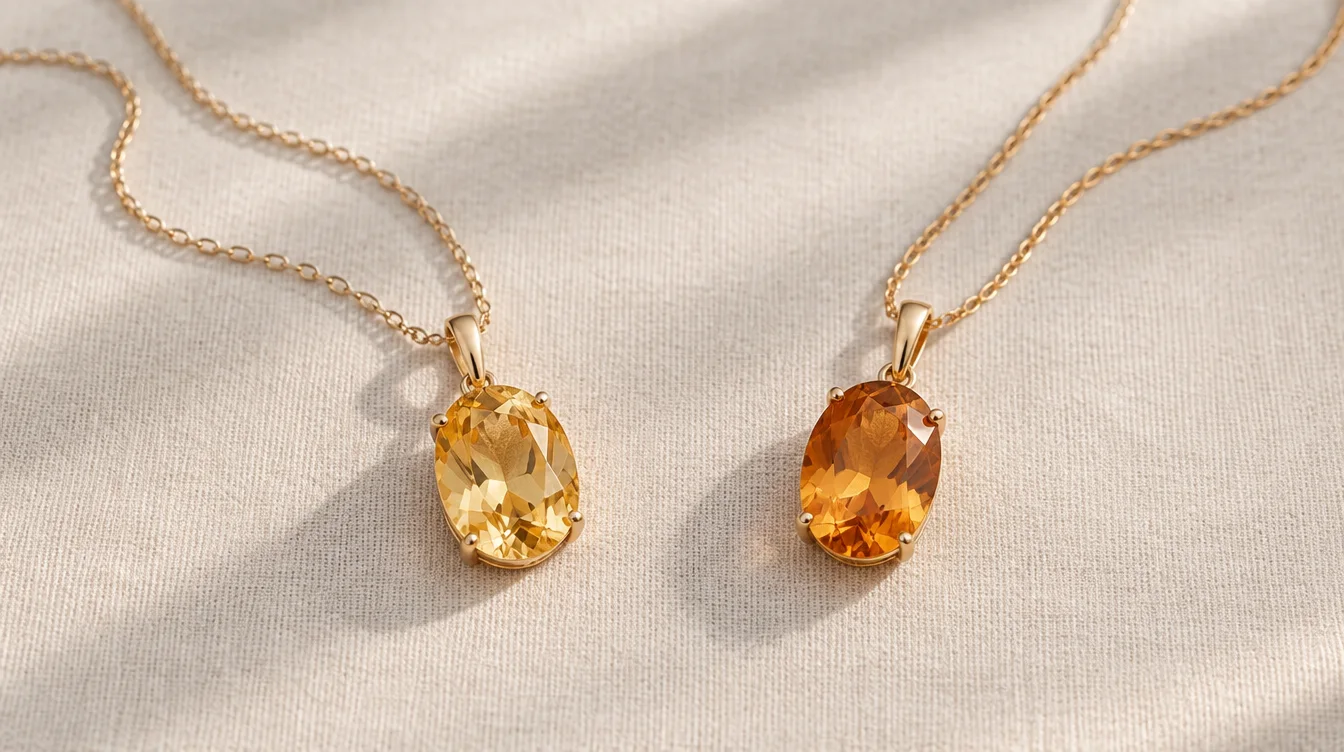
Choose citrine if you want a warm yellow or orange gem at an accessible price. Choose topaz if you want more color options or a specific golden shade. For topaz vs citrine for November birthstone jewelry, color alone is not enough: similar stones can have different treatments and care needs, so ask what the gem is and how its color was produced before you buy.
Why does November have two birthstones?
November has two recognized birthstones. Birthstone traditions changed, and both gems became accepted choices. Warm colored topaz has the older link to November. Citrine can look much like it, but it is a different mineral. The Gemological Institute of America lists both gems for November. It also notes that yellow stones have been mistaken for one another.
That history helps answer why does november have two birthstones. It does not make either gem more legitimate. A November birthday does not call for golden topaz alone. Blue topaz is still topaz. Citrine also suits someone who loves amber tones.
If the gift is for someone else, start with the color they wear, not a rule about which stone came first. Once you know their taste, the mineral differences become much more useful.
What are topaz and citrine actually made of?
Topaz and citrine are not two names for the same yellow gem. Topaz is its own mineral. Citrine is the yellow to brownish orange variety of quartz, as GIA explains in its November birthstone guide. A golden stone in a display case could be either one, and a photo rarely settles the question.
Check the gem name on the listing or receipt. If it says only “November birthstone,” ask which stone it is before paying. The seller should also disclose any known color treatment.
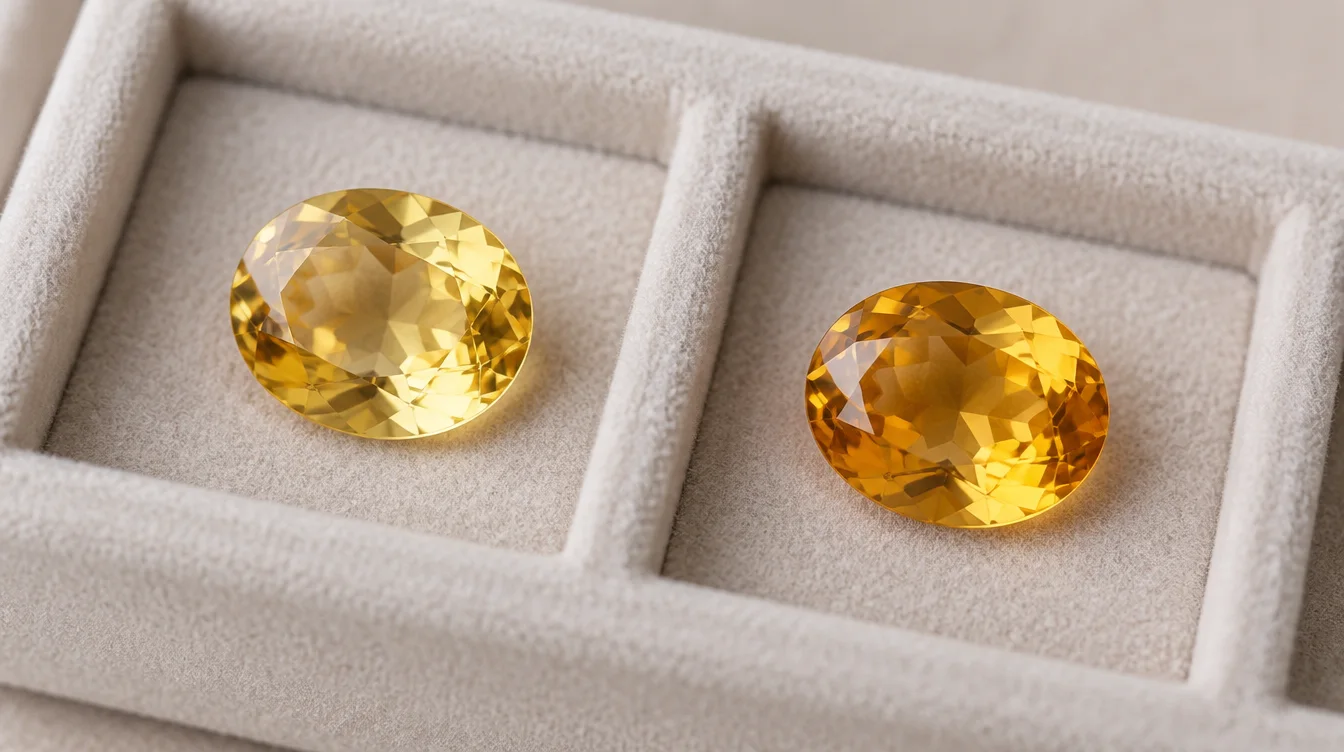
Both gems can look bright and clear, so the difference is easy to miss. They vary in color, scratch resistance, and how they handle a hard blow. Those traits matter more than the birthstone label.
What topaz vs citrine for November birthstone jewelry really comes down to
The practical choice rests on four questions: which color do you want, how will you wear it, what treatments are disclosed, and how much care will you give it? There is no single winner across all four. Topaz offers a broader palette and greater scratch resistance. Citrine keeps the choice focused on warm color and often suits a buyer who wants a larger golden gem without seeking a rare topaz variety.
Choose topaz for a wider color choice
Topaz comes in colorless, blue, yellow, orange, pink, and other colors. GIA says strong blue topaz in shops usually gets its color from irradiation, then heat. Pinkish orange Imperial topaz is sought after. But “Imperial” is not a name for every orange topaz.
If you want a traditional warm look, compare the actual yellow or orange gems rather than buying by name alone. A pale golden topaz and a rich orange topaz can feel like very different pieces of jewelry.
Choose citrine for a warm, focused palette
Citrine ranges from yellow to orange and brownish orange. It does not come in topaz’s blues or pinks. If you want a golden gem, that smaller range may help. Compare each stone’s shade, cut, and look against your skin.
Pale, honey colored citrine may look soft. Deep orange citrine can stand out. Neither is always better. Ask whether the listing shows a color you would enjoy in person.
How do you tell similar golden stones apart?
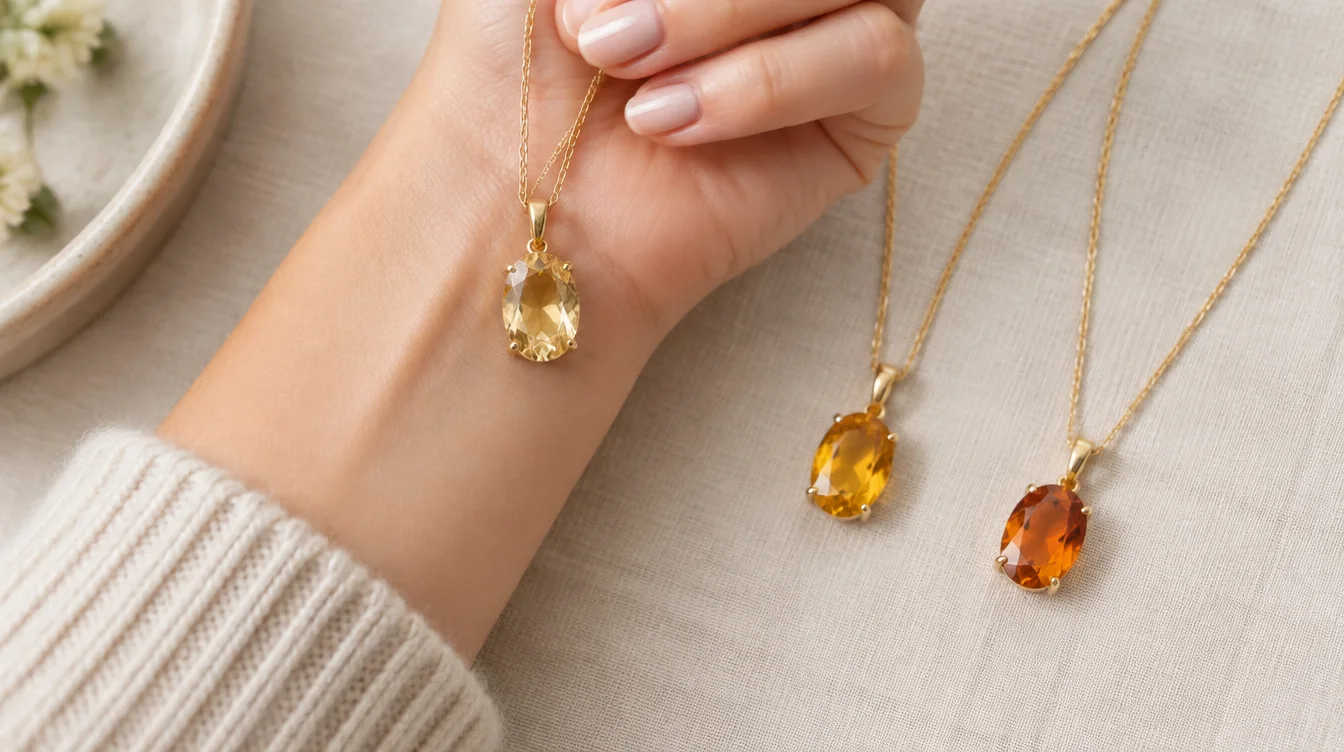
Color alone cannot reliably tell yellow topaz from citrine. Their shades overlap. Light can change how each looks. Ask the seller to name the gem, especially when shopping online.
If a listing has only a studio image, ask for daylight and indoor photos. View the stones on the same screen at similar brightness. Check the gem name, treatment, dimensions, and return terms. These steps help online, but they cannot identify a gem for you.
The november birthstone color many people picture is golden yellow. Both gems can meet that brief. Topaz also gives November shoppers colors far outside it, so a blue topaz piece is not a different month’s stone. Citrine stays in the warm family.
If the seller cannot name a warm stone, do not guess from its price or photo. Ask for written identification, or choose a clearer listing. Once you know the stone, ask how it got its color.
Which treatments should you ask about before buying?
Ask about treatment because a gem may not have started with its current color. Treatment does not necessarily make a gem fake. Look for a clear description and care advice that fits the stone.
Topaz treatment depends on the color
Most blue topaz sold today gets its color through irradiation and heating, according to GIA. Mystic Topaz has a thin coating that gives it a rainbow effect. Scrubbing or buffing can remove that coating. Do not assume all topaz has the same treatment as blue topaz.
Citrine may begin as another quartz variety
Much commercial citrine comes from heated quartz, including amethyst. Heat does not turn quartz into topaz. It also does not, by itself, make the gem imitation citrine. A seller who knows the stone was heated should not imply its color is untreated. For more on this difference, see our guide to natural citrine and heat treated amethyst.
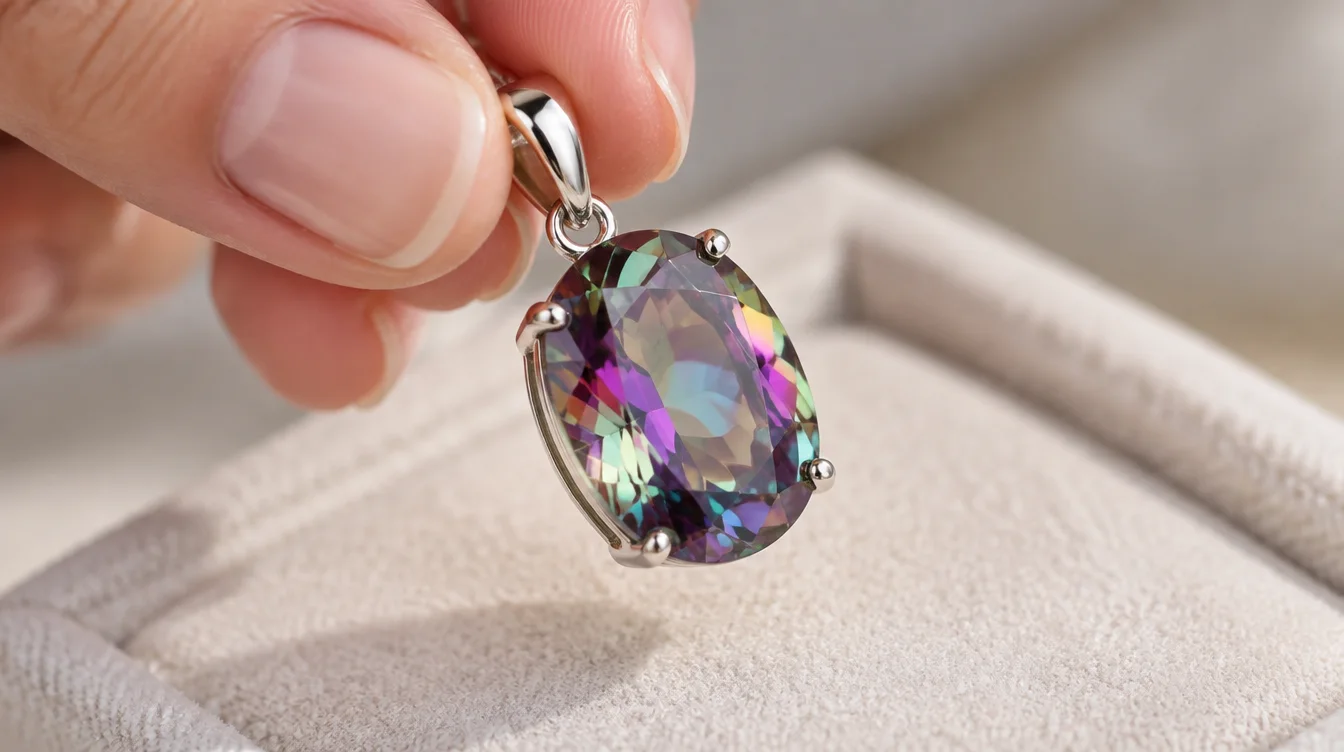
A simple buying question works for both gems: “What is the stone, and has its color been treated or coated?” Keep the written answer with the receipt. It helps you compare pieces now and care for yours later.
Which November birthstone handles wear better?
Topaz resists scratches better than citrine. Still, daily wear can damage either gem. On the Mohs hardness scale, topaz measures 8 and citrine measures 7. These care and material details come from GIA and Ecksand. Hardness describes scratch resistance, not how well a gem survives a knock.
That difference matters most for topaz. GIA says topaz has poor toughness despite its hardness. A sharp blow can chip or crack it. Citrine may show surface wear sooner, especially in a ring worn for hands on work.
Consider two ways to wear a birthday gem. A pendant worn at work and removed at night could suit either stone. A ring worn while carrying boxes or gripping tools faces more risk. Neither gem makes that habit safe. Taking the ring off matters more than its Mohs number.
For topaz vs citrine, treat the setting and your habits as part of the decision. A stone worn where it avoids knocks faces a different job from one worn on a busy hand. That leads to a useful way to compare actual pieces.
How should you compare two pieces in a shop?
Compare topaz and citrine under the same conditions, using the same questions for each. Start with appearance, then check identification, treatment disclosure, and care. This keeps a vivid photo or a familiar birthstone name from making the whole decision.
Look at the stone you would take home
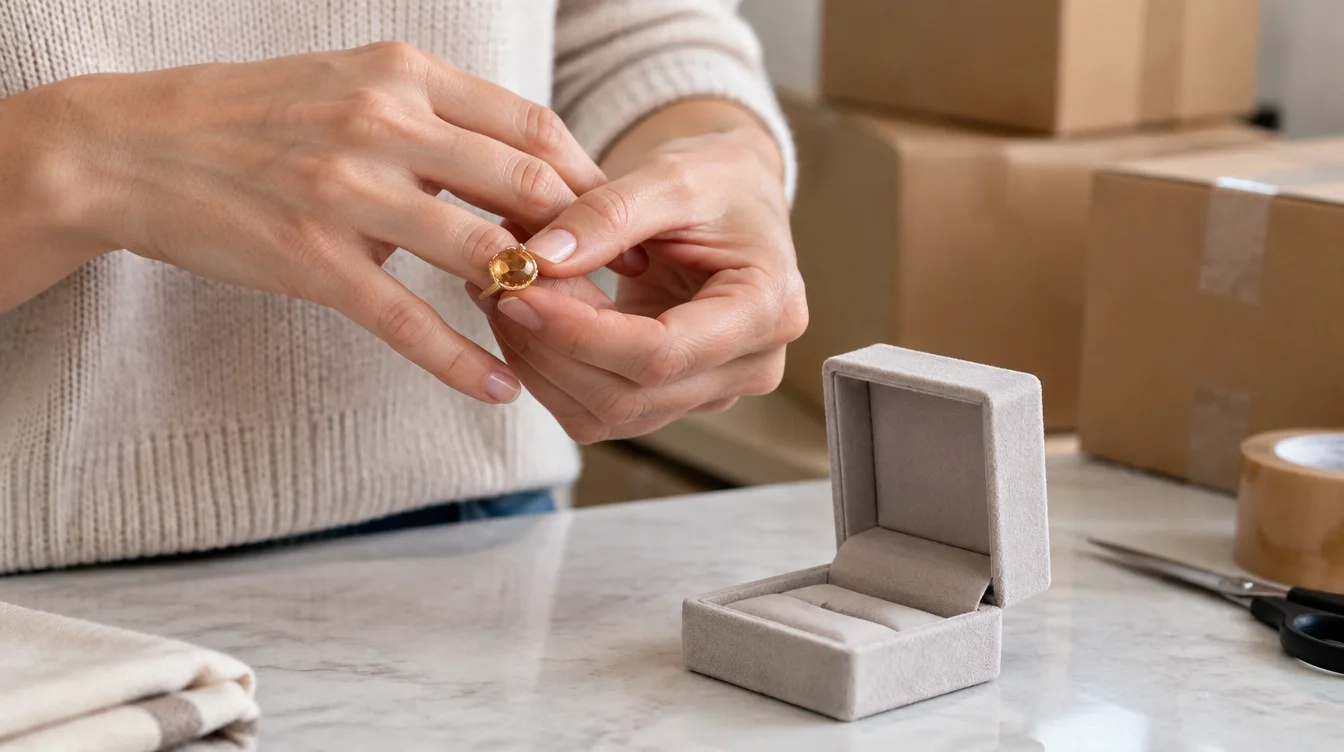
Check whether you like the gem in the light where you will wear it. Notice its tone, visible marks, and how the cut shows color across the stone. A large center area that looks much paler than the edges may bother you, even if the gem looks striking at first glance. Your own response to the individual stone is the point.
Compare the details in writing
Ask each seller for the mineral name and any known color treatment. If you are comparing prices, compare pieces with similar stone dimensions, metal, setting, and workmanship. A low price for a silver pendant does not tell you what the same gem would cost in a gold piece. Nor does a high price prove a stone is untreated.
When topaz makes more sense
Pick topaz when its particular shade wins you over, especially if citrine cannot offer that color. Accept that a harder surface does not cancel topaz’s risk of chipping after an impact. If you choose a coated topaz, follow the seller’s specific care directions.
When citrine makes more sense
Pick citrine if you want yellow or orange without seeking a particular topaz color. Compare several warm stones. Keep in mind that citrine may show surface wear sooner than topaz. If untreated color matters, ask for clear disclosure before buying.
This framework makes the choice personal without making it vague. Once you have chosen a stone, the right cleaning routine helps keep it looking good.
How do you clean and store each gem?
Clean gently with warm water, mild soap, and a soft cloth or brush. GIA recommends warm, soapy water for topaz. It warns against steam and ultrasonic cleaners. Sudden temperature changes can also damage topaz.
For anyone asking how to clean topaz and citrine jewelry, check the whole piece before it goes into water. An older setting, a loose stone, or another gem in the design may need different care. When you are unsure, ask a jeweler to inspect it first. Do not scrub a coated topaz, and avoid abrasive products.
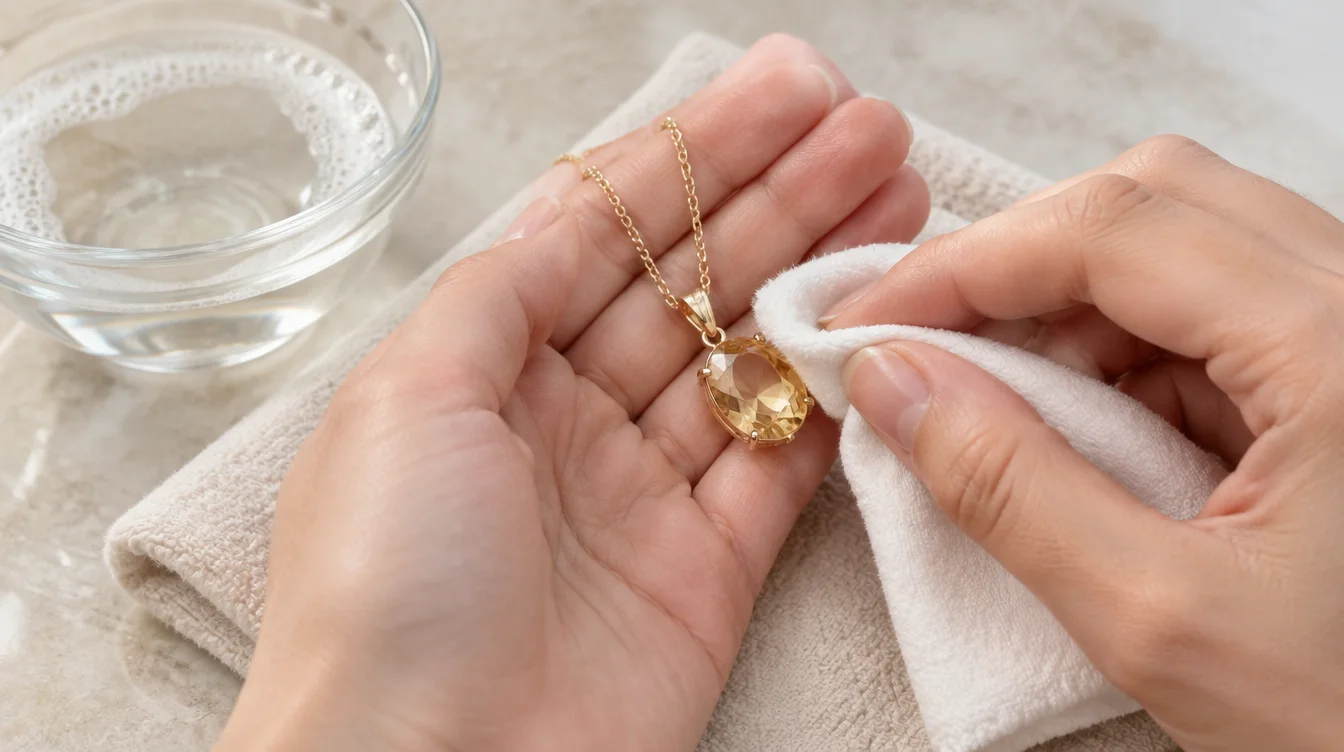
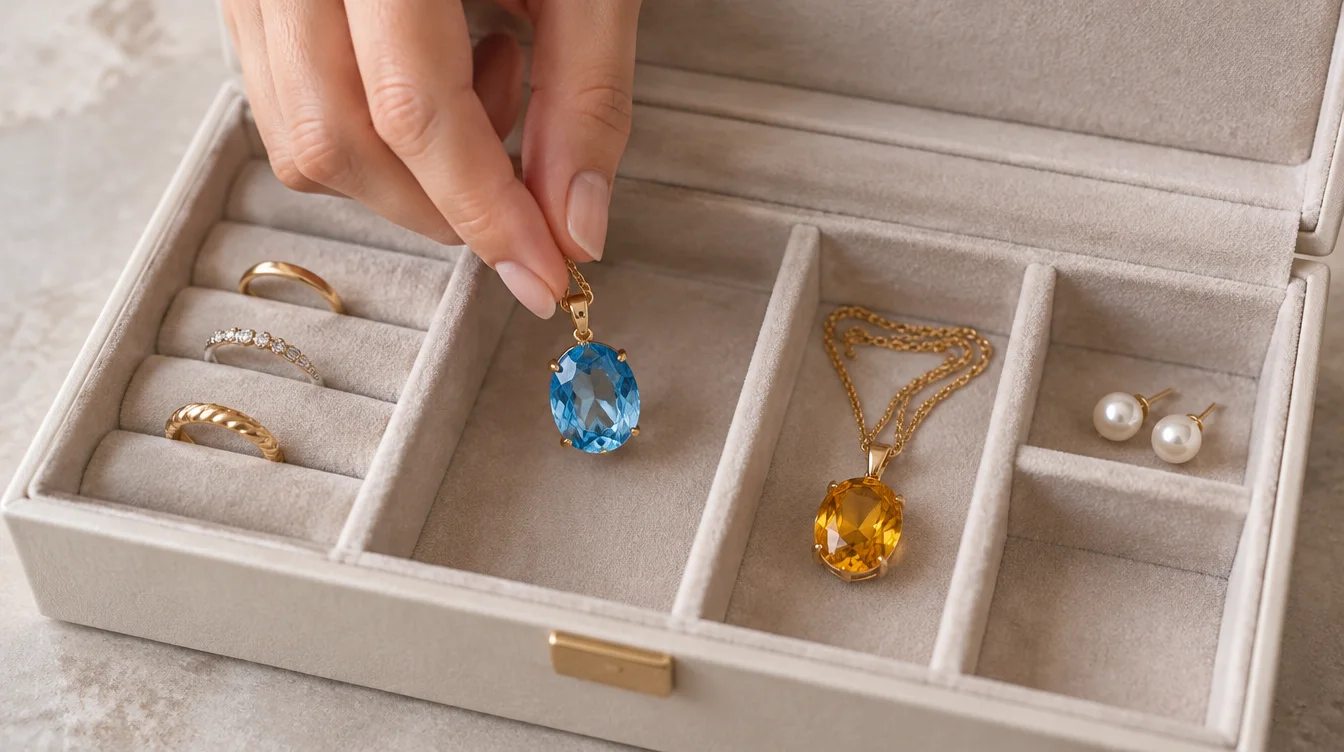
Store the pieces so their stones do not rub against other jewelry. Separate soft pouches or compartments are a simple answer. Take off either gem before work that might strike the setting, and keep it away from harsh cleaning products. If a piece looks cloudy after cleaning, stop rather than reaching for a stronger cleaner. The right next step is to check the setting and any disclosed treatment.
Care is practical, but November stones also carry a meaning that many buyers want to share.
What does a November birthstone symbolize?
The november birthstone meaning is a tradition, not a promise about what a gem will do. Topaz has been linked with strength and calm in historical beliefs. Citrine has also been associated with warmth and a calm temperament. GIA describes these ideas as beliefs held across different times and places, not proven effects.
That leaves room for a personal message. A golden gem might remind someone of a late autumn birthday or a favorite color. A blue topaz might suit a November born person who never wears yellow. Neither choice needs a claim about health, luck, or energy to feel thoughtful.
The meaning may help you give the piece, but practical questions still decide whether it is the right one. Here are the answers shoppers most often need before checkout.
Frequently asked questions about November birthstones
Both gems belong to November. Color, treatment, and wear may still affect your choice.
Can a blue topaz be a November birthstone?
Yes. Blue topaz is topaz, a November birthstone. Most blue topaz in jewelry has been treated for color. Ask for disclosure rather than assuming its blue is natural.
Does heat treated citrine count as a real birthstone?
Yes. Heat treated citrine is still a quartz gem sold as citrine. Ask how it got its color if that matters to you. Do so especially if the listing suggests the color is untreated.
How can I tell whether yellow jewelry contains topaz or citrine?
Color alone cannot tell you for sure. Ask the seller to name the gem in writing. For a valuable purchase, a qualified gemologist may help if its identity matters to you.
Why does november have two birthstones instead of one?
Birthstone lists have changed. Both topaz and citrine became accepted November choices. Their warm colors helped link them, but they are different minerals.
With those questions settled, your choice can rest on the piece you will actually enjoy wearing.
Choose the stone, not just the month
For topaz vs citrine for November birthstone jewelry, start with the color you want to see often. Then check the gem name, any known treatment, and the care the piece will need. Topaz is the stronger choice for color variety and scratch resistance, with a real need to avoid hard impacts. Citrine is the focused choice for warm yellow to orange color, with more attention needed to prevent surface wear.
If both pieces still appeal, view them in ordinary light. Choose the color you like best. Ask the seller to put the gem name and treatment disclosure on your receipt. You will know what you bought and how to care for it.