Why threadless earring pin replacement Might Be the Wrong Fix for a Loose Top
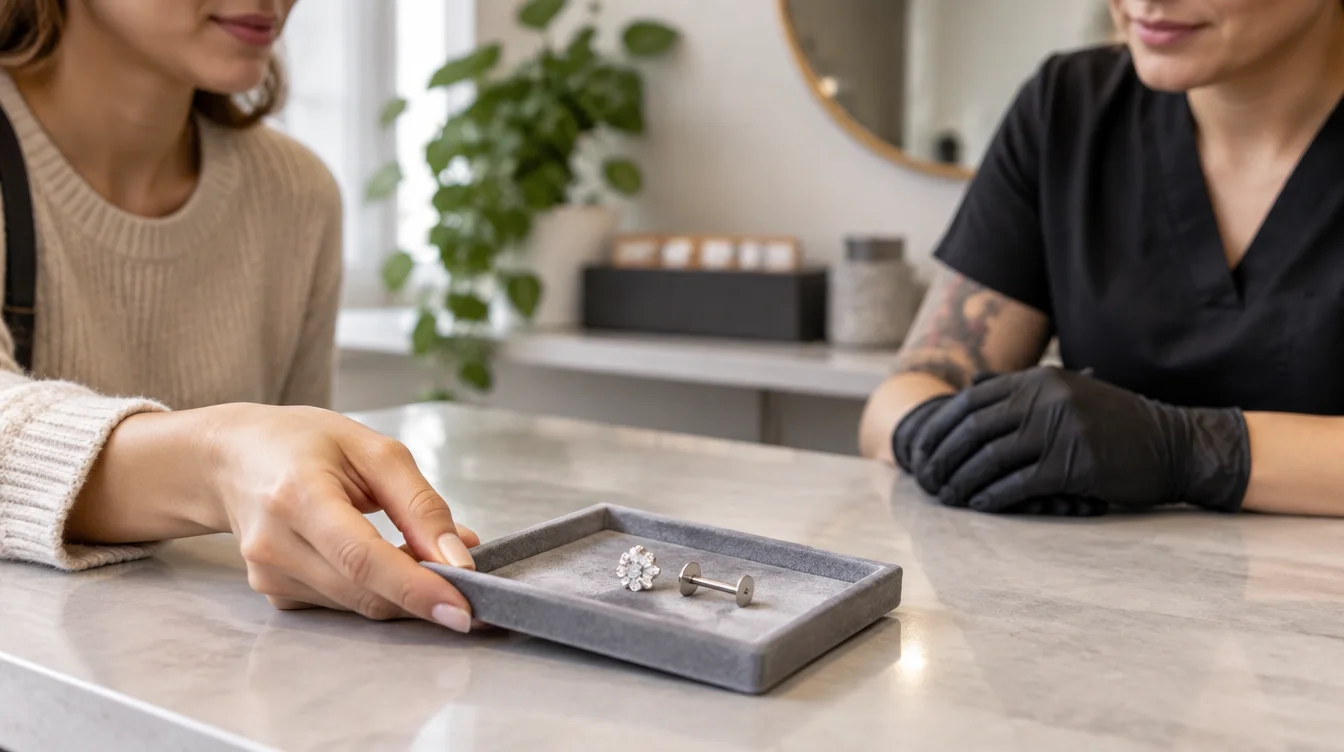
A threadless top that keeps falling out needs a fit check before you buy a new part. Weak pin tension, a mismatched post, or damage may be the cause. Threadless earring pin replacement may make sense if the pin is at fault. If it looks cracked or the top needs force to seat, stop wearing it. Ask a professional piercer to check both pieces.
Why does a threadless top fall out?
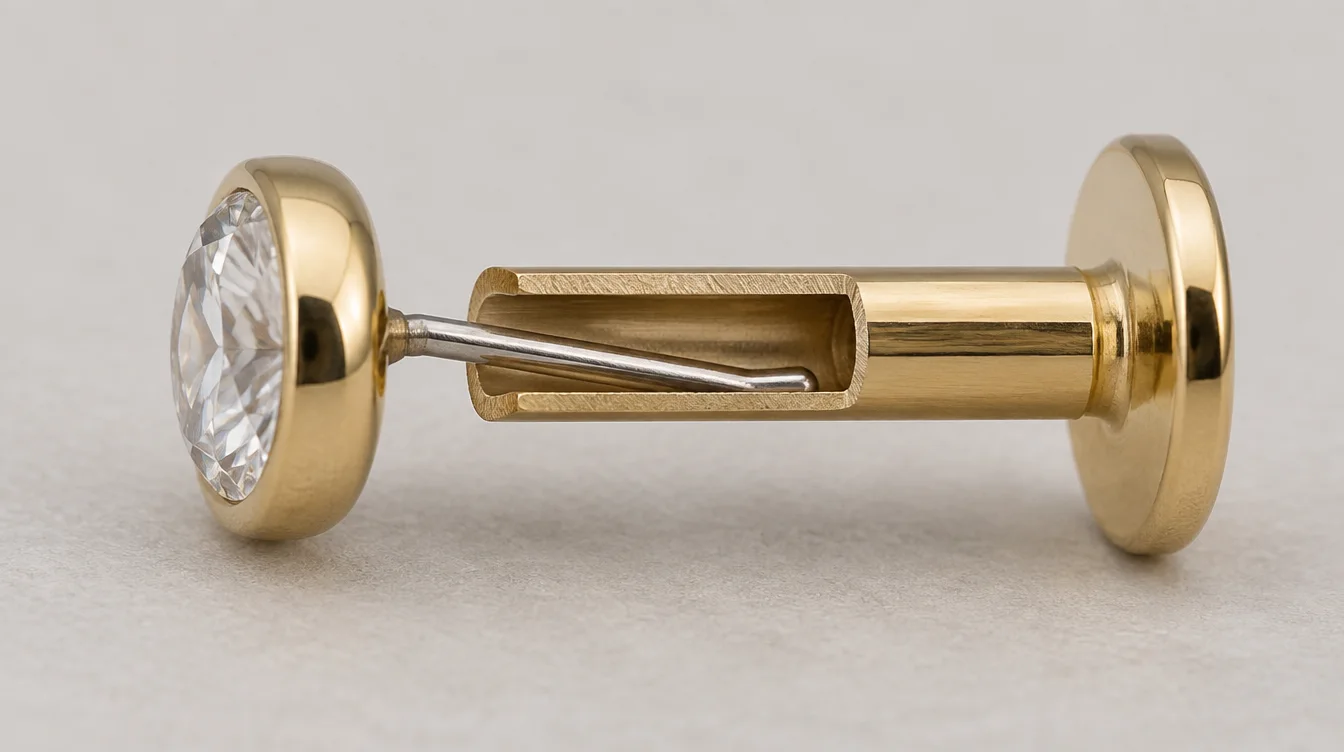
A threadless top stays in place because its slim pin presses against the inside of a hollow post. A slight bend creates that pressure. If the bend gives too little grip, the top can slip free; if the parts do not fit each other, bending alone may not help. Oufer’s explanation of the connection describes both causes.
This is not the same as a conventional stud with a push back. On that earring, a backing grips the post behind your ear. On a threadless earring, the decorative top’s pin grips inside the post. Tightening a butterfly back will not solve a loose threadless top because there is no butterfly back to adjust.
Notice when the top comes free. Does it slide out during a gentle check, or only after hair or clothing catches it? A snag can pull apart a connection that otherwise feels firm. A top that slips out with little resistance points more strongly toward the pin or post fit. That first observation helps narrow the next check.
When should you check threadless earring pin tension?
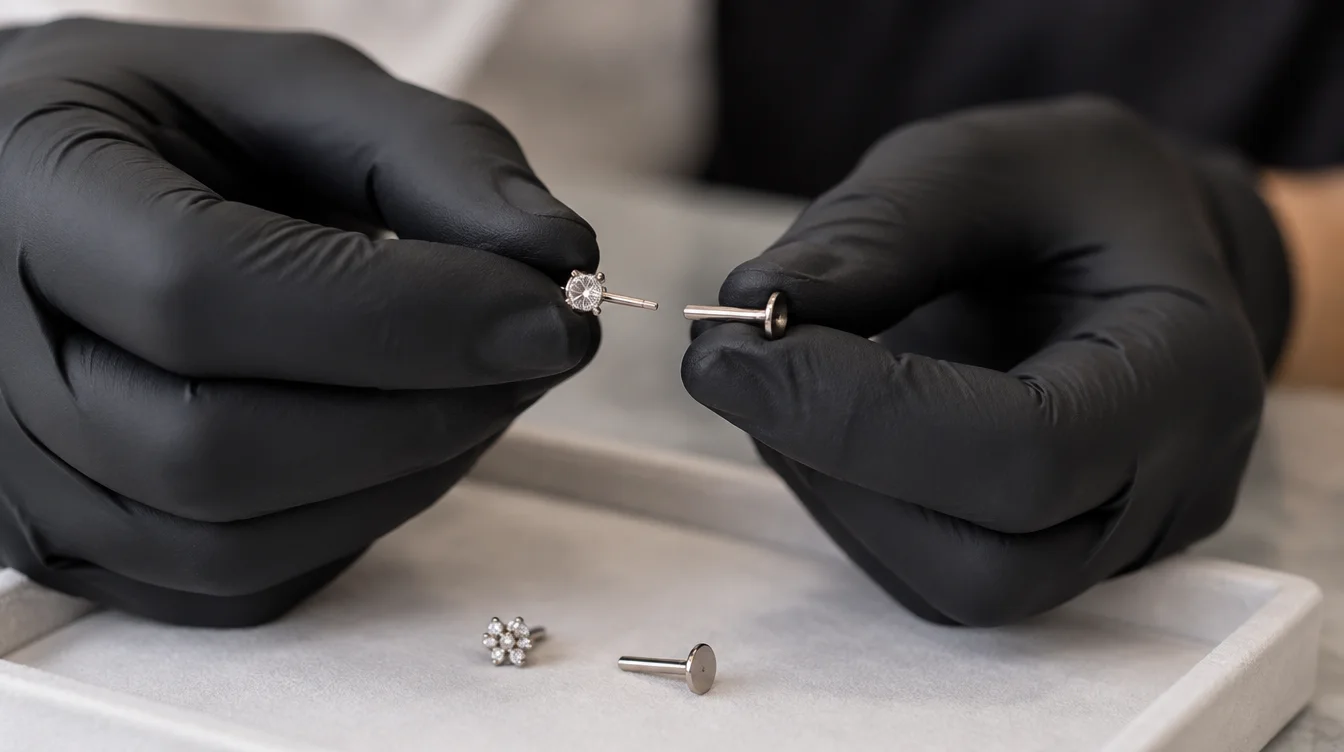
Check threadless earring pin tension when the correct top and post appear undamaged, yet the top slides out too easily. The bend should give the pin a secure grip without making the top hard to insert. A pin can arrive nearly straight, or its fit can change after it has been adjusted for another post.
What a safe fit feels like
With the jewelry out of your ear, the top should meet some resistance as it enters the post. It should then seat fully and stay put through a gentle pull. Do not treat a painful push or a top that stops halfway as proof of a safer fit. Too much bend can make insertion difficult and may put stress on the pin.
People searching for how to tighten threadless earrings often expect a screw to turn. There is none. The adjustment is a small change to the pin’s bend, followed by a fit test. Pierced Owl describes that gradual approach, while Identity Body Piercing recommends having a piercer make the adjustment. That difference matters most when the top is valuable, the piercing is healing, or the same pin has already been bent several times.
How much adjustment is too much?
Advice on how to bend threadless jewelry pin parts agrees on one point: make tiny changes, then test. Oufer advises placing the pin partway into the post. Bend the exposed pin, not the joint where it meets the decorative top. Repeated bending at that joint risks damage. A sharp crease is not the slight curve the connection needs.
If you cannot tell where the bend belongs, let a piercer handle it. Knowing when to stop is as useful as knowing how to tighten threadless earrings. When a careful adjustment fails to hold, check whether the parts belong together before bending again.
Are threadless earring tops universal across posts?
The short answer to “are threadless earring tops universal?” is no. Many tops work with a range of threadless posts, but fit is not guaranteed across every maker or size. Pin thickness, the post’s inner opening, and the condition of both parts affect the connection. A decorative top meant for a threadless post will not fit a conventional earring back.
Gauge describes the thickness of the post that passes through the piercing. It does not, by itself, confirm the size of the opening that grips the pin. Oufer notes that posts sold in 20G, 18G, and 16G can need different pin bends. Before buying a replacement, ask the seller or piercer which top and post are meant to pair.
A useful swap test
A swap test can help narrow the fault, but it cannot prove compatibility. If you have another known compatible top and post, ask a piercer to test each top in each post outside your ear. If one top slips in both posts, its pin needs a closer look. If both tops slip in one post, that post may be at fault.
Do not force a test pair just because the pieces look alike. Instead of asking “are threadless earring tops universal?” ask whether this pin fits this post with a secure, comfortable hold. That answer helps you choose between adjustment and replacement.
When is threadless earring pin replacement the right call?
Threadless earring pin replacement is worth discussing when the pin is cracked, sharply creased, loose at its attachment, or unable to hold after a suitable fit adjustment. A broken threadless earring pin is not a tension problem to solve with one more bend. Set the top aside and have a piercer or the maker assess it.
The pin may be fixed to the decorative top, so replacing the top may be more practical than replacing the pin alone. Repair options depend on how that particular piece was made and what its seller supports. Do not assume a jeweler can swap its pin like the straight post on a standard stud. Those are different parts with different jobs.
Replace the top or the post?
Choose the part that failed, not the part that is easiest to order. If a pin is damaged and the post tests well with a compatible top, ask about threadless earring replacement tops. If several suitable tops feel loose in one post, have that post checked instead. A worn or poorly matched post will not be fixed by buying more decorative ends.
That check may save you from buying the wrong part. A broken threadless earring pin needs inspection before you order: visible damage may not be the only fit issue. Bring the complete set so the decision rests on the connection, not a photo alone.
What should you bring to a piercer for a fit check?
Bring the loose top, its post, and any packaging or maker details you still have. If you own a second top that you know fits that post, bring it too. Tell the piercer whether the top slips out at rest, after a snag, or only after you change jewelry. Mention any past pin adjustments.
Ask for three separate checks: pin condition, grip inside the post, and whether the post length suits your piercing. Identity Body Piercing lists snags, installation, and post fit among reasons jewelry can come loose. If the piercing is healing or sore, leave the jewelry change to a professional rather than repeatedly removing the post yourself.
A clear account of the problem helps more than asking for threadless earring replacement tops right away. Once the parts are checked, you can choose the smallest sound fix and avoid forcing an uncertain fit.
Frequently asked questions
These quick answers cover the choices that remain after a basic fit check. If the jewelry is damaged or the piercing is irritated, a piercer should assess it in person.
How do I know if the pin is too loose?
If the top slides out of its matching post with little resistance while both pieces are out of your ear, threadless earring pin tension may be too weak. A piercer can check the bend and rule out a mismatched or worn post.
Can I bend the pin while wearing the earring?
No. Advice on how to bend threadless jewelry pin parts calls for adjustment outside the piercing. Working on a tiny pin while it is in your ear makes it harder to control the bend and spot damage.
What if the top will not push all the way in?
Stop rather than forcing it. The bend may be too strong, or the top and post may not fit together. A piercer can check both before any adjustment.
Does a loose top always mean I need a new one?
No. A small tension adjustment may restore a secure fit when the pin and post are sound. A broken threadless earring pin, however, calls for an inspection and possibly a new top.
Choose the fix before you buy the part
A top that falls out is a reason to check the connection, not to keep pushing it back in. Start with the fit. If a piercer finds sound, compatible parts, a small adjustment may be enough. If the pin is damaged, ask the maker or piercer which replacement fits your post. Bring both pieces to a piercing studio and get the hold checked before you wear the earring again.