Why tension vs tension style rings can look identical from the front
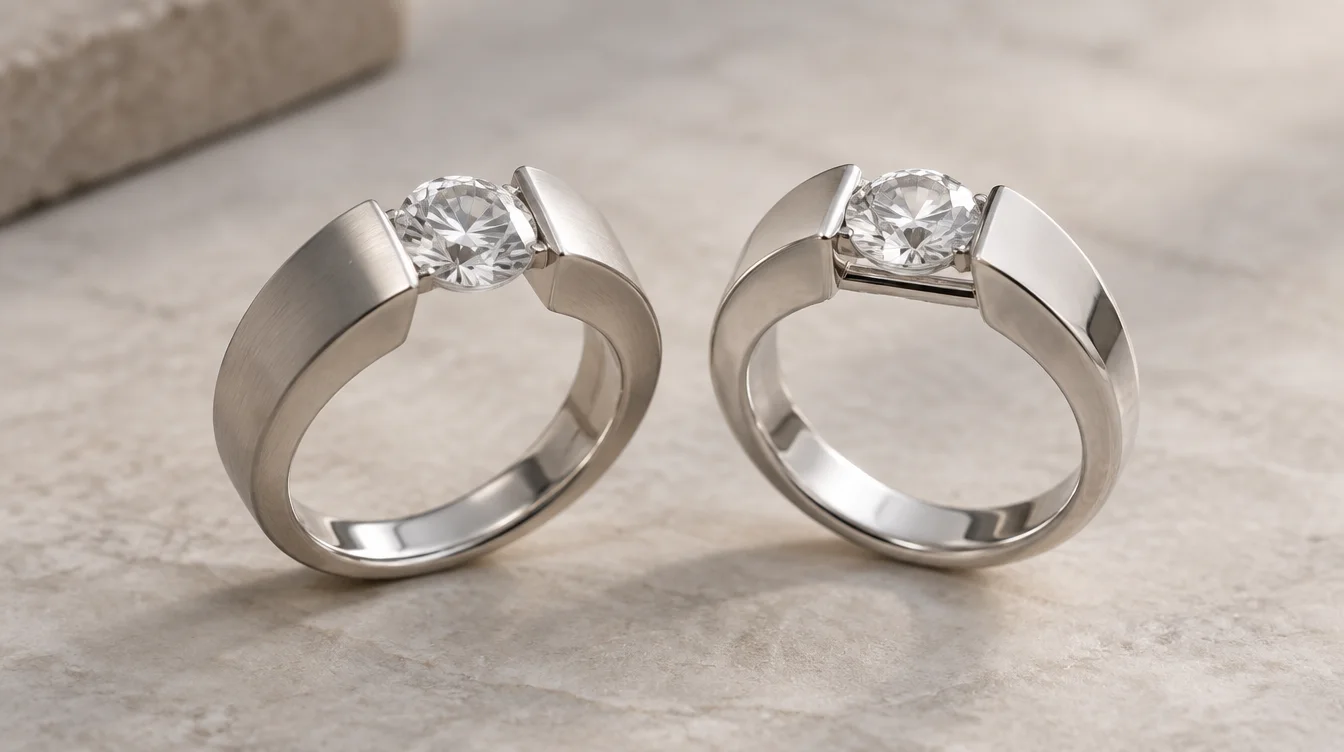
True tension rings grip the center stone between two engineered metal ends. Tension style rings give a similar floating look but add support. To tell them apart, check the side and underside, then ask what holds the stone. A photo may not settle it if the support sits behind the gem.
What separates tension vs tension style rings?
The difference is the load path. True tension relies on pressure from the band. Tension style uses another part of the mounting to help hold the stone. From above, both may show an open gap with little visible metal. That is why the names get mixed up.
Ask one question: what would hold the stone if the metal behind or beneath it were removed? In a true tension setting, the shaped band ends hold the stone. In a tension style design, a bridge, rail, prong, or partial bezel may do some or all of that work. The jeweler should be able to name each part and explain its role.
Do not judge by how much light you can see around the gem. An open gallery can make a supported stone look suspended, and a well hidden bridge may disappear in a front facing photo. The construction becomes clearer once you know how true compression works.
How does a true tension setting hold the stone?
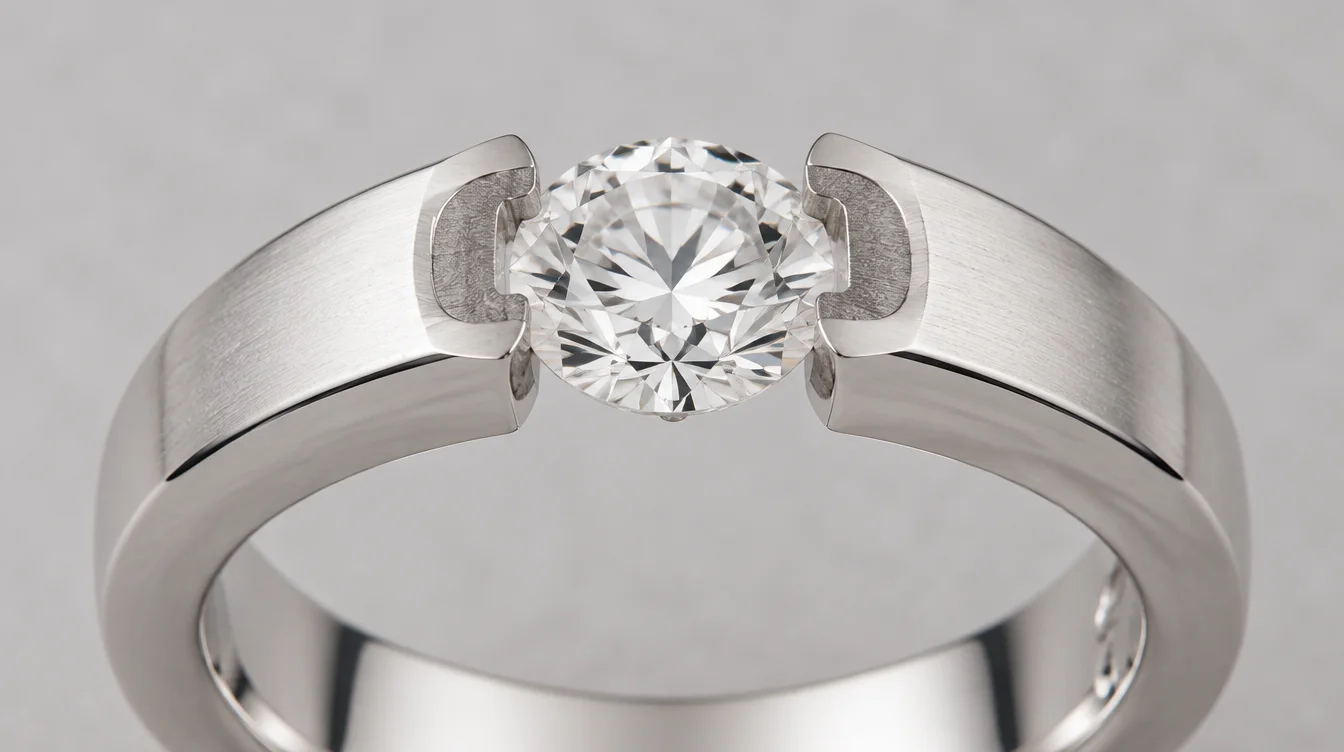
A true tension setting grips the stone at carefully cut seats on opposite sides of its girdle. The girdle is the narrow edge around the stone’s widest point. The band presses inward to keep the stone seated between its ends. The seats matter as much as the pressure. They give the girdle a precise place to rest instead of leaving it against flat metal.
That is the practical answer to how do tension rings work. The metal must keep its spring force, and the seats must fit the particular stone. Ronora’s explanation of true tension construction describes compression and fitted grooves as the holding system. Cookson Gold’s setting guide also notes that misshapen metal can reduce tension and raise the risk of a loose stone.
Neither fact gives shoppers a reliable way to test spring force at home. Pressing the band cannot confirm it. Never try to move the stone. Instead, look at the structure: where are the seats, and does other metal support the gem? That question leads to the most common lookalike.
What holds a tension style stone instead?
A tension style ring has the open look but adds conventional support. The design varies. A narrow bridge may cross beneath the stone. Metal may also wrap partway around its edge. Some rings have small prongs that are hard to see from above. The band ends can frame the gem without being its only support.
That distinction matters when comparing tension setting vs tension style. A bridge is not a flaw or a secret shortcut. It is a different mounting choice and deserves an accurate name. Ronora distinguishes the designs by what holds the stone: compression alone, or added support from a bar or partial bezel. A product tag still cannot tell you how a particular ring was built.
Picture two round diamonds photographed from above. Both sit in a gap between broad band ends. Turn one ring sideways. You see open space beneath the diamond, apart from its two side seats. Turn the other, and a slim rail appears below the pavilion, the pointed lower part of the stone. That rail changes the answer, though the front views look alike.
The same check applies to tension style engagement rings shown only in studio photos. Attractive images tell you what the ring looks like, not which component holds its center stone. Ask for a side view and an underside view before drawing a conclusion.
How can you inspect a ring without guessing?
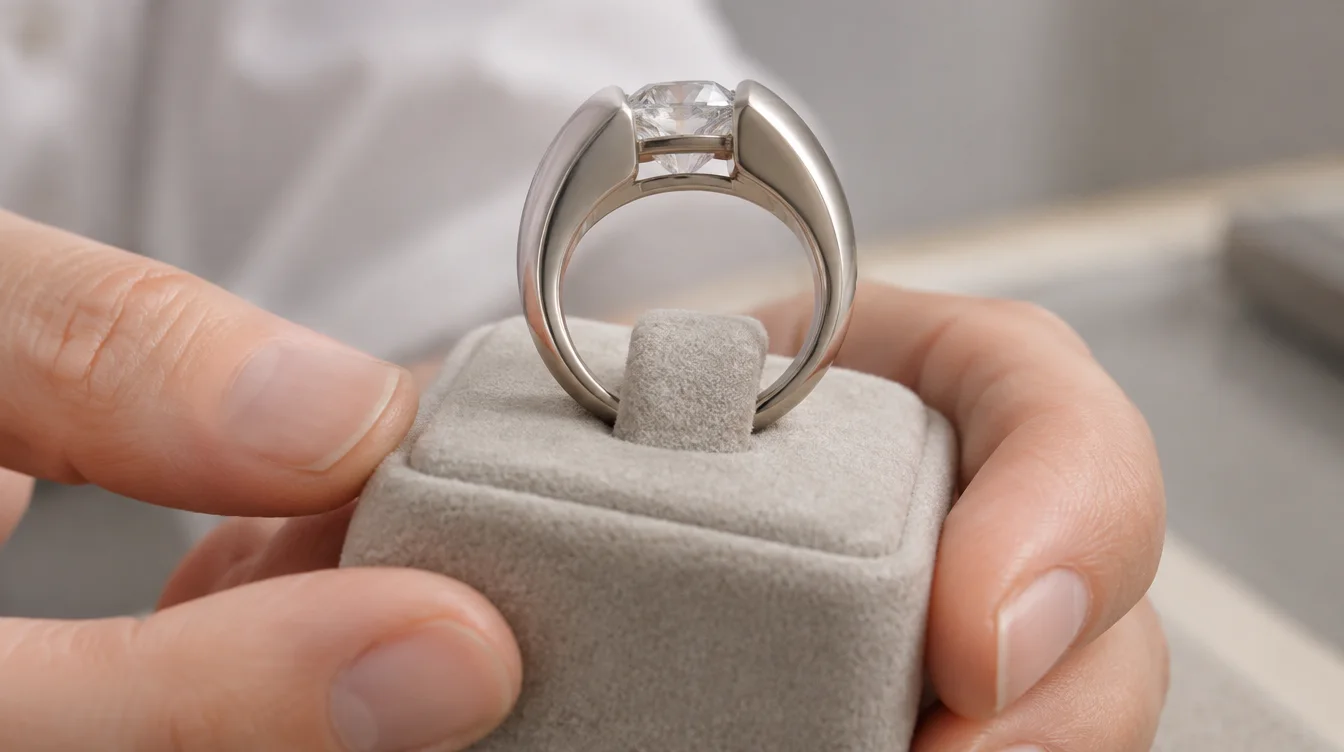
To work out how to identify a true tension setting, get views from above and from the side. Look through the finger opening too. Check for metal crossing the gap beneath the stone. Then check the gem’s edge for a partial rim or small prongs. Use bright, even light. Do not push, tap, or twist the setting.
Check the stone’s two contact points
In a true tension setting, the key contacts are fitted seats at opposite band ends. You may see a small metal lip on each side of the girdle. A hidden bridge is harder to spot. Change your viewing angle rather than treating those two contacts as proof. A close side photo can help, though reflections may make metal blend into the stone.
What an open side view can tell you
Clear space beneath the stone supports a true tension claim, but it does not prove one. A rail could sit farther back, outside the photo’s focus. Ask to see the full underside as well. If the ring is online, request an unedited video that slowly turns it through a full view.
What a visible bridge tells you
Metal joining the band ends under the stone means the mounting has added structure. That is a strong reason to question a claim that compression alone holds the gem. It does not tell you exactly how much of the stone’s security comes from that bridge, so ask the maker to explain its job.
This inspection gives you evidence, not a final verdict. For tension vs tension style rings, a jeweler’s construction details should agree with what you can see. If the photos and the explanation do not match, pause the purchase and ask for a clearer view.
What should you ask the jeweler?
Ask which metal parts retain the center stone and whether the ring has a bridge, rail, prongs, or bezel contact. A clear answer should identify the stone’s seats and any added support. “It looks like tension” describes the design, not the construction.
Next, ask whether the band was made for that specific stone and finger size, and who can inspect the setting later. For a claimed true tension ring, ask what the maker would check after a hard knock. If a seller cannot explain the mounting or provide a side view, treat “true tension” as unconfirmed rather than assuming either design.
To compare two listings, note what each photo shows and each description claims. Then record what each jeweler confirms in writing. If all three point to compression at two fitted seats with no added support, the true tension claim is clearer. If you spot a bridge, ask the seller to call the ring tension style and explain what the bridge does.
Keep that reply with your receipt. It gives a future jeweler a better starting point than a product name alone. Once construction is clear, the remaining questions are about care and possible alterations.
What changes once you know the construction?
The verified mounting tells you whom to ask about inspection and repair. If you wonder are tension set rings safe, the answer depends on the ring, stone fit, condition, and maker’s skill. No setting is immune to damage. Cookson Gold warns that deformation can reduce a tension setting’s grip.
For daily wear, ask the maker what signs should prompt an inspection. A stone that seems to move, a changed gap, or a hard impact deserves a jeweler’s attention. Do not try to tighten the band yourself. A tension style ring needs care too: its bridge, prongs, or rim must remain sound.
Shoppers also ask, can tension set rings be resized. Changing a true tension band may affect its engineered grip. Do not assume a routine sizing job is possible. Ronora says its true tension designs need a rebuild rather than ordinary resizing. A tension style ring may offer more options. Even then, the answer depends on its support and the size change needed.
Those limits are worth knowing, yet they should not distract from the first task. Confirm what holds the stone before you accept claims about safety, care, or future changes. The short answers below can help you check a listing quickly.
Common questions about tension construction
The questions shoppers ask most often come down to what they can see and what the seller can confirm.
How do tension rings work if there are no prongs?
True tension rings use pressure from the band and fitted seats at the stone’s girdle. A ring with a hidden rail may look similar, but that added part makes its construction different. Ask the jeweler to identify every point that holds the gem.
How can I tell if a bridge is hidden?
Look through the finger opening and request side and underside views. A bridge may be obscured by the stone from above. If the photos still leave doubt, ask the jeweler for a direct construction description.
Can tension set rings be resized later?
Do not count on routine resizing for a true tension ring. A change to the band can affect its grip. Tension style engagement rings may allow alterations, but the maker must assess the support and requested size change.
Does a floating look mean the setting is true tension?
No. A floating look describes the view, not the holding method. To settle tension setting vs tension style, check beneath the stone and ask whether compression alone retains it.
Once those answers are in hand, you can choose the look you like without guessing at the construction.
Choose the ring you can clearly identify
Neither construction wins on appearance alone. True tension suits buyers who want an engineered band to hold the stone. They should also be ready to discuss care with the maker. Tension style suits buyers who like the open look but prefer added support. Start with an accurate account of the ring’s construction.
Before buying, request side and underside views. Ask for a written answer to one question: what holds the center stone? That check turns tension vs tension style rings from a confusing label into a choice you can make with confidence.