Why Tantalum Ring Scratch Removal Can Make a Small Mark Look Worse
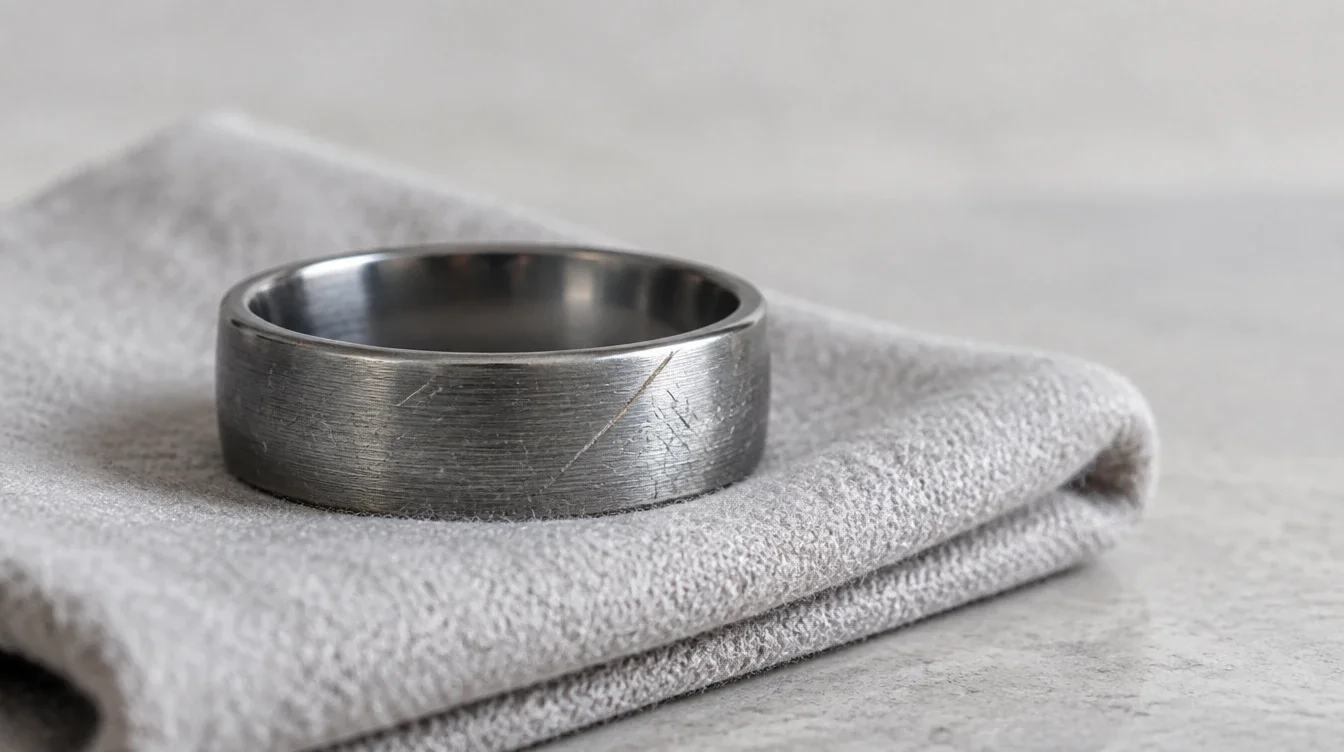
Leave light marks on a tantalum wedding ring if they do not bother you after cleaning. Ask about professional tantalum ring scratch removal if a mark catches on fabric or feels rough on your skin. The same goes for a mark that spoils a finish you want to keep. Your choice depends on the mark’s depth, the finish, and any darkening, stones, or inlay.
When is tantalum ring scratch removal worth considering?
Consider tantalum ring scratch removal if a mark hurts or still bothers you after a gentle clean. A faint line seen only in bright light differs from a gouge you can feel. Neither needs automatic repair. A jeweler should assess the deeper mark, though.
If you are asking, “do tantalum rings scratch,” the answer is yes. Tantalum resists everyday wear, but it is not scratchproof. Alpha Rings’ tantalum care guide says light marks show more on polished bands than brushed ones. A jeweler may also be able to refinish a deep gouge. Brushed finishes are generally easier to restore.
There is no rule that a wedding band must look new forever. If a mark is smooth, stable, and easy to ignore, leaving it alone is a sound choice. If it snags a sweater or irritates your finger, the question changes from appearance to comfort. Start by finding out what sort of mark you have.
Is the mark a scuff, a scratch, or a gouge?
A scuff changes how light reflects from the surface. A deeper scratch or gouge leaves a groove you may feel. This helps you describe the mark. It does not tell a jeweler how much work your ring needs.
Look at the ring in ordinary light
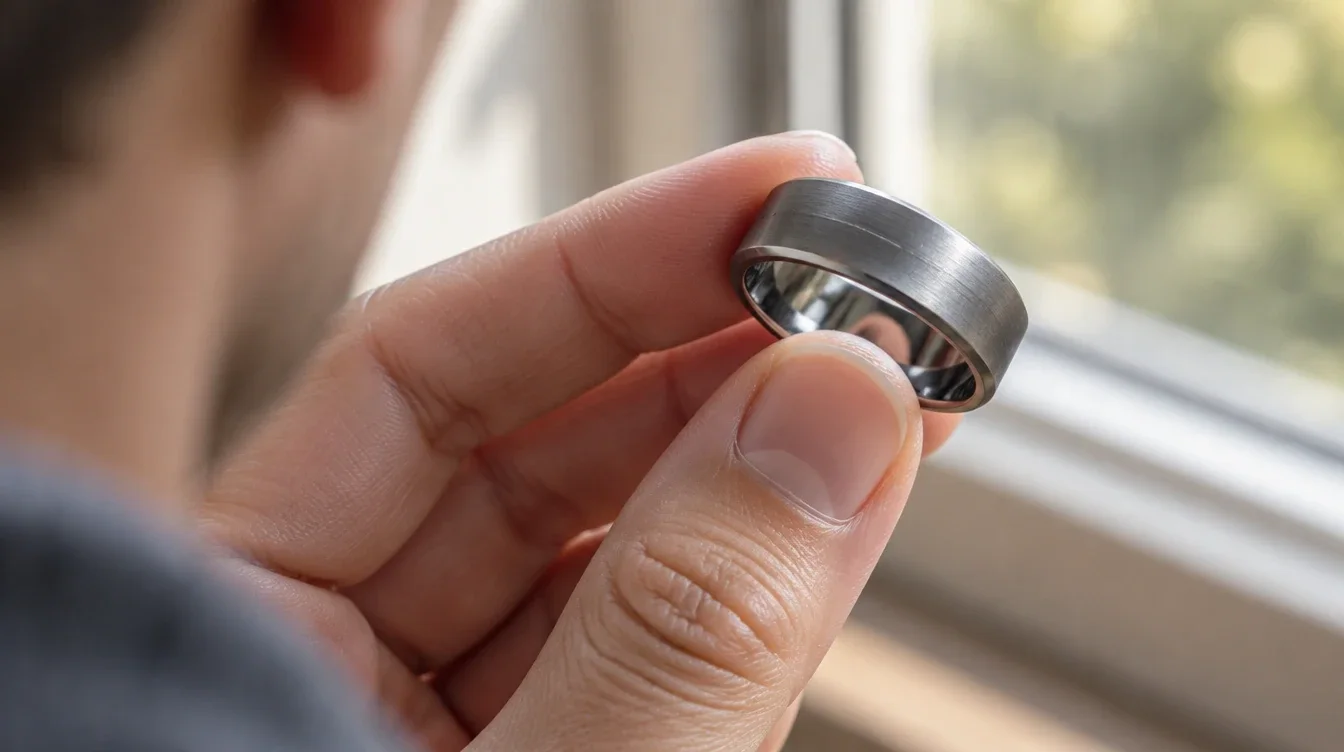
Wipe the band with a clean, soft cloth and turn it near a window. A polished area may look dull where it has rubbed against something. A brushed area may look oddly shiny. Neither change means the metal is cracked. A jeweler’s guide to metal finishes describes scuffs as visible surface changes and deeper marks as ones you can feel.
Check the same spot after washing and drying the ring. Dirt caught in a groove can make it look darker and deeper. On a textured band, residue can also make the whole finish seem uneven. Cleaning will not erase a scratch, but it gives you a fairer view of one.
Check for a raised edge or a snag
Run a fingertip gently across the mark. Do not press into a sharp edge. Does it catch on clothing or feel rough against the next finger? Is there a new dent near a stone? If so, treat it as more than a cosmetic mark. A jeweler should inspect the band and any setting before polishing.
Take a clear photo before seeking service. Show the full ring and a close view of the mark in plain light. Those images help you explain what bothers you and compare the finish afterward. Next, clean the ring safely so residue does not drive the decision.
How should you clean a scratched tantalum ring first?
Clean a scratched tantalum ring before you decide on refinishing. Use mild soap, lukewarm water, and a soft cloth. If you need to know how to clean a tantalum ring with an inlay, ask its maker first. Wood, meteorite, carbon fiber, adhesive, and gemstones may need different care than a plain band.
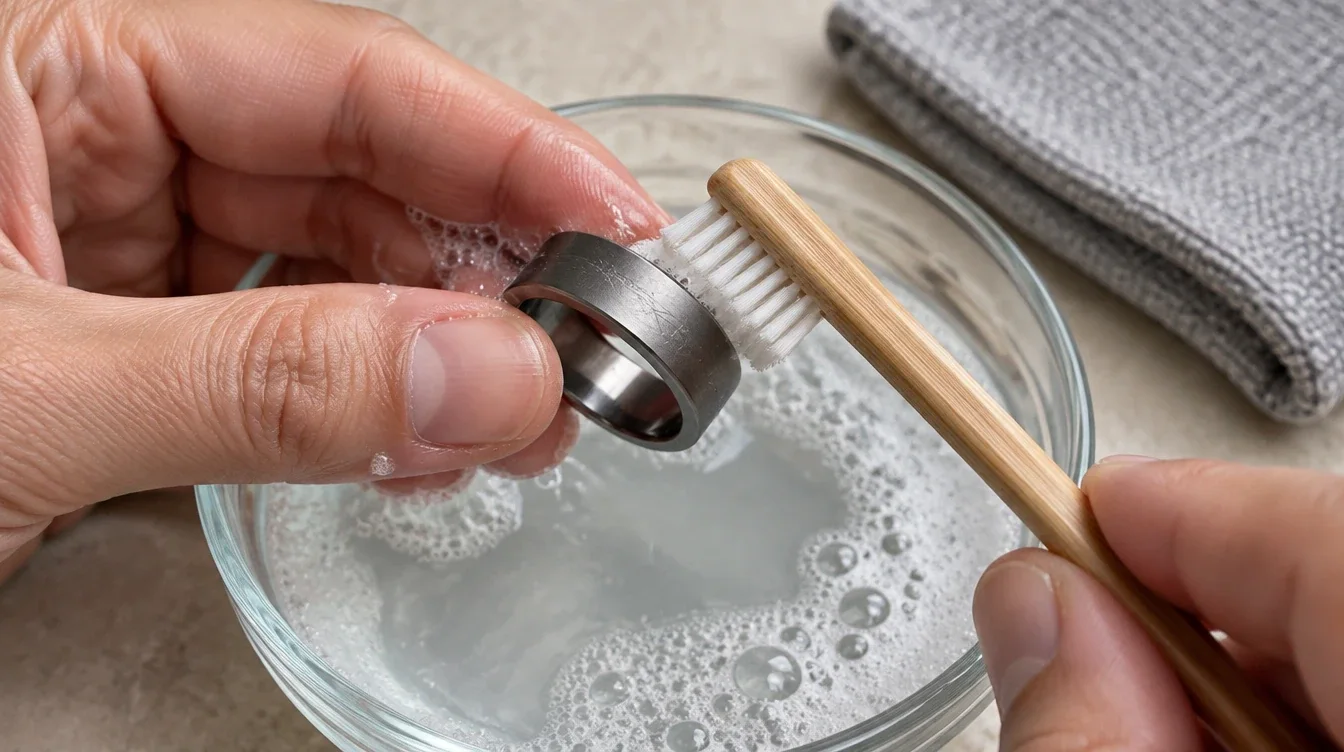
For a plain band, use a little mild dish soap in lukewarm water. Gently work away visible residue with a soft brush, then rinse and dry the ring with a lint free cloth. Keep the brush light around engraving or texture. The supplied tantalum care advice makes the distinction clear: cleaning removes buildup; polishing changes the surface.
Skip toothpaste, steel wool, rough pads, and polishing compounds. They can add fine marks or alter the finish you wanted to save. Do not assume an ultrasonic or steam cleaner is safe for a ring with an inlay, even if the tantalum itself tolerates cleaning well. For a mixed material band, the least durable component sets the care limit.
Once the ring is dry, look again at the problem spot. If the dull patch is gone, you needed cleaning, not repair. If the line remains, its finish matters as much as its depth.
Why does the original finish change the repair plan?
After treating a mark, a jeweler must match the original finish. A polished band needs an even shine. A brushed band needs an even texture and direction. A ring with both finishes takes more care. Work on one area must not change the other.
Natural tantalum and ordinary surface wear
Natural tantalum has its own grey tone rather than a white gold style surface plating, according to Anthony Alferev’s description of its untreated tantalum bands. That describes those rings, not every product sold as tantalum. Some bands include added darkening, coatings, or contrasting materials. Ask what was used on yours before anyone buffs it.
You may hear ordinary wear called a tantalum ring patina. Fine marks can change the ring’s sheen over time. That does not prove the ring has a removable coating. Nor does it mean every dark or light patch will blend in. Compare the worn area with one that sees less contact, such as the inside edge.
Darkened surfaces and inlays
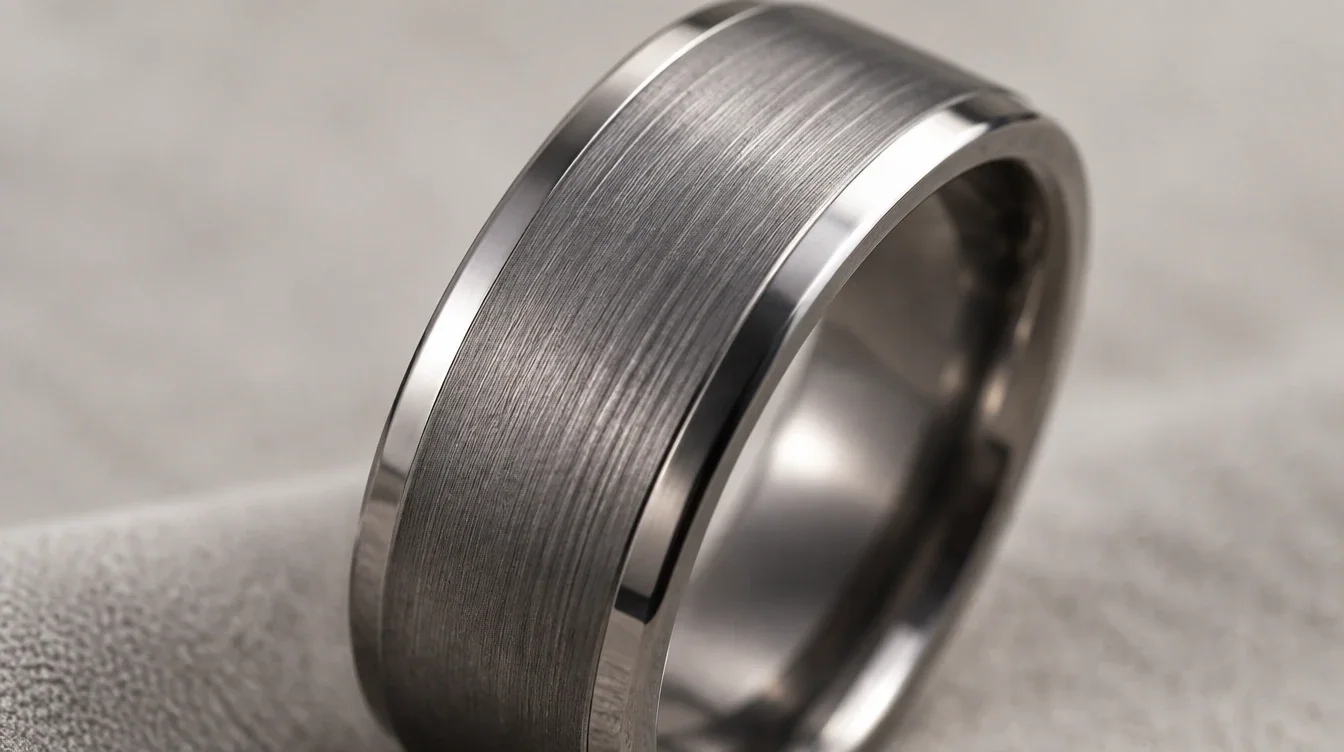
A darkened ring needs more than “we can polish it.” Ask where its color comes from: the metal, a surface treatment, or another material. Could polishing reveal a different shade? Can the original look be restored? An abrasive test is risky without those answers.
An inlay adds another limit. A polishing wheel near wood, meteorite, carbon fiber, or a stone setting may affect more than the tantalum. Ask the maker to name each material and approve the method. Then decide if the marks are worth keeping.
When should you leave the scratches alone?
Leave smooth, shallow marks alone if the ring feels good and you can accept how it looks. That choice makes sense when marks spread evenly across a band worn daily. Repeated work on each new line can change the ring without keeping it spotless for long.
A well worn finish may appeal to you, but you do not have to like it. The term tantalum ring patina describes a softer look that may develop with use. It is no reason to dismiss a mark you dislike. View the band in your usual light, not only under a phone flashlight.
Picture a plain brushed band with a faint line across its outer face. After cleaning, the smooth line blends into the texture. Leaving it alone avoids changing the rest of the finish. Now picture a deep edge scrape that catches a shirt cuff. That ring merits a professional look, even if you welcome other signs of wear.
Waiting is also reasonable when you are unsure how the ring was made. Keep wearing it only if the mark is smooth and the ring has no loose parts or uncomfortable edge. For damage that affects comfort, ask what professional work can achieve.
Can tantalum rings be polished or refinished?

Yes, some tantalum bands can be polished or refinished. The result depends on the ring. To answer “can tantalum rings be polished,” check the mark’s depth, finish, and nearby materials. A jeweler may improve a gouge but not remove it fully.
HELMUT The Jeweler’s repair overview distinguishes light buffing from deeper polishing. It says matte finishes may also need matching texture. Its jewelers work on tantalum, but shops may use different methods. Not every band can be fully restored. Ask a professional to assess yours.
Tantalum ring refinishing should start with the result you want. Say whether you want the original brushed texture, an even polish, or just a rough edge made comfortable. Those requests are not interchangeable. Removing enough metal to level a deep groove may affect the band’s profile; softening the edge may leave a visible line.
Do not try to match the finish with sandpaper at home. One uneven pass can turn a local mark into a broad patch. That patch may be harder to blend. Professional work makes sense when the problem is clear and the jeweler can explain its limits. Get those limits in writing before booking.
What should you ask before handing over the ring?
Before approving tantalum ring scratch removal, ask the maker or jeweler to identify the whole ring. Ask them to describe the planned work. Name the finish, mark, and result you would accept. “Please make this edge smooth without changing the dark outer face” is clearer than “make it look new.”
Ask whether the band is natural or darkened tantalum. Point out any inlay, engraving, stones, or contrasting finish. Can the shop treat only the marked area? Or must it treat the full band to keep the finish even? Ask what may remain visible, especially if the groove is deep.
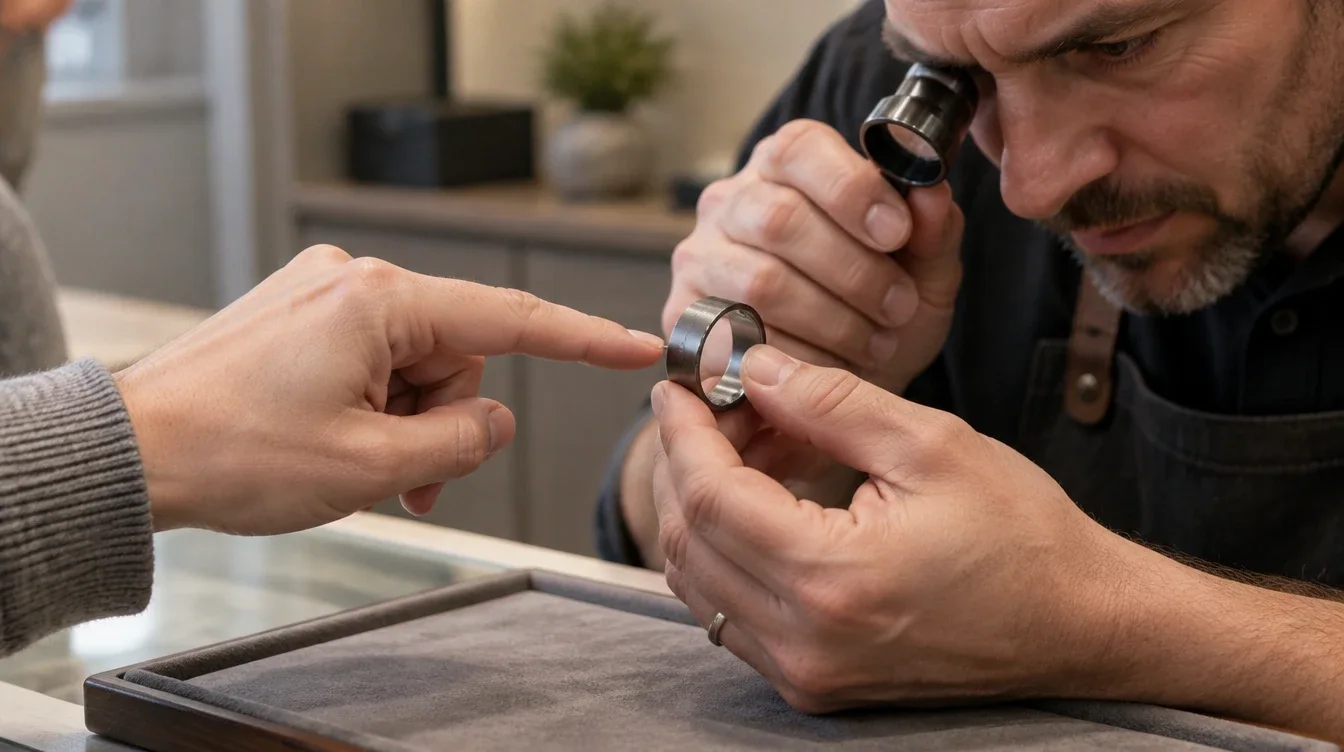
Ask who will do the work and whether the original maker offers the service. One tantalum ring maker invites owners to ask about alterations or refinishing. That offer does not apply to every seller. Check your invoice and warranty. Written terms may cover ordinary wear, accidental damage, and factory defects in different ways.
Ask for a quote based on your ring. Include any shipping and return costs. The metal name alone cannot give you a reliable price. Those answers will help settle the questions that remain.
Frequently asked questions about scratched tantalum rings
These short answers cover the decisions owners most often face after noticing a mark.
Do tantalum rings scratch during normal wear?
Yes. If you ask “do tantalum rings scratch,” expect some surface marks over time, even on a durable band. How much they show depends on contact, light, and whether the finish is polished or brushed.
Can tantalum rings be polished at home?
If you wonder “can tantalum rings be polished” without a jeweler, do not start with household abrasives. They can change the finish or harm nearby materials. Clean the ring gently, then ask its maker about a mark that still bothers you.
How do you clean a tantalum ring with an inlay?
Ask the maker how to clean a tantalum ring with that specific inlay. Gentle wiping may be safer than soaking when the added material or its bond is unknown. Keep steam and ultrasonic cleaning off the table until the maker confirms they are suitable.
Does refinishing remove every gouge?
No. Tantalum ring refinishing may make a deep mark less visible, but not erase it. Before agreeing to the work, choose your goal: a smooth edge, a less visible groove, or a restored overall finish.
Those answers leave one practical choice: what result matters most to you?
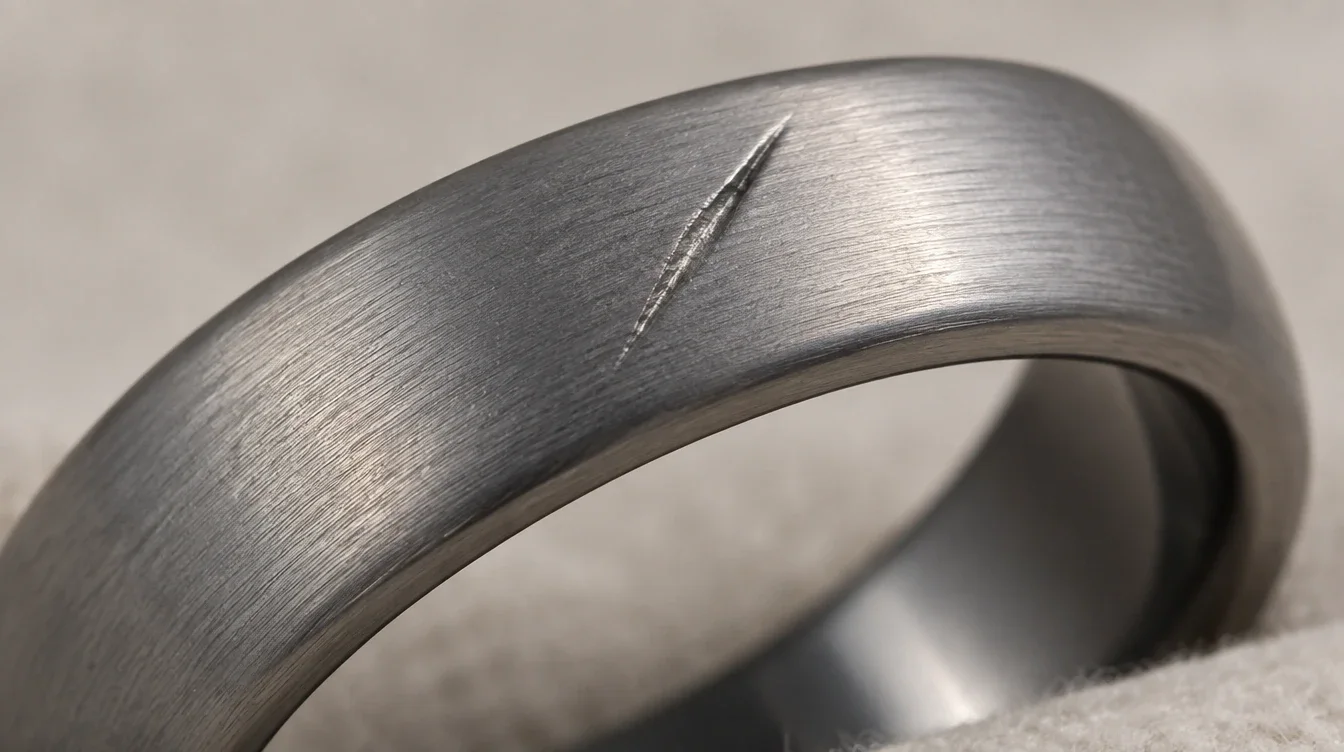
Choose the result your ring actually needs
A smooth mark that barely shows does not need a repair appointment. Clean the ring, wear it for a while, and see whether you still notice it. A snagging edge, a damaged setting, or a finish you genuinely dislike calls for a closer look.
For tantalum ring scratch removal, take clear photos and your purchase details to the maker or a jeweler. Ask them to assess the whole band. Find out what they can improve, what will remain, and how the work may change the original finish. Then choose a small fix, a full refinish, or no work at all.