Why Your Bracelet Keeps Loosening (And When sliding bracelet clasp repair Helps)
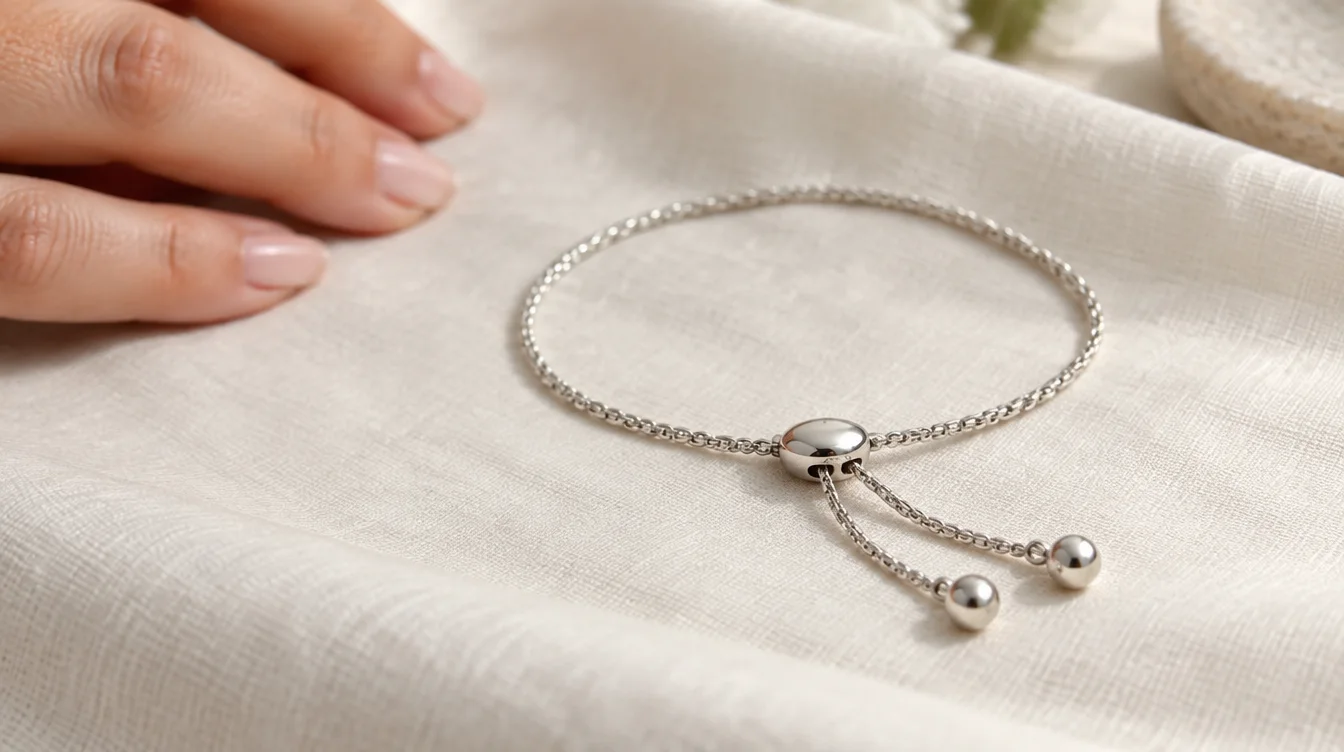
A slider bracelet that opens on your wrist has usually lost grip at the sliding clasp, though a damaged chain can cause a similar problem. Sliding bracelet clasp repair starts by finding which part moves or fails; a worn internal grip may call for a new slide rather than an adjustment. Stop wearing the bracelet if it can slip over your hand.
How does a bolo bracelet clasp work?
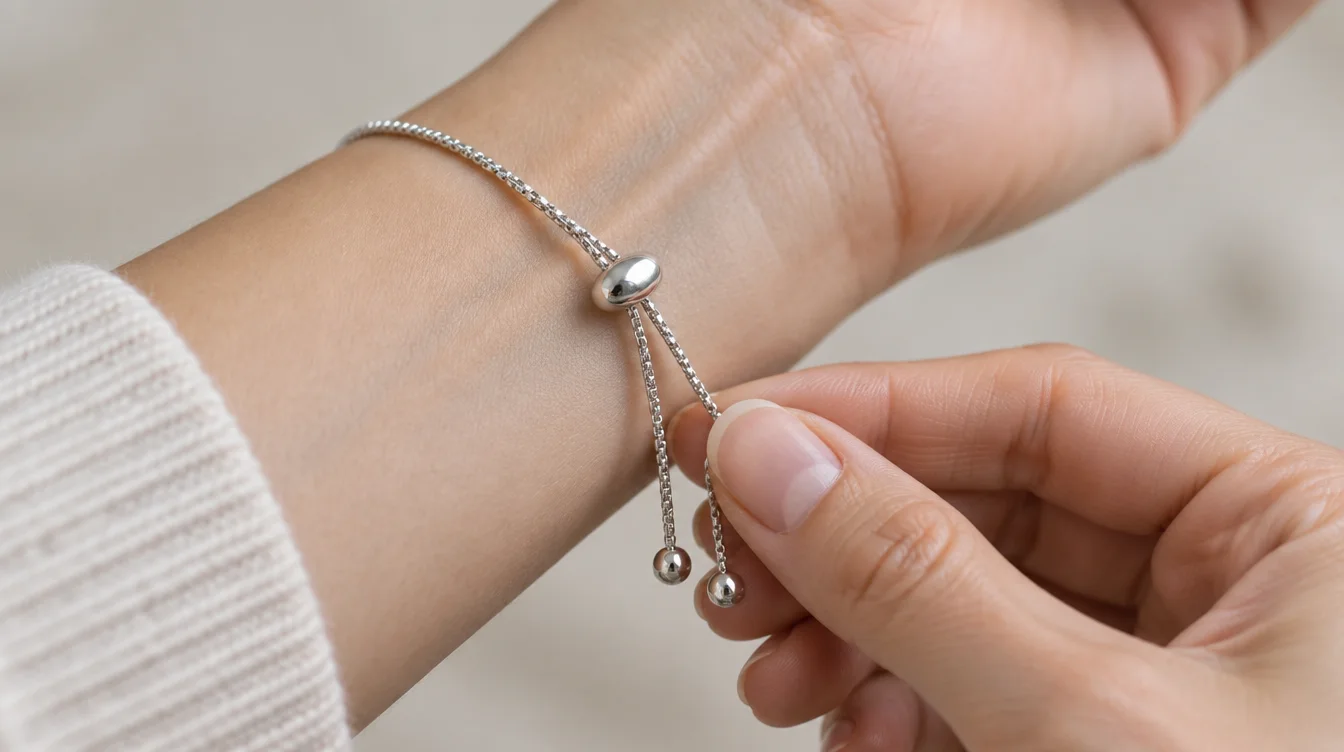
A bolo clasp changes the bracelet’s size by letting two chain ends pass through a movable slide. The slide must hold those ends in place once you stop pulling. As Quick Jewelry Repairs explains, one common design has internal channels and a rubber stopper that grips the chains. That description does not establish what is inside every slider.
Look at the bracelet before trying to fix it. Some slides have plain metal shells. Others are shaped, decorated, or branded. End stops may keep the chain from pulling through. A new slide must suit both the chain and the bracelet’s look.
To test the fit, gently pull both chain ends to draw the slide toward your wrist. Use even pressure. If the slide holds at rest but moves during wear, note where that movement starts.
What causes a slider bracelet to loosen?
A slider bracelet loosens when the slide no longer holds its set position or when damage changes how a chain end sits inside it. Grip loss is one possibility. A bent or worn chain, missing end stop, or damaged connection may point to a different repair. You cannot tell which part failed from a loose fit alone.
Lost grip or chain damage?
Place the bracelet on a soft cloth. Set the slide at a spot you can recognize. Gently move each chain end, one at a time. Does the slide travel freely along an intact chain? Does one end pull farther than the other? Note what happens, but do not pull hard on the end stops.
Check the links near the slide and at the ends. A split link or a chain that bunches as it enters the slide deserves a jeweler’s inspection. A snapped chain and a failed slide are different jobs: chain repair may address the break without curing a slide that has lost its grip.
Once you can describe the symptom, you can ask for the right kind of inspection.
When is sliding bracelet clasp repair possible?
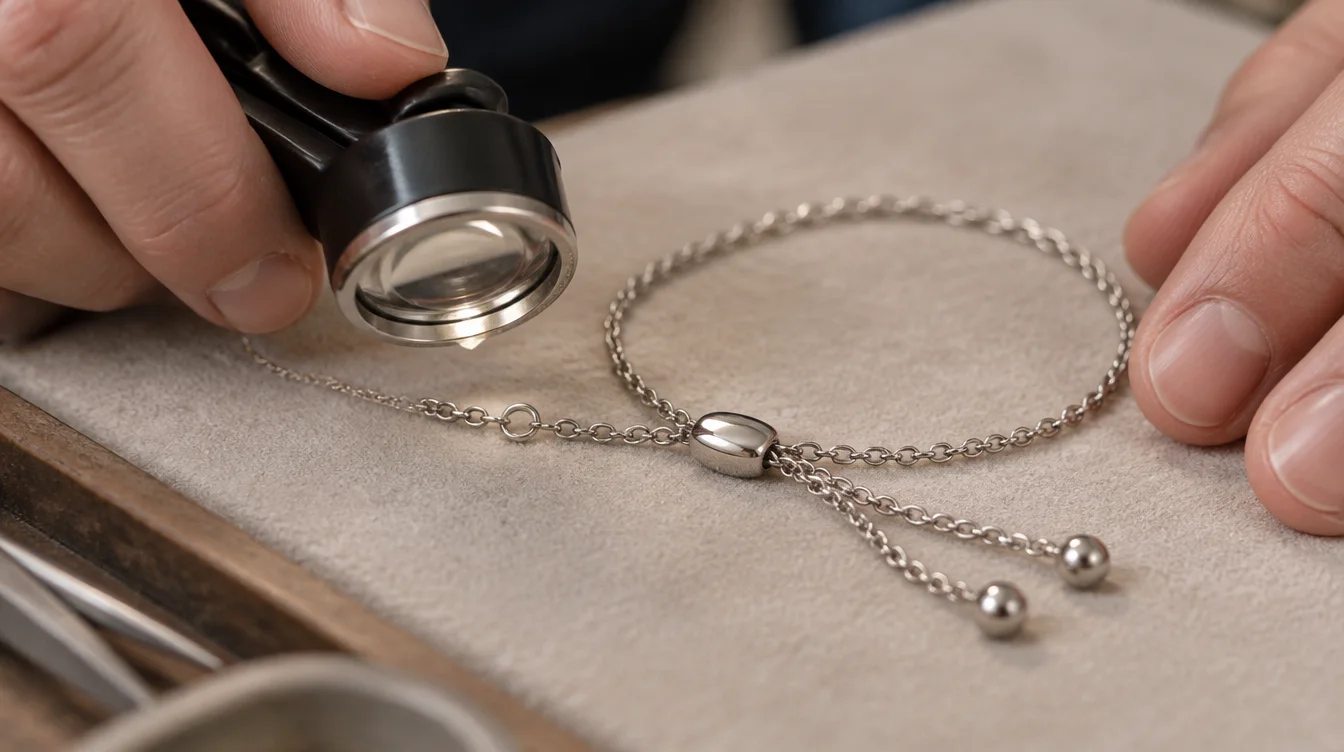
Sliding bracelet clasp repair depends on how the clasp is built and which part failed. A jeweler may repair a chain or connection and keep a sound slide. If the slide has lost its inner grip, replacing it may make more sense. Quick Jewelry Repairs describes full slide replacement for its rubber stopper design.
What a jeweler needs to check
Bring the whole bracelet, including any loose end piece. Ask the jeweler to check the slide, both chain paths, end stops, and nearby links. Show how far the bracelet loosens during wear. That helps more than saying the clasp feels weak.
Keep the original slide when the chain is at fault
If the slide holds securely but a link has opened, the repair question centers on the chain. Whether that link can be joined depends on its metal and construction. Ask the jeweler to test the slide again after the chain work.
Replace the slide when its grip is gone
Bracelet sliding clasp replacement makes more sense when the chain is sound but the slide will not hold. Ask if a new part fits the chain and suits the bracelet’s finish. A plain slide may work well without matching a shaped original.
Those checks also make the choice between a new slide and a different clasp easier.
Should you replace the slide or change the clasp style?
Choose a new slide if you want adjustability and a fitting part is available. Choose a fixed clasp if one set length suits you better. You will lose the easy adjustment. Either way, ask how the jeweler will secure the chain ends. Check the finished fit on your wrist.
A request to convert bolo bracelet to lobster clasp changes more than the closure. The jeweler must settle on a length, remove or work around the slide, and attach suitable ends. Quick Jewelry Repairs describes using a lobster clasp and jump ring. Your chain and design still need an individual check.
Consider two bracelets with the same loose fit. One has a plain slide and an intact chain. A fitting new slide may keep it adjustable. The other has a shaped slide and a damaged link. Its owner may prefer chain work that keeps the original detail, if the slide still holds. Both looks and function matter here.
Cost is the remaining question, and a quote should reflect the work actually needed.
What should a bolo bracelet repair quote include?
A bolo bracelet repair cost quote should name the failed part and proposed work. It should also name any replacement material. Ask if the quote covers chain work, end stops, and a final grip check. Then you can compare quotes on the same terms.
Metal choice and parts availability can change the price. Quick Jewelry Repairs says a sterling silver slide can cost less than a gold one. Sourcing a slide can also take more time. Its article gives a starting price for simple chain soldering, not a current price for your bracelet. Without an inspection and a dated quote, no reliable bolo bracelet repair cost can be stated.
Before approving the job, ask what happens if no slide fits both the chain and the bracelet’s design.
Common questions about loose slider bracelets
How to fix a loose slider bracelet at home?
If you want to know how to fix a loose slider bracelet, first check gently for broken links. Watch for uneven chain movement, too. Do not squeeze the slide, add glue, or tug on an end stop. That can hide the fault or damage a small part.
Can a jeweler repair the original bolo slide?
Bolo bracelet repair may keep the original slide when the fault lies in the chain. A slide with failed internal grip may need replacing. Ask the jeweler which part failed before agreeing to either job.
Does a replacement slide have to look identical?
No. Bracelet sliding clasp replacement needs a part that fits and grips the chain. An exact match for a decorative slide may not be available. Decide how much the original look matters to you.
Can you convert bolo bracelet to lobster clasp instead?
Yes, a jeweler may be able to convert bolo bracelet to lobster clasp if the chain and ends allow secure attachments. Confirm the finished length first. A fixed clasp will not give you the same on wrist adjustment.
If your bracelet keeps opening, set it aside. Bring it in for a clasp and chain check. Ask for a quote that names the failed part and compares repair, slide replacement, and conversion. Then choose the finish and fit you want to wear.