Why shortening a tennis bracelet without changing the pattern takes more than removing links
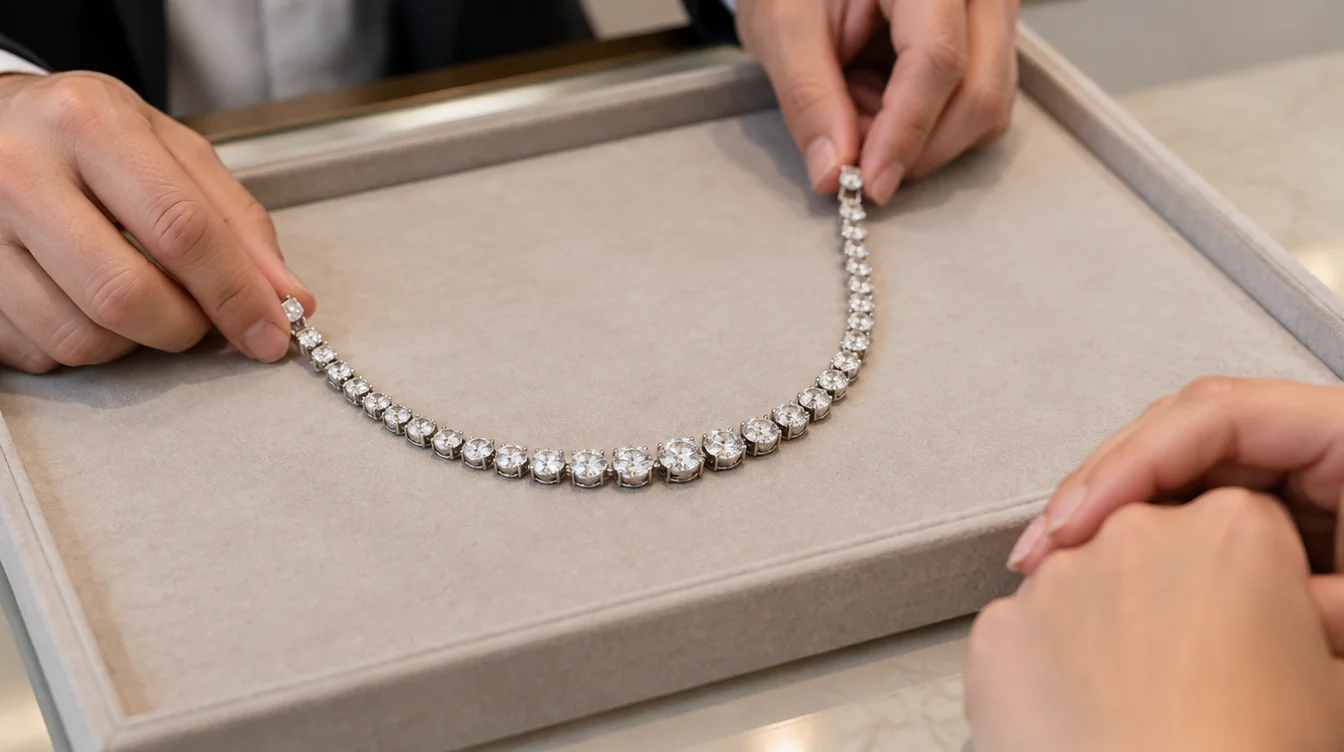
Shortening a tennis bracelet without changing the pattern is often possible. The links removed must leave the sequence and clasp ends balanced. A uniform row offers more choices than a repeating or graduated design. Before work begins, ask which links will come out and how long the bracelet will be.
When is shortening a tennis bracelet without changing the pattern possible?
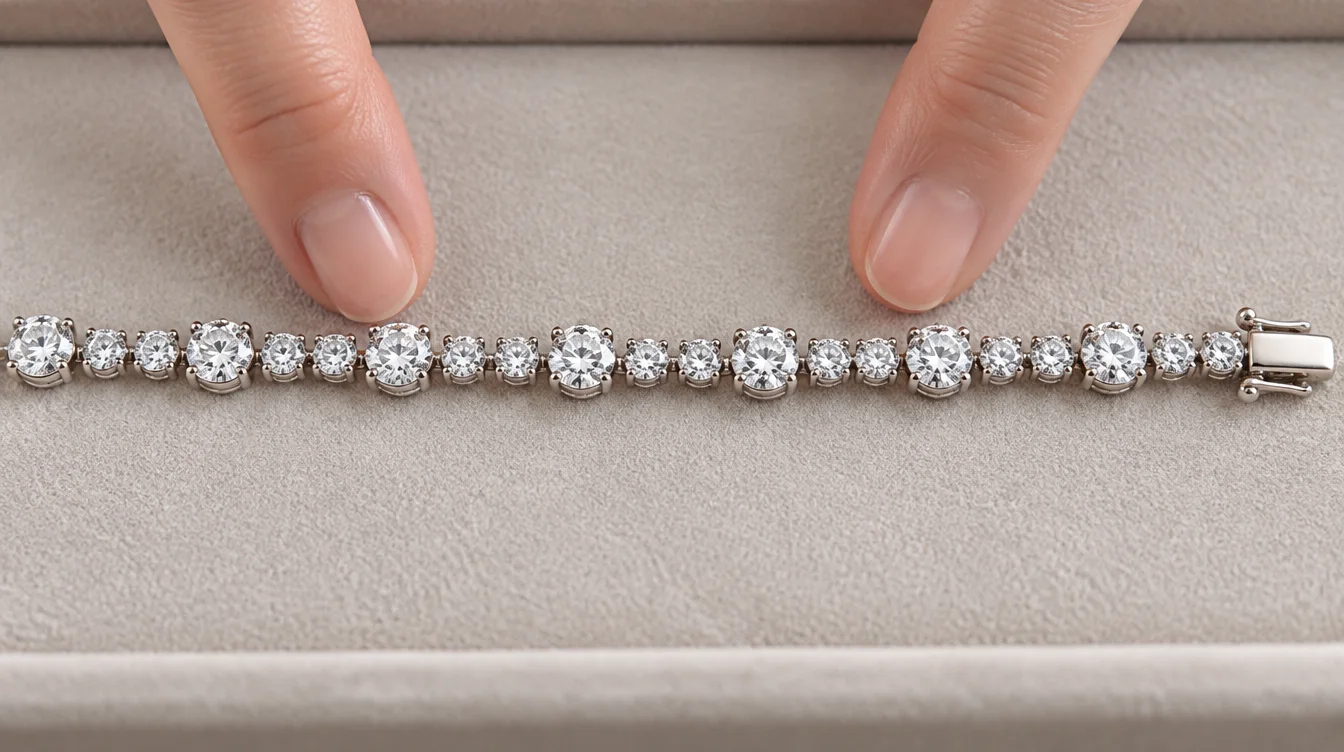
A bracelet can keep its pattern if the right links come out. The jeweler must also join the ends without a break in the design. Many tennis bracelets can be shortened, but their construction sets the limit. By Bonnie Jewelry describes link removal as a common method and warns that altered connections and diamond alignment need care.
First, decide what “same pattern” means for your bracelet. A row of identical diamonds may look unchanged after several links come out. A small, small, large pattern has a stricter rule. The stones must stay in that order. On a graduated bracelet, the largest stones may need to stay centered on your wrist.
If your tennis bracelet too big slips toward your hand, length matters. Yet cutting it to an exact measurement is not always possible without changing its look. The available lengths come from the links and clasp your jeweler can safely join.
So ask which links can come out without changing what you see. That tells you more than a simple yes or no about shortening.
How does a jeweler choose which diamond links to remove?
A jeweler should map the full row before removing a link. The map should show stone sizes, link order, clasp connections and changes in setting style. The removal point must keep the design intact. It must also leave a sound place to join the bracelet.
Uniform rows allow the most choice
With identical links, a jeweler can often remove the needed count near the clasp. Even here, the end links deserve a close look. They may have different fittings, and the clasp must sit straight once the row is joined again. Removing diamonds at random can leave the clasp pulling at an angle.
Repeating rows need complete sequences
Suppose a bracelet repeats one large diamond followed by two small diamonds. Removing only the large link would change the order. Removing one whole three link repeat may keep it intact, provided the new ends also meet in the right sequence. That final check matters as much as the links taken out.
A length calculation before any work
This example is not a measurement for your bracelet. Assume each of those three links adds 4 millimeters to its laid flat length. One full repeat adds 12 millimeters. Say you need to lose about 6 millimeters. Removing the full repeat may make the bracelet too short. Taking fewer links may fit better but break the pattern. You and your jeweler must decide which result matters more.
Clasp ends are part of the pattern
Look at the stones on both sides of the clasp. If they match now, removing a full repeat from one side could upset that balance. The sequence might still be correct. Ask your jeweler to mark the proposed end links on a photo. Then you can judge the change before any metal is cut.
Once the links are mapped, check the symmetry. This matters most when the diamonds change size across the wrist.
What changes when the bracelet has a graduated layout?
A graduated tennis bracelet needs its largest stones to stay visually centered. Removing links from one end can shift that center. A jeweler may need to remove matching links from both ends. Those pairs may not give you the length you want.
Picture a row that grows from small diamonds near the clasp to a large center stone. It then tapers back down. Removing one small link from each end keeps the mirror image. Removing two from one end shifts the center stone when the clasp sits under your wrist. You may notice that shift each time you wear it.
Some designs also have a gradual change rather than exact pairs. In that case, your jeweler should show you the laid flat layout and explain how the remaining stones will sit around your wrist. The question is not whether the bracelet looks even on a tray. It is whether its focal point lands where you want it when worn.
For diamond tennis bracelet resizing, a centered row may offer fewer length choices than a uniform row. If the closest balanced length feels wrong, you may prefer to keep the original layout.
That brings the decision back to fit: a neat pattern is little help if the finished bracelet cannot be worn with ease.
How should the finished tennis bracelet fit?
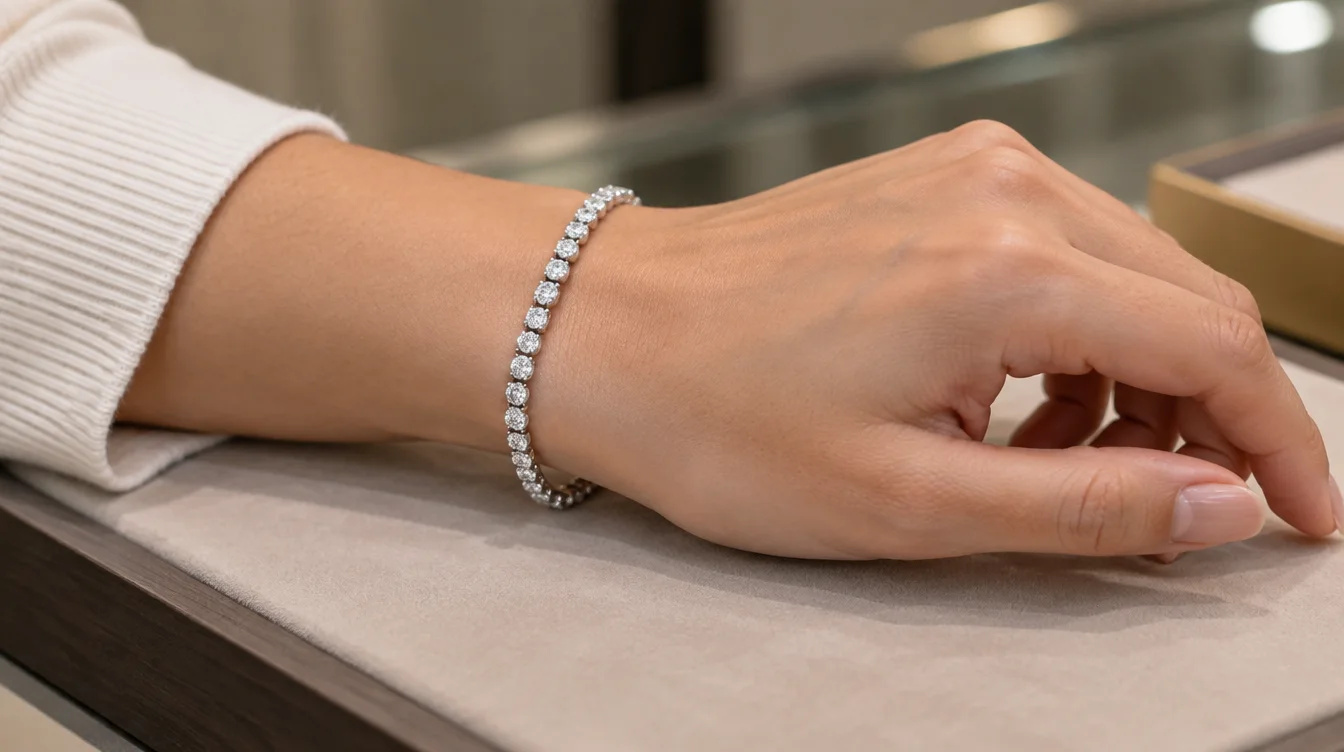
A finished tennis bracelet should move a little on your wrist without pressing into your skin or slipping over your hand. There is no single gap that suits every wrist and clasp. Check the fit while your hand is relaxed, then move it as you normally would.
If you ask how should a tennis bracelet fit, start with your own bracelet. Does it turn and hide the diamonds? Does it catch on your sleeve or pass over the widest part of your hand? Check that the clasp stays closed, too. Shortening will not fix a faulty clasp.
Zadok Jewelers advises a comfortable fit and notes that a bracelet that is too loose can turn over or slip off. Use that as a wear check, not a command to remove a fixed number of links.
Ask to try the planned length at the counter. A jeweler can hold the planned removal points together. You can then feel how the bracelet hangs before work begins. Ask if the measurement includes the clasp. That is the full length you will wear.
With a target length in hand, you can compare the pattern safe options against the work each one needs.
Where are the design limits and repair risks?
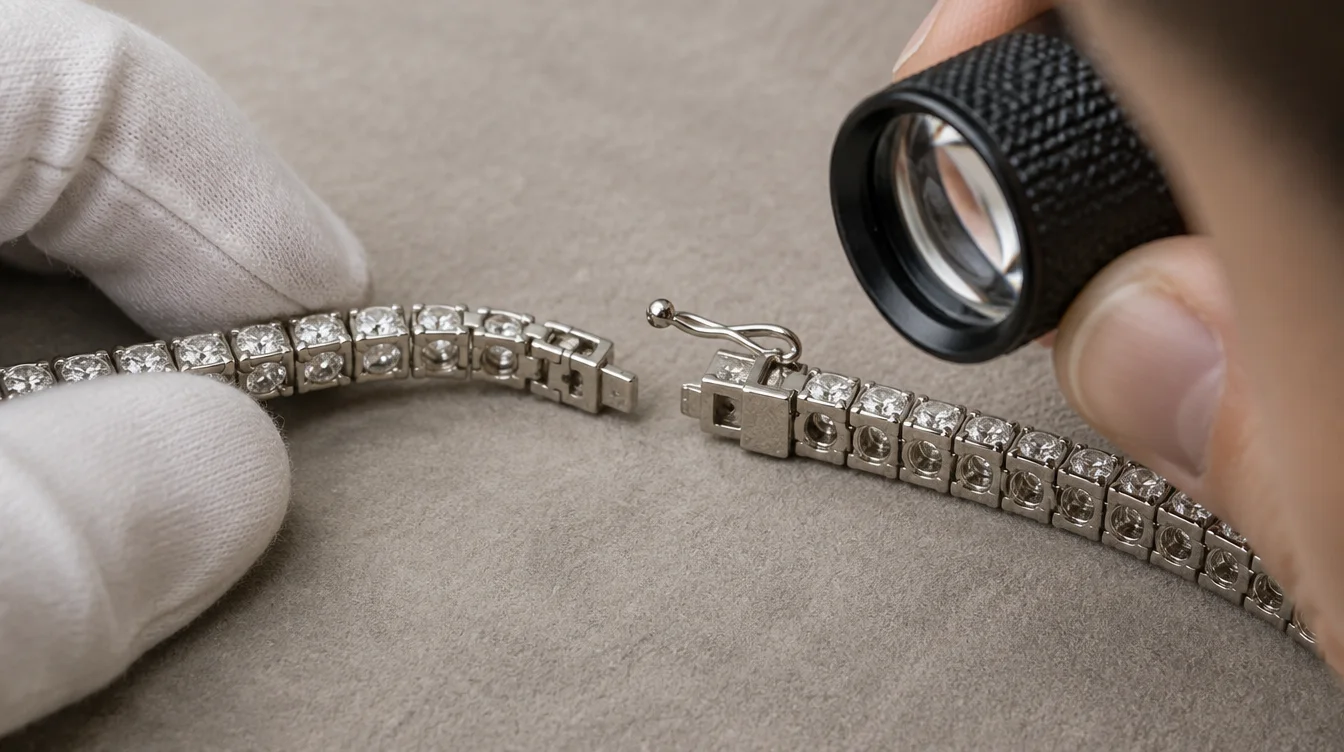
A design reaches its limit when the links needed for a good fit cannot come out safely. Removing them might shift the pattern, upset the clasp ends or leave a poor connection. So, can all tennis bracelets be resized without changing their look? No. The layout, links and clasp decide which changes are possible.
Before diamond tennis bracelet resizing, a jeweler should check the link joints and diamond settings. A loose stone or worn joint may need repair first. Once joined, the bracelet should bend freely. The diamonds should line up. The clasp and any safety catch should also be tested. These checks address the connection and alignment risks By Bonnie Jewelry identifies.
Ask what will happen to the removed diamond links. Keep them labeled and stored safely. They may help with a later repair, though reusing them in another piece would be a separate job.
If no safe link removal gives you both the look and fit you want, ask about a clasp change or a more involved rebuild. Each choice should be judged by the same three tests: finished length, visible pattern and sound connections. A quote should name the proposed work rather than just say “resize bracelet.”
Those details also explain why price questions need a close look at the actual piece.
What should you ask before approving the quote?
Before approving a quote, ask your jeweler to mark the removal points. Get the finished length in writing, too. This can reveal a pattern change before it becomes permanent.
Ask to see the bracelet laid flat, with the links to be removed marked. Check both clasp ends. On a graduated row, check the center stone too. Ask if the quote covers setting repair, clasp work and a final check. The work needed affects tennis bracelet resizing cost, not just the number of diamonds removed. Zadok Jewelers also names metal, clasp complexity and diamond rearrangement as cost factors.
There is no responsible price to quote without seeing the bracelet and the proposed repair. One link removal from a simple row is not the same job as rebuilding matched ends around a graduated layout.
Once you know what the quote covers, the remaining questions are easier to answer.
Frequently asked questions about shortening tennis bracelets
These answers help you decide what to discuss at the bench. Your bracelet still needs an inspection before a jeweler can promise a result.
Can you remove links from a tennis bracelet without changing its pattern?
Yes, if the remaining links keep the sequence and the clasp ends look balanced. If you ask, “can you remove links from a tennis bracelet,” the answer depends on its repeat, end fittings and needed length.
Can all tennis bracelets be resized to an exact length?
No. A tennis bracelet can usually be shortened only by the lengths its removable links allow. The exact length you want may fall between two balanced options. This is more likely with a repeating or graduated row.
How should a tennis bracelet fit after links are removed?
The bracelet should move without pinching or sliding over your hand. Try the planned length before approving work. Check the clasp on its own if it feels insecure.
What affects tennis bracelet resizing cost?
The quote reflects the links, connections, metal, clasp and any setting repair needed. Ask for an itemized quote. Then you can compare simple link removal with a design change on the same terms.
If your tennis bracelet too big needs a cut that breaks its pattern, pause. Review the link layout and try the planned length before you decide.
Keep the pattern you love
Shortening a tennis bracelet without changing the pattern starts with one request: “Show me which links you would remove.” Check the repeat, the symmetry and the length on your wrist. If any one fails, ask for another plan. Do that before agreeing to a cut you cannot undo. Choose a jeweler who can mark the change and explain the finished result before work begins.