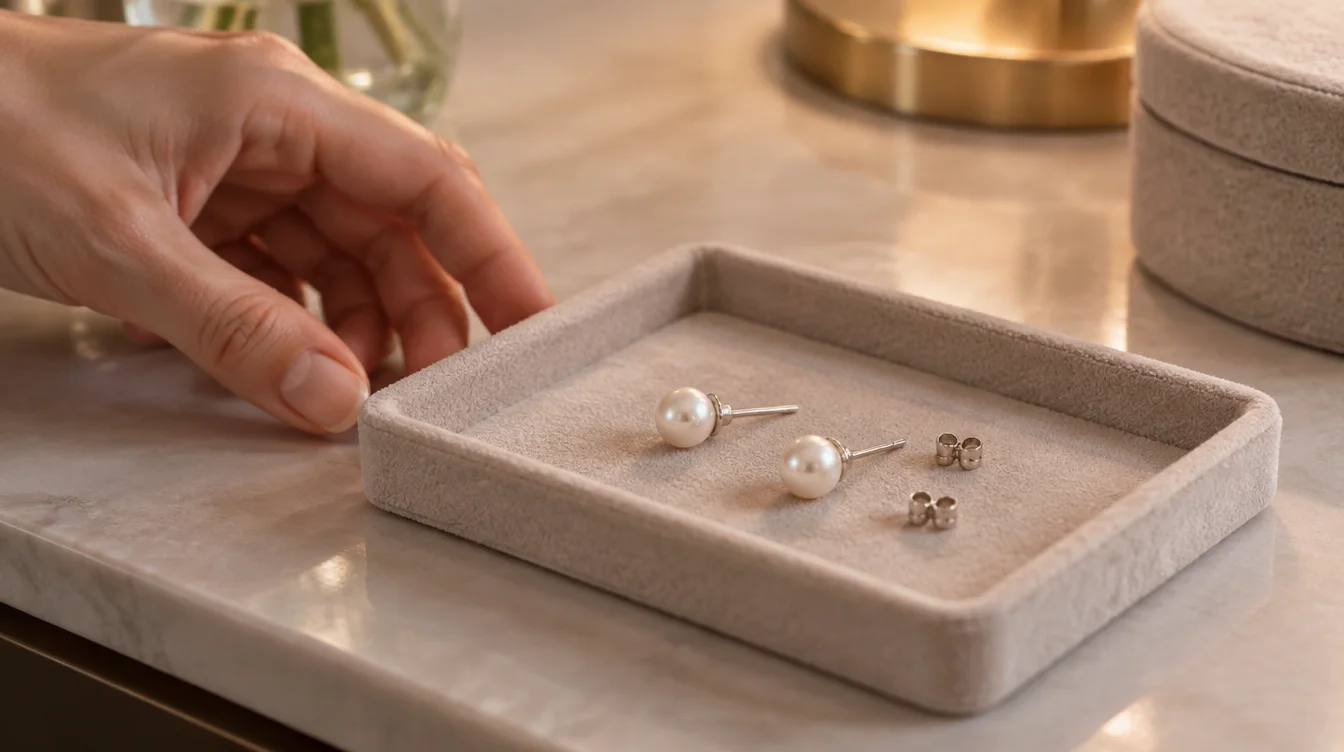
Are pearl stud earrings drooping forward because of the back or the pearl?
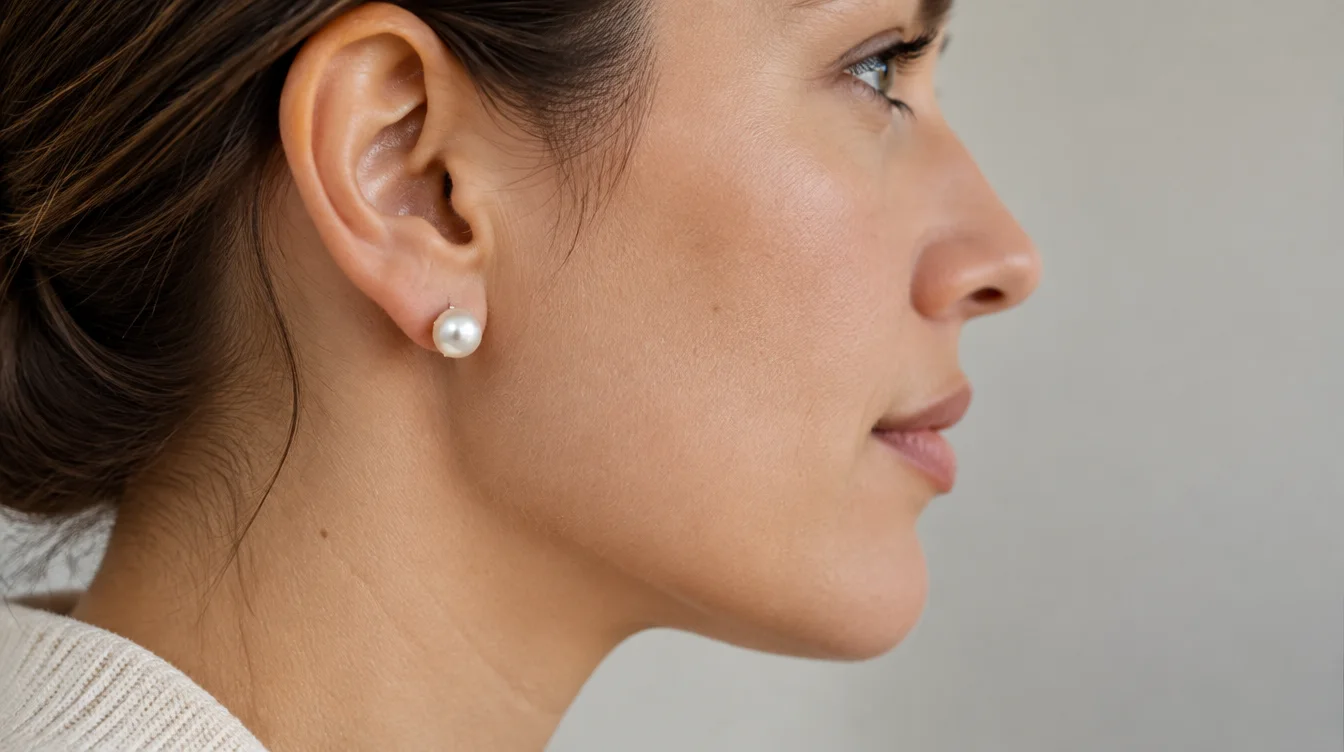
Pearl stud earrings drooping forward usually call for a fit check, not an immediate repair. If the pearl and post move as one piece, check how the back supports the lobe, then consider the pearl’s size and how far it sits from the ear. If the pearl moves on the post, or the post looks damaged, stop wearing the pair and ask a jeweler to inspect it.
First, find out what is actually moving
A forward leaning stud and a loose pearl are different problems. Remove the earring with clean, dry hands over a soft cloth. Hold the post still and view the pearl from the side. Does the whole stud stay in place as you turn it? Or does the pearl shift against the post or mounting?
Do not twist the pearl to test the joint. A gentle look and light touch are enough. Check the matching earring too. Comparing both sides can show whether one mounting sits at a different angle, even before either stud goes back in your ear.
A pearl that moves against a still post needs a jeweler’s assessment. If the stud stays intact but leans when worn, check its fit instead. That distinction helps you choose the right next step.
Once you know the pearl is stable, check where the tilt begins.
Why are pearl stud earrings drooping forward when the pearl is secure?
Pearl stud earrings drooping forward may reflect how the front, post and back sit against your lobe. A pearl that sits farther from the ear has more room to tip. A back that rests too far along the post may also let the front lean. Neither sign proves a part is broken.
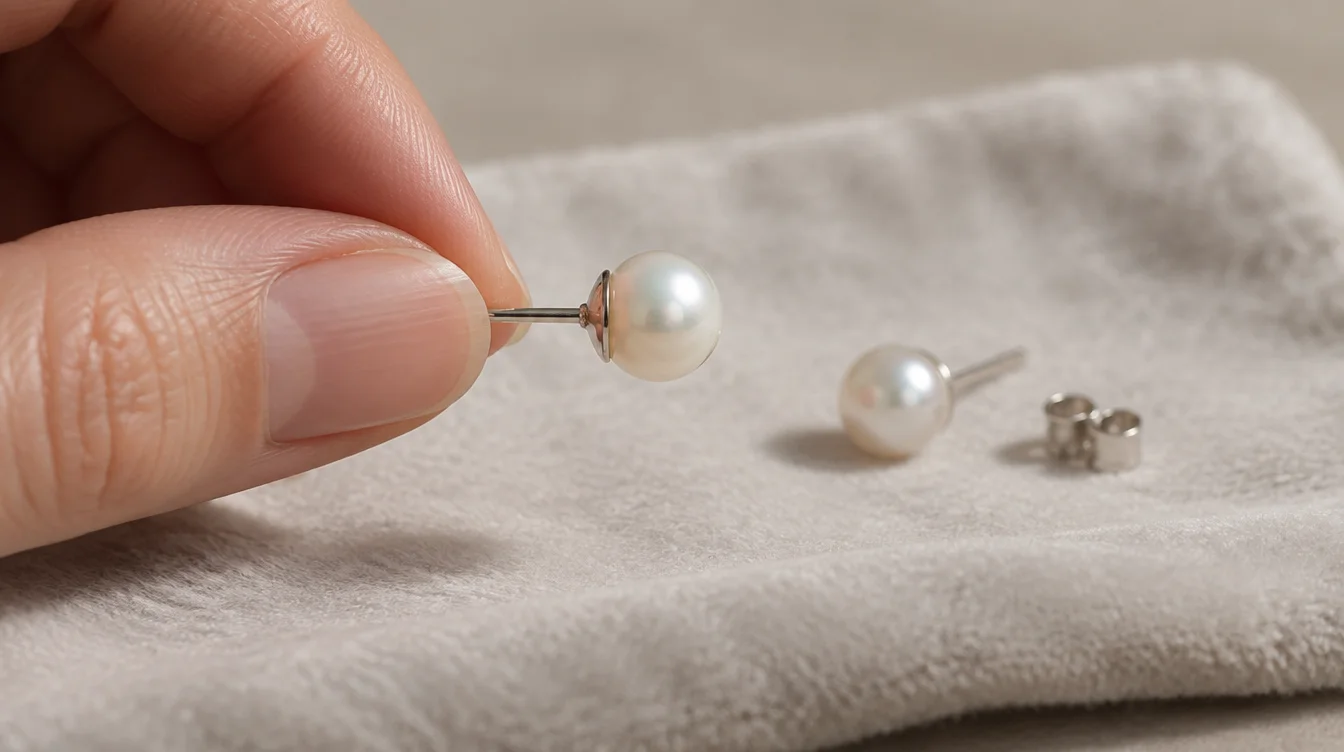
Look at the stud from the side while you wear it. Is there a visible gap between the pearl’s mounting and your lobe? Does the back sit against the lobe, or does it rest farther along the post? Notice whether both earrings lean equally. One tilted side may reflect a difference in the backs, the mountings or where each piercing sits.
Pearls are also judged as a pair from normal wearing angles, not just side by side on a table. This guide to pearl pair matching explains why setting orientation and side profile affect how balanced earrings look. That does not mean every uneven looking pair has a fit fault. It does mean the side view is worth checking before you buy new backs.
With the likely source of the lean in mind, try the simplest comfortable fit check first.
Check the back without pressing it into your ear
First, check whether the back supports the stud without discomfort. Put the earring in as usual. Slide the back forward until it holds the post without pressing your lobe. Stop if it pinches, throbs or resists movement.
Watch the pearl in a mirror as you move your head normally. If it sits better and stays comfortable, the back’s position may have been the main issue. If it soon slips backward again, remove the earring and ask a jeweler whether that back still fits its post. Do not bend a post or squeeze a back to make it grip.
When might a wider back help?
Wider earring backs for heavy studs can support more of the lobe behind the post. That may help a sound post that still leans with a small back. Choose a back made for the post’s size and closure style. Check comfort as well as appearance.
What a support back can change
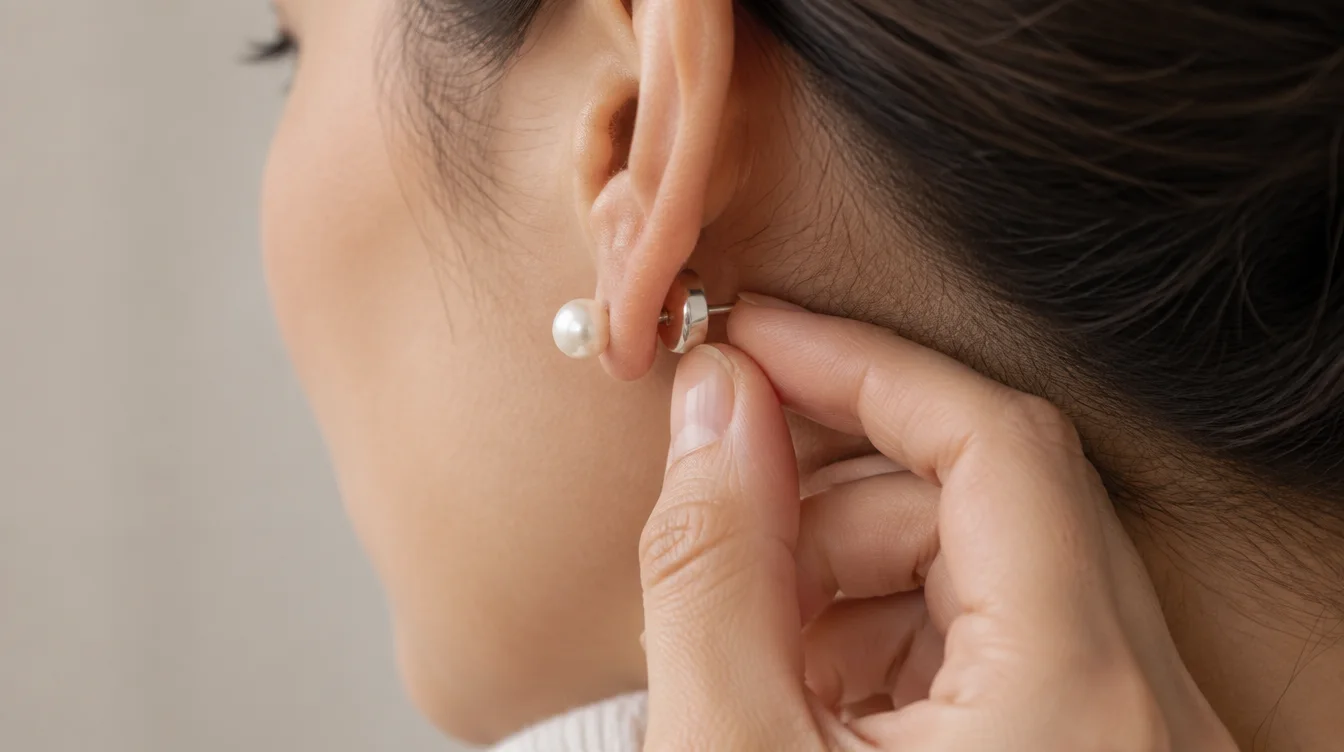
A support back may steady an intact stud by changing how it rests against the lobe. Check the result while standing, turning your head and speaking. A back that looks good for one still photo may feel different after a few minutes.
What a support back cannot change
A wider back cannot fix a loose pearl, a damaged post or a front that is poorly aligned with its mounting. Nor should it be used to pull a heavy stud tight against a sore lobe. If added support fails without pressure, the next check is the earring’s front and your piercing position.
That limit matters most when a larger pearl continues to lean with a comfortable, secure back.
Look at front weight, projection and piercing position
If stud earrings tilt forward despite a suitable back, check how the pearl sits in front of the lobe. A larger pearl is not automatically too heavy to wear. Its weight, its distance from the ear and the shape of the mounting all affect the result you see.
Take a straight on photo and a side photo while wearing the pair. Keep your head level. Then remove the earrings and compare their side profiles on a flat, soft surface. If one front sits noticeably farther from its post, ask a jeweler to inspect the mountings rather than trying to push either pearl into place.
Next, note where the post passes through each lobe. A lower piercing leaves a different area of skin beneath the stud’s front. Lobe shape and flexibility can differ between ears too. Photos can help you describe the lean. They cannot tell you whether to change the jewelry or seek piercing advice.
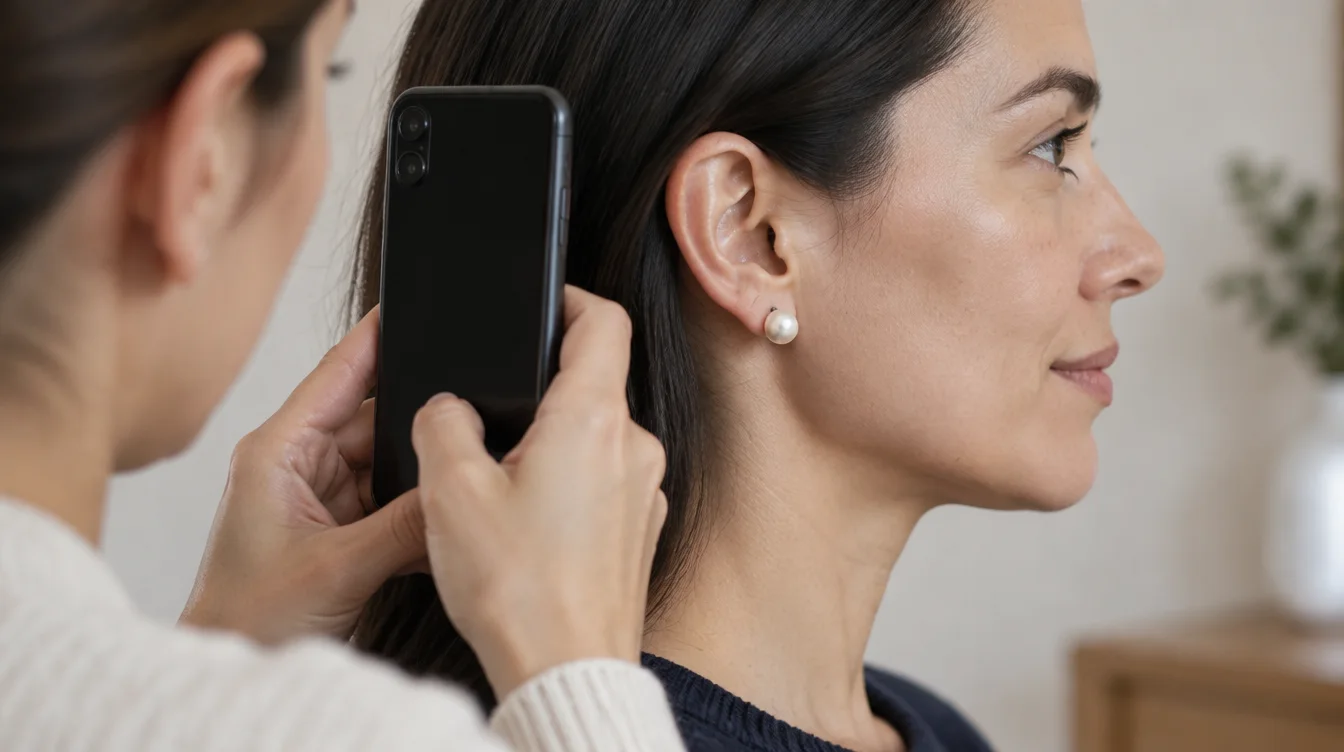
Do not move the post into an uncomfortable angle to make the pearl look level. If one ear is tender, newly pierced or irritated, set the pair aside and seek advice from a qualified piercer or health professional. For a healed, comfortable piercing, compare another light stud you already wear. If it sits level while the pearls lean, the pearl studs deserve the closer check.
That comparison helps you choose one useful next action instead of trying every back in a drawer.
Choose the next check from what you observed
How to stop stud earrings from drooping starts with the part that changes the fit. If a secure back sits comfortably and solves the lean, wear the pair briefly and check again. If the back slips, have its fit to the post checked. If it stays put but the stud still tilts, ask a jeweler to inspect the front’s size, projection and post alignment.
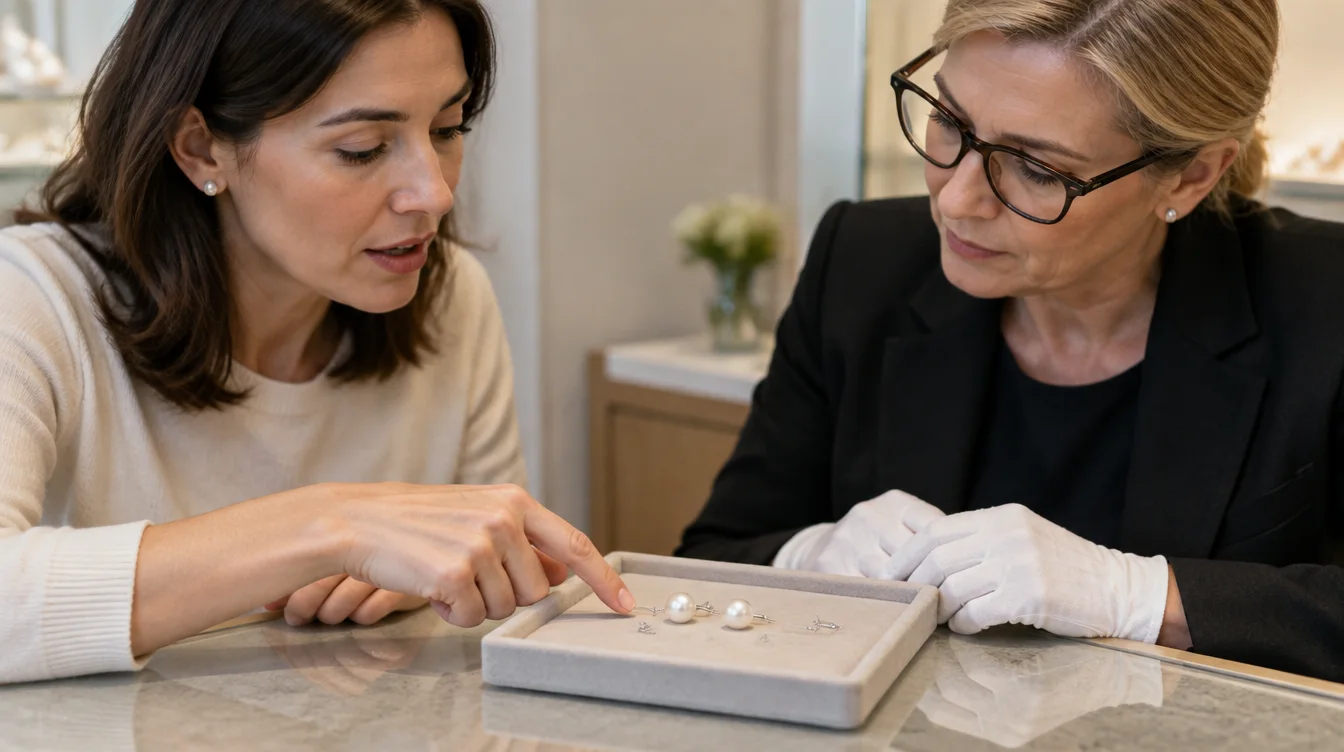
If only one earring leans, bring both earrings to the appointment. The matching stud gives the jeweler a direct comparison. Explain whether the tilt appears on a table, only in your ear or after the back moves. Those details are more useful than saying the pearl feels heavy.
Stop wearing the pair if you find a pearl loose on earring post, a cracked or bent post, a back that will not stay on, or rubbing that leaves your lobe sore. Do not use extra pressure to keep a failing fit in place. If the pearl has detached, keep the parts together; a separate guide to detached pearl studs covers that repair question.
A fit check should leave both the earring and your ear comfortable. A few common questions can help you judge what to do next.
Frequently asked questions
Pearl studs can lean for more than one reason, so judge movement and comfort before choosing a fix. These answers apply to intact studs unless stated otherwise.
How can I tell whether my pearl is loose?
Hold the post still over a soft cloth and look for movement where the pearl meets its mounting. If the pearl shifts independently, stop wearing it and ask a jeweler about pearl earring repair. Do not twist it to get a clearer answer.
Can a bigger back stop a pearl stud from tilting?
A wider back may help an intact stud sit steadier, but it must fit the post and feel comfortable. It cannot correct a loose joint, damaged post or mounting that needs inspection.
Why does only one pearl stud droop?
One back may fit differently, or one mounting may sit at another angle. Piercing position and lobe shape can also vary between ears. Compare the earrings off the ear, then note what changes when you wear them.
Does a drooping stud mean I need a new piercing?
No. Check the intact earring and its back first, without pushing either part against your lobe. If other light studs also lean or the piercing is sore, a qualified piercer can assess the fit.
If those checks leave the cause unclear, take the pair in rather than forcing a fix at home.
Let comfort decide when to stop testing
Pearl stud earrings drooping forward are easier to assess when you check for two kinds of movement: the whole stud tilting and the pearl shifting at its joint. Start with a gentle look. Then test the back’s position without pressure. If the stud still leans, compare both fronts and note how each sits in your ear.
For an intact but stubborn pair, bring both earrings and your observations to a jeweler. If the pearl or post moves, or your lobe hurts, stop wearing them now. A level look is nice, but a sound earring that feels good is the real goal.