Why the oval diamond bow tie effect should not decide your ring from one photo
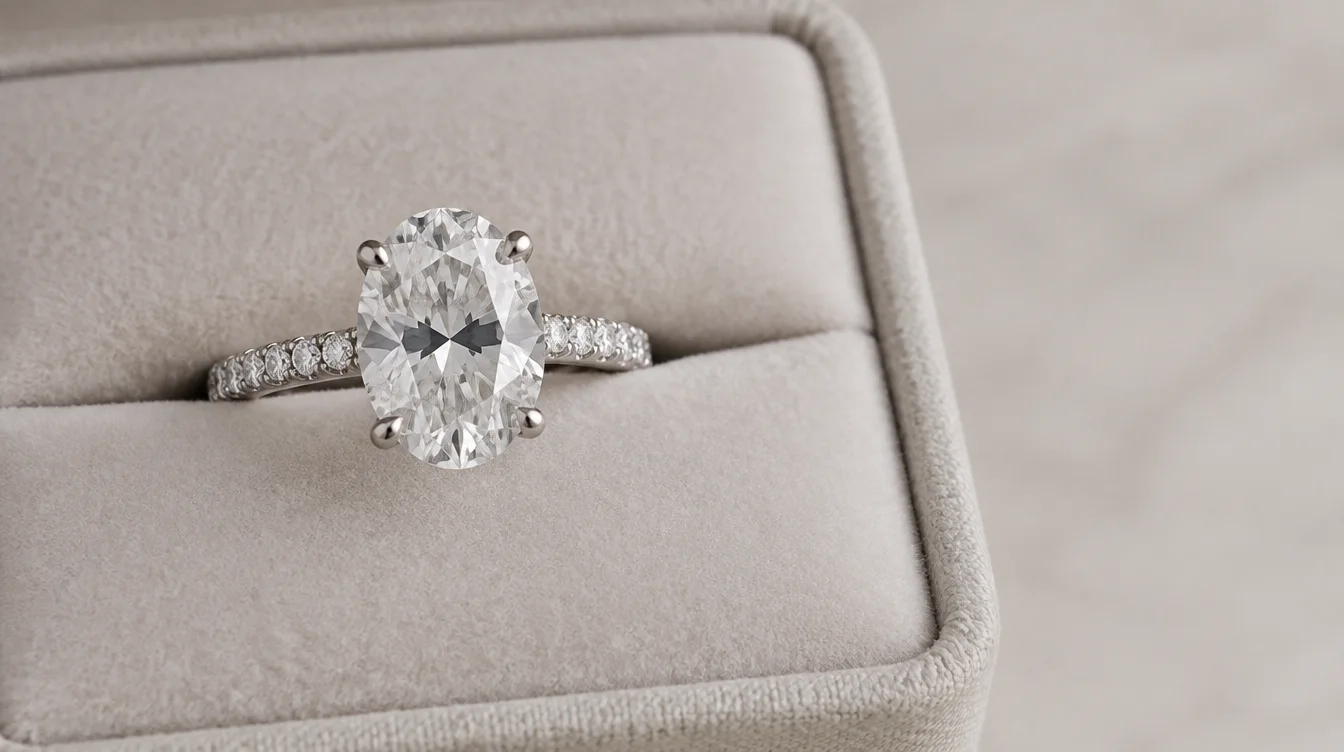
Reject an oval diamond if its dark center keeps drawing your eye as it moves in ordinary light. The oval diamond bow tie effect is not a pass or fail mark by itself. A brief shadow can add contrast. A broad shadow that stays dark can make the center look dull. Before you commit, view the stone from above, at normal distance, in more than one setting.
What the oval diamond bow tie effect tells you
The dark shape across an oval’s center tells you how some of its facets look from your viewing position. It is not an inclusion or a crack. Light can be blocked by the viewer, while the diamond’s facet pattern affects where that dark contrast appears. Its look can change as the stone, light, or viewer moves. Frank Darling’s explanation of the oval bow tie makes a useful distinction between light blockage and light leakage.
That difference matters when you judge a diamond. A dark facet in a still image may flash bright a moment later. A center that stays dark through much of the movement looks different. Neither sight proves why a facet looks dark. Both help you judge whether you like the stone.
People ask, “do all oval diamonds have a bow tie?” Most oval brilliant diamonds show some central contrast, but its strength varies. Calling every dark facet a defect would rule out stones that look lively on the hand. For a closer look at the visual signs, see our guide to identifying the bow tie effect in oval diamonds. Once you can spot the pattern, the harder task is deciding whether it bothers you.
How much darkness is too much?
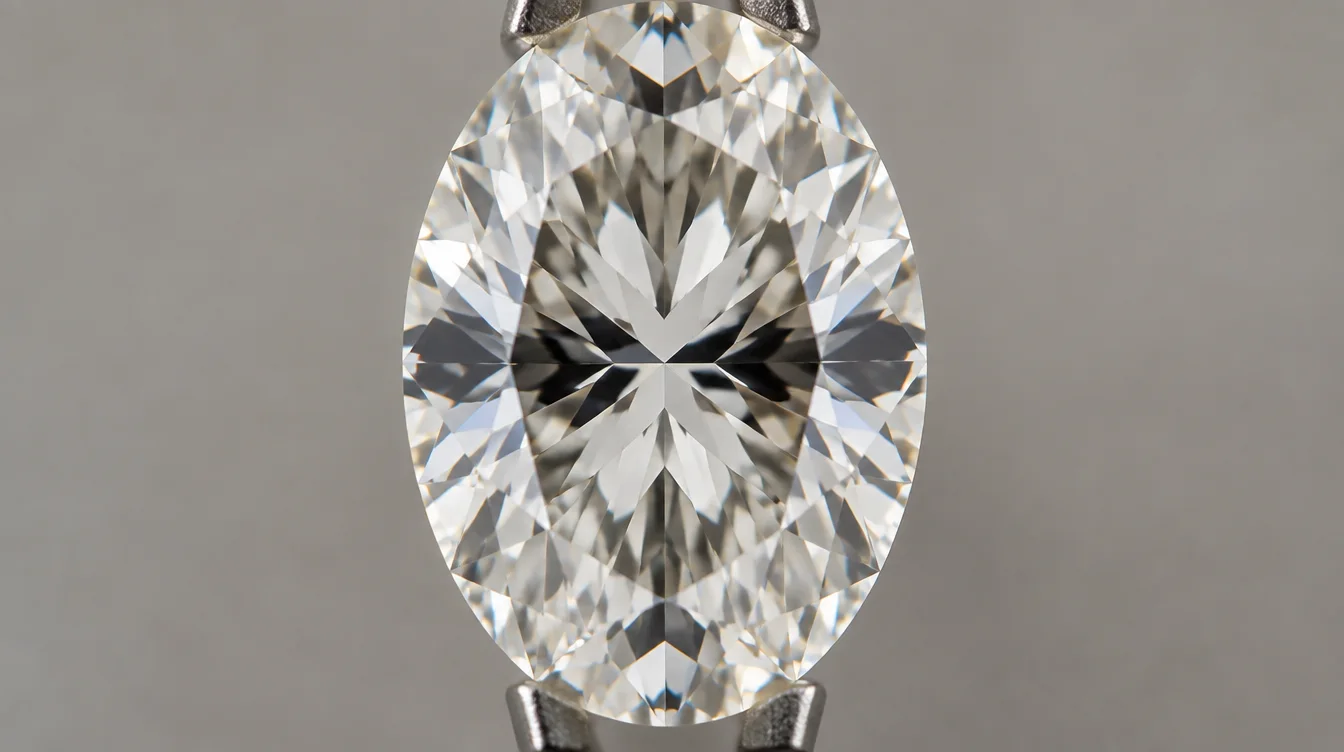
No fixed amount of bow tie suits every shopper. Ask whether you notice the diamond or its dark band first. Then watch for flashes across the center as the stone moves. A faint shadow that comes and goes may add contrast. A solid band may keep drawing your eye away from the rest of the diamond.
The question “how much bow tie is acceptable in an oval diamond” is personal, but you need not guess. Judge the center with the whole stone in view. Does it look bright from above? Do its dark facets change as you turn it? Would you notice the band at arm’s length if no one pointed it out? Those checks help more than judging a shadow’s size from one photo.
Be wary of judging only at high zoom. Enlarged images help you find a pattern, yet you will wear the ring at a much smaller apparent size. Check close views, then return to a normal distance. An obvious black center at both distances deserves more thought than a soft patch visible only when you pause a close video.
These are viewing tests, not laboratory grades. The Alexis Gallery guide also notes that light and movement can change how strong the pattern looks. Start with motion to see whether the dark area is brief or stays in place.
Watch the center move before you judge it
A moving view shows whether an oval’s dark center changes with the stone. Begin with the diamond face up. Tilt it gently left and right, then turn it through a small angle. Watch the middle rather than chasing the brightest flash near an edge. You want to see whether light and dark facets take turns across the center.
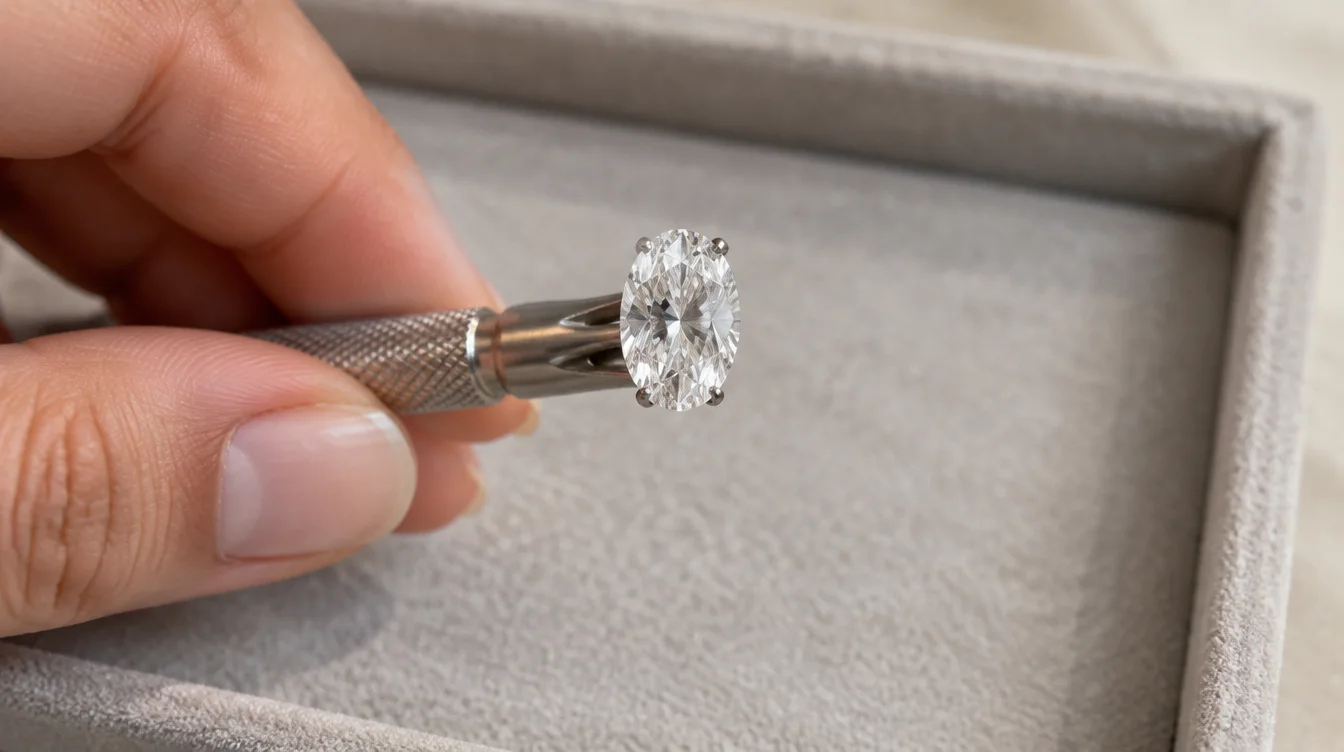
For an online listing, play the full video at normal speed. Pause after you have seen the whole movement. One paused frame can make a lively stone look worse than it does in motion. A seller’s chosen bright frame can do the reverse. Neither still shows how often the band appears.
Some 360 degree clips spin the diamond while its tilt stays nearly fixed. That view helps, but it may not answer your question. Ask for a short clip that tips the stone toward and away from the camera as well. The Ouros Jewels discussion of oval videos likewise recommends watching whether the central area shifts between brightness and shadow.
Keep the camera near a normal face up view for part of the clip. At an extreme angle, a diamond may look unlike the stone you will see on your hand. If the center stays dark through gentle tilts and keeps drawing your eye, compare another stone. Motion gives you a first verdict. Varied light tests whether it holds.
Check the same stone in light you actually use
One lighting setup cannot show how an oval will look everywhere you wear it. Bright display lights can create strong flashes. Soft room light may make a persistent dark center easier to notice. Diffuse daylight offers another view without the sharp spots common in jewelry counters. Compare the same face up view in at least two of those settings.
Try to keep your viewing distance similar in each place. Stand in a bright room, then move to a spot with softer light. If you are in a shop, ask to step away from the display case while the seller holds the stone securely. Do not make your decision under a spotlight alone, especially if the diamond will spend most days in an office or at home.
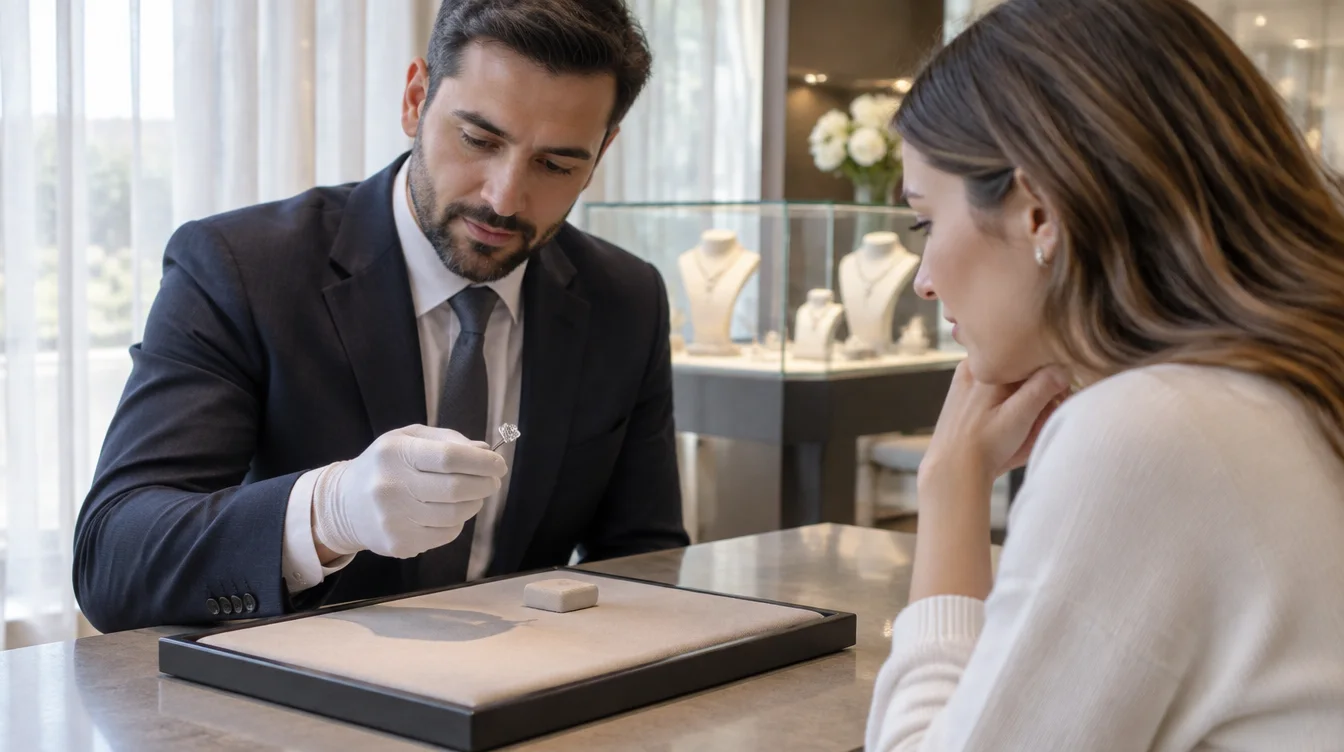
For remote shopping, request short clips in diffuse daylight and normal indoor light. A phone video can be useful if it shows both settings without filters or edits. It may not match what you will see in person, since camera exposure can change the dark area’s appearance. Treat it as added evidence, not a promise.
Look for a pattern across the views. A center that darkens for one brief angle may feel different from one that stays dark in soft daylight and room light. If the videos disagree, see the diamond yourself or ask for another view. Next, ask for views that let you compare stones fairly.
Ask the seller for evidence a grading report cannot give
Ask to see the actual diamond, not a sample with similar details. Request a face up photo, a clip with gentle tilts, and views in more than one light. Check that the report number matches the stone shown. If you cannot see it in person, ask about return terms before you pay. That gives you a chance to check its look when it arrives.
A grading report gives you important details about the diamond, but it does not grade the severity of its bow tie. Frank Darling notes that bow ties are not listed on grading reports. That is why a good report and a disappointing face up view can belong to the same stone.
Oval diamond cut quality still matters, but listed proportions and symmetry cannot replace seeing the stone. Two ovals with similar report details may show different contrast at the center. Do not let a good report override what you can see. By the same token, do not reject a lively stone because one photo caught a dark moment.
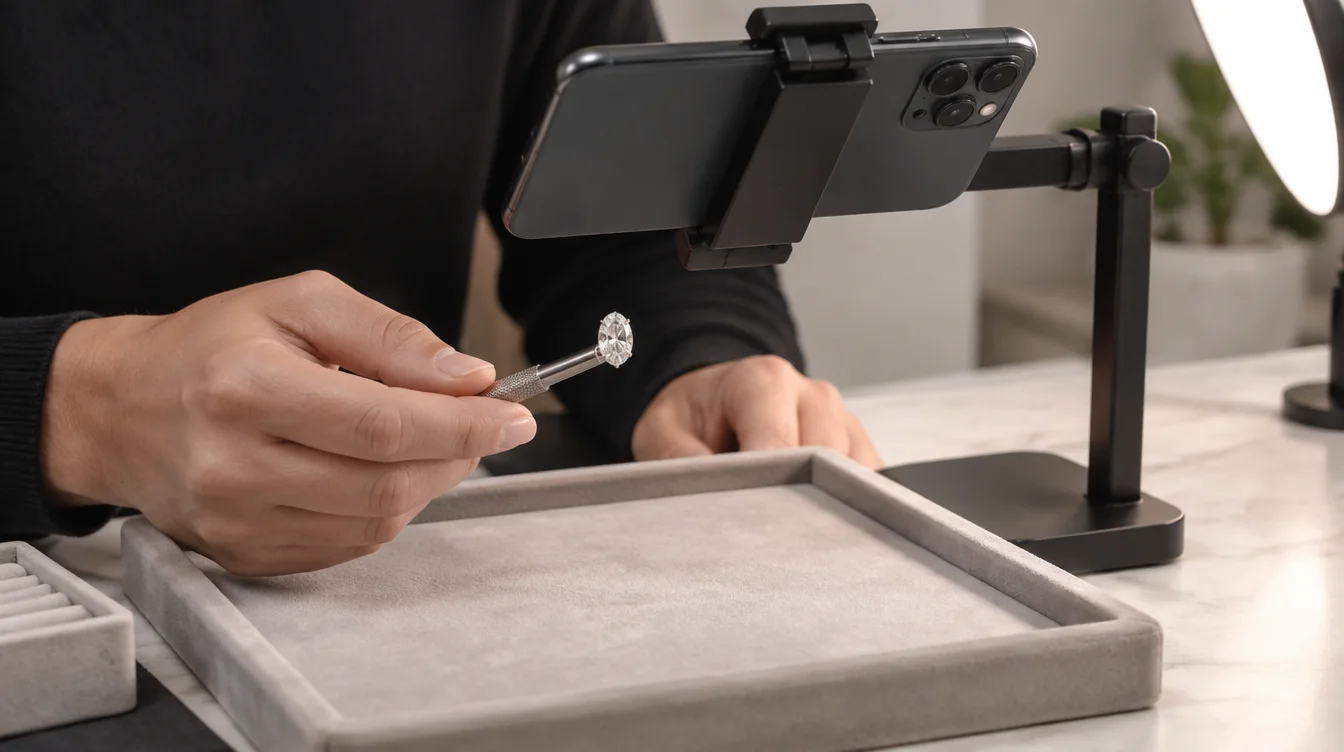
If the seller cannot provide a useful moving view, decide whether you are comfortable relying on an in person inspection and a clear return policy. If neither is possible, uncertainty is part of the purchase. Better evidence lets you compare stones by the same standard, rather than by the quality of their marketing photos.
Compare two oval diamonds using the same test
To compare two ovals, use the same light, motion, and viewing distance. Imagine two stones with reports you already accept. Stone A has a dark band in its listing photo, but its center flashes as it tilts. Stone B looks bright in its photo, yet a wide dark area stays visible through much of a gentle tilt. This example is illustrative; it does not describe real stones.
Under this test, Stone A deserves another look. Its first image may have caught a dark instant. Stone B needs a closer check in soft light, since its bright still may hide a center you would notice often. Neither gets an automatic verdict until you view both at a normal distance. The same questions must apply to each.
A practical three pass decision test
First pass: notice your first impression
View each diamond without pausing or zooming. Which looks brighter as a whole? Note if your eye lands on a black band before you see the outline or sparkle. That first response matters. You will not inspect the ring like a lab sample each morning.
Second pass: follow the center
Watch both stones tilt in the same light. Does the dark area break up, shift, or lighten? Watch each clip more than once. An oval diamond bow tie effect may look heavy in one frame but mild in motion. A bright listing photo may hide the reverse.
Third pass: change the light
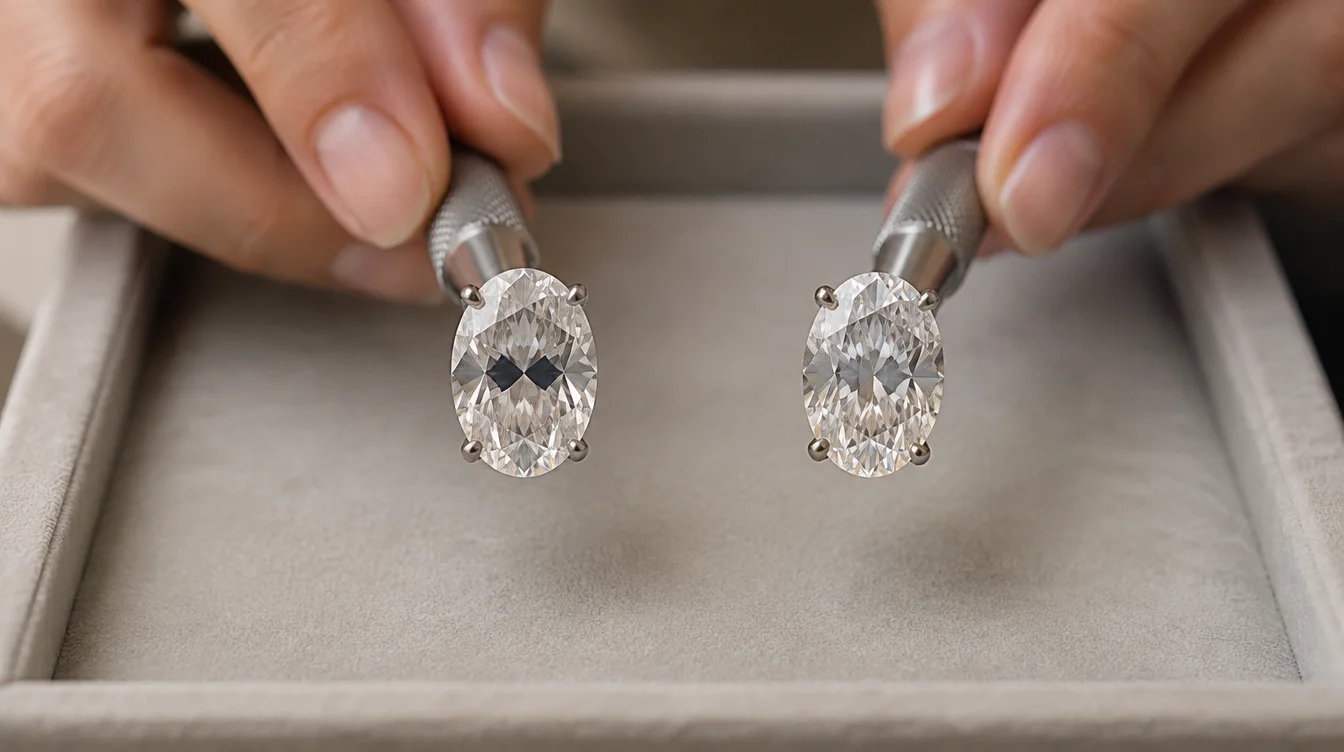
Compare the stones again in softer light and at normal distance. If one center still distracts you, set that stone aside. If both look lively, choose the one you prefer. This test gives no universal score. It gives you a fair way to judge them before you make your choice.
Common questions about oval bow ties
The short answers below depend on what the diamond looks like in motion, not just on its report. They can help you decide what to check before you accept the stone.
How can I tell whether a bow tie is acceptable?
Ask “how much bow tie is acceptable in an oval diamond” while viewing it from above in varied light. A brief shadow that changes may be fine. A dark band that stays clear and bothers you is a sound reason to pass. Your preference matters more than a claimed severity label.
Do all oval diamonds have a bow tie?
Some central contrast is common, but not every oval has a strong or distracting bow tie. When people ask “do all oval diamonds have a bow tie,” the useful question is how the contrast behaves. Does it move, or does a dark band keep taking over the center? Compare actual stones rather than relying on one broad answer.
Can a setting hide a strong bow tie?
A setting may change the light around a diamond, but it cannot change its facet pattern. Do not buy a stone whose center you dislike on the hope that a mounting will fix it. Ask to view the diamond as it will be worn if the seller can show you safely.
How do I avoid a bow tie when buying online?
If you search “how to avoid bow tie in oval diamond,” ask for video of the actual stone as it moves in varied light. Check the return terms. Then inspect the diamond soon after it arrives. No still image or report can settle this visual choice for you.
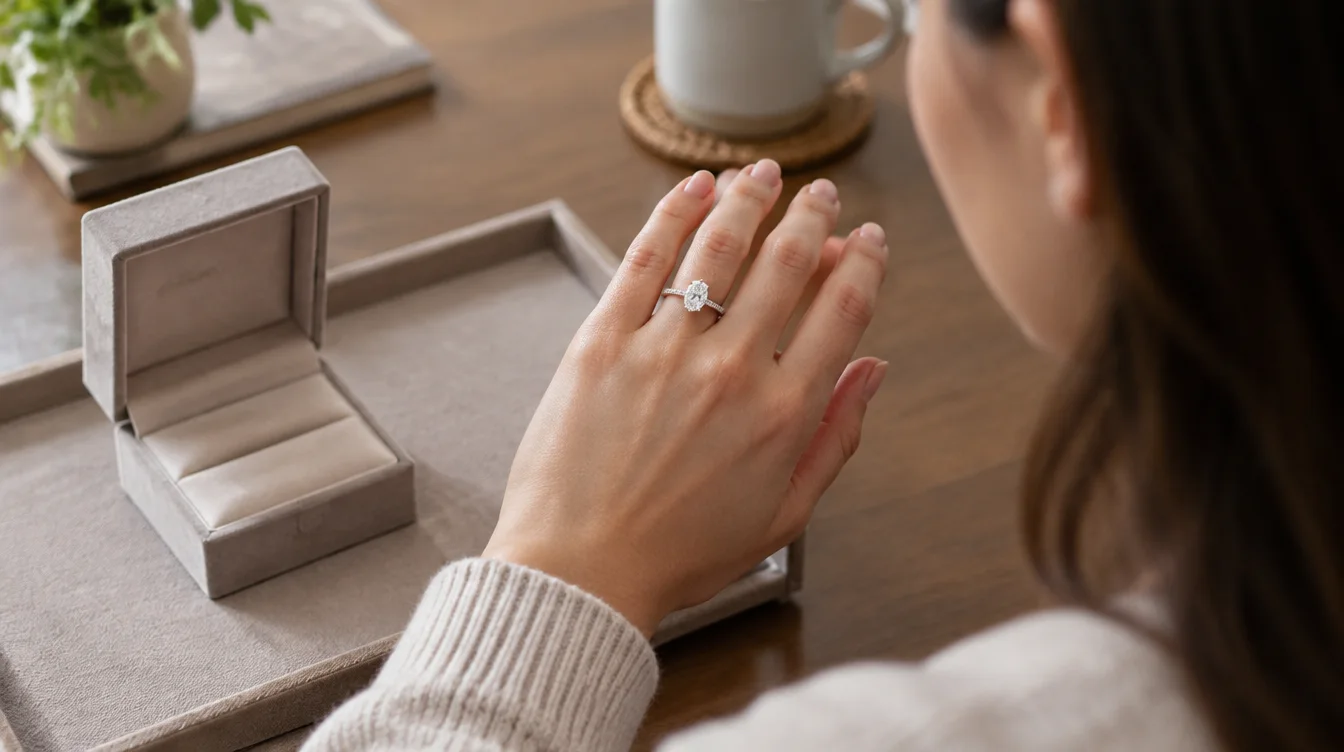
Those answers point to one final choice: whether you like the center you keep seeing, not the center you hope a better photo will reveal.
Choose the oval you like seeing again and again
The oval diamond bow tie effect should affect your choice only if it changes how you feel about the stone in real light. Use the report for the details it records. Judge the center with motion, varied light, and your own eyes. If the dark band keeps taking over, ask to see another oval.
Searches for “oval diamond bow tie examples” can show you what to spot. They cannot show how your chosen diamond will behave. Broad advice on oval diamond cut quality has the same limit. If you are asking how to choose an oval diamond from a short list, request comparable clips of the actual stones. View them at normal distance. Keep the one that looks lively to you, and pass on a center you cannot stop noticing.