Omega back earrings too tight? The fit detail you should check before bending anything
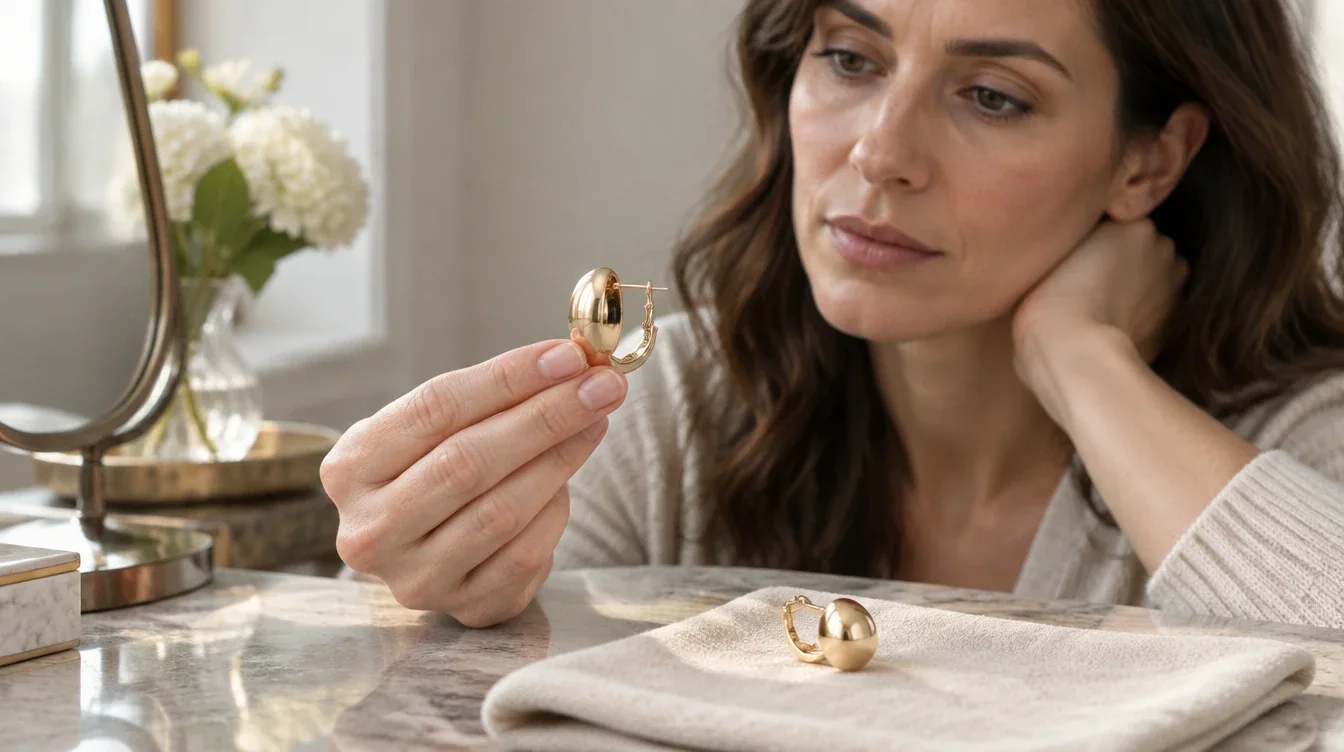
If you find your omega back earrings too tight, take them off and check where the clip presses. A jeweler may be able to adjust the fit, but the right change depends on the closure and what is causing the pressure. Do not bend the back while it is on your ear, and stop wearing the pair if it leaves your lobe sore.
What are omega back earrings, and where should they touch?
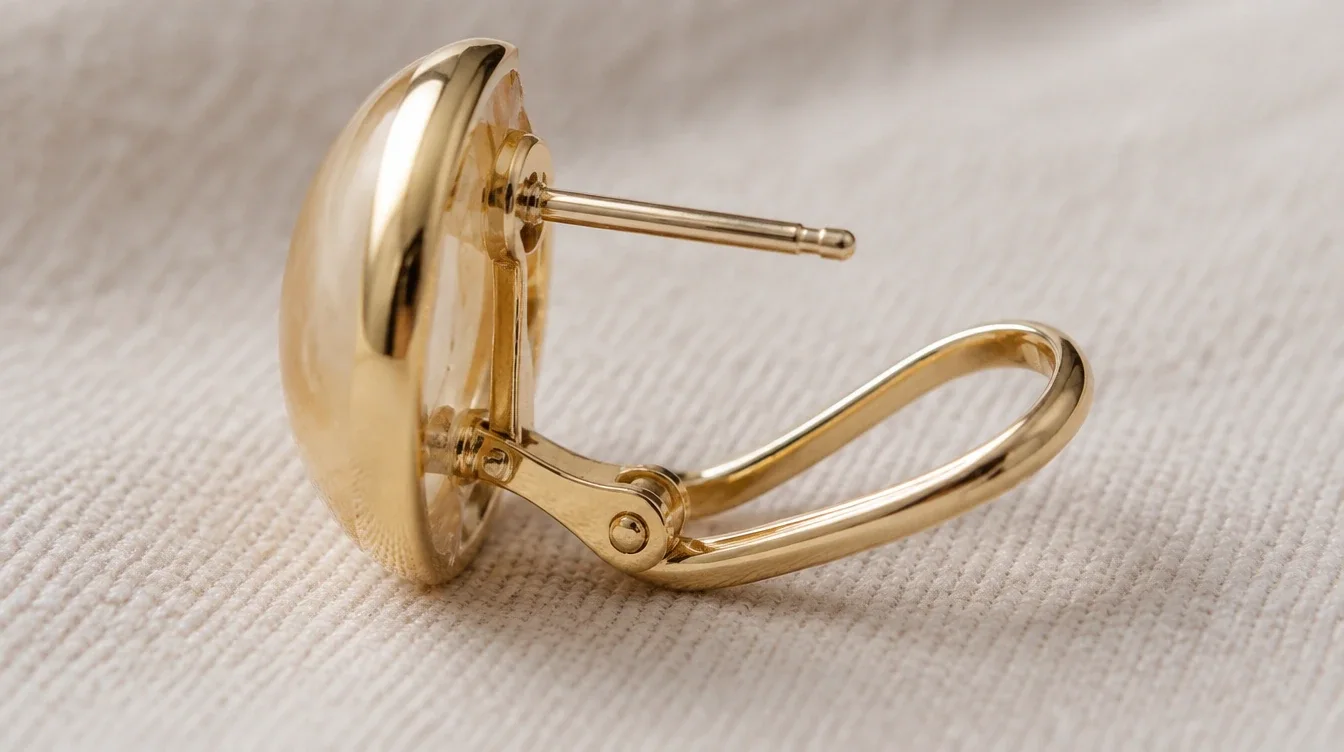
An omega back has a hinged, curved clip that rests behind the earlobe. Some pairs also have a post that passes through a piercing. The clip supports the earring front, which can be useful with a larger design, as Bounkit’s closure guide explains.
The clip should rest against your lobe without making you want to pull it away. A pierced omega back uses both the post and the clip. A pair made for unpierced ears relies on the clip for its grip. That difference matters: loosening a clip without a post may make the earring easier to lose.
If your question is “what are omega back earrings,” look for the curved piece that moves behind the ear. A butterfly back is a separate piece that slides onto a post. A hinged hoop closes by seating its post in a catch. Neither should be adjusted as though it were an omega clip.
Once you know the closure, check whether its pressure is spread across your lobe or focused in one spot.
Omega back earrings too tight? Find the pressure point first
A sore lobe tells you the fit needs attention, but it does not identify the faulty part. Notice whether pressure sits directly under the curved clip, at the earring front, or near the piercing. Take the earrings off before inspecting them.
Look at your lobe soon after removal. A brief, light impression can show where the metal touched. Pain, deep marks, broken skin, or a mark that persists are reasons to leave the pair out. If the skin is swollen, hot, or increasingly painful, seek advice from a healthcare professional rather than treating it as a jewelry adjustment.
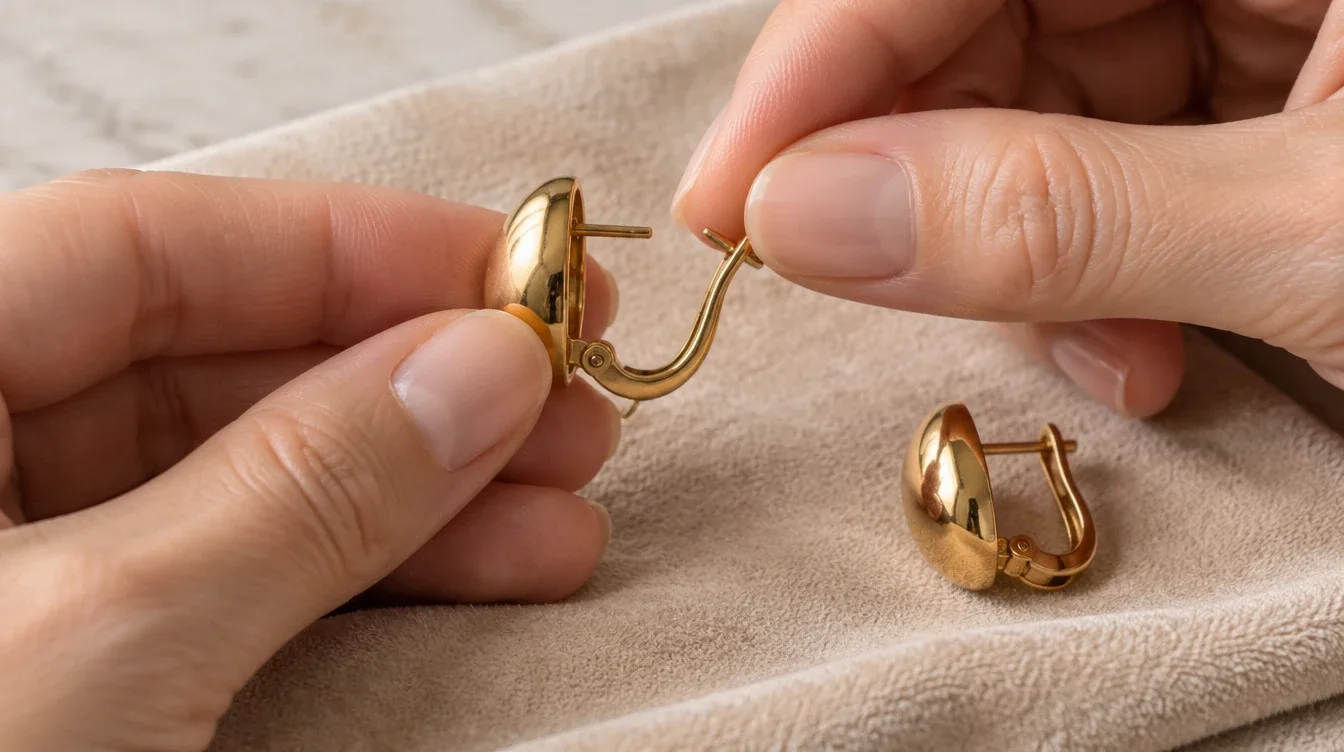
Compare the two earrings on a soft cloth. Do the clips appear to sit at the same angle? Does one open less smoothly? Is a post visibly bent, or does a hinge look damaged? These observations help a jeweler, but they are not a reason to straighten the parts yourself.
When omega back earrings hurt on only one side, compare both the hardware and where each earring sits on your ear. Lobes and piercings need not match exactly. The comparison narrows the question without assuming that the painful clip is simply too strong.
Next, check the pair without using your ear as a test bench.
How can you check the fit without changing the metal?
You can check an omega closure’s movement and contact without trying to adjust it. Work over a soft cloth so a dropped earring does not strike a hard surface.
Open and close each clip off your ear
Hold the earring by its solid front and move the clip gently through its normal range. Stop if it catches, twists sideways, or needs unusual force. Compare it with the matching earring. A smooth motion does not prove the fit is right, but a snag gives you a clear reason to request an inspection.
Check how the earring sits
If the skin is comfortable and unbroken, put the earring on as usual. Use a mirror to see whether the front lies where it should. For a pierced pair, the post should enter the piercing without being forced to meet the clip. Remove the earring at once if closing it pinches.
Imagine one earring hurts where the clip’s tip meets the lobe, while its mate feels fine. Tell the jeweler that exact spot. “The back is too tight” describes the symptom; the contact point gives them something useful to examine.
Those checks show why advice on how to loosen omega earring backs cannot stop at bending the curved piece outward.
How to adjust omega earring backs safely
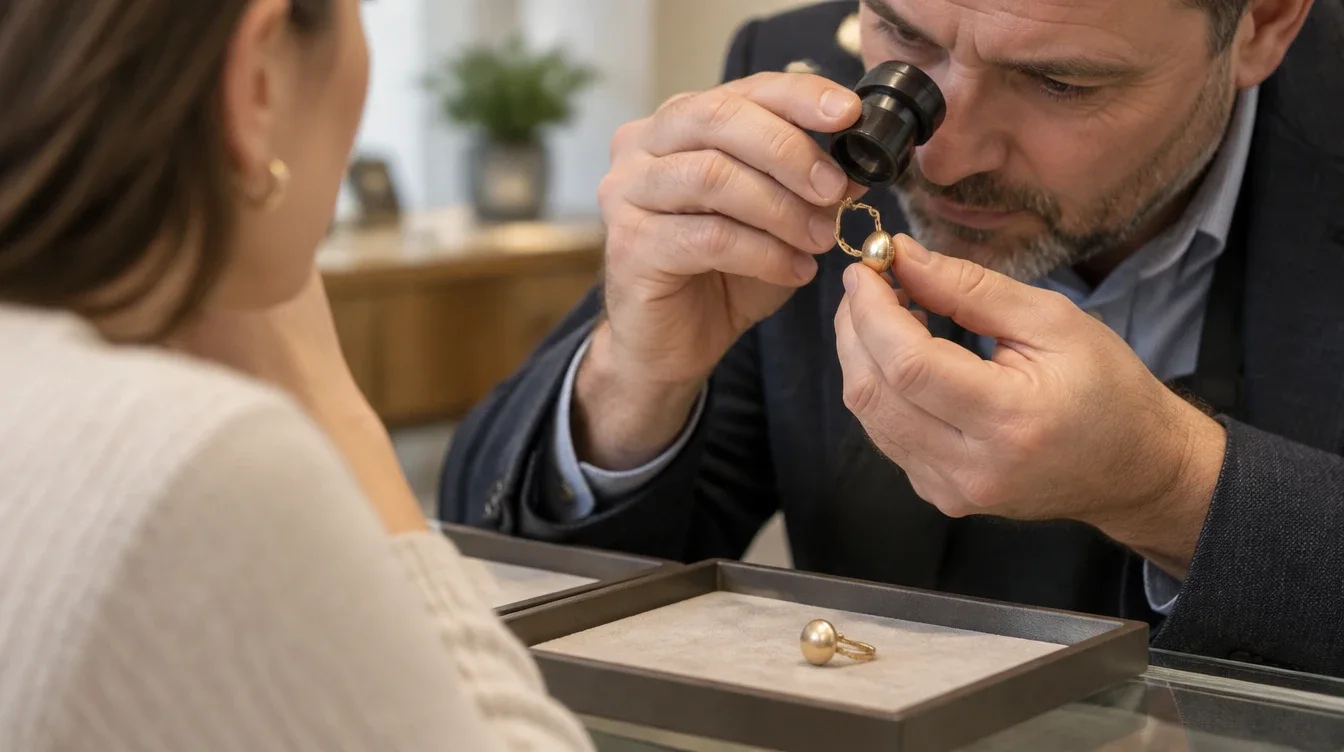
If you want to know how to adjust omega earring backs, have a jeweler assess your pair before moving any metal. The jeweler needs to check the clip’s spring action, the space for your lobe, the hinge, and any pierced post. Changing one part may not fix a problem caused by another.
There is a distinction between spring tension and spacing. In Stuller’s bench guidance on omega backsexplains that loop tension and clip spacing are separate. Its bench instructions cover work on the mechanism. They are not directions for bending a finished earring against your lobe.
Ask the jeweler what they plan to change and how they will check that the earring still holds. Bring both earrings, even if only one pinches. Mention whether the pair is pierced or unpierced, how soon discomfort starts, and where it touches. If it is vintage or has fragile decoration, say so before work begins.
Searches for how to loosen omega earring backs often turn up advice for butterfly backs or ordinary clips. GIA’s bench tip on clutch backs concerns curled springs that grip a notched post. That is a different mechanism, so its adjustment method should not be applied to an omega clip.
Professional adjustment is only useful if the pair remains comfortable and secure afterward.
What if loosening the clip makes the earrings slip?
A looser omega clip may ease pressure, but it may also reduce support. The tradeoff is sharpest for an unpierced pair, since the clip alone holds it on the lobe. A pierced post adds another point of attachment, though it does not make a poorly fitting clip comfortable.
Ask for a fit check with the earrings on your ears after any adjustment. The front should sit in its intended position. The clip should rest against the lobe without a sharp pinch. With ordinary head movement, the earring should stay in place without you holding it. Do not tug hard to test the grip.
If a clip must squeeze painfully to keep a heavy earring upright, more tension may not be the right answer. Its weight, front shape, or position on your lobe may be part of the problem. Ask the jeweler whether that pair can be made comfortable while keeping a dependable hold. Be open to hearing that the design may not suit long wear on your ears.
Now you have a better way to judge the result than whether the clip simply feels “less tight.”
How do you decide whether the adjustment worked?
An adjustment worked only if the earrings feel comfortable and remain steady during normal wear. Try them on while you are with the jeweler, if possible, and point out any remaining pressure right away.
Pay attention to where the clip lands, not just how easily it closes. If it still strikes the same sore spot, another change may be needed. If the front starts to tilt or the clip shifts as you move, the new fit may be too loose. Neither result calls for squeezing or spreading the metal at home.
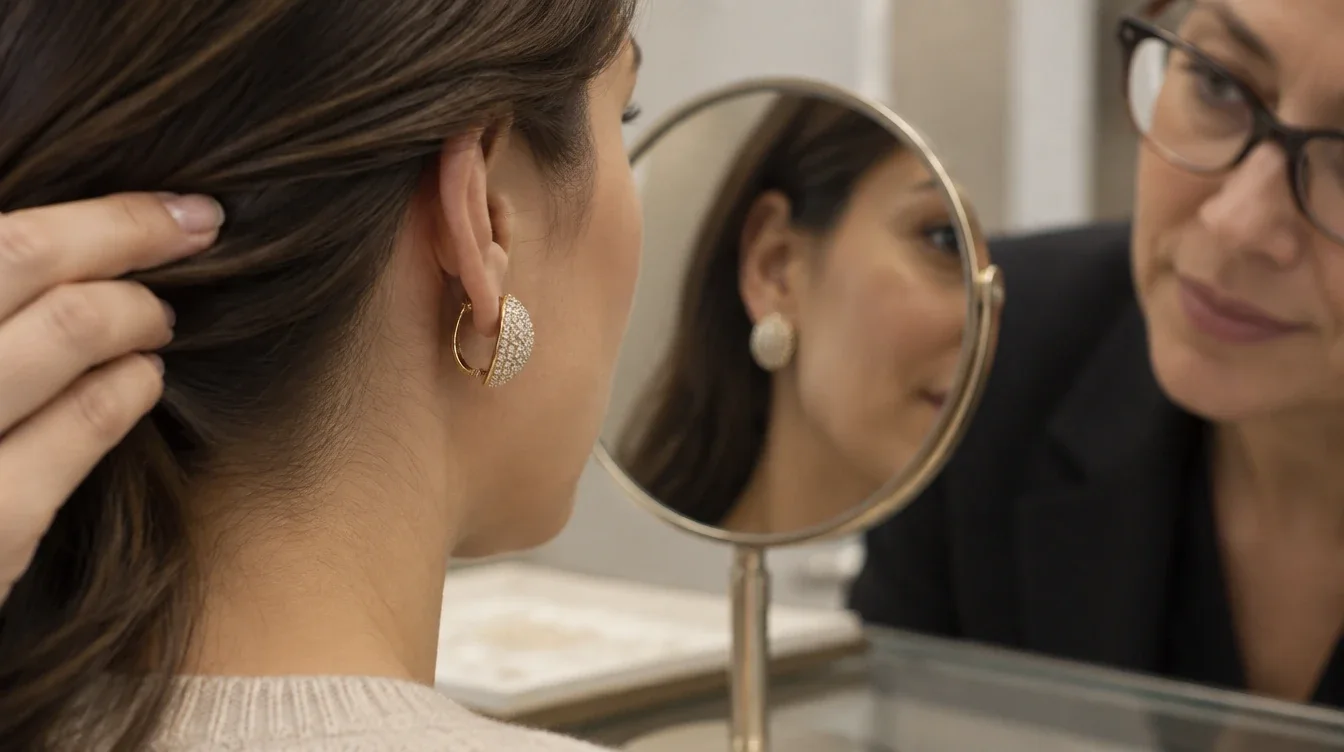
Once your lobe has recovered from any soreness, a short, quiet wear test can tell you more than a quick try on. Take the earrings off if pain returns. For a valuable pair, do not keep wearing them to see whether you “get used to” a grip that feels uncertain.
A few common questions may help you decide what to do before your next try on.
Frequently asked questions about tight omega backs
A tight omega back calls for a fit check, not a standard adjustment that works for every pair. These answers cover the choices owners most often face.
Can I bend an omega back at home?
Bending a finished omega back can change its grip or damage the hinge or post. Have a jeweler inspect the pair, especially if it is valuable, vintage, or visibly out of line. Keep it off your ear while you decide.
Why do my omega back earrings hurt after a few minutes?
If omega back earrings hurt after a short time, the clip may be pressing too hard or concentrating pressure at one point. Remove them and note the sore spot. A jeweler can then check the closure and how the earring sits on your lobe.
Does a pad fix an omega back that pinches?
A pad may change where the clip touches, but it cannot reliably correct excessive spring pressure or damaged hardware. It also changes the space available for your lobe. Ask a jeweler to assess the fit before using padding to mask pain.
How do I know whether an omega clip is too loose after adjustment?
The earring may shift, tilt, or feel ready to slide during normal movement. Take it back for a fit check rather than bending it tighter yourself. A comfortable clip still needs enough grip for that specific pair.
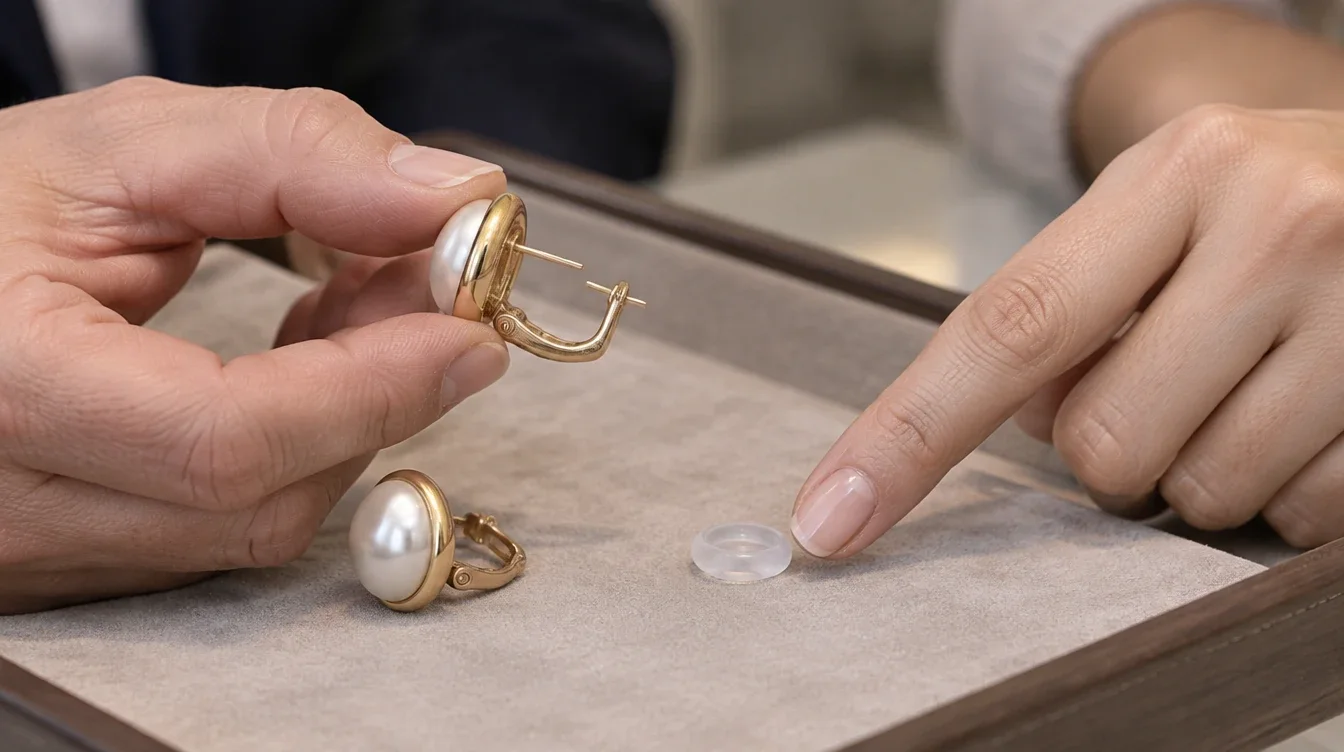
If the answer remains uncertain, bring the earrings and your observations to the jeweler instead of making another change yourself.
Give the pair a fit that your ears can live with
If you find omega back earrings too tight for comfortable wear, do not keep them on just because they look secure. Find the pressure point and compare both closures. Leave metal adjustments to someone who can check the hinge, spacing, and grip together.
Bring both earrings to a jeweler and show them exactly where the pair pinches. Ask to try the result on before you leave. Your ears, not the sound of the clip closing, will tell you whether the fit is finally right.