naturally dark Tahitian pearls vs dyed black pearls: Are You Paying for Color You Can Prove?
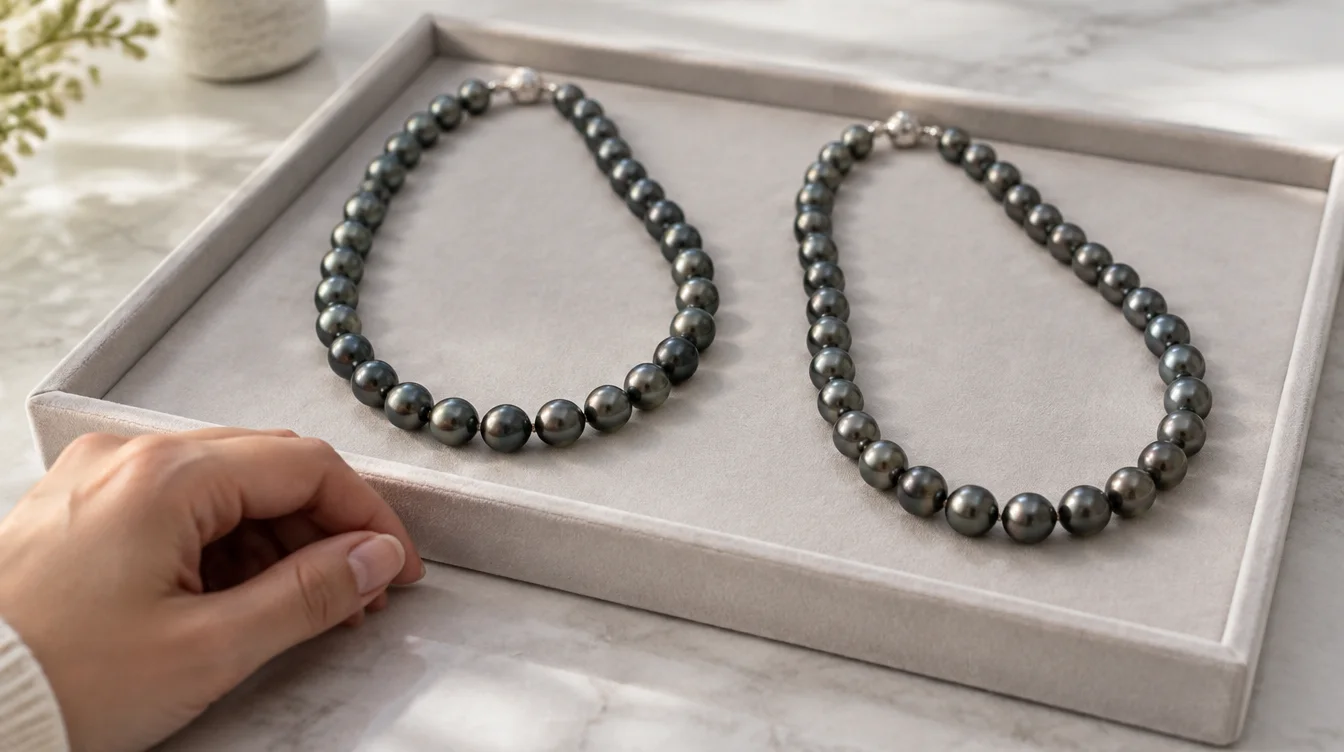
Pay a premium for natural dark color only if the seller names the pearl, discloses treatments, and backs the claim at that price. When choosing between naturally dark Tahitian pearls vs dyed black pearls, looks alone are not proof. A disclosed dyed pearl can be a good buy if you love it and pay for what it is.
What changes the price in naturally dark Tahitian pearls vs dyed black pearls?
The premium rests on two claims: what grew the pearl and how it got its color. A genuine pearl can be dyed. A pearl can also have natural dark color without being Tahitian. Ask the seller to name the pearl type and color origin before comparing prices.
Tahitian cultured pearls grow in the black lipped oyster, Pinctada margaritifera. Their dark colors range from gray and green to shades with blue, purple, or other overtones. Most Tahitian pearls sold as jewelry are cultured. People start their growth inside the oyster. “Natural color” refers to color. It does not mean the pearl formed without human help. The Black Pearl Buying Guide describes that distinction and the range of Tahitian colors.
That wording matters in a listing. “Natural Tahitian pearl” might mean a cultured pearl with natural color. It might also appear to claim a rare pearl formed without culturing. If the listing is unclear, ask the seller to rewrite it. You should not have to guess what supports the price.
Dyed black freshwater pearls are genuine cultured pearls too. Dye changes their color. It does not make them plastic or glass. A seller who says “dyed freshwater cultured pearl” gives you useful facts. The jewelry is not fake. The problem is a dyed pearl sold or priced as a naturally dark Tahitian one.
Nor does “black” promise one fixed shade. In jewelry listings, it may describe charcoal, dark green, or a pearl that looks nearly black in one light. Pearls of Joy notes that Tahitian pearls show a range of dark body colors and overtones rather than a uniform jet black appearance. Color names are helpful for shopping, but they cannot settle identity or treatment on their own.
Start with those two claims, then ask what evidence supports each one. That makes the visual clues easier to put in their proper place.
Can you judge a dark pearl from photographs?
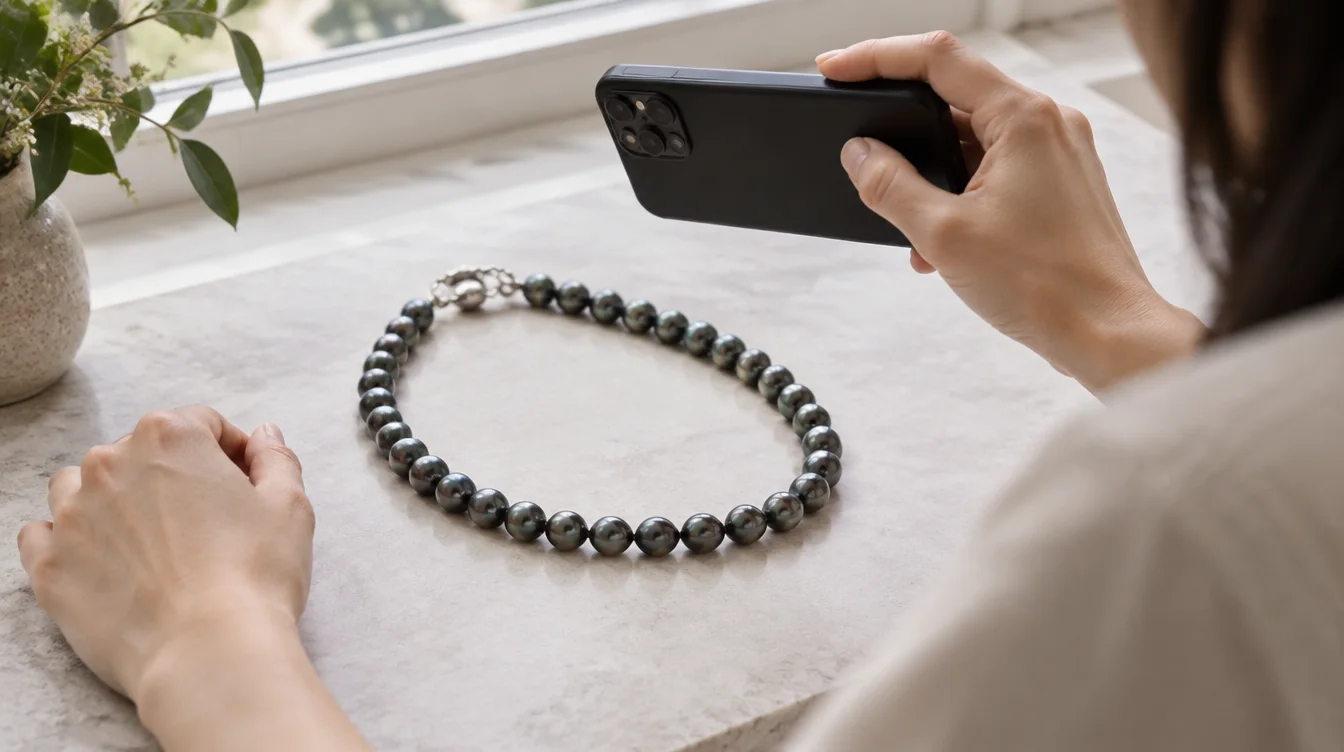
No photo can reliably prove a dark pearl is Tahitian or its color is untreated. Photos help you decide if you like the piece. They may also raise questions. They cannot replace clear disclosure or proper testing.
What color can show you
A Tahitian pearl may have a dark body color with green, blue, purple, or peacock overtones. Those colors may shift as you turn it in the light. A treated pearl can also have lovely color. One photo may hide much of what you would see in person. An overtone is not a certificate.
Ask for images of the exact pearl in soft daylight and normal indoor light. For a strand, request a short video of its full length as it turns. Check luster, visible marks, and how well the pearls match. A studio image can help, but may make a quiet pearl look more vivid than it will at your desk.
Backgrounds matter too. Dark pearls may look different against white paper, skin, and black fabric. Bright glare can make one area look pale. A shadow can make a gray pearl look black. If color drives the premium, ask to see the pearl in light like you will wear it in.
What surface and drill holes can show you
Surface marks, shape, and drill holes may raise questions, but they do not give a sure answer. A chipped coating at a drill hole can point toward an imitation bead. It does not mean every genuine dyed pearl will show visible dye there. Likewise, a smooth pearl is not automatically fake, and an irregular pearl is not automatically Tahitian.
Some buying guides suggest touch or a tooth test to separate pearls from imitations. That is a different question. Even if those checks suggest genuine nacre, they cannot name the mollusk or prove untreated color. Scraping a valuable pearl also risks harm. For naturally dark Tahitian pearls vs dyed black pearls, skip that test.
Use visual review as a filter, not a verdict. Once a pearl passes the “do I like it?” test, move to the claims the seller will put in writing.
What should a seller disclose before you pay a Tahitian premium?
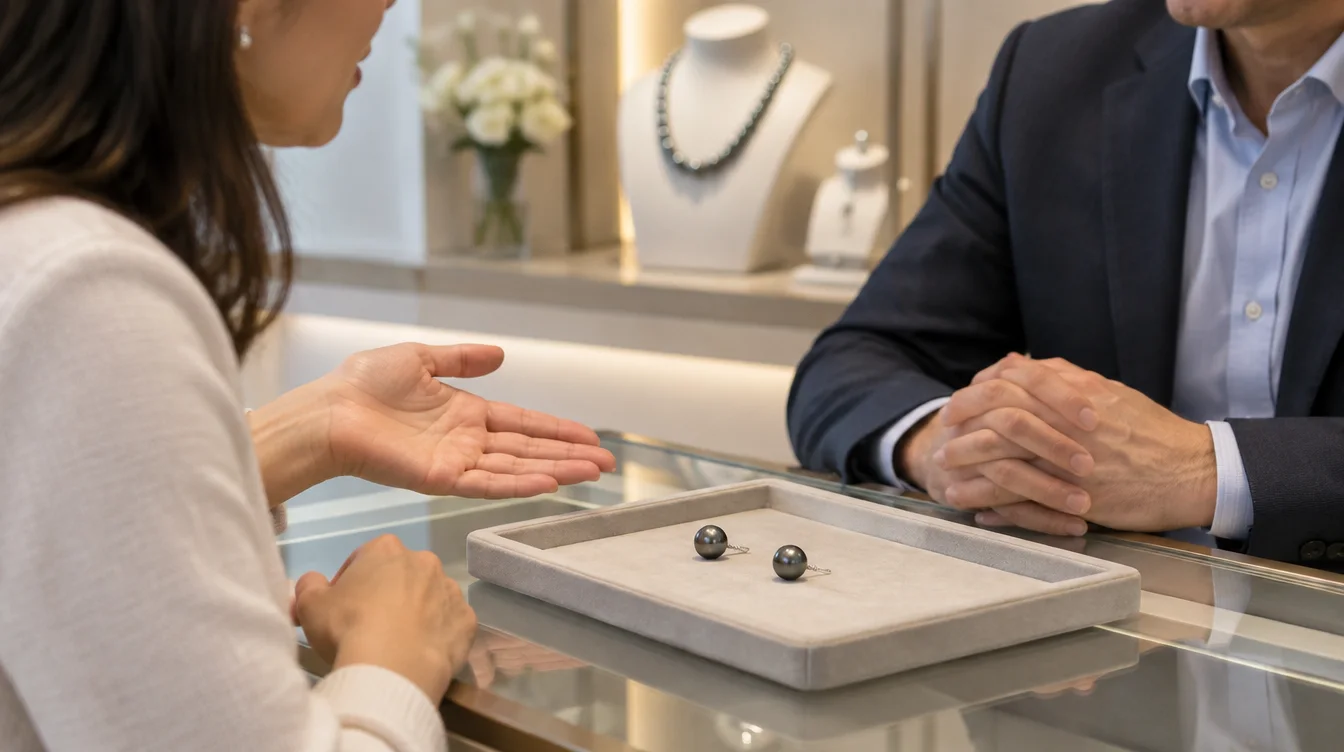
A seller should name the pearl and state whether its color is natural or treated. They should also explain the evidence. Those facts should cover the exact piece you will receive. “Black pearl necklace” names a color. It is not enough to justify a Tahitian price.
Ask for the full pearl description
Ask for a written description that names a cultured Tahitian pearl, if that is the claim. It should also state natural dark color, if the seller can support it. If the pearl is dyed freshwater or treated Akoya, the description should say so. The Pearls of Joy guide describes dyed freshwater and Akoya pearls as other sources of dark pearl jewelry.
For a strand, ask if every pearl has the stated identity and color origin. Mixed strands can be beautiful, but the description must match the price. For earrings, ask if the claim covers both pearls. A report on one loose pearl does not describe its untested mate.
Size, shape, luster, surface condition, and matching matter too. Two Tahitian strands with natural dark color may have different prices. Their visible quality may differ. Color origin is just one part of value. It does not make every naturally dark pearl fine jewelry.
Ask what “authenticated” actually means
An authentication badge may cover only part of a sale. It might confirm a metal mark or check an item against its listing. Pearl type and color origin could remain untested. Ask who examined the pearls, what they tested, and what they found.
A Pearl Guide discussion shows why buyers ask this question. Participants disagreed over a strand’s identity while the buyer tried to understand what an online authentication had established. A forum debate is not proof about that strand. It is a useful reminder that “authenticated” needs a defined meaning.
Read the return terms before paying. If you want an independent opinion, allow time to receive the jewelry and arrange a review. You also need time to return it if the description is wrong. Ask who pays shipping and whether mounted or worn jewelry still qualifies.
Clear seller language may be enough for a modest purchase. At a higher price, or with more doubt, ask if independent evidence is worth the cost.
When is a GIA pearl report worth requesting?
A GIA pearl report may be worth asking for if identity or natural color drives much of the price. First ask which pearls it covers and what it says. Its findings and scope matter, not a logo in a listing.
Pearl testing can go beyond what a shopper sees in photos. The Pearls of Joy guide describes lab imaging and other tests used to assess color treatment. That is why a home color check is not conclusive. Testing may have limits for a mounted piece. Before paying, ask the lab or seller what the proposed service can establish.
Match the report to the jewelry
For a loose pearl, compare the report’s size and identifying details with the item offered. For jewelry, ask if it covers the whole piece, some pearls, or one pearl tested before setting. Keep the listing, invoice, report, and seller’s written answers together.
Do not assume a report answers every buying question. A finding about identity does not, by itself, tell you whether you like the luster or whether the necklace is well matched. A natural color conclusion also does not set a retail price. It supports one claim you can then weigh against the piece’s visible quality.
Use the price gap to set your evidence threshold
Here is an illustrative decision, not a market price: suppose a seller offers a claimed natural color Tahitian strand for 900 units of your currency and a disclosed dyed strand you like for 300. The difference is 600 units. You are not paying all 600 solely for color origin, since size, luster, matching, and materials may differ. But if those features look similar, ask what documented facts explain the gap.
Now imagine the seller cannot say whether every pearl was examined and will not allow a return after independent review. Even a striking strand becomes a poor candidate for a provenance premium. If the seller gives a precise description, a report that covers the pearls, and workable return terms, you can judge the extra cost on firmer ground.
That framework works without a fixed price rule. The more you pay for a claim you cannot see, the more clearly that claim should be documented. Next, compare the two options on what they deliver to you, not just what they are called.
Which dark pearl gives you better value?
A naturally dark Tahitian pearl may offer better value if you like it, care about its origin and color, and trust the evidence. A disclosed dyed pearl may suit you better if you want a dark look for less. Neither is best for everyone.
Compare beauty on the same terms
Put the pieces under similar light, or request comparable images. Judge luster first: can you see a clear, lively reflection, or does the surface look dull? Then consider surface marks, shape, size, and how evenly a pair or strand is matched. Ask whether the color remains pleasing in normal indoor light, not just under a bright lamp.
Tahitian pearl value rests on more than a “natural color” label. A dull pearl may not appeal to you, even if its dark tone is untreated. A dyed freshwater strand can also look lovely. If you would choose it with both labels hidden, take that choice seriously.
Compare the claims on the same terms
Next, set appearance aside for a moment. What exactly does each seller promise in writing? Is the claimed Tahitian identity supported by a report or by the seller’s stated source and guarantee? Is treatment disclosed for the dyed option? Which purchase gives you a fair chance to inspect and return the piece?
For naturally dark Tahitian pearls vs dyed black pearls, compare similar quality and purchase terms. A large, bright Tahitian pearl tells you little beside a small, dull dyed one. Choose pieces you might wear. Then compare their stated identity and evidence.
Personal taste belongs in this calculation. Some buyers want the color range associated with a Tahitian pearl. Others want a uniform black strand for occasional wear and prefer to spend less. A natural color claim is meaningful only if you care about it and the seller can back it up.
One question may settle your choice. What would you do if the premium claim remained uncertain? If you would still want the piece at its price, you may need less paperwork. If you would return it, settle the evidence question before checkout.
What questions do buyers ask about black pearl color?
Buyers often ask if “black” means natural, whether dye leaves clues, and what a report proves. These answers keep pearl identity separate from color origin.
Are black pearls naturally black?
Some cultured Tahitian pearls have natural dark color. But “black pearl” does not identify a pearl or prove untreated color. Many look gray, green, or purple as light changes, rather than flat black. Ask for the pearl type and color origin in writing.
How to tell if pearls are dyed?
Visual clues may prompt questions, but cannot reliably settle how to tell if pearls are dyed in every case. A genuine dyed pearl may show no clear sign in a seller’s photo. Ask for treatment disclosure. Consider lab testing if the answer changes what you will pay.
How to tell if Tahitian pearls are real?
To answer how to tell if Tahitian pearls are real, check the seller’s exact claim and evidence for those pearls. Color shifts, weight, and surface marks are clues, not proof of oyster type. For a costly piece, ask what an independent report can confirm.
Does a GIA pearl report prove a strand is untreated?
A GIA pearl report covers only the submitted pearls and the findings it states. Read its color conclusion. Check how much of the strand was tested. If either point is unclear, ask before treating it as proof for every pearl.
Pay for claims the evidence supports. Choose the look you truly want.
Pay for the pearl you can identify and enjoy
When weighing naturally dark Tahitian pearls vs dyed black pearls, do not let a vivid photo or vague “rare black” label set the price. Ask the seller to name the pearl, state its color origin and any treatment, and explain the paperwork. Then judge luster, color, and matching for yourself.
A disclosed dyed pearl is an honest choice if you love its look. A naturally dark Tahitian pearl may be worth more to you if its character and documented origin matter. Before paying extra, send your questions in writing and keep the answers with your receipt. If the answers stay vague, keep shopping.