Why natural vs lab grown emerald for May birthstone jewelry is the question to ask before you buy
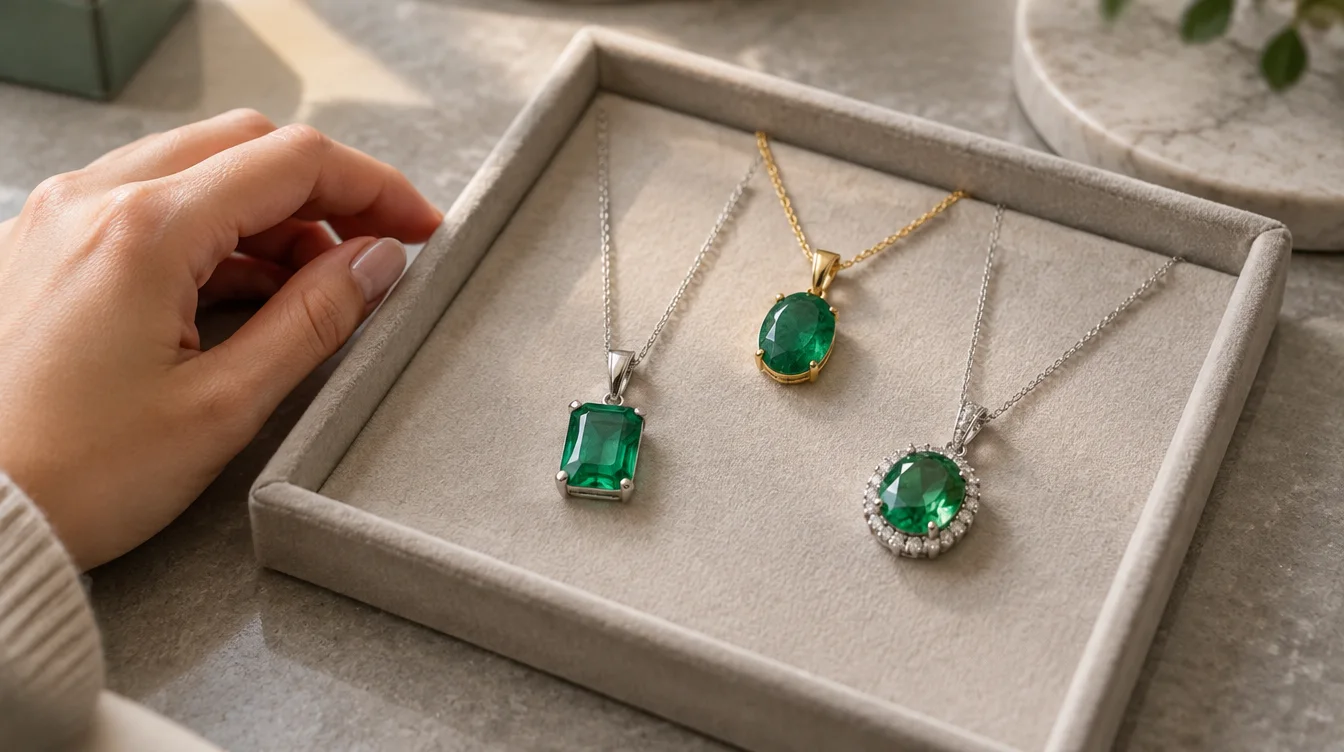
Choose a natural emerald if you value its origin. Choose a lab grown emerald if you want emerald material without paying for natural origin. Choose another green gem if color matters most. For natural vs lab grown emerald for May birthstone jewelry, check what the seller offers. A photo cannot prove a green stone is emerald.
Start with the stone’s identity, not its shade of green
May birthstone jewelry can hold a natural emerald, a lab grown emerald, or another green material. The listing should name the stone. Color cannot tell you what it is.
Natural emerald forms in the earth. Lab grown emerald is made by people, but it is still emerald material. Green glass is an imitation, not an emerald. A seller’s use of “real” or “genuine” may leave the origin unclear. The natural, lab grown, and imitation comparison makes the same useful distinction.
A treated natural emerald remains natural. Treatment describes something done to the stone, not where it grew. So “natural,” “untreated,” and “emerald” are three different claims. Ask about each one rather than assuming one proves the others.
Once the material is clear, you can judge what natural origin is worth to you.
Why natural vs lab grown emerald for May birthstone jewelry is not a clarity grade
Natural versus lab grown tells you where an emerald formed. It does not tell you if the stone is clear, attractive, or well cut. Both types can have features inside. A natural emerald may have visible inclusions. A lab grown one need not be flawless. Do not treat claims that all lab grown emeralds are clear as a buying rule.
What natural origin buys you
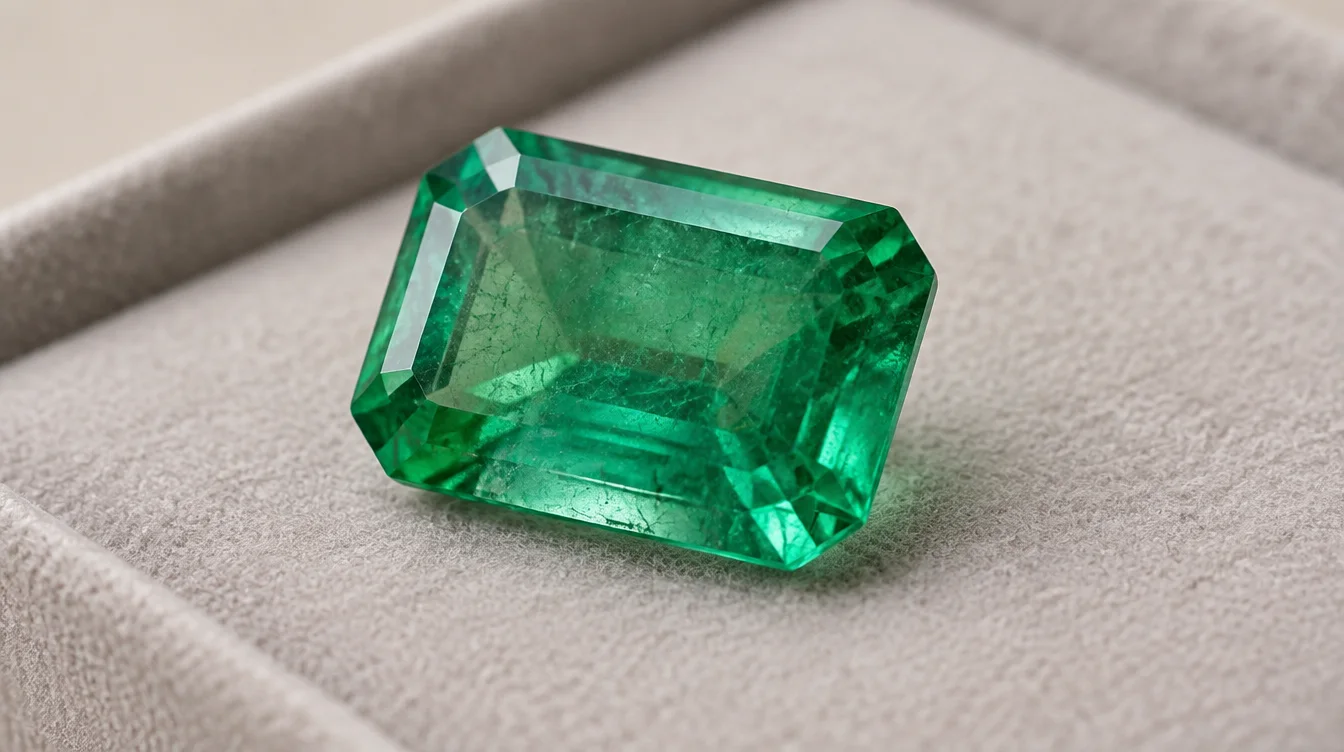
A natural emerald suits someone who wants a gem that formed without human growth. Its visible features may be part of its appeal. Still, natural origin does not excuse a dull face, distracting surface marks, or a color you do not enjoy. Compare the actual stone from the front, in ordinary light, before paying a premium for its story.
What lab grown origin buys you
A lab grown emerald suits someone who wants emerald material but cares less about its geological history. You should still like how the offered stone looks. A seller may call a lab grown emerald a “synthetic emerald.” That does not mean green glass. This emerald authentication overview.
For either origin, ask if the stone was treated for clarity. Origin tells you where it grew. Treatment tells you what was done to it. These facts matter when similar stones have different listing terms.
Compare prices only after the listings match
Lab grown emerald price means little until you know what the quote includes. A loose stone and a finished pendant are not alike. Rings may also differ in stone size, metal, or workmanship.
Make a simple comparison sheet. A note on your phone will do. For each listing, record the total price and currency. Add the stone’s origin, stated treatment, measurements, metal, and return terms. View both stones under similar light. Say one listing gives only carat weight. The other gives measurements and treatment details. Ask for the missing facts before you judge the prices. You do not need an invented market average.
Natural emeralds generally command a different price than lab grown emeralds because natural origin has its own appeal. Yet the supplied research does not establish a current price range for matched stones. Do not treat a striking discount as proof of either value or fraud. Ask what the stone is, what the price includes, and whether the seller will put those answers in writing.
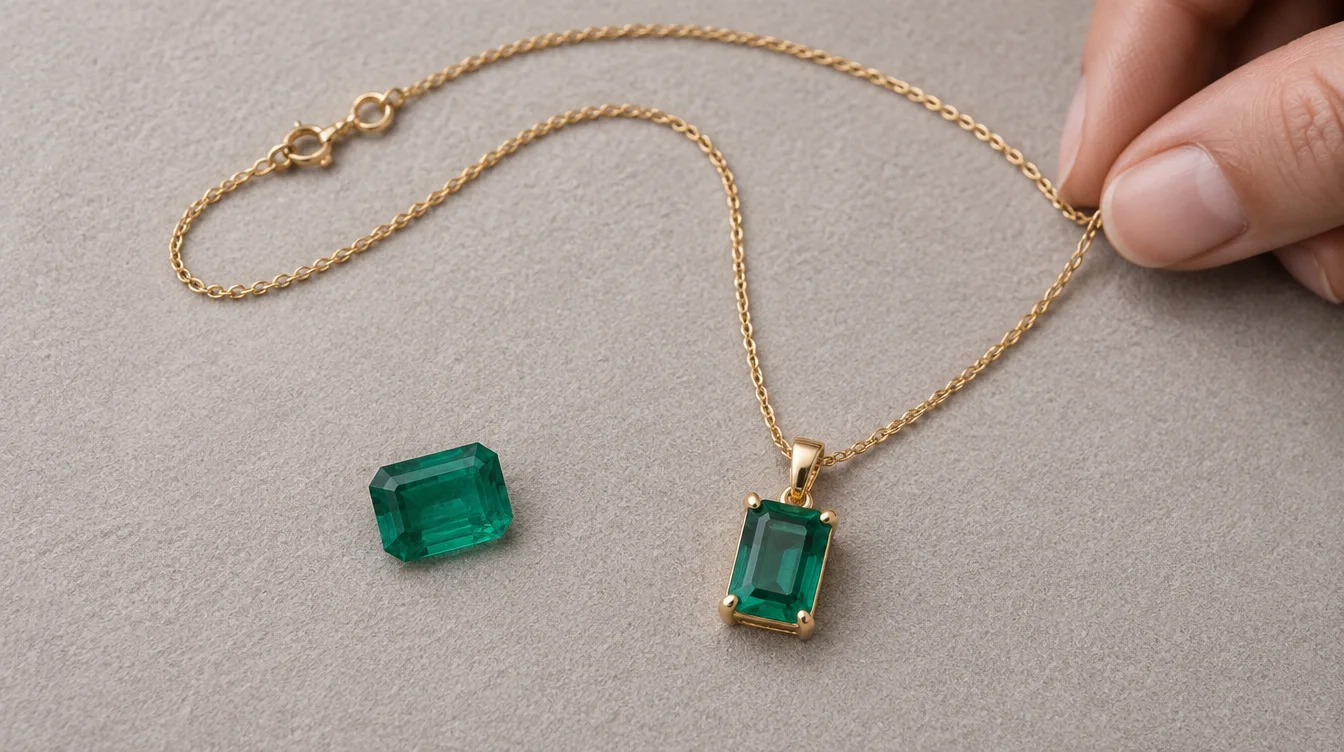
Price makes more sense once you have ruled out stones that were never emeralds to begin with.
When a green look alike is the more honest choice
Emerald alternatives make sense when you love green but do not need emerald material. They should be sold under their own names, not tucked behind a vague phrase such as “emerald style.”
Choose by material, then by appearance
Green glass can give you color at a modest cost. It is an imitation, not a gemstone bargain. A named green gem may suit you better if you like its own look and identity. For example, tsavorite and emerald have different visual appeal; one should not be represented as the other.
Ask the seller to name the material in plain terms. “Green stone” is not enough. Neither is “emerald cut,” which describes a shape or cutting style, not proof that the material is emerald. A green stone in that shape could be made from something else entirely.
Be just as clear when buying a gift. If the recipient expects an emerald, choose a natural or lab grown emerald and say which it is. If they asked for green jewelry, a named alternative may fit. You need not present a look alike as a rare find.
Whatever material you choose, look for its name in the listing.
Ask for these disclosures before you pay
For natural vs lab grown emerald for May birthstone jewelry, the listing should name the material. It should also state the growth origin and any known treatment. Ask the seller to confirm those facts for the exact piece, not just the product range. Keep the reply with your receipt.
Read the description as three separate claims
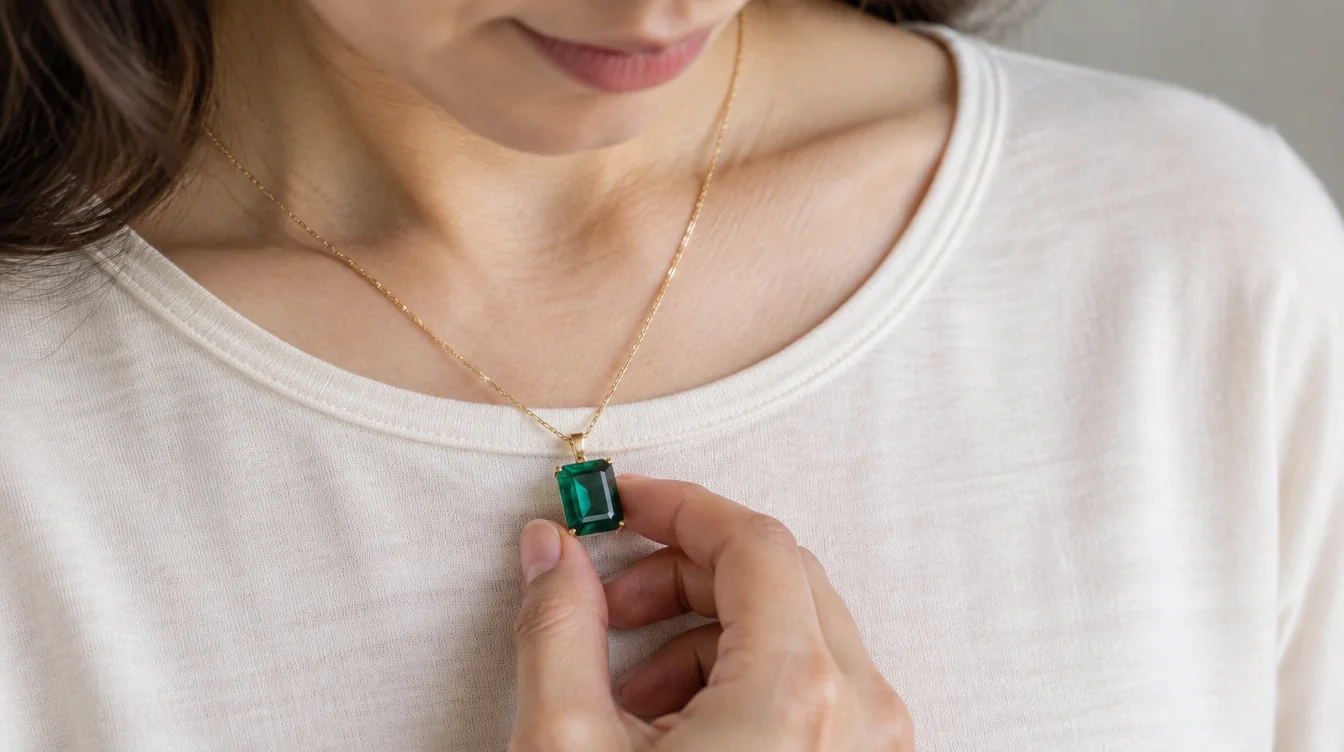
Material and origin
Ask, “Is this stone an emerald, and is it natural or lab grown?” If the answer is “created,” have the seller state whether they mean a lab grown emerald or a different created material. That one follow up can prevent a costly mix up.
Treatment and documentation
Ask if the emerald had a clarity treatment. Get the stated details in writing. For a costly stone, ask if an independent gemological report covers that gem. A generic card may only repeat the shop’s description.
A photo or home test will not settle every doubt. A loupe may show clues. Yet a visual check may not tell a natural emerald from a lab grown one or a convincing imitation. The identification guide also warns against scratch, fog, and cold touch tests. They can mislead you. Scratching can harm the stone.
Clear details help when you buy. Good care helps once you get the piece.
Let the stone’s care needs shape the purchase
Emerald jewelry care starts with the setting and any treatment the stone received. Ask the seller how to clean the finished piece. Its metal, nearby stones, and treatment may change what is safe.
Not every cleaning method is safe for a lab grown emerald. Lab growth does not protect the setting from damage. Care for a treated natural emerald must account for its treatment. If unsure, ask a jeweler before using heat, harsh chemicals, or an ultrasonic cleaner.
For May birthstone jewelry, consider how easily you can return the item if its description and appearance do not match. Written care instructions and a clear return policy are part of a useful listing, not an afterthought.
These common questions can help you check your choice before ordering.
Frequently asked questions about emerald listings
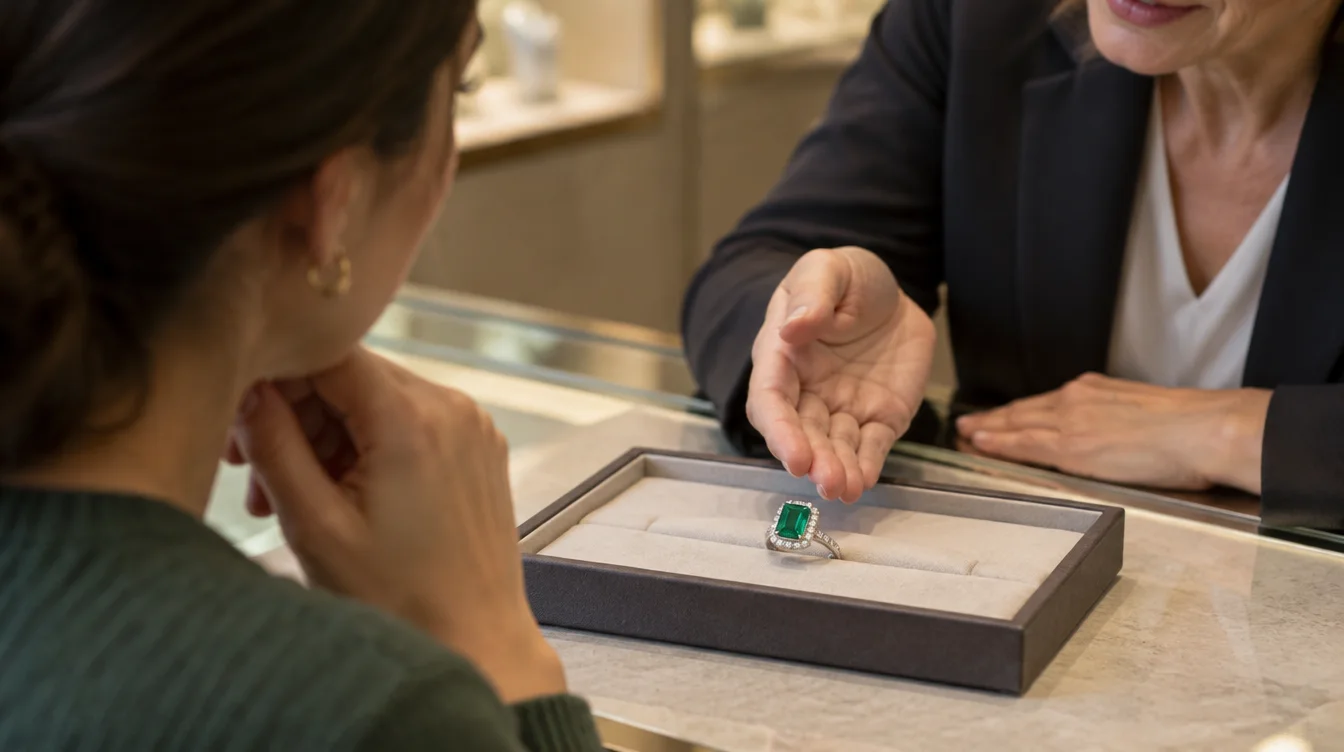
Emerald buying questions often come down to the seller’s words. Do they name the material, its origin, or just its look?
Are lab created emeralds real?
Yes. People grow lab created emeralds; they do not form in the earth. They are still emerald material. Ask the seller to put “lab grown emerald” in writing. That helps set it apart from an imitation.
How to tell if an emerald is real?
First ask what “real” means: emerald material or natural origin. Photos and home checks cannot reliably settle both points. Get the answer in writing. For a costly or uncertain stone, consider an independent report.
Can a natural emerald be treated?
Yes. Natural origin and treatment are separate facts. Before you compare stones, ask what treatment the seller states, if any.
Does lab grown emerald price tell me whether a listing is genuine?
No. Price reflects more than the stone, including the setting and what the seller includes. Compare matched details and request documentation rather than using a low price as your only test.
Once you have those answers, you can choose based on what you value.
Buy the green stone you mean to buy
Choose a stone you like and know by name. For natural vs lab grown emerald for May birthstone jewelry, pay for natural origin only if you value it. Choose lab grown if you want emerald material without natural origin. Choose a named green gem if color is your goal.
Before checkout, ask the seller to confirm the exact stone, its origin, any treatment, and the return terms. Look at the piece once more. If you like its look and know what you are buying, you can give or wear it with confidence.