The mokume gane wedding band buying checklist That Could Save You From a Bad Deposit
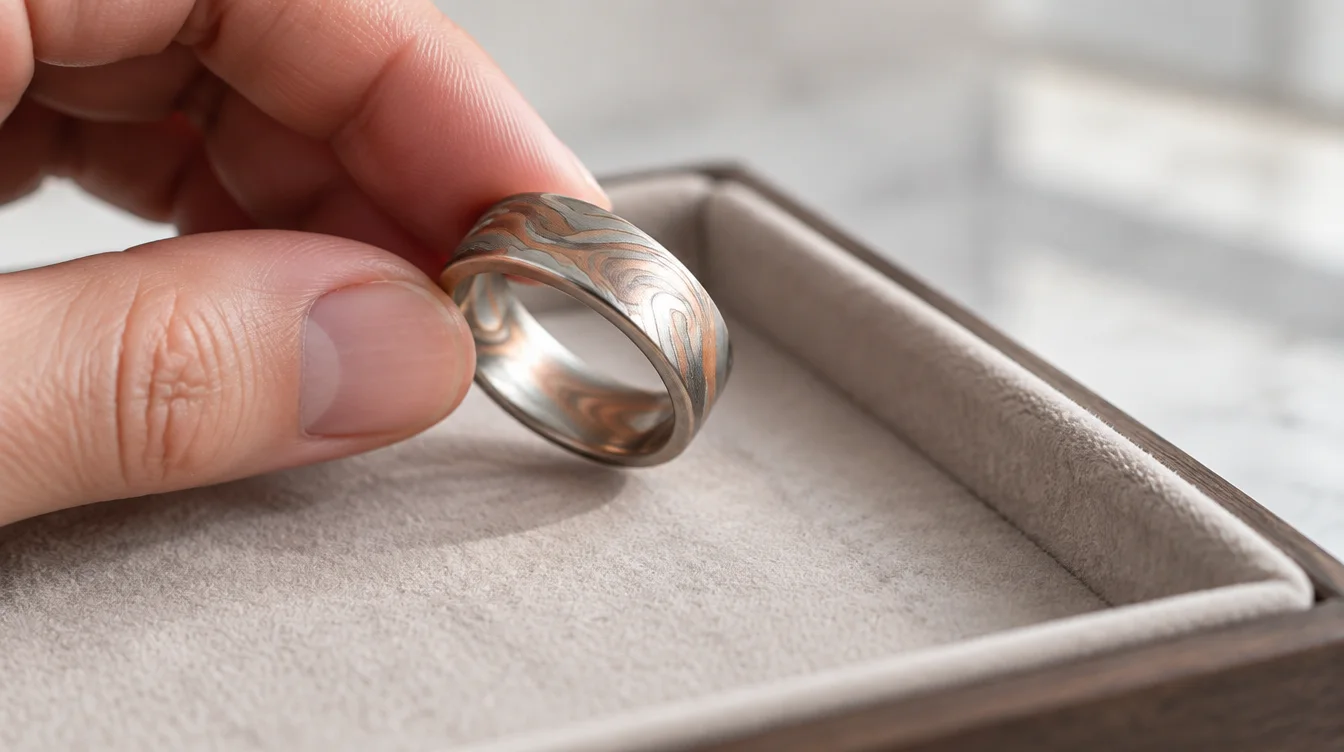
Before paying a deposit, get the band’s build, exact metals, finish, and care terms in writing. A mokume gane wedding band buying checklist must also cover resizing. A liner or inlay can limit repairs. If the seller cannot describe your ring, pause the order.
Start the mokume gane wedding band buying checklist with construction
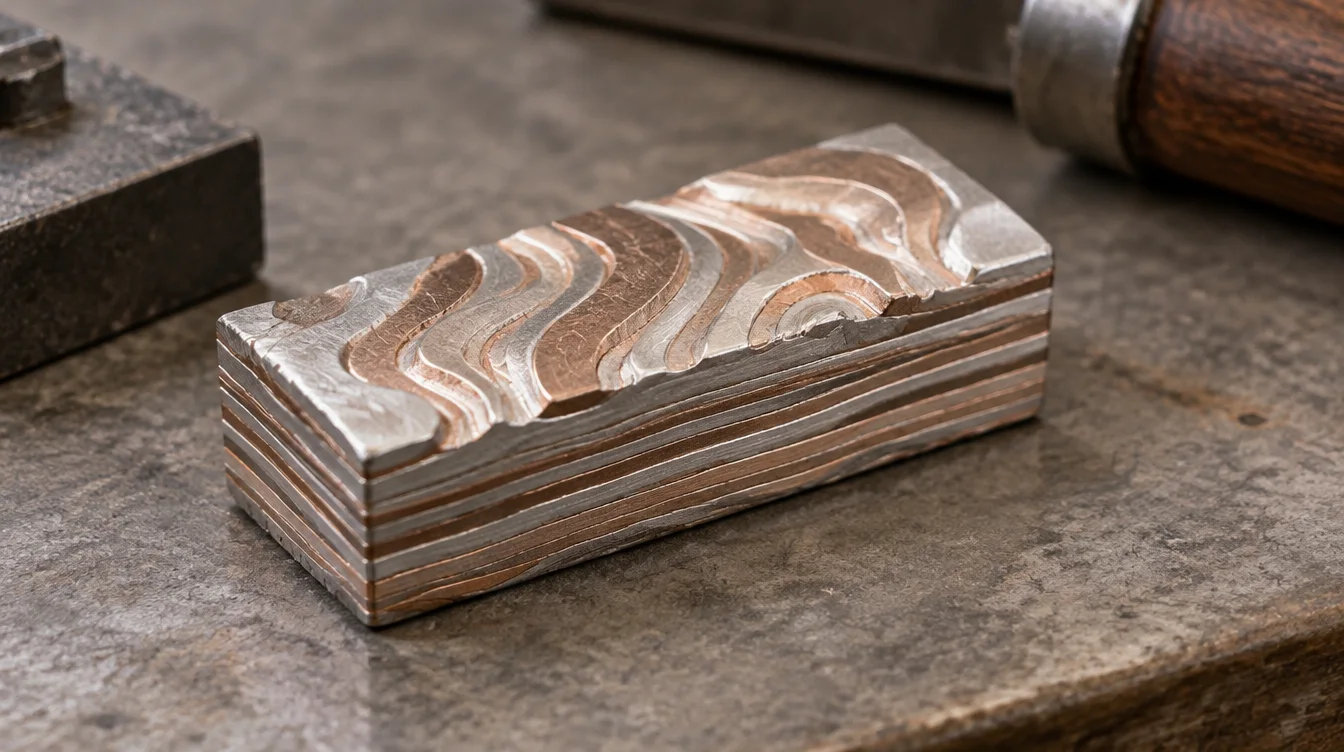
A genuine layered band needs a clear account of its bonded metals. You also need to know what creates the visible pattern. Do not rely on a photo alone. Ask if the patterned metal forms the whole band. It may sit over an inner liner or appear as an inlay instead.
Each construction gives you a different ring. A full patterned band has layered metal inside and out. A lined band puts another metal against your skin. An inlay is a strip of patterned metal set in a base ring. None is always a poor choice. Each has its own repair needs.
Ask how the layers are bonded
Wondering how are mokume gane rings made? A maker bonds metal sheets into a billet. The maker then works the billet to show its layers. Metalworker Steve Midgett describes several ways to bond them. He covers solder bonding and two forms of diffusion bonding in his overview of mokume gane methods. A seller need not teach you metallurgy. Still, the seller should know which method the maker uses.
Ask for a plain description: “Are these bonded metal layers, and which part of this band contains them?” If the answer is only “Damascus style” or “wood grain finish,” ask again. Those phrases describe a look, not the ring’s construction.
Separate the pattern from the base
Ask for a side view and a description of the inside edge. Can you see patterned metal there, or does a liner cover it? For an inlay, ask what holds it in place. Also ask what happens if it or its base needs repair. These details help you compare bands that look alike from the front.
Get the construction on the order
The invoice should name the patterned part, any liner, and any inlay. A spoken answer may be forgotten once custom work starts. Next, find out what each visible and hidden layer contains.
Get the exact metal recipe, including the liner
The exact alloys tell you more than a label like “mixed metals.” Ask for each metal in the patterned billet. Get its stated fineness where that applies. Ask what metal forms any liner, too. “Gold and silver” leaves out details about skin contact, color, and future service.
Mokume gane ring metals vary by maker. The Christopher Taylor Timberlake maker FAQ, for example, lists mixes of sterling silver, gold alloys, shakudo, and palladium white gold. It says its stainless steel inner bands support rings with stone inlay. That is one maker’s choice. It is not a rule for every mokume band.
Match the written recipe to the band you tried on
Suppose a sample has pale layers and a dark pattern. Your quote says only “white gold mokume.” Ask which layers create each color and whether the finish adds the dark tone. Check whether the sample has a liner, too. The finished ring may use different metals, even under the same design name.
If you have a known metal sensitivity, tell the maker before choosing a billet. Ask which metal touches your skin, then ask whether the outer layers can also contact it at the edges. A liner may cover the inside, but it does not make every other part of a ring disappear. For uncertain sensitivities, seek advice from a qualified clinician rather than treating a seller’s “hypoallergenic” label as a diagnosis.
Do not assume every color will stay the same
Some metals have a natural color contrast. Other rings get their contrast from a finish or oxidation. Darkened surfaces can change with wear. The maker FAQ above says its blackened finish grows lighter over time. It can also be restored.
Ask which colors come from the alloys themselves. Which come from a surface treatment? Once you have the metal recipe, you can better judge how the pattern and finish may look over time.
Check what the pattern photo actually promises
A product photo may show a pattern style, not your ring’s exact lines. Ask what the listing shows. Is it the finished ring for sale, a sample from the same billet, or a past commission? The answer helps you judge what may arrive.
The maker FAQ says its hand patterned pieces vary. No two are exactly alike. It offers named patterns, but some features cannot be removed once made. Before ordering, name what matters to you: tight lines, broad waves, visible knots, or an even spread of dark and light.
Agree on what counts as an acceptable variation
“Similar to the photo” is hard to judge. Make your request specific: “I want a flowing pattern without large knots, and I accept that the lines will not match the sample.” Ask if you can see the band or an approval photo before the final finish. If so, ask what can still change at that point.
That is not a demand for identical handwork. It is a way to set a fair boundary. A maker can tell you when your preferred pattern is realistic and when a different sample is a better starting point.
See the finish in ordinary light
Ask for a short video or photos in soft daylight and studio light. Polished, matte, and etched finishes can show the same layers in different ways. Check which finish is on your order, not just in the gallery.
The surface will change with use. The maker FAQ says its matte finish can burnish and can be restored. A preview shows how the new ring looks. The repair policy tells you what happens later.
Put resizing and repair support in writing
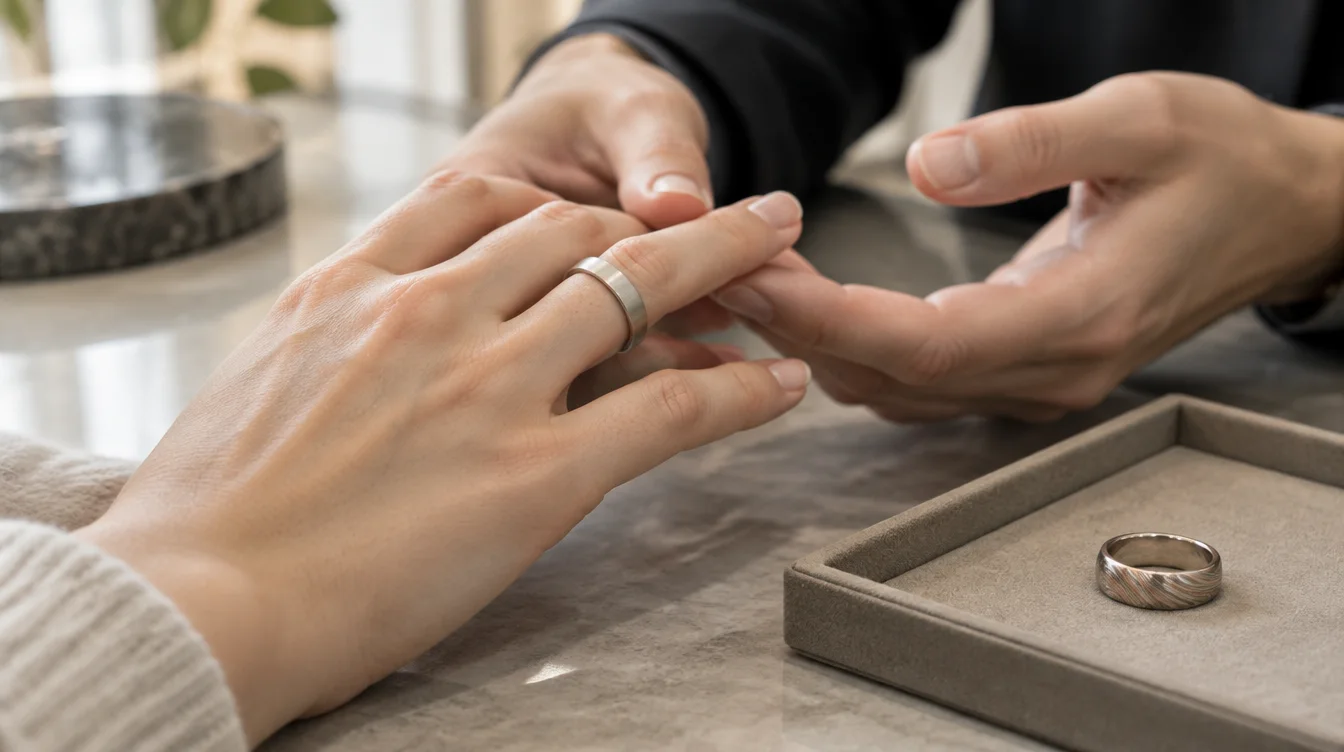
A mokume band may be resizable. That depends on its construction and the maker’s methods. Before paying, ask about your chosen width, billet, liner, finish, and any stone inlay. Do not accept a broad promise that “metal rings can be sized.”
Can mokume gane rings be resized? Christopher Taylor Timberlake says most of its mokume rings can be. Its rings with inlay cannot. Resizing also changes the pattern, the maker warns. Other workshops may set different limits. Ask about your exact ring.
Ask for the size range and the fallback plan
Get the allowed size changes in writing for your chosen ring. Ask if the maker must do the work. Does a liner affect the method? Could resizing leave a visible seam or change the pattern? If resizing is ruled out, ask what an exchange or remake covers. Ask what it costs, too.
A comfort fit does not settle the issue. Nor does buying a larger size “just in case.” Get an accurate fitting. Also get a clear policy for a ring that feels wrong after delivery.
Pin down refinishing and damage repairs
Ask who can renew an etched or darkened finish. Is routine refinishing included? Ask what happens if a layer separates. What if an inlay loosens or the band bends? A warranty may cover a making fault but exclude impact damage. Read the terms rather than guess.
Mokume gane ring care should suit the ring’s metals and finish. Get written advice on cleaning products and when to remove the ring. Ask when it needs a check, too. For stone inlay, the maker FAQ advises removal before activities that may crack or dislodge the stone.
Support is part of the purchase, especially when another jeweler may not work on an unfamiliar layered band. With those terms in hand, you can make a decision without treating every unknown as a risk you must accept.
Use a deposit test that separates facts from promises
Before paying, compare the product page, the maker’s answers, and the invoice. All three should describe the same ring. If a key detail appears only in a chat, ask to add it to the order.
Test the order with three questions. What is the band made from? How may its pattern and finish change over time? What will the maker do if the size, finish, or structure needs work? A full answer names the materials, sets limits, and explains the service process.
Picture two quotes for a dark and silver colored band. One names each alloy and identifies a liner. It says the dark color comes from an applied finish. It also says inlay prevents resizing. The other says only “custom mokume, lifetime warranty.” The first gives you more facts, though the second sounds reassuring. This is an illustrative comparison, not a claim about either seller.
Weigh the mokume gane rings pros and cons against your habits. Want an exact copy of a sample photo? Want a ring that needs no finish work? Ask if this design can meet those needs. If you like a pattern that shows wear, ask whether its maker can service it. That tradeoff may suit you.
Unanswered questions do not always mean poor workmanship. They do mean you lack the facts needed to approve a deposit. The final questions below help close the gaps buyers most often leave open.
Common questions before ordering
The last checks cover daily wear, future sizing, and your purchase record. Ask about the exact ring on your quote. Makers use different metals and constructions.
Are mokume gane rings durable enough for daily wear?
Are mokume gane rings durable? A sound layered metal band can be worn daily. Its surface and finish will still show use. How fast they change depends on the alloys, finish, and what your hands do. Ask the maker how your chosen combination tends to wear.
Can mokume gane rings be resized later?
Some mokume rings can be resized, but not all. A liner, stone inlay, or chosen pattern may limit the work. Resizing may also change the visible design. Get the maker’s size range and remake terms before ordering.
How are mokume gane rings made differently from printed patterns?
In a layered mokume ring, the maker bonds different metals into a billet. Working that metal brings the layers into view. A printed or applied pattern creates a surface look instead. Ask which type you are buying.
What belongs in a mokume gane ring care policy?
A useful mokume gane ring care policy names safe ways to clean your finish. It tells you when to remove the ring. It also says who handles refinishing, checks, and repairs. General jewelry advice cannot answer those questions for your maker.
Those answers should agree with the written order. If they do not, resolve the difference before the deposit changes hands.
Buy the ring you can verify
The best mokume gane wedding band buying checklist ends with a clear record, not a sales pitch. Know what is layered and what touches your skin. Know how the pattern may vary and who will handle repairs. Ask the maker to put those details beside your chosen size and finish. If the written answers meet your needs, you can pay the deposit knowing what you have ordered.