Wearing the Wrong Chain Length Is the Most Common Mistake Men Make (Here's the Mens Silver Chain Necklace Guide That Fixes It)
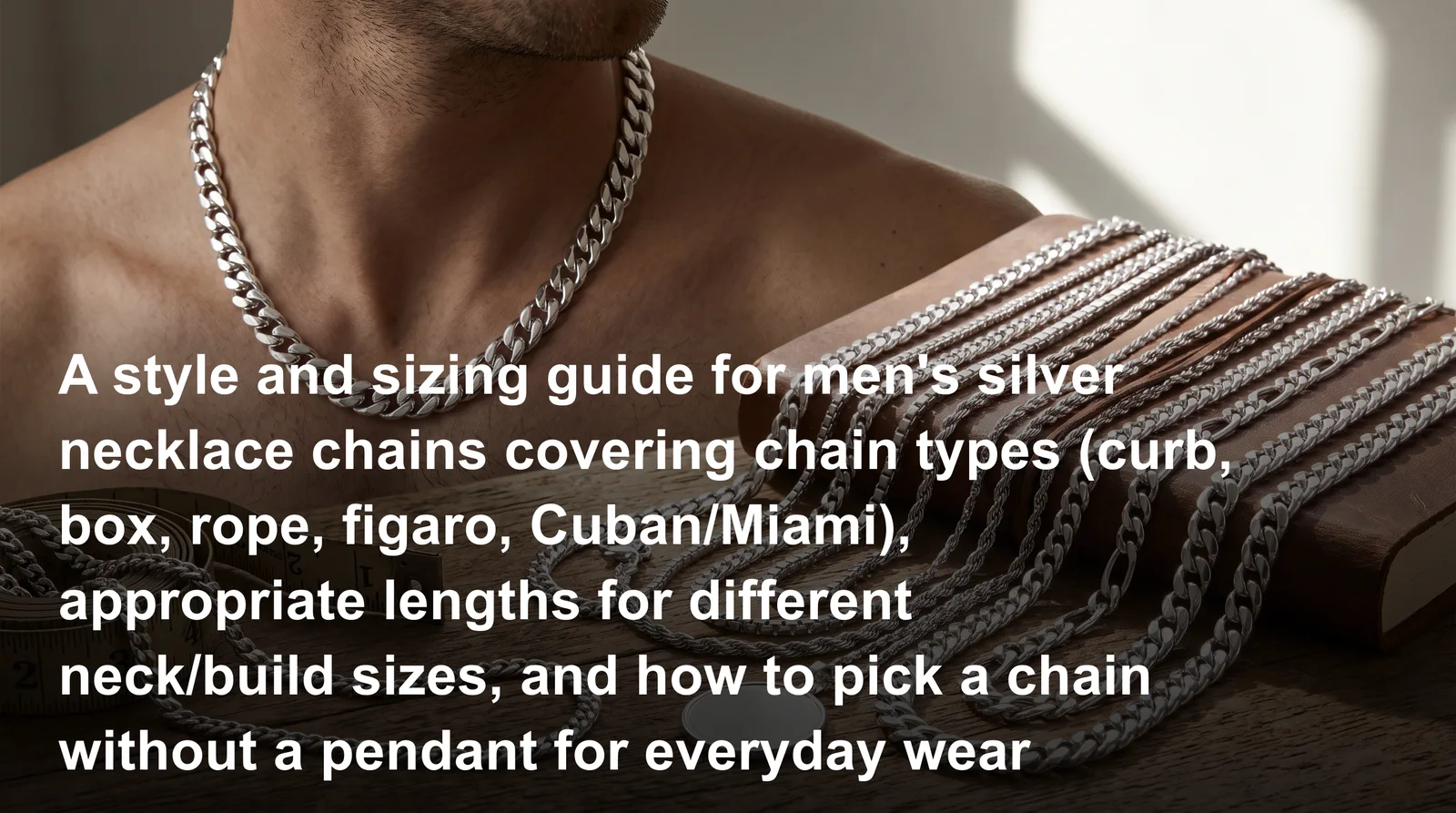
Most men buy a chain based on how it looks in a photo, then wonder why it sits wrong once it's actually on. A mens silver chain necklace guide only works if it accounts for your neck size, your build, and what you actually plan to wear it with. Get the length wrong and even a great chain looks off. Get it right, and a plain curb or Cuban chain becomes the one piece you never take off.
The short answer: most men should start around 20 to 22 inches for everyday wear without a pendant, adjusting up if you have a broader neck or larger chest. Everything else in this guide builds on that starting point.
What Is the Best Chain Length for Men Without a Pendant?
For a plain chain worn on its own, 20 to 22 inches is the sweet spot for most men. This range sits at or just below the collarbone, which reads as intentional rather than accidental. A pendant-free chain has nowhere to hide, so length matters even more than it does with a pendant hanging off the front.
Shorter lengths, in the 16 to 18 inch range, sit high and close to the throat. They work if you want something almost invisible under a collared shirt. Anything past 24 inches starts to feel like a statement piece rather than a quiet daily accessory, which is fine if that's the goal, but it's a different look entirely from a clean 20 inch curb chain worn under a tee.
The best chain length for men without a pendant also depends on how much chest you're showing. A crew neck exposes more of the chain than a button-down, so the same 22 inch chain can look completely different depending on the shirt. Keep that in mind before you settle on one length for every outfit. Once you know your target range, the next step is measuring your actual neck size instead of guessing.
How to Measure Your Neck for a Necklace

Measuring your neck for a necklace takes about thirty seconds with a soft measuring tape or a piece of string and a ruler. Wrap it around the base of your neck, not too tight, right where a shirt collar would sit. Mark where the ends meet, then check that number against a ruler if you used string.
That number is your baseline, not your final chain length. Add two to four inches to your neck measurement to get a length that sits comfortably without choking or feeling like a collar. A 15 inch neck, for example, points you toward an 18 to 20 inch chain as a reasonable floor.
Why the Extra Inches Matter
A chain measured to the exact circumference of your neck sits like a choker, tight and high. Nobody wants that on a plain chain worn daily. The extra two to four inches give the chain room to drape naturally instead of pressing against your throat every time you turn your head.
Adjusting for Torso and Chest Size
Men with a broader chest or longer torso often need to size up beyond what neck measurement alone suggests. A 24 inch chain on a slim build might sit mid-chest, but the same chain on a broader man could sit noticeably higher. This is where body type starts to matter as much as neck size, which brings us to the full length chart.
Men's Necklace Length Chart by Neck Size and Build
A men's necklace length chart works best when it accounts for both neck circumference and overall build, not just a single number. Here's how the common lengths break down in practice.
16 to 18 Inches: Close and Subtle
This range sits at the base of the neck, just below the collar line. It suits slimmer builds and men who want something understated under a dress shirt. It's less common for men without a pendant since it can start to read as a choker on broader necks.
20 Inches: The Everyday Default
Twenty inches is the most commonly worn length for men, and for good reason. It rests near the collarbone, works under an open collar, and doesn't compete with the neckline of a t-shirt. If you're unsure where to start, this is it.
22 Inches: The Versatile Middle Ground
This length falls just below the collarbone and offers a bit more visibility than 20 inches. It works across dressier and casual outfits equally well, which makes it a smart pick if you only want to own one chain. Slim to average builds tend to find this the most flattering all-purpose length.
24 Inches and Up: Built for Bigger Frames
Men with a larger neck, broader shoulders, or a muscular frame often find that 20 to 22 inch chains sit too high or look pinched. A 24 inch chain, sometimes up to 27 inches, gives the drape room it needs on a bigger build. This length also suits men who prefer a more relaxed, lower-hanging look regardless of body size.
Matching length to build isn't just about comfort. It changes how proportional the chain looks against your frame, which is exactly why the same 22 inch curb chain can look sharp on one man and slightly off on another.
Types of Men's Chains and How Each One Wears Differently
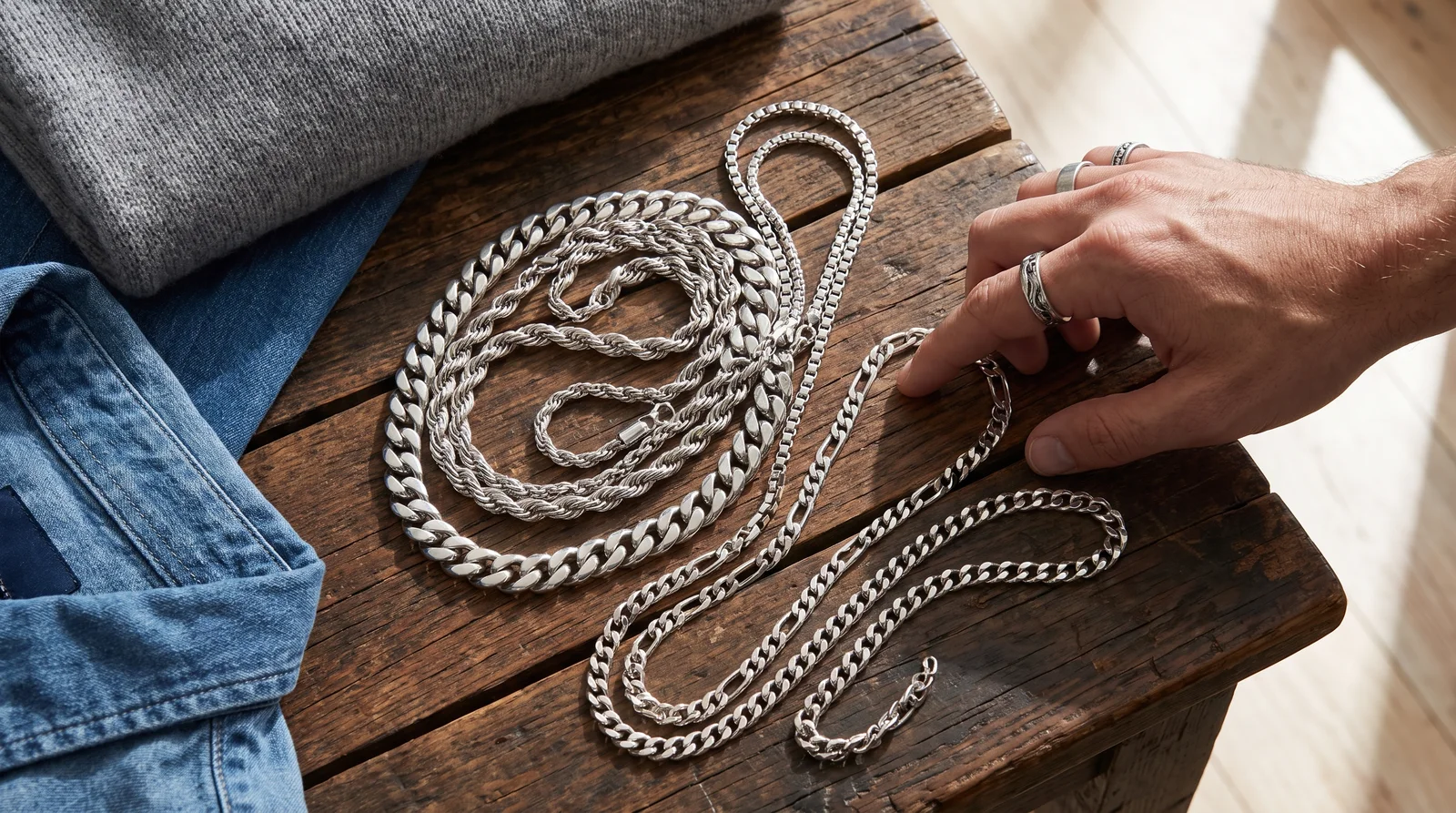
The types of men's chains you'll come across most often each have a distinct look, weight, and wear pattern, and picking the right one matters as much as picking the right length. Curb, box, figaro, rope, Cuban, and snake chains all sit and move differently against the skin, which changes how they photograph and how they feel day to day.
Curb Chain
Curb chains use flattened, twisted links that lie against the neck without twisting around. They're one of the most versatile plain chain styles because they work equally well thin or thick, polished or matte. A 2mm curb chain reads as understated daily jewelry, while a 5mm or 6mm curb starts to carry real presence on its own.
Box Chain
Box chains are built from square links that interlock into a smooth, almost seamless rope-like surface. They tend to catch light differently than curb chains, giving a slightly more polished, formal look. Box chains also hold up well under weight, which makes them a common choice even without a pendant attached, simply for the clean geometric texture.
Curb Chain vs Box Chain: Which Wears Better Day to Day
The curb chain vs box chain question comes down to texture and formality more than durability, since both hold up well for daily wear. Curb chains have visible individual links and a slightly more casual, textured look. Box chains look smoother and more uniform, almost like a solid rope, which reads a touch dressier. If you want something that works equally under a suit collar and a plain tee, curb is usually the safer pick. If you want a cleaner, more polished daily piece, box chain edges it out.
Figaro Chain
Figaro chains alternate between two or three short oval links and one elongated link, creating a rhythm that's instantly recognizable. This pattern has Italian roots and carries a slightly dressier feel than a standard curb chain. Figaro sits flat against the chest and works well both solo and as a base for a pendant, if you decide to add one later.
Rope Chain
Rope chains twist multiple strands of metal together into a spiral, which means they catch and reflect light constantly as you move. They tend to look busier and shinier than flat-link styles like curb or box. A thinner rope chain, around 2mm to 3mm, keeps things understated, while a thicker rope becomes a genuine standalone statement piece.
Cuban Link and Miami Cuban Chain
Cuban link chains use thick, interlocking flat links that lie close to the neck and catch light cleanly from nearly every angle. They've been a staple in streetwear for decades and work equally well with a plain tee or a button-down. A 4mm to 6mm Cuban chain tends to be the most popular width range, noticeable without becoming heavy or overpowering.
Cuban Link vs Miami Cuban Chain
The Cuban link vs Miami Cuban chain comparison trips a lot of buyers up because the names sound interchangeable. A standard Cuban link uses a tighter, flatter link pattern that sits close to the skin. Miami Cuban chains use a heavier, more rounded and sculpted link, giving each loop a more three-dimensional look. Miami Cuban chains typically run heavier for the same length, which means more silver and a bolder presence, while standard Cuban links stay sleeker and easier to wear daily under a collar.
Snake Chain
Snake chains are built from tightly interlocking scale-like plates that create an almost liquid, smooth surface with no visible individual links. They sit flat and flexible against the neck, which makes them one of the more comfortable everyday styles. Snake chains also tend to be more delicate looking, so they suit men who want a subtle, low-profile piece rather than something with visible texture.
Each of these types of men's chains changes the entire feel of the same length. A 22 inch curb chain and a 22 inch snake chain will sit at the same spot on your chest but read completely differently once you factor in width and finish.
Choosing the Right Link Thickness for a Masculine Look
Link thickness, measured in millimeters, is what separates a subtle everyday chain from a bold statement piece, and it matters just as much as chain type. Most men's chains run between 2mm and 7mm, with anything above 8mm moving into standalone statement territory.
Thin Chains (2mm to 3mm)
Thin chains sit close to the neck and stay quiet under a shirt collar. They're the right call if you want something you barely notice you're wearing, or if you plan to add a pendant later and want the chain itself to stay in the background.
Medium Chains (4mm to 5mm)
This range is the sweet spot for most men who want a chain to read as a deliberate style choice without shouting. A 4mm Cuban or curb chain has enough visual weight to stand on its own over a plain tee, but it still layers well and doesn't overwhelm a slimmer build.
Thick Chains (6mm and Above)
Thick chains are built for men who want the chain to be the focal point. These widths suit broader, more muscular frames particularly well, since a heavier link balances proportionally against wider shoulders. On a slimmer build, anything past 6mm can start to look like it's wearing you instead of the other way around.
Once you've settled on a thickness that matches your build, the next decision is whether you're wearing one chain or building toward a stack.
Layering Multiple Silver Chains Without Overdoing It
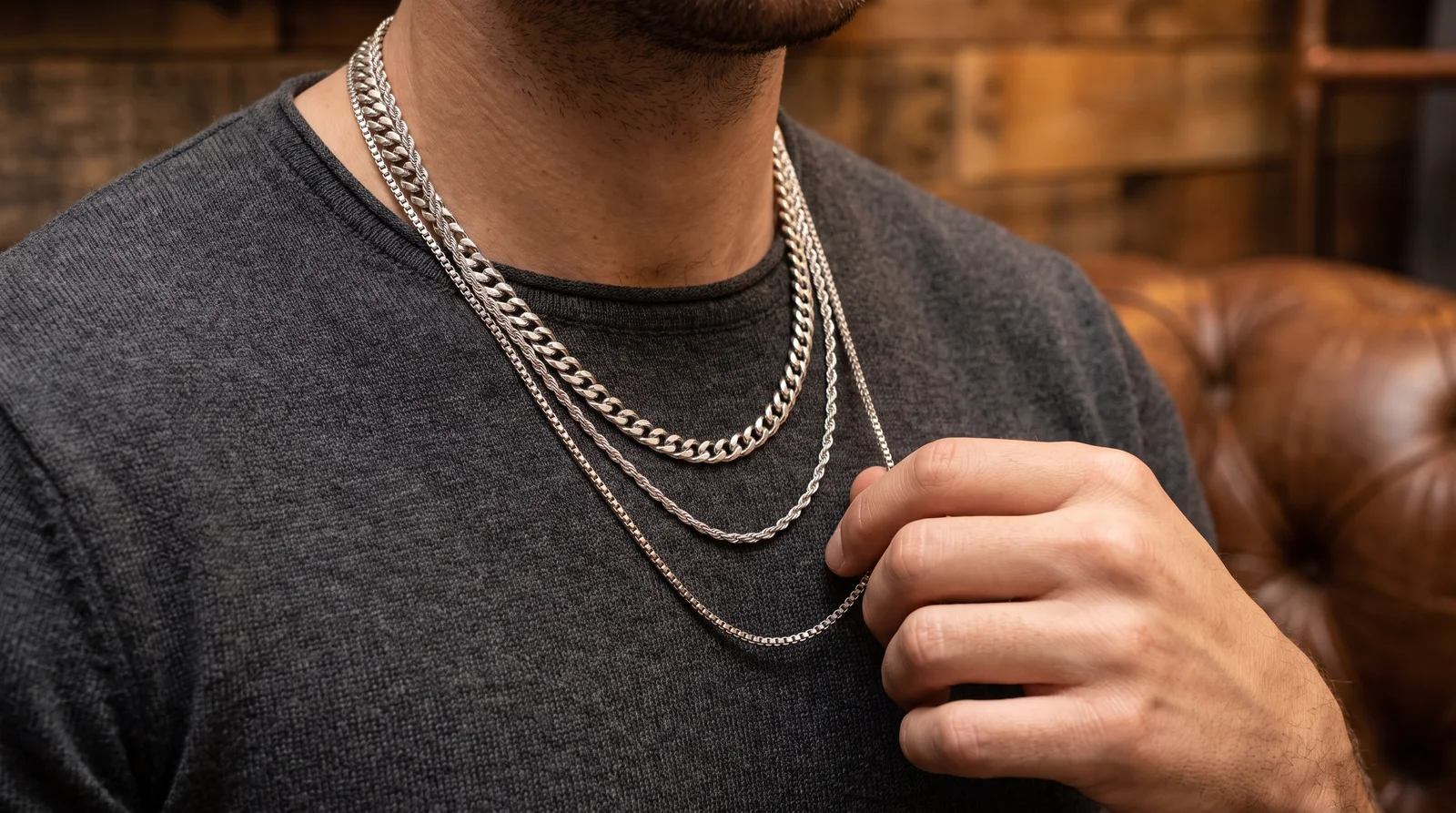
Layering works when you vary length and width at the same time, not just pile on chains of similar size. Two chains of nearly identical length and thickness tend to tangle and blur together instead of creating visible separation.
Pairing Lengths That Actually Work
A 20 inch and 22 inch chain worn together creates a clean two-inch gap that reads as intentional. Some men prefer stacking 22 and 24 inches for a slightly lower, more relaxed layered look. The key is keeping enough distance between lengths that each chain has its own space to sit.
Mixing Chain Types for Texture
Pairing a flat-link chain like curb or box with a textured style like rope or Cuban adds contrast without clashing. A thin 2mm curb chain underneath a thicker 5mm Cuban link, for instance, gives you a clear visual hierarchy instead of two competing statement pieces. This is also where matte and polished finishes can do real work.
Layering is optional, and plenty of men are better served by one well-chosen chain than a stack. But if you do want to build one out, start with two chains before adding a third, since three or more takes a more practiced eye to pull off without looking cluttered.
Matte vs Polished Finish: Which Suits Your Style
A polished finish reflects light and gives a chain a brighter, more formal shine, while a matte finish absorbs light for a quieter, more understated look. Neither is objectively better. It comes down to how much visual attention you want the chain to draw.
When Polished Finish Works Best
Polished silver catches light constantly, which makes chains like rope or Miami Cuban look more dynamic and higher-contrast. This finish tends to suit dressier settings and men who want their jewelry to be visibly noticed rather than blended into the outfit.
When Matte Finish Works Best
Matte finishes have gained ground because they read as more understated and modern, particularly on curb and box chains. A matte 3mm curb chain worn under a plain t-shirt looks deliberate rather than flashy, which suits men who want jewelry that supports the outfit instead of leading it. Matte finishes also tend to show fewer surface scratches over time since the texture already diffuses light unevenly.
Whichever finish you land on, starting with genuine .925 sterling silver matters more than the finish itself, since plated pieces lose their shine and color far faster with daily wear. If you're unfamiliar with what separates real sterling silver from lower grade alternatives, it's worth reading through this breakdown of 925 sterling silver jewelry canada before you buy. Once you've picked your finish and confirmed the material, the last practical step is thinking about how the chain fits into the rest of your everyday jewelry.
Building Your Everyday Silver Chain Into a Complete Look

A silver chain rarely exists on its own once you start wearing it daily, since most men eventually pair it with a bracelet or ring in the same metal. Matching your chain's finish and thickness to a bracelet creates a more considered look than mixing metals or widths at random. If you're figuring out how a bracelet should scale against your new chain, this mens silver bracelet styles guide walks through matching styles and widths in more detail.
Length that doesn't quite sit right after a few months of wear isn't unusual either, particularly if your chain was a gift or bought without a proper measurement. Chains can typically be adjusted rather than replaced, and a professional resizing service can shorten or extend a chain to match your actual neck size and build. That's a far cheaper fix than buying an entirely new piece because the original length was a guess.
With material, length, thickness, and finish all sorted, you're left with a chain that actually fits your neck, your build, and how you plan to wear it. That's really the whole point of this exercise.
Frequently Asked Questions About Men's Silver Chains
What chain length should a man wear for daily use?
Most men do best with 20 to 22 inches for everyday wear without a pendant. This range sits near the collarbone and works under both collared shirts and plain tees without feeling too tight or too loose.
How do I know if a chain is too short for my neck?
If a chain presses against your throat or sits like a choker rather than draping naturally, it's likely too short. Adding two to four inches beyond your actual neck measurement usually solves this.
Can I wear a thick chain with a slim build?
You can, but chains above 6mm tend to overwhelm slimmer frames and look disproportionate. Sticking to 2mm to 4mm generally looks more balanced on a leaner build.
Does chain finish affect how fast silver tarnishes?
Finish itself doesn't significantly change tarnish rate, since that comes down to metal purity and exposure to moisture or chemicals. For tips on keeping either finish looking fresh, this guide on how to clean sterling silver jewelry at home covers the basics.
What's the difference between a Cuban link and a Miami Cuban chain?
Cuban links are flatter and sit closer to the neck, while Miami Cuban chains use a heavier, more rounded link for a bolder look. Miami Cuban chains typically weigh more per inch than standard Cuban links of the same length.
Finding the Chain That Actually Fits You
Picking the right silver chain isn't really about trends or what's showing up in every photo online. It's about matching length to your neck and build, picking a chain type that suits how you actually dress, and choosing a thickness that looks proportional rather than borrowed from someone else's frame. Get those three things right and the finish becomes the easy part. Start with your neck measurement, add those extra inches, and go from there. If something feels off once you've worn it a few weeks, whether that's length, width, or fit, it's fixable. A well-chosen sterling silver chain should end up being the piece you forget you're wearing, in the best possible way.