Why mabe vs round pearl earrings and pendants look so different on you
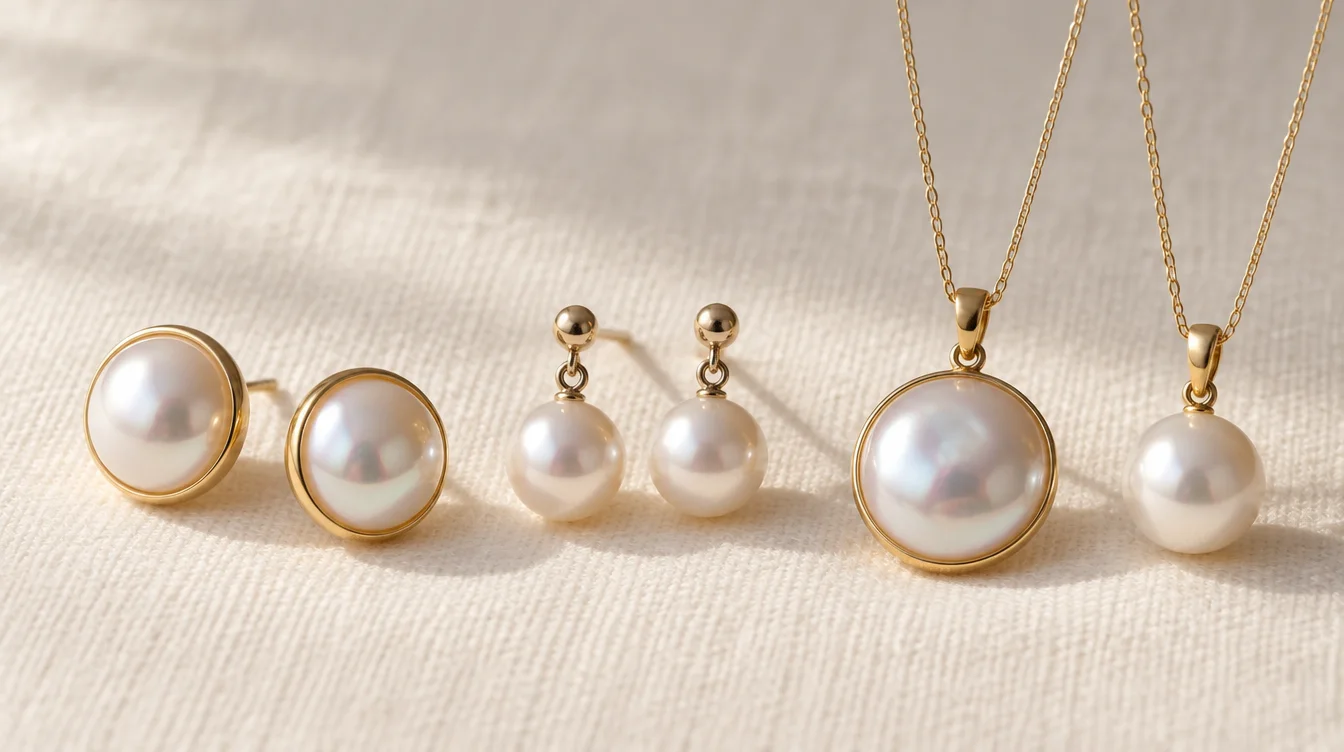
Choose a mabe pearl for a broad, low dome that sits close to the ear or chest. Choose a fully round pearl when you want depth and a finished look from every angle. With mabe vs round pearl earrings and pendants, check the side and back before deciding. A mabe’s assembled backing matters most when that part of the piece will show.
What are mabe pearls, and how does their construction differ?
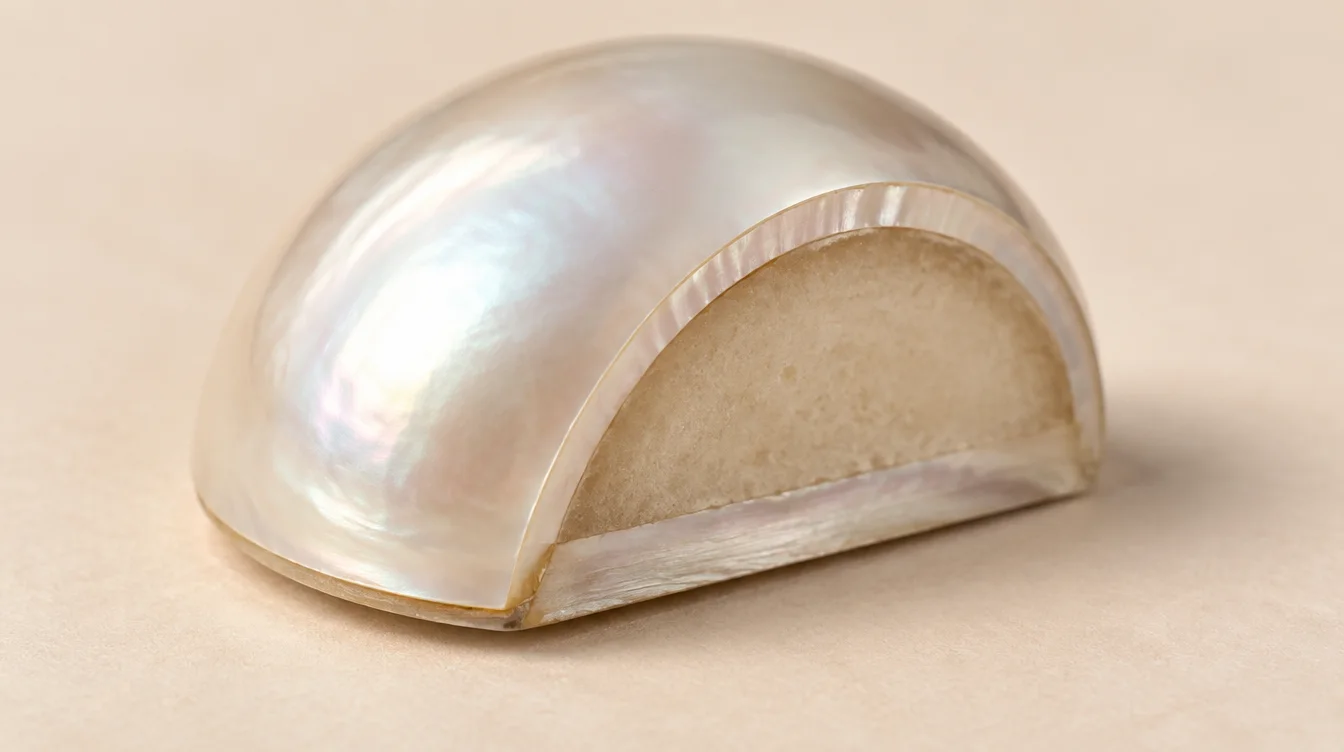
What are mabe pearls? They are cultured pearls grown as domes against the inside of a mollusk’s shell, rather than as separate pearls within it. After harvest, a typical mabe is filled and given a flat backing. Its curved outer surface is nacre, the pearl material you see and touch. The Skyjems description of mabe construction explains how the dome, filler, and backing form the finished pearl.
A fully round cultured pearl grows around a nucleus within the mollusk. It is not a hollow dome with a separate flat back. That difference does not make a mabe imitation. If you have wondered, “are mabe pearls real,” the answer is yes: a cultured mabe has genuine nacre. Still, its assembled construction should be disclosed when you buy it.
Construction explains the shape. Next, judge how much pearl you see once the jewelry is on.
Why face size tells only half the story
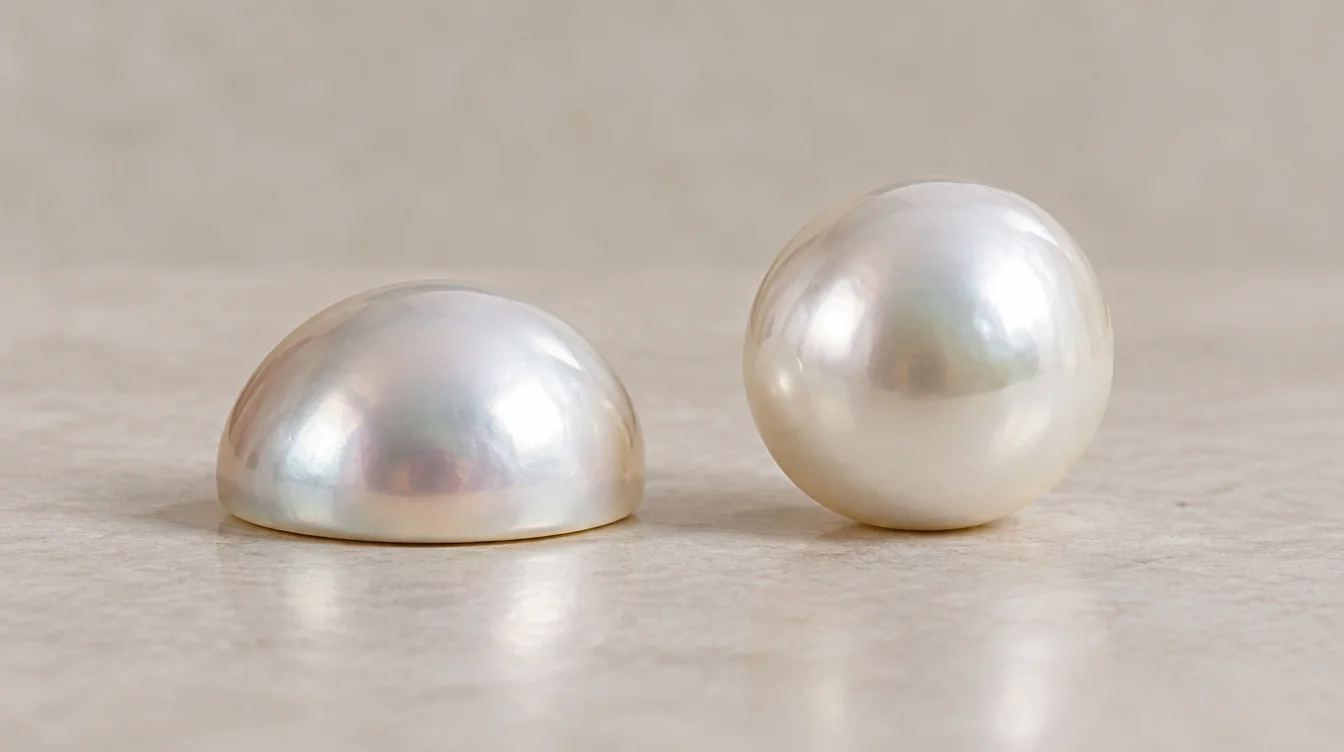
A mabe can look broad from the front yet sit closer to the body than a fully round pearl of similar width. That is the main visual tradeoff in mabe vs round pearl earrings and pendants. The mabe fills more space across the lobe or chest. The round pearl shows more depth from the side.
Compare width and projection separately
Imagine two pearls that each measure 14 millimetres across. This is an illustrative comparison, not a claim that either pearl has a standard height. A fully round pearl would also measure about 14 millimetres front to back. A mabe dome would project less, but its exact height depends on the dome and setting. Ask for both measurements rather than treating “14 millimetres” as a complete description.
Check the view you will wear
Hold an earring beside your face or place a pendant at its intended chain length. Look straight on, then turn. A photo taken only from the front can hide a tall setting, a shallow dome, or a visible backing.
Those views matter differently for earrings and pendants, so consider each piece on its own.
Which pearl profile works better for earrings?
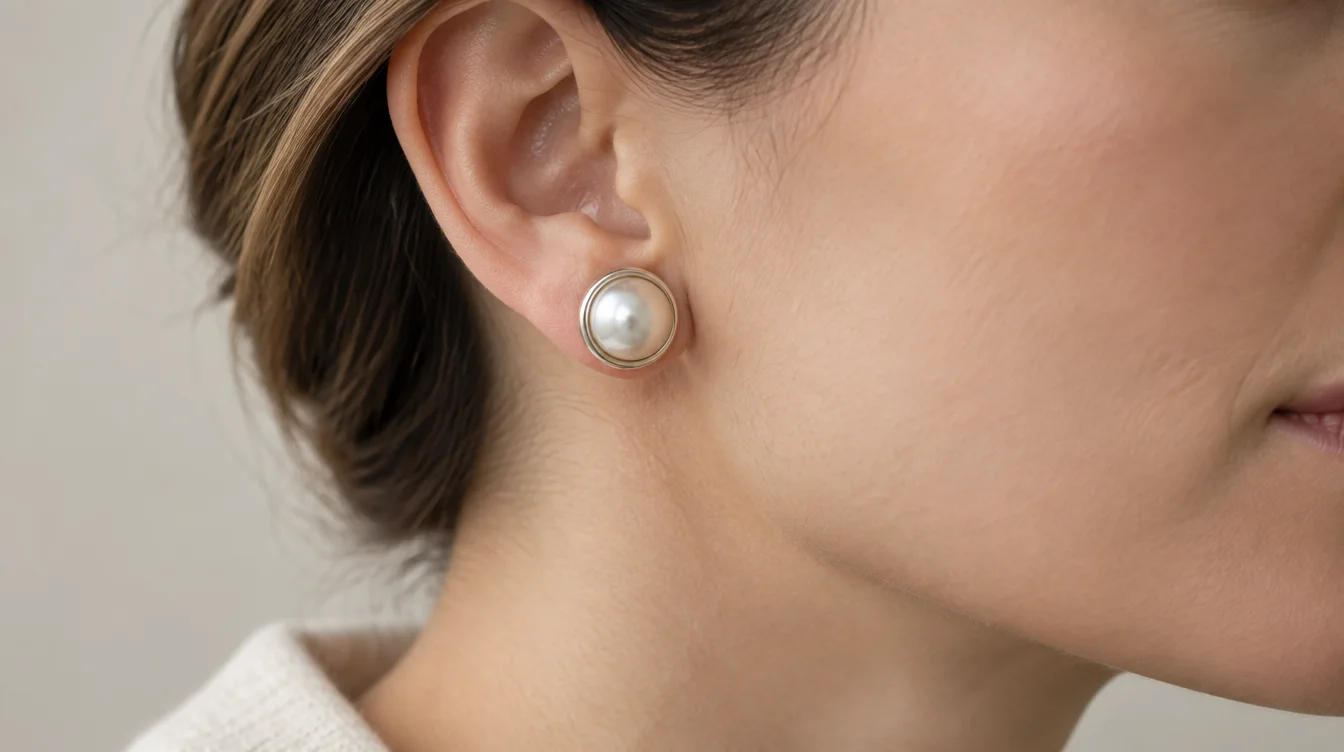
Mabe pearl earrings suit shoppers who want a generous face size without a sphere standing far from the lobe. Their flat backs also give a jeweler a broad surface to mount. A round pearl is the better choice if the earring is meant to look finished from the side or move freely below the ear.
For studs, inspect the edge
A bezel or surrounding metal rim can frame a mabe and cover the join at its edge. That can be both attractive and protective. Check that the two domes match in colour, height, and shape, not just diameter. From the side, see whether the setting sits neatly against each lobe.
For drops, think about movement
A dangling round pearl can be seen as it turns. A dangling mabe may reveal its flat back unless the design covers it or keeps the dome facing forward. Neither result is automatically a flaw. It is a reason to try on mabe pearl earrings while moving your head, not just while facing a mirror.
For pendants, check the back as well as the front.
When does a mabe pearl pendant make more sense?
A mabe pearl pendant is a strong choice when you want a wide, luminous front that rests near the body. A fully round pearl makes more sense when the pendant hangs free, turns often, or will be viewed from both sides.
Look at where the chain meets the setting. Then check whether the pendant tilts forward, stays level, or flips during normal movement. For a larger piece, ask whether the chain suits the finished pendant’s weight. The pearl’s face size alone cannot answer that question.
Do not overlook the reverse
Turn the pendant over. Its back may be plain mother of pearl, covered by metal, or part of a more detailed design. Decide whether you like that view before buying. If the reverse is visible while you wear it, a full round pearl may give you the look you want with less fuss.
Once the profile feels right, compare quality and cost on equal terms.
How should you judge quality and mabe pearl value?
Mabe pearl value depends on more than diameter. Compare luster, surface marks, colour, dome symmetry, the setting, and the condition of the edge and back. The USA Jewels mabe guide identifies luster, surface quality, colour, and dome shape as key quality factors. A large, dull dome is not necessarily a better buy than a smaller, bright one.
For earrings, compare the pair under the same light. Reflections should look similarly sharp on both domes, and obvious marks should not draw the eye to one side. For a pendant, inspect the nacre at the rim. Ask whether the colour is natural or treated, what the backing is made from, and whether the seller will explain the construction in writing.
Do not compare the price of a loose mabe with that of a finished round pearl pendant. Metal, workmanship, and setting design affect the total. Mabe pearl value is clearest when two finished pieces meet the same design brief and you can inspect both in person.
Care matters more when you plan to wear the piece often.
How do you care for the finished pearl?
How to care for mabe pearls starts with gentle cleaning and careful storage. Wipe the pearl with a soft, slightly damp cloth after wear, and keep it away from perfume and cosmetics. Avoid ultrasonic and steam cleaning: the Skyjems care guidance warns that those methods can affect a mabe’s bonded parts.
Store pearl jewelry apart from harder pieces that could scratch it. If a mabe’s edge or backing looks loose, stop wearing it and ask a jeweler to assess it. Round cultured pearls also need gentle care, though they do not have the same assembled back to inspect.
A few common questions may help you make the final choice.
Questions shoppers ask before choosing
Are mabe pearls real pearls?
Yes. If you ask, “are mabe pearls real,” look for a clear description of a cultured mabe with a nacre dome and an assembled back. “Real” does not mean solid all the way through.
What are mabe pearls best used for?
What are mabe pearls best used for depends on the setting. Their broad front and flat back suit close fitting earrings and pendants, while round pearls suit designs that show every side.
Does a larger mabe always have higher value?
No. Mabe pearl value also reflects luster, surface, symmetry, colour, and the finished setting. Compare pieces of similar quality before paying more for width alone.
How can I care for mabe pearls between wears?
How to care for mabe pearls is simple: wipe them gently, store them away from scratches, and check the edge and back now and then. Leave steam and ultrasonic cleaning to other jewelry.
Choose the pearl that works in the finished piece, not just in a product photo. Try the earring or pendant on. View it from the side and ask to see its back. If the dome gives you the look you want, choose it with confidence. If you want beauty from every angle, go round.