Is knife edge ring rubbing adjacent fingers a reason to walk away?
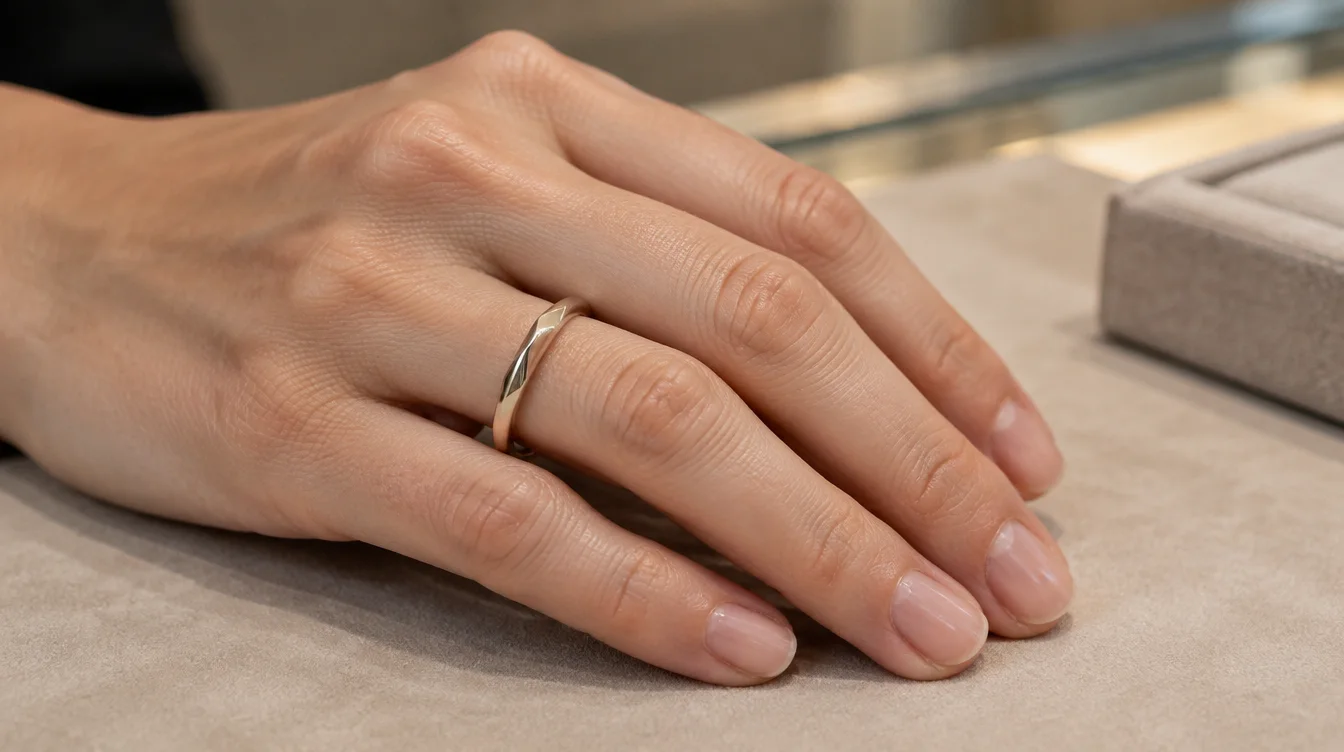
Knife edge ring rubbing adjacent fingers may be a reason to choose another band. Light contact alone is not a problem. What matters is whether the ridge presses, scrapes, or leaves a sore spot as you use your hand. Try the ring during normal movements before you buy. Do not count on getting used to a profile that hurts in the shop.
Why a knife edge ring touches neighboring fingers
A knife edge ring can touch the middle finger, the pinky, or both. Its outer surface rises to a narrow ridge, with sides that slope away. When your fingers move together, they may meet that ridge first.
Contact is not the same as discomfort. Finger shape and spacing affect where pressure falls. So does the way you grip things. A low, rounded ridge may barely register. A tall, crisp one can feel firm against the same hand.
That difference helps explain why owners report such mixed results. In one discussion of knife edge bands, some wearers describe pressure on neighboring fingers, while others say they do not notice their rings. Those are personal accounts, not a comfort guarantee for any model.
Do not judge the profile by its name or a front view. Look across the band from its side, then feel the ridge with a fingertip. That gives you a better starting point for the test that matters: how it feels on your hand.
When knife edge ring rubbing adjacent fingers becomes a problem
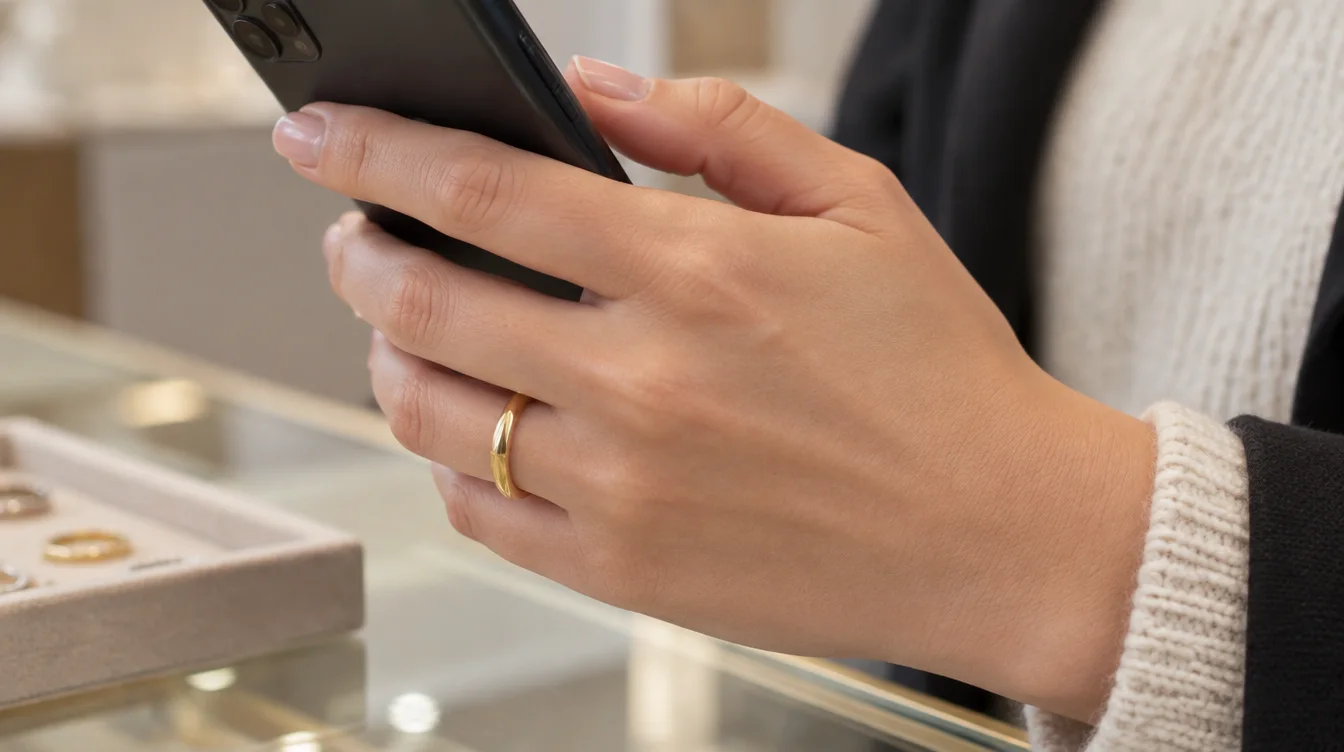
Knife edge ring rubbing adjacent fingers is worth rejecting when normal hand movement causes repeated pressure, scratching, or pain. A brief sense that the ring is there is different from wanting to hold your fingers apart to avoid it.
Start with your hand relaxed. Let your ring finger rest beside the middle finger and pinky. Close your fingers without squeezing. Does either finger meet a smooth slope or a narrow point? Repeat with your hand at your side. Contact may feel different when you stop posing for a mirror.
Next, make a loose fist and open it several times. Hold your phone, pick up your keys, and grip the handle of your bag. These are not strength tests. They show whether everyday motion pushes the ridge into the same patch of skin again and again.
A ring can feel fine for one squeeze yet irritate after repeated contact. Ask if you may wear the sample while you browse briefly. Follow the shop’s rules. Compare how your neighboring fingers feel at the start and end. If a spot becomes tender, take the ring off.
Do not dismiss sharp pain as a normal break in period. Before deciding what caused it, check whether the pressure comes from the outer ridge or from the ring’s fit against its own finger.
How to tell ridge pressure from a tight ring
Ridge pressure lands on a neighboring finger; a tight inner band presses the finger wearing the ring. Finding the sore spot first can save you from trying to fix the wrong issue.
Check where you feel the contact
If your middle finger hurts where it meets the ring, check the outer profile. Gently move that finger against the band while your hand is relaxed. A clear contact point calls for a closer look at the ridge or shoulder. If the ring finger feels squeezed at its base, the inner fit may be involved instead.
Take the ring off and check your skin. A temporary mark can show where contact occurred, but it does not tell you by itself whether the ring is suitable. Tenderness, scraping, or a mark that returns during normal movement gives you more useful information.
Separate pressure from movement
Notice whether the band turns as you move. If it rotates, the ridge may meet different parts of your neighboring fingers. If it stays still, one area may take most of the contact. Either way, describe the exact spot to the jeweler rather than saying only that the ring feels wrong.
Do not assume a larger size will stop rubbing on the next finger. Size may change how the ring sits, but it will not remove a prominent outer ridge. A smooth inside can feel good on the ring finger while the outside bothers its neighbors. Knowing which surface causes trouble makes designs easier to compare.
Compare ridge height, width, and thickness in person
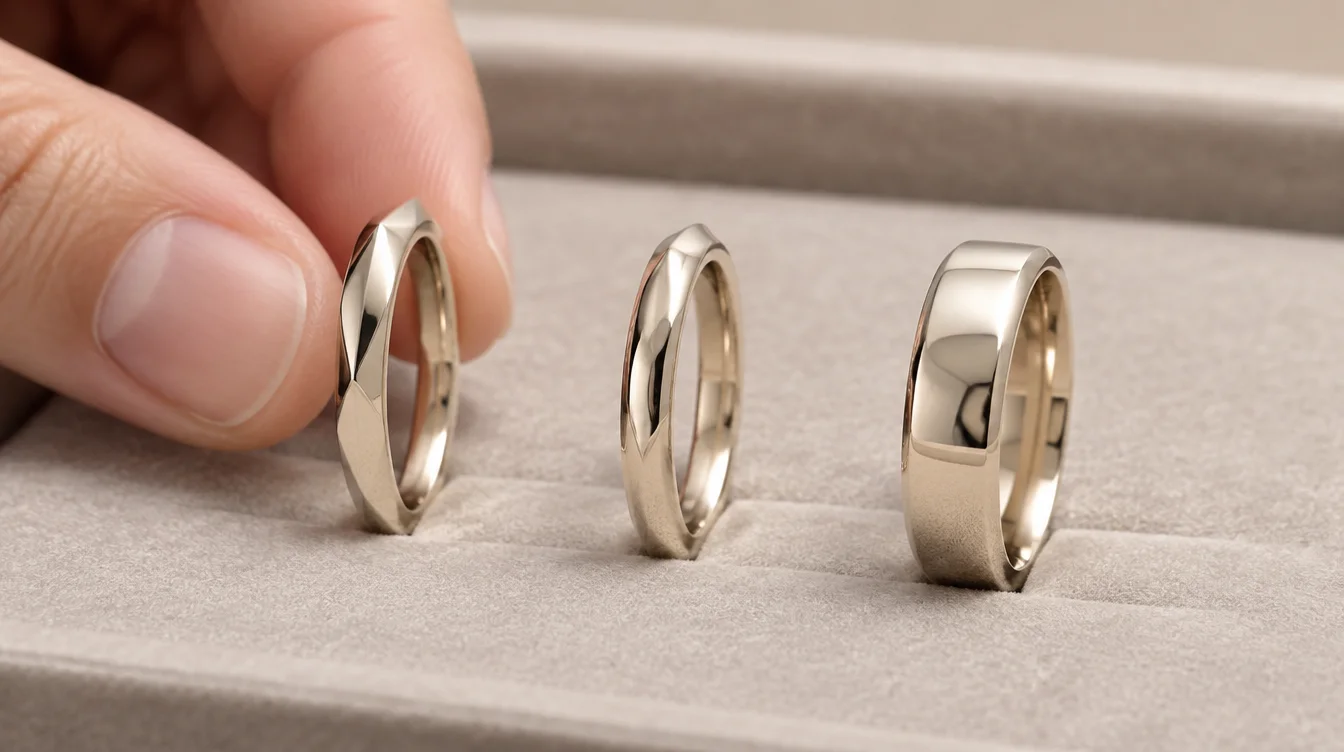
Compare several rings on the same finger using the same movements. If the shop has suitable samples, change one feature at a time. Photos rarely show how a ridge meets the skin beside your ring finger.
Ridge prominence
Ask to see a pronounced profile beside a soft knife edge ring. View each band from the side, not just from above. Run a fingertip gently across the crest. A soft ridge still has the angled look, but its peak feels less abrupt. Then wear both and repeat the relaxed hand and grip checks.
Where the peak sits
Look at the band around the full circle. The part facing your neighboring fingers matters more to this test than the most flattering view from above. Ask whether the sample’s shape matches the ring you would receive, especially if your order will be made to size.
Band width and thickness
Compare the full shape, not just the width. Two bands may look equally narrow from above, yet rise to different heights. A thicker band with a high crest may hold neighboring fingers farther apart. A broader band may spread contact, but it can also take up more space between fingers.
Use the same hand movement
Put each candidate through the same small routine: relaxed hand, closed fingers, loose fist, phone grip, and bag handle. Change only one ring at a time. You are comparing contact on your hand, not making a universal ranking of band shapes.
Make a simple note of which finger touched each band. Record the movement and whether contact felt smooth, firm, or sharp. That is easier than recalling five nearly identical rings later. The next comparison clears up two design terms shoppers often mistake for opposites.
What knife edge vs comfort fit really compares
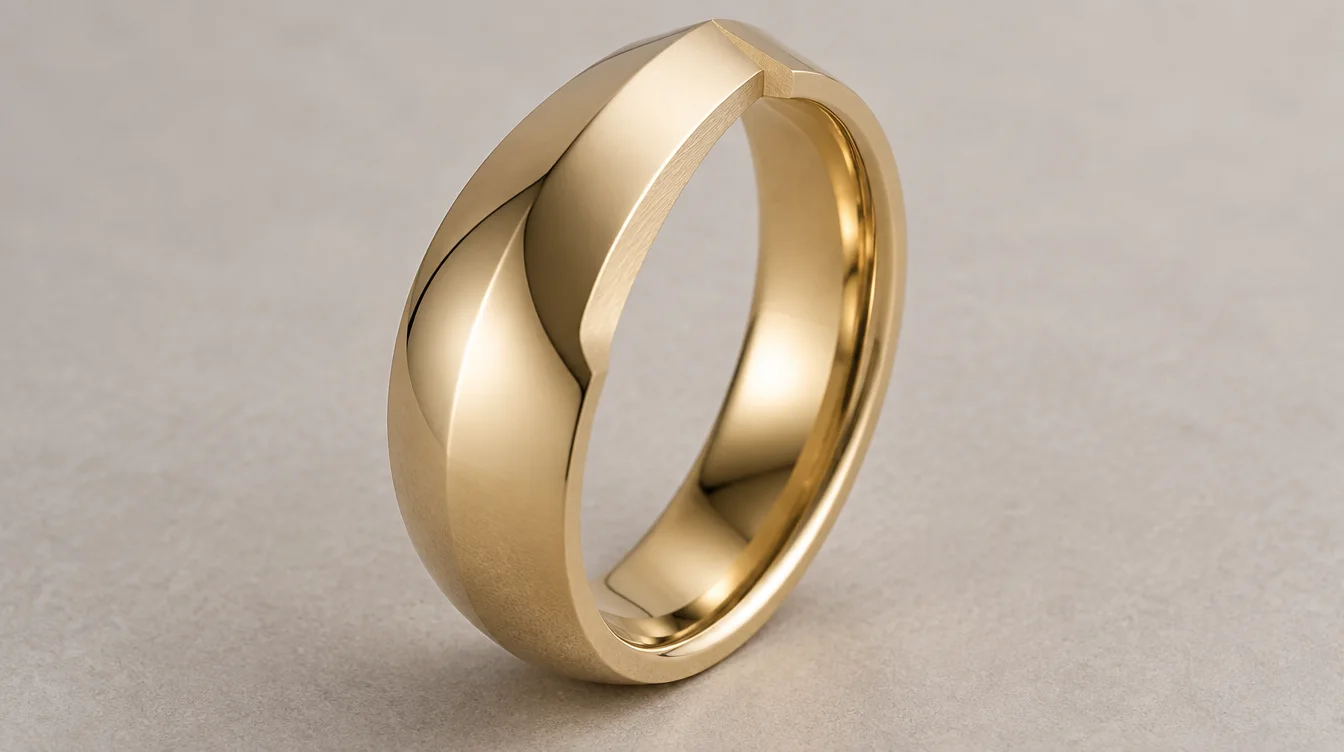
Knife edge vs comfort fit compares two surfaces. Knife edge describes the outside profile. Comfort fit describes a rounded inner surface. A ring can have both, and neither label tells you how it will feel against your middle finger or pinky.
The comparison of knife edge and comfort fit rings describes the raised outer ridge and the rounded inside as separate features. For this buying decision, ask the seller to show you both surfaces. Then test the outer edge against neighboring fingers while keeping the inner fit in mind.
Suppose Ring A has a crisp outer ridge and a rounded inside. Ring B has a softer ridge and a less rounded inside. Ring A may feel good on the ring finger but press the middle finger. Ring B may ease that contact yet feel less smooth as it slides on. This example illustrates a tradeoff. It does not predict how every ring will feel.
When you compare knife edge vs comfort fit, keep the question narrow: which surface causes the feeling you want to change? If adjacent contact is the issue, ask about a softer outer profile. If the ring finger itself feels pinched, discuss fit with the jeweler. That distinction matters when a famous design catches your eye.
Can a Tiffany style knife edge feel comfortable?
A Tiffany style knife edge can feel comfortable, but its reputation cannot tell you how it will feel on your hand. The actual ring, its ridge, and your neighboring fingers decide the result.
Searches for Tiffany knife edge ring comfort often turn up opposite stories. In the wearer discussion, one owner says a Tiffany band bothers the pinky and middle finger. Another says a Tiffany knife edge ring feels very comfortable. The accounts show why a brand name is no substitute for trying the ring.
If that classic shape is your first choice, test it during your usual hand movements. Close your fingers, hold your phone, and let your hand rest. Ask if the sample has the same profile as the ring you would buy. A similarly styled display band cannot prove how the final ring will feel.
Tiffany knife edge ring comfort is a personal fit question, not a single published verdict. If you are buying for someone else, ask about the return or exchange terms before paying. A surprise ring should leave room for the wearer’s own comfort test. That brings us to the decision you need to make at the counter.
A simple pass or reject test before you buy
A knife edge ring passes the comfort test when normal movement causes, at most, mild contact you can accept. Reject or reconsider it if you feel a sharp point, change how you hold your hand, or develop tenderness during a short try on.
First, compare at least two outer profiles on the same finger. Keep the rings at a fit that the jeweler considers appropriate for you, so a loose or tight sample does not cloud the result. Check the side view and feel each ridge before wearing it. A soft knife edge ring is a useful comparison even if you prefer the sharper look.
Next, repeat the same movements with each ring. Let your fingers touch, make a loose fist, and hold an object you handle often. Pay attention to pressure on the middle finger and pinky. Do not press your fingers together harder than you normally would. The goal is to copy daily use, not force a failure.
Pause and notice what happened. If you forgot about one ring but kept shifting another, take that difference seriously. If you find a knife edge ring uncomfortable during an ordinary phone grip, you have useful buying information. You need not wait for a sore patch.
If you love the silhouette, ask whether the seller offers a less prominent ridge. Confirm the shape on the ring you will receive and what changes, if any, are possible before purchase. Then use the answers below to settle the most common last minute doubts.
Questions shoppers ask about knife edge contact
These quick answers focus on neighboring fingers, since that is where an outer ridge can make the difference.
Does a knife edge ring always rub your other fingers?
No. Some contact is possible, but the amount depends on the ring’s profile and how your fingers meet. Knife edge ring rubbing fingers is more concerning when contact becomes repeated pressure or soreness.
Can you get used to a knife edge ring uncomfortable at first?
You may stop noticing mild contact, but do not count on adjusting to pain or scraping. If a short, normal wear test bothers you, try a softer ridge before you commit.
How do you test a knife edge ring without wearing it all day?
Compare candidates during the same short set of movements, including a relaxed hand and a familiar grip. Note exactly where each ring touches and whether the feeling changes as you move.
Why does knife edge ring rubbing fingers vary between people?
Finger spacing and movement vary, as do ridge height, width, and thickness. Even two rings sold under the same style name may feel different, so test the specific profile you plan to buy.
If those answers still leave you unsure, ask for more time with the sample rather than guessing from its appearance.
Choose the ring your hand agrees with
The right knife edge ring should let you close your fingers and use your hand without guarding a sore spot. A crisp ridge may suit you. If not, a soft knife edge ring may keep the look with less contact.
Bring your phone or another everyday item to the shop. Try the same movements with each ring, then tell the jeweler where you feel pressure. If the ridge still hurts, leave that ring behind. A design is easier to enjoy when you can forget you are wearing it.