When kinked omega necklace repair Is Worth It (And When It Is Not)
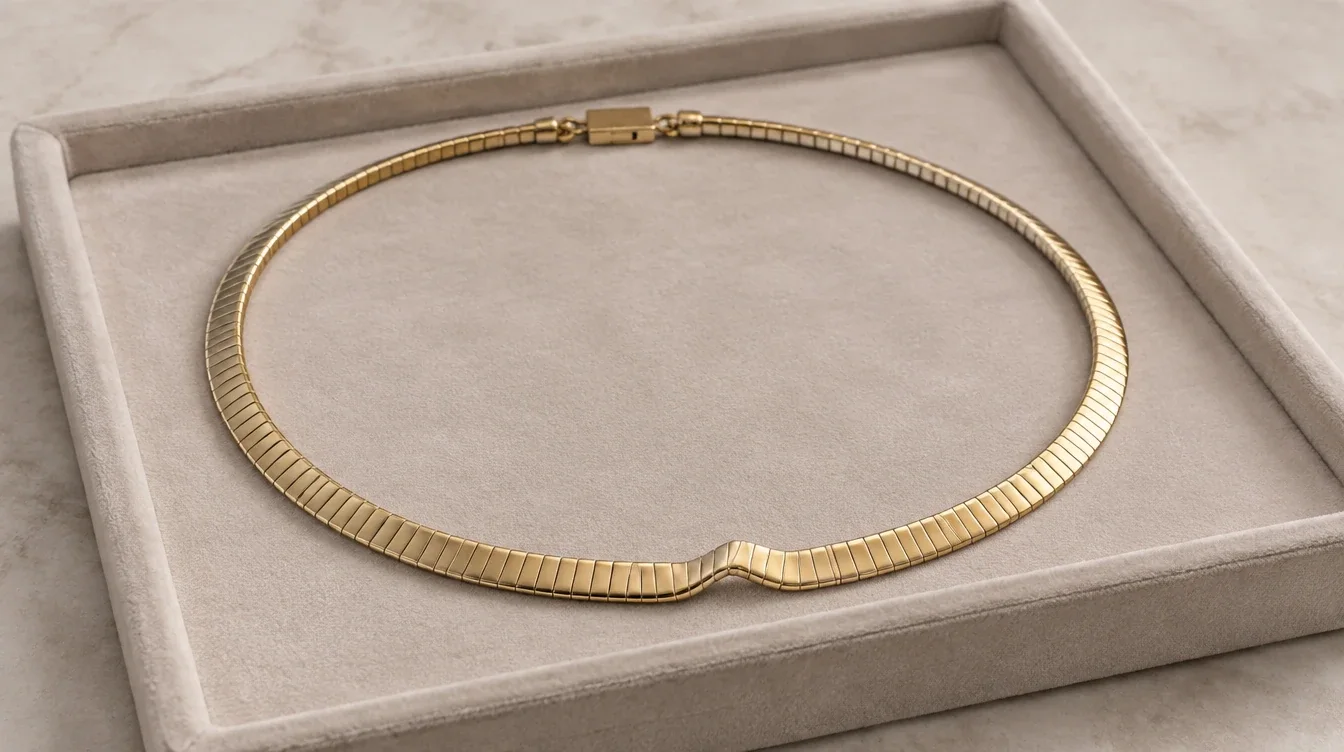
Professional kinked omega necklace repair may make the piece wearable again. A sharp crease or harmed inner support may still leave a visible joint or stiff spot. The choice depends on what bent, whether the repair will hold, and what result you can accept. Stop wearing the necklace until a jeweler checks it. Pulling the kink straight may cause more damage.
What a kinked omega necklace repair must fix
An omega necklace needs its smooth curve back. It must also flex enough to sit well on your neck. A neat surface is not enough if the damaged spot stays weak or rigid.
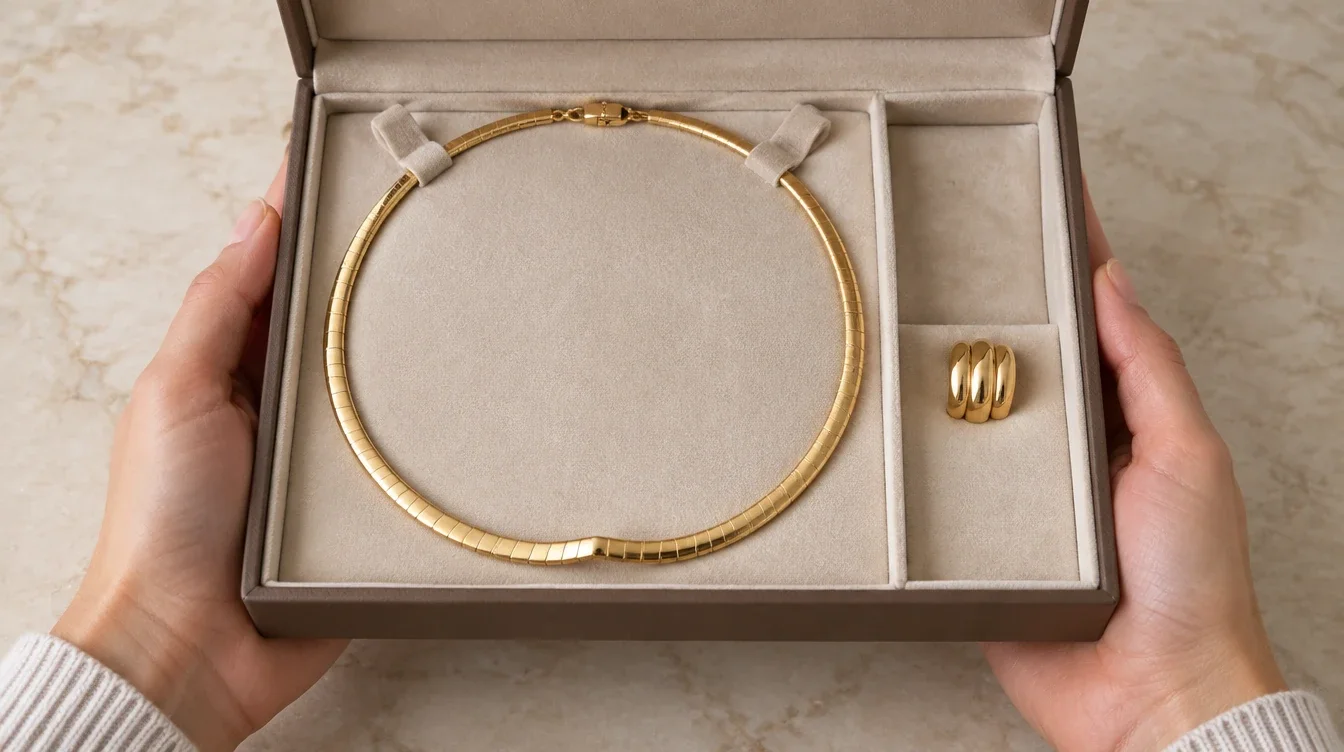
Unlike a loose link chain, an omega necklace has a shaped outer surface and an inner support. Amin Jewelers describes outer metal pieces and an inner network of wires or mesh. A bend can harm one part or both. So a necklace may look smooth yet feel wrong when worn.
Look at the necklace while it rests in its usual curve. Note any sharp angle, raised segment, gap, or spot that no longer bends like the rest. Do not keep flexing it to test the problem. Those observations help the jeweler locate the damage, but they cannot reveal the full condition of the inner support.
Do not ask only whether the kink can be hidden. Ask whether the whole necklace will hold its shape after repair. A close inspection is the first step.
Can a kinked omega necklace be repaired after a sharp bend?
Yes, some bent omega necklaces can be repaired. A sharp bend needs a jeweler’s assessment before anyone can promise a result. The outer surface may be marked. The inner support may also have pulled apart.
When the bend is limited
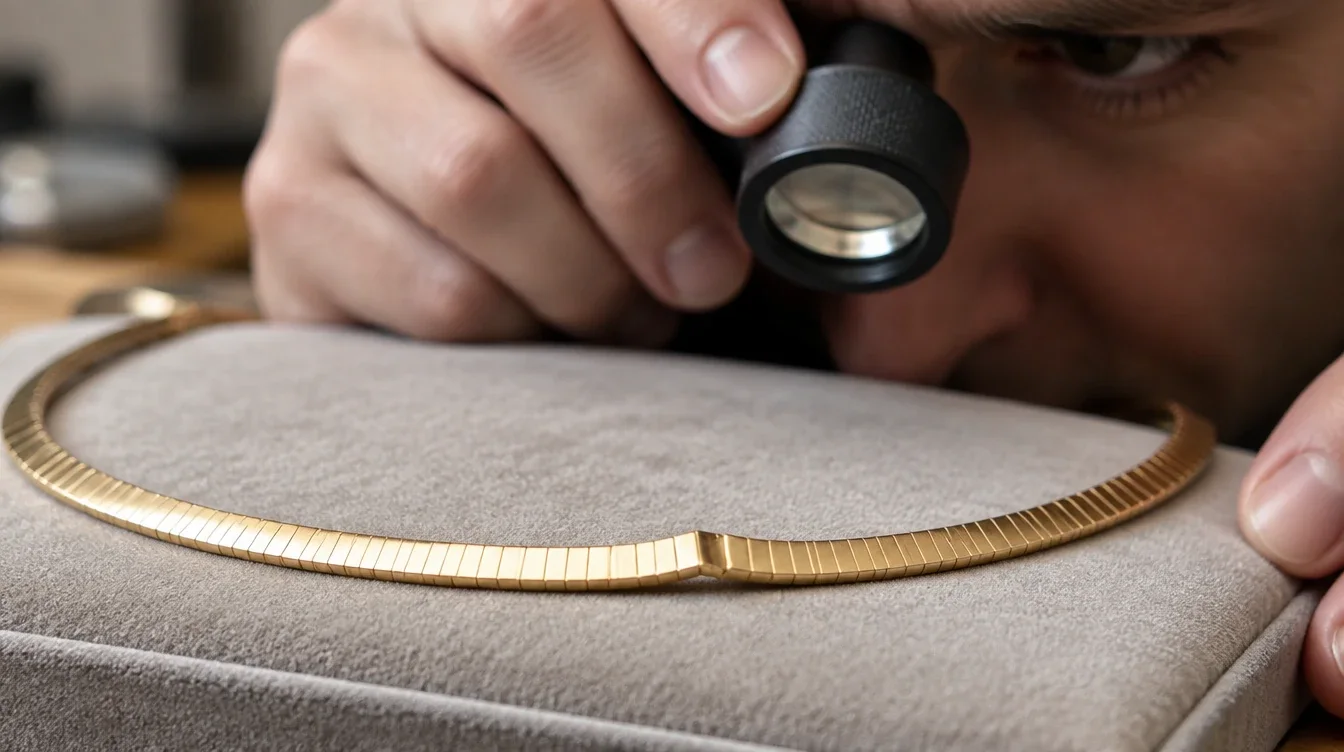
A slight bend may leave more of the necklace intact than a hard crease. The jeweler must still check for splits or stretched areas before reshaping it. A smooth look from one angle does not prove the repair will hold during wear.
When the structure is damaged
If the inner support has split, repair may mean removing or joining a section. The same may be true if the outer pieces no longer meet. Amin Jewelers describes work on both parts. It warns that the repaired spot may lose flexibility. That shows what may be possible, not what every jeweler can do for every necklace.
Ask the jeweler to show where the damage starts and ends. A quote for “straightening” tells you little on its own. Find out whether the work treats a bend or a broken structure. Then ask how the necklace will look and move.
What can omega chain repair change about the necklace?
Omega chain repair may restore use without restoring the factory finish. A join may show in some light or feel firm. It may also make the necklace sit less evenly. The result depends on the damage, its location, and the repair method.
The front curve is easy to see. A faint line near the clasp may bother you less than one beneath a center pendant. Even a neat join can change how the necklace hangs if that spot stays stiff.
Before approving omega chain repair, decide what success means to you. Would you wear a necklace with a visible mark? Or do you want it to look smooth from every angle? Sentimental value may make a mark easier to accept. If you prized its clean surface, the same result may disappoint you.
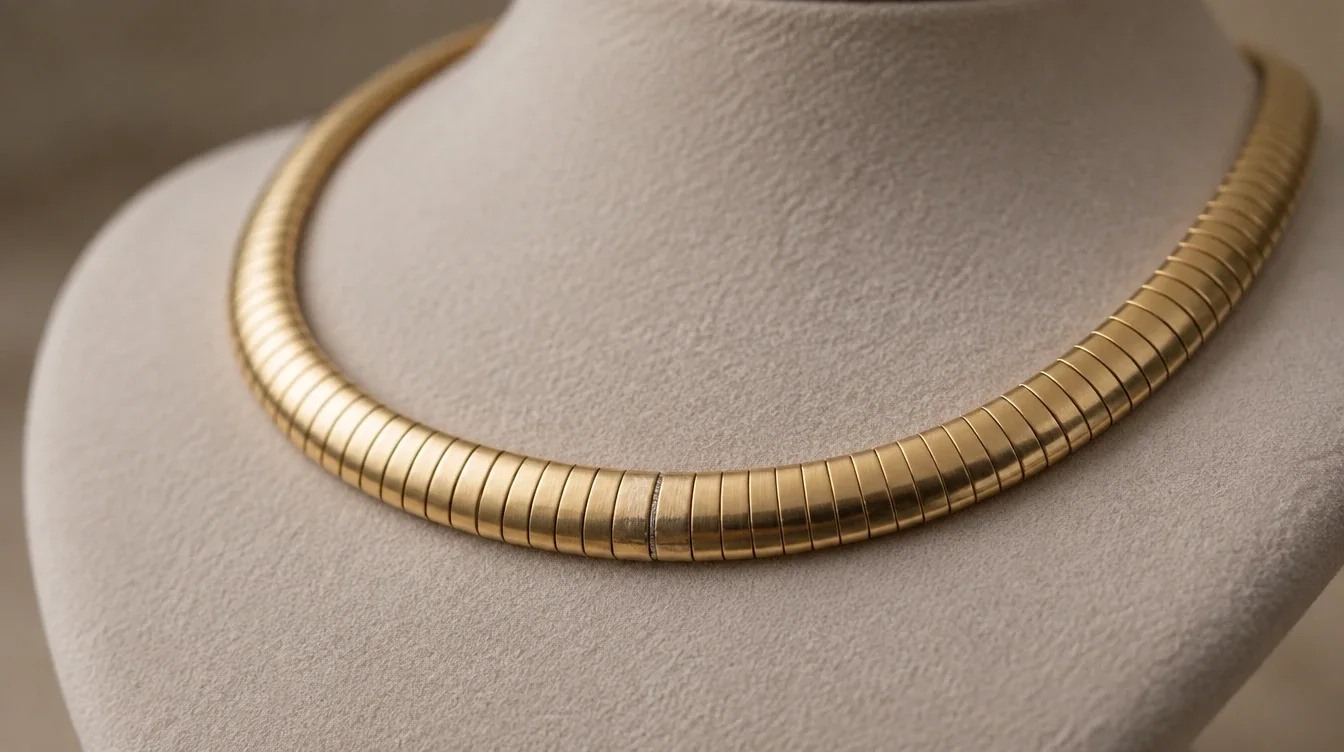
Ask what will show, how the repaired spot will bend, and whether it should hold during your usual wear. A photo alone cannot settle those points. The answers will help you choose repair or replacement.
When does replacement make more sense?
Replacement makes more sense if repair cannot make the necklace reliable enough for your usual wear. It may also suit you better if a visible joint or changed curve would spoil what you liked about it.
Judge repair and replacement by the same tests: looks, flexibility, wear, cost, and sentimental value. Picture a crease at the necklace’s center. Someone who wears a slide over that spot might accept a firm repair line. Someone who wears the omega alone may prefer a new necklace. These are examples, not promised results.
Past work matters too. Ask whether a new repair would sit near an old joint or another worn area. A sound fix at one point does not correct damage elsewhere. If the necklace has several weak spots, seek an assessment of the whole piece rather than a quote for the newest kink alone.
Replacement does not mean you must discard a necklace with personal meaning. You can keep the original and wear a new piece each day. If repair still appeals, compare its quote with a replacement of similar metal, length, and quality.
What affects omega necklace repair cost?
Omega necklace repair cost depends on the work needed, not only the size of the visible kink. A small adjustment differs from structural repair. Metal, finish, damage location, and matching parts may also affect the quote.
No fixed price for your necklace is sound without an inspection. General chain prices may mislead you. An omega’s shaped surface and inner support need their own check. For more on how chain construction affects quotes, see this guide to chain repair costs by type, but do not treat its ranges as an omega quote.
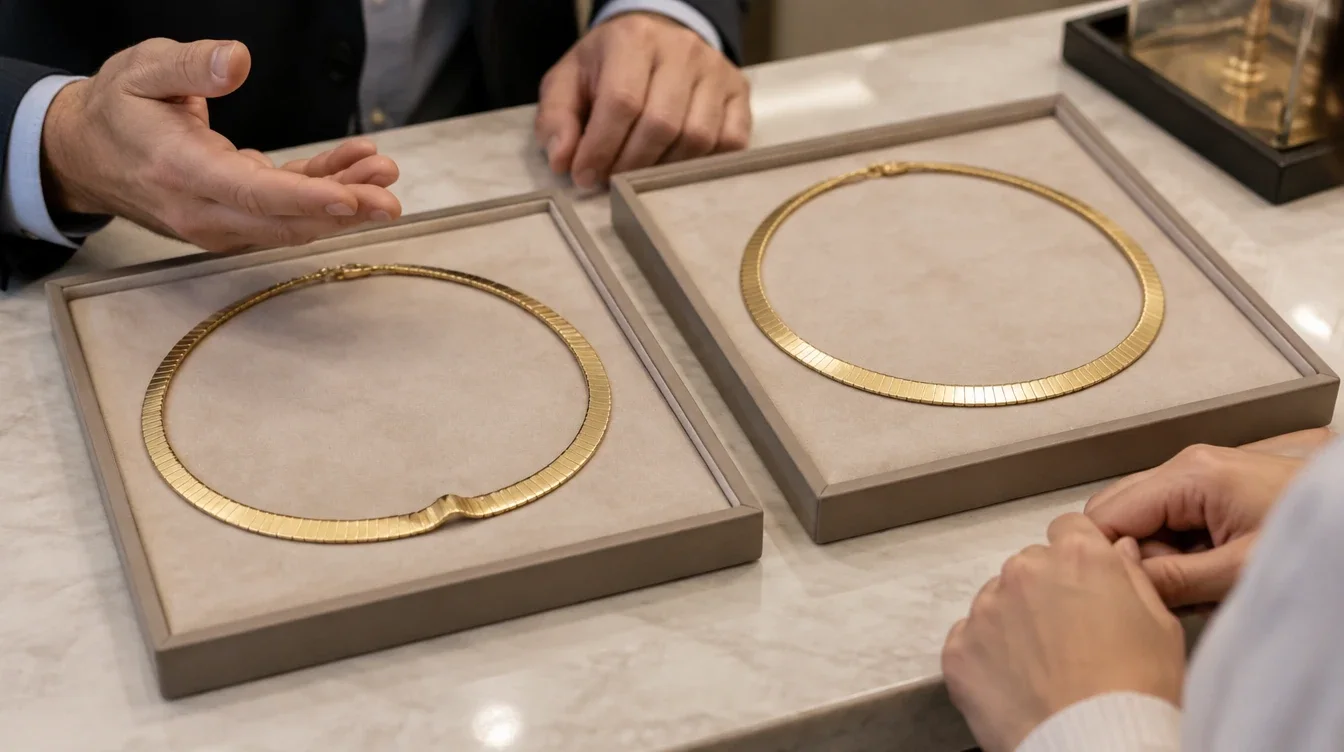
Ask what the omega necklace repair cost includes. Does the quote cover inspection, structural work, finishing, and any shortening? Will the jeweler call if hidden damage adds work? Get the likely look and limits in writing with the price. Then compare repair and replacement on fair terms.
What should you do before taking the necklace to a jeweler?
Leave the kink alone and store the necklace in a gentle curve. Bring any loose pieces to the appointment. Bring its slide or pendant too, so the jeweler can see how you wear it.
If you searched for how to fix a bent omega necklace at home, avoid pliers, pressure under a book, or repeated bending. Those methods cannot tell you what happened inside the necklace. Van Adams Jewelers advises against pulling or twisting a kinked chain because the attempt can add damage.
Tell the jeweler when you saw the bend and whether the necklace caught on clothing. Mention any past repairs. You do not need to name the fault yourself. The full necklace and its history give the jeweler a better place to start.
Common questions about a damaged omega necklace
These answers can help you prepare. Only an inspection can show which repairs suit your necklace.
Can a kinked omega necklace be repaired without a visible mark?
A minor bend may improve with little change to its look. A break or sharp crease may need a join. Ask where that line might show before you approve the work.
How to fix a bent omega necklace if it still clasps?
A working clasp does not tell you whether the bent area is sound. Stop wearing the necklace and have the outer surface and inner support checked rather than trying to press it flat.
Does an omega necklace have to be replaced if it loses flexibility?
Not always. But a less flexible spot may affect comfort and how the necklace hangs. Before deciding, ask how its finished curve should compare with an undamaged area.
What should I ask when I get a repair quote?
Ask what is damaged, what work is planned, and whether the necklace will be shorter. Ask about a visible joint, stiff spot, or limits on future wear. Those answers matter as much as the price.
With an inspection and a clear quote, the decision becomes much less of a guess.
Choose the result you will actually wear
Kinked omega necklace repair may be worth it if a jeweler can explain the work and likely result. A small mark may be fine on a treasured necklace. Replacement may suit you better if the curve stays stiff, looks uneven, or feels weak during wear.
Bring the necklace to a jeweler who can check both its surface and inner support. Ask to see the damage. Compare a written repair plan with a replacement of similar metal, length, and quality. Choose the result you would feel good wearing.