Learn how to tell if rutilated quartz is cracked Before You Blame the Needles
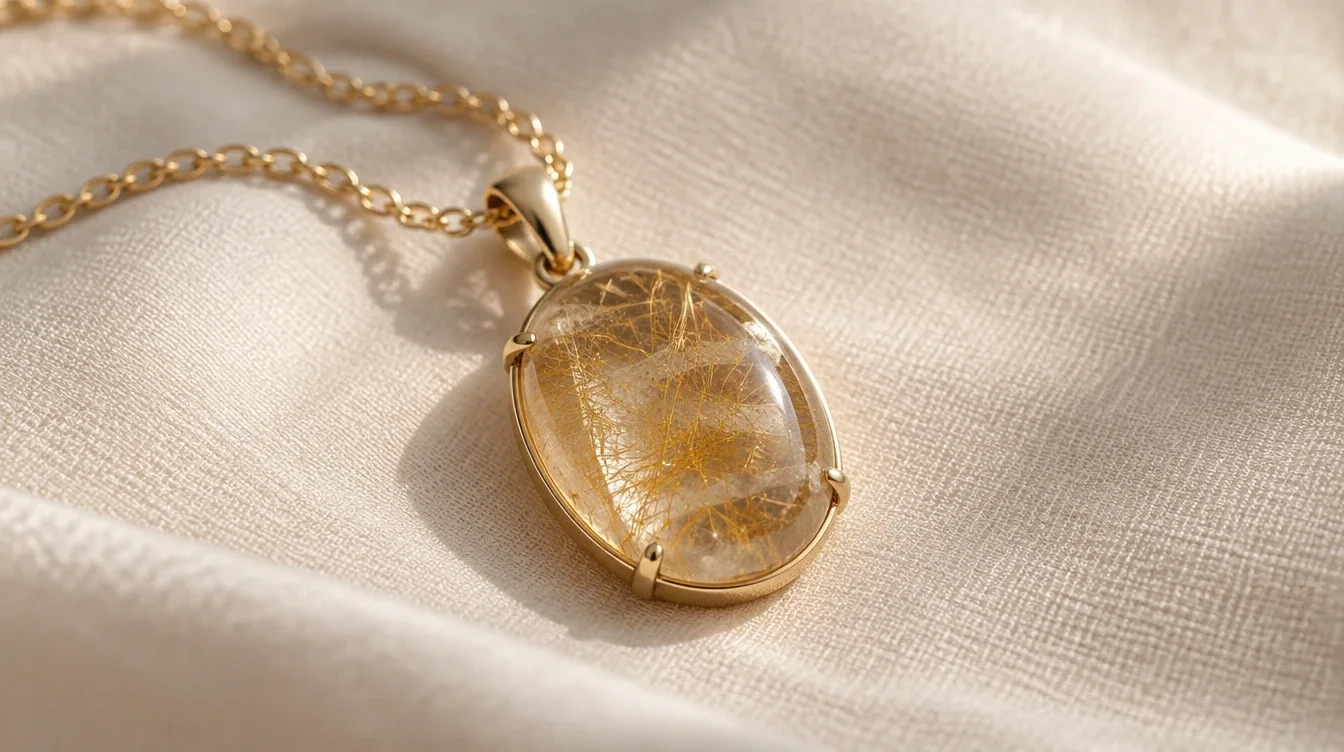
To learn how to tell if rutilated quartz is cracked, compare the suspect line’s shape, depth, and appearance from several angles rather than judging its color alone. Rutile needles and fractures can exist in the same stone, so finding attractive inclusions does not rule out damage. If a line looks new after a knock, or the surface appears broken, stop wearing the piece until a qualified jeweler checks it.
What the needles actually tell you
Rutile needles are mineral crystals inside quartz. They are not cracks. Skyjems describes these inclusions as long rutile crystals found alone, in groups, or in dense networks. Their color ranges from gold through copper tones to nearly black.
When someone asks “what are the needles in rutilated quartz,” that distinction comes first. A solid crystal enclosed within the gem is different from a break in the quartz around it. Both may look like fine lines through a polished surface.
Not all needles follow a neat pattern. Eastern Story’s identification guide describes crossed, bundled, bent, and broken rutile crystals. It also notes fractures and fluid inclusions. A straight line alone cannot give you a firm answer.
Treat rutilated quartz inclusions as features to check, not proof that the stone is sound. Start with the line itself, then look at the quartz around it.
Compare rutilated quartz needles vs cracks without guessing
Compare shape, depth, and contact with the surface together. No single clue you can see gives a sure answer for every stone.
Follow the feature through the stone
Try to follow one suspect line from end to end. Does it stay thin as you tilt the stone? Or does it seem to spread into a wider area? Note what you see without trying to name the cause.
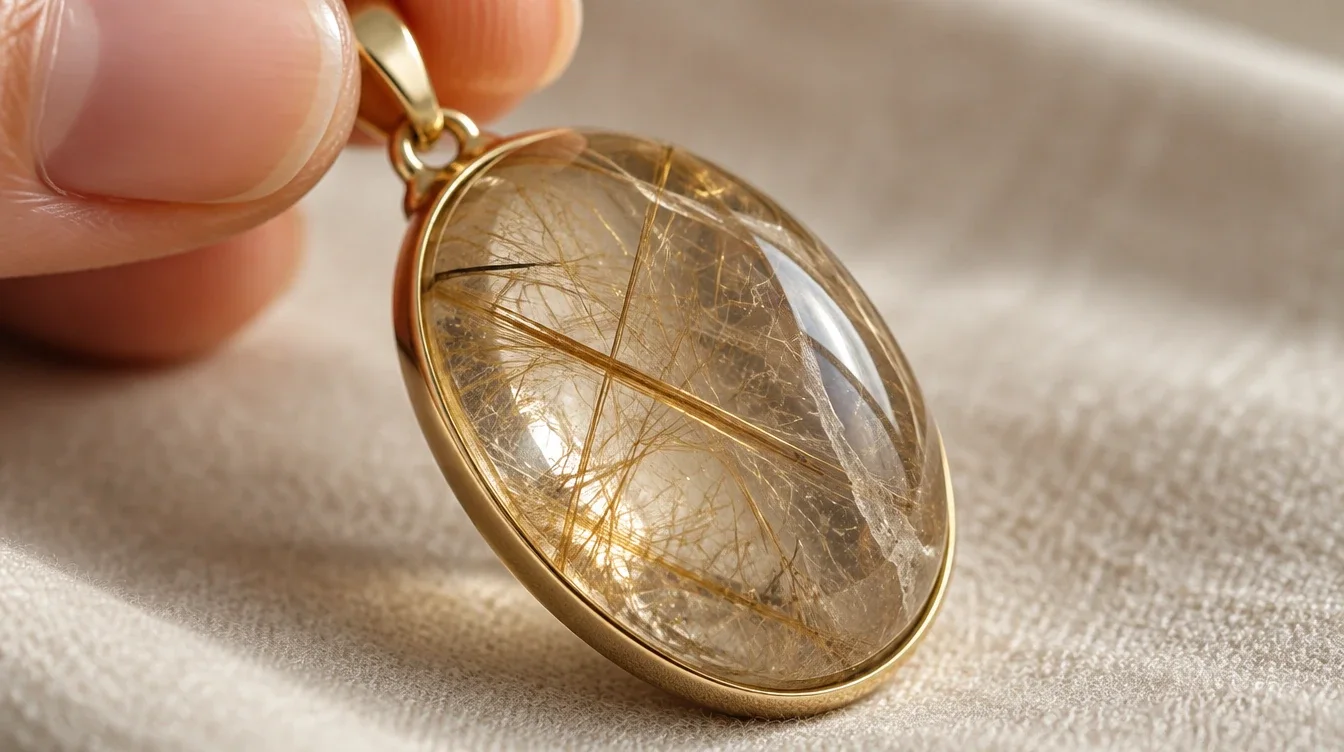
These details help you describe the feature to a gemologist. They are not a home pass or fail test. A thin feature can be hard to read from its edge.
Separate color from condition
Gold does not mean harmless, and black does not mean broken. BE.’s discussion of dark inclusions notes that stones sold as black rutilated quartz may hold rutile or tourmaline. They may hold another mineral instead. Looks alone do not confirm the species.
Learning how to identify rutilated quartz is therefore separate from assessing its condition. Even confirmed rutile does not explain every other line nearby. With that boundary clear, a careful viewing routine becomes more useful.
A safe way to examine your jewelry
Check rutilated quartz over a soft surface in good light. Move it gently and leave the stone in its setting. Avoid any test that uses force.
Begin with the whole piece
Set the jewelry on a folded cloth. Note which stone concerns you and where the mark sits. For a bracelet, note the bead’s place near the clasp or another clear feature.
Look without magnification first. Is the mark near an edge or a drill hole? Check for metal that hides part of the stone, too. Do not pull a strand tight to expose a bead.
Use magnification to record detail
A loupe marked 10× gives tenfold magnification. Eastern Story recommends inspection at 10× as screening, with professional examination for confirmation. Bring the jewelry into focus slowly rather than pressing the lens against it.
Change the viewing angle
Turn the piece slightly and follow the same feature. Does it look wider or thinner? Note whether another line comes into view, too. Keep your notes clear so you can repeat the check later.
Change the light position
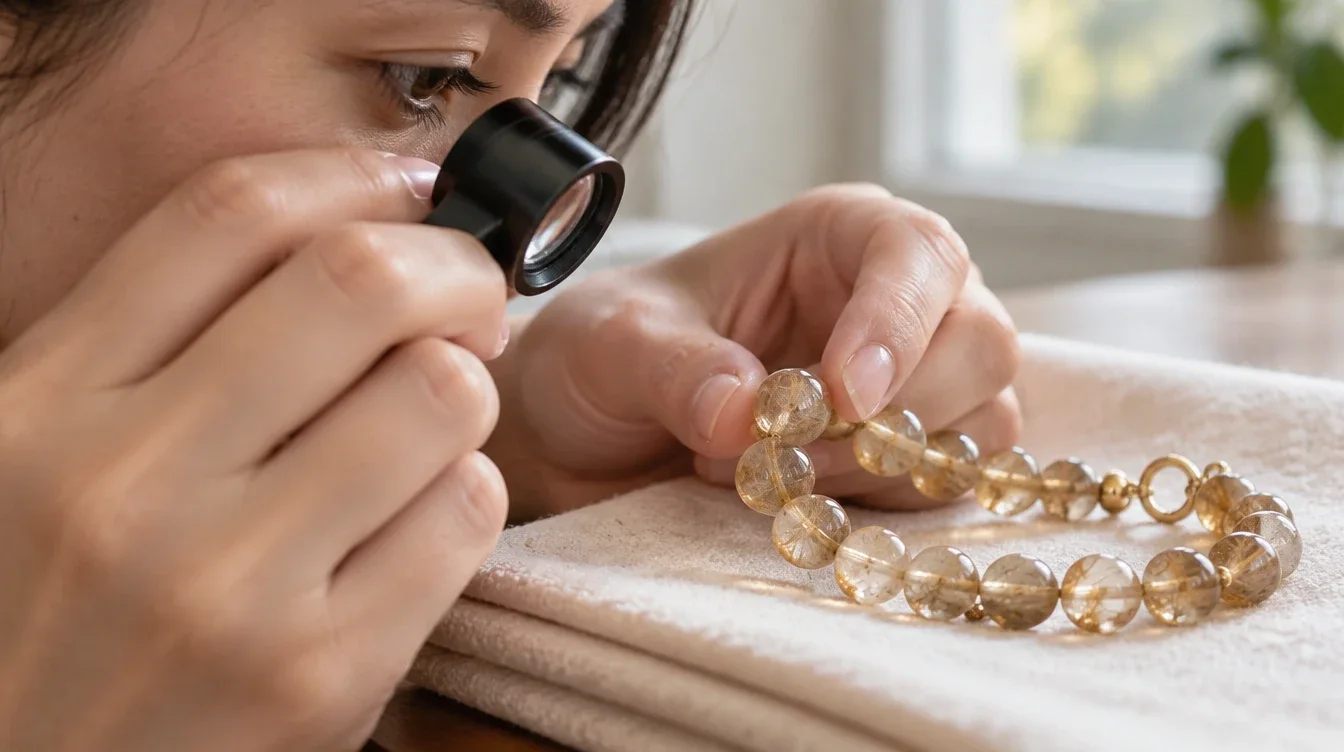
Try soft window light, then a small lamp from the side. Keep hot lamps away from the stone. If glare hides the mark, move the light. Do not rub or probe the surface.
Do not drag a pin across a line or test it with your fingernail. Skip heat, impact, and scratch tests entirely. Once you have a clear description, decide what remains unknown.
Knowing how to tell if rutilated quartz is cracked has limits
Home checks can help you find a concern. They cannot always identify a fracture or tell you whether the jewelry is safe to wear. Hidden surfaces and dense inclusions may keep parts of the stone out of view.
Use three terms in your notes: likely mineral feature, suspected fracture, or unclear. These describe what you see, not a grade. They help keep a guess from becoming a claim.
A likely mineral feature might match nearby needles in shape and depth. Have a suspected fracture checked. This matters even more if you saw it after an impact. Choose unclear if glare, the setting, or poor focus blocks your view.
Imagine a pendant with gold threads and a pale mark near its rim. Those threads do not prove the pale mark is also rutile. Take photos of both features. Ask the jeweler to check the rim on its own.
This example is not a reported customer case. The point is to check each feature on its own. Photos can help, as long as you know their limits.
What photos can show before you buy
Photos can record a feature you can see. They cannot prove that a rutilated quartz stone has no fractures. Ask for views of the actual piece, not a similar item.
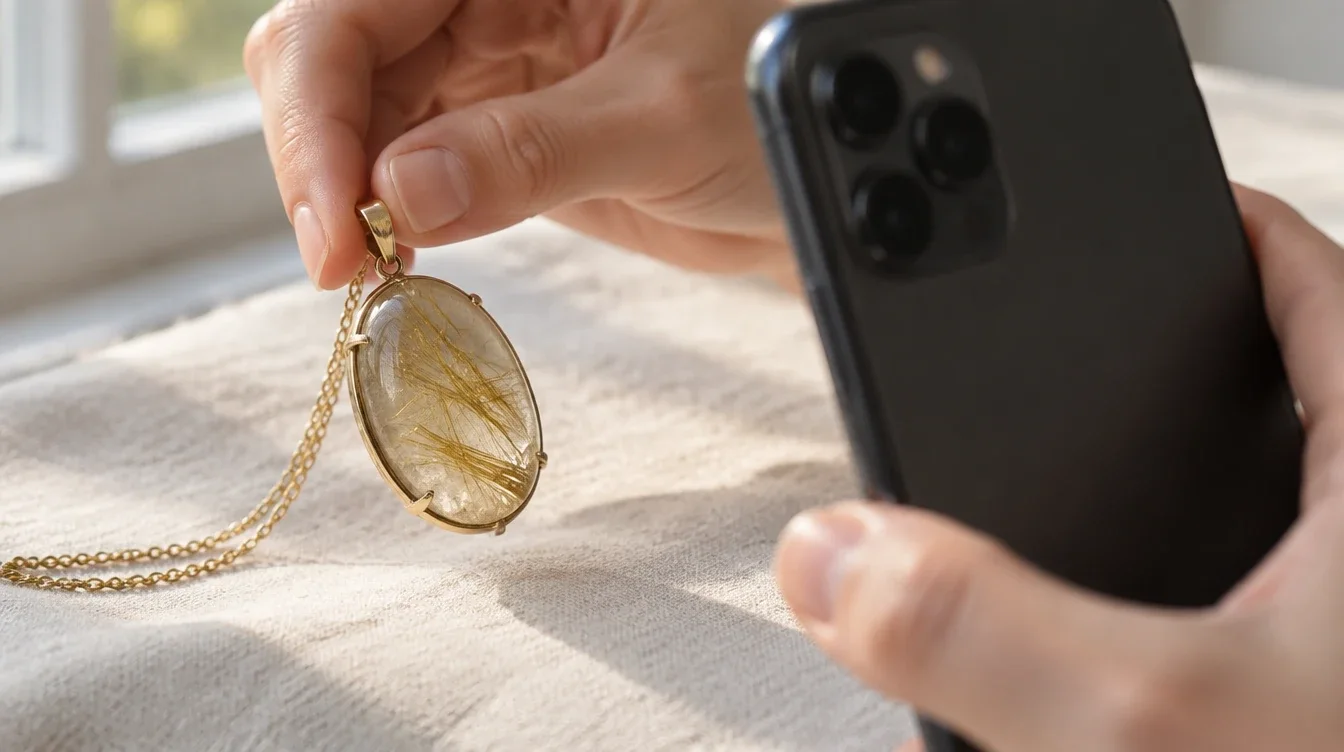
Ask for a still image in soft light. Request a slow video as the seller turns the jewelry, too. Ask to see the sides and any back surface in view. For beads, request clear views around both drill openings.
Ask, “Has this particular mark been examined, and does it reach the surface?” That calls for a clear answer. “Is this good quality?” leaves too much room for guesswork.
Also ask whether any fractures have been filled. Eastern Story separates visual screening from treatment confirmation, which may need microscopy and more tests. If the stone’s condition affects your choice, do not trust the seller’s description alone. Have the stone checked.
Save the listing and written replies. Check the return terms before you pay. Take extra care if the seller cannot address your concern. When the piece arrives, compare it with those records before you wear it.
Keep the comparison fair. Match the viewing angle and light as closely as you can. A mark missing from one image may have been hidden. Its absence does not prove recent damage.
Write down when you first saw the feature. Do not guess when it formed. That gives the seller or examiner a clear place to start. It avoids a claim you cannot support.
If you own the jewelry, next decide if you should put it aside.
When to stop wearing the piece
Put rutilated quartz jewelry aside if you suspect a new fracture. Do the same if the surface is broken or the stone moves in its setting. If you are unsure after a knock, have it checked. Do not try another home test.
Do not try to hide cracks in rutilated quartz with oil or glue. Keep the piece separate in a padded container. Bring any earlier photos and explain when you first saw the change.
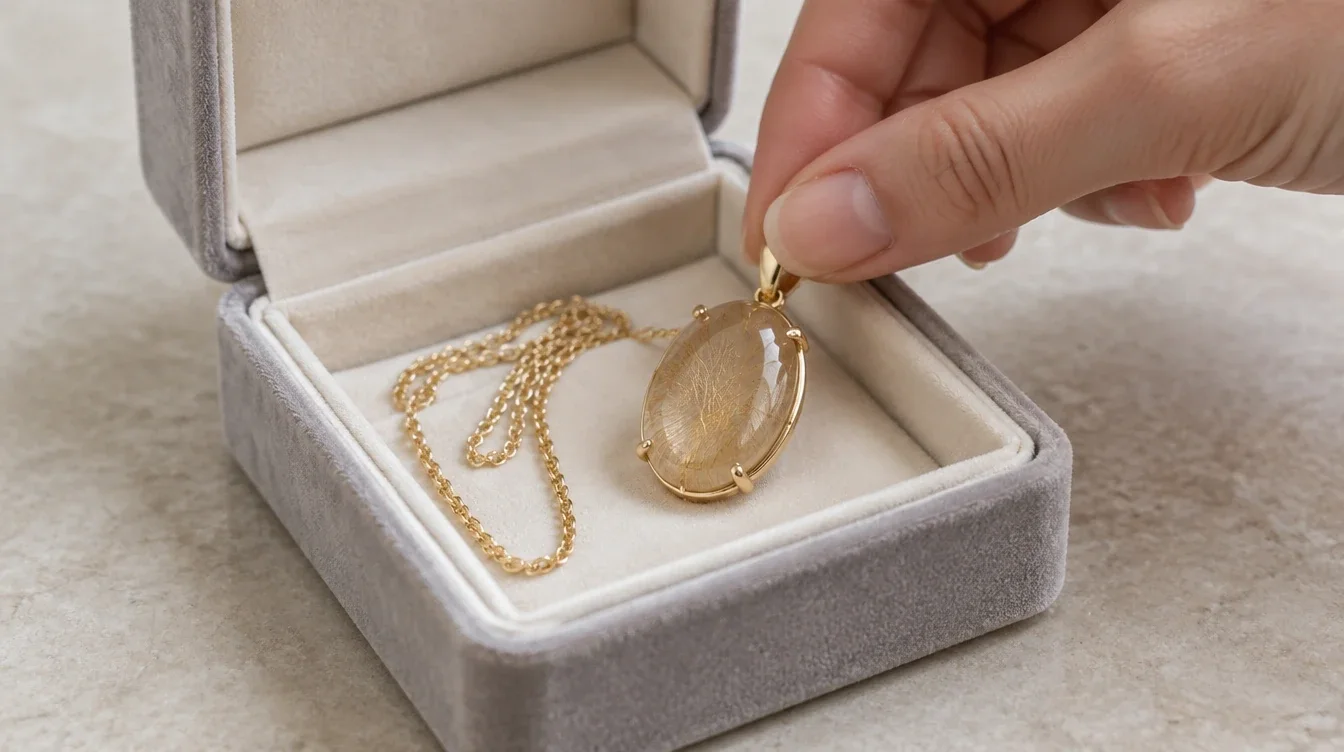
Ask the examiner to tell the visible needles from the suspect feature. Does that feature reach the surface? Ask if they suspect treatment. Does the setting limit what they can check?
A report naming the material does not tell you all about its condition. Ask about this stone in this piece of jewelry. Before you book, the answers below can help you explain your concern.
Common questions about visible lines
Visible lines need context, and these answers clarify what home checks can establish.
What are the needles in rutilated quartz made of?
The sources above describe rutile as titanium dioxide inside quartz. Trade labels for dark needles can be loose. If the mineral name matters, ask for proof of what it is.
Can rutilated quartz inclusions and fractures occur together?
Yes, a stone can hold both mineral needles and fractures, as Eastern Story’s guide notes. Knowing what one needle is does not tell you what another mark is. Check each concern on its own.
Does a new visible line prove recent damage?
No, seeing a line today does not prove it formed today. Compare older photos under similar light. Have it checked if it appeared after a knock or remains unexplained.
How can I compare rutilated quartz needles vs cracks in a photo?
Use the photo to find and describe the feature. Do not use it to declare the stone sound. Knowing how to identify rutilated quartz from a listing does not replace a condition assessment, which helps you decide what to do next.
Keep the pattern and check the concern
The answer to how to tell if rutilated quartz is cracked starts with a close look. Stop where the evidence stops. Enjoy the needles, but do not assume they explain each line.
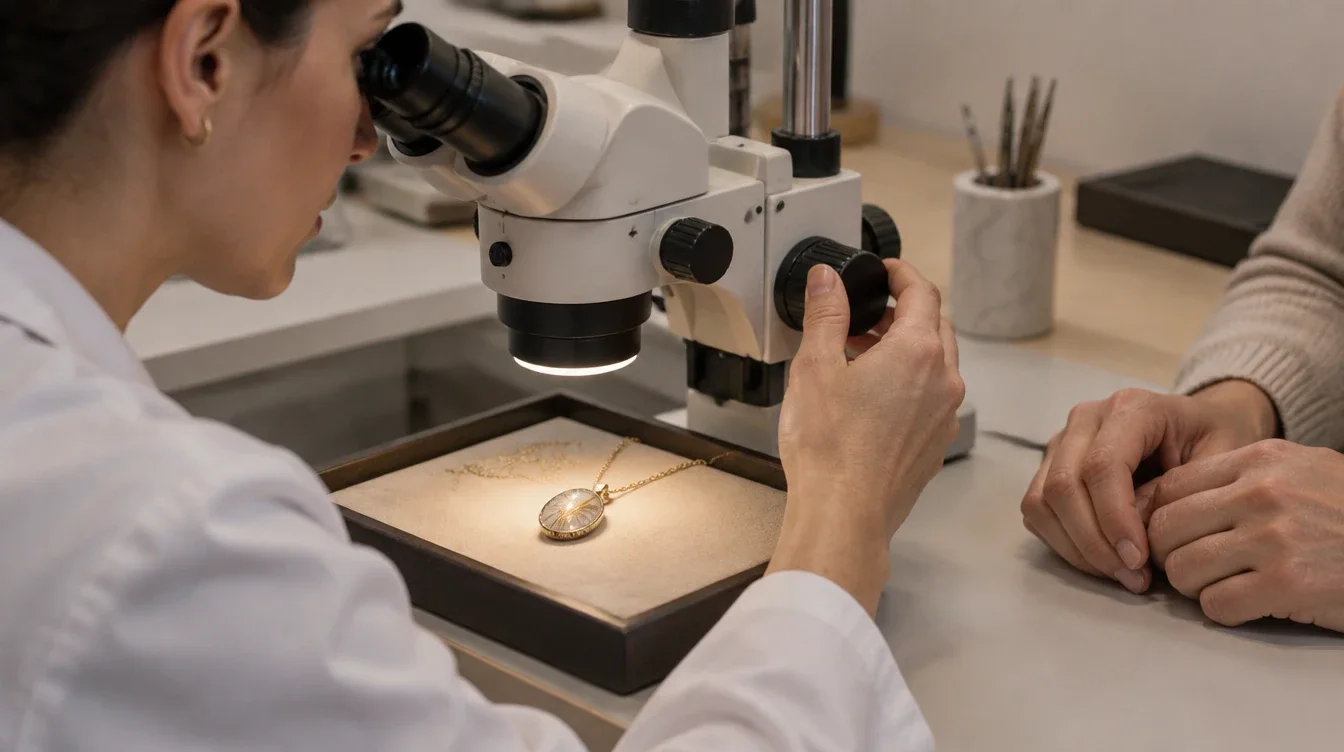
Suspected cracks in rutilated quartz call for answers about that stone. Put the jewelry aside if a mark is new or unclear. Do the same if it sits near a damaged surface. Book an inspection with a qualified jeweler or gemologist. Bring photos of the feature that worries you.