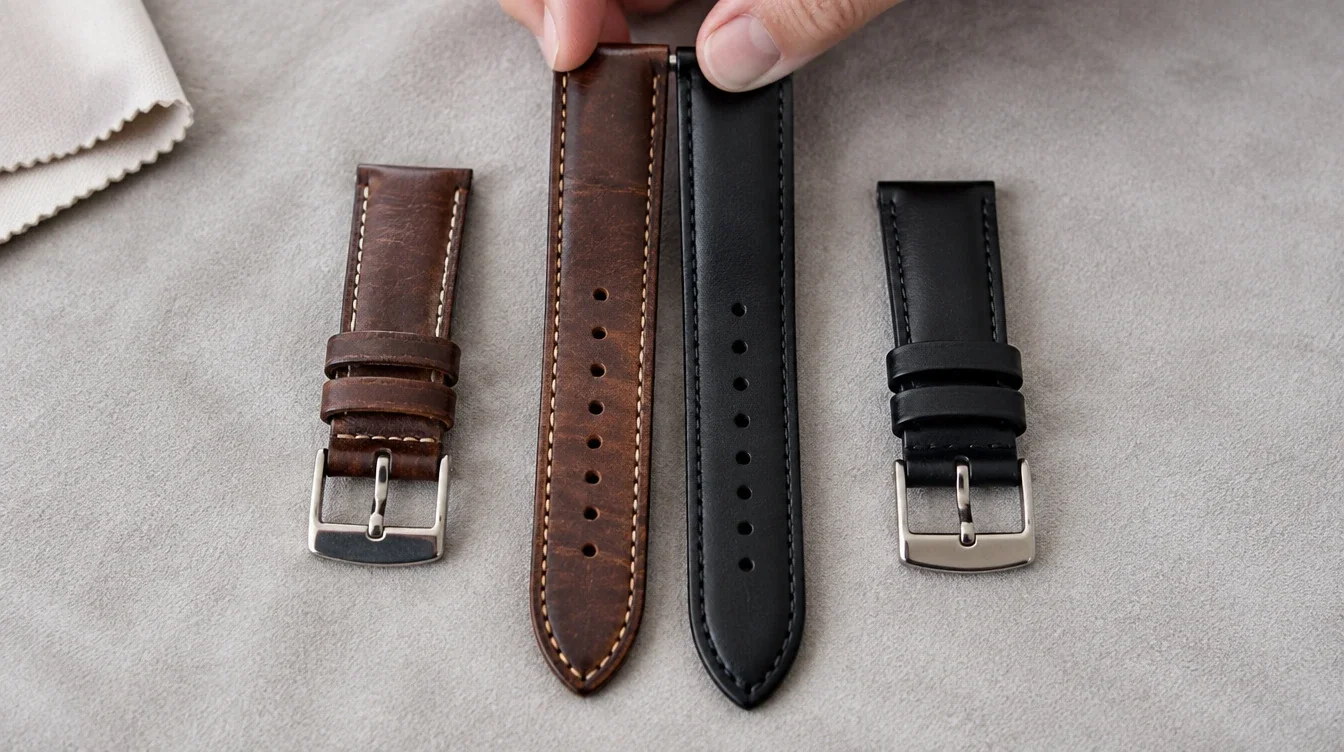
Learn how to measure watch strap width Before Ordering the Wrong Size
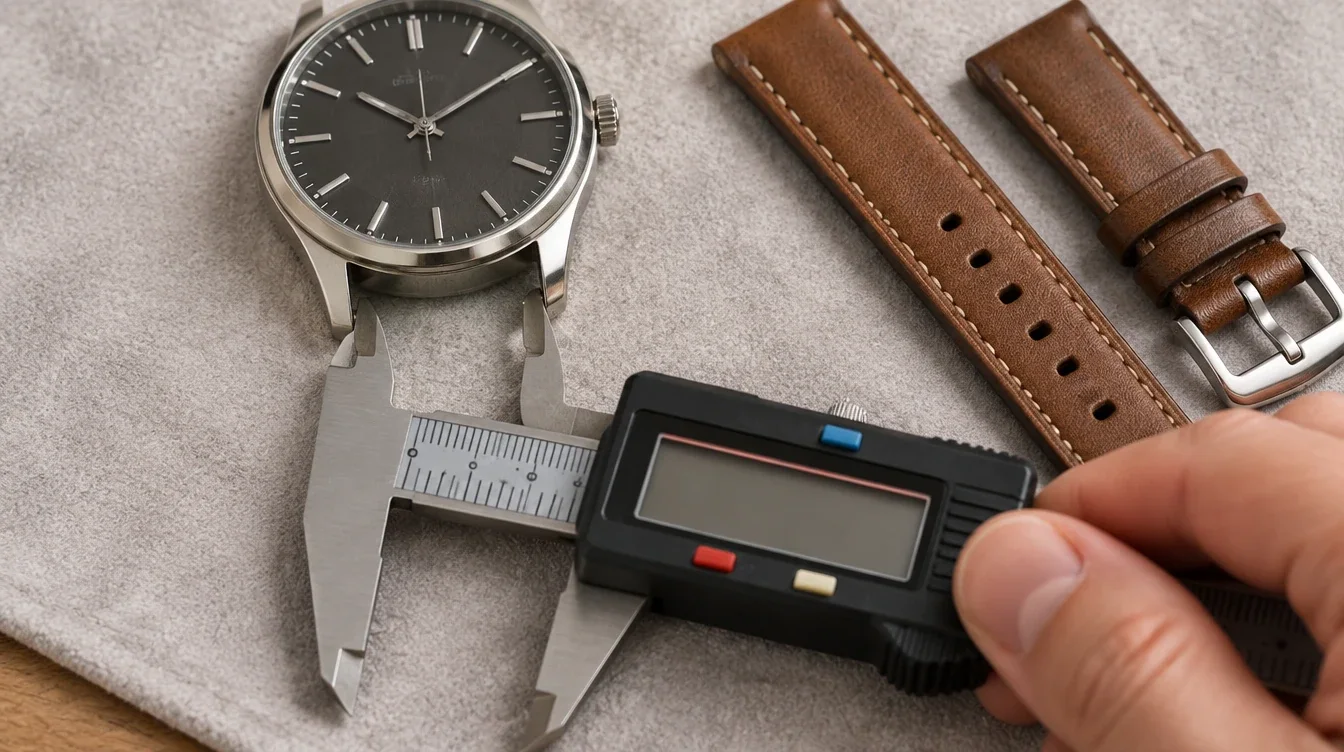
Measure the gap between your watch’s inner lug edges in millimeters. Choose a strap with that width. For watches with standard lugs, that is how to measure watch strap width for replacement. Veblenist’s fitting guide recommends an exact width match. Watches with unusual fittings need a separate compatibility check.
Start with the gap, not the watch case
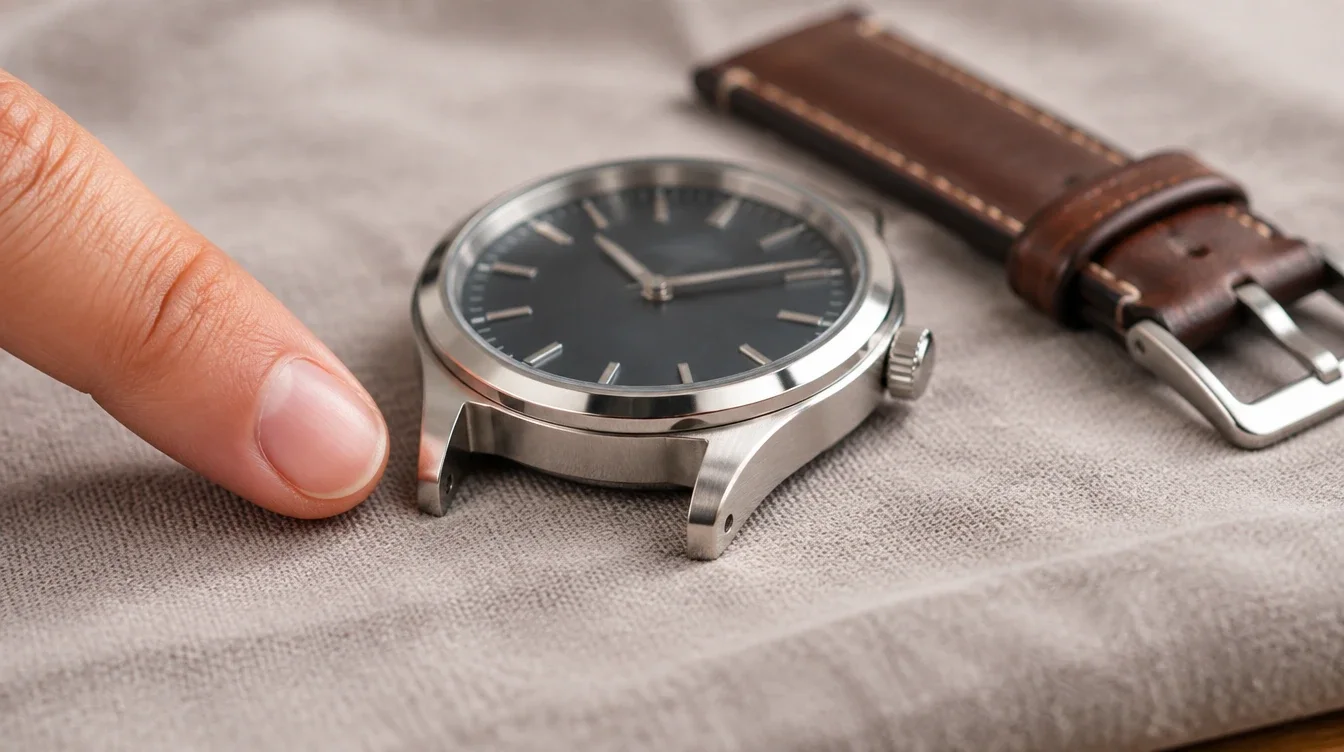
Lug width is the space where the strap joins the watch, not the width of the case.
Lugs are the parts that project from the case and hold the strap. Measure between their inner faces across one end of the watch. Do not measure across their outer edges. Nor should you measure from the case’s top to its bottom.
If you are asking “what size watch strap do I need,” start with that gap. Wrist size helps you choose strap length. That is a separate measurement.
Nixon’s explanation of how to measure watch lug width also suggests looking for a size stamp underneath your current strap. A clear stamp can save time. Still, compare it with the watch before ordering. Next, pick a tool that lets you read the gap clearly.
Choose a ruler or calipers
A millimeter ruler works when you can read the marks clearly. Digital calipers help you check small differences.
Use a ruler for a quick check
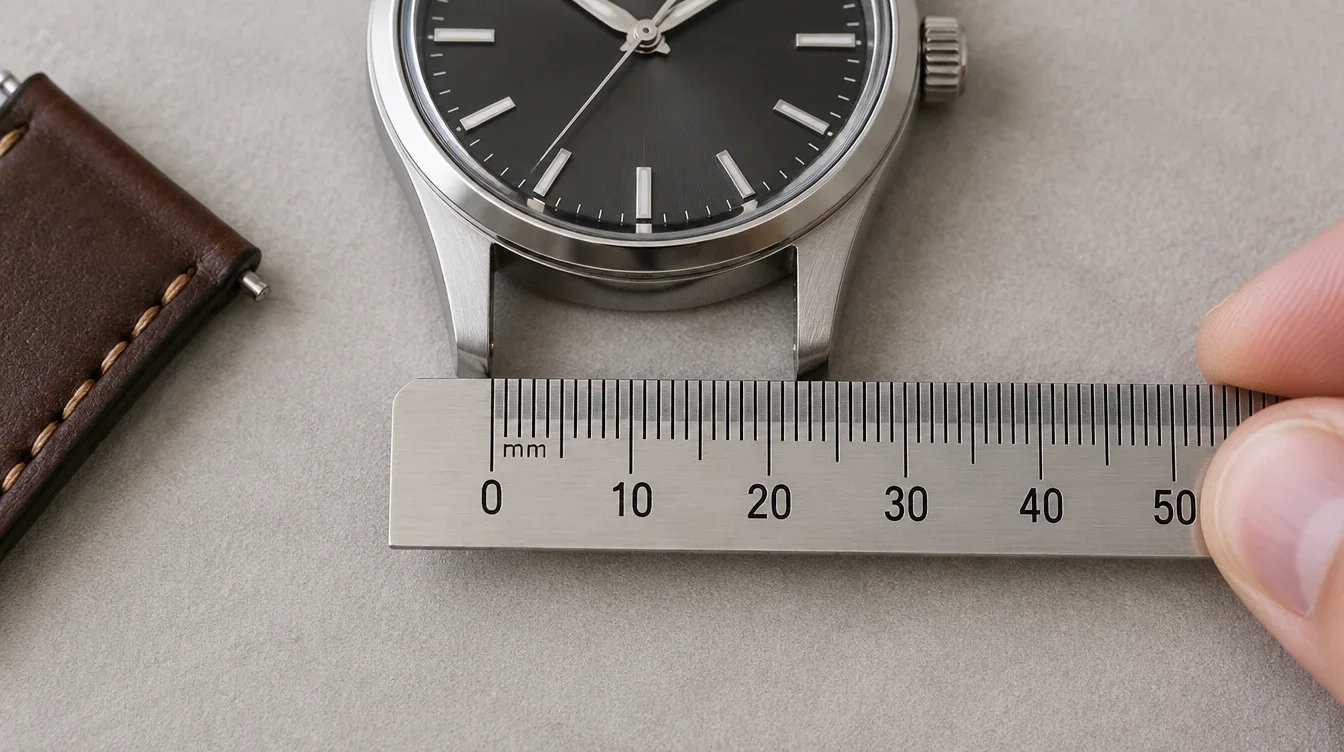
A rigid ruler is easy to position across the opening. Choose one with clear millimeter marks rather than estimating between inch marks. Good light matters more than speed.
If you want to learn how to measure watch strap width with a ruler, the key is alignment. Keep the scale straight across the gap, not at an angle. The method below shows where to place it.
Use calipers when the marks are hard to read
All Watch Bands recommends digital calipers for accuracy. Use the inside measuring jaws. Open them gently against the inner lug faces. Avoid dragging metal tips across polished surfaces.
Whichever tool you choose, prepare the watch before taking a reading.
Follow these steps for how to measure watch strap width
Rest the watch on a soft cloth and measure the inner lug gap. Repeat the reading before ordering.
Expose the measuring points
You can leave the strap on if both inner lug edges are visible. Delugs notes that removing the strap gives a clearer view. If removal feels awkward, ask a watch repairer rather than forcing the fitting.
Read the gap in millimeters
Place the ruler’s zero mark at one inner edge. Look straight down and read the mark at the opposite inner edge. Use the printed zero, not the ruler’s end.
For a worked example, suppose the edges line up with 10 mm and 30 mm. Subtract 10 from 30 to get a 20 mm gap. Starting at another mark helps when the ruler’s end blocks your view.
Check a doubtful reading
Lift the tool, place it back, and measure again. If the readings differ, do not average them and buy the nearest size. Check that the tool is straight. Or confirm the stated lug width for your exact watch reference.
Avoid rounding up by default
Some guides suggest rounding up for flexible straps, while Veblenist recommends matching exactly. Follow the exact match approach rather than treating flexibility as permission to squeeze in a wider strap.
Once the gap is confirmed, use the old strap as a second check.
Compare the old strap and buckle separately
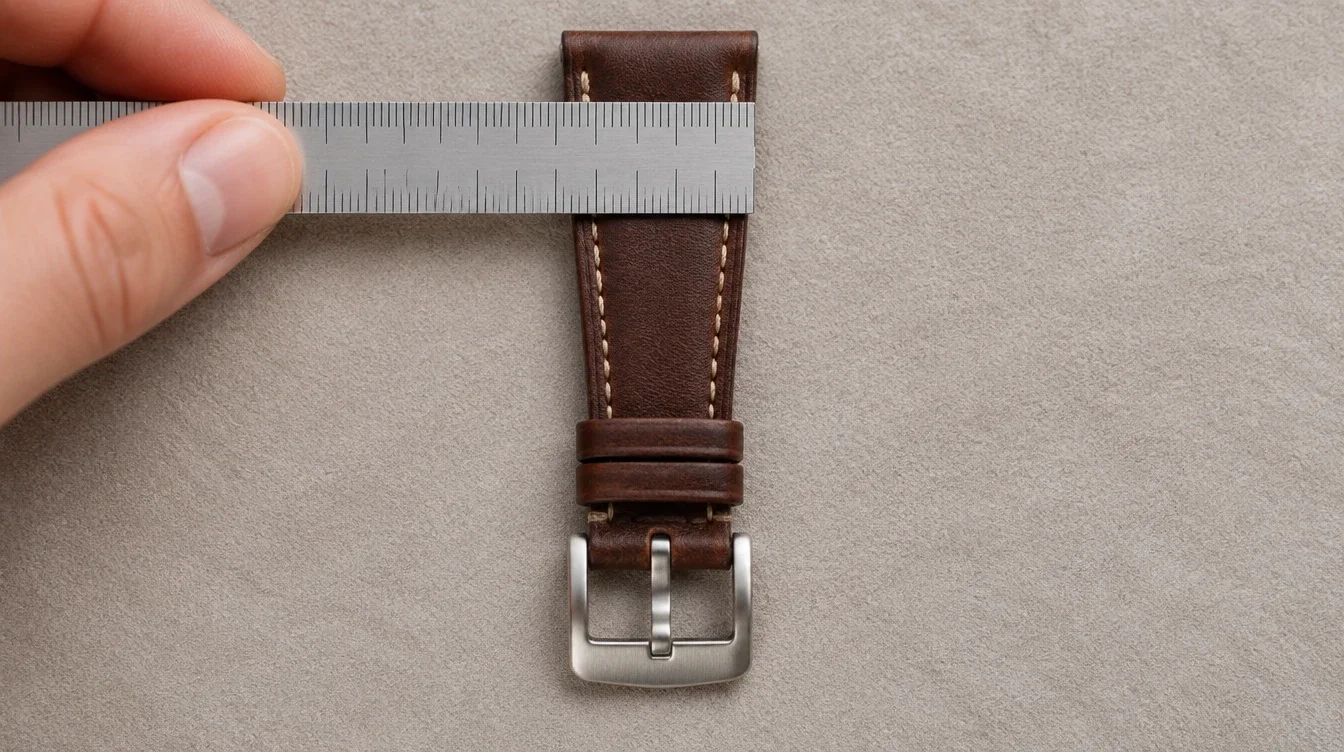
Measure an existing strap at its watch end, not at its narrow tip or buckle.
That is how to measure watch band width when the strap is off. Lay it flat. Read across the end that sat between the lugs. Check the watch itself if the leather edges look worn or bent out of shape.
Understand watch strap width vs buckle width
A strap may narrow toward the buckle. Delugs lists paired widths with lug width first and buckle width second. For example, a strap listed with 20 mm and 16 mm widths fits a 20 mm lug gap. Its buckle end fits a 16 mm buckle opening.
When comparing watch strap width vs buckle width, note both measurements if you plan to reuse your buckle. Otherwise, focus first on the watch end. Then check the seller’s sizing details.
Common questions before buying
A watch strap size chart helps confirm a measurement. It should not replace checking your exact watch.
How do I use a watch strap size chart?
Match the full model reference, not just the collection name. If the chart disagrees with your measurement, ask the maker or seller before ordering.
How can I check width without removing the strap?
Learning how to measure watch strap width with a ruler does not always mean taking the strap off. Measure across the visible inner lug edges. Stop if the strap hides either measuring point.
What size watch strap do I need for a tapered band?
Use the width at the watch end to choose the replacement. Keep buckle width separate. Check strap length against a strap that fits your wrist.
Does measuring a band replace measuring the lugs?
Knowing how to measure watch band width provides a crosscheck if the current band fits correctly. Knowing how to measure watch lug width gives you the watch’s actual opening. Resolve any mismatch before checkout.
Order from a confirmed measurement
Choose the replacement only after your readings agree. Write down the lug width in millimeters. Add buckle width if needed, and confirm the attachment style with the seller. Take one careful measurement now. Then shop for a strap that fits without guesswork.