How to Measure Ankle for Anklet the Right Way, No Guessing
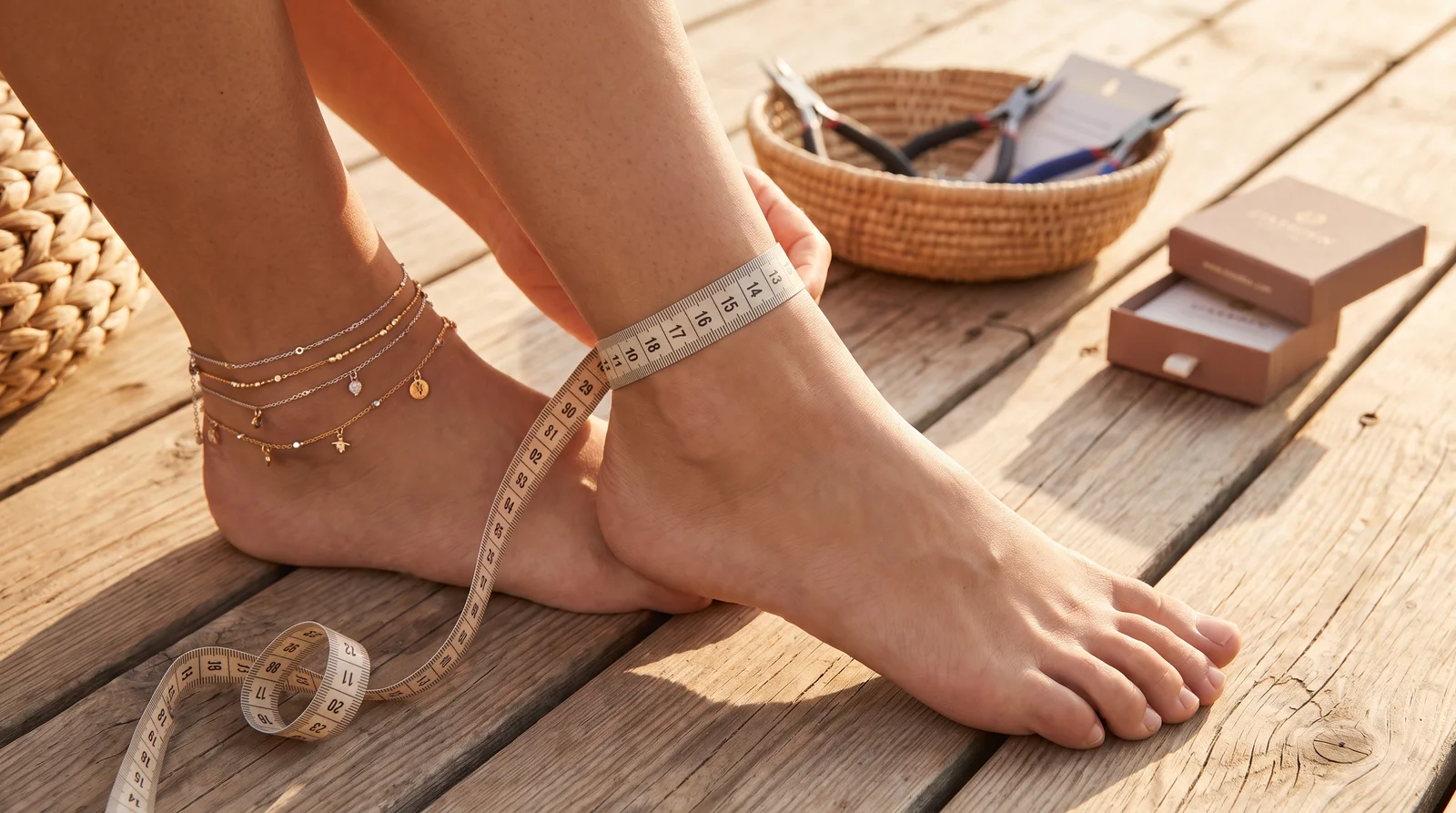
The fastest way to learn how to measure ankle for anklet fit is to wrap a flexible tape measure around your ankle just above the bone, note the circumference, then add half an inch to one inch depending on how loose you want it to sit. Measure at the end of the day, since ankles swell more than wrists from standing and walking. Skip this timing detail and you risk buying an anklet that feels great in the morning but pinches by evening.
Why Ankle Measuring Isn't the Same as Wrist or Ring Sizing
Ankles behave differently than wrists, and that changes how you should measure them. Your wrist size barely shifts throughout the day. Your ankle is a different story. Gravity pulls fluid downward as you sit, stand, and walk, so ankles swell more noticeably by evening than wrists ever do. That's not a minor detail. It's the reason so many people order an anklet that fits perfectly when they try it on in the morning, then feels tight and uncomfortable after a full day on their feet.
Wrist swelling tends to be mild and temperature related. Ankle swelling is gravitational, and it compounds with heat, long flights, salty meals, or standing jobs. If you've ever noticed your socks leaving a deeper mark at night, that's the same fluid shift affecting your future anklet fit. Understanding this difference is the real starting point for accurate sizing, more important than any chart.
With that context in mind, let's get into the actual measuring process.
How to Measure Ankle for Anklet Sizing Step by Step
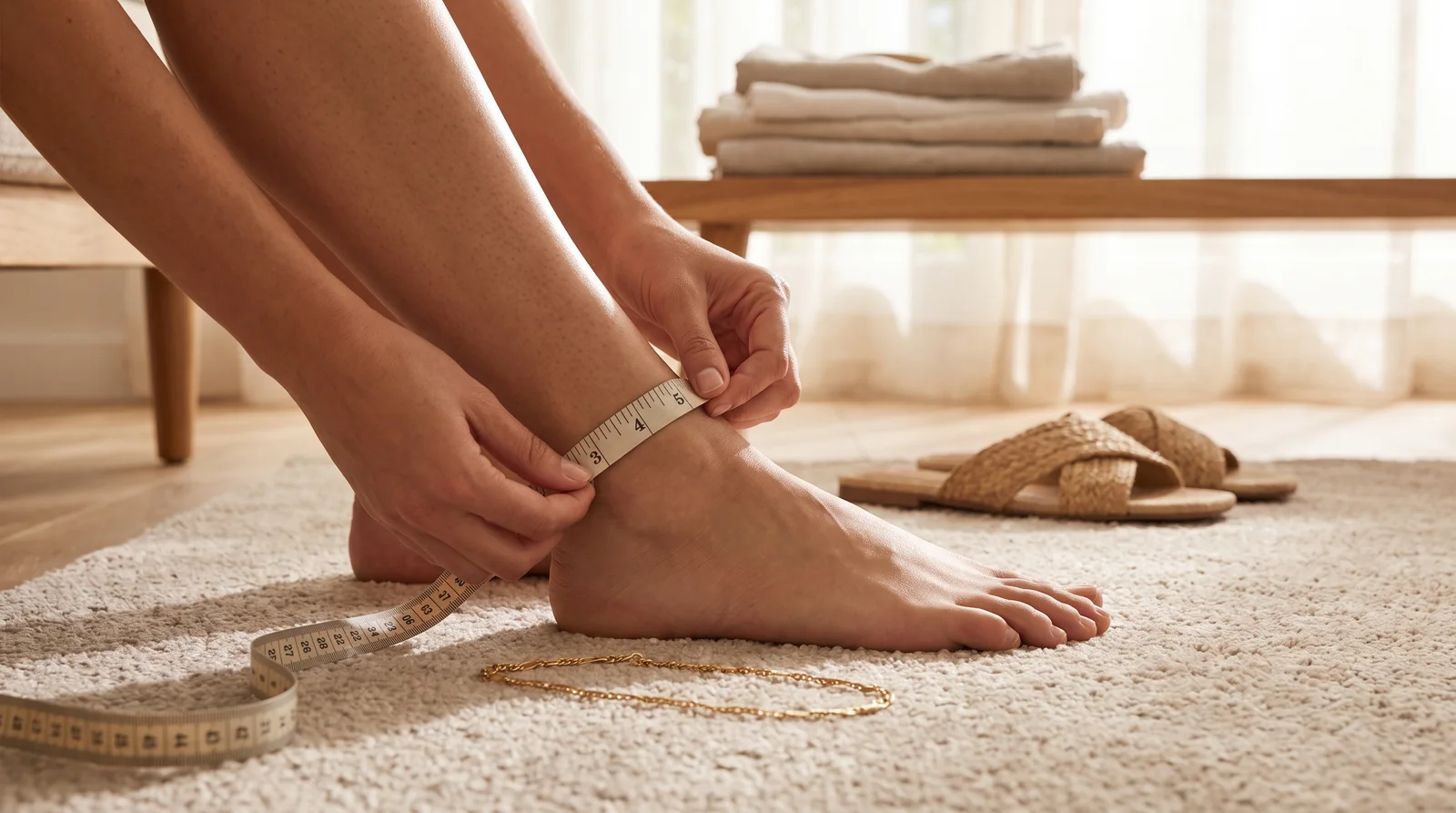
Measuring your ankle correctly takes about two minutes and one household tool. You're aiming to capture the circumference right above your ankle bone, which is where most anklets naturally rest.
Choosing Your Measuring Tool
A flexible sewing tape measure gives the most accurate reading because it curves naturally around the ankle's shape. If you don't have one, a piece of string or a thin strip of paper works almost as well. Wrap it around, mark where it overlaps, then lay it flat against a ruler. Avoid a rigid metal tape measure. It won't follow the curve of your ankle bone properly, and you'll end up with a number that's slightly off.
Placement Matters More Than People Think
Position the tape just above the ankle bone, where the leg starts to narrow before widening into the calf. This is the spot where most anklets naturally settle when worn. Some people prefer their anklet to sit lower, resting just below the bone instead. If that's your style, measure at that lower point instead, since the circumference can differ by a quarter inch or more between the two spots.
Reading the Number Correctly
Keep the tape snug but not tight. You want it touching your skin without indenting it. Write down the number in inches or centimeters, whichever matches the sizing chart you'll compare it against. Once you have that raw circumference, the next step is figuring out how much to add for comfort.
What the Comfort Fit Range Actually Means
The comfort fit range for an anklet is typically your raw ankle measurement plus half an inch to a full inch, depending on how loose you like it. This extra space matters because anklets need slightly more room than a snug bracelet would. A chain that fits flush against your skin all day will start to feel restrictive once your ankle swells even slightly.
Adding half an inch gives you what most sizing guides call a close or standard fit, one that stays put without digging in. Adding closer to a full inch creates a relaxed fit, letting the chain drape and move more freely, which many people prefer for anklets worn during warmer months or beach days. Average adult ankle circumference runs somewhere between 8 and 10 inches, though this varies quite a bit by frame size and whether you measure above or below the bone. If your raw measurement lands between two chart sizes, choosing the larger option almost always feels better in practice than sizing down.
Once you know your ideal range, the next question is how that plays out with anklets that come with built in adjustability.
How to Adjust Anklet Size Once You've Bought One
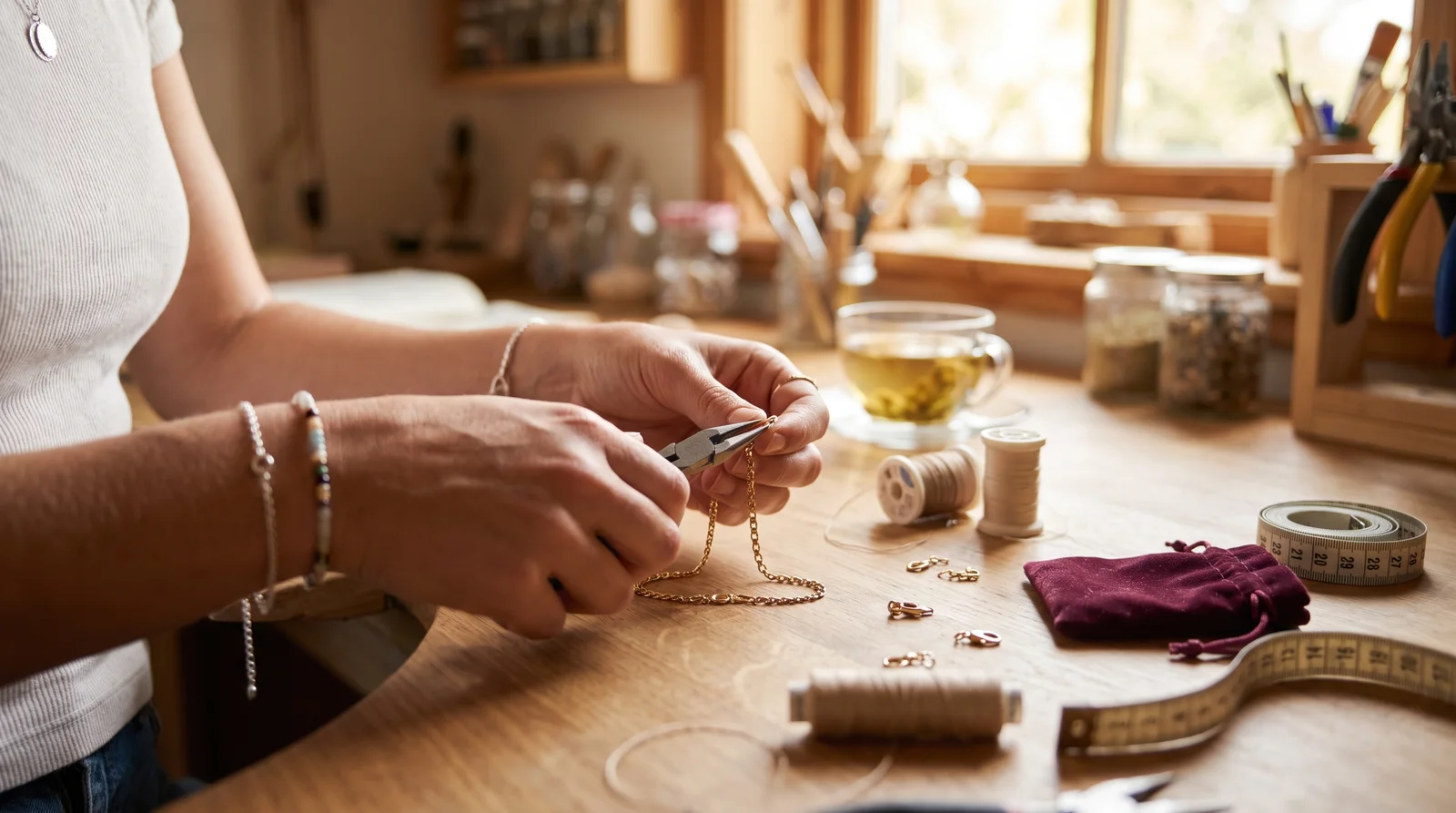
Most anklets today include some form of built in adjustability, which takes pressure off getting the measurement perfect on the first try. Chain style anklets with a lobster clasp or toggle usually have multiple connection points along a short extender chain, letting you shift the fit by a quarter inch or more in either direction. Beaded and cord anklets often adjust through a sliding knot or pull cord, meaning you can loosen or tighten them by hand without any tools.
If your anklet doesn't have an adjustable clasp and it's running a bit loose or tight, a local jeweler can usually add or remove a small link in a few minutes. This is a common request, and it's inexpensive for most chain styles. Solid cuff style anklets are the exception since they can't be resized without significant rework, so double check your measurement carefully before buying one of those.
Adjustability becomes even more useful once you start wearing more than one anklet at a time, which brings up its own sizing considerations.
Layering Anklets Sizing Without the Tangled Mess
Layering anklets sizing works best when each piece sits at a slightly different length so they don't compete for the same space on your ankle. A difference of one to two inches in total length keeps each anklet visible and prevents the chains from bunching together as you walk. Pairing one closer fitting anklet with one slightly looser piece tends to create the cleanest layered look.
Avoid combining two loose, relaxed fit anklets on the same ankle. They'll both drift toward your heel and tangle with each other throughout the day. A safer approach is keeping at least one piece snug against the ankle bone while letting the other hang with a bit more drape. This mirrors the same fit versus comfort balance you'd consider when sizing other jewelry, a principle covered in more detail in this guide to how to choose jewelry for a gift, which is especially useful if you're buying anklets for someone else without access to their exact measurement.
If you're new to layering, start with two pieces before adding a third, since three anklets require more precise spacing to avoid a cluttered look.
Buying an Anklet as a Gift Without a Measurement
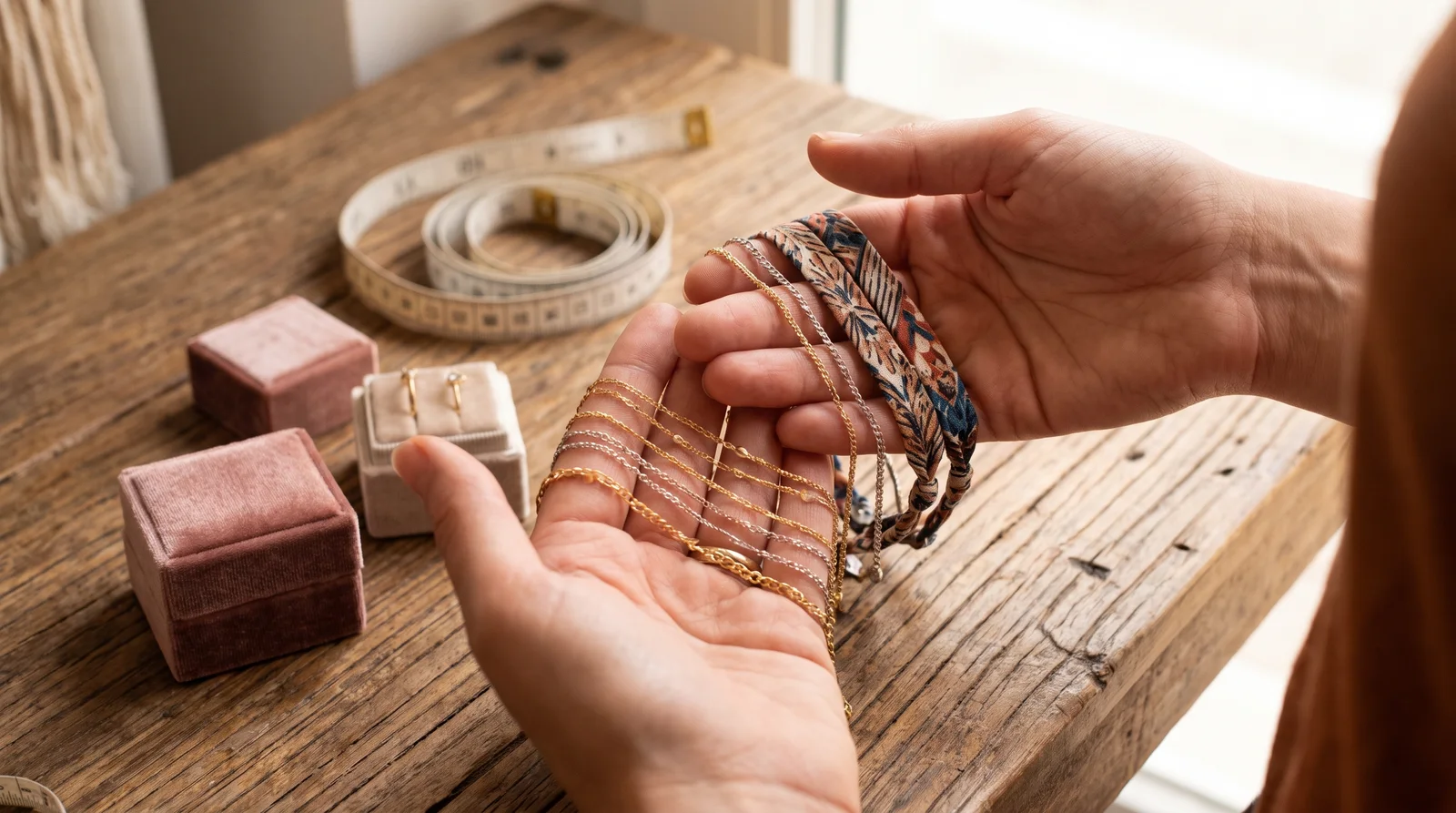
When you can't measure the recipient's ankle directly, choosing a piece with a longer extender chain gives you the most flexibility. Anklets with two or three inches of adjustable range cover a wider set of ankle sizes than fixed length pieces. This is the same logic that applies to buying rings or bracelets for someone else, where built in adjustability matters more than guessing an exact number.
If you happen to know the average anklet size for women in your recipient's general build, that can serve as a reasonable starting point. Most adult women fall somewhere in the 8.5 to 9.5 inch ankle circumference range, though this is a broad average and plenty of people fall outside it. When in doubt, a gift receipt or exchange policy is your best backup plan.
Now that you've got the full picture on measuring, sizing, and adjusting, a few common questions tend to come up.
Frequently Asked Questions About Anklet Sizing
How should an anklet fit around my ankle?
An anklet should sit comfortably without pinching the skin or sliding down toward your heel. You should be able to slip one finger underneath it comfortably. If it leaves a mark or feels tight by the end of the day, it's likely sized too small.
What time of day should I measure my ankle for the most accurate size?
Measure in the late afternoon or evening rather than first thing in the morning. Ankles naturally swell throughout the day from standing and walking, so an evening measurement gives you a more realistic worst case size. This helps you avoid ordering something that only fits comfortably for a few hours.
Can I use the same measuring method for anklets and bracelets?
The tape measure technique is similar, but the fit expectations differ because ankles swell more than wrists throughout the day. If you want a closer look at the wrist specific version of this process, the measurement steps in this guide to men's silver bracelet styles use the same basic tool and technique.
Does ankle swelling affect anklet sizing more than wrist swelling affects bracelets?
Yes, generally it does. Gravity causes fluid to pool in the lower legs over the course of a day, especially after standing, flying, or eating salty food. Wrists don't experience the same degree of swelling, which is why anklet comfort ranges tend to be slightly more generous than bracelet ranges.
What is the average anklet size for women?
Most adult women measure somewhere between 8.5 and 9.5 inches around the ankle, though this varies by frame and height. It's a helpful reference point for gift buying, but a direct measurement will always be more reliable when it's available.
Getting Your Fit Right the First Time
Measuring your ankle properly takes a few extra minutes, but it saves you from the frustration of an anklet that slides, pinches, or ends up in a drawer unworn. Grab a flexible tape measure, take your reading in the evening, and add that half inch to full inch of breathing room based on how you like your jewelry to sit. Whether you're picking out your first anklet or building a layered stack, a little care at the measuring stage pays off every time you put it on.