How to identify foil backed jewelry before one cleaning mistake dulls the stones
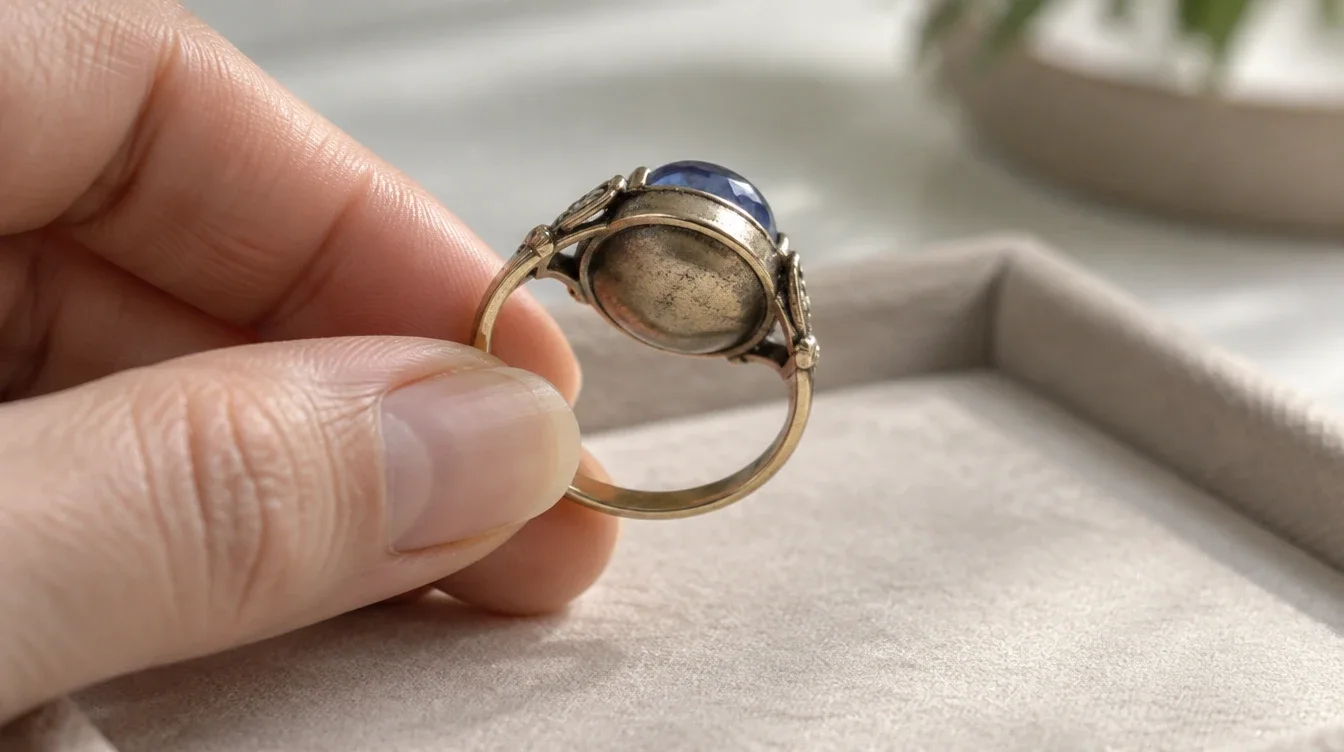
To learn how to identify foil backed jewelry, turn it over. Look for a solid back beneath each stone. A solid back is a reason to pause, not proof of foil. Keep water and cleaning liquids away until a jeweler who handles antique settings checks it. The jeweler may be able to do so without opening it.
What is foil backed jewelry, and why does identification matter?
Foil backed jewelry has a reflective layer behind a stone that sends light back toward the viewer. The foil may make a pale stone look brighter or change its apparent color. Lang Antique Jewelry University describes foiling as a gemstone enhancement that can act as both a reflector and a coloring agent.
The foil is usually hidden. According to Skyjems’ explanation of foil back settings, a stone can sit over foil inside a closed metal mount. The metal edge is then worked over the stone to hold the assembly together. Looking at the face of a sparkling gem may tell you little about what sits beneath it.
That hidden layer changes the cleaning decision. Moisture that reaches foil can cause it to tarnish, leaving a stone dark or cloudy. A cloth may remove dirt from the surface, but it cannot clean damaged foil sealed behind a gem. That is why the first question is not which cleaner to buy. It is whether the setting may contain something that cleaning could harm.
Foil backed gemstones can include natural gems as well as glass paste. Foil alone does not prove that a piece is old, valuable, or set with a particular stone. Keep those separate questions out of the way for now. First, learn what the setting can tell you.
How to identify foil backed jewelry by examining the setting
First, check whether you can see through each stone’s setting from the back. Place the piece on a soft, dry surface in good light. Turn it gently. Do not press on a stone, clasp, or delicate detail. Look at the metal behind the gem, not through the gem’s face.
Look for a solid back beneath the stone
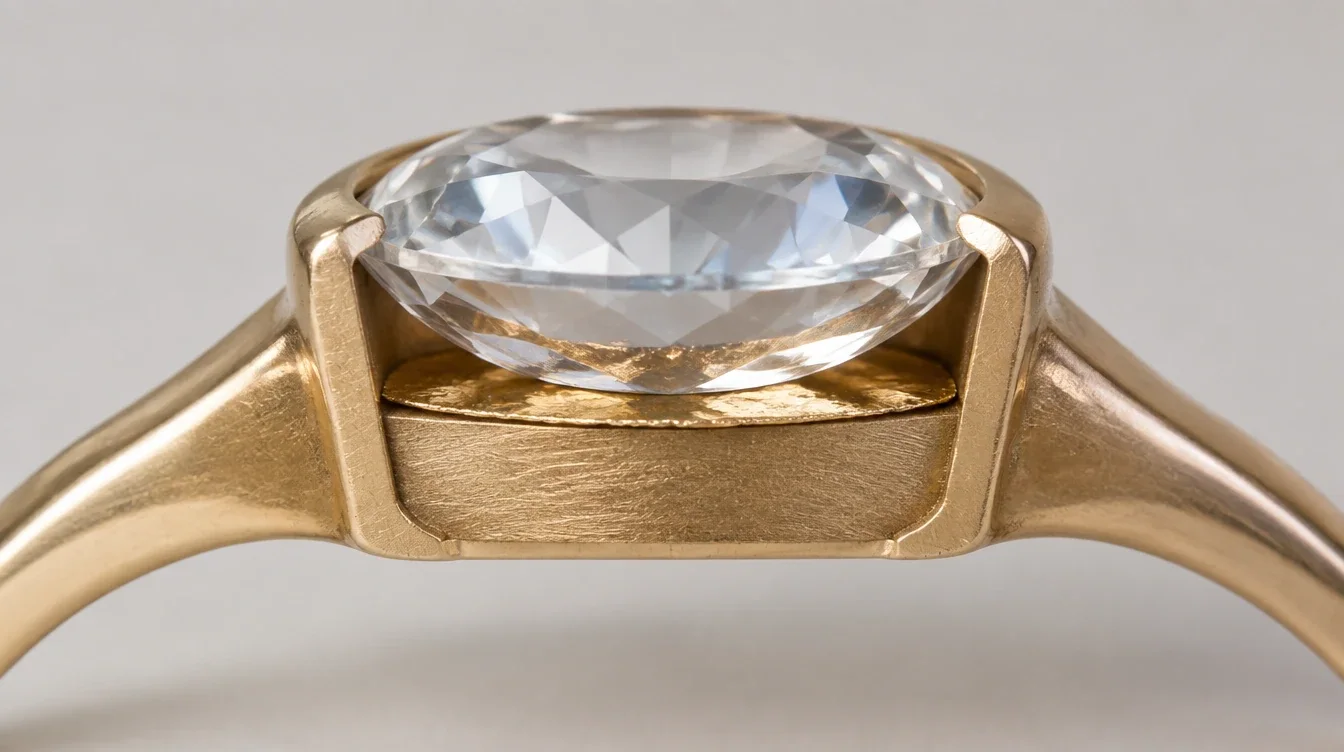
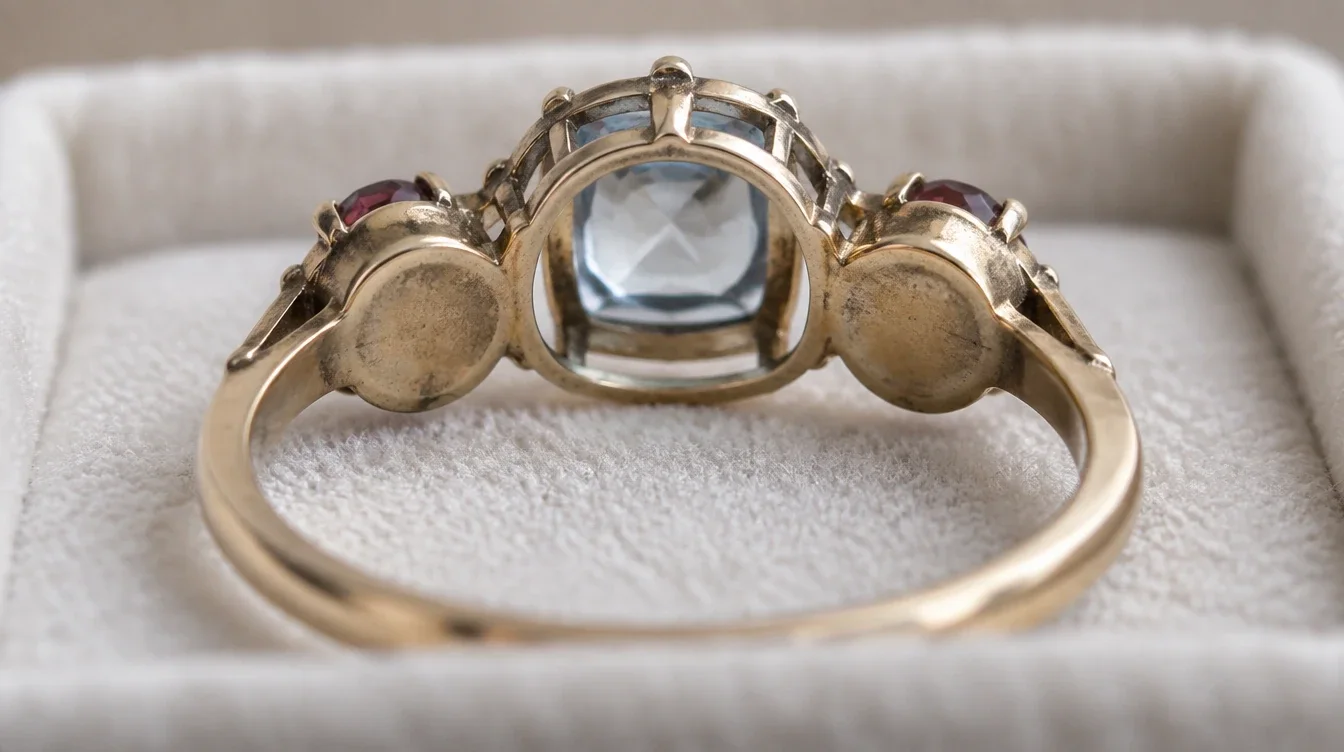
An open setting often lets you see the underside of a stone through spaces in the metal. A closed setting has a solid base beneath it. The base may look like a shallow cup or a small metal box. That construction makes foil possible because it gives the reflective layer a place to sit.
Here is the key limit: a closed back is a clue, not a diagnosis. A solid base does not let you see what is sealed inside. Lang notes that most foiled gems are set in closed backs, but that does not mean every closed setting contains foil. Treat a closed back as a reason to avoid liquid until the piece is assessed.
Check each stone, not just the main one
One ring can contain more than one type of setting. A large center gem might have an open back, while small stones around it sit in closed cups. Turn the piece slowly and compare each mount. Do not assume that a safe cleaning method for one stone is safe for the whole ring.
This matters on earrings and brooches too. Small accents can be hard to inspect when a pin, hinge, or earring fitting blocks the view. If you cannot see a back clearly, record that as unknown. Guessing is less useful than knowing where the uncertainty lies.
Look at the edge without testing it
Skyjems describes foil as sitting beneath a stone inside a closed collet or bezel. A collet is the metal mount around the gem. Its upper edge can be pressed over the stone to hold it in place. From the side, you may see a continuous rim rather than open prongs.
Do not push on that rim to check whether it is sealed. A gap, old repair, or worn edge may be too small to judge by eye. The aim of this inspection is to spot a possible moisture risk, not to prove that a mount is watertight. Next, consider which visual clues deserve less weight than they first seem to.
Which clues suggest foil, and which ones do not prove it?
A closed back raises the chance that foil is present, but appearance alone cannot confirm it. The best home assessment combines what you can see with what you know about the piece. Even then, the result may be “possibly foiled.” That is a useful answer when it keeps an uncertain piece dry.
Age and style offer context, not confirmation
Foil work appears in historic European jewelry, and The Antique Parlour’s care guide notes its association with Georgian pieces. Still, an old looking ring is not proof of an old setting. A piece may have been repaired, reset, or made later in an earlier style.
Likewise, a hallmark can help with a piece’s history but cannot reveal what is sealed behind a stone. If you want to understand a stamp, our guide to British hallmarks on inherited jewelry addresses that separate question. For cleaning safety, the mount matters more than a date you have guessed from its style.
Brightness and color can mislead
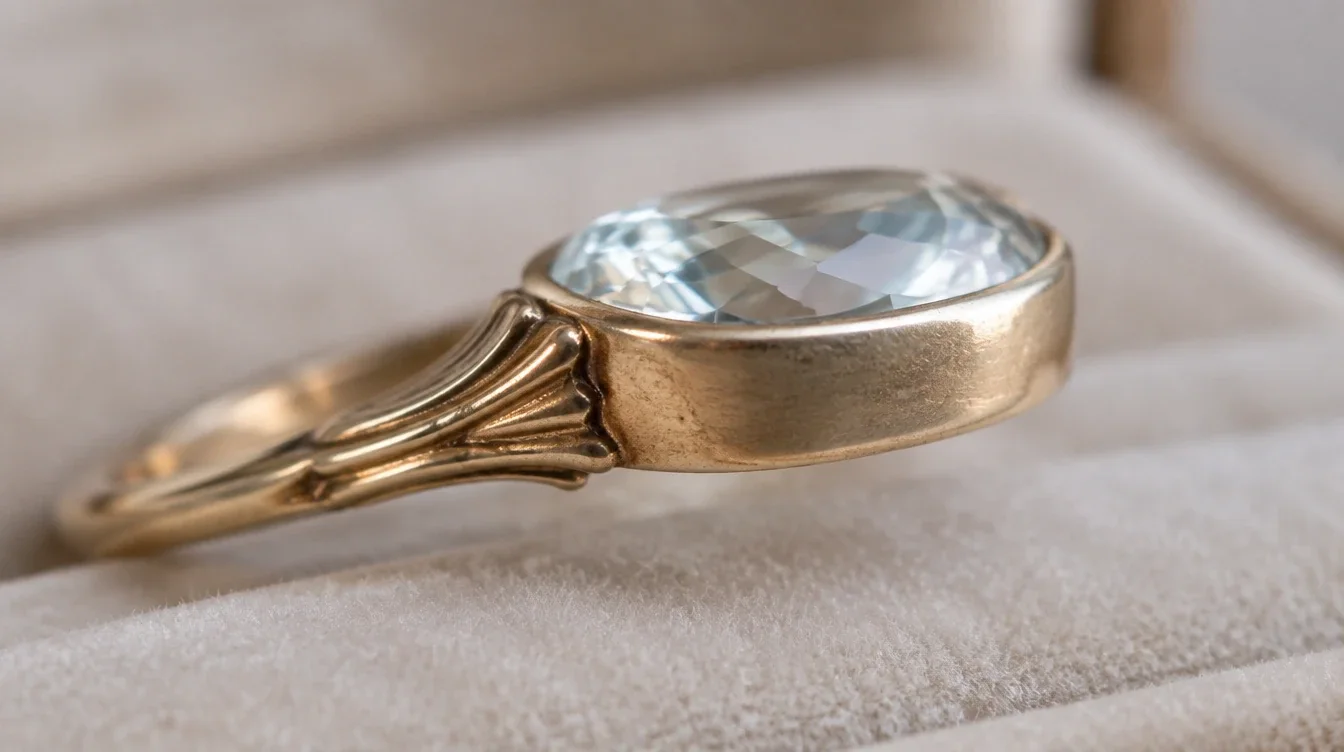
Foil backed gemstones may look bright because light reflects from behind them. Yet a bright stone may have no foil at all. A dark or cloudy stone is not proof of damaged foil either. Dirt, the stone itself, or changes within the setting could affect what you see. Do not try to settle the question by cleaning a small patch.
Consider an inherited pendant with three blue stones. The center has a visible opening underneath, while the two side stones sit over solid metal. You have not identified foil in either side stone. You have identified different levels of uncertainty within one piece, which is enough to rule out soaking the whole pendant before an inspection.
The same caution applies to foil backed diamonds. A stone described as a diamond still needs its setting checked. Its identity does not tell you whether foil sits beneath it. Once you know which clues matter, you can take photographs that make a professional assessment easier.
What can photographs tell you about a possible foil back?
Photographs can show whether a setting appears open or closed, but they usually cannot confirm hidden foil. A clear view of the back helps a jeweler decide what to inspect first. It does not replace an examination of the metal edge, stone security, and any signs of past work.
Take a photo of the whole piece first. Then photograph the front, back, and sides of each stone you are concerned about. Use steady, ordinary light and keep the piece on a soft surface. If a chain or fitting covers the back, move it only if it shifts freely. Never pull it aside to get a better shot.
For a ring, show the underside of the head and the inside of the band. For a brooch, show the area behind the stones, even if the pin crosses it. Share a photo of any dark spot behind a gem. The photo alone cannot show whether it is dirt, foil damage, or something else.
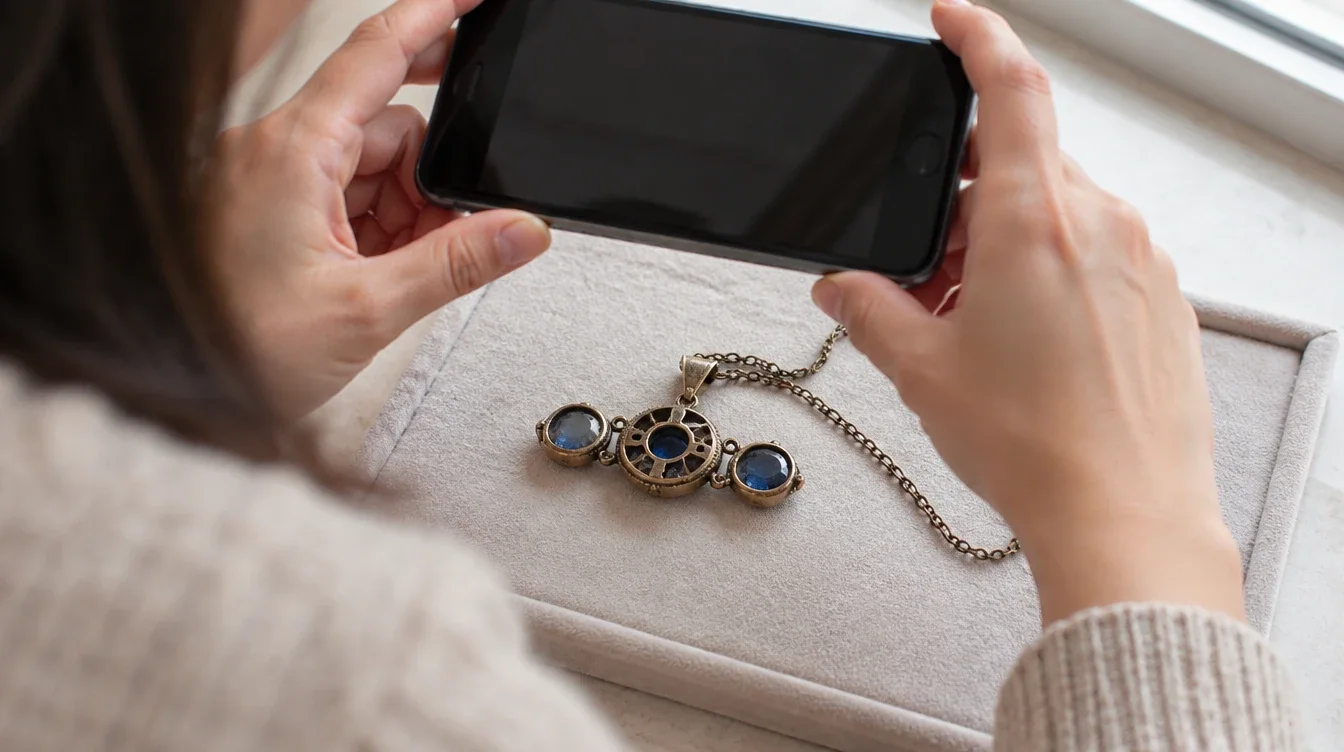
A seller’s single front view has an even narrower use. It may show the look you like, but not the construction you need to assess before cleaning. Ask for a sharp back view rather than treating “antique” or “foil backed” in a listing as a confirmed finding.
How to identify foil backed jewelry from photos comes down to spotting possible risk. Pictures may show a closed mount. If the back is hidden or blurred, its construction remains unknown. Arrange an in person check before any wet clean. Next, look for signs that call for a prompt visit.
When should you stop handling the piece and see a jeweler?
Stop handling antique jewelry if a stone moves, a mount looks cracked, or the area behind a gem has changed. These signs do not prove foil is present. They do mean that rubbing, brushing, or adding liquid could make an existing problem worse.
Take special care if a stone moves. If a gem shifts when you lift the piece, set it down. Do not shake it to check. A worn edge might let in moisture or fail to hold the stone. Skyjems identifies cracks and a loose fit at the stone’s edge as possible paths for moisture to reach foil.
A dark area beneath one stone is also worth showing a jeweler, especially if nearby stones look different. Do not assume the darkness is surface grime. If moisture has already reached foil, wiping the front will not reach the cause. Trying a stronger cleaner only adds risk.
What about a piece that looks sound but has a closed back? You can still pause without treating it as an emergency. Keep it dry, store it where it will not rub against other jewelry, and ask for an assessment before cleaning. That measured approach suits an heirloom as well as a recent antique purchase.
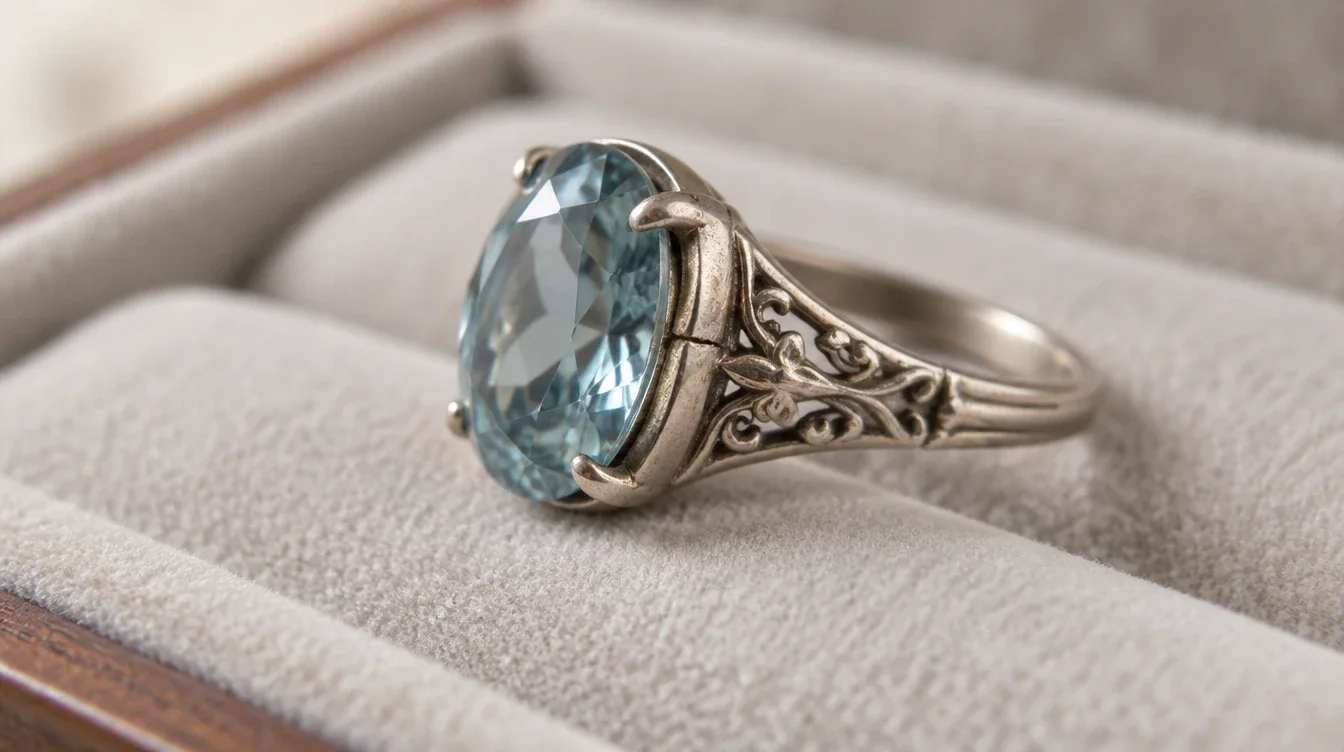
How to identify foil backed jewelry does not require you to open the setting, lift a stone, or perform a home test. Those steps could damage the very construction you want to protect. A few clear questions will make the professional visit more useful.
What should you ask a jeweler before cleaning?
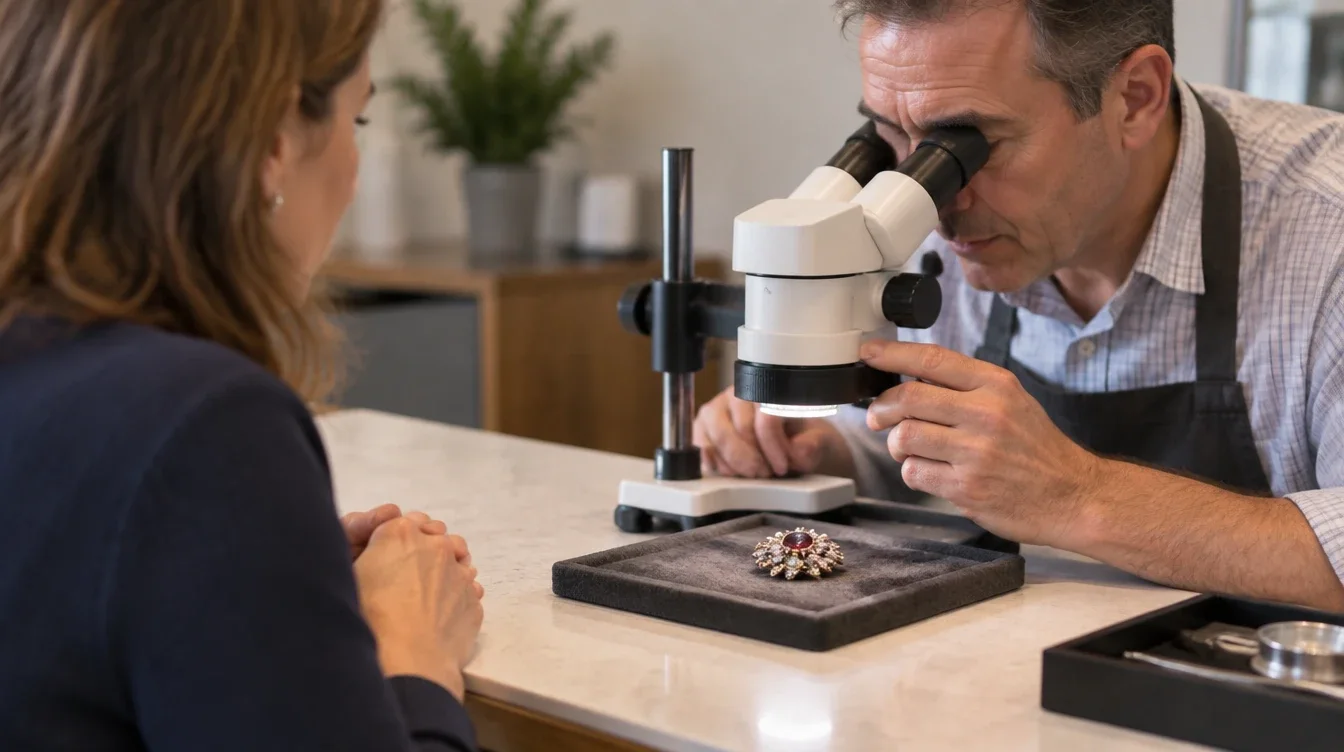
Ask the jeweler to check the setting before choosing a cleaning method for the whole piece. Say that you want an inspection first, not an automatic soak or machine clean. Bring your photos. Point out every stone whose back you could not see.
Ask what can be identified without opening the mount
Ask, “Do these stones sit in closed settings, and can you tell whether any may be foiled without lifting them?” The answer may be uncertain. That does not make the visit a failure. A jeweler can still advise you to keep a setting dry if its construction cannot be confirmed safely.
Ask the jeweler to check the rim around each stone for wear or gaps. Mention any dark patches, loose parts, or past repairs you have noticed. If a seller supplied a description, share it as background rather than proof. An old receipt may help, but the piece in front of the jeweler is what needs assessment.
Ask for a method tied to each material and setting
When you ask how to clean foil backed jewelry, the right answer begins with what the jeweler has found. A piece may contain several stones, a plated surface, or fragile metalwork. Ask which areas can be touched, which should stay dry, and whether the jeweler recommends any cleaning at all.
The Antique Parlour advises against submerging foil backed stones because moisture can reach and dull the foil. Its guide also cautions against ultrasonic and steam cleaning for antique settings. That advice gives you a sound starting point, but it cannot replace inspection of your particular piece.
If the proposed method involves liquid near a closed setting, ask why it is suitable for that mount. A clear explanation should address the construction, not just the hardness of the gem. Those questions lead to a simple rule for caring for the piece while you wait.
What should you do before any cleaning attempt?
Keep a possibly foiled setting dry and leave stubborn dirt in place until the construction is checked. Do not soak the piece to loosen grime. Avoid running it under a tap, using steam, or placing it in an ultrasonic cleaner. Cleaning can wait; damage behind a sealed stone is harder to address.
If loose dust rests on a sound, accessible metal area, resist the urge to work a cloth into the stone’s edge. Pressure there may move dirt toward a gap or catch on worn metal. Do not use a damp brush to probe around a closed mount. Your goal before inspection is safe handling, not a partial restoration.
For general pieces whose materials and settings have already been identified, our jewelry cleaning guide covers broader home methods. Do not carry its routine soap and water advice over to an unconfirmed antique setting. A method that suits one ring can be wrong for the ring beside it.
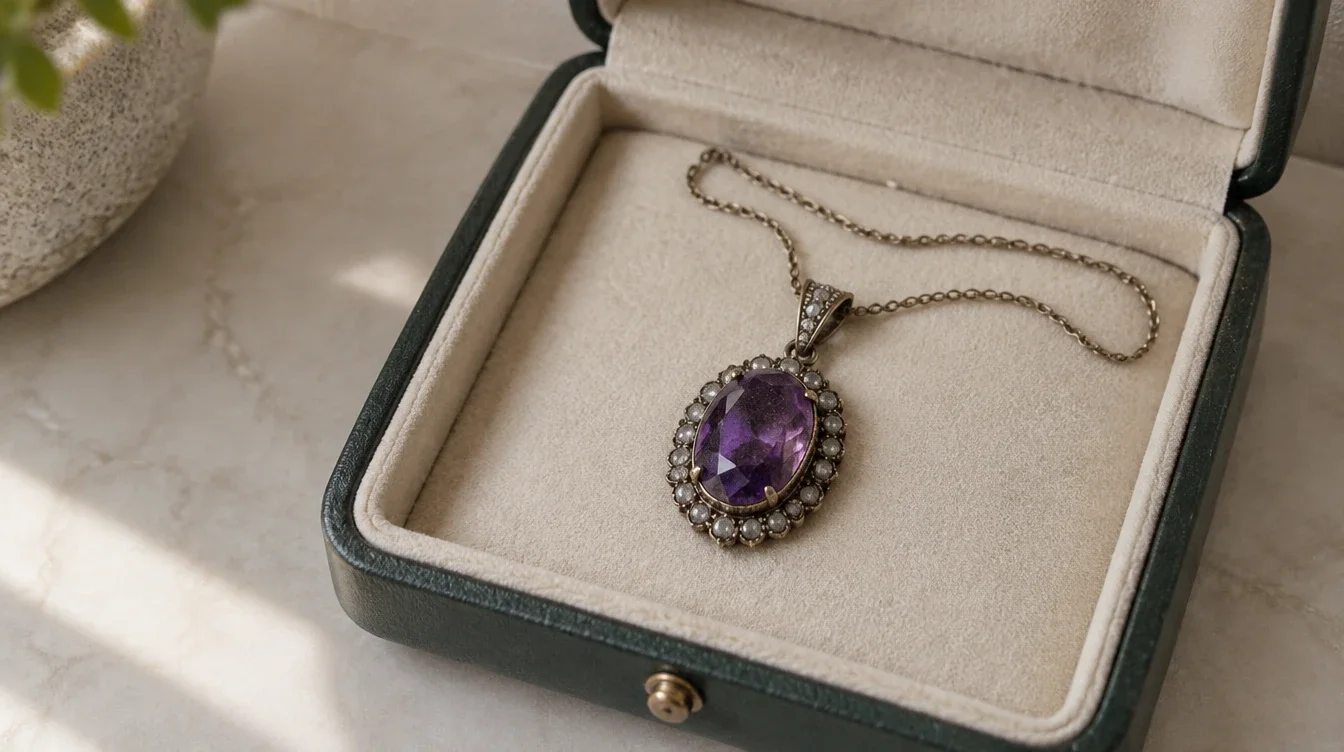
You need not remove a stone to answer what is foil backed jewelry in your collection. A jeweler may be able to assess the risk without disturbing it. If the construction remains uncertain, keep the piece dry while you agree on the next step.
That rule answers the most common questions owners ask before they bring a piece in.
Common questions about possible foil backed settings
These answers can help you make a safe next move, but none confirms what is hidden inside your setting.
Can a closed back prove that a stone has foil?
No. A closed back is a useful warning sign, not proof of foil. Treat the setting as potentially moisture sensitive until a jeweler assesses it.
Does a shiny stone mean the foil is intact?
No. Shine alone cannot show whether foil is present or sound. Light, the stone, and its setting all affect what you see from the front.
How can I tell if foil backed diamonds need special care?
Check the mount beneath each diamond rather than judging by the gem’s name. If the back is closed or hidden, avoid liquid cleaning and ask a jeweler to assess the setting.
Can I confirm foil by lifting a loose stone?
Do not lift or press a loose stone yourself. Set the piece aside and have a jeweler inspect its mount before cleaning or wearing it.
Those answers point to one practical choice: when the backing is uncertain, protect the setting first.
Let the setting answer before the cleaner does
How to identify foil backed jewelry starts with a careful look at each stone’s back. A solid mount tells you foil could be hidden there. It does not tell you what is inside, whether a seal is sound, or which cleaning method is safe.
If your piece has closed backs, a loose stone, or a dark patch you cannot explain, leave it dry. Take clear photos and ask a jeweler who handles antique settings to inspect it before cleaning. You do not need a perfect diagnosis at home. You need enough information to avoid an avoidable mistake.
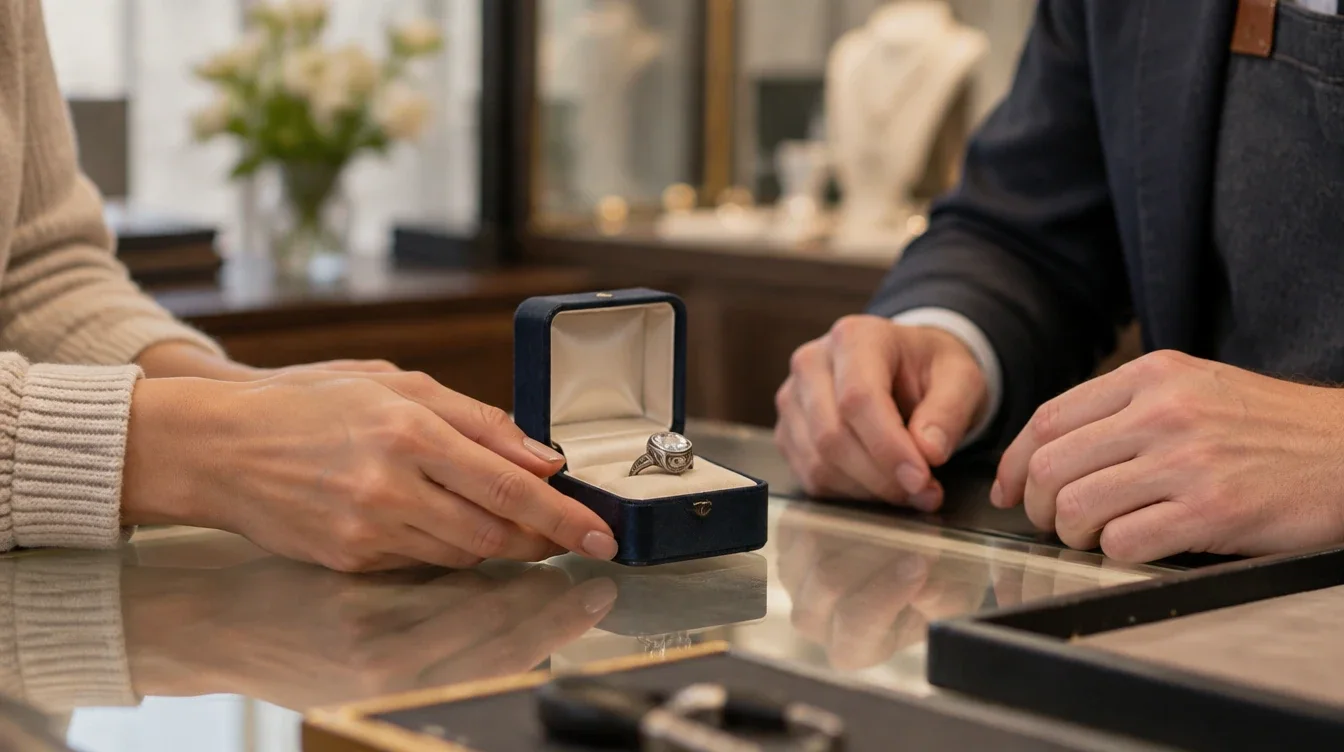
Bring the piece in with one clear request: check the settings first, then discuss cleaning. That small pause gives an old piece a better chance of keeping the look you wanted to preserve.