How to Choose an Ametrine Ring Without Losing the Color Split You Loved
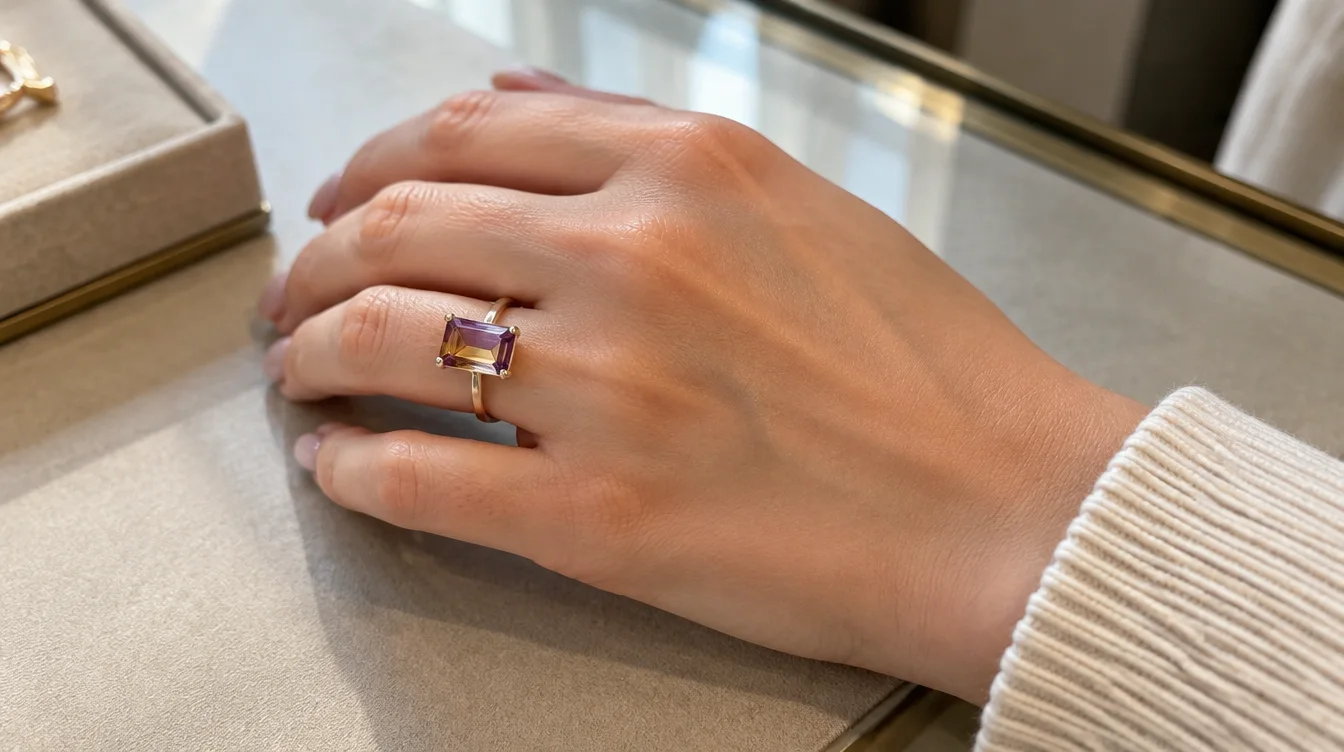
To learn how to choose an ametrine ring, check both colors in the finished setting. Get the stone’s identity, treatments, and return terms in writing. Prongs or a new viewing angle may change what you see on your hand. No photo alone can prove a stone is natural.
How to Choose an Ametrine Ring by Its Color Split
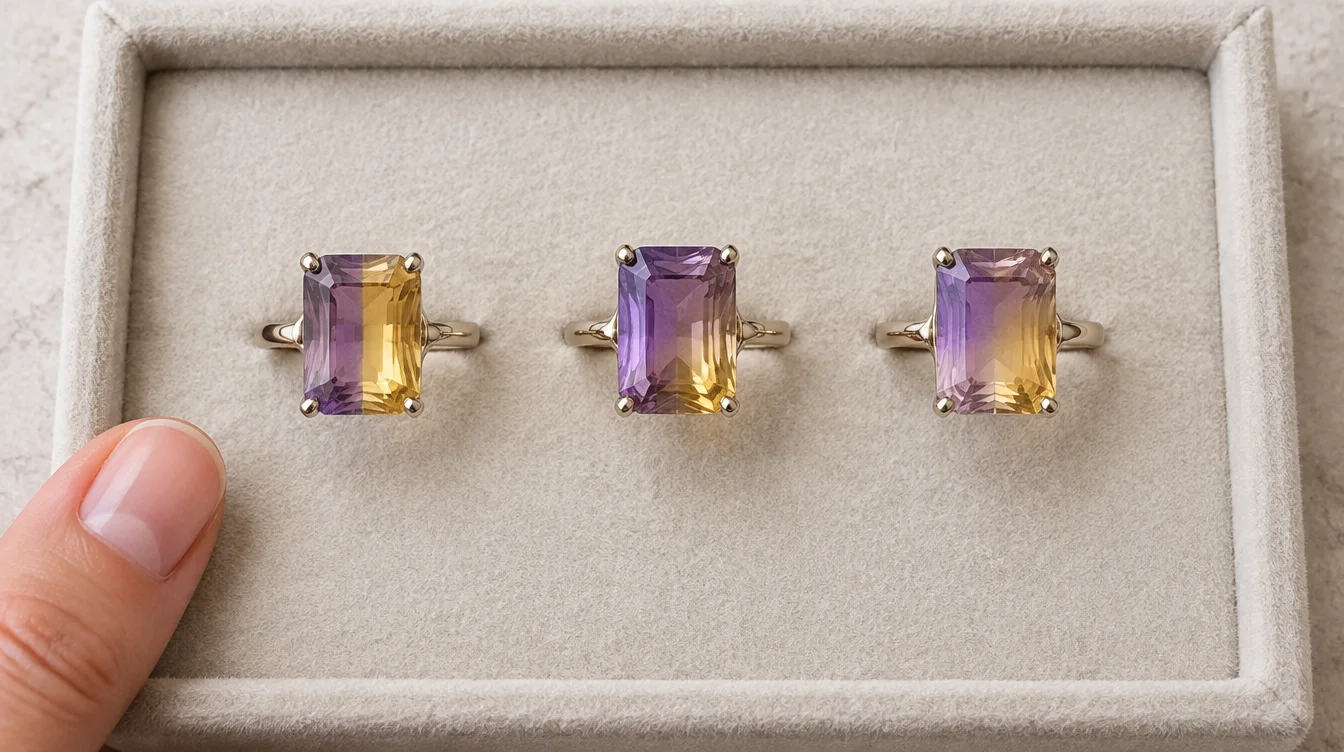
Choose an ametrine ring by how well both colors show when you wear it. Do not rely on a promised split ratio. Ametrine is quartz with purple and yellow color zones. What matters is how those zones meet across one gem, as this ametrine buying guide explains.
Decide what kind of split you actually like
A near equal split gives each color room to show. Choose it if you want clear contrast. An uneven split may have a broad purple area and a small yellow flash, or the reverse. A softer boundary suits you if you like the colors to mingle.
Neither pattern is right for everyone. One seller’s guide favors balance. Another notes that some buyers prefer an irregular split. Compare stones face up. Pick the pattern you would enjoy seeing each day. Natural Gemstones discusses the balanced preference; GemSelect describes the case for varied patterns.
Check the colors at normal viewing distance
Hold your hand where you would glance at a ring each day. Can you see both colors at once? If yellow appears only when you tilt the stone toward a lamp, decide if that is enough. In a close listing photo, a narrow zone may seem much larger.
Notice which color catches your eye first. Some buyers want purple near the fingertip. Others prefer yellow there. No grading rule decides this for you. Next, check whether the cut and setting keep that split in place.
Why the Cut and Setting Can Change What You See
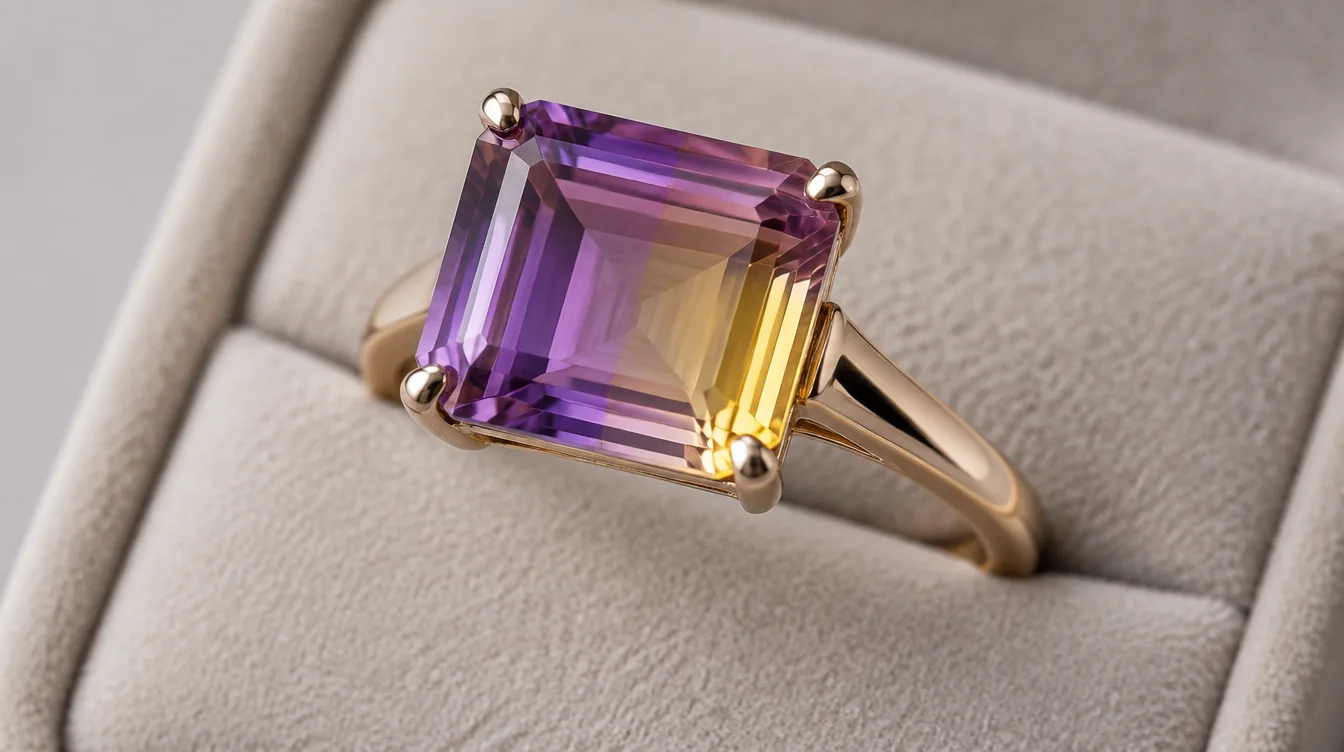
The cut and setting affect how much ametrine color you see in the ring. A loose stone photo tells only part of the story. GemSelect notes that cut style and zone position affect the face up view. Judge the mounted stone when you can.
Look at the boundary, not just the shape name
A rectangular stone can place the divide across its width or along its length. An oval may show the same zones as broad areas or small patches near its ends. Ask for a face up image before treating “oval” or “emerald cut” as a promise about how the colors will look.
The best cut for ametrine shows the split you like and looks pleasing overall. A step cut may show a clear divide. Another faceted cut may give a more mixed effect. No shape can promise one result. Each rough crystal has its own color zones.
Check where the metal meets the color
Prongs may cover a small yellow corner. A bezel may hide more of the stone’s edge. Both can work, but the details matter when one color forms a narrow zone. View the ring from above. Then check it at the angle you use when looking at your hand.
For a stone that has not been set
Have the jeweler mark the planned prong positions on a photo of that exact gem. Ask which end will point toward your fingertip. If the yellow zone sits at an edge, ask whether any metal will cover it. A sketch can settle this before the stone goes into the ring.
For a finished ring
Ask for an overhead view of the whole ring, not just a close crop. Then ask to see it on a hand. One view shows the stone’s colors. The other shows what you may notice while wearing it.
Next, check whether the listing shows the ring you will receive.
Ask for Photos of the Actual Ring Before You Commit
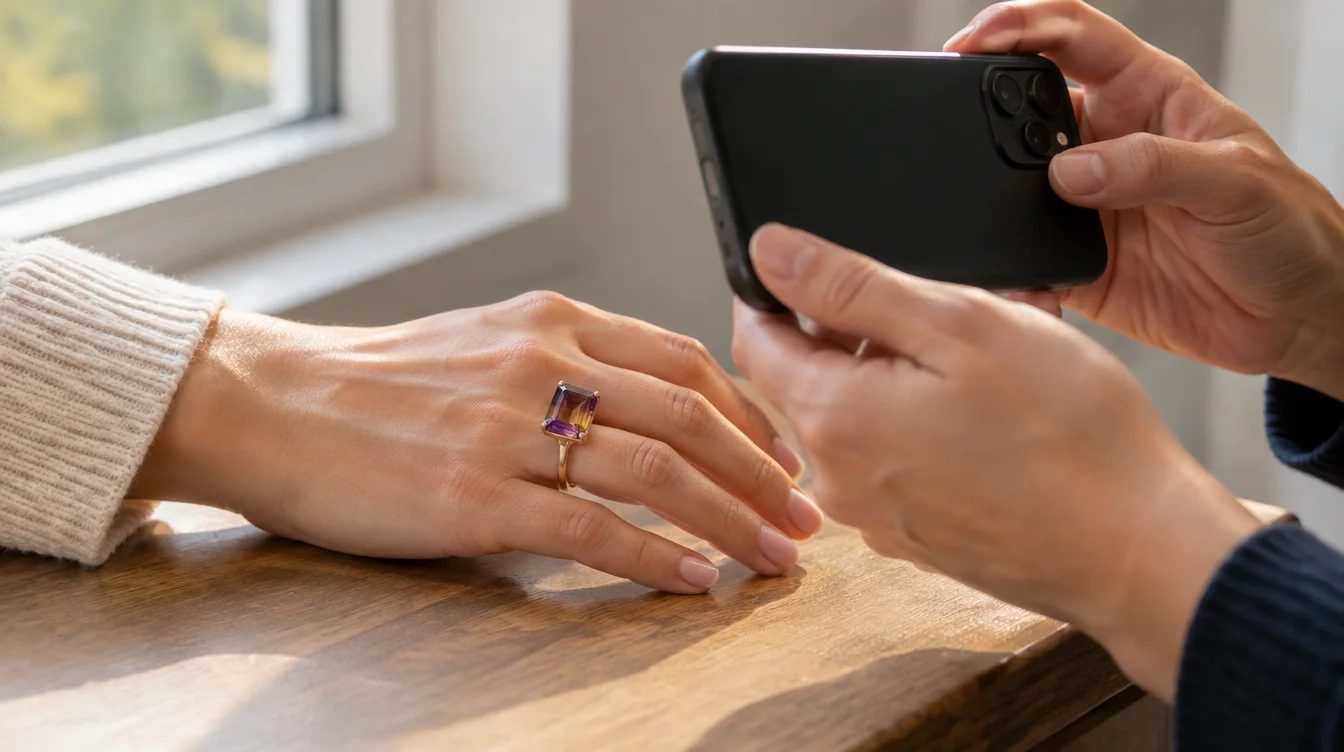
Photos of the actual item give you the clearest online view of its color pattern. Stock images show the design, not the split in another stone. Ask the seller to confirm in writing that the photos or video show your exact ring.
Request views that answer a specific question
Ask for one still image from above and a short video as the ring turns slowly. Daylight near a window and ordinary indoor light offer two useful views. Avoid judging from a video that moves so fast you cannot follow the boundary. GemSelect also advises checking ametrine under different lighting and viewing angles when buying online.
Keep your request simple. “Please show the ring from above, on a hand, and tilted slightly each way” tells the seller what you need. If one color fades from view, decide whether that matters before you pay.
Match the images to the written listing
Compare the stone shape, ring design, and color pattern in every image. They should match. If the seller has similar rings, ask them to put the item number in their reply. Save that reply with your order.
Compare two rings using the same three checks. Can you see both colors from above and on a hand? Does the setting leave your favorite zone open? You need not assign a score or assume one pattern is best for all buyers. If both pass, pick the one you like more.
Photos can settle appearance, but they cannot settle origin or treatment. Those questions belong in the seller’s written description.
What a Seller Should Disclose About an Ametrine Ring
A seller should say whether the ametrine is natural or synthetic, disclose any known treatment, and make the return terms clear. Ask for those details on the invoice or in a message tied to the order. A vague phrase such as “genuine ametrine” does not answer every question.
Separate material identity from origin
In natural vs synthetic ametrine, the terms describe the stone, not its beauty. A natural ametrine ring has a stone formed in the earth. Synthetic ametrine is made in a laboratory. The color split alone cannot tell you which you have. The supplied buying guides note that synthetic stones exist. They advise buyers to seek clear identity and treatment details.
If a seller names a mine or country, ask what backs that claim. Their statement is not the same as an independent gemological report. If origin affects your choice or the price, ask for the report before paying. Check that it names the stone being sold.
Ask about treatments in plain words
Ask, “Has this stone been treated to change or improve its color? If so, how?” Get the answer in writing. If the seller’s position is “no known treatment,” ask them to state that. Heat treatment is discussed in the supplied ametrine buying guide, but that does not show whether the ring you want was treated.
The wording matters. “Untreated” is a specific claim. “We have no treatment information” describes a gap in knowledge. If you want an untreated natural stone, do not treat those answers as equal.
Make the return policy part of the purchase
Check how many days you have to inspect the ring and when that period begins. Ask who pays return shipping, whether a fee applies, and whether resizing or engraving makes the sale final. These are store terms, so get the policy for your order rather than relying on a general reassurance.
For a custom ring, ask to approve the exact stone and its planned position before work begins. You may spot a hidden color zone while changes are still possible. Once the terms are clear, you can focus on the ring’s appearance.
How to Make the Final Choice Without Chasing a Perfect Ratio
Choose a ring that shows the colors you like in its finished setting. Get answers you can keep. A strict half purple, half yellow rule may exclude a stone you love. Yet a striking photo does not make unclear sale terms acceptable.
Consider two rings. The first has an even split in a stock image, but the seller cannot show the actual item. The second has a less even split. Both colors show clearly in its own video. Its seller confirms the material, treatment status, and return terms in writing. You have more to judge with the second ring, even if you prefer the first pattern.
Think about wear, too. Ametrine is quartz with a Mohs hardness of 7. Still, hardness alone cannot protect a ring from every knock. GemPundit notes the quartz hardness and the value of a protected setting. If your rings often hit hard surfaces, ask a jeweler if the setting covers the stone’s edges enough for your habits.
Keep wear separate from color. A lovely split may still be a poor fit for how you use your hands. The questions below cover the last details to check.
Questions Buyers Ask About Ametrine Rings
Before checkout, settle questions about looks, identity, and returns.
How can I tell if ametrine is real from a photo?
A listing photo cannot confirm natural versus synthetic origin. To answer how to tell if ametrine is real, first define what you mean by “real.” Ask for a written stone description. If natural origin matters enough to your purchase, ask for an independent gemological report.
Does an ametrine ring need an equal purple and yellow split?
No. An equal split gives strong contrast, but an uneven one can look better to you. Judge whether both colors remain visible when the actual ring is viewed from above and on a hand.
What is the best cut for ametrine in a ring?
The best cut for ametrine depends on where the color zones sit and how you want them displayed. Compare actual stones face up rather than choosing by shape name alone, then check whether the setting covers either zone.
Can I buy a natural ametrine ring without a lab report?
Yes, if the seller’s written description and return policy meet your needs. A report gives you another way to check a claim. It should name the specific stone; a generic certificate does not.
If any answer is missing, ask before ordering. A clear reply now is easier to assess than a dispute after the ring arrives.
Choose the Split You Want and Get the Promise in Writing
Knowing how to choose an ametrine ring starts with the color you see. It also means asking the seller to account for the stone. Pick a split you enjoy in photos of the finished ring. Confirm what is being sold, whether treatment is known, and how returns work. Save those answers. Then choose the ring that still looks right on a hand.