How to Choose a Cocktail Ring Without Regretting It Later
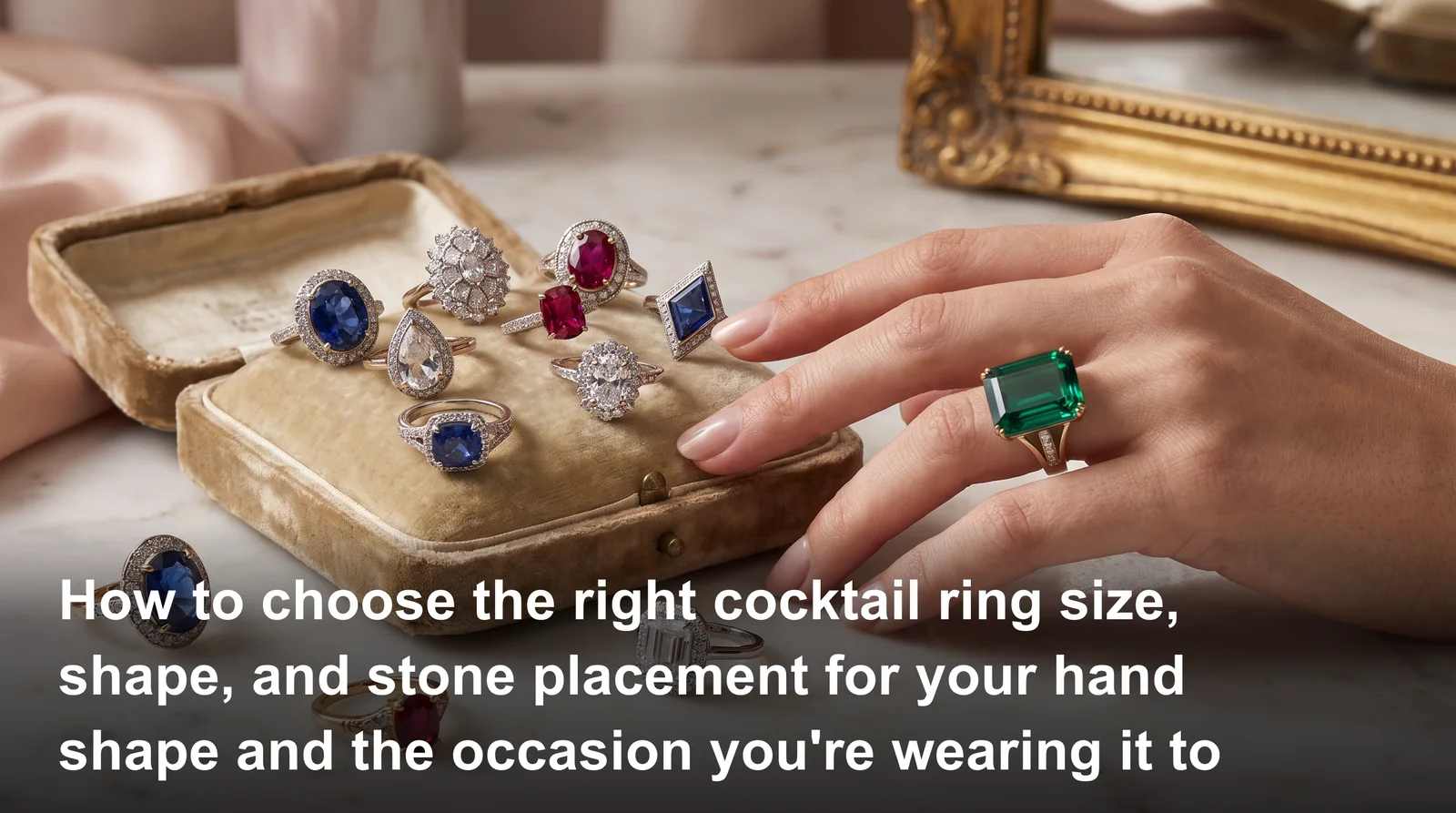
You already know what a cocktail ring is. Now comes the harder part: picking one that actually fits your hand, suits the event on your calendar, and doesn't end up shoved in a drawer after one wear. Knowing how to choose a cocktail ring means matching scale to your finger length, shape to your hand type, and color to your skin tone, not just grabbing whatever looked good on a stranger's Instagram post.
The short answer: measure your finger width and length first, pick a shape that elongates rather than shortens your hand, then size the ring to the occasion. A cocktail party calls for something bolder than a wedding you're attending as a guest. Get those three things right and everything else, the metal, the stone color, the finger you wear it on, falls into place a lot faster.
How to Choose a Cocktail Ring That Actually Fits Your Hand
Fit comes down to two measurements: finger width and finger length, not just your standard ring size. A lot of women size a cocktail ring the same way they'd size a wedding band, then wonder why it feels top-heavy or spins around their finger by lunchtime. Cocktail rings carry more weight up top, so the shank needs to sit snugly, sometimes even a half size tighter than your usual fit, to keep the stone from tipping sideways.
If you're unsure where your true size lands, it helps to get properly measured rather than guess based on an old ring. Our guide on how many sizes a ring can be adjusted covers this in more detail, and it's worth a look before you commit to a purchase, especially if you're buying online and can't try before you buy.
Matching Ring Size to Finger Length
Short fingers need a different scale than long ones, and this is where a lot of buyers get tripped up. A ring that reads as elegant on a long, slender finger can look clunky and overwhelming on a shorter one. The fix isn't to avoid cocktail rings altogether if you have shorter fingers. It's to choose proportions that work with what you've got instead of fighting it.
Generally, a center stone under 10mm reads as tasteful and proportional on shorter fingers, while anything much larger starts to swallow the finger visually. Vertical stone orientation matters too. A stone set lengthwise down the finger, rather than wide across it, creates an optical stretch that makes the whole hand look longer. This single adjustment solves more sizing complaints than almost any other trick I've seen work in a jewelry consultation.
What to Do If the Ring Doesn't Sit Right
Sometimes a ring looks perfect in the case but sits wrong on the hand once you actually wear it for a few hours. This happens more than people expect, especially with rings that have a high-profile setting or an asymmetrical band. If a piece you love doesn't quite work as-is, resizing services exist for exactly this reason, and a jeweler can often adjust the shank or reposition the setting so the ring sits flatter and more securely.
Once your ring actually fits the way it should, the next question is shape. That's where hand shape starts to matter just as much as finger size.
Cocktail Ring for Your Hand Shape: Which Silhouette Actually Flatters You
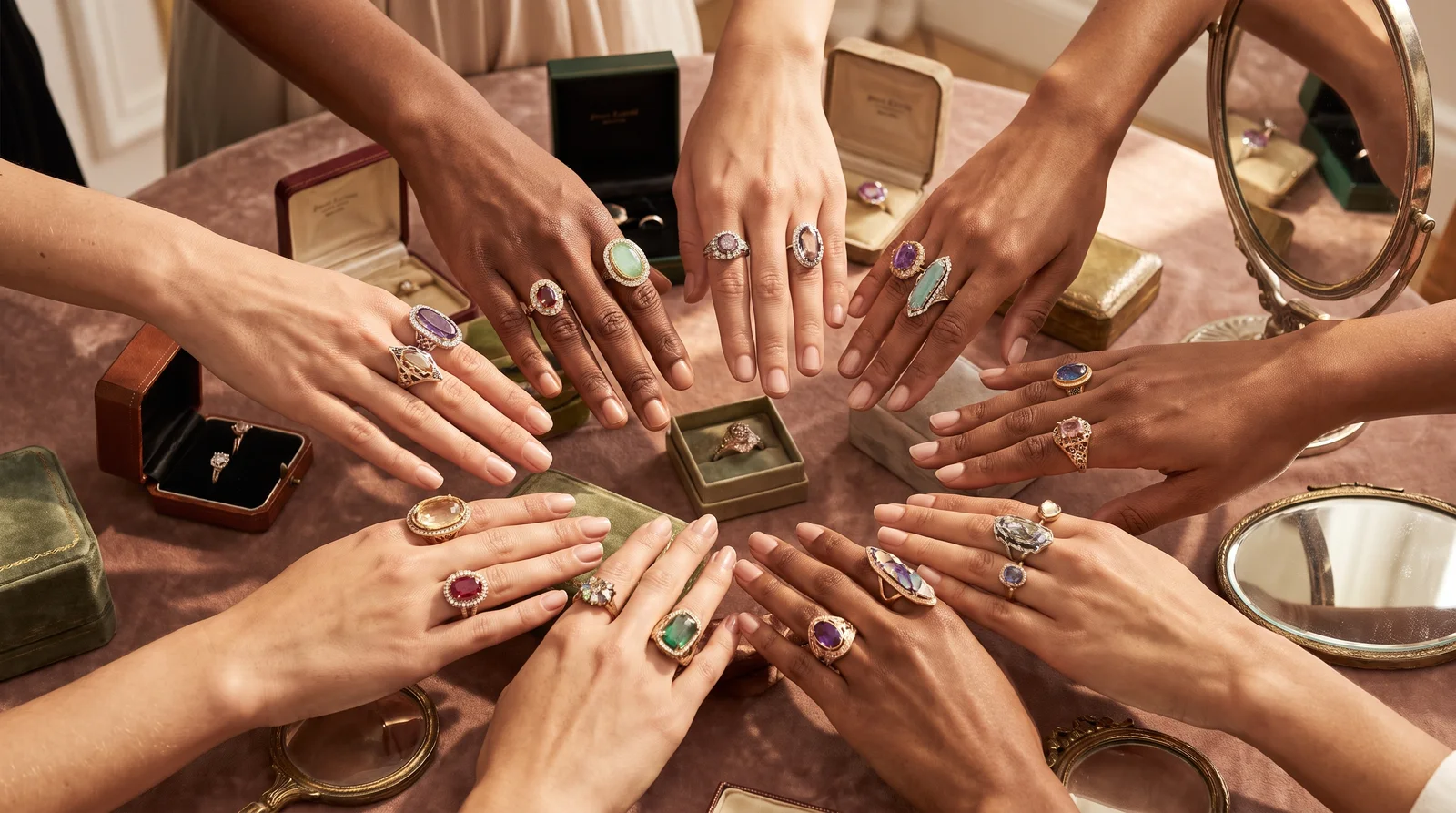
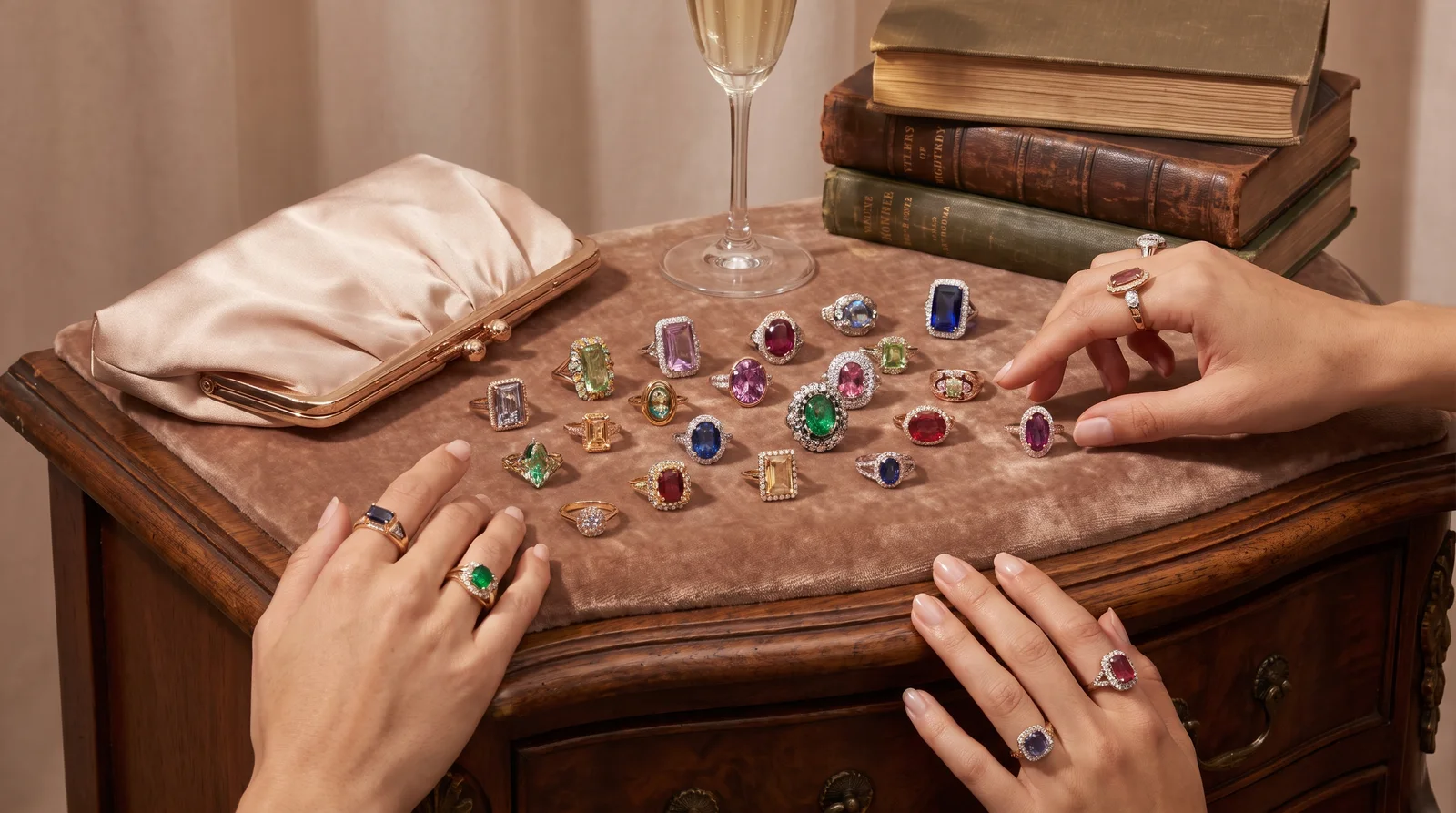
The right cocktail ring for your hand shape depends on whether your fingers are long and slender, short and squared, or somewhere in between. Round hands with shorter fingers generally look best in oval, marquise, or pear shaped stones because the elongated silhouette creates length. Long, narrow hands can carry round or cushion cut stones beautifully since there's already length to spare, and a rounder shape softens the overall line without making the finger look stretched.
Wider palms with fuller fingers tend to do well with cluster settings or geometric designs that add visual width without adding bulk in one single direction. A dense cluster of smaller stones spreads the eye across the ring instead of concentrating it on one large gem, which can feel more balanced on a fuller hand. Angular, art deco-inspired shapes also work nicely here because the sharp lines contrast with the softness of the hand itself.
Best Cocktail Ring Shapes for Short Fingers
If short fingers are your main concern, oval and marquise cuts are your best friends. Both shapes naturally taper at the ends, which draws the eye up and down rather than side to side. Emerald cut stones work well too, provided they're set vertically rather than horizontally across the finger.
Avoid wide, boxy cushion cuts or perfectly round stones over 12mm if your fingers run shorter. These shapes tend to visually shorten the finger by drawing attention to its width instead of its length. A well-placed halo can help here as well, since a thin ring of accent stones adds presence without adding bulk to the center.
Best Shapes for Long, Slender Fingers
Long fingers have more room to experiment, honestly. Round, cushion, and even large square cut stones all read as elegant rather than overwhelming. You can also go bolder with sculptural or asymmetrical designs since there's enough finger length to support a more elaborate silhouette without it looking like too much.
Once you've settled on a shape that flatters your hand, the next decision is where you're actually going to wear the thing.
What Finger Do You Wear a Cocktail Ring On
Most people wear a cocktail ring on the ring finger or middle finger of the right hand, though there's no hard rule anymore. The right ring finger has stayed the traditional spot mainly because it keeps the statement piece separate from an engagement ring or wedding band on the left hand. But plenty of women now wear cocktail rings on the middle or even index finger, especially when the design is oversized enough to need more room to sit properly.
Middle finger placement tends to suit the widest, most dramatic designs since it's the longest finger and can visually anchor a larger stone without looking cramped. Index finger placement has become more common too, particularly for rings with geometric or sculptural details, since it puts the piece front and center in photos and everyday hand movement. Whichever finger you choose, the rest of that hand should stay relatively bare. One statement piece per hand reads as intentional. Two competing rings just look busy.
Cocktail Ring Sizing Guide for Different Occasions
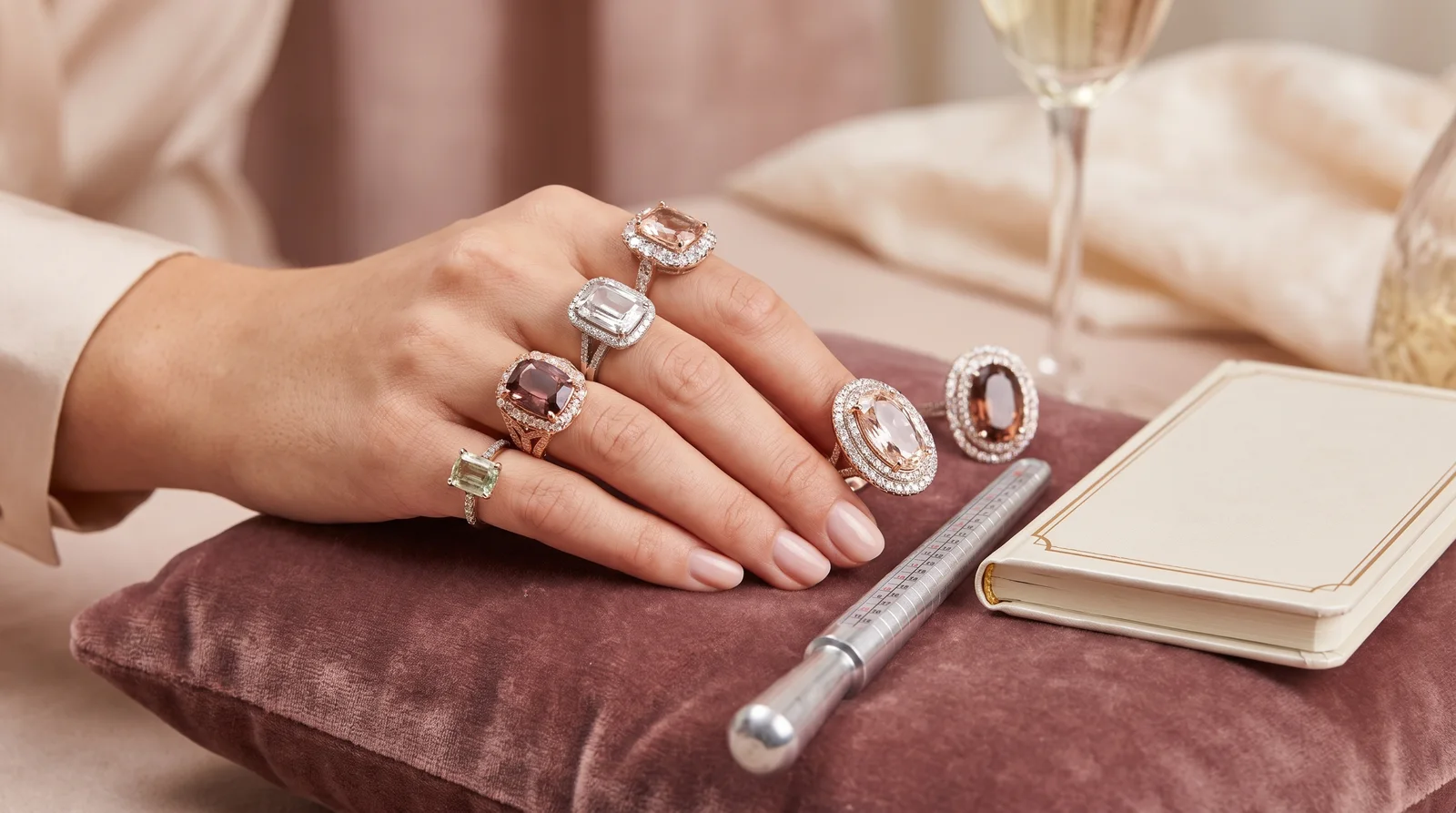
The occasion you're dressing for should directly influence how large and how bold your cocktail ring gets. A ring built for a black tie gala doesn't belong at a Tuesday office lunch, and a ring meant for daily wear will feel underwhelming at an actual cocktail party. Matching scale to setting is one of the most overlooked parts of choosing a ring, and it's also one of the easiest to get right once you know what to look for.
Cocktail Parties and Evening Events
This is where you go bigger. A center stone in the 12 to 18mm range, paired with a halo or cluster design, reads as appropriately dramatic for evening wear. Bold colored stones like emerald, sapphire, or amethyst work particularly well here since low evening lighting tends to mute softer tones. Gold settings, especially yellow or rose gold, tend to catch candlelight and warm up under evening lighting in a way that platinum sometimes doesn't.
Wedding Guest Attire
Weddings call for a slightly more restrained approach, mainly because you don't want to compete with the bride or draw attention away from the couple. A mid-size stone, somewhere around 8 to 12mm, in a softer color like rose quartz, morganite, or a pastel sapphire tends to strike the right note. Save the biggest, boldest cluster designs for a different event, and lean toward something elegant rather than showstopping.
Everyday Statement Wear
If you want to wear a cocktail ring regularly, size and durability matter more than drama. A smaller center stone, a lower profile setting, and a harder gemstone like sapphire or a lab-created diamond will hold up better to daily bumps than something delicate like opal or pearl. Many women who wear cocktail rings daily also opt for a slightly smaller carat weight specifically so the ring doesn't snag on clothing or bags throughout the day.
Sizing for the occasion naturally leads into a bigger question: how do you tell a cocktail ring apart from other statement pieces you might already own?
Cocktail Ring vs Statement Ring: Does the Difference Actually Matter When Buying
For buying purposes, the distinction matters less than most people think, but it's still worth understanding. A cocktail ring vs statement ring debate usually comes down to intent and setting. Cocktail rings are traditionally built for evening and social occasions, with an emphasis on a dramatic center stone or elaborate cluster. Statement rings cover a wider range, including bolder everyday pieces that aren't necessarily tied to a specific type of event.
In practice, every cocktail ring qualifies as a statement ring, but not every statement ring has the drama or scale to work as a cocktail ring. If you're shopping specifically for an event, look for pieces marketed with elevated settings, larger center stones, and more intricate metalwork. If you want something more versatile for regular wear, a statement ring with a lower profile might serve you better long term.
How to Style a Cocktail Ring for the Occasion You're Dressing For
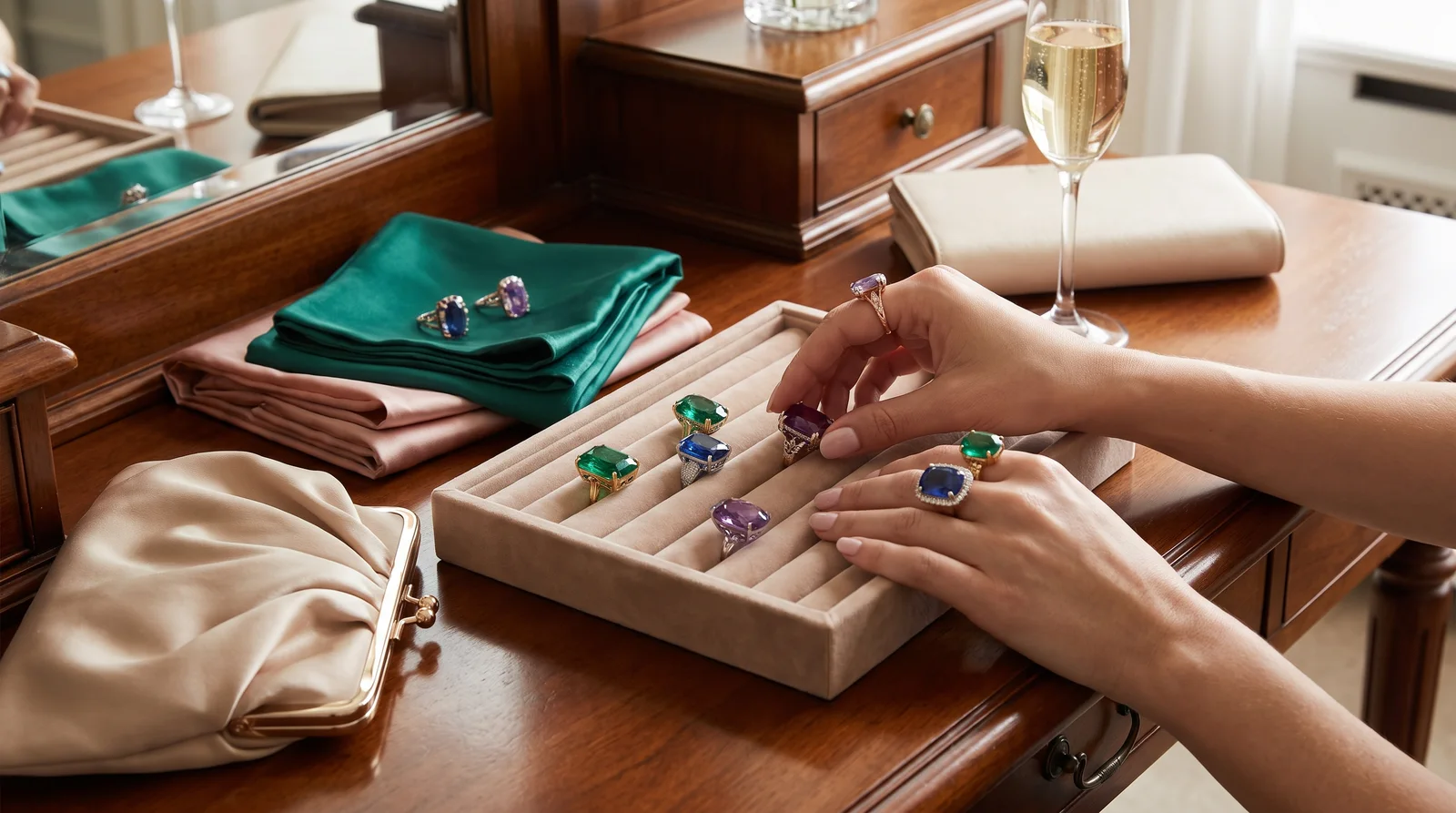
Styling a cocktail ring well means treating it as the single focal point of your hand rather than one piece among many. Pair it with plain bands or leave the rest of your fingers bare so the eye goes exactly where you want it. Metal tone should generally match the rest of your jewelry that day, though a little contrast, like a gold ring with silver earrings, can work if done intentionally rather than by accident.
Outfit color matters more than people expect too. A cocktail ring in a jewel tone like sapphire or emerald tends to pop against neutral or monochrome outfits, while a warmer stone like citrine or garnet plays nicely with autumn palettes and richer fabrics. Skin tone plays a role as well. Cooler skin tones, those with pink or blue undertones, tend to look best in platinum, white gold, or stones like sapphire and amethyst. Warmer skin tones with golden or peachy undertones usually suit yellow gold and stones like citrine, peridot, or garnet.
If you're buying a cocktail ring as a gift rather than for yourself, these same principles apply, though you'll want to think carefully about the recipient's existing jewelry and personal style. Our guide on choosing jewelry as a gift walks through more of that decision process in detail.
Custom Options When Nothing Off the Shelf Feels Right
Sometimes the right cocktail ring simply doesn't exist in a standard collection, and that's more common than people assume. Hand shape, finger length, occasion, and personal color preference all have to line up, and that's a lot of variables for a mass produced piece to satisfy. When that happens, a custom design lets you control stone shape, setting height, and band width specifically for your hand rather than settling for a close-enough fit.
This route also solves a real problem for shorter fingers or unusually proportioned hands, where standard cluster or halo settings sometimes sit awkwardly no matter the size. A custom piece can be built with vertical stone orientation, a slimmer band, or a lower profile setting from the start, which saves you the trouble of resizing or adjusting later.
Frequently Asked Questions About Choosing a Cocktail Ring
How do I know what size cocktail ring to buy?
Measure your finger at the end of the day when it's slightly more swollen, since fingers shrink somewhat overnight. For cocktail rings specifically, many jewelers recommend sizing a half size tighter than your standard ring size because the extra weight up top can cause spinning if the band is too loose.
Can you wear a cocktail ring every day?
Yes, as long as you choose a smaller stone, a lower profile setting, and a durable gemstone like sapphire or diamond. Softer stones like opal or pearl wear down faster with daily contact and are better saved for occasional wear.
Does hand size limit what shape I can wear?
Not entirely, but it does influence what looks proportional. Smaller hands generally do better with elongated shapes like oval or marquise, while larger hands have more flexibility with round or cushion cuts and bigger cluster designs.
What finger should I avoid wearing a cocktail ring on?
Avoid the left ring finger if you're already wearing an engagement ring or wedding band there, simply to prevent visual competition. Beyond that, there's no finger that's off limits, though thumbs are rarely practical given standard ring construction.
How much should a cocktail ring cost?
Prices vary enormously depending on metal, stone type, and craftsmanship, ranging from under 100 dollars for costume pieces to several thousand for fine jewelry with precious gemstones. A mid-range cocktail ring with a semi-precious center stone in gold vermeil typically falls somewhere between 200 and 800 dollars.
Finding the Ring That's Actually Right for You
Choosing a cocktail ring isn't complicated once you know what to measure and what questions to ask. Start with your finger size and shape, pick a silhouette that works with your hand instead of against it, and let the occasion guide how bold you go. The rest, the finger placement, the metal, the stone color, tends to sort itself out once those foundations are solid.
If you're still not finding the right fit off the shelf, or you want a piece built specifically around your hand and your event calendar, a custom cocktail ring might be worth exploring. It takes the guesswork out of sizing and lets you get exactly the shape, scale, and stone placement that suits you best.