Here's How Intaglio Engraving Carved Signet Ring Designs Below the Surface
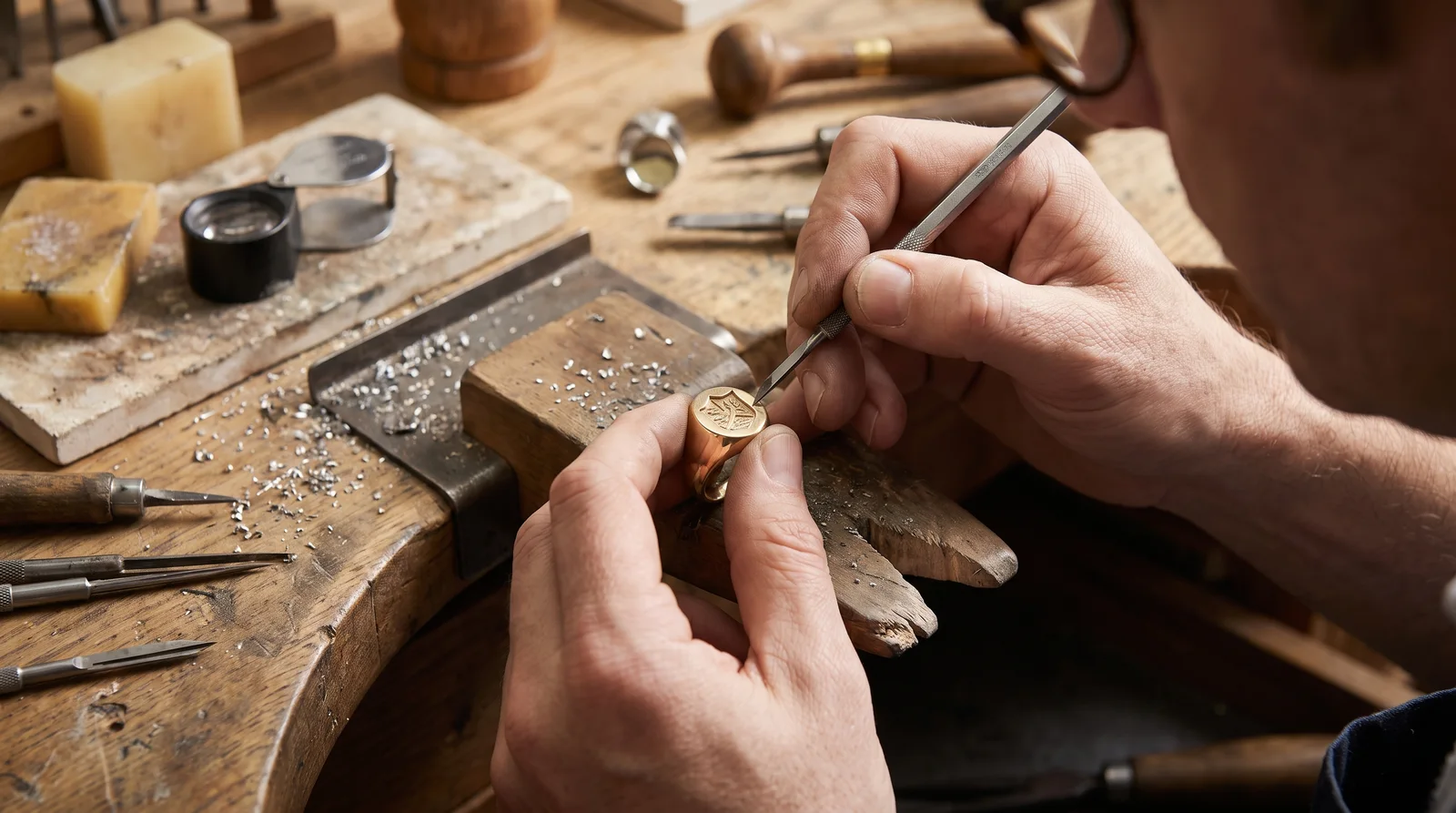
Here's how intaglio engraving carved signet ring designs actually work: the jeweler cuts the image below the metal or stone surface, instead of raising it above. This is the opposite of relief carving. The recessed cut is what let ancient wearers press a ring into wax and leave behind a raised, correctly oriented mark. The depth of that cut also determines how long the design survives decades of handshakes, pocket friction, and daily wear.
What Makes Intaglio Different From Every Other Engraving Style
Intaglio means the design is carved into the metal or gemstone. It sits below the original surface line, instead of on top of it. Picture pressing your thumb into wet clay. The dent you leave behind is intaglio. If you built up a little clay mountain instead, that would be relief, sometimes called cameo when done on stone. Signet rings almost always use intaglio, because of what that recessed shape does when pressed into something soft.
When a recessed image gets pushed into warm sealing wax, the wax fills every groove. Lift the ring away and the wax now shows a raised copy of the design, sitting proud of the surface. That raised wax impression is the whole point. A relief carving pressed into wax would just leave a shallow dent with no readable detail. That's useless for authentication.
This is also why understanding how intaglio engraving works matters if you're choosing a design today, even if you never plan to seal a letter. The recessed cut catches light and shadow differently than a flat or raised surface. That shadow is what makes a monogram or crest readable at a glance, decades after the ring was made.
Mirror Image Cutting and Why It's Necessary
Because the wax impression reverses the design, the engraver has to cut everything backward on the ring itself. A letter "R" on the metal actually looks like a backward R when you glance at the ring on your finger. Press it into wax and it flips back to a correct, readable R. This reversal is the single hardest part of true intaglio work. It's why historical seal engravers trained for years before cutting anything meant for actual use. Get the mirroring wrong, and the seal is worthless, no matter how pretty the carving looks.
Modern signet rings meant purely for wear, with no plan to ever use wax, sometimes skip the mirror reversal entirely. The engraver cuts the monogram to read correctly on the metal itself. That looks right to the naked eye, but wouldn't produce a proper seal. Neither approach is wrong. It just depends on whether you want a ring that could theoretically still function as a seal, or one that only needs to look right on your hand.
That distinction between decorative and functional cutting sets up the next question. How does a jeweler actually get metal or stone to hold a recessed image with clean edges and real depth?
How Intaglio Engraving Carved Signet Ring Designs Come to Life
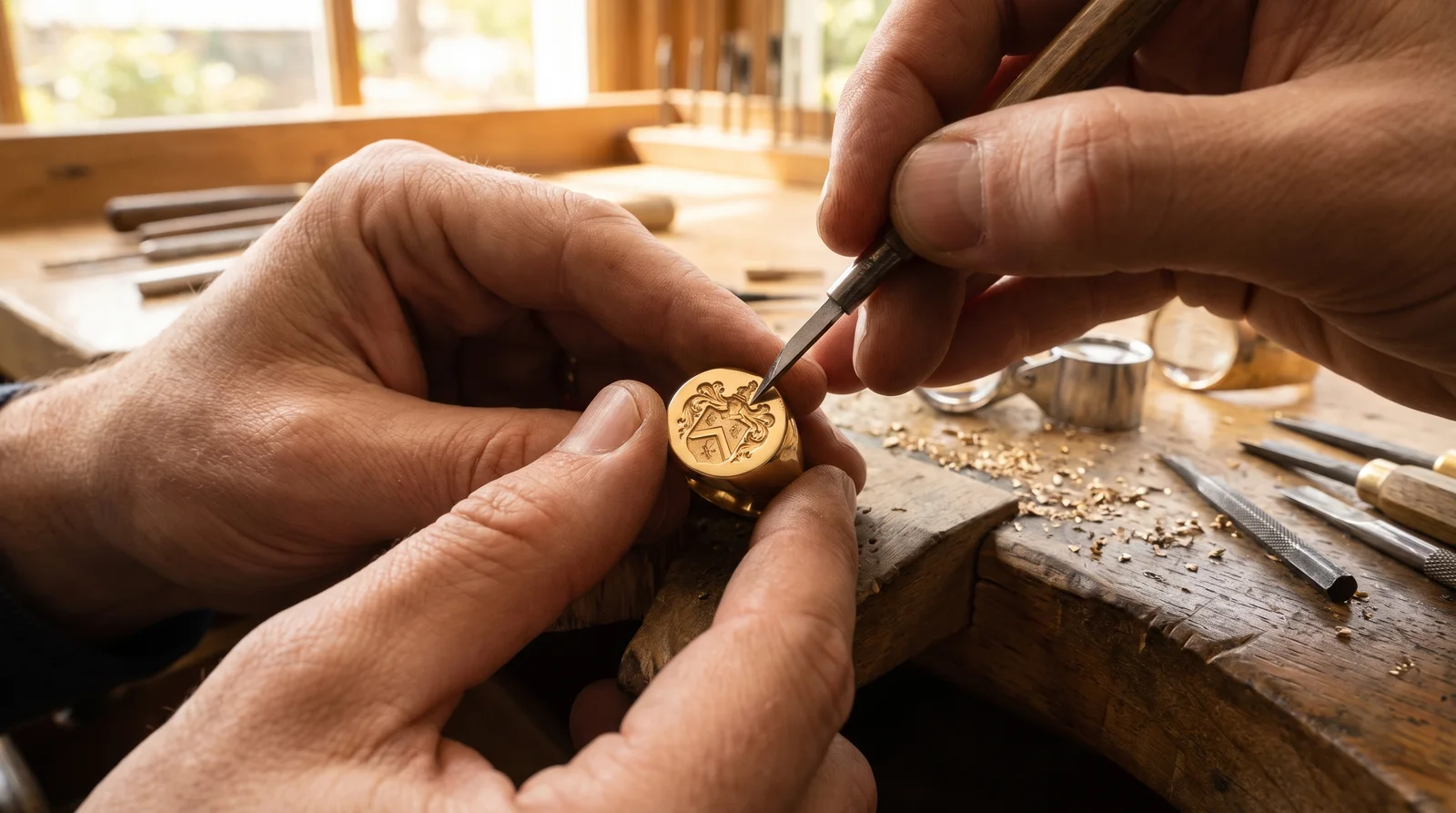
A jeweler carves intaglio using either hand tools guided by decades of muscle memory, or a rotating cutting wheel powered by a small motor. Sometimes computer-guided lasers assist too. Each method removes metal or stone in tiny, controlled amounts, until the design reaches the correct depth. The choice between hand and machine work changes the price, the character of the final piece, and how it ages.
Hand Engraving With a Graver
Hand engraving uses a small steel tool called a graver, pushed or tapped through metal one sliver at a time. The engraver braces the tool against a bench pin and their palm, controlling pressure with the kind of precision that takes years to build. Traditional seal engravers, called gemmarii by the Romans when they worked on hardstone, spent entire careers refining this single skill. A good hand engraver can vary the width and depth of a single line within a letter. That's what gives antique intaglio rings their slightly uneven, clearly human character.
This method still exists today, mostly in workshops that specialize in custom signet rings and monogram work. It costs more than machine engraving, because it takes longer and depends entirely on one person's steady hand. The upside is depth control. A skilled hand engraver can cut deeper into thicker areas of the bezel and shallower near delicate details. Machines historically struggled to replicate that kind of control.
Machine and Laser Engraving Methods
Rotary engraving machines spin a small cutting bit at high speed. A mechanical pantograph traces a template, or computer software controls the bit's path directly. This produces consistent, repeatable depth across an entire design, which matters for symmetrical crests or uniform lettering. Laser engraving takes it further, vaporizing tiny amounts of metal with focused light instead of physical contact at all.
Laser work is fast and precise for shallow decorative engraving, but it has limits for true seal-depth intaglio. Sealing wax needs a cut with real physical depth and clean vertical walls to produce a sharp impression. A laser can etch a fine line, but building up enough depth for a functional seal often still calls for mechanical cutting or hand finishing afterward. Most jewelers combine methods now. They rough out a design by machine, then refine the depth and edges by hand.
Recessed Engraving Seal Impression Mechanics Explained
A recessed engraving seal impression works because wax is soft enough to flow into every carved groove before it cools and hardens. Press a signet ring face-down into warm wax, hold it steady for a few seconds, then lift straight up. The wax has taken on a raised negative of everything carved into the ring, readable exactly as intended.
The depth of the original carving directly controls how crisp that wax impression turns out. A cut that's too shallow, maybe under half a millimeter, produces a faint, blurry mark that's easy to fake or misread. Traditional seal-quality intaglio was typically cut between 0.5 and 1.5 millimeters deep, depending on the hardness of the material and the fineness of the detail. Deeper cuts hold more wax and produce sharper, more durable impressions. But they also remove more material from the bezel, which affects long-term structural integrity.
Sharp internal corners inside the carving, like the crossbar of an A or the tight curve in a crest's scrollwork, need extra care during cutting. If those corners are too shallow or rounded off, the wax won't fully fill them and fine detail gets lost in the impression. This is one reason antique intaglio rings from skilled Roman or Renaissance workshops still produce sharp seals centuries later. The original carving was simply cut with enough depth and precision to survive.
That depth-to-durability relationship raises a bigger practical question for anyone wearing one of these rings daily.
Intaglio vs Relief Engraving for Everyday Signet Rings
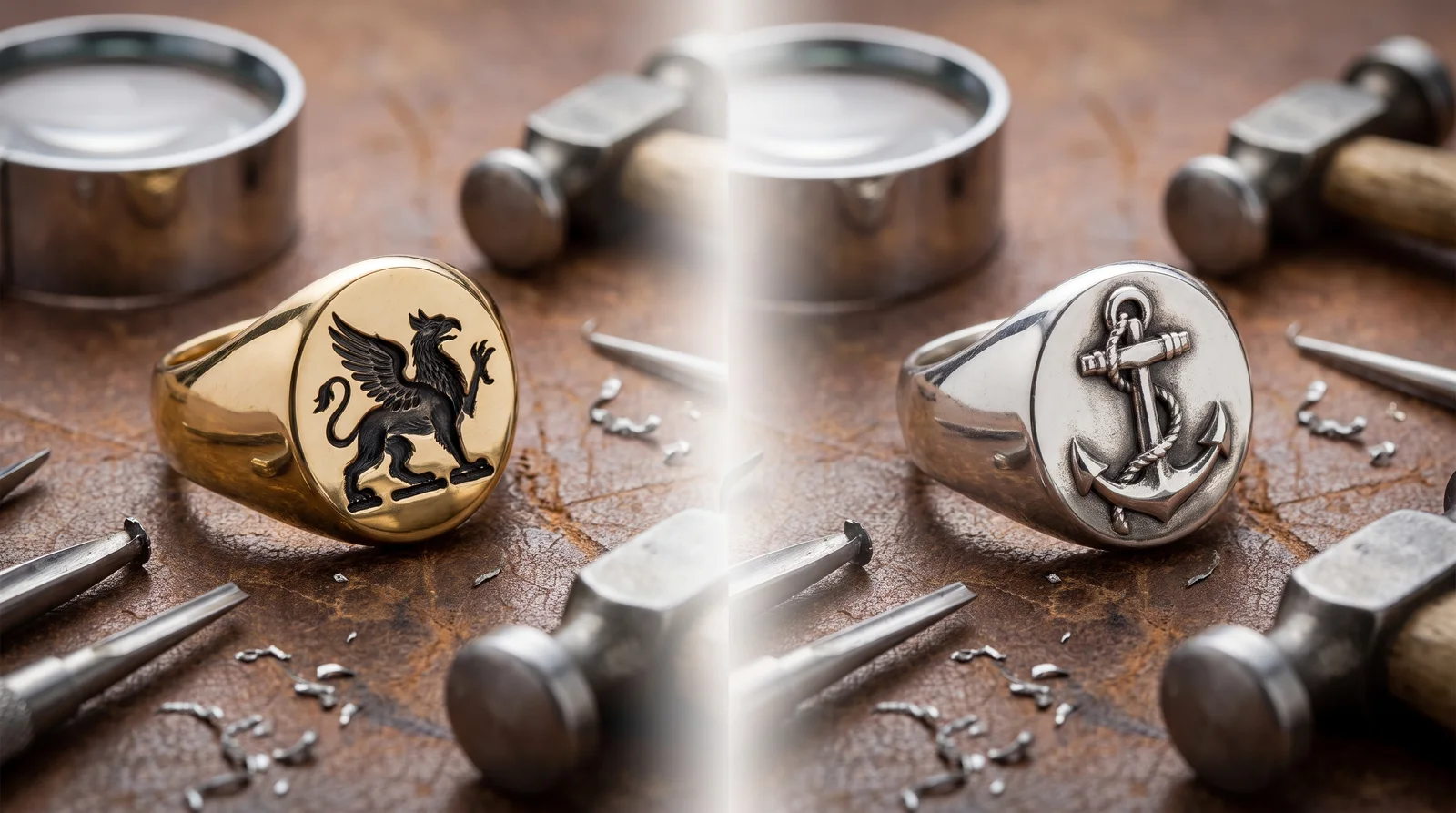
Intaglio vs relief engraving comes down to function versus visibility. Most people today actually prefer relief, or raised-positive lettering, for daily wear. Intaglio remains the historically correct choice, though. Intaglio's recessed lines are mirror-reversed and harder to read at a glance. But they age well, since the grooves hold shadow that keeps the design visible even as surrounding metal wears smooth. Relief engraving raises the design above the surface instead. It reads correctly to anyone glancing at your hand. It's purely decorative, though, and can't produce a wax seal.
There's a third path some jewelers now offer: engraving that's still recessed and correctly oriented for reading on the ring itself, without the mirror reversal needed for wax use. This gives you the shadow-holding durability of a true recessed cut, without requiring backward lettering. It's a compromise. It's honestly what most modern buyers actually want, since almost nobody today is sealing letters with hot wax.
The metal you choose changes how well either style holds up. Softer metals wear down engraved detail faster. That's part of why alloy choice matters as much as carving technique, something covered in more depth when comparing 14k vs 18k gold for daily wear. A harder alloy keeps sharp edges on recessed lines for longer, especially on a ring worn every day for decades.
That wear-and-durability question connects directly to something collectors of older pieces run into constantly.
What Happens to Intaglio Depth Over Decades of Wear
Intaglio engraving loses definition gradually as the metal around it wears smooth. The rate depends heavily on original cutting depth and the alloy's hardness. A ring worn daily for fifty years experiences constant friction from pockets, handshakes, and desk surfaces. That friction slowly erodes the raised portions of the bezel surrounding the carving. The recessed design itself is somewhat protected, since it sits below the wear surface. But shallow cuts eventually get shallower still.
Why Antique Intaglio Rings Still Look Sharp
Many antique intaglio rings surviving from Roman or Georgian workshops still show remarkably crisp detail. That's not luck. Roman gem engravers typically cut into carnelian, sard, or garnet. These stones are rated around 6.5 to 7 on the Mohs hardness scale. That hardness meant the recessed design resisted wear far better than engraving cut directly into soft gold. A gold ring's raised bezel surface wears down over centuries. A hardstone intaglio set into that bezel, though, keeps its carved detail almost intact, because the stone itself barely erodes.
Restoration and Recutting Considerations
When an old intaglio does wear down, or a ring needs resizing, restoration gets complicated fast. Deepening a worn carving means removing more metal or stone. That can throw off the proportions of the original design entirely. Resizing a signet ring band also affects the metal near the bezel. There are real structural limits to how much a band can be altered, a topic explored further in the guide on how many sizes can a ring be adjusted. A jeweler experienced in antique restoration will often recommend stabilizing a worn intaglio, rather than recutting it. That preserves what's left of the original craftsmanship, instead of chasing a sharper look that changes the piece's character.
These wear patterns and restoration limits matter just as much for buyers considering personalization today, not only for people inheriting old pieces.
Choosing Intaglio Depth for Signet Ring Personalization Today
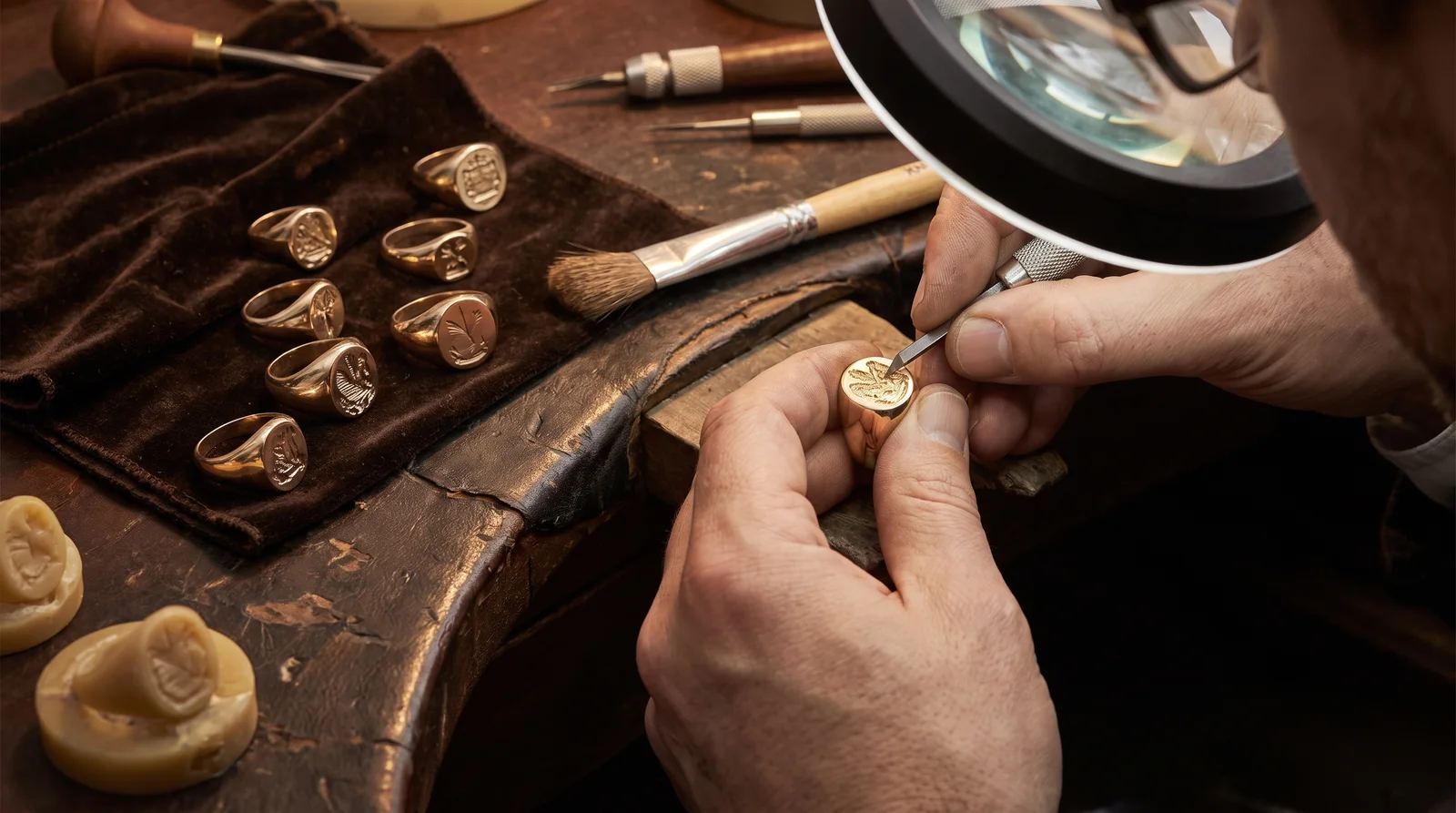
Signet ring personalization today usually comes down to picking a depth and style that matches how you'll actually wear and use the ring. If you want a ring that could genuinely produce a wax seal, ask your jeweler for true intaglio with proper mirror reversal. It should be cut to at least a millimeter of depth in a hard alloy. If you just want initials that read correctly and hold up to decades of wear, choose a shallower recessed cut without reversal. This is sometimes called a seal-style relief, and it gives you readability without the seal function. Either way, the bezel needs enough surface area and metal thickness to support real depth without weakening the ring's structure. A thin, delicate band with a deeply cut bezel is more prone to distortion during resizing or years of pressure. This is one reason experienced jewelers ask about your lifestyle, hand size, and how often you plan to resize the ring, before recommending a final engraving depth.
Metal Choice and Long-Term Detail Retention
Gold alloy purity changes how well fine intaglio detail survives daily wear. 18k gold contains 75 percent pure gold and tends to be softer. Some engravers actually prefer it for cutting crisp initial detail, though it wears faster over decades. 14k gold, with 58.3 percent pure gold, resists dents and wear better. It holds recessed detail longer under daily friction, which is often the more practical choice for a ring you plan to wear every single day for the rest of your life.
With those practical choices in mind, a few common questions still come up from people considering their first intaglio piece.
Frequently Asked Questions About Intaglio Signet Ring Engraving
How deep does intaglio engraving need to be to work as a seal?
Traditional seal-quality intaglio is typically cut between 0.5 and 1.5 millimeters deep, depending on the material and detail level. Shallower cuts produce faint, blurry wax impressions. Deeper cuts hold more wax and stay sharp longer.
Why is intaglio engraving mirror-reversed on signet rings?
The design has to be cut backward on the ring so it reads correctly once pressed into wax and lifted away. Wax impressions always come out as the reverse of whatever was carved, so a forward-facing carving would produce a backward, unreadable seal.
Can antique intaglio rings still be used to seal wax today?
Many antique intaglio rings with hardstone carvings, like carnelian or sard, still hold enough depth and sharpness to produce a usable wax impression. It's worth having a jeweler check the depth and condition first, since some pieces have worn down over the centuries.
Does resizing a signet ring damage the intaglio carving?
Resizing itself typically affects the shank rather than the bezel. So the engraving usually stays untouched during a standard adjustment. Larger size changes on a heavily engraved bezel carry more risk. That's why a jeweler familiar with structural limits should handle the work.
What's the difference between intaglio and cameo carving?
Intaglio is carved into the surface, creating a recessed design. Cameo is carved so the design sits raised above the background. They're essentially opposite techniques. Only intaglio produces a correct raised impression when pressed into wax.
Wearing a Piece of Five Thousand Years of Craft
A signet ring carved with true intaglio connects you to a technique that's barely changed since Mesopotamian seal cutters worked cylinder stones into wet clay. The reversed, recessed cut that seems almost backward at first glance is actually the entire point. It's built for a function most of us will never need, but can still appreciate every time light catches the shadow inside those grooves. Whether you go with a deep, seal-ready carving or a shallower modern take built purely for daily wear, understanding how that depth gets cut, and how it holds up over time, puts you in a much better position to choose a piece that'll actually last. If you're weighing metal options, engraving depth, or how a design will hold up against years of wear, talk to a jeweler who can walk you through the tradeoffs before any metal gets cut.