Hinged Hoop Earring Not Clicking Shut? The Test That Matters More Than the Sound
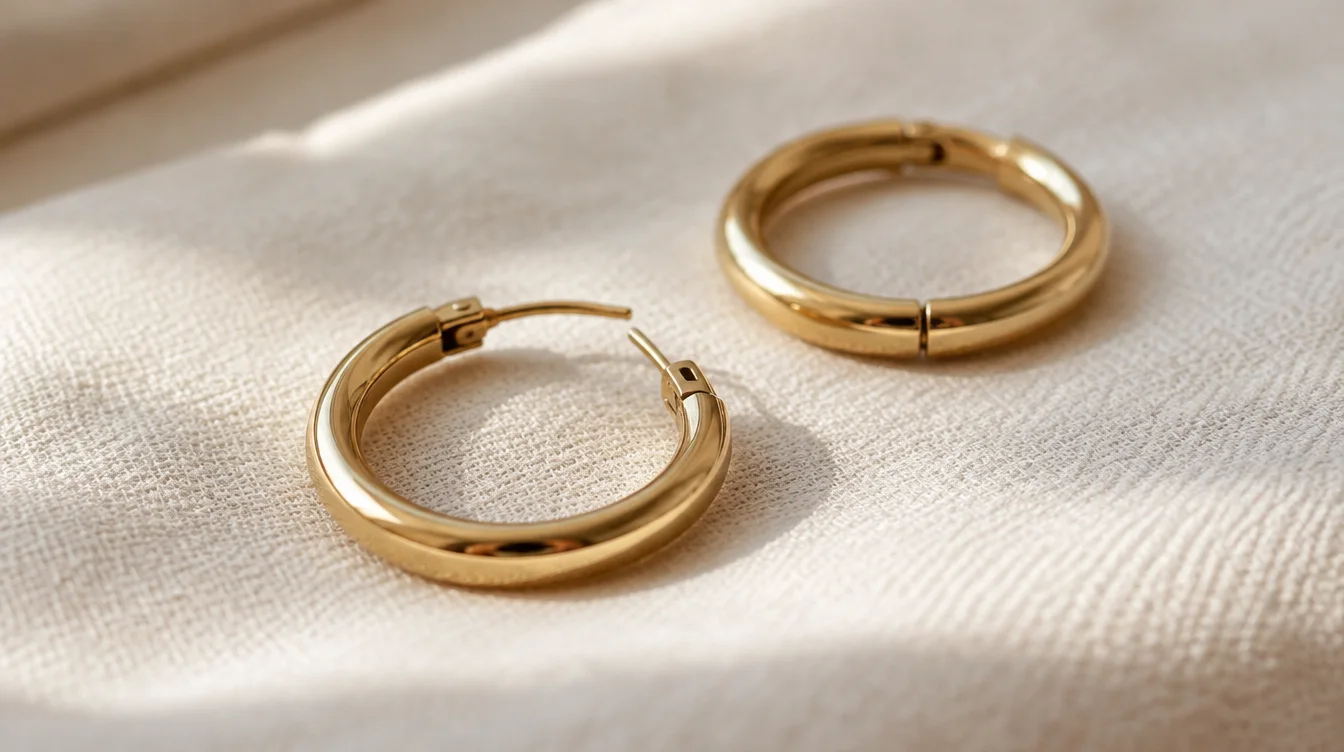
If your hinged hoop earring not clicking shut used to close securely, take it off and check whether the post still seats in the latch. A missing click may mean poor engagement, but sound alone cannot tell you whether the hoop is safe to wear. If the post slips free, the hinge feels loose, or you see damage, leave the earring out until a jeweler checks it.
Why a hinged hoop earring not clicking shut needs a closer look
A hinged hoop stays closed when its post meets and holds in the receiving latch. On some designs, a small notch on the post catches a matching notch in the hoop. Slight misalignment can stop those parts meeting, even when the hoop looks closed from the front. LooptyHoops describes how the notches engage and why a shifted post can change the closure.
Think back to what changed. Did the hoop catch on a towel? Was it pressed under other jewelry? Does the post now meet the latch at an angle? A huggie earring won't close for the same basic reasons as a larger hinged hoop, though its small parts can be harder to see.
First, make sure you are looking at the right kind of closure.
Identify the latch before you test it
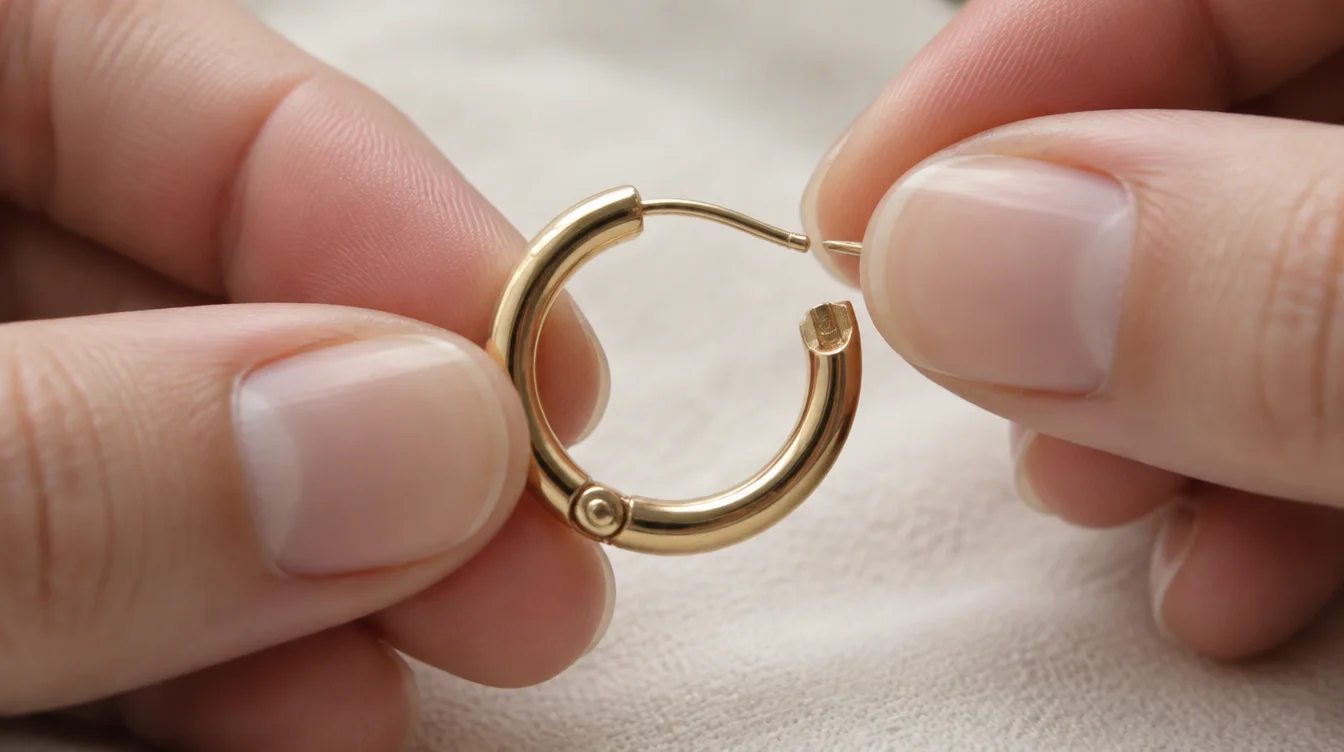
A hinged hoop has a moving arm joined to the hoop by a hinge. Its post swings into a catch or opening on the opposite side. That differs from a continuous hoop, where a wire enters a tube, and from a hoop with a separate backing. Advice for one closure may not suit another.
Hold the earring over a soft cloth in good light. Find the hinge, the post that passes through your piercing, and the point where its tip should lock. Close it slowly without forcing it. Watch the tip: does it enter the latch, skim its edge, or miss it entirely?
Compare it with the matching earring if that one still works. The pair can show where the post should land, but do not assume both closures need the same pressure. If your huggie earring won't close, use bright light and look from the side as well as the front. A front view can hide a small gap.
Once you know where the parts should meet, check what might be keeping them apart.
Check for dirt, misalignment, and hinge movement
For a hinged hoop earring not clicking shut, start with a visual check while it is off your ear. Look for dried product or debris at the catch. If you see any, clean the earring using a method suitable for its metal, finish, and stones. Let it dry before testing the closure again. Do not dig into a tiny latch with a sharp tool.
When the post misses the catch
Close the arm gently and watch its path. A bent hoop earring post may sit above, below, or to one side of the latch. The hoop itself may also be out of shape. Both can change where the tip lands. Konatsu describes slight post misalignment as one reason a huggie stops clicking, but a visual check cannot show how much adjustment the metal can safely take.
When the parts meet but will not hold
If the tip enters the latch yet springs straight back out, the catch may not be gripping it. Open the hoop and check whether the hinge arm wobbles from side to side. A damaged hinge can also move the post off its normal path, even when the post looks straight.
These observations tell you what to describe to a jeweler. They do not call for repeated bending. Next, test whether the closure holds without relying on your ears.
Why a click is not proof that the hoop is secure
A click tells you that two parts made contact. It does not prove that the post is seated deeply enough to stay put during wear. Likewise, a quiet closure is not automatically faulty if that design has always been quiet and still holds firmly. The change from your hoop’s usual feel matters more than the noise.
With the earring off your ear, close it as you normally would. Look at the seam from the front and side. Then hold each side near the closure and apply a very light pull in the direction used to open it. Do not tug hard or twist the hoop. The post should remain seated until you deliberately release it.
If a hoop earring keeps opening during this gentle test, do not wear it. If it holds but opens more easily than its mate, set it aside for inspection. One successful test cannot guarantee it will stay closed. Hair, clothing, and daily handling may also touch the clasp.
A weak hold tells you when to leave the earring out.
When to stop wearing the earring
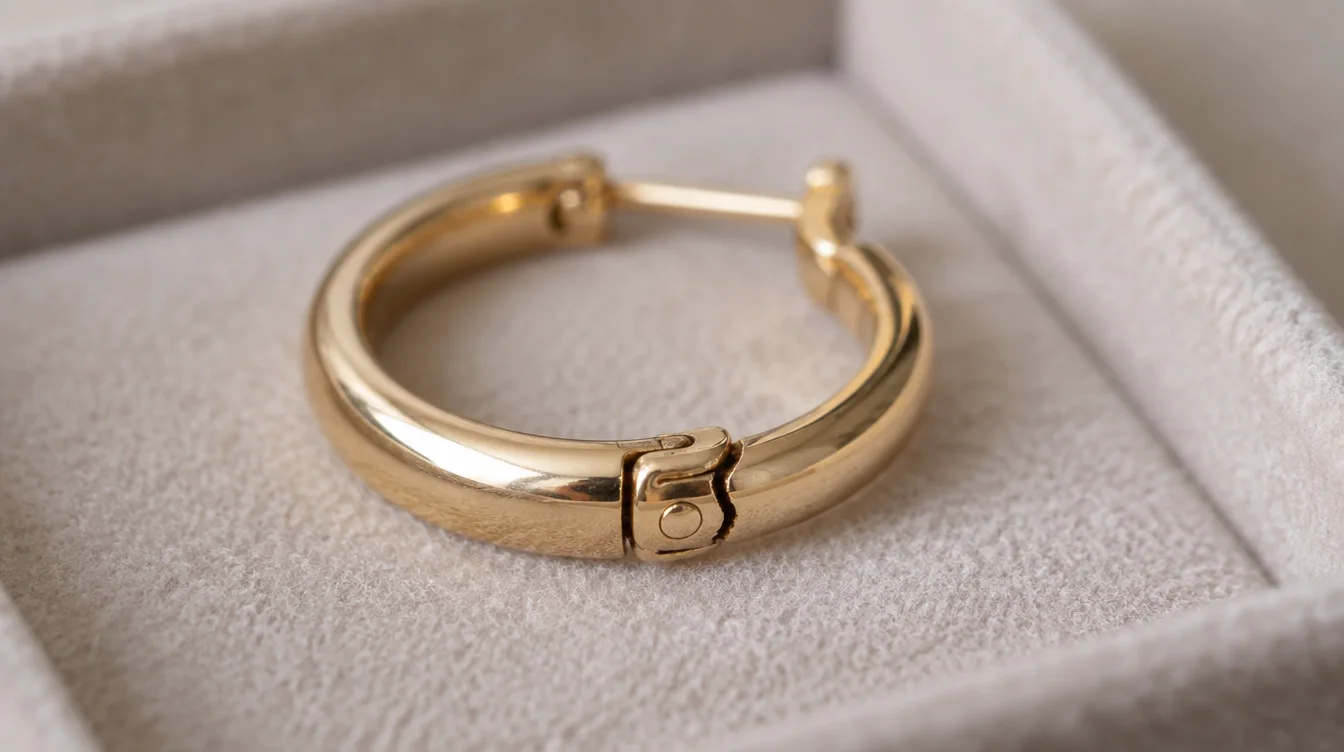
Stop wearing a hinged hoop when the post does not stay in the latch under a gentle check. If your hoop earring keeps opening after you close it, leave it out whether or not you hear a click. A loose closure can let the earring fall out. Forcing it shut may make the damage worse.
Leave it out if you see a crack, a split near the hinge, a missing hinge pin, or a visibly worn catch. Stop as well if the arm shifts sideways, the post has a sharp edge, or closing the hoop takes new force. For an earring with stones, have any loose setting checked too. Antique Cut distinguishes latch alignment from cracks, hinge damage, and loose stones because those problems need different attention.
One failed gentle test is enough. You do not need to keep the hoop in your ear to confirm it.
If the parts look intact but still will not engage, the next choice is whether to seek an adjustment.
Should you bend the post or ask a jeweler?
For a hinged hoop earring not clicking shut, a jeweler is the safer choice when you cannot clearly identify the fault. Ask for an inspection if the hinge moves oddly, the hoop is out of shape, or the post shows a sharp bend or stress mark. Hoop earring hinge repair is different from nudging a sound post back into alignment.
Some sellers describe tiny post adjustments for their own hinged designs. LooptyHoops, for example, advises small changes when the post and notches do not meet, while warning that too much bending can break the post. That guidance does not establish that every hoop is safe to adjust at home. Metal, thickness, construction, and prior damage all matter.
If you search how to fix a loose hoop earring clasp, look past any one size fits all instruction. A clean catch may need no repair. A slightly shifted post may need careful alignment. A loose hinge, cracked metal, or worn latch needs a jeweler to assess the part itself. Repeatedly squeezing the hoop closed can hide the cause for a moment without restoring a reliable catch.
Ask the jeweler to show you how that specific closure should feel when it seats. Then you can judge future changes against a sound example.
FAQs about hinged hoop closures
These answers address common questions after you check the hoop off your ear.
Why did my hinged hoop stop clicking?
A shifted post, debris in the catch, or movement at the hinge can change how the latch meets. If the hoop once clicked and now does not, test its hold off your ear before wearing it again.
Can I wear a hoop that closes without a click?
Some sound hoops close quietly. But if yours used to click, do not rely on appearance alone. Leave it out if the post slips free or the closure feels newly loose.
How do I know whether the post is bent?
Watch the post approach the catch in good light and compare it with the other earring. A bent hoop earring post may miss the opening, but a shifted hinge or hoop can create a similar gap.
Does a loose hinge need professional repair?
Yes, if the arm wobbles or no longer guides the post into the latch. Hoop earring hinge repair calls for an inspection of the joint, not a guess about which way to bend the post.
With those answers in mind, make the wear decision based on the hold, not the sound.
Wear it only when the latch holds
A hinged hoop earring not clicking shut deserves a short pause, not a harder squeeze. Check it off your ear, clear any visible obstruction safely, and see whether the post seats and stays seated under a gentle test. If the hoop fails that check, shows damage, or feels less secure than it used to, set it aside. Take the pair to a jeweler and ask them to inspect the latch and hinge before you wear it again.