Your Gold Cross Pendant Styling Guide Is Missing These 5 Daily Wear Rules
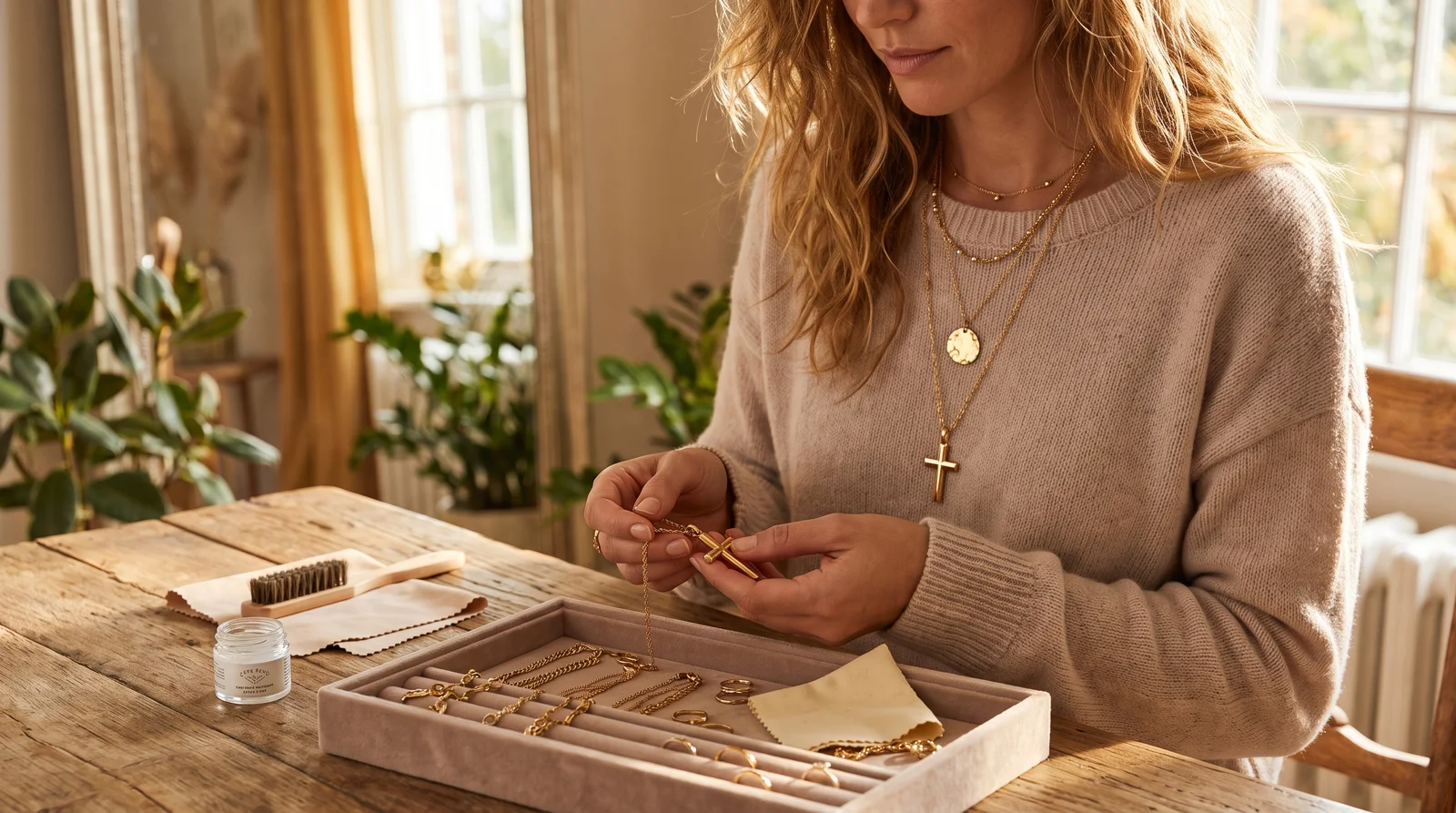
The short answer to any gold cross pendant styling guide is this: match your chain length to your neckline, keep the metal color consistent across your other jewelry, and remove the pendant before showering, sleeping, or working out. Do that and you avoid the two biggest problems people run into. Those are a pendant that looks out of place and a chain that wears out early. The rest comes down to personal taste. But those three habits protect both the look and the piece itself.
What Makes a Gold Cross Pendant Different From Other Necklaces
A cross pendant carries weight that other jewelry does not, both literally and emotionally. That changes how you should think about wearing it. Unlike a plain chain or a fashion pendant, a cross often means something to the wearer. So the styling choices you make tend to feel more personal. That also means the practical side matters more. You are likely to wear this piece daily for years, sometimes decades. So the chain, the clasp, and the metal purity all get tested by repeated use in a way an occasional-wear necklace never faces.
This is where a gold cross necklace styling guide has to go beyond outfit matching. You need to think about how the pendant sits against your collarbone, how it interacts with your other daily jewelry, and how it holds up when you forget to take it off before a shower. Getting the styling right is only half the job. The other half is knowing how to wear it in a way that does not wreck it within a year.
How to Wear a Gold Cross Pendant So It Actually Looks Right

The way to wear a gold cross pendant correctly starts with chain length. Length determines whether the cross reads as a subtle daily piece or a bold statement. A 16 inch chain sits high on the neck, close to the collarbone, and works well with crew necks or collared shirts where you want the cross visible but not dominant. An 18 inch chain, the most common length sold, falls just below the collarbone and pairs with almost anything, from t-shirts to blazers. Go to 20 or 22 inches and the cross drops lower, which suits open collars, v-necks, or a more relaxed layered look.
Matching Pendant Size to Your Frame and Outfit
Pendant size should scale with both your body and your typical outfits, not just personal preference in isolation. A small cross, under 2 centimeters, disappears under a crew neck but shows nicely with an open collar or scoop top. A larger cross, closer to 3 or 4 centimeters, reads as a statement piece. It works best with simpler necklines that will not compete with it. If you wear mostly fitted, minimal clothing, a smaller cross keeps the whole look balanced. If your style leans bold, a bigger pendant will not feel out of place.
Choosing a Chain That Won't Fight the Pendant
The chain style matters almost as much as the length. A box chain or a Franco chain gives you clean lines that let the cross stay the focal point, while a rope chain adds texture without stealing attention. Avoid pairing a heavily faceted, high-shine chain with a detailed cross pendant. The two will compete for light and end up looking busy. If you are unsure, a simple cable or curb chain in the same gold tone as your pendant is close to foolproof. For more on matching chain type to pendant weight, this breakdown of solid vs hollow gold chain for pendant use is worth a look before you buy.
Getting the chain and pendant proportions right sets the foundation. From there, styling becomes about how the cross fits into your daily outfit choices and your other jewelry.
Gold Cross Necklace Styling Guide for Everyday Outfits
Building outfits around a gold cross pendant works best when you treat it as an anchor piece rather than an afterthought. For casual daily wear, a simple cross on an 18 inch chain sits well with crew neck tees, henleys, and button-downs left open at the collar. Business casual settings call for a slightly more subtle approach. A smaller pendant tucked just inside a collared shirt reads as polished without pulling focus from your outfit. For evening or dressier occasions, a longer chain with a bit more detail on the cross can carry the look without needing extra jewelry.
Layering Without Overcomplicating Things
Layering a cross with other necklaces works when you vary the lengths and keep the metal tone consistent. Pair your cross chain with one or two shorter chains, maybe a plain bar pendant or a small charm. Space them by at least an inch or two so they do not tangle. Keep all the chains in the same gold tone, whether that is yellow, white, or rose. Mixing tones in a layered look tends to read as accidental rather than intentional. Two or three necklaces is usually the limit before the look starts feeling cluttered instead of curated.
Matching Metal Tones Across Your Jewelry
Consistency in metal tone across your whole look matters more than most people expect. If your cross pendant is yellow gold, your earrings, rings, and watch should lean yellow gold too, or at least avoid clashing with a heavy silver or white gold presence. This is not a strict rule, since mixed metals have become more accepted in recent years. But for a cross pendant specifically, sticking with one tone keeps the piece feeling intentional rather than like a random addition. If you want a deeper look at coordinating gold pieces overall, this guide on how to wear gold jewelry covers the broader principles.
Once you have the outfit and layering sorted, the next question is durability. A cross pendant only looks good long term if the metal underneath can handle daily contact with skin, fabric, and moisture.
Gold Cross Necklace Daily Wear Tips That Actually Prevent Damage
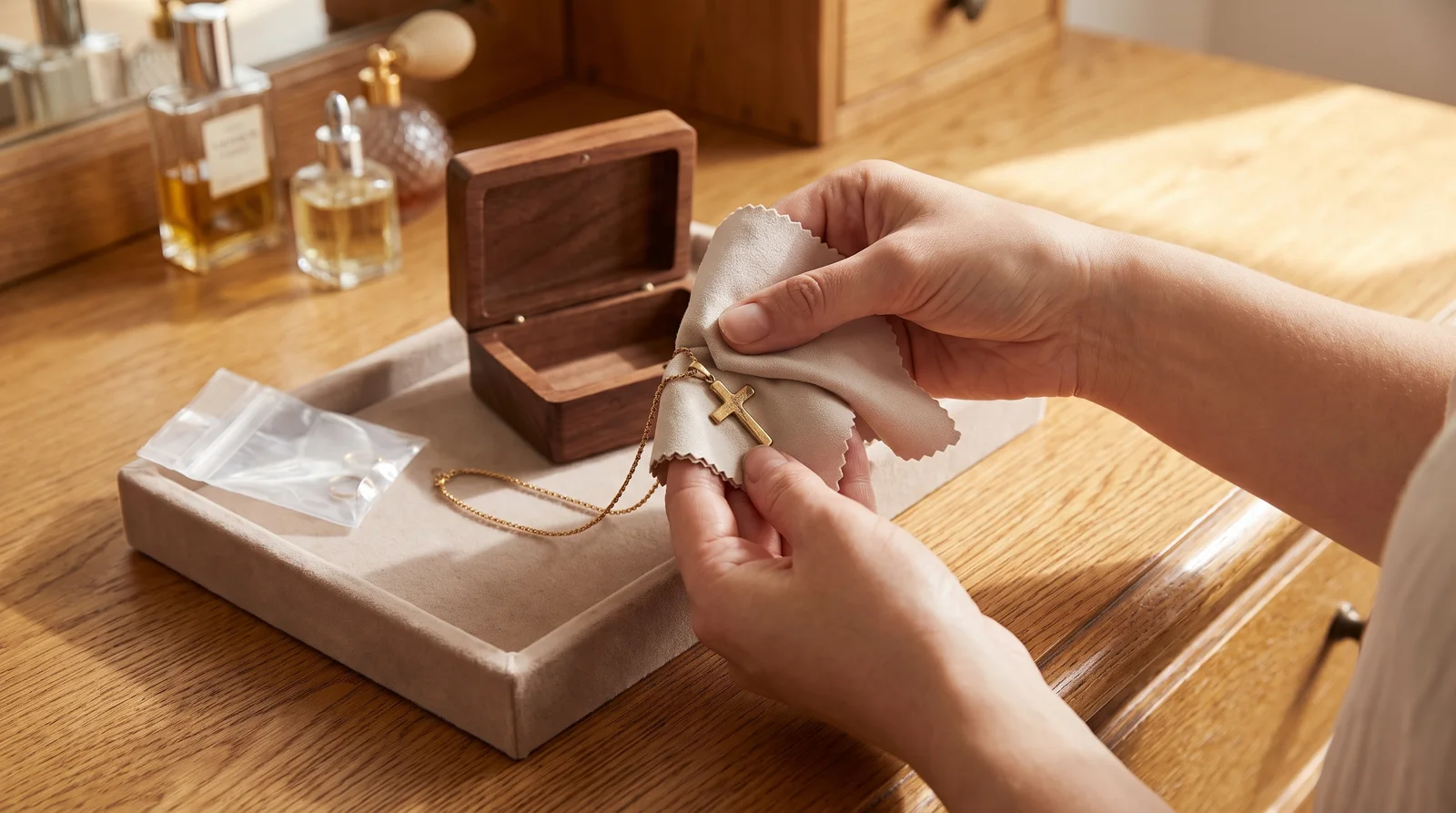
Daily wear tips for a gold cross necklace come down to timing your routine around the jewelry, not the other way around. Put your cross on last, after applying perfume, lotion, or sunscreen. Those products contain chemicals that dull gold's surface and speed up wear on the clasp. Take it off first when you get home, before showering or changing clothes. Tugging a chain over your head repeatedly stretches the links and weakens the clasp over time. This two-step habit, on last and off first, prevents more wear than any cleaning product ever will.
Activities That Call for Taking It Off
Certain activities are hard on any gold pendant, cross designs included, so plan around them rather than risk damage. Swimming, especially in chlorinated or salt water, reacts with gold alloys and can dull the finish faster than daily air exposure ever would. Exercise creates sweat and friction against the chain, which adds up over months of gym sessions. Household cleaning introduces harsh chemicals that have no business touching a gold pendant. Slip it off before you start scrubbing.
Why Karat Choice Affects How the Pendant Holds Up
Karat purity directly affects how well your cross pendant survives daily contact and movement. 14k gold is 58.3 percent pure gold mixed with stronger metals. It tends to resist scratching and bending better than 18k gold, which contains 75 percent gold and is noticeably softer. For a piece worn every single day, that difference matters more than most buyers realize. If you are deciding between karats before buying, this comparison of 14k vs 18k gold for daily wear breaks down exactly why the lower karat often outperforms the higher one under regular use. Similarly, pure 24k gold pendants dent far more easily. This piece on 24k gold pendants explains why in more detail.
Knowing what to avoid protects the piece day to day, but even careful wearers need a real cleaning and storage routine to keep the cross looking sharp over years, not just weeks.
Gold Cross Necklace Storage and Maintenance for the Long Haul
Proper storage and maintenance for a gold cross necklace starts with keeping the clasp fastened whenever the piece is not on your neck. An unfastened chain tangles into knots that stress the links and sometimes require cutting to fix. Store the necklace in a soft pouch or a jewelry box compartment separate from other pieces. Gold can pick up scratches from harder gemstones or even other gold items rubbing against it. Keep it away from direct sunlight and humidity, both of which can affect the finish over time, especially on gold plated pieces.
How to Clean Gold Plated Cross Jewelry Without Ruining It
Cleaning gold plated cross jewelry requires a gentler touch than solid gold, because the plating layer is thin and wears away with abrasive contact. Use a soft, slightly damp cloth to wipe the surface after wearing. Skip anything abrasive like baking soda paste or an ultrasonic cleaner, since both strip plating fast. For solid gold pieces, warm water with a drop of mild dish soap and a soft brush works well for routine cleaning. Rinse thoroughly and dry immediately. Air drying can leave water spots that are more work to remove than the dirt was in the first place.
When to Get Professional Attention
A professional polish once a year restores shine and buffs out the small scratches that accumulate from months of daily wear. This is especially worth doing if the pendant is a family heirloom or something you plan to wear for the rest of your life. A jeweler can also check the clasp and jump ring, the two parts most likely to weaken first, and catch problems before you lose the pendant entirely. Between professional visits, the simple habits above will keep most of the wear at bay.
With cleaning and storage covered, a few common questions still come up often enough to deserve direct answers.
Frequently Asked Questions About Wearing a Gold Cross Pendant Daily
How often should I clean my gold cross necklace?
A quick wipe with a soft cloth after each wear keeps oils and residue from building up. A deeper clean with mild soap and water once every week or two is usually enough for daily wear pieces.
Can I shower or swim while wearing a gold cross pendant?
You can, but it is not ideal, since chlorine, salt water, and even hot shower steam can dull the finish faster over time. Removing it for these activities is a small habit that adds years to how the piece looks.
Does layering damage a gold cross necklace chain?
Layering itself does not damage the chain, but tangling from similar lengths can put stress on links and clasps. Spacing your chains by at least an inch and keeping metal tones consistent avoids most of that friction.
What chain length works best for a gold cross pendant?
An 18 inch chain is the most versatile choice, sitting just below the collarbone and working with nearly any neckline. Shorter 16 inch chains suit higher necklines, while 20 to 22 inch chains suit more open or layered looks.
How do I know if my gold cross pendant needs professional repair?
Watch for a clasp that feels loose, a jump ring that looks stretched, or a chain that kinks easily instead of lying flat. Any of these signs mean it is worth a trip to a jeweler before the pendant is lost or the chain breaks.
A gold cross pendant is meant to be worn, not babied in a drawer. The habits above make that possible without sacrificing how it looks or how long it lasts. Get the chain length and metal tone right, build a simple on-and-off routine around your day, and give the piece a real cleaning now and then. That is really all a gold cross pendant styling guide comes down to. Treat the routine like brushing your teeth, small and consistent, and the pendant will still look sharp years from now.