Why fire opal without play of color Can Still Be Worth Buying
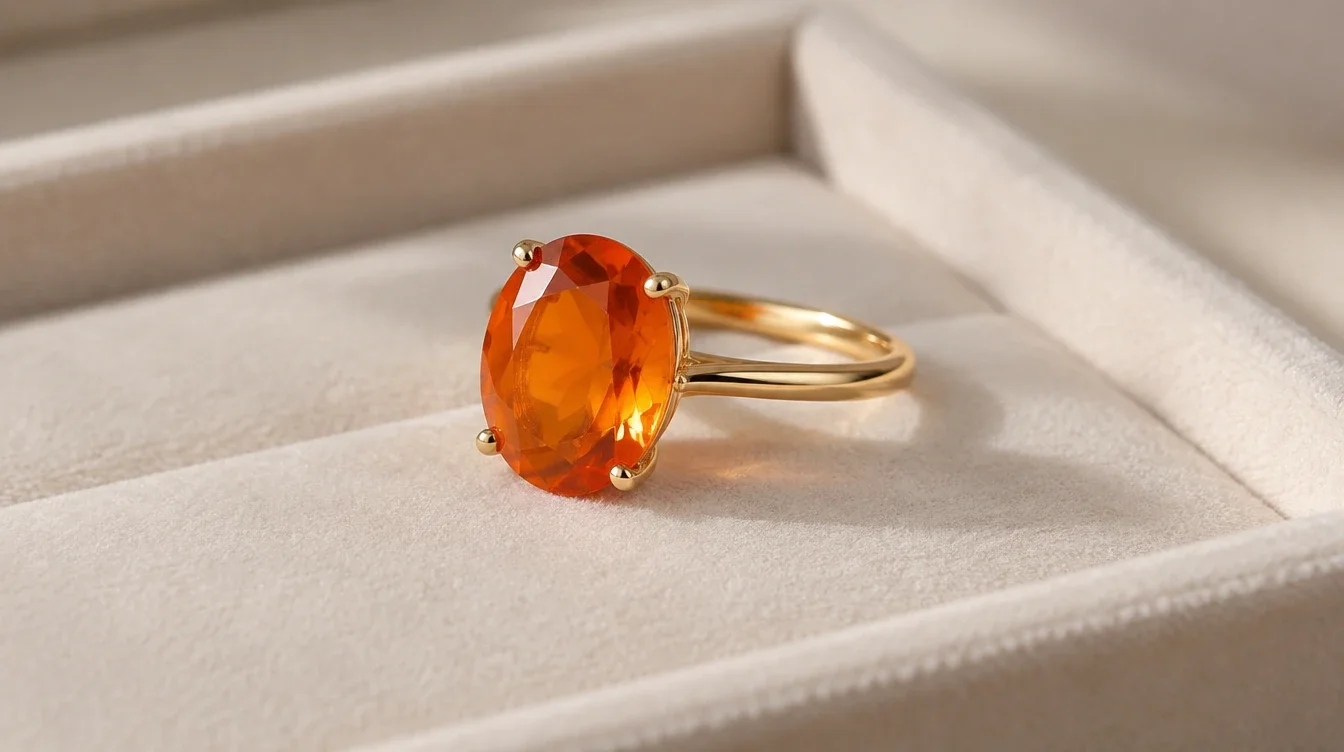
A fire opal without play of color can be genuine. Warm body color defines the variety, not rainbow flashes. Many lack the ordered structure inside needed to make those flashes. Others show both effects. The Smithsonian explains this distinction. Missing flashes alone do not mean a stone is flawed. They cannot prove its identity either.
What the word fire actually describes
Fire describes the yellow, orange, or red body color of fire opal, rather than a promise of shifting rainbow flashes. GIA describes fire opal by these warm hues and notes that it might show play of color. That difference shapes what buyers should expect.
Think of body color as the stone's base hue. An orange gem may look brighter or darker as you turn it. Yet that change alone is not the green, blue, or red flashing called play of color.
Both effects can exist in one stone. Neither needs to replace the other.
Warm color and rainbow flashes come from different causes
The Smithsonian's fire opal description links its warm body color to iron oxide inclusions. Rainbow flashes come from tiny silica spheres arranged in order. One effect comes from what is within the gem. The other comes from how its structure works with light.
Ask the seller to describe each effect on its own. “Orange body color with green flashes” tells you far more than “fiery opal.” Clear wording helps you judge whether the stone suits your taste.
Keeping those effects apart helps explain why some stones never flash.
Why the internal structure matters more than the name
Opal needs the right ordered structure inside to show play of color. The Smithsonian explains that orderly silica spheres act like a diffraction grating, splitting white light into colors. Having silica is not enough. How it is arranged matters.
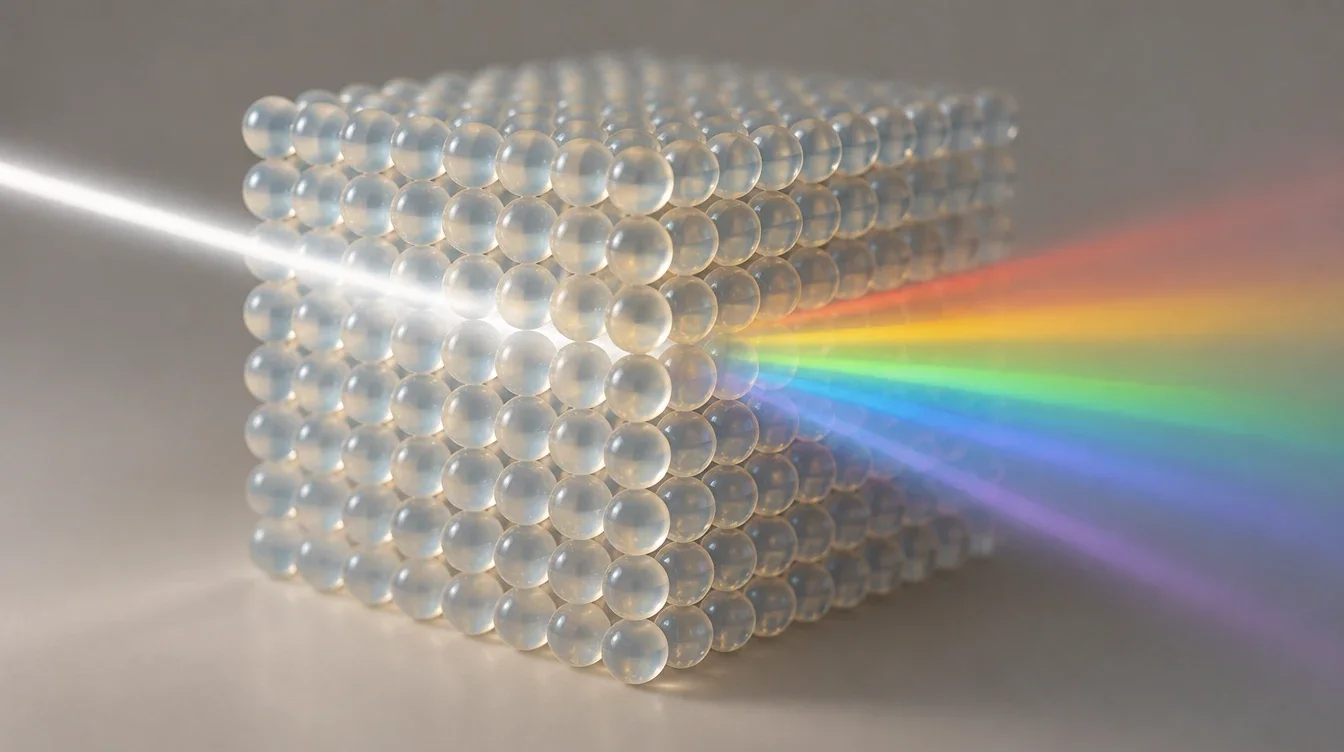
That explains what causes play of color in opal. Light works with repeating structures inside the stone. Their size and spacing affect which colors can appear. The angle you view from affects what reaches your eye.
Why some opals never produce rainbow flashes
Opal Auctions describes the structural difference between orderly silica arrangements in precious opal and irregular arrangements in common opal. A stone can still be opal without the structure needed for rainbow flashes.
A fire opal without play of color need not lack something that will develop later. Its look may reflect how it formed. Hoping rainbow flashes will appear goes against the evidence you have.
No sales phrase changes that difference. “Brilliant,” “glowing,” and “fiery” may describe a pleasing look. None clearly says that the gem shows play.
Why some fire opals show both effects
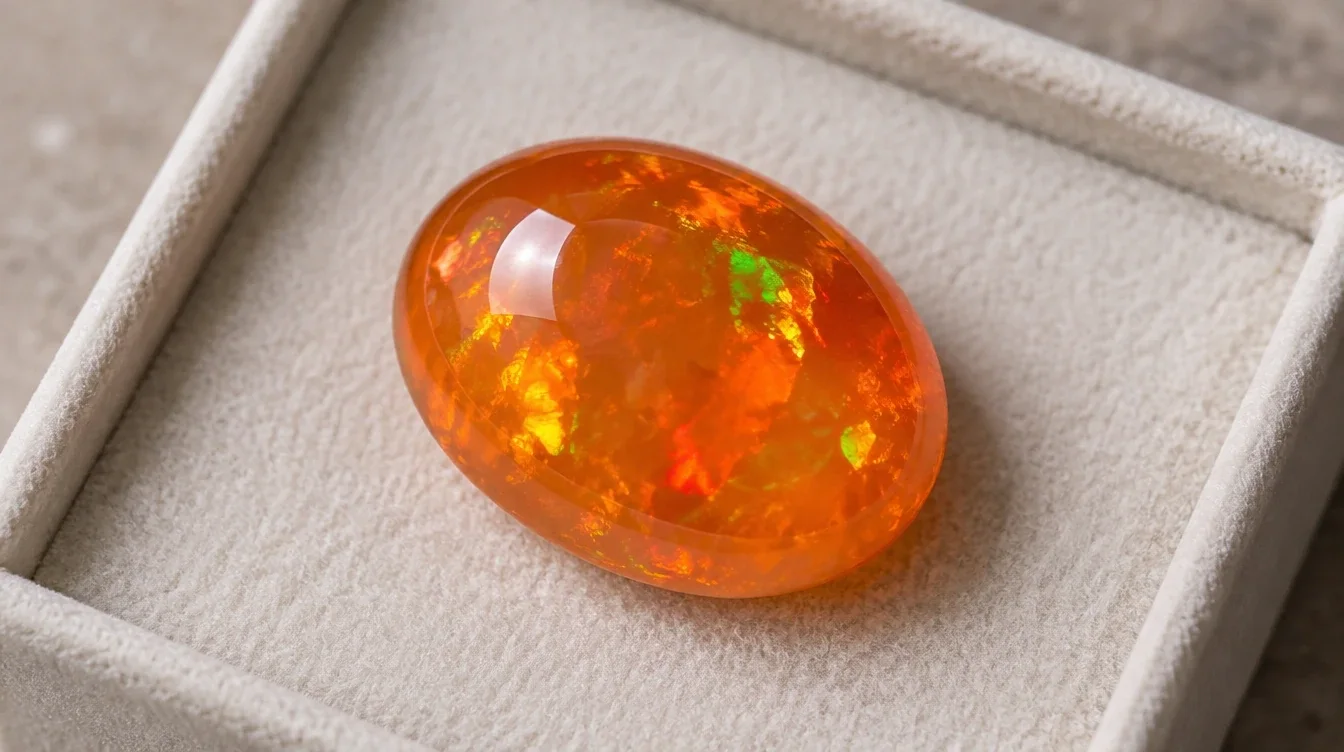
A warm body hue does not prevent play of color. The Smithsonian specimen combines an orange body with green, yellow, orange, and red flashes. It shows both effects in one gem.
There is no need to choose between “real fire opal” and “opal with flashes.” Both can describe the same stone. That helps explain the labels used in listings.
How fire opal and precious opal labels overlap
Fire opal names a color variety. Precious opal is opal that shows play of color. GemSelect explains that precious fire opal combines both. These are not two mutually exclusive groups.
When comparing fire opal vs precious opal, check what each name means. A yellow or orange stone can show strong flashes. Another may have clear, warm color with no rainbow effect.
“Common opal” means opal without play. That does not mean every such stone looks plain or belongs in cheap jewelry. The term is not a full quality grade.
Translate the label into an appearance you want
Decide what you want to see. Is it a warm orange gem, moving rainbow flashes, or both? Those are three different tastes. Knowing yours helps you rule out stones before comparing prices.
If you love a clear orange look, you may prefer fire opal without play of color. If green and blue flashes matter most, ask to see them in the actual piece. Neither choice needs defending.
A listing may leave you asking “does fire opal have play of color,” but you need an answer about that stone. A reply about the whole variety is not enough. Next, check how the seller shows the stone in motion.
What photos and videos can actually tell you
Photos and videos help you judge how an opal looks. One image cannot show every angle at which it flashes. GIA notes that play changes with viewing angle and lighting. A still photo shows only one mix of light and angle.
Ask for a slow turn under ordinary light
Ask for a video of the actual item turning slowly. Request a view from above and a gentle tilt each way. Include normal indoor light, not just the brightest display lamp.
Watch for colored patches within the gem. Note how much of the face they cover. Check how often you can see them as it turns. A brief flash at one steep angle may be lovely. But that differs from color seen during normal wear.
Do not treat a video as a laboratory test. It shows you what look to expect. It does not prove origin, treatment, or identity.
When the listing promises no rainbow flashes
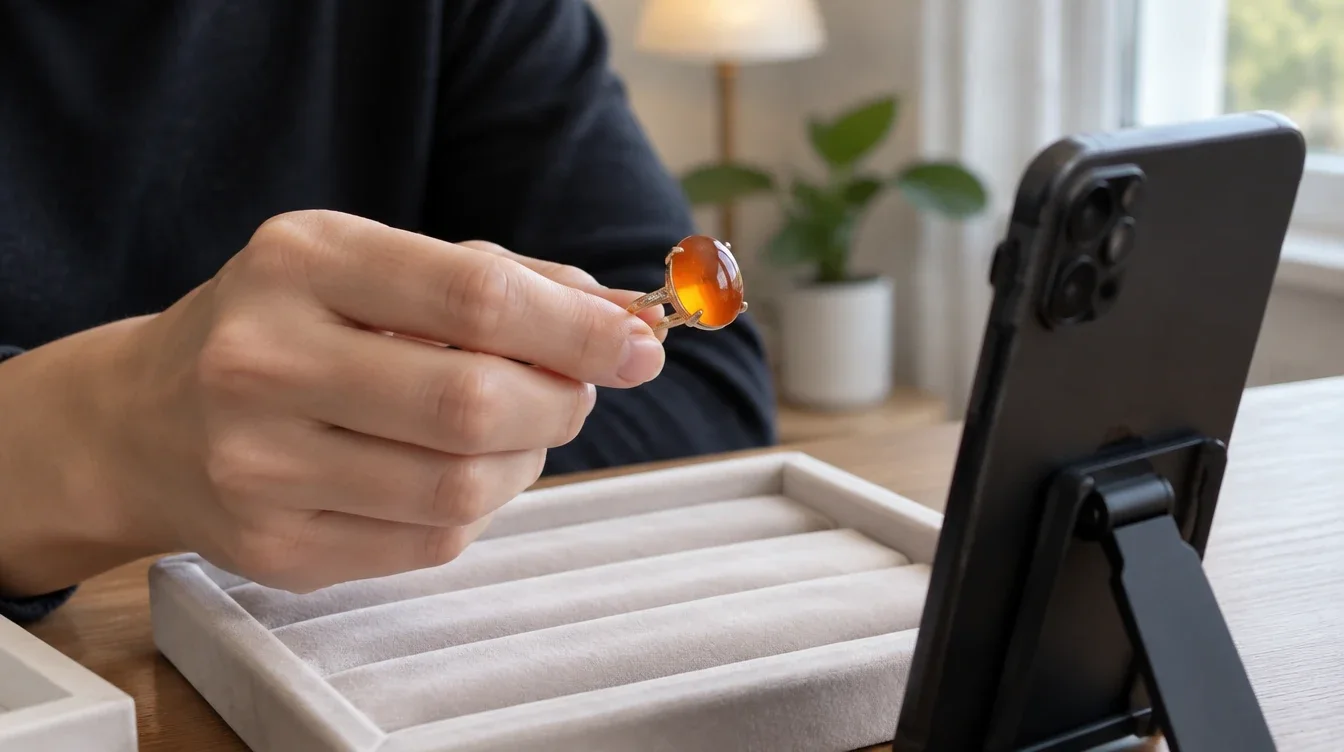
For fire opal without play of color, use the video to assess the warmth and brightness you are buying. Does the orange still appeal outside the close view? Can you enjoy the stone without searching for a rainbow?
If the images seem heavily changed, ask for an unedited view. Keep the written description. Check the return terms before you pay.
When the listing promises visible play
Ask the seller to point out the flashes. Have them show the angles where those flashes appear. Think about how you will wear the piece. A pendant seen mostly from the front should please you from that view.
Once you know the look, judge its quality. Flashes alone should not give a stone an edge.
How to judge fire opal without play of color fairly
Judge a nonflashing fire opal by its body color, clarity, transparency, cut, and condition rather than a rainbow effect it never promised. GemSelect uses these factors in its quality discussion. Treatment, size, and origin also matter.
Start with the color you can enjoy
Good fire opal quality is not just about the reddest stone. GemSelect notes that a bright, well cut orange gem can compare well with a duller red one. Color names alone leave too much out.
Look for a shade you enjoy across the visible face. Check whether it seems too dark indoors or too pale for your taste. Neither a seller's favorite hue nor a dramatic photo should make that decision for you.
Separate transparency from flashes
A transparent stone need not show rainbow play. GIA describes transparent fire opals that may or may not show it. Seeing through a gem answers a different question.
Some buyers like clear depth. Others prefer a softer look. Compare stones that look alike before judging value.
Do not let missing flashes distract from condition
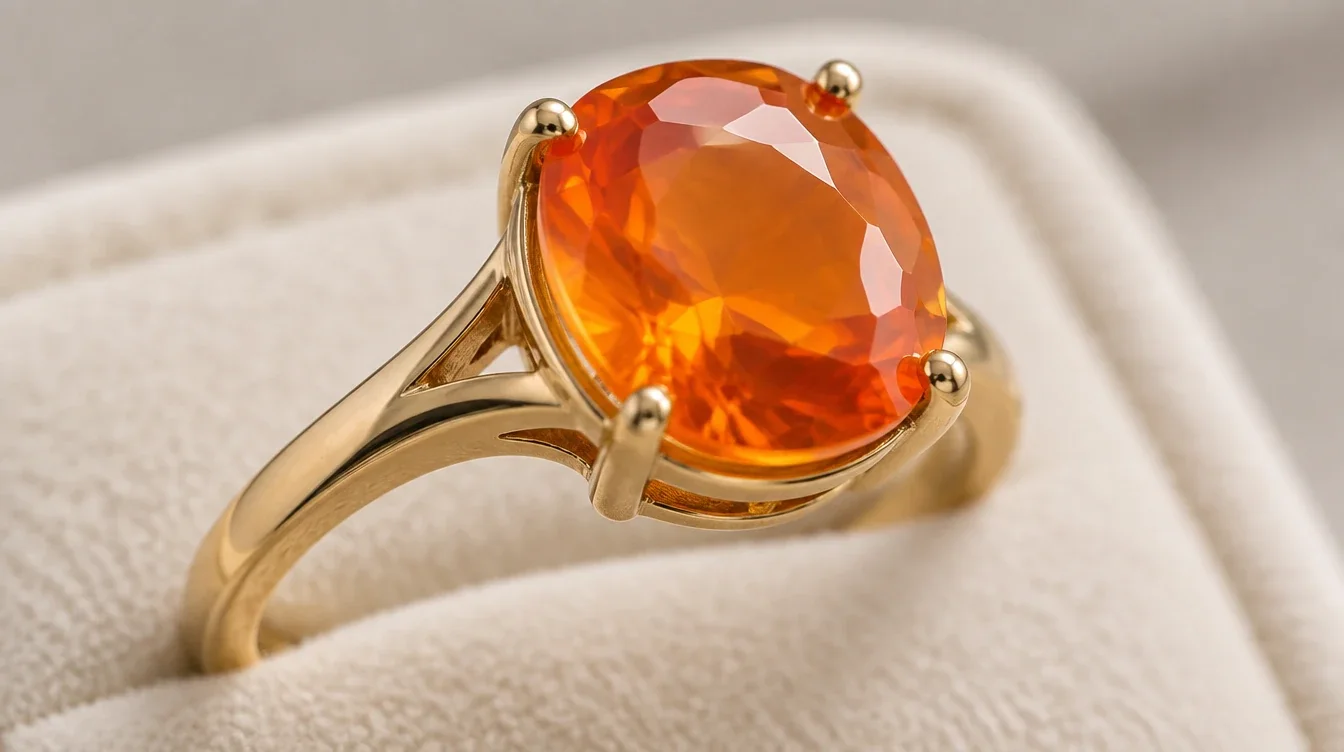
GIA checks opals for cracks called crazing, pits, and inclusions. It checks polish too. Its evaluation guidance weighs these along with color and cut. Missing rainbow play does not replace a check of the stone's condition.
Ask the seller about visible marks and request close views. Move past broad labels to the details behind the asking price.
What really changes the buying decision
Play of color can add value. But having it does not make one fire opal better than another. GemSelect compares vivid nonflashing material with dull stones showing weak play. The stone's whole look still matters.
When discussing fire opal value, ask what supports the price. A useful reply should describe that gem. It should not rely on “rare,” “Mexican,” or “red.” Ask for clear details about known treatment and any records that support them.
An illustrative comparison between two stones
Imagine two orange gems offered in similar settings. This is a buying example, not a customer case or price comparison. Assume both have equally sound identity and treatment disclosures. Their condition is equally good.
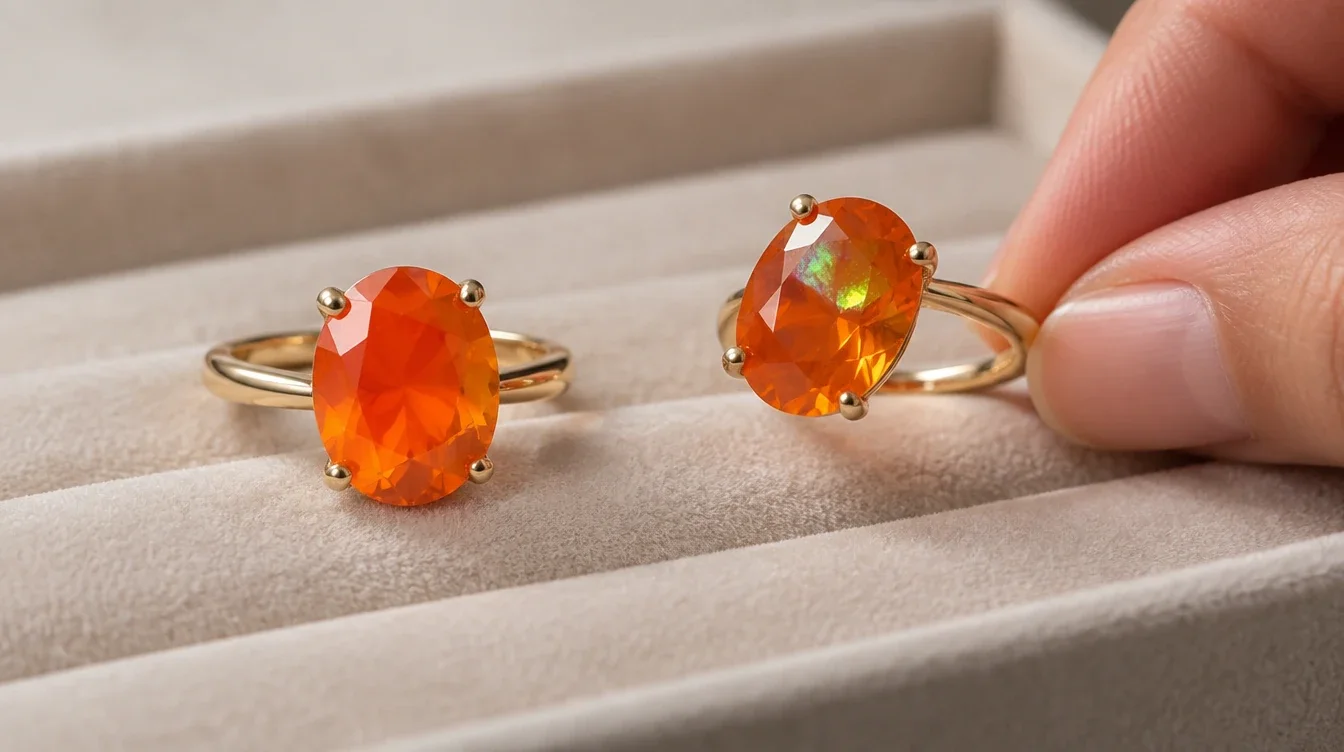
Stone A has clear, bright orange color and no rainbow flashes. Stone B has a less pleasing body hue. It shows a small green flash when tilted sharply.
Suppose you want an orange gem that looks good from above. Stone A may suit you better. A buyer drawn to the green flash might choose Stone B. They would need to accept its limited viewing angle.
Neither result follows from the label alone.
Compare fire opal vs precious opal on equal terms. Check body hue and visible play in both stones. Compare their condition and asking price too. Otherwise, you risk paying for a feature you barely notice.
Choose fire opal without play of color because you like its look. Do not expect it to act like another stone. Before choosing, settle a few common questions.
Questions buyers ask before choosing
Good fire opal questions keep two things apart. One is what the gem is; the other is how it looks. Viewing a stone does not prove it is genuine.
Does fire opal have play of color?
Some does, but not all, as GIA's fire opal description confirms. Ask whether that stone shows flashes and from which views. Then compare it with another piece.
What causes play of color in opal?
Ordered silica structures create the effect through diffraction of light, as the Smithsonian explains. Without the right arrangement, opal may have a pleasing body color. It may still show no rainbow play.
Can a nonflashing fire opal still be valuable?
Yes, fire opal value can come from desirable body color, transparency, clarity, and cutting rather than rainbow flashes. GemSelect makes this distinction. It also weighs condition, treatment, and other factors.
How can I tell whether missing flashes are normal?
Ask whether the stone has ever shown play. Find out how the seller describes its usual look. A gem that used to flash but now looks different raises a separate question from one that never did.
Those answers bring you back to the look you want each day.
Buy the appearance you actually want
Choose a fire opal whose stated features match the look you enjoy. Warm body color can be enough. Seek rainbow flashes if they are why you want an opal.
For a final fire opal quality check, read the description. Compare it with the photos and the seller's answers. Ask to see the actual stone move in the light. Check the claims about color, condition, and any known treatment.
If a listing promises warm color alone, judge that color. If it promises flashes, ask to see them clearly. Check them from useful angles before you pay.
You do not need to reject fire opal without play of color simply because it fails to match the usual picture of opal. Nor should you settle for it if shifting flashes are what you truly want.
Before buying, ask your jeweler to show both looks side by side. Explain which effect matters most and compare the actual stones. Choose the one you would still love without the sales description.