Diamond girdle grades explained (When the edge should change your mind)

A girdle grade should change your buying decision when it points to a fragile spot or weight you cannot see from above. With diamond girdle grades explained, the next step is to locate the thin or thick area, not reject a stone from one word on its report. An extremely thin edge deserves special care, while an unusually thick edge calls for a size comparison.
What does a girdle grade tell you before you buy?
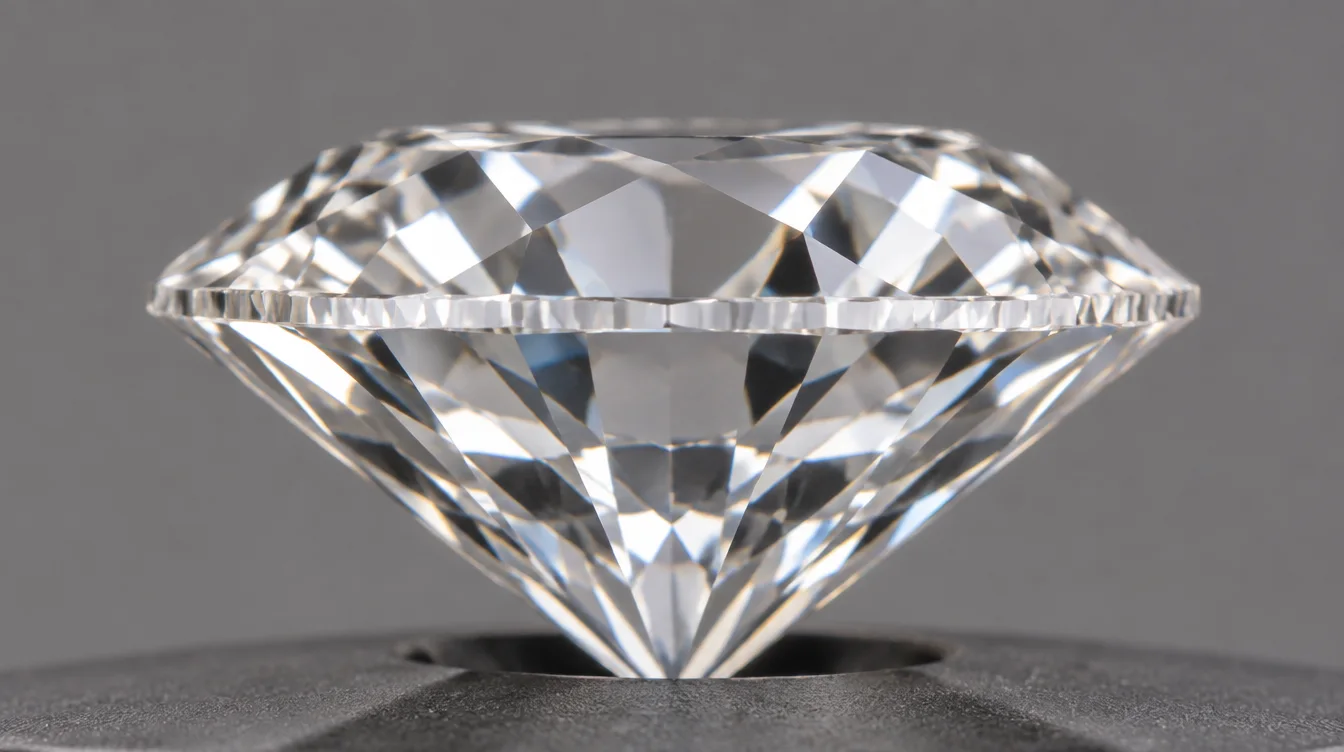
A girdle grade describes the diamond’s outer edge, where the crown meets the pavilion. That edge forms the outline and sits where a setting holds the stone. A laboratory report may give one grade or a range, such as Thin to Slightly Thick. That is because thickness can vary around the stone. The range names the thinnest and thickest points, not the size of every spot between them. Brilliance’s guide to girdle reporting explains how that range appears on a report.
That matters when you compare loose diamonds. A report reading Very Thin to Thick leaves two questions: Where is the very thin area? How much of the edge is thick? The report tells you to inspect the stone. It does not show whether the thin spot lies at an exposed point. Nor does it show how much of the outline is thick.
The girdle’s finish is a separate detail. A girdle may be faceted, polished, or bruted, which describes its surface rather than its thickness. Keep those two report entries apart. For this purchase decision, the location and extent of a thin or thick area tell you more than the finish label. First, though, you need a sensible way to read the thickness scale.
Diamond girdle grades explained from thin to thick
Diamond girdle grades run from Extremely Thin to Extremely Thick. The middle grades are not strict pass or fail lines. Use this diamond girdle thickness chart to decide what needs a closer look. Either extreme calls for more evidence. A middle grade usually leaves you more time to judge the diamond’s full appearance.
Extremely Thin and Very Thin
Extremely Thin is the grade most likely to alter a purchase decision. A very narrow edge is more exposed to chipping, especially during setting or after a sharp knock. Very Thin deserves a closer look, but it is not the same grade. Ask where the narrow area falls and whether the jeweler can inspect that section before you commit. Lumera’s diamond girdle guide makes the same distinction in its advice for rings and pointed shapes.
An extremely thin girdle diamond is not always damaged. The risk lies at its narrowest point. If that point is on a corner or tip, another loose stone may be the simpler choice. The same is true if no one can confirm where it lies.
Thin, Medium, and Slightly Thick
Thin, Medium, and Slightly Thick are useful starting grades for comparison. None promises beauty on its own. Still, a diamond in this part of the scale usually calls for less girdle investigation than one at an extreme. A range such as Thin to Slightly Thick can be ordinary variation, not evidence that something went wrong in cutting.
There is no single ideal diamond girdle thickness for every shape and use. For a round diamond, a modest middle range is a practical start. For a stone with points or corners, check the grade at those spots. It matters more than a tidy overall label.
Thick, Very Thick, and Extremely Thick
Thick is a prompt to compare measurements, not a reason to walk away. Very Thick and Extremely Thick call for closer study of face up size, since extra weight can sit at the edge without making the diamond look wider. A thick area may also be local rather than continuous. The report range alone cannot tell you how much weight is held there.
This is why a diamond girdle thickness chart should guide your next question, not make the choice for you. Once a grade catches your eye, find out where that part of the edge actually sits.
Why can one localized thin spot matter more than the full range?
A localized thin spot matters most when it falls where the outline is already vulnerable or likely to take pressure. Picture two loose diamonds whose reports both read Very Thin to Medium. One has a short very thin area along a rounded side. The other has it at a sharp corner. The words match, but the decision need not.
Ask for a magnified edge view. Then find the thin area on the stone’s outline. If the seller has only a rotating face view, ask for a side view too. The face view shows shape and appearance. The side view may show the girdle more clearly. If a spot remains unclear, ask a jeweler to inspect it.
Do not assume every wide range signals poor symmetry. A girdle can vary around a well cut diamond, and the range reports endpoints rather than a map. What matters to you is whether the thin end is isolated, where it lies, and whether the stone shows a nick there. Those are questions to settle while the diamond is still loose.
Suppose an oval and a princess cut both read Very Thin to Medium. Do not judge them the same way without seeing their edges. Each outline has different spots to check. Shape belongs in the decision.
How should diamond shape change your edge check?
Shape matters because points and corners need more attention than rounded edges. A round diamond has no sharp corner. Still, inspect any extremely thin section. Princess cuts have corners that can be more prone to chipping. Give a Very Thin grade at a corner more weight in your choice. Lumera specifically advises caution with Extremely Thin and Very Thin princess cut girdles.
For pear and marquise shapes, ask the jeweler to inspect the tips closely. With an emerald cut, look at each corner rather than treating the long straight sides as the whole story. These checks do not mean every pointed diamond is risky. They mean the location of the thinnest section matters more than the report’s range by itself.
Your plans for wearing the stone may also affect your choice. A ring’s center stone may face more contact than one in an earring or pendant, as Lumera’s guide notes. A pendant does not make a risky edge safe. Still, two buyers may judge the same loose diamond differently.
When comparing thin vs thick diamond girdle issues, include shape in your review. Thin spots raise a durability question. Thick areas raise a question about visible size for the weight.
When does a thick girdle make a diamond a poor buy?
A thick girdle can be a poor buy if it adds weight but not the face up size or look you want. Carat measures weight, not visible width. Before paying more for a heavier stone, compare its dimensions with similar diamonds. Use the same shape and similar weight. If possible, view them from above at the same scale.
Here is a useful, limited illustration. Beyond4Cs gives two one carat round diamond examples: one with an extremely thick girdle measures 6.00 by 6.06 millimeters across, while one with a medium girdle measures 6.49 by 6.47 millimeters. Their average widths are about 6.03 and 6.48 millimeters. That is a difference of about 0.45 millimeter, or roughly 7 percent relative to the smaller width.
Those are two examples, not a controlled test of girdle thickness alone. Their other proportions also differ. The calculation shows why you should check millimeter measurements instead of treating equal carat weights as equal visible size. It does not tell you what every Very Thick diamond will look like.
So, is a thick girdle bad on a diamond? Not by itself. A Thick stone may still look lively and compare well on visible size. If its proportions please you, the label may not change your choice. If an Extremely Thick stone looks smaller than a comparable option, ask whether its extra weight is worth buying.
Face up size is also affected by how a finished ring looks on the hand. If that is part of your concern, the related guide on why a diamond can look smaller after setting covers the mounting’s visual effect. For a loose diamond, check its measurements first. Then compare the stones themselves.
How do you compare two loose diamonds fairly?
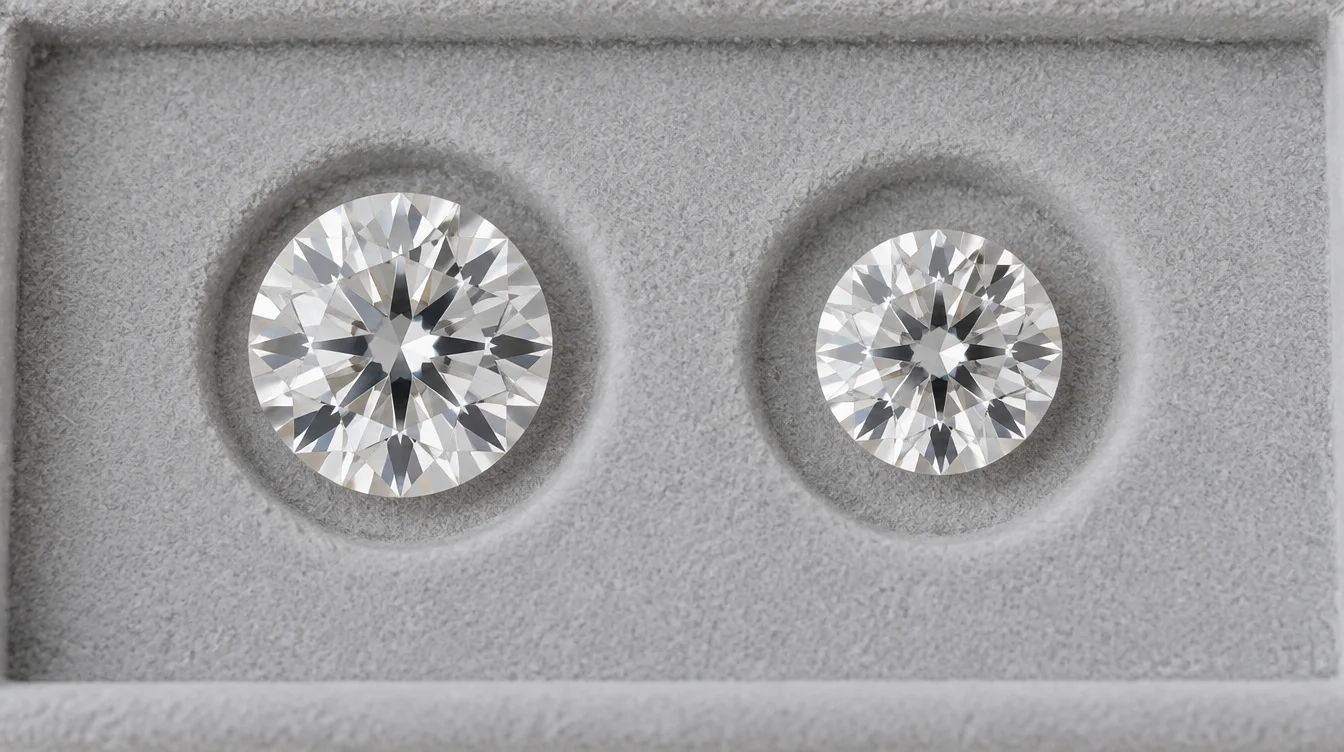
Compare loose diamonds by shape, weight, dimensions, edge condition, and appearance under similar viewing conditions. Start with the report, but do not stop there. Put each diamond’s girdle range beside its length and width in millimeters. For rounds, compare diameter; for elongated shapes, compare both length and width.
Next, inspect the area that concerns you. For a stone graded Extremely Thin to Medium, ask to see its thinnest spot under magnification. For one graded Medium to Very Thick, compare its outline with a similar stone that holds less weight at the girdle. Ask for matching views if photos differ in zoom or light. Otherwise, size may be hard to judge.
Judge both stones by the same standard. An extremely thin girdle diamond needs an edge check, even if it looks large. A diamond with a thick edge needs a size and appearance check. That holds even if its overall cut grade is strong. Other favorable grades do not answer these edge questions.
If you cannot inspect in person, ask the seller what views and return terms are available before payment. The aim is not to find a diamond with a perfect sounding girdle label. It is to understand the tradeoff you are accepting. That leads to a short, useful conversation with the jeweler.
What should you ask a jeweler before committing?
Ask a jeweler to locate the reported extreme and explain what they can see there. “Where is the thinnest point?” is better than “Is this girdle okay?” Follow with “Is that point on a tip, corner, or rounded side?” and “Can you see a nick or chip under magnification?” You are asking for an observation about this stone, not a promise that no diamond will ever chip.
For a thick range, ask, “How much of the edge carries that grade?” Compare its millimeter dimensions with a diamond of the same shape and similar weight. Ask to see both from above at the same scale. If the jeweler says the thick girdle has no visible effect, that view can help you judge the claim.
Finally, ask what the report leaves out. Can the jeweler show the whole edge, not just a face view? Will someone inspect the loose stone with you before setting? What happens if its condition differs from the listing on arrival? Clear answers help you judge a borderline grade. Vague reassurance is a reason to slow down.
Your ideal diamond girdle thickness need not be one word on a report. Look for an edge you can inspect. Its dimensions and appearance should also make sense for the price you agree to pay. These common questions put that test to work.
Frequently asked questions about girdle grades
Diamond girdle grades work best as prompts for specific checks. These answers address questions that arise when two loose stones look equally appealing.
What is the safest girdle grade to look for?
For a loose diamond, Thin through Slightly Thick is a fair starting range. It does not guarantee safety or beauty. Check where the thinnest spot lies, especially on a shape with points or corners.
Can a diamond with a Very Thin girdle be a good choice?
Yes. A Very Thin grade does not rule out a diamond on its own. Check the spot’s location and visible condition, along with the stone’s shape and intended use. A thin corner calls for more caution than a rounded side.
Does an Extremely Thick girdle always make a diamond look small?
No. Extra weight at the edge can reduce visible spread. The result also depends on the diamond’s full proportions. Compare millimeter dimensions and face up views with stones of similar shape and carat weight.
How can I tell whether a thick girdle is worth accepting?
Ask whether the diamond looks as large and appealing as others at a similar weight and price. If it does, a Thick grade need not end the discussion. If it looks smaller, find out why before you buy.
Choose the diamond you can judge, not just the grade you like
A girdle grade earns your attention when it points to a thin spot in a vulnerable place or a thick edge that may hold unseen weight. Neither question is answered by the label alone. Ask to see the edge, compare the measurements, and let the stone’s condition and face up appearance decide whether the tradeoff works for you.
Before you commit, ask the jeweler to show you the reported extreme on the loose diamond. If you cannot locate it or compare the stone fairly, keep looking. Another diamond may give you a clearer answer.