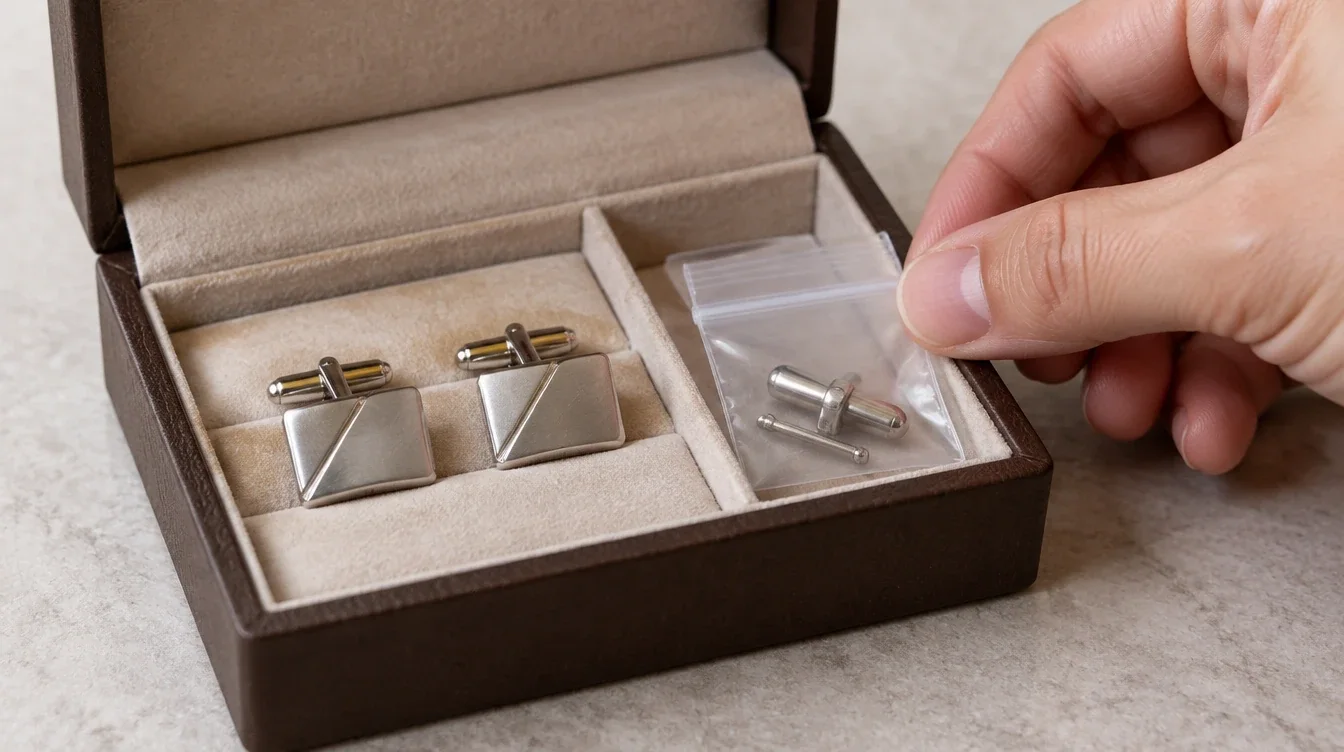
Why cufflink swivel repair starts with the tiny pin
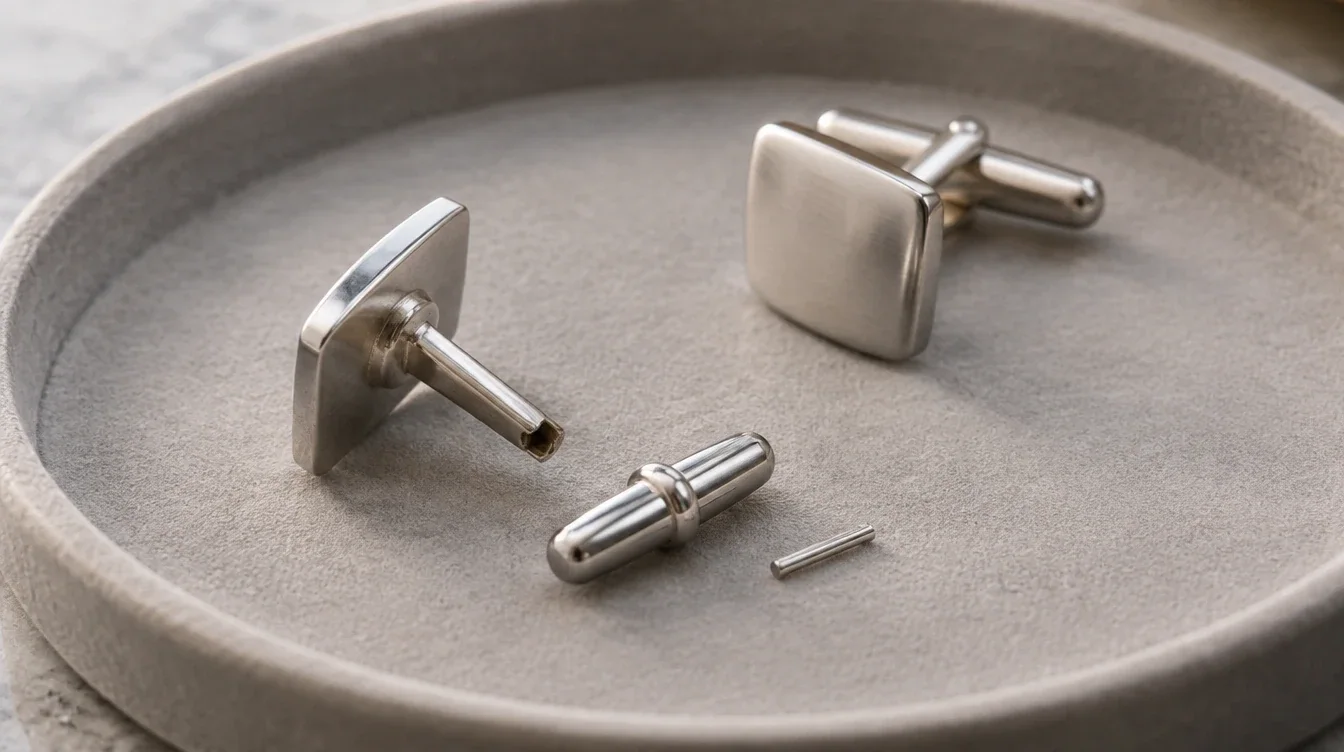
Cufflink swivel repair starts with a check of the pin, spring, and fitting. A worn pin may be replaceable. A spring that has lost tension may call for a new swivel fitting. Stop wearing the cufflink if its bar could fall off. Save any loose pieces for the jeweler.
Check what actually broke before choosing a repair
A swivel bar should turn, then stay in place across the shirt cuff. Hold the decorative front still and move the bar gently. Does it wobble at its pivot, turn without resistance, or come off? Each sign points to a different problem.
If the bar wobbles or falls off
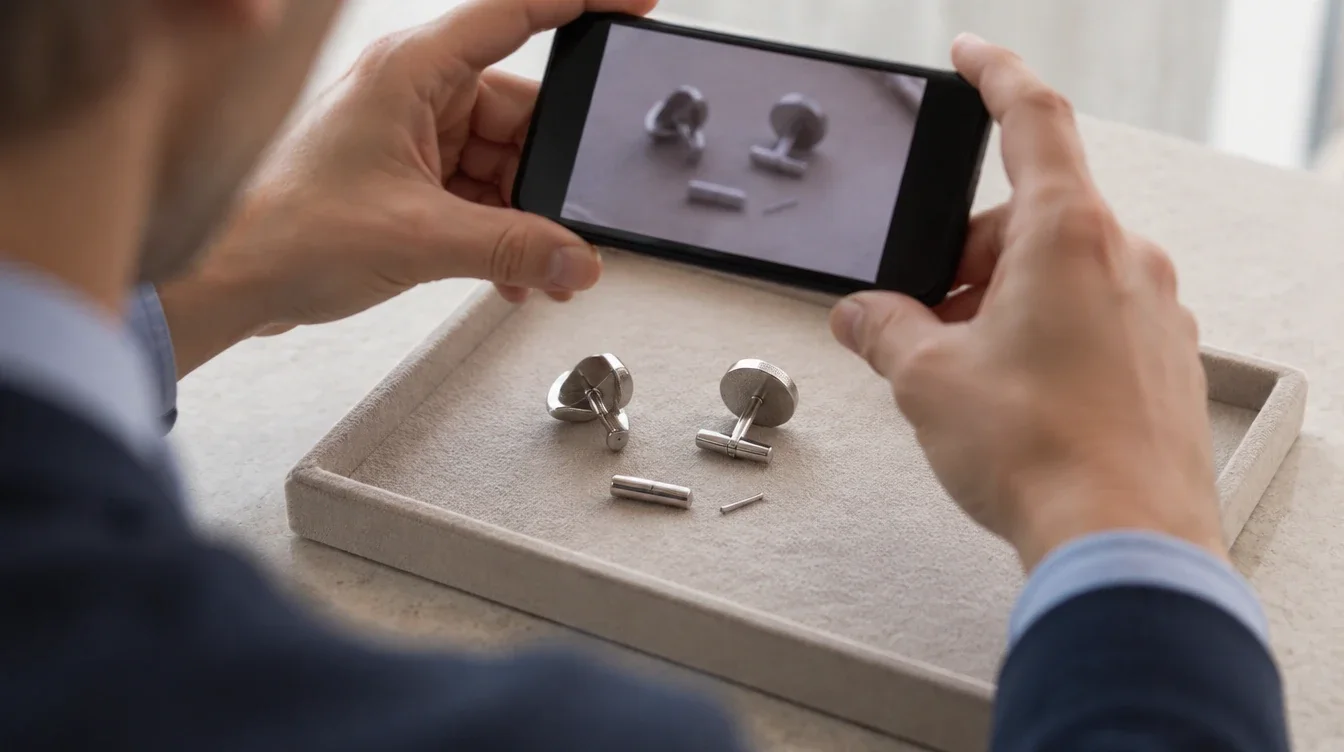
Look for the small pin that holds the rotating arm. A repair provider notes that a worn rivet can sometimes be replaced if the spring inside is sound. If you found a loose pin, put it in a small bag rather than pushing it back in and wearing the cufflink again. Maker Mends describes the pin and spring repairs here.
If the bar turns but will not stay put
Weak spring tension is a different fault. That same repair provider says the whole swivel fitting needs replacement when the spring loses tension. Check the other cufflink too. A new fitting may not match its older partner exactly. Once you know the fault, you can narrow down the repair choices.
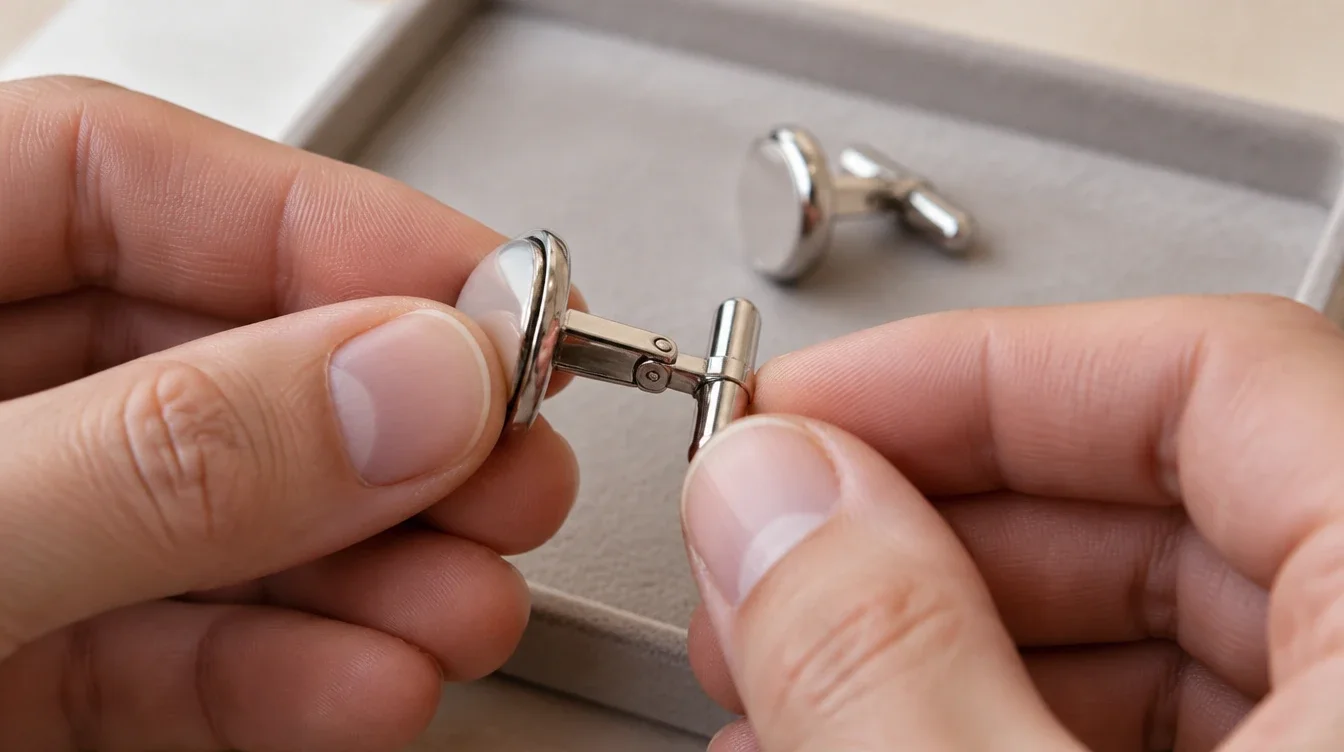
When does cufflink swivel repair mean replacing the back?
A cufflink back replacement makes sense when the spring has failed. It may also make sense if the fitting is too worn to hold the bar. Replacing a worn pin is less work than replacing the full fitting. Ask which part has failed before approving either job.
There is also a visual choice. A jeweler may replace one back and leave the pair slightly mismatched, or replace both for a closer match. Maker Mends notes that matching an original swivel fitting can be difficult. That tradeoff matters most when the backs are visible or the pair has sentimental value.
A cufflink back replacement is not the answer if the entire fitting has come away from the decorative face. That calls for an assessment of the attachment, not just a new rotating bar. Bring both cufflinks so the jeweler can compare their build before ordering parts.
What can you safely check at home?
If you are searching for how to fix broken cufflinks yourself, start with inspection, not force. Work over a tray so a loose pin cannot roll away. Take clear photos of the front, back, and damaged joint, then keep any detached pieces together.
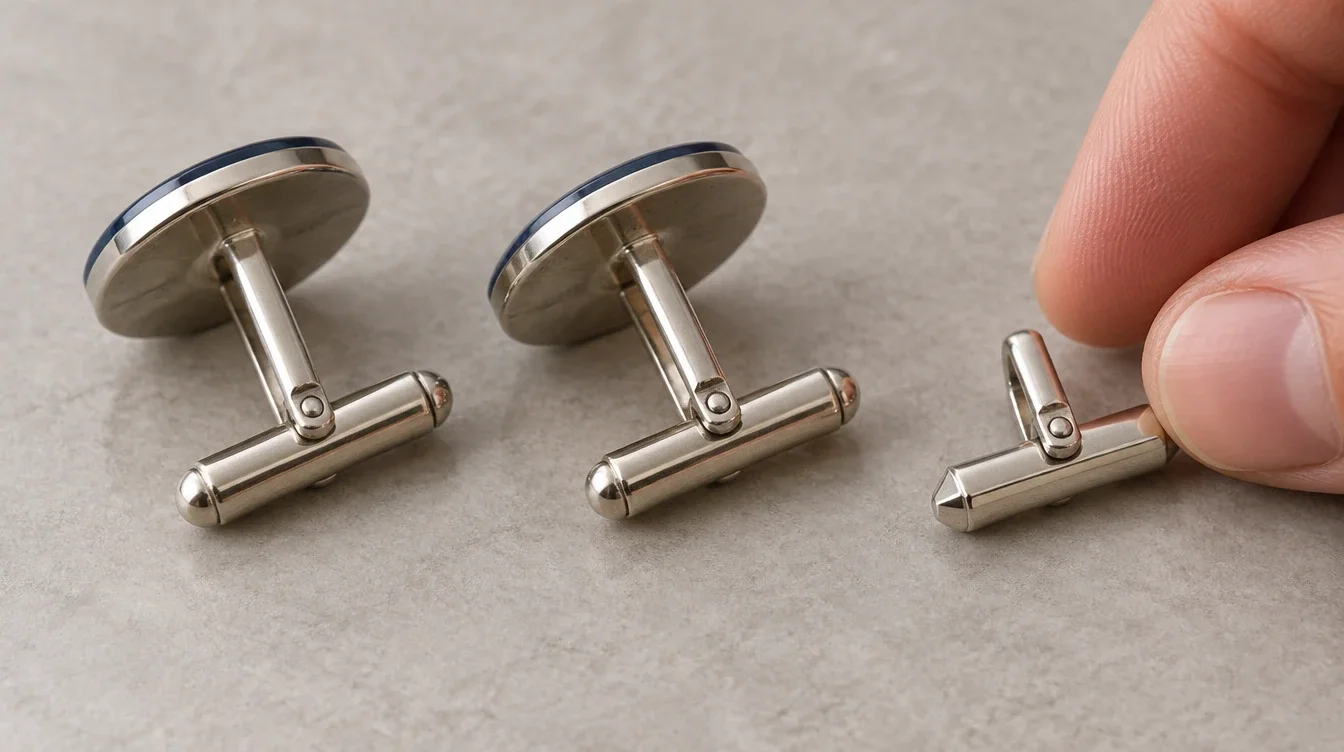
Do not bend the bar until it feels tight. A loose pivot and a weak spring are not the same fault, and bending the arm will not replace a missing pin. Avoid glue around the swivel as well. It can block the moving joint without restoring a secure hold.
Some cufflink repair parts are sold separately, but a part that looks close in a photo may not fit the original fitting. Compare both cufflinks and ask a jeweler to check the joint if you cannot identify the fault. That is a safer next step than buying a back on appearance alone.
How do you choose a repair that suits the pair?
A good cufflink repair service should name the failed part. It should also explain how the finished pair will look. Send photos of both backs. Say if the pin is missing, the bar is loose, or the spring no longer holds. For an older or valuable pair, ask about the least disruptive repair first.
If you want to know how to fix a loose cufflink, show where it moves. A bar that rocks at its pivot may need a pin repair. A fitting that shifts against the decorative face needs a different assessment. Ask if the work will keep the original fitting and whether the pair will still match.
Request a quote after that inspection, not before it. The cost depends on the failed part, the fitting, and whether one or both backs need work. Clear answers to those points make the repair easier to approve.
Common questions about broken swivel cufflinks
These quick checks can help you describe the fault, but they cannot replace an inspection of the actual fitting.
Can a jeweler replace just the swivel pin?
Sometimes. A worn rivet may be replaceable when the spring is still sound, according to Maker Mends. Ask the jeweler to test the spring before choosing a pin repair.
How do I know if the spring has failed?
The bar may rotate but fail to stay in its holding position. Stop wearing the cufflink if it can slip free, then have the fitting checked.
Why might a new back look different?
Original fittings are not always easy to match. You can ask about replacing both backs if an even looking pair matters more than keeping one original fitting.
What should I bring to a cufflink repair service?
Bring both cufflinks and every loose piece you found. Photos taken before anything detached can also help show where the bar sat.
Keep the pair, fix the right part
The useful question is not simply how to fix broken cufflinks. It is which part stopped doing its job. Check the pivot, spring, and attachment to the face, then ask for a repair plan that names the failed part. If you are unsure how to fix a loose cufflink, take both pieces to a jeweler before the bar goes missing.