The cuff bracelet vs bangle mistake that starts with the opening
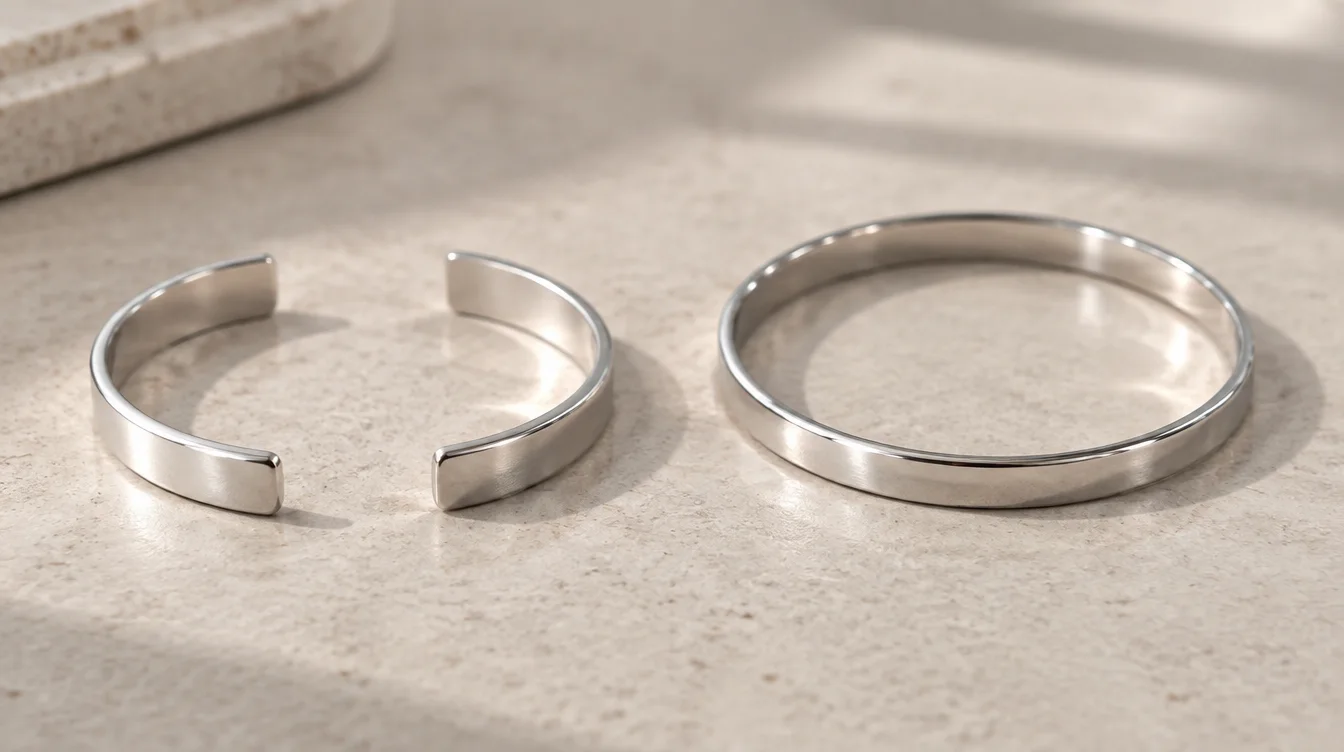
A cuff bracelet has an opening that lets it go around your wrist. A traditional bangle is a closed ring that slides over your hand. For the cuff bracelet vs bangle choice, start with how each goes on, not its width. Some bangles have hinges, and an open cuff is not always safe to bend for a better fit.
What does cuff bracelet meaning tell you?
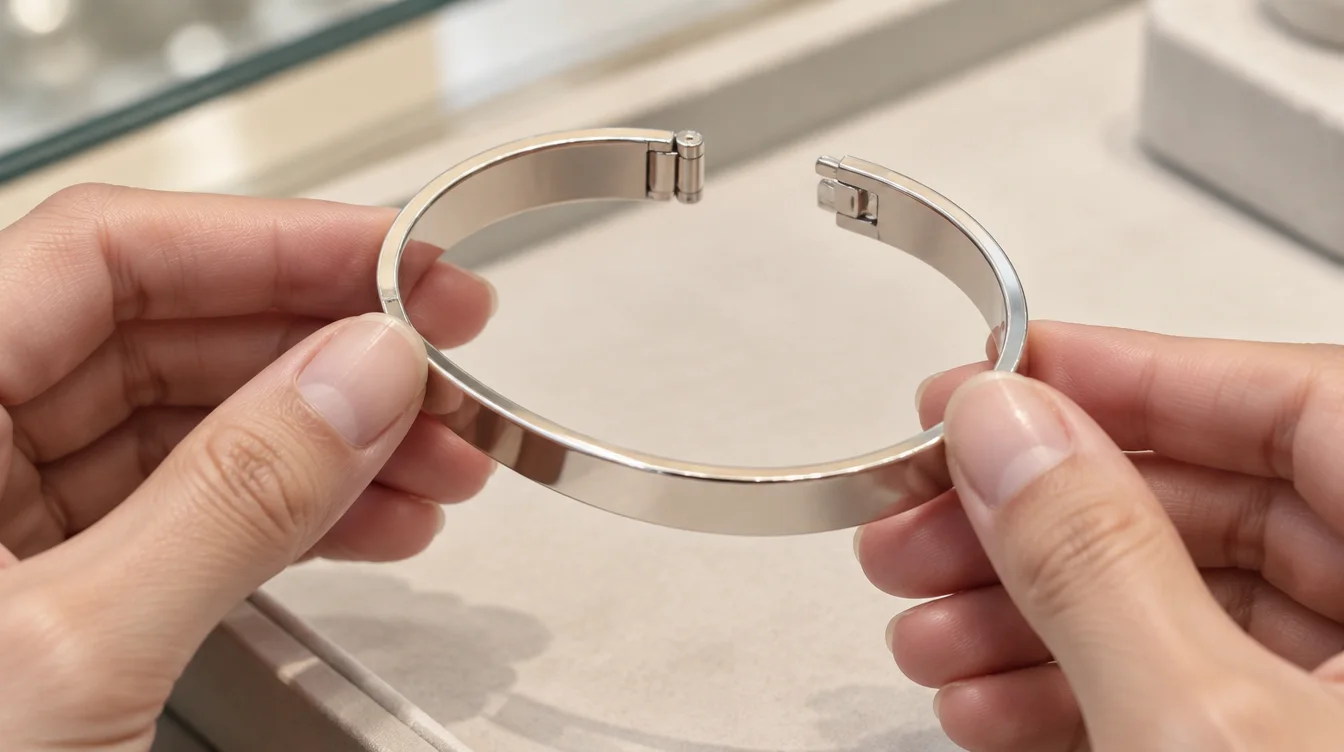
The cuff bracelet meaning starts with a band that wraps around the wrist rather than a chain of links. A metal cuff usually holds a rigid or semi rigid shape and leaves a gap between its ends. That gap lets you put it on from the side of the wrist. A narrow cuff can look much like a slim bangle from the front, so check the back before you decide what it is.
Width alone does not define a cuff. Some cuffs are slim enough to sit beside a watch; others cover much more of the wrist. Leather cuffs may also use snaps or buckles instead of an open metal gap. Trendhim’s comparison describes both open metal cuffs and closed leather cuffs, which shows why the word needs context.
For a first purchase, look at the whole piece, not just its name. On a metal cuff, the opening is the quickest clue. If the label is unclear, check how the piece goes on. Then compare it with a bangle.
Where does the cuff bracelet vs bangle difference show up?
The main difference is the route onto your wrist. A traditional bangle is a continuous, rigid ring, so it must pass over your hand. An open metal cuff passes around the side of your wrist instead. JBR Jeweler’s comparison describes that open cuff and closed bangle distinction, as well as the closer fit cuffs often provide.
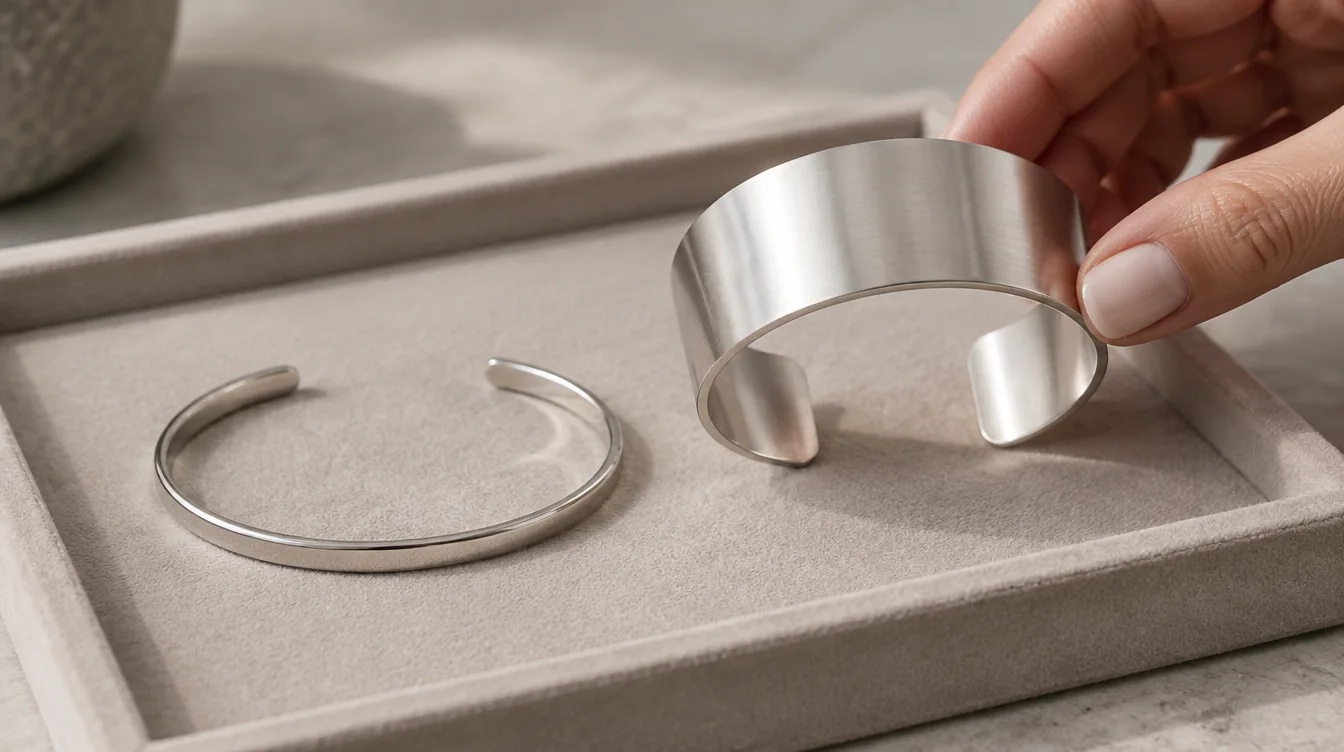
That difference matters when your hand is much wider than your wrist. A closed bangle needs enough room to clear the hand, even if you want it to rest fairly close at the wrist. An open cuff can go on without making that trip. Neither shape promises a perfect fit, but they ask different things of the wearer.
So, what is a bangle bracelet when it has a hinge? It is still a rigid ring once closed, but its hinge and clasp let it open for wear. Trendhim notes that some modern bangles use this design. The clasp matters more than a simple open versus closed label, so look at how the piece fastens.
How to wear a cuff bracelet without forcing it
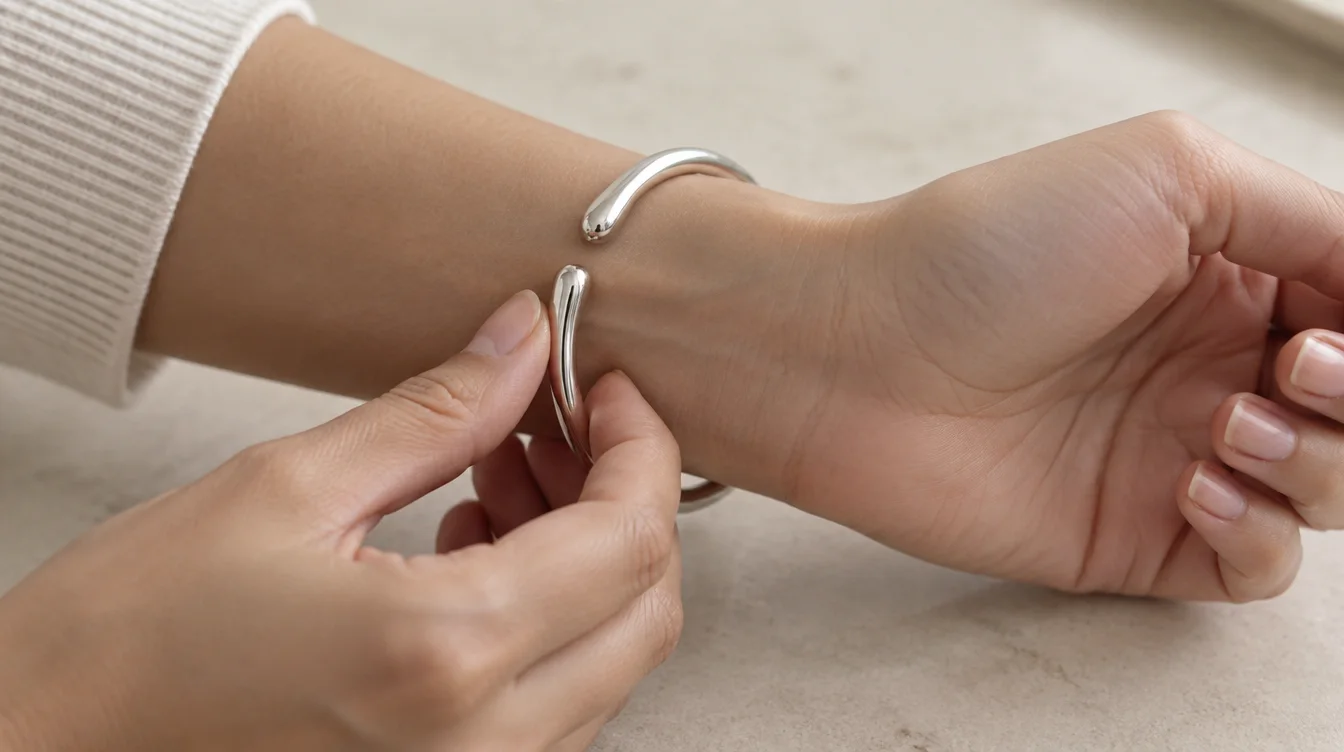
To learn how to wear a cuff bracelet, place the opening at the narrow side of your wrist and guide the ends around it. Do not try to pull a rigid cuff over your hand like a bangle. Once it is on, turn the gap to a spot that feels comfortable and check that the ends do not press into your skin.
Check the path before you buy
Picture the moment you put the bracelet on. If you dislike easing a ring past your knuckles, an open cuff may feel simpler. If you prefer to slip on a complete ring without placing an opening against your wrist, try a traditional bangle. A hinged bangle offers another route, though it adds a clasp you will need to open and close.
When trying a cuff, take it off the same way you put it on. Repeatedly spreading the ends just to remove it can change the shape or strain details attached to the metal. Ease of wear is useful, but it only counts if the piece also sits well once it is on. Fit is the next check.
How should a cuff bracelet fit during a normal day?
If you ask how should a cuff bracelet fit, start with comfort. It should stay on during normal movement without pinching. Move your hand, reach into a bag, and turn your wrist. The cuff may shift a little. Its opening should not catch your skin or seem likely to slip off.
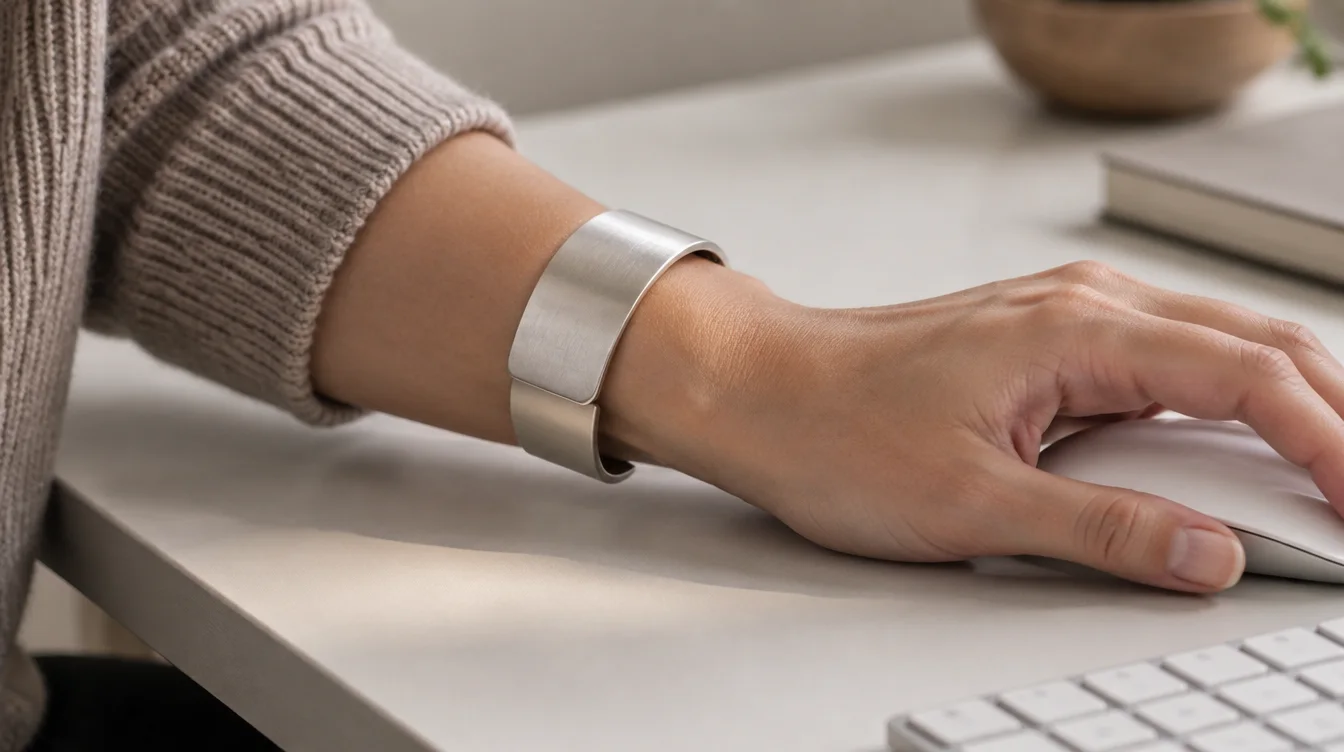
A wide cuff needs special attention at the edges. Sit at a desk and bend your wrist as you normally would. If the band digs in or stops that motion, a different shape may feel better. A slim cuff can have the same problem if its ends sit in the wrong place.
Ask how should a cuff bracelet fit before assuming a close fit means a tight one. Comfort depends on the wrist, the cuff’s curve, its width, and where the gap sits. If it only stays on when you squeeze it hard, choose a better fitting piece instead. That leads to a common question about adjustment.
Are cuff bracelets adjustable just because they are open?
No, are cuff bracelets adjustable is a question about the particular piece, not the cuff category. An opening lets the bracelet go around your wrist. It does not tell you how far its ends can move safely or how often they can move.
Some plain metal cuffs allow a small, careful change of shape. Others are made to keep their original curve. Stones, settings, surface finishes, and the metal construction can limit adjustment. Leather cuffs with snaps may offer set positions, while a rigid open cuff may offer none. If a listing says “adjustable,” ask what can be changed and whether the maker gives instructions.
Try a cuff in its intended shape first. If the gap is too wide or the band presses into your wrist, do not count on bending it until it works. A jeweler or the seller can tell you whether that design permits a minor change. Knowing that limit makes the final choice less of a guess.
Which shape suits the way you put jewelry on?
Choose an open cuff if getting a closed ring over your hand is the part you want to avoid. Choose a traditional bangle if you like a complete ring and can slip it over your hand comfortably. For either piece, try it on rather than treating its style name as a fit guarantee.
Try this in a store. Find the bracelet’s opening or clasp before you look at its design. Put it on, move your wrist, and take it off without force. Then try the other shape. Compare both by the same test: how easy they are to put on and how they feel once worn.
If you like a closed look but not the trip over your hand, ask to see a hinged bangle. If you like the simple entry of a cuff, check its gap and curve before paying. A few common questions can clear up the details.
Common questions about cuffs and bangles
These answers cover the details most likely to cause confusion when you shop.
What is a bangle bracelet compared with a cuff?
A traditional bangle is a rigid, closed ring that slides over the hand. A metal cuff leaves an opening so it can go around the wrist from the side.
Can a cuff bracelet be narrow?
Yes. A cuff can be slim or wide; its width does not decide its name. On a metal piece, check for the wrist opening rather than judging it from the front.
Does an open cuff need a clasp?
Usually, an open metal cuff goes on through its gap without a clasp. Other cuff designs, including some leather ones, may use a fastening, so inspect the piece you are buying.
How can I tell whether an open cuff will stay on?
Try it on and move your wrist as you normally would. If the gap feels insecure or the ends hurt, ask for a better fit rather than bending the piece on a guess.
Your choice still comes down to how each piece goes on and feels.
Make the opening your first check
The cuff bracelet vs bangle choice starts with how each piece goes on. Find the opening or clasp, try the bracelet without force, and move your wrist. Choose an open cuff if it goes on more easily and feels comfortable. Choose a bangle if you prefer a closed ring that fits. Ask about adjustment before you buy, then pick the piece you can wear with ease.