The Real Cost to Restring Pearl Necklace Strands (And Why Your Quote Might Be Wrong)
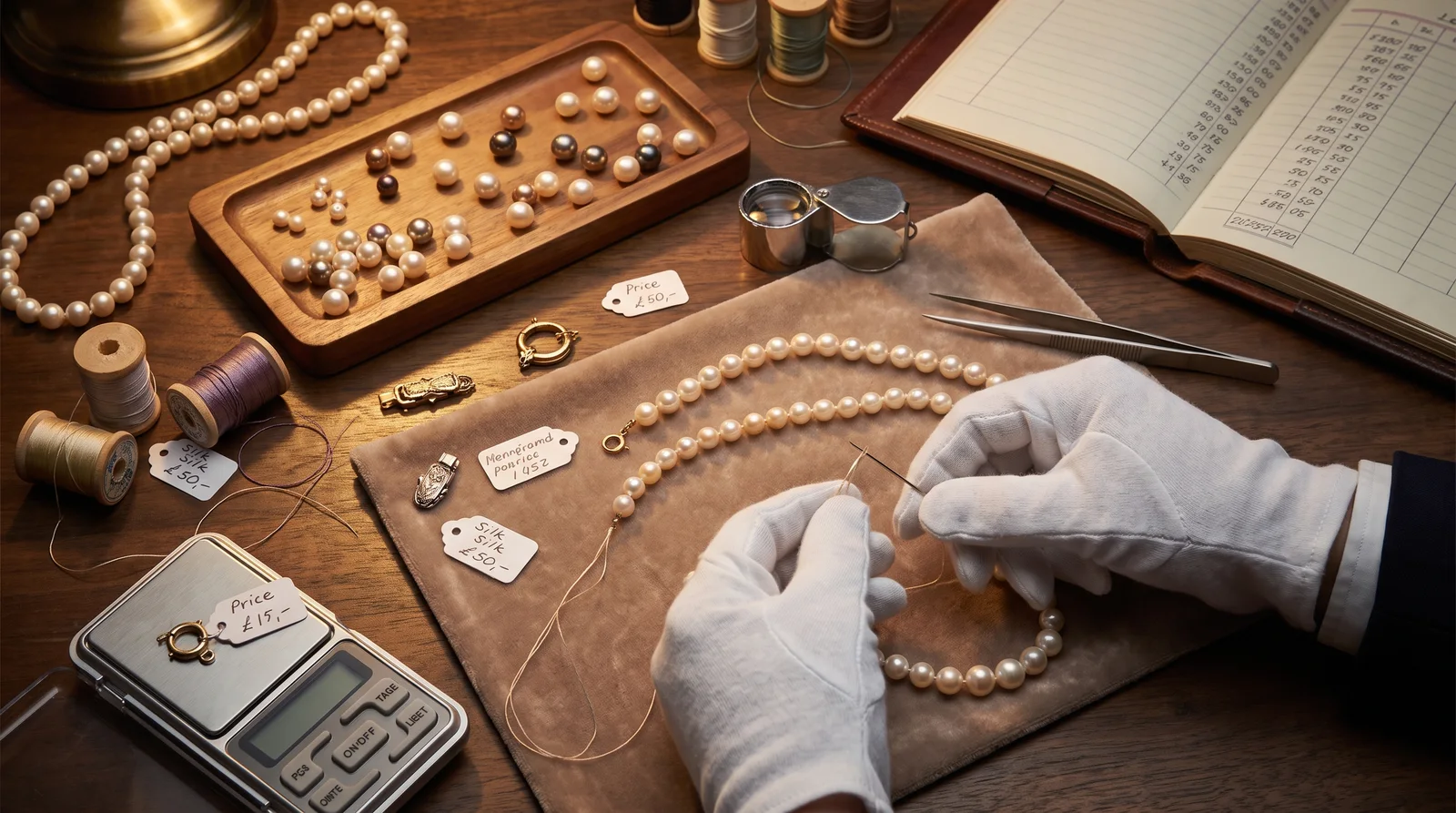
The cost to restring pearl necklace strands typically runs $1.50 to $6 per inch. The price depends on whether you want knotting between each pearl, the size of your pearls, and whether you're paying a hobby stringer or a jewelry store. A standard 18 inch strand with knots usually lands between $60 and $150. Small pearls, thicker silk, or extra small drill holes push that price higher. They slow the stringer down.
Why Pearl Restringing Costs Differently Than Chain Repair
Pearl necklaces get priced by labor time and thread type, not by metal weight like a gold chain repair does. A jeweler fixing a soldered chain link is mostly paying for metal and a few minutes of torch work. A pearl stringer hand ties a knot between every single pearl, sometimes 60 or 70 knots on one necklace. That's the real difference. If you've ever looked into chain repair cost pricing, you already know labor and metal type drive most of that estimate. Pearls flip the formula. Metal barely matters unless you're replacing a gold clasp. Time and skill matter most.
Silk Thread vs Wire Restringing
Silk thread with hand knotting is the traditional method. Most jewelers recommend it for genuine pearls. It stretches slightly over time, which is normal, and it protects pearls from rubbing against each other since each one sits in its own little knot cushion. Wire restringing, usually with flexible beading wire, skips the knots entirely and strings pearls close together. It's faster to do, which makes it cheaper. But it offers less protection if the necklace ever breaks. One snap and every pearl scatters across the floor. Silk with knots costs more upfront but saves you from that nightmare.
Knotted vs Strung Pearl Necklace Cost
The knotted vs strung pearl necklace cost gap is significant and worth understanding before you request a quote. According to pricing published by The Pearl Girls, knotting runs about $3 per inch. Simple strung restringing without knots runs closer to $1.50 per inch, based on figures from theworldofpearl.com. On a 20 inch necklace, that's roughly $60 for knotted work versus $30 for strung work, plus a small charge for silk and supplies. Small pearls packed tightly, more than four per inch, can add extra per-knot charges. Each knot takes longer to tie by hand.
Pearl Restringing Price Per Inch Explained
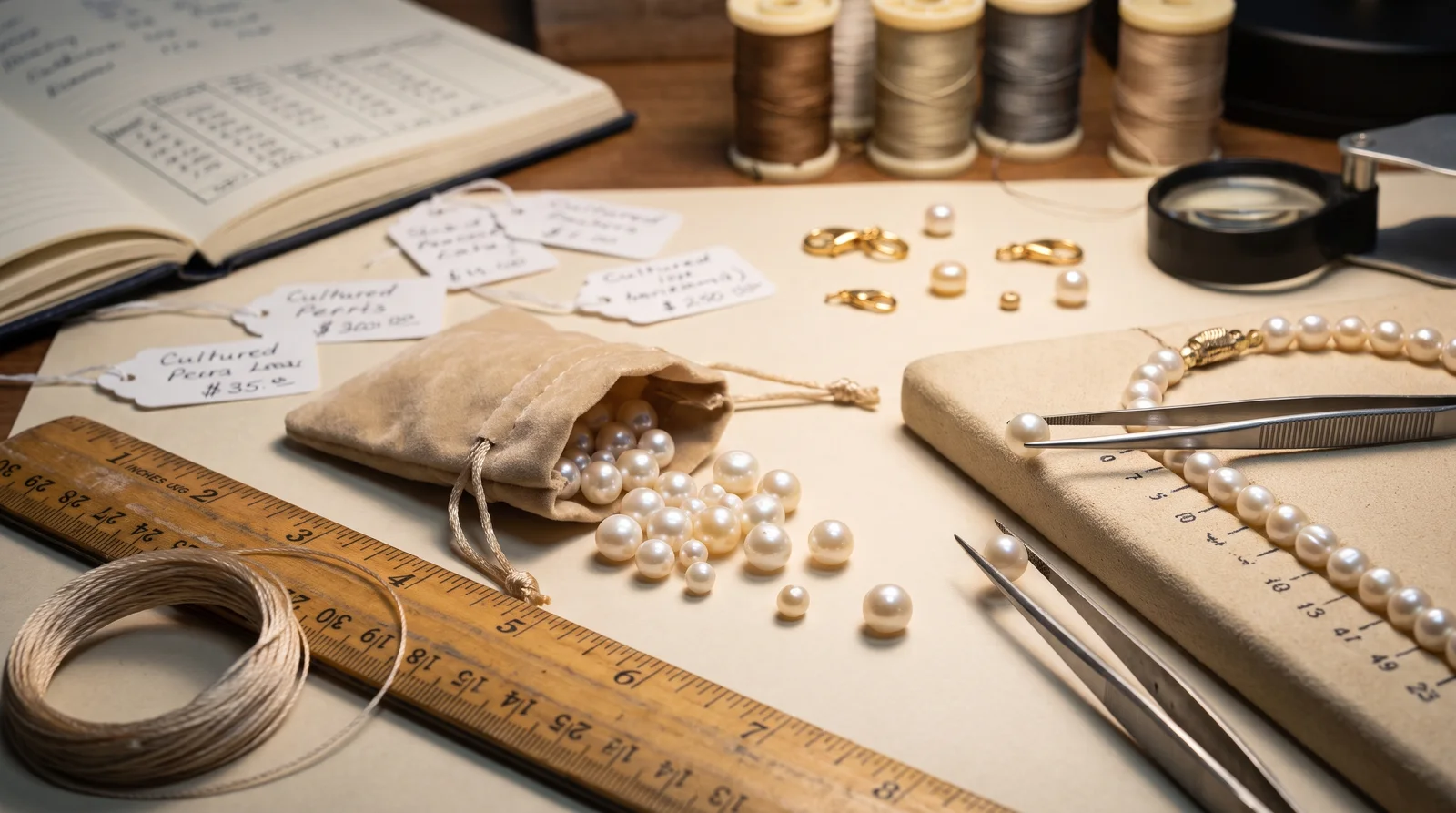
Pearl restringing price per inch is the most useful number for comparing quotes, since necklace length varies so much between pieces. A 16 inch choker costs less to restring than a 30 inch opera length simply because there's more thread and more knots involved. Based on published stringer pricing, expect somewhere between $1.50 and $3 per inch for standard sized pearls, plus an added flat fee for silk thread that typically runs around $6. Bracelets follow the same math but often carry a minimum charge, sometimes $50. Very short pieces still take real setup time regardless of length.
How Pearl Size and Quality Affect Labor
Smaller pearls take longer to knot, which raises your labor cost even on a short necklace. A stringer working with 3mm freshwater pearls has to tie dozens more knots per inch than one working with 9mm South Sea pearls. Extra small or oversized drill holes complicate things too. Standard drill holes measure about 0.7mm. But many large pearls or imitation pearls have bigger holes that need thicker thread and larger knots, according to information published by The Pearl Girls at thepearlgirls.com. Bigger knots mean more visible thread, and sometimes a slightly longer finished necklace than the original.
Pearl Clasp Replacement Cost and Karat Weight
Pearl clasp replacement cost depends almost entirely on the metal karat weight you choose, not on the pearls themselves. Sterling silver clasps start around $25. 14k gold clasps often start near $100 and climb from there depending on design complexity and current gold prices. If your original clasp was 18k gold, replacing it with the same karat weight costs more than dropping down to 14k. That's because 18k contains 75% pure gold compared to 14k's 58.3%. That difference in gold content directly affects material cost. If you're unsure which karat makes sense for your piece, this breakdown on whether 14k gold is good for everyday jewelry explains the durability tradeoffs clearly.
When a Heavier Clasp Makes Sense
Heavier strands, especially multi strand pearl necklaces or long opera length pieces, put more strain on a clasp than a single delicate strand does. A flimsy clasp on a heavy piece will eventually bend or pop open under normal wear. This mirrors the logic used when comparing solid versus hollow gold chain construction for pendants. Weight capacity matters just as much with pearls as it does with gold chains carrying a heavy charm.
Pearl Jewelry Repair Prices at a Jeweler vs a Specialist
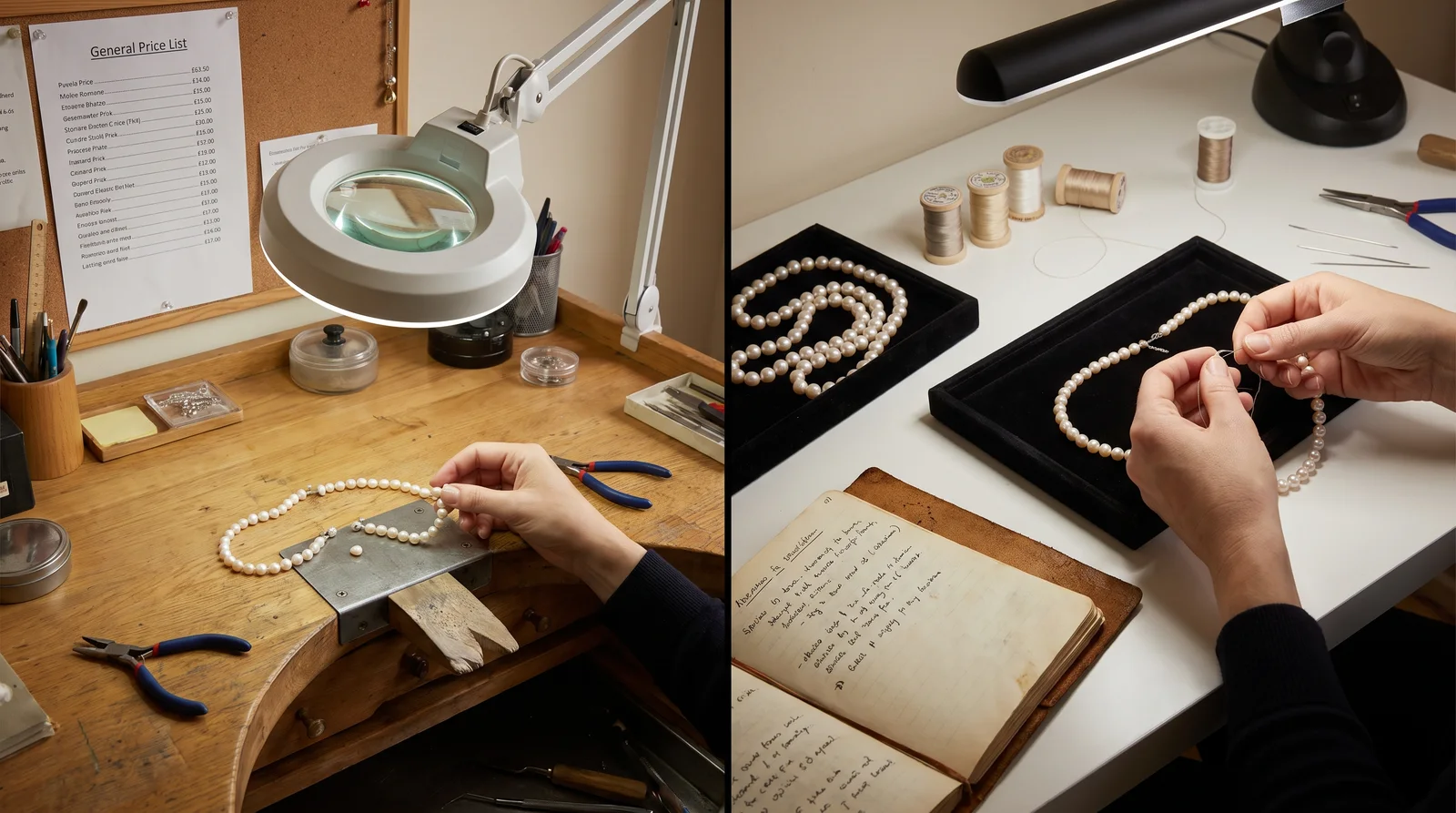
Pearl jewelry repair prices vary quite a bit depending on who does the work behind the counter. A general jewelry store often sends pearl restringing out to a third party stringer, then adds a markup before quoting you. According to a repair pricing table published by Inglis Jewellers, general pearl restringing runs between $45 and $180. Turnaround takes five to ten days. That range reflects this multi step process, as noted at inglisjewellers.ca. A dedicated pearl stringer, by contrast, does the work in house. This often costs less since there's no middleman markup involved.
What Drives the Price Difference
Skip the markup and you often save real money on longer necklaces. Someone in a city with a jewelry district can sometimes locate a stringer directly and cut out the jeweler's cut entirely. That said, going through a jeweler gives you a single point of contact if something goes wrong with the finished piece. It's a tradeoff between convenience and cost. For expensive strands, that convenience might be worth paying for.
Restring Pearls at Home vs Jeweler
Restring pearls at home vs jeweler comes down to the value of your pearls and how much patience you have for fiddly handwork. Craft stores sell silk cord kits with built in needles for a few dollars. For costume pearls or low value strands, that's a perfectly reasonable option. For genuine cultured pearls, particularly ones with sentimental or resale value, a professional stringer's experience with tension, knot placement, and thread weight is hard to replicate on a kitchen table. A poorly tied knot can slip loose within months, undoing all that saved money.
Signs You Should Skip the DIY Route
Real pearls paired with a 14k gold clasp are usually worth professional handling. If you're dealing with an inherited strand, an antique piece, or pearls you genuinely don't want to lose, mail order pearl repair services or a trusted local jeweler are the safer bet. Cheap silk cord and a shaky hand are fine for practice pieces, not family heirlooms.
Frequently Asked Questions About Pearl Restringing
How often should pearl necklaces be restrung?
Most jewelers recommend restringing pearls worn regularly about once a year, or sooner if you notice the silk looking dingy or stretched between pearls. Pearls worn only occasionally can often go two to three years between restringing.
Why do pearl necklaces need knots between each pearl?
Knots prevent pearls from rubbing against each other, which protects their surface from friction damage over time. Knots also act as a safety measure, since a broken thread only releases pearls up to the nearest knot instead of the entire strand.
Does restringing shorten a pearl necklace?
It can, slightly, especially if the original piece had stretched silk that's being replaced with fresh, properly tensioned thread. A stringer who removes existing knots to simplify the design may also shorten the piece by an inch or two.
Can imitation pearls be restrung the same way as real pearls?
Yes, imitation pearls and glass beads follow the same knotting or strung process as genuine pearls. Imitation pearls often have larger drill holes that require thicker thread, though. Pricing is typically identical per inch regardless of whether the pearls are natural, cultured, or imitation.
What's a fair price for a full pearl restringing service?
For an 18 inch strand with standard sized pearls and hand knotting, expect somewhere between $60 and $150 depending on your region and whether a clasp replacement is included. Smaller pearls, multi strand designs, or gold clasp upgrades will push that estimate higher.
Getting the Most From Your Restringing Investment
A little planning before you hand over your pearls saves both money and stress. Ask upfront whether pricing is per inch or a flat rate, whether silk and clasp costs are included, and what karat weight clasp options are available. Bring your necklace in a small bag if any pearls have already come loose. That helps the stringer assess original spacing and knot style. Pearls hold up well for decades when restrung properly. Treating this as routine maintenance rather than an emergency repair keeps both your budget and your necklace in good shape for years to come.