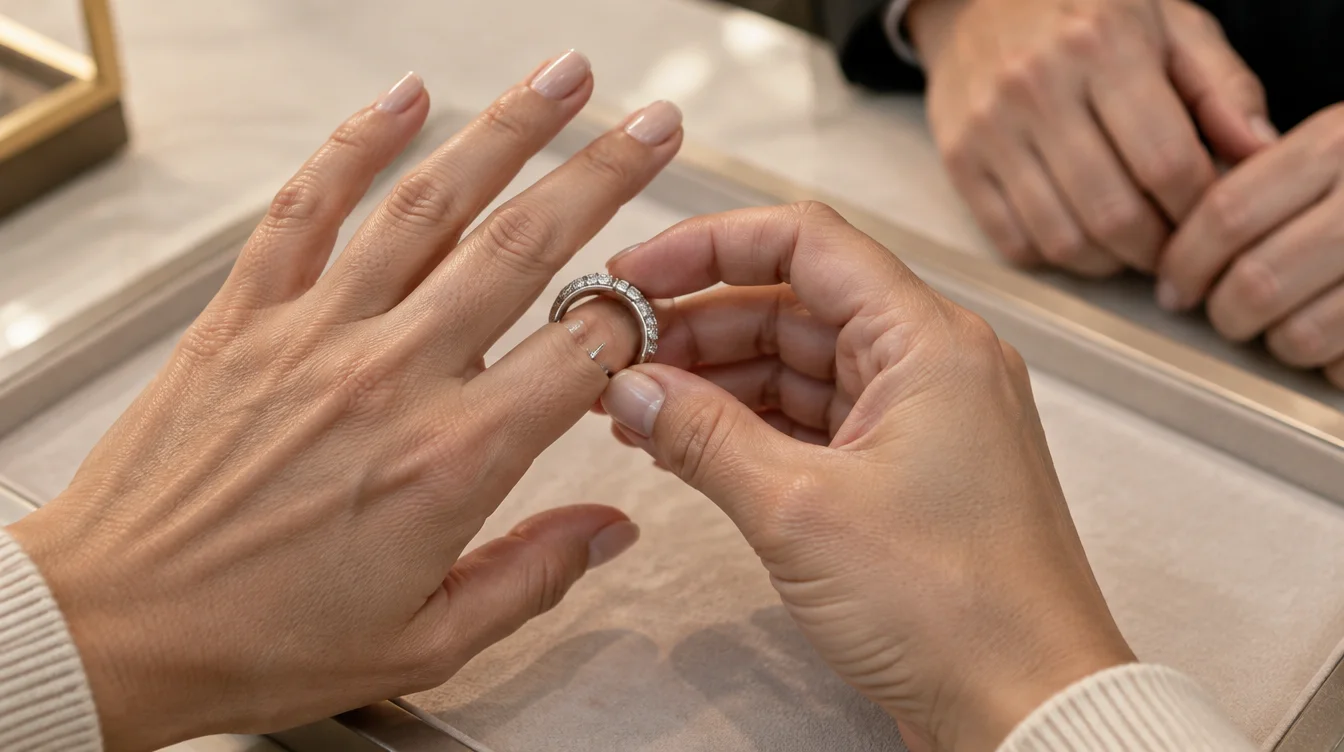
Can you convert ring to hinged shank for large knuckles and keep your setting safe?
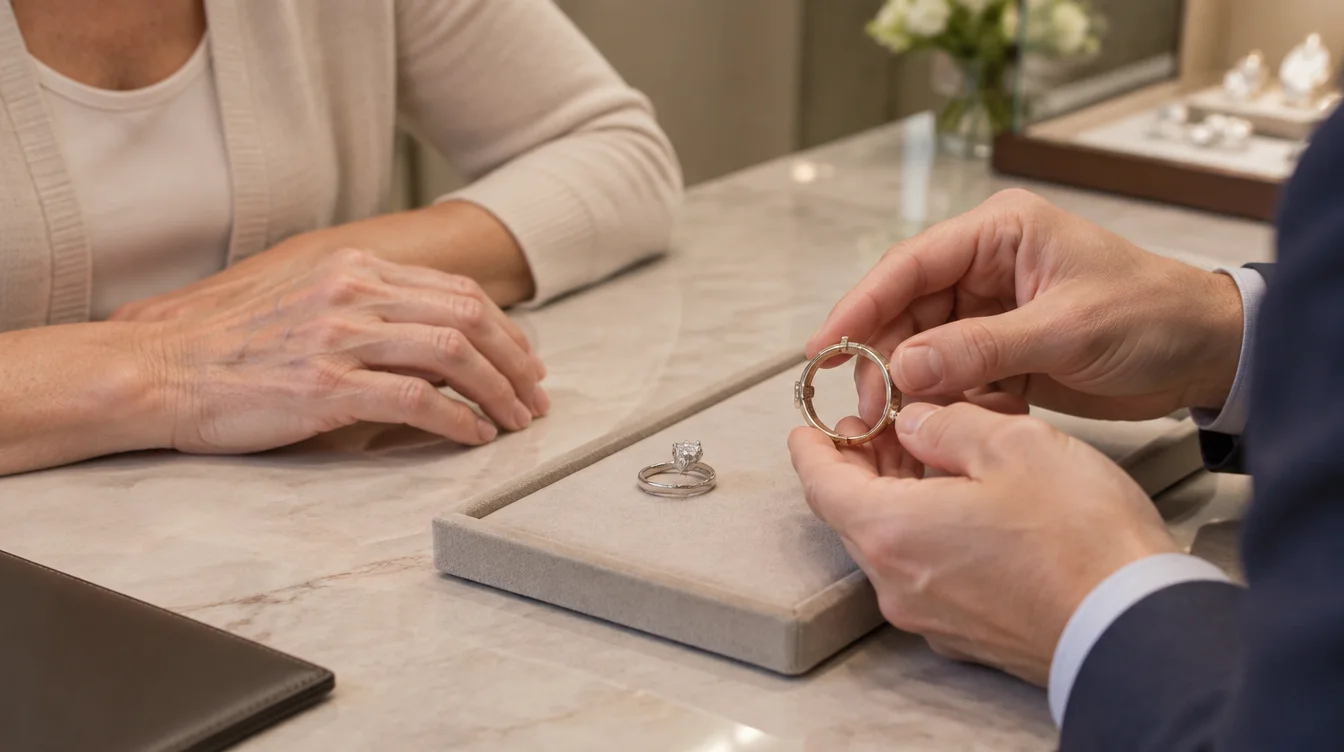
You may be able to convert ring to hinged shank for large knuckles if the band can support a hinge and latch without putting its stones at risk. A jeweler must inspect the ring first. The finished ring also needs to lock securely, sit well at the base of your finger, and open easily in your own hands.
When can you convert ring to hinged shank for large knuckles?
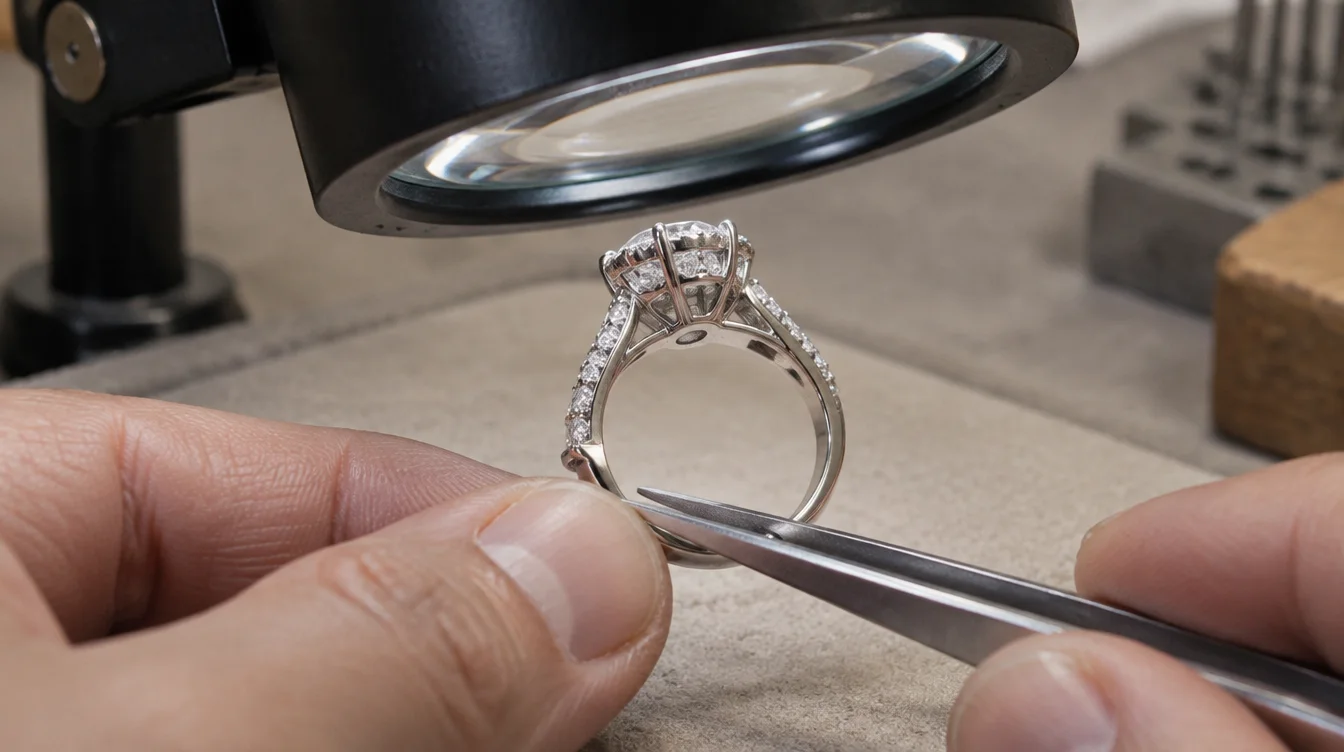
A hinged ring shank conversion is most promising when sound metal surrounds the planned attachment points. The jeweler needs room to join the new lower band to the existing ring. A narrow band, old joints, or stones set low on the sides can make that harder. Jewelers assessing hinged shanks check the design, width, stone placement, and condition before accepting a ring for conversion. See the factors they assess.
Ask what will stay and what must change
Bring the ring to the consultation, not just a photo. Ask the jeweler where the original shank would be cut and where the new section would meet it. If stones sit near either join, ask how their settings will be protected and checked afterward. When you ask “can you add a hinge to an existing ring,” the jeweler needs to inspect the whole ring, not just its top view.
Even with a sound band, the latch must work for you.
How should a hinged ring open and lock?
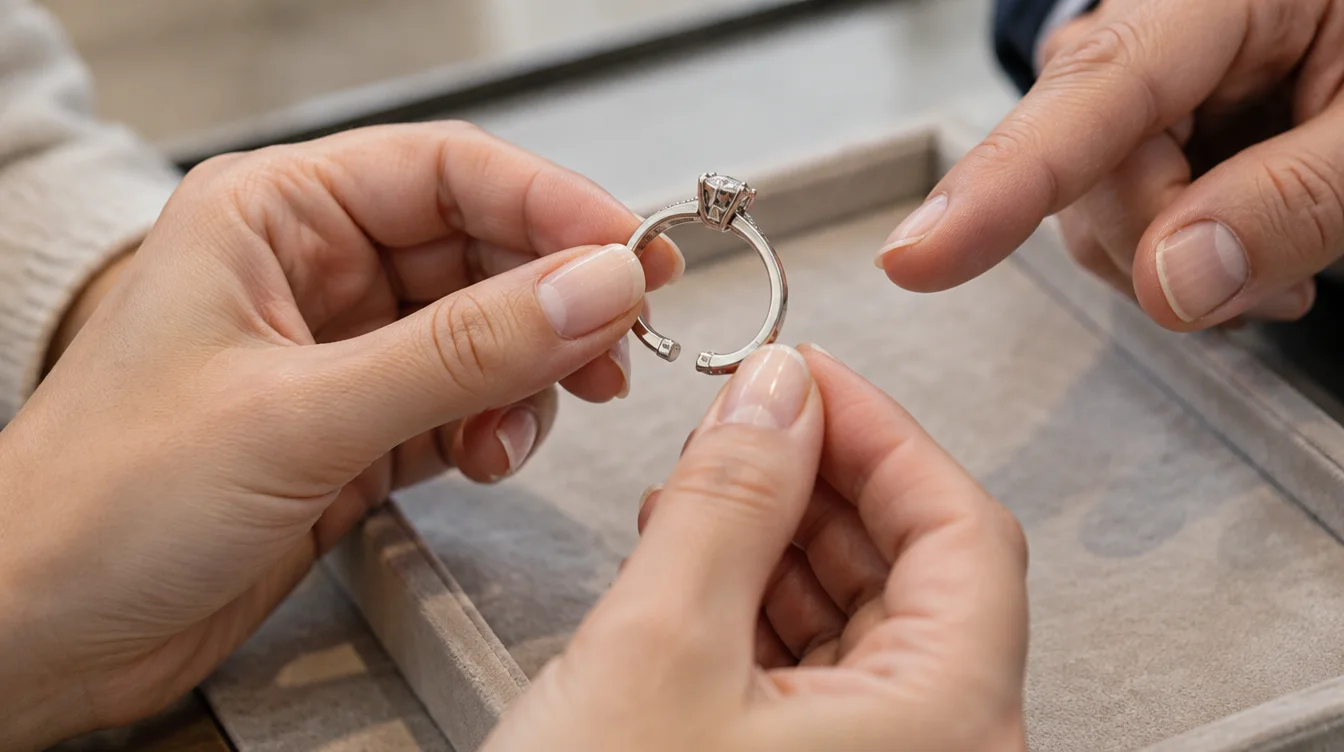
A hinged shank opens to get past the knuckle, then closes around the narrower finger base. The latch should hold the closed band in its intended shape. CLIQ describes its retrofit as a custom hinge fitted to an existing ring and recommends trying the mechanism with an authorized dealer before ordering. See CLIQ’s retrofit process.
Try the latch before you agree to the work
Ask for a sample and have the jeweler show how to open a hinged ring without pressing on its stones or prongs. Then do it yourself. Open and close it several times with the hand you normally use to remove jewelry. Check that the latch meets cleanly and stays shut when you move your fingers. If you cannot operate it without help, say so now.
A CLIQ ring retrofit may suit a ring that passes inspection, but its latch still has to suit your grip. Once you can work the latch, check how the closed ring fits.
What fit checks matter after conversion?
Ring sizing for large knuckles should focus on the finger base as well as the joint. A hinged band need not be made loose just to slide over the knuckle. CLIQ says its dealer uses a sizing set to find a snug fit at the base while allowing easier removal. Fit must still be judged on your hand, not from a size number alone.
Test comfort while your hand moves
Close the sample ring and make a fist. Straighten your fingers, then let your hand rest. The band should stay in place without pinching skin at the hinge or latch. Check for a gap, a sharp edge, or pressure when you bend your finger. Finally, open and remove the ring without help.
These checks matter especially for rings for large knuckles when finger size changes during the day. If your finger is swollen today, tell the jeweler before settling on a base size. That leads to a few useful questions.
What should you ask before booking a conversion?
Ask about your ring, your hands, and the proposed mechanism. Those answers are more useful than a general promise of a perfect fit.
Can you add a hinge to an existing ring with side stones?
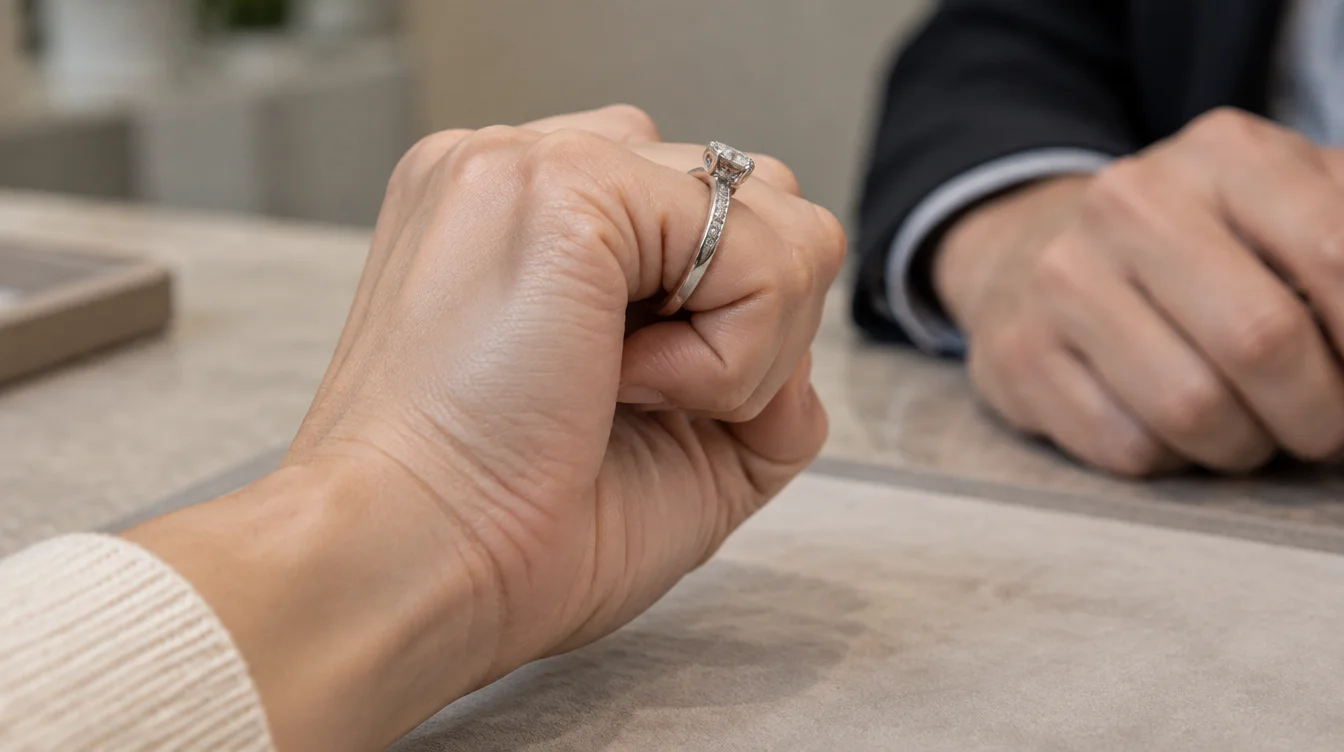
Possibly, but the jeweler must inspect where each stone sits and where the hinge would join the band. Stones extending down the shank can limit the space available for a safe conversion.
How do you learn how to open a hinged ring?
Have the jeweler demonstrate the exact latch you are considering. Practise while the ring is off your finger, then repeat the motion during the fitting.
Does a CLIQ ring retrofit fit every swollen finger?
No single closed size will feel the same at every level of swelling. Tell the jeweler if your finger changes enough that a snug morning fit becomes tight later. That detail should shape the fitting conversation.
Use those answers to judge whether the ring will work for you each day.
Keep the ring only if the new fit works for you
Good rings for large knuckles must clear the joint and feel comfortable once closed. Before authorizing a hinged ring shank conversion, ask what work is planned. Have the jeweler show you how to work the latch. At pickup, repeat the fit and removal checks yourself. If the band pinches or you cannot release it, ask the jeweler to address that before you take it home.