Chipped Enamel Jewelry Repair: Why It's Nothing Like Fixing a Dent
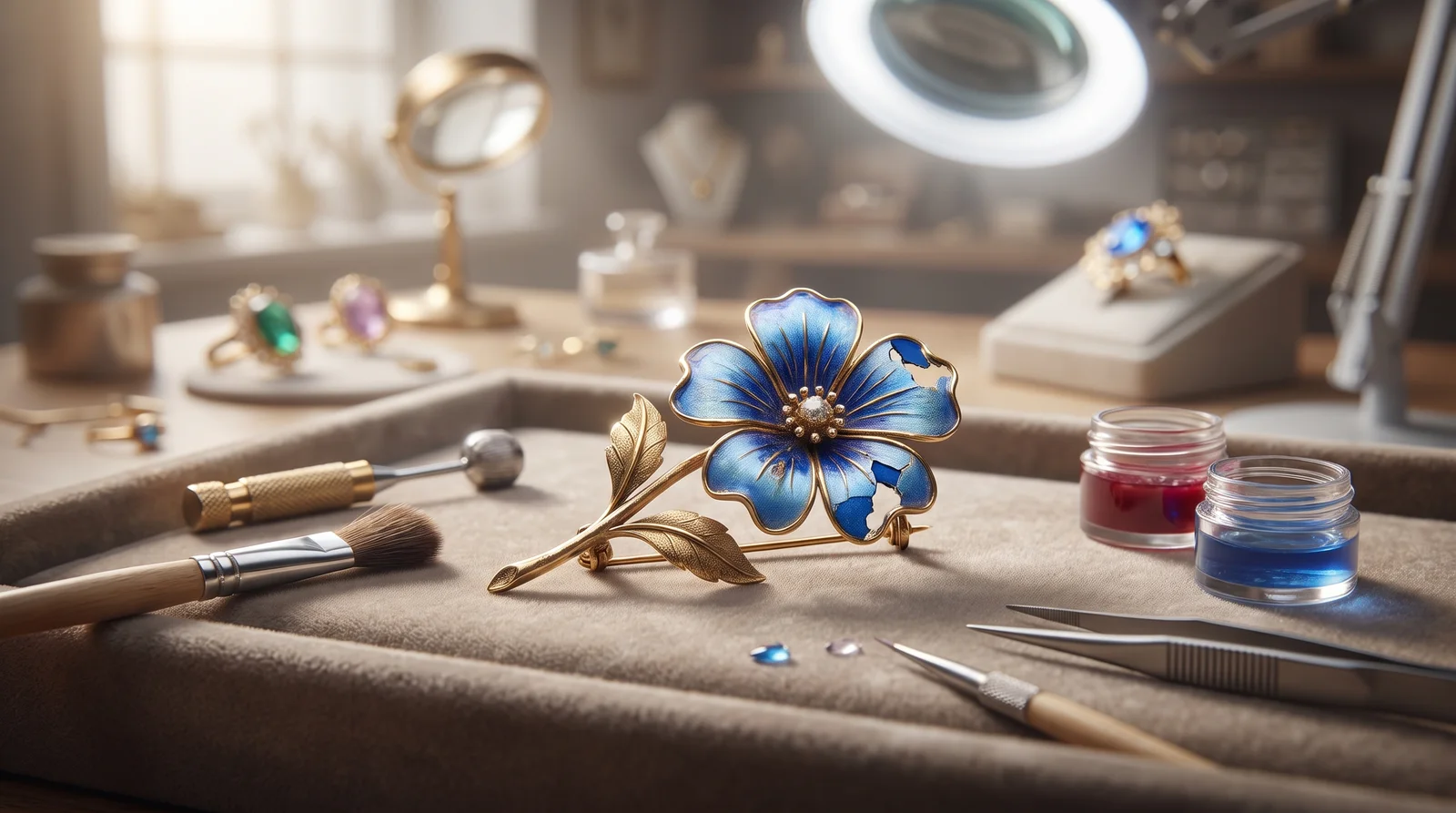
Chipped enamel jewelry repair is possible in most cases. But it works nothing like repairing a dent or a bent prong. Enamel is glass fused to metal, or a hardened resin sitting on top of it. Once it chips, that section is gone for good. Repair means filling or replacing the missing color, not reshaping what's already there. Whether that's a smart move depends on the enamel type, the piece's value, and how visible the damage is.
What Chipped Enamel Jewelry Repair Actually Means
Chipped enamel jewelry repair means replacing lost material, not massaging metal back into place. This trips people up constantly. When a prong bends or a band wears thin, a jeweler can heat the metal, reshape it, and fuse it seamlessly. Metal is malleable. Enamel doesn't work that way. It's either glass that's been kiln fired onto metal at extreme heat, or a synthetic resin that's cured chemically. Neither one flexes, stretches, or reforms once it's cracked or missing a chunk. A chip in enamel is a hole. The only way to fix a hole is to fill it with new material and hope it matches.
That distinction matters. A lot of jewelry owners walk into a repair shop expecting the same kind of invisible fix they'd get on a scratched gold band. Enamel repair is closer to touch-up paint on a car door than it is to buffing out a scratch. You're adding something new to blend with something old, and old enamel has usually faded, yellowed, or shifted in tone over the years. Getting a perfect match is genuinely hard, even for someone who does it daily.
Why Enamel Chips in the First Place
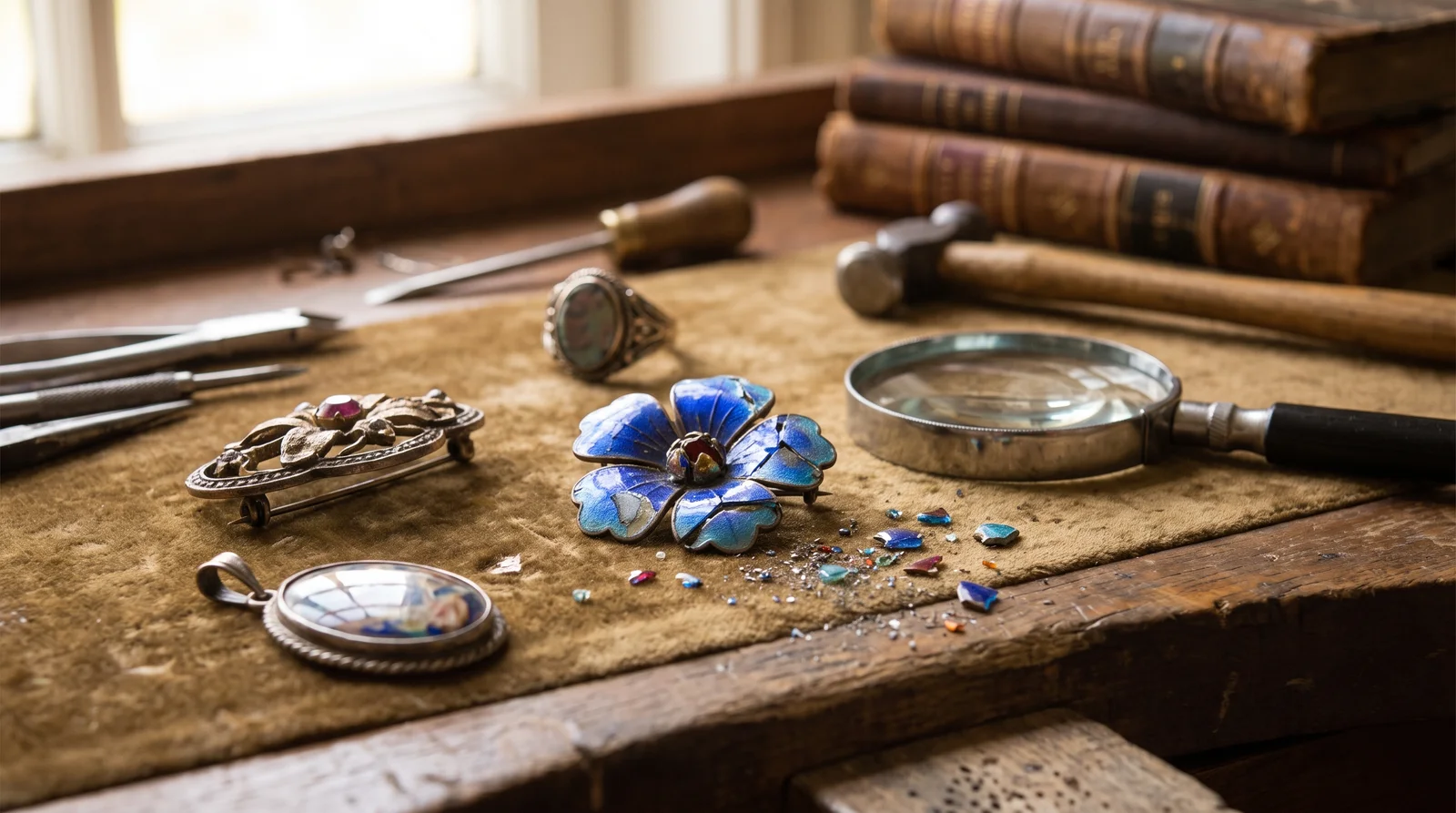
Enamel chips because it's rigid and brittle. Rigid, brittle materials crack under stress that metal would simply absorb. Glass enamel has a hardness that actually exceeds steel on the Mohs scale, but hardness isn't the same as toughness. A hard material resists scratching, yet it can still shatter from a sharp impact because it has almost no flexibility. Drop a vintage enamel ring on a tile floor, and the metal band might survive without a mark. The enamel face, though, fractures instantly.
Physical Impact and Sudden Force
A hard knock against a countertop, a fall onto pavement, or even a firm bump inside a jewelry box can chip enamel. The metal underneath flexes slightly on impact. Enamel doesn't flex with it, so the bond between the two layers breaks at the weakest point. This is the most common cause of chips on rings, since rings take the most physical abuse of any jewelry category.
Thermal Shock and Temperature Swings
Metal and glass expand at different rates when temperatures change quickly. Stepping from a cold car into a hot shower, or running warm water over a ring you just took out of a cold safe, can stress the enamel surface enough to crack it. Jewelers call the resulting fine cracks crazing. They often show up before an actual piece breaks off.
Age, Wear, and Chemical Exposure
Decades of contact with skin oils, lotion, perfume, and household cleaners slowly weaken enamel's bond to the metal beneath it. Older synthetic coatings can yellow or become brittle with age. This is why a 1920s enamel brooch is more likely to chip from a light bump than a piece made ten years ago, even without any dramatic single incident. Understanding these causes helps explain why the repair method has to match the type of enamel involved. That's the next piece of the puzzle.
Cold Enamel vs Vitreous Enamel Repair: Which One Are You Dealing With
Cold enamel vs vitreous enamel repair comes down to one core difference. Vitreous enamel is real glass fired at extreme heat. Cold enamel is a resin cured at room temperature or under UV light. Vitreous enamel is fired in a kiln between roughly 750 and 850 degrees Celsius, sometimes higher depending on the pigment formula. That heat fuses powdered glass permanently to gold, silver, or copper. Cold enamel skips the kiln entirely. It relies on two-part epoxy or acrylic resin mixed with lightfast pigment, curing over 24 to 72 hours instead.
You can often tell the two apart with a simple scratch test in a hidden spot, like the inside of a ring band. Run a fine steel needle across the surface. Vitreous enamel is harder than steel, so the needle glides without leaving a mark. Cold enamel is softer, and the needle will leave a faint indentation. A gentle tap with a metal probe also helps. Real glass enamel gives off a sharp, clear clink, while resin sounds duller and flatter.
Why This Distinction Changes Everything
Knowing which type you have determines the entire repair path, and getting it wrong can ruin the piece. Vitreous enamel technically can be refired, but that means heating the whole piece back up to kiln temperatures. That's risky if there are gemstones set nearby. Heat-sensitive stones like opals, pearls, or emeralds can crack or discolor under that kind of heat. Cold enamel can never go anywhere near a torch or a kiln. Even moderate heat from routine repair work, like resizing a ring or rebuilding a prong, will scorch or melt it instantly. A jeweler has to know which material they're touching before they pick up any tool.
Can Chipped Enamel Jewelry Be Fixed With DIY Repair
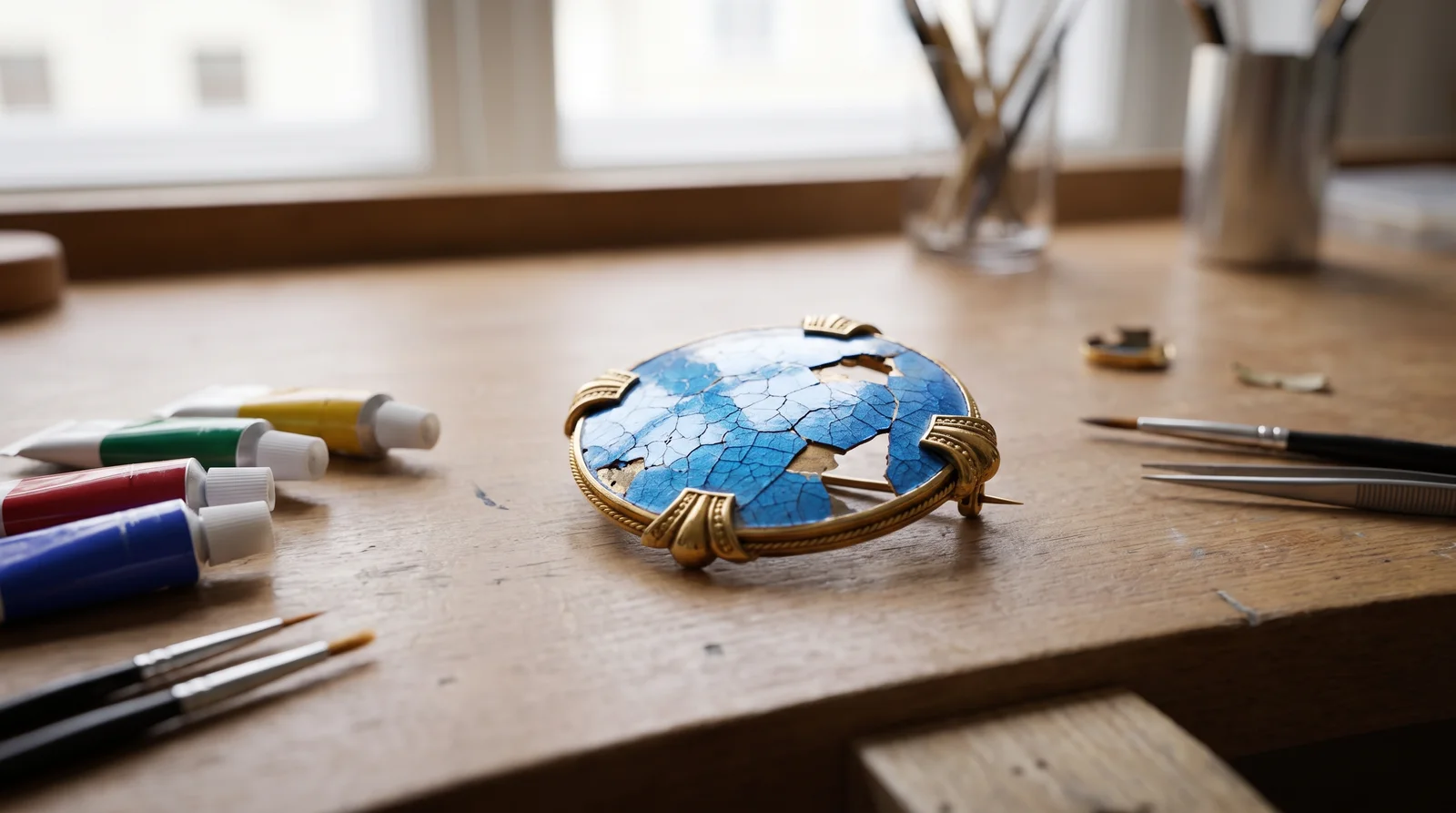
DIY enamel jewelry repair can work for small chips on costume pieces, but it's rarely a good idea for anything with real value or sentimental weight. Cold cure resin kits, similar to the epoxy jewelers use professionally, are available to home hobbyists. They can fill small chips reasonably well. The process involves cleaning the chip, mixing tiny amounts of pigmented resin to match the surrounding color, and applying it in thin layers. Then you cure it under UV light or at room temperature, and sand and polish the surface smooth.
Here's where it gets difficult in practice. Color matching by eye is genuinely one of the hardest parts of this entire process, even for trained restorers. Old enamel fades unevenly. A resin that looks right in the bottle often reads too bright, too flat, or slightly off once it's cured and sitting next to decades-old pigment. Sanding is another risk point. Too aggressive with the grit, and you'll scratch the surrounding original enamel or leave a visible ridge where old meets new.
When DIY Actually Makes Sense
A small chip on a costume brooch, a fashion ring, or a piece with no real resale or sentimental value is a reasonable DIY candidate. If the repair goes wrong, you haven't lost much. Basic cold enamel touch-up kits run somewhere in the range of fifteen to thirty dollars. The tools involved, like fine picks, small brushes, and wet sanding pads, are inexpensive and widely available online.
When DIY Becomes a Real Risk
Vintage cloisonné, champlevé, or plique-à-jour pieces should never be a home repair project. These techniques involve delicate wirework or backless glass sections. A wrong sanding pass or an ill-fitting resin fill can permanently damage them. Anything with genuine gemstones set close to the enamel also carries risk, since a slipped tool or an accidental scratch can chip a stone while you're focused on the enamel itself. If a piece has family history or real monetary value, the safer move is professional help. That brings up the next natural question.
When to Seek Professional Jewelry Repair for Enamel Damage
Seek professional jewelry repair for enamel damage whenever the piece is antique, made with cloisonné or plique-à-jour techniques, or set with heat-sensitive gemstones. The same goes for anything worth enough that a failed DIY attempt would sting. A professional enamel jewelry restorer starts with inspection under magnification, usually a jeweler's loupe. This identifies whether the enamel is vitreous or cold cure, and checks for hidden cracks that aren't visible to the naked eye. That diagnosis shapes everything that follows.
Loose findings matter here too. If a post, prong, or clasp near the enamel is also damaged, fix that structural issue before any cosmetic enamel work happens. Rebuilding a prong on a piece with cold resin enamel nearby means the jeweler has to protect that resin from heat. Sometimes this means removing the stone setting entirely or shielding the enamel section during soldering. This is precision work that genuinely requires bench experience, not something to attempt with a home soldering iron.
Antique and Heirloom Pieces
Pieces with real age or collector value deserve conservative treatment. A restorer familiar with historical technique will often aim to stabilize the damage rather than hide it completely. An overly aggressive repair can actually reduce a collector piece's value. Some collectors prefer visible, honest restoration over a fill that tries to hide the piece's age entirely.
Structural Damage Near the Enamel
If you notice a bent prong or a stone that wiggles near enamel work, don't wait. Related setting issues often need attention alongside the enamel itself, and understanding prong retipping cost gives you a sense of what that structural side of the repair might run before you even get to the enamel work. Once you know what a professional repair actually involves, the next question is what it costs.
Enamel Jewelry Restoration Cost: What You're Actually Paying For
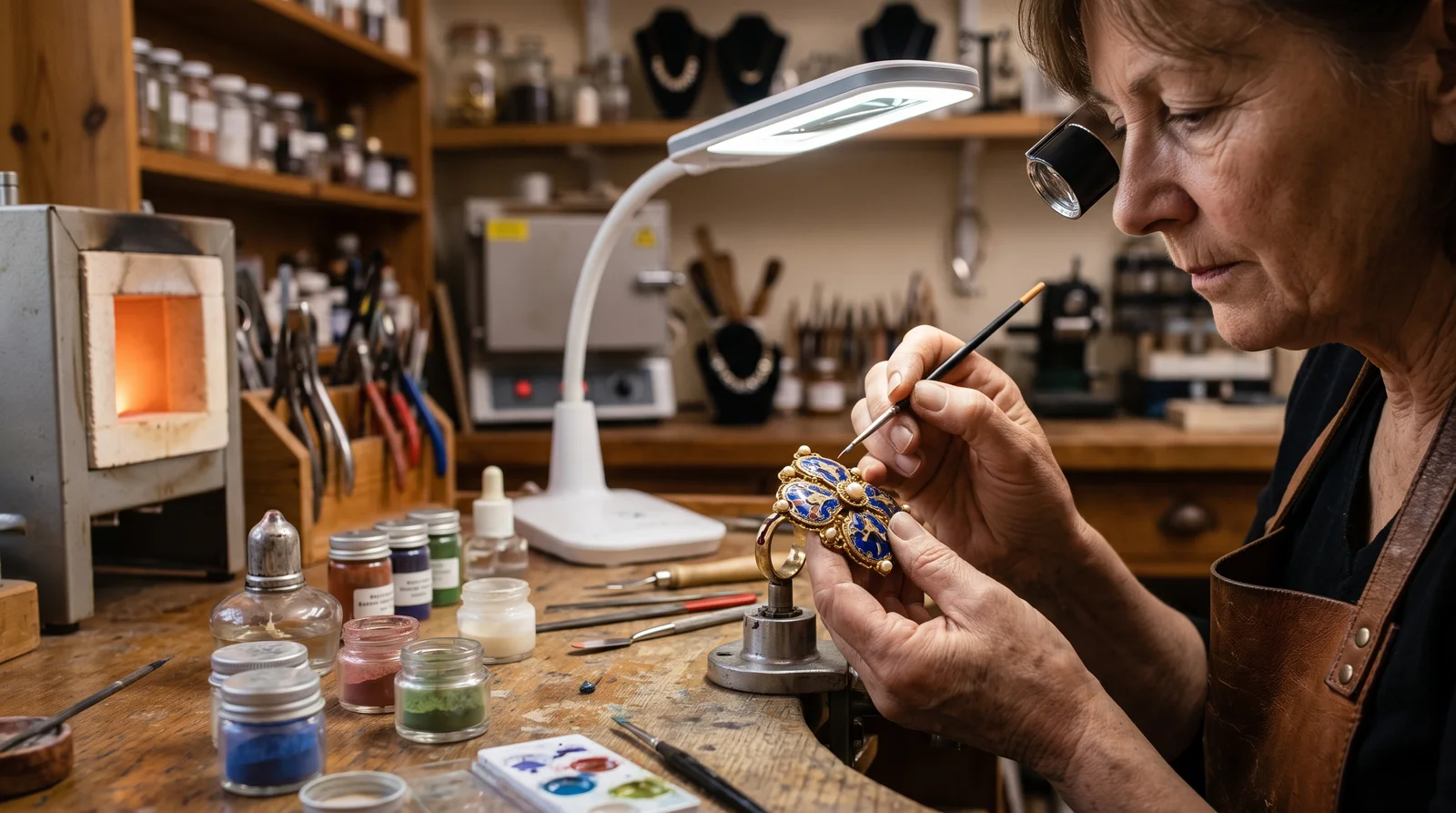
Enamel jewelry restoration cost typically ranges from around 50 dollars for a small cold cure touch-up on a simple piece, up to several hundred dollars for full re-enameling on a complex antique. Simple chip repairs on a flat surface, like a plain enamel pendant or a basic ring, tend to land on the lower end of that range. They involve less color matching and fewer layers of resin. Pieces with intricate cloisonné wirework, multiple colors, or hard-to-source pigment matches push costs higher because of the time involved.
Turnaround time also affects price. A straightforward cold cure fill might be done within a day or two, since curing takes 24 to 72 hours regardless of complexity. Full re-enameling on an antique can take weeks. This is especially true for anything requiring kiln work, research into original pigment formulas, or careful removal of existing damaged sections. That labor time is baked into the quote.
Factors That Push the Price Up
Complex techniques like plique-à-jour, where the enamel sits without metal backing, cost more to restore because there's zero room for error. Antique pieces also often require custom pigment mixing, since standard commercial resin colors rarely match century-old glass tones. A restorer may source dry mineral pigments and mix them by hand for an exact match. That takes far more time than simply filling a chip with a pre-made resin color.
Is Restoration Worth the Cost
This is where the honest answer is that it depends on what the piece means to you and what it's made of. A costume piece with a five dollar chip repair makes sense on almost any budget. A fine piece built on solid gold jewelry is generally worth the investment in professional restoration. The base metal holds its value regardless of the enamel condition. A proper repair protects that investment long term. Comparing cost against the piece's actual worth naturally leads to the harder decision: repair or replace.
Repair or Replace: Making the Right Call for Your Piece
Repair makes sense when a piece has sentimental value, uses precious metal, or carries historical significance. Replacement is often the more practical choice for mass-produced costume jewelry with widespread damage. A single small chip on an otherwise intact heirloom ring is almost always worth fixing. Extensive cracking across an entire enamel surface is different, especially on a low-value piece. Restoring it properly sometimes costs more than the item is worth.
Think about what the piece is actually built on. A brooch with vitreous enamel over solid silver or gold has real bones underneath the damaged surface. That metal isn't going anywhere, and restoring the enamel brings the whole piece back to life. A costume ring with cold enamel over base metal doesn't carry the same long-term value. A thirty dollar repair might not make financial sense if the ring itself only cost twenty.
A Real-World Comparison Worth Knowing
The decision here actually mirrors a similar question jewelry owners face with gemstone damage. If you've ever wondered whether a chipped diamond can be repaired, you'll notice the same logic applies. Sometimes the fix is straightforward and affordable. Other times, the smarter financial move is accepting the damage or considering replacement. This is especially true when the repair cost approaches or exceeds the piece's actual worth. That comparison naturally leads into how to keep enamel from chipping again once it's been restored.
Protecting Enamel Jewelry After a Repair
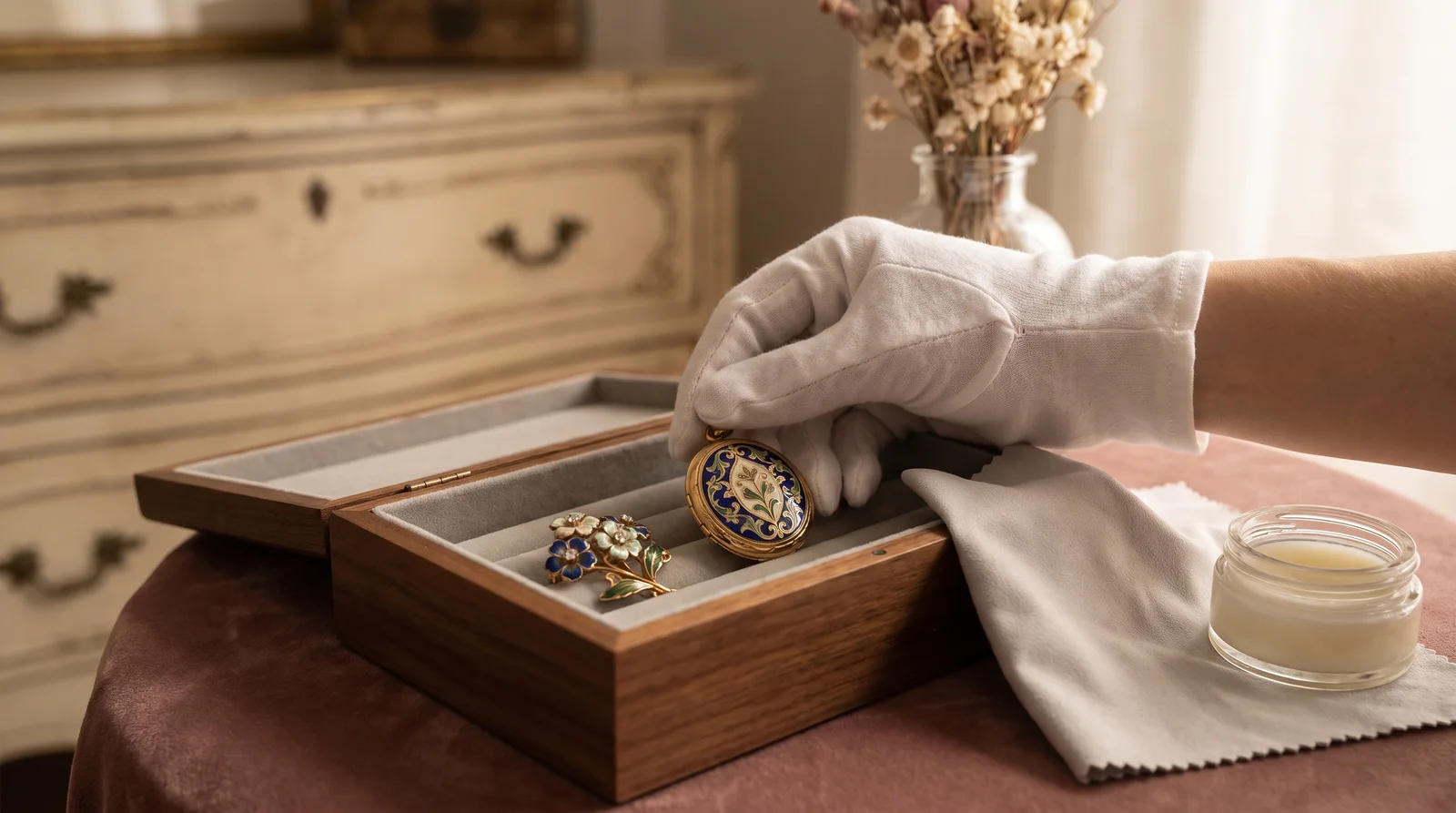
Protecting repaired enamel jewelry mainly comes down to storage habits and avoiding harsh cleaning products that can degrade the new fill. Store enamel pieces separately from other jewelry, ideally in a soft pouch or a lined compartment. This way they don't knock against harder metal or gemstone pieces in a shared box. That single habit prevents most of the impact damage that causes chips in the first place.
Cleaning matters just as much. Harsh ultrasonic cleaners and chemical dips can be rough on enamel, particularly cold cure resin repairs that haven't fully cured or hardened. A soft cloth with mild soap and water goes a lot further than people expect. For a full breakdown of safe methods across different materials, our guide on how to clean jewelry covers what works and what to avoid for enamel specifically.
Everyday Habits Worth Building
Take rings off before washing dishes, gardening, or any activity involving sudden temperature changes. Thermal shock is a real and often overlooked cause of cracking. Avoid wearing enamel pieces during workouts or manual labor. These small adjustments cost nothing, and they dramatically extend how long a repair actually lasts. That brings us to some of the most common questions people ask before committing to a fix.
Frequently Asked Questions About Enamel Repair
Can nail polish be used to touch up chipped enamel?
Nail polish can work as a very temporary cosmetic fix on costume jewelry, but it isn't durable. It will chip, yellow, or peel faster than proper cold cure resin. It's fine in a pinch for a piece with no real value, but it's not a lasting solution.
How long does a professional enamel repair typically last?
A well-done cold cure repair can last for years with normal care, though it depends heavily on how the piece is worn and stored. Full vitreous re-enameling, when done correctly by a skilled restorer, can last just as long as the original enamel work did.
Does chipped enamel affect a piece's resale value?
Yes, chipped enamel almost always lowers resale value, sometimes significantly on antique or collector pieces. Whether repair improves or hurts that value depends on how visible and well-matched the fix is. That's part of why professional restoration matters for anything valuable.
Why can't jewelers just repaint enamel like touch-up paint?
Enamel repair requires precise pigment matching, proper curing, and careful sanding to blend with the original surface. None of this behaves like ordinary paint. Paint doesn't bond the same way, doesn't match the glass-like depth of vitreous enamel, and tends to wear off far faster.
What happens if heat-sensitive gemstones are near the enamel damage?
A restorer will typically avoid kiln firing entirely and use cold cure resin instead. Or they'll remove and reset the stone before any heat-based work happens. This is exactly why identifying cold enamel vs vitreous enamel repair needs matters before any tool touches the piece.
Getting Your Piece Back to Where It Belongs
Chipped enamel doesn't have to mean the end of a piece you love. Once you understand that enamel breaks and repairs completely differently than metal, the whole decision gets a lot clearer. Small chips on costume jewelry are often fair game for a careful DIY fix. Anything with real history, fine metal, or gemstones nearby deserves a professional eye before anyone touches it with a needle or a torch. If you're staring at a chipped brooch or ring right now and not sure which category it falls into, get it looked at by someone who works with enamel regularly. A quick inspection will tell you more than any amount of guessing. It's the difference between a piece that gets a second life and one that gets ruined for good.