Can You Wear Cufflinks With Regular Dress Shirt? The Real Answer
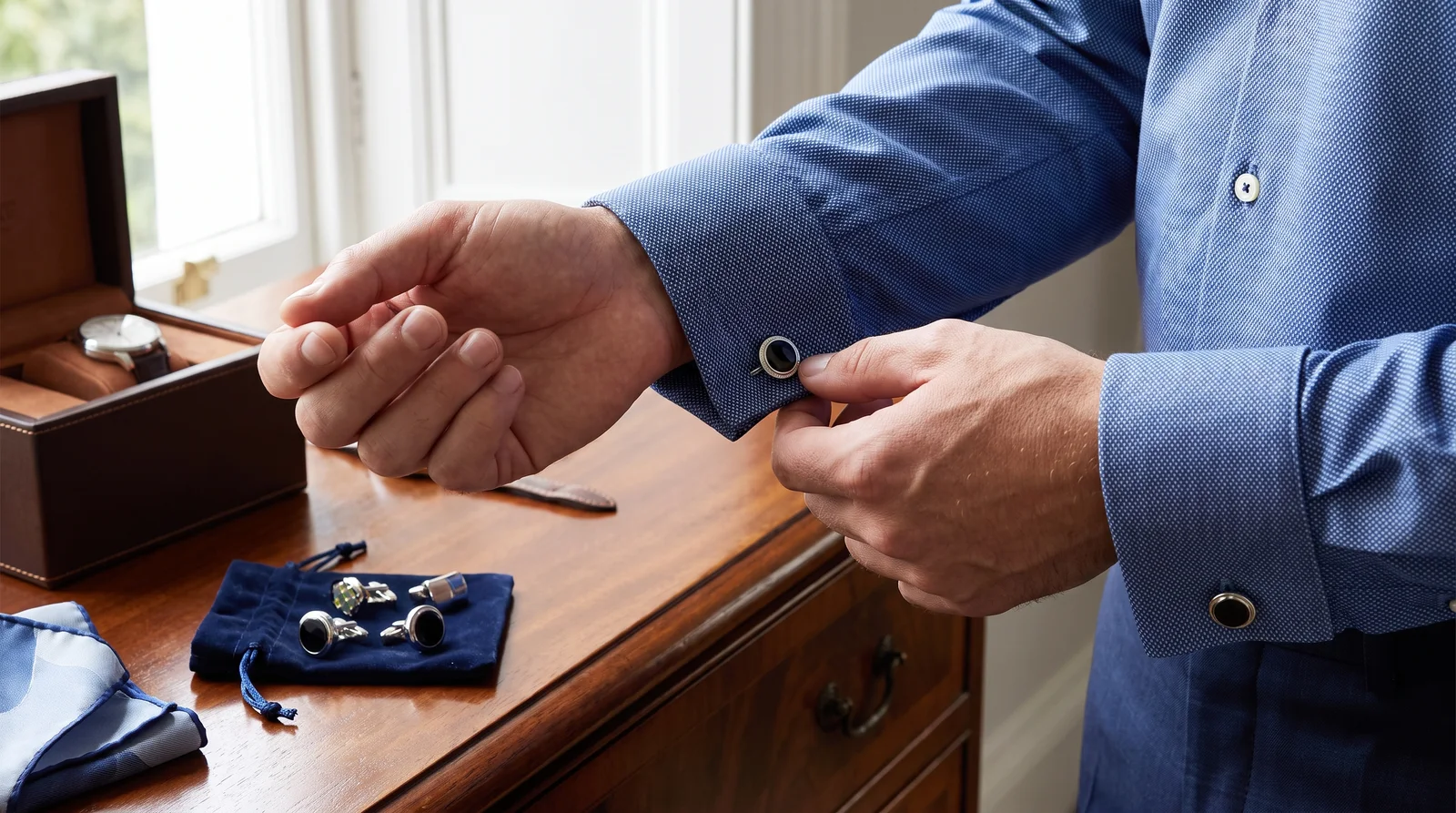
No, not without modification. Standard dress shirts use buttons on the cuff. Cufflinks need holes on both layers of fabric to pass through. The exception is a convertible cuff shirt. It's built with both button holes and cufflink holes, so it works either way. If your shirt only has buttons, you need a shirt swap or a tailor to add proper cufflink holes.
Can You Wear Cufflinks With a Regular Dress Shirt Without Changing Anything?
Straight answer: no, a true barrel cuff shirt has no holes for a cufflink to grip. The button and buttonhole system is a closed loop. It's sewn to hold one layer against another with a single point of fastening. A cufflink needs two aligned holes, one on each side of the folded cuff. This lets the post or toggle pass through and lock in place. Without that second hole, there's simply nothing for the cufflink to hold onto.
This trips up a lot of guys who buy cufflinks first and figure out the shirt problem second. Some try to force a cufflink through a buttonhole meant for a button. That stretches the fabric and looks sloppy up close. The mechanics just don't work that way. You need the right cuff architecture before the jewelry even matters.
French Cuff vs Single Cuff Shirt: What's the Mechanical Difference?
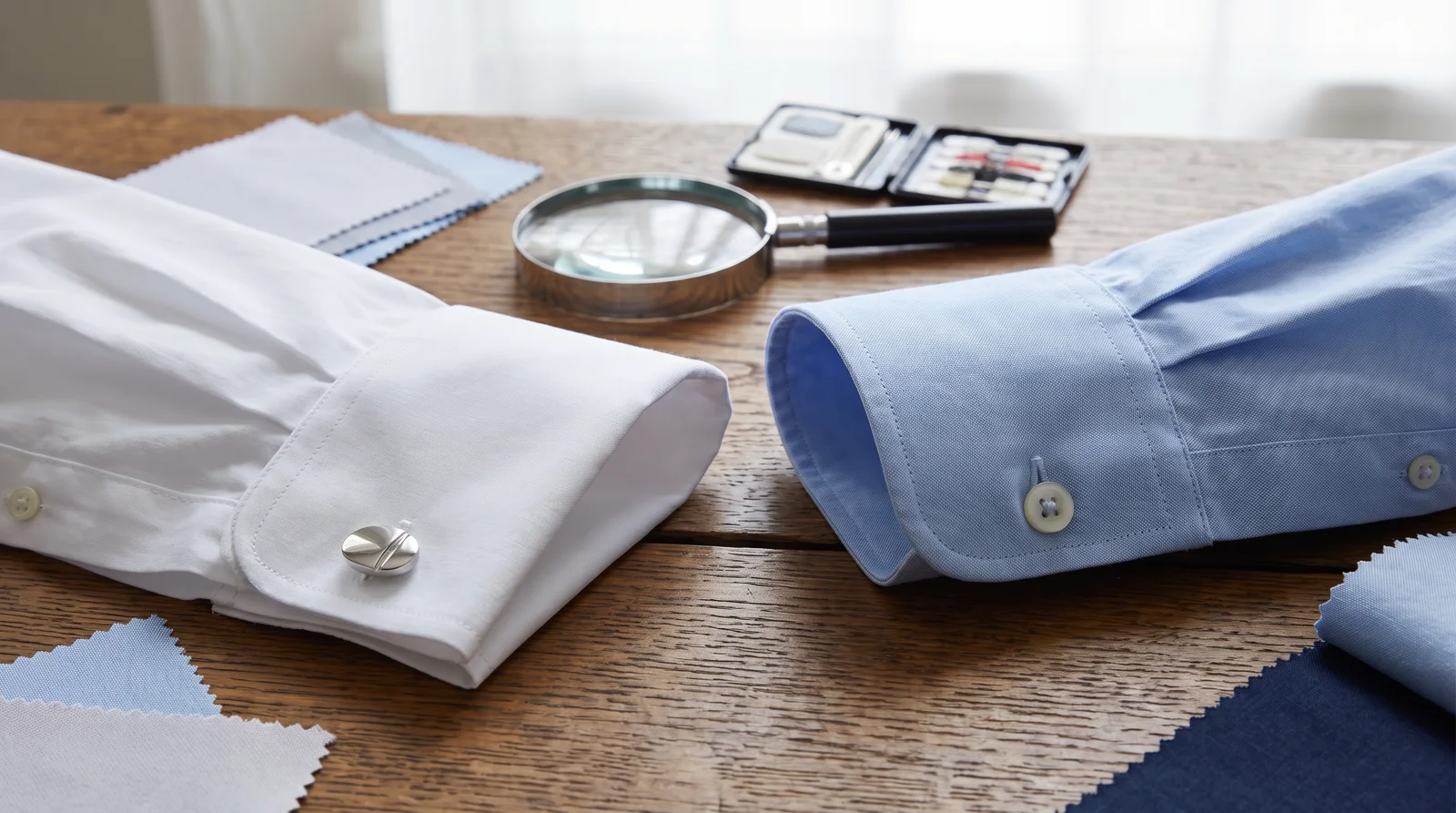
A French cuff shirt has a doubled length of fabric that folds back on itself. A single cuff shirt is a single layer closed with a button. This is the core distinction in the French cuff vs single cuff shirt debate, and it's purely structural, not just about formality. The French cuff, sometimes called a double cuff, is roughly twice the length of a standard cuff. It folds over so four layers of fabric line up, with two holes punched through for a cufflink to secure everything.
A single cuff, by contrast, is one layer with a button and buttonhole. Some single cuffs come with two buttons for a slightly more formal look. They're still built for buttons, not cufflink hardware. If you're shopping for a shirt specifically to wear cufflinks with, check this detail first. Look at the cuff length and whether it's designed to fold.
Cufflinks With Button Cuff Shirt Styles: Is Conversion Actually Worth It?
Converting a button cuff shirt for cufflinks with button cuff shirt use is possible. It's rarely worth the cost or effort for a shirt you already own. A tailor can remove the existing button, close the buttonhole, and add two new holes positioned for a cufflink. This typically runs between 15 and 40 dollars per shirt, depending on your area and the tailor's rate. That's not outrageous for one favorite shirt. It adds up fast if you're trying to convert several.
There's also a fit issue nobody mentions enough. Standard barrel cuffs are cut shorter and closer to the wrist than French cuffs. Even after adding cufflink holes, the cuff won't fold back properly, since there isn't enough extra fabric length. You end up with something that technically holds a cufflink but doesn't sit right. It won't fold cleanly, and it looks a little off up close.
My honest take, after years of watching people try this shortcut: if you want cufflinks to look right, buy a French cuff or convertible cuff shirt instead. Conversion works better as a rescue plan for a single shirt with sentimental or financial value, not as a general strategy.
What Makes a Convertible Cuff Shirt Cufflinks-Ready Without Guessing?
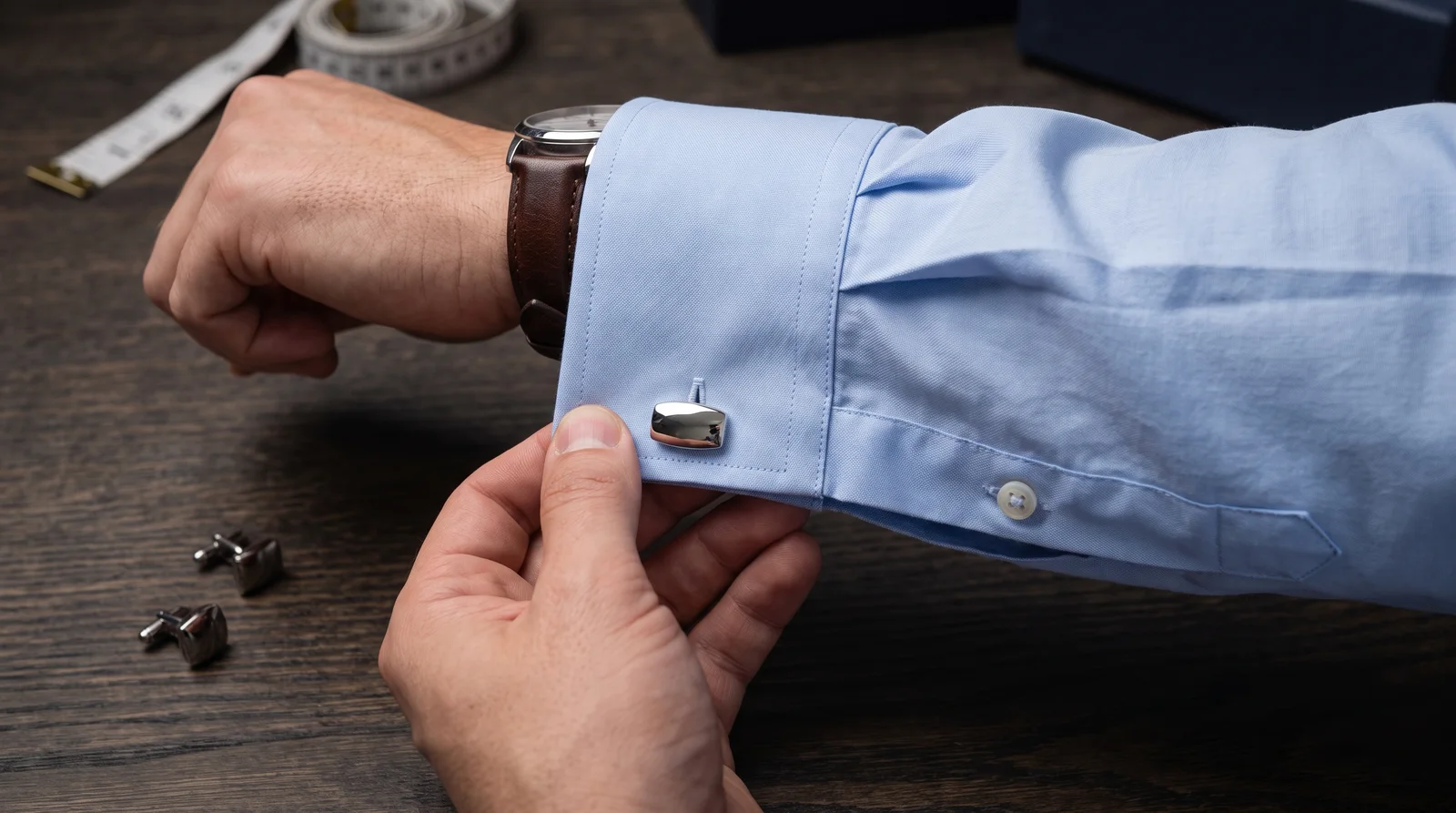
A true convertible cuff shirt has both a functioning button and a second buttonhole positioned to also accept a cufflink post. This dual setup is the entire point of convertible cuff shirt cufflinks compatibility. It removes the guesswork that trips people up when shopping online. You can wear the shirt buttoned for a casual look, then switch to cufflinks for something dressier, all with the same garment.
Here's how to spot one without relying on product photos, which are often misleading or cropped wrong. Check the product description for the words convertible cuff or French cuff convertible. Look for language mentioning both button and cufflink options in the same sentence. If a listing only says barrel cuff or button cuff, assume it's buttons only regardless of how the photo looks.
Feel the cuff if you can see it in person. A convertible cuff usually has slightly more fabric length than a standard barrel cuff, similar to how a French cuff needs extra material to fold.
When Modification Isn't Worth It (And What to Do Instead)
Skip modification when the shirt is inexpensive, the fabric is thin, or you need cufflinks regularly rather than for one event. Cheap dress shirts, the kind running under 40 dollars, often use lighter cotton blends. These don't hold up well to having holes cut and re-stitched. The fabric can fray, or the reinforcement won't be strong enough for the repeated stress of a metal cufflink post. You'll spend money on alteration and still end up with a shirt that wears out faster at the cuff.
If you wear cufflinks more than a couple times a year, the better move is buying one or two dedicated French cuff shirts. Prices for a solid French cuff dress shirt start around 60 to 80 dollars. That's often close to what conversion plus a mediocre result would cost anyway. You get proper fabric weight, correct cuff length, and holes built in from the start, not added as an afterthought.
If you're also thinking about how cufflinks pair with other jewelry choices, it helps to get the metal finish right across pieces. Our guide on how to wear gold jewelry covers matching tones so your cufflinks don't clash with a watch or ring.
Cufflink Shirt Alternatives When You Don't Want to Deal With Cuffs at All

If dealing with cuff types feels like too much hassle, several cufflink shirt alternatives get you a similar polished look without any of the fitting issues. Silk knots are a soft, fabric option that threads through French cuff holes the same way a cufflink would, giving a slightly less formal but still sharp finish. Cuff straps are another option, using a small elastic or leather band with a snap or magnetic closure that fits over a barrel cuff. Neither requires cufflink holes, but both still need a shirt with the extra cuff length to fold back.
Button covers are the true alternative for barrel cuff shirts. They snap directly over your existing buttons, giving the visual effect of a cufflink without touching the shirt's construction at all. This is genuinely the best route if you own several button cuff shirts and don't want to alter or replace any of them. It's fast, reversible, and costs a fraction of tailoring.
Frequently Asked Questions
Can you wear cufflinks with a regular dress shirt if it has two buttons on the cuff?
No, two buttons on a cuff still means it's a buttoned system, not a cufflink one. The number of buttons doesn't change the fact that there's only one fabric layer and no holes for a cufflink post.
How to convert regular shirt to cufflinks without ruining the fabric?
Take the shirt to a tailor experienced with formal wear rather than a general alterations shop. Ask them to reinforce the new holes with extra stitching, since standard cuff fabric wasn't built to handle a metal post pressing against it repeatedly.
Does a convertible cuff shirt work for cufflinks and buttons equally well?
Yes, that's the entire design purpose of a convertible cuff. You get a functional button for everyday wear and a second hole for cufflinks when you want a dressier look, all on one shirt.
When to wear French cuffs instead of relying on a converted shirt?
Choose real French cuffs whenever you're dressing for something formal enough that people will notice the details, like weddings, galas, or client dinners. A properly constructed French cuff folds and sits cleaner than a converted barrel cuff ever will.
Can you wear cufflinks with a regular dress shirt after adding button covers instead?
Button covers aren't cufflinks technically, but they solve the same styling problem without needing cufflink holes at all. They snap over your existing buttons, so the shirt itself needs zero modification.
Getting the Shirt Right Comes First
Cufflinks are a small detail, but they only work when the shirt underneath is built for them. Check the cuff before you check the cufflink box. No amount of nice hardware fixes a shirt that was never designed to hold it. If you're already thinking through which pieces pair well together for a polished look, our guide on men's silver earrings covers similar ground on what reads as professional versus overdone. Get the cuff type sorted first, then let the accessories do their job.