Why calibrated gemstone sizes Can Still Leave You With a Stone That Does Not Fit
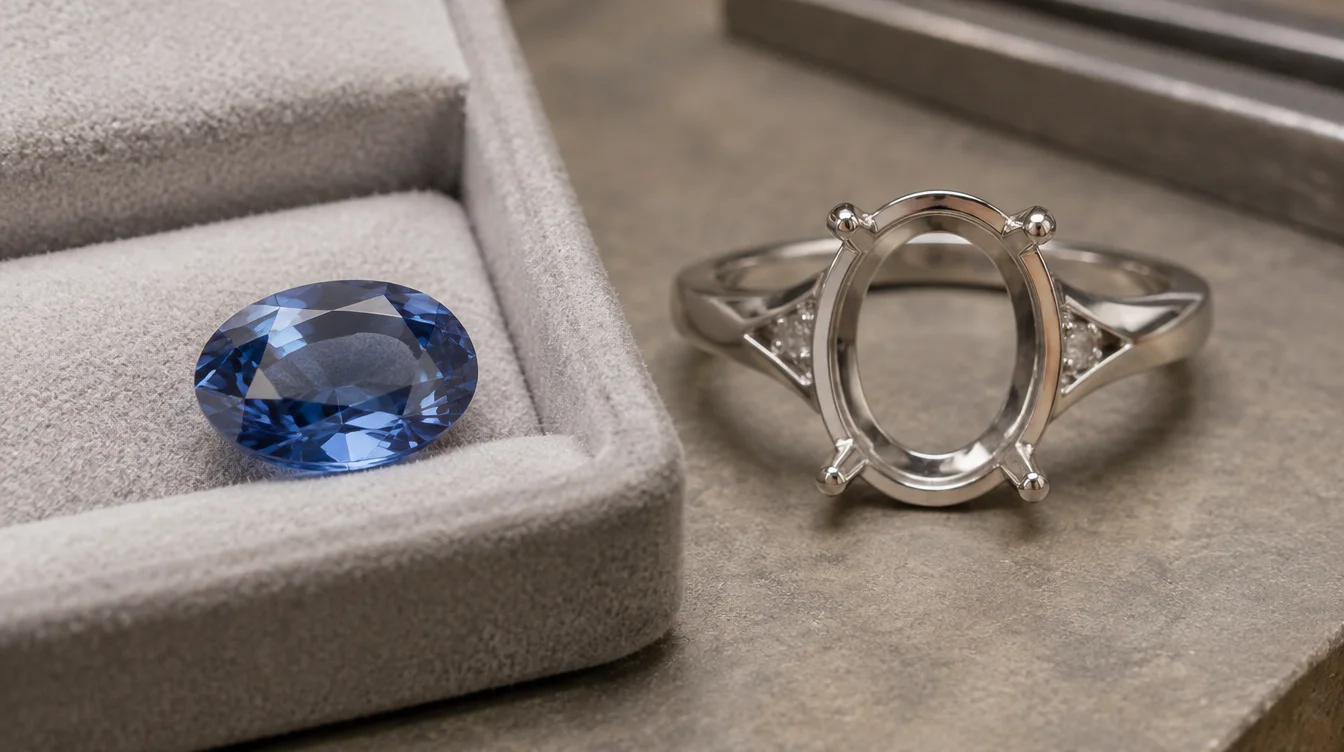
Before buying a loose stone for a standard mounting, match its actual measurements to the setting, not just its listed size. Calibrated gemstone sizes name common dimensions, but they do not guarantee that every stone will fit every mounting with that label. Depth, outline and girdle shape matter too. Ask the seller for the stone’s measurements and have your setter review them before you pay.
What calibrated gemstone sizes tell you
A calibrated size tells you the shape and nominal face up dimensions a stone was cut to meet. If you have wondered what are calibrated gemstones, think of an oval sold as 7 × 5 mm. Those numbers describe its intended length and width, not a promise that it measures exactly 7.00 × 5.00 mm.
Common labels help buyers shop for standard gemstone sizes. Rounds are usually listed by diameter. Ovals and rectangular cuts use length and width. A standard gem sizes chart from the International Gem Society shows listed dimensions for different shapes. Use it to start your search, not to judge whether a stone fits your mounting.
This matters most when you already own the setting. Check the dimensions its maker gives. Then compare them with the actual stone. Start with millimeters, not carats.
Why millimeters matter more than carat weight
For fit, gemstone sizes in mm vs carats is a simple choice: use millimeters. A carat measures weight. It does not tell you how wide a stone is, how deep it sits or whether its corners match the mounting.
Stones can share face up dimensions but differ in weight. Gem materials have different densities. Cutters also leave different amounts of stone below the girdle. The International Gem Society gives different estimated weights for a 6.5 mm round diamond, sapphire and opal. Those examples show why a weight chart cannot confirm fit.
Use a gemstone size chart for the shortlist
A gemstone size chart can help you find candidates. Say a mounting’s product page calls for a 7 × 5 mm oval. Search for that size, then request the exact dimensions of each stone you consider.
Note the weight when you compare stones of the same material. Do not use it in place of measurements. Once you have the dimensions, ask how close they must be.
How much size variation can a standard setting take?
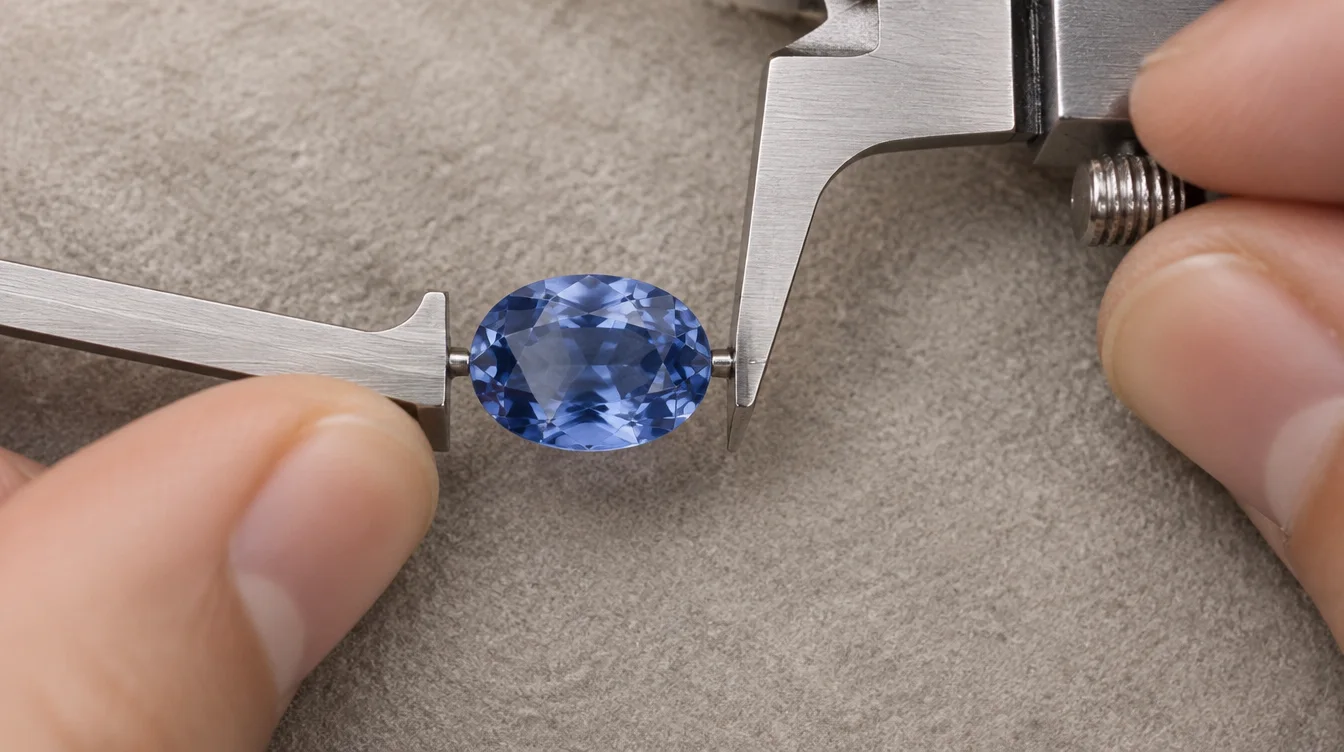
No single tolerance is safe for every standard setting. Fit depends on the mounting and the stone’s shape and size. It also depends on what the setter can adjust without weakening the hold.
Guides also describe tolerance differently. Skyjems describes a general calibration tolerance of ±0.1 mm in face up dimensions. The International Gem Society discusses what a skilled metalsmith may fit into a setting. Neither figure approves a mounting you have not had checked.
A worked size check
Suppose a listing calls an oval 7 × 5 mm, but its measured size is 7.08 × 4.94 mm. It is 0.08 mm longer and 0.06 mm narrower than the label. Under an assumed ±0.1 mm face up calibration range, both differences fall within that range. The calculation says the listing is plausible. It does not say the stone will fit your mounting.
Send the actual 7.08 × 4.94 mm dimensions to the setter. Ask for a yes or no on that stone in that setting, subject to an in person inspection. Width and length still leave out part of the fit.
What else should you check beyond length and width?
Check depth, outline and girdle before accepting a stone for a standard mounting. Two ovals can share the same length and width. Yet they may sit differently over the seat.
Depth and room beneath the stone
Ask for total depth in millimeters. A deep pavilion may touch the base of a low mounting. It may also make the stone sit too high. A shallow stone may meet the prongs or bezel at the wrong point. Skyjems notes that depth is less rigidly standardized than face up size. The setting’s bearing still limits what can sit properly.
Check the mounting’s construction
Ask whether the mounting has an open or closed back. Find out how much room lies below the stone. The setter should check clearance at the pavilion and culet, if present. Depth matters, but so does the shape beneath the girdle.
Outline, corners and girdle
Compare the stone’s outline with the seat, not just its cut name. Oval ends may be broad or narrow. Cushions can have different corner shapes. An emerald cut’s clipped corners must meet the mounting where the prongs or bezel expect them.
Ask where the metal will hold
The girdle is the stone’s outer edge. A setting often grips the stone there. Ask the setter to check girdle thickness and uneven spots at the contact points. A close match on paper may still need a different mounting. Someone must inspect both pieces to make that call.
What should you confirm before buying?
Before ordering, get the seller’s measured length, width and total depth in millimeters. Ask whether those are measurements of the actual stone, rather than nominal figures copied from its size category. Request clear face up and side views, including the girdle.
Send the setter those details, the stone’s shape and its listing. Include the mounting’s exact model or specifications. For gemstone settings by size, ask if the maker gives a fit range. Then ask the setter to check the outline, girdle and pavilion against the seat.
Ask what happens if the setter rejects the stone after seeing it. Read the return terms before buying. Check whether an inspection or setting attempt changes them. Written measurements and clear return terms help more than a size label.
If the stone falls outside the mounting’s stated range, ask about another stone or a mounting made for it. The questions below can help you choose.
Questions buyers ask about fit
A listing may leave these fit questions unanswered. Your setter still needs to approve the actual stone and mounting.
Can a 7 × 5 mm oval fit any 7 × 5 mm setting?
No. A 7 × 5 mm label does not give the oval’s exact measurements, depth or outline. Ask the setter to compare the actual stone with that mounting.
How do I learn how to measure a gemstone?
Use a suitable caliper to measure length and width across the girdle. Measure depth from the table to the culet or lowest point. If you are unsure how to measure a gemstone without harm, ask the seller for measurements. Let the setter check them.
Does a heavier stone need a larger setting?
Not necessarily. For gemstone sizes in mm vs carats, weight can differ due to density and cut depth. Choose gemstone settings by size using measured dimensions. Then have the setter check the stone’s profile.
Those answers all lead to the same practical next step: approve the stone and mounting as a pair.
Make the fit call before you commit
Calibrated gemstone sizes narrow your search, but they cannot confirm fit. Use standard gemstone sizes and a gemstone size chart to find candidates. Then check each stone’s dimensions, depth, outline and girdle against the mounting.
If the seller cannot give you those details, wait. If the setter cannot approve the fit yet, arrange an inspection or choose another stone. Send both parties the same measurements before you buy. They need to check the stone you will receive.