Why bypass vs split shank ring fit depends on more than style
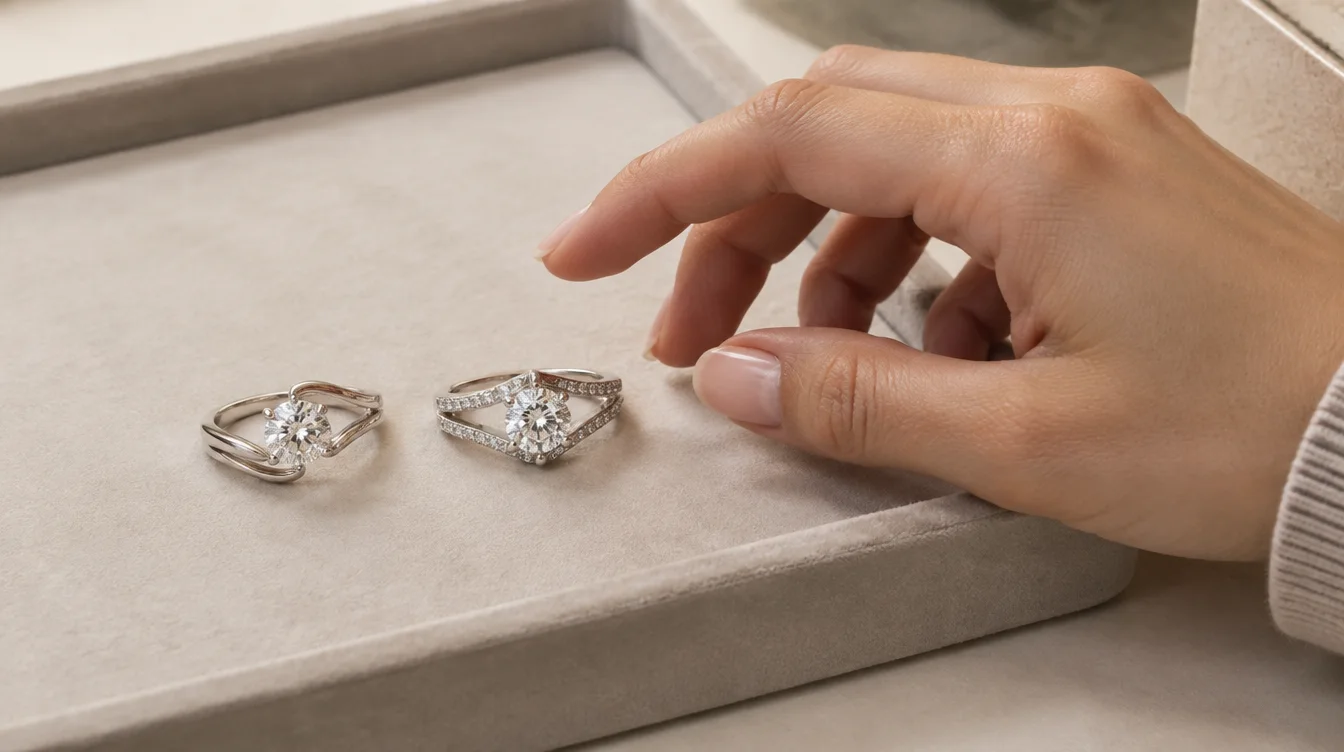
Neither style fits better by name alone. For bypass vs split shank ring fit, choose the ring that stays centered and feels clear of nearby fingers when you move your hand. Inner band size, shoulder spread, and the weight of the setting all matter. Try on finished rings before changing your size based on a design label.
What changes in bypass vs split shank ring fit?
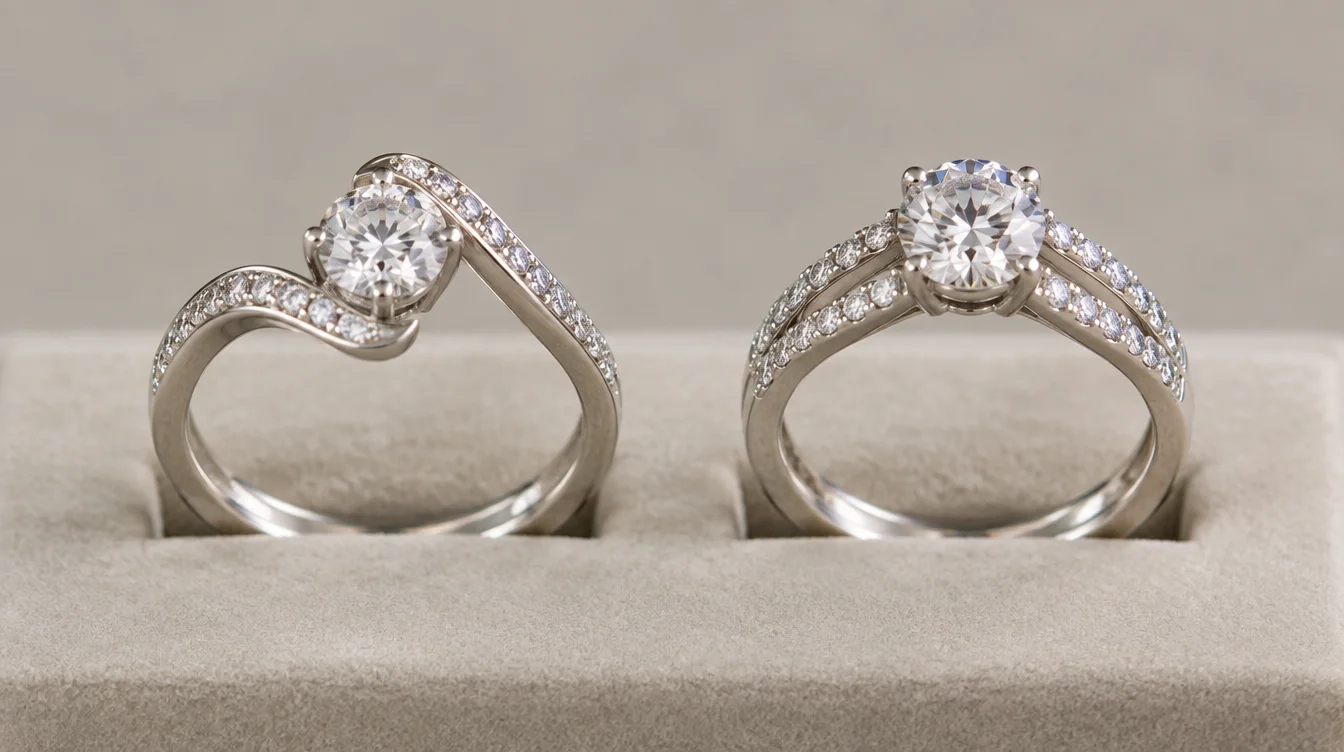
The main difference is how the shoulders approach the center stone, not how the band fits beneath your finger. On a bypass ring, the two sides curve past the stone rather than meeting it evenly. On a split shank, the band divides into separate arms near the setting. Cooksongold’s guide to ring shanks describes both structures.
That distinction helps when comparing bypass engagement rings with split shank engagement rings. A bypass may bring one shoulder closer to a neighboring finger. A split shank may spread its shoulders across more of the top of yours. Neither detail tells you the inner band size. Both styles can be made with different band widths and inside profiles, so start by judging the part that circles your finger.
Which style feels better on your finger?
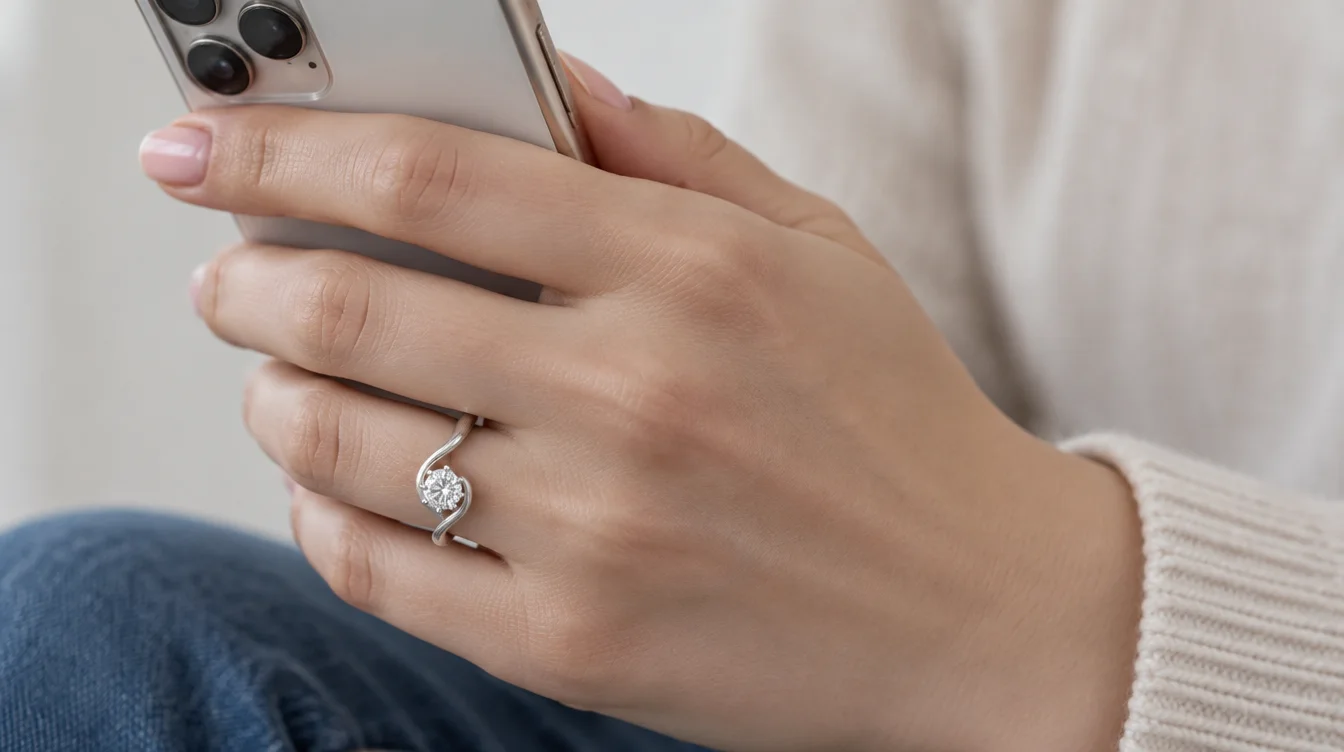
Finger comfort depends on where the metal touches you. Check the inner band, the shoulder edges, and the setting while your hand rests and moves. A smooth fit at the base means little if an upper shoulder presses into your next finger.
Feel the inside before judging the shape
Comfort fit engagement rings have a rounded inner profile, rather than a flat interior with firmer edges. That profile is separate from whether the ring has a bypass or split shank design. Cooksongold explains comfort fit as a feature of the shank’s profile. Ask to compare rings with similar inside shapes, or you may credit the design for a difference caused by the finish.
Close your hand and check the shoulders
Make a loose fist, hold a phone, and grip a bag handle. Notice any pinch or rubbing. With bypass engagement rings, check both sides separately because the curves may sit at different points. With split shank engagement rings, feel where each arm begins and where it joins the lower band. If either ring bothers you during these simple moves, its good looks will not fix that feeling. Next, look at how much space those shoulders take up.
How much does shoulder width matter?
Shoulder width affects how a ring feels across the top of the finger, but it is not the same as inner band width. The shoulders are the parts of the shank that lead to the setting, as DiamondNet’s shank guide explains. They can look broad from above while the band beneath the finger stays narrow.
When you compare engagement ring band width, ask for two views. Look straight down at the shoulder spread, then turn your hand over to see the lower band. A split shank with widely spaced arms may feel open on top yet still press at its outer edges. A bypass with close curves may look slim but touch the next finger on one side. Finger shape and the exact setting change the result, so judge the sample on your hand.
Once the width feels right, see whether the ring stays where you put it.
Will a bypass or split shank ring spin less?
Neither design guarantees less spinning. Rotation can change with the fit of the lower band, the weight and height of the setting, and how the ring sits on your finger. Compare finished samples instead of assuming that wider shoulders will hold either style upright.
Run the same movement test on both rings
Place each center stone upright. Let your arm hang, walk a few steps, then turn your palm down and open your hand. Note how far the stone moves and whether you keep straightening it. Repeat the test with each ring at a comfortable size. A tighter sample may seem steadier, but it should not press on your finger.
Ask what is causing the movement
If you are searching for how to stop a ring from spinning, first ask a jeweler to check the size and the finished ring’s balance. Do not choose a smaller size just because one sample turns. A ring must still pass over the knuckle and feel comfortable when your finger changes through the day. An adjustment that helps one design may not suit another. Stability matters, but the next test is whether you can live with the ring during ordinary tasks.
What should you compare during a try on?
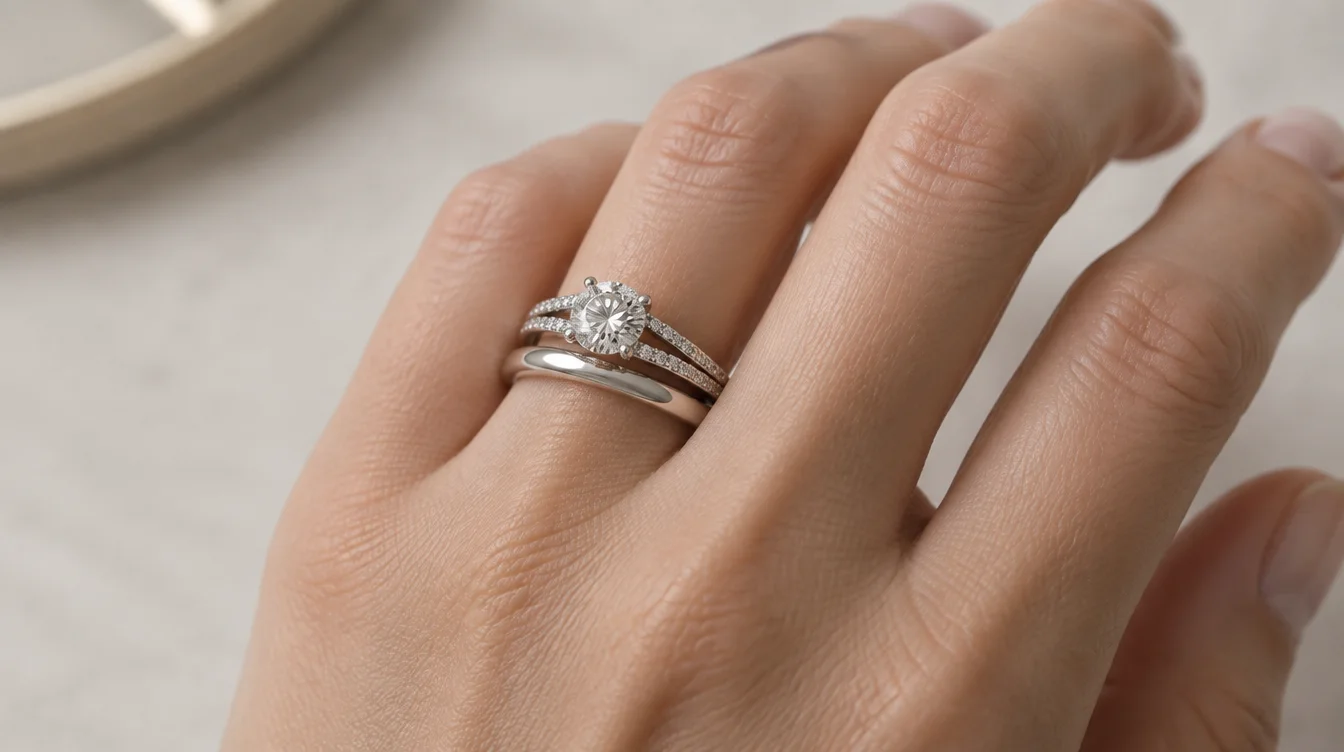
A useful try on compares the same three things for each ring: rotation, contact with nearby fingers, and comfort when bending your hand. Wear each sample long enough to repeat the same motions. Keep notes if you are choosing on different days.
Compare like with like
Try similar center stone sizes and setting heights where possible. Otherwise, a tall head may make one ring feel less steady for reasons unrelated to the shank. When assessing split shank rings pros and cons, do not count the open space as a comfort benefit until you have felt the outer arms against your fingers. For a bypass, check whether its curve feels different when worn on the intended hand.
Check the view from every angle
Look from above for shoulder spread. Turn your palm inward to see how the lower band sits. Then bend your fingers and check for contact you missed while your hand was still.
Give the wedding band a turn
Place a wedding band beside each engagement ring if you plan to wear them together. The two shapes may leave different gaps or touch at different points. If you want to compare band profiles first, this guide to wedding ring styles explains comfort fit and curved bands. The pair should feel good together, not just look right in a photo.
Which ring should you choose?
Choose the bypass ring if its curved shoulders clear your other fingers and you like its off center look. Choose the split shank if its arms feel comfortable and the wider top suits your hand. In either case, favor the finished ring that stays reasonably upright without feeling tight. Neither style can promise a better fit without a try on.
For comfort fit engagement rings, ask about the inside profile as well as the shape seen from above. For engagement ring band width, compare the lower band and the shoulder spread separately. Those checks tell you more about fit than a style name alone.
Questions to ask before you buy
These answers cover the fit concerns that tend to appear once you start trying rings on.
Does a split shank make a ring fit tighter?
Not by itself. The split describes the upper shoulders; the inner band still needs to fit your finger. Ask the jeweler to check the finished ring rather than changing size from a photo.
Can a bypass ring touch my next finger?
Yes, depending on its curve and your finger spacing. Close your hand while wearing it and feel both sides. If one shoulder rubs, try another design before accepting that contact.
How can I tell if a ring spins too much?
If the setting repeatedly turns during normal movement and you must keep straightening it, have the fit checked. For how to stop a ring from spinning, start with size and balance rather than assuming the shank style is at fault.
What are the main split shank rings pros and cons?
The open shoulders give the center stone a distinct frame. Their spread may also bring metal closer to nearby fingers. The exact shape matters more than the style label, which is why a try on settles the choice.
Let your hand make the final call
A ring should feel good during the quiet parts of your day, not only while you admire it in a case. Try both styles at a proper size. Move your hand, check the shoulders, and wear the wedding band beside them. Bring the ring that feels best back to a jeweler for a final fit check before you order.