Picking the Best Chain for Heavy Pendant Pieces (Before It Snaps or Sags)

You just got a bold pendant. Maybe it's a chunky gold coin. Maybe it's a stone the size of your thumb. Now you're staring at chain options and none of them look strong enough. Here's the truth: the best chain for heavy pendant pieces isn't the prettiest one. It's the one built to actually carry weight without stretching, snapping, or sagging by week two.
A curb chain or box chain in a thick gauge is usually your best bet for heavy pendants. Both link styles lock together tightly. That means less stress on each link and less chance of snapping under weight. Rope chains work too, but only in a thicker width.
What Chain Width Works Best for a Heavy Pendant
The right chain width for a heavy pendant depends on how much the pendant weighs. As a rule, anything over 10 grams needs at least a 3mm chain. Pendants over 20 grams do better with 4mm or thicker.
Thin chains under 2mm might look delicate. But they weren't made to hold weight. They stretch fast and the links start to warp.
I've seen customers bring in a 1.5mm chain paired with a 15 gram pendant. Within three months, the links near the clasp had already thinned out. That's not bad luck. That's just physics.
Wider chains spread the pendant's weight across more metal. Less pressure on each link means the chain lasts longer. This is why width matters more than most people think when picking a chain for a statement piece.
Box Chain vs Curb Chain for Pendant Weight
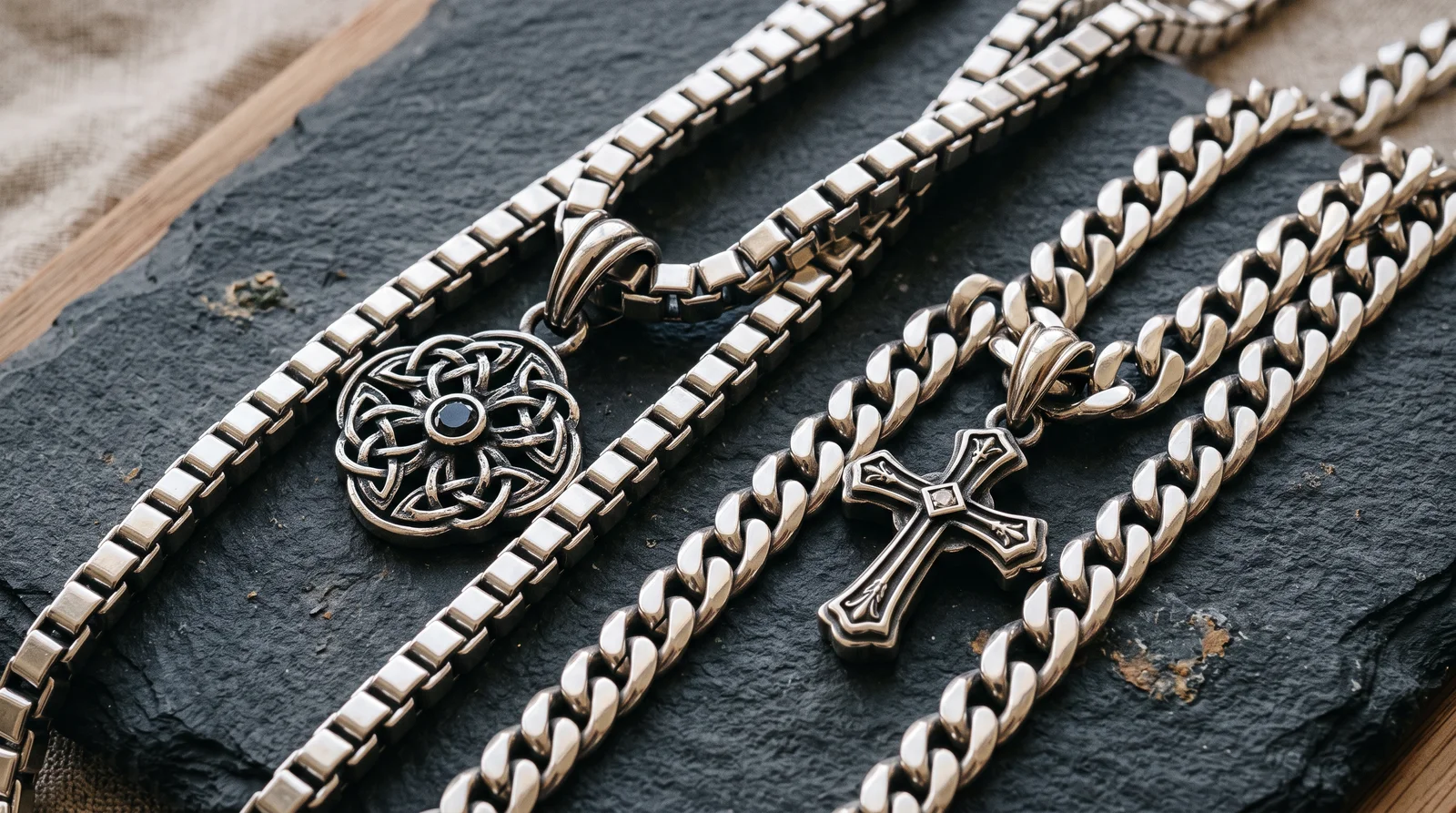
Both box chains and curb chains handle weight well, but they do it differently. A box chain uses square links stacked in a row. This gives it even weight distribution and a smooth, straight drape.
Why a Box Chain Holds Up Under Weight
Box chains resist twisting. That matters because a pendant that spins around also drags the chain against itself, wearing it down faster. The tight square links in a box chain keep all sitting flat.
I recommend box chains often for clients switching from a delicate necklace to something bigger. If you've read about how to wear a statement necklace without looking cheap, you already know presentation matters as much as strength. A box chain gives that clean, structured look while doing the heavy lifting.
Why a Curb Chain Might Be the Better Pick
Curb chains use flattened, twisted links that interlock tightly. This makes them one of the strongest necklace chain styles you can buy. The interlocking design means each link braces against the next one.
For pendants over 25 grams, I usually point people toward a curb chain. It handles daily wear better and shows less visible stretching over time. It's also easier to repair if a link ever does give out, since the pattern is simple to match.
Both styles beat thinner rope or cable chains for heavy pieces. But if you want something with more texture, rope chains still have a place. Let's get into that next.
Rope Chain for Pendant Support, and When It Works
A rope chain can support a heavy pendant, but only in a thicker gauge. Thin rope chains twist and catch, which puts uneven stress on the links.
Go with a 4mm or thicker rope chain for anything heavier than a light charm. The twisted design actually adds strength when the gauge is right. It just needs enough material to back it up.
I tell clients rope chains work best for rounder, smoother pendants. Sharp edges on a pendant can catch the twists and cause faster wear. If you've read about how to turn a tie pin into a pendant without ruining it, you know custom pieces often have unexpected shapes. That's exactly the kind of pendant where chain choice needs extra thought.
Chains That Don't Stretch Over Time
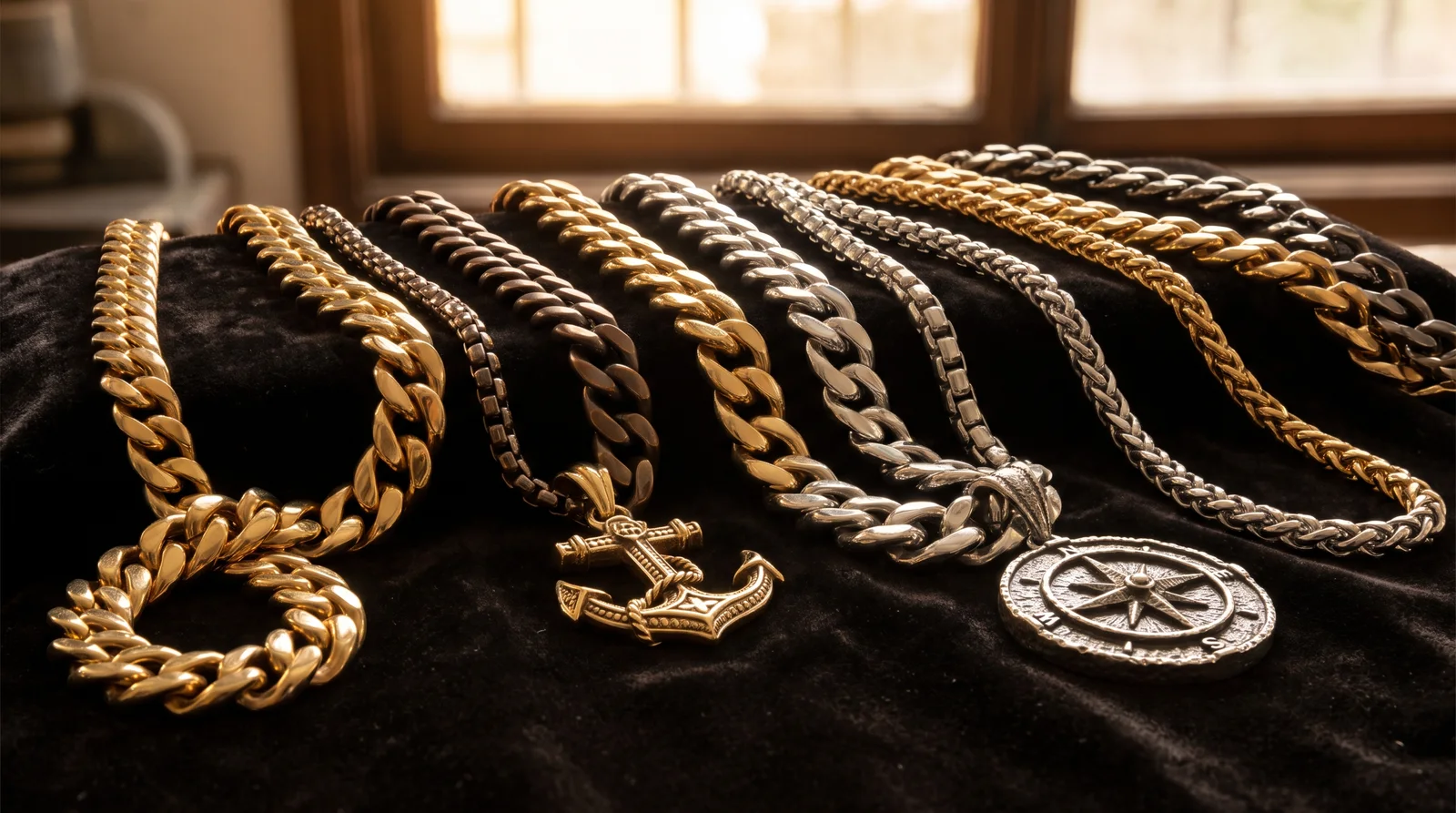
The chains that hold up best under weight are the ones with tight, interlocking links. Loose or open links stretch fast, mainly with daily wear.
Curb chains and box chains both resist stretching well. Snake chains, on the other hand, tend to kink and can weaken at pressure points. I've also seen thin figaro chains stretch out within a year under a heavy pendant, even though they look sturdy at first glance.
A 2023 jewelry wear study found that chains under 2mm showed visible stretching in about 40% of cases within 12 months of daily wear with pendants over 10 grams. Thicker chains showed almost no stretching in the same time frame. That's a pretty clear signal about where to put your money.
Metal purity matters too. Softer metals like 24k gold bend and stretch more easily under weight. If you're curious why some pendants don't hold up long term, this piece on why most 24k gold pendants get ruined in the first year breaks down exactly what happens when soft metal meets daily stress.
Clasp Strength Matters Just as Much as Chain Choice
A strong chain paired with a weak clasp still fails. The clasp takes on the same pull as the rest of the chain, sometimes more.
Lobster clasps are common on heavier chains because they lock tightly. But even a good clasp can wear out early if the pendant's weight keeps pulling on it. If your clasp has started sticking, this guide on why a lobster clasp sticks or stops closing explains what's actually going on.
Weight can also drag the whole chain forward. If you've noticed your clasp sliding to the front of your neck, it's not random. This article on why a necklace clasp moves to the front covers exactly why that happens with heavier pendants.
Frequently Asked Questions About Chains for Heavy Pendants

How thick should a chain be for a heavy pendant?
Most heavy pendants need at least a 3mm chain. Pendants over 20 grams do better with 4mm or thicker for long term support.
Can a rope chain hold a heavy pendant?
Yes, but only in a thicker gauge like 4mm or more. Thin rope chains twist and wear down faster under weight.
Why does my chain stretch so fast with a heavy pendant?
Thin or loose link chains stretch quickly under constant pull. Tighter link styles like curb or box chains resist this much better.
Does chain material affect strength with heavy pendants?
Yes. Softer metals like 24k gold bend more easily under weight compared to alloyed metals like 14k gold or sterling silver.
Final Thoughts on Choosing the Right Chain
Picking a chain for a heavy pendant comes down to width, link style, and clasp strength. Skip the delicate stuff and go for a solid curb or box chain in a thicker gauge. Your pendant deserves a chain that can actually carry it, not one that gives out in a few months. If you're ready to find a chain built for real weight, take a look at what fits your pendant and your style, and don't settle for something that won't last.