Peridot or Sardonyx: Which August Birthstone Jewelry Actually Survives Daily Wear?
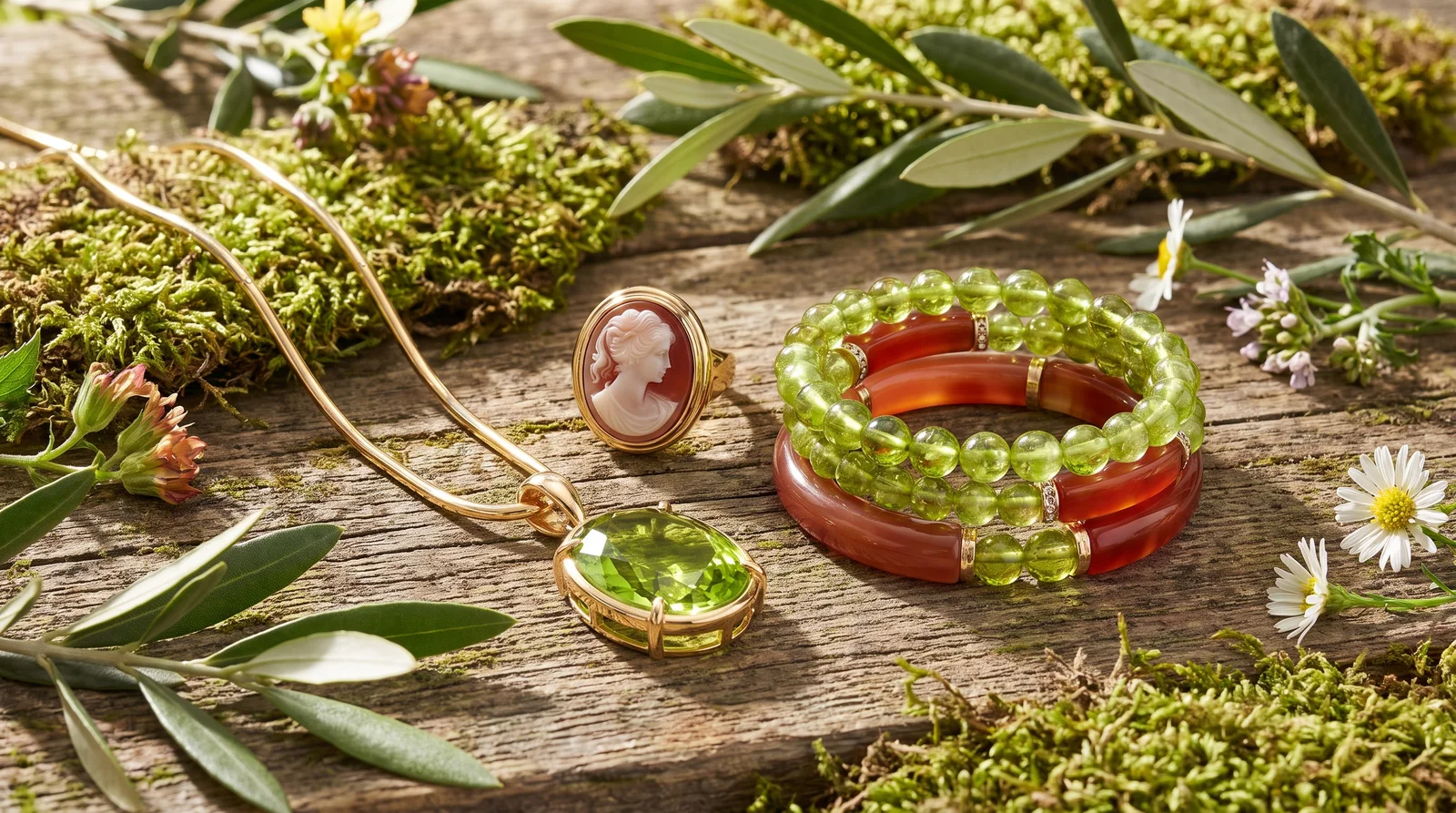
Peridot and sardonyx both work for august birthstone jewelry, but not in the same jobs. Peridot sits at 6.5 to 7 on the Mohs hardness scale. That's fine for a necklace or earrings, but risky for a ring you never take off. Sardonyx sits in that same 6.5 to 7 range too. Its solid, banded structure handles bumps a little differently than peridot's more brittle crystal. The right pick depends on what you're actually going to do while wearing it.
Why August's Two Main Birthstones Wear So Differently
Peridot and sardonyx look nothing alike and behave differently on your hand. They formed through completely different processes. Peridot is a crystal, the gem form of olivine. It's born deep in the earth's mantle and pushed up through volcanic activity. That crystal structure gives it clarity and a lime to olive green color. But it also means a hard knock can chip or crack it along internal planes. Sardonyx is a banded chalcedony, built from microscopic quartz fibers layered over time into stripes of reddish brown and white. That fibrous structure is tougher against chipping, even at a similar hardness number on paper.
This is the part most birthstone guides skip. Two stones can share a Mohs rating and still hold up differently in real life. Hardness only measures resistance to scratching, not resistance to a sharp impact. Sardonyx's density and banded grain make it a bit more forgiving if you knock a ring against a doorframe. Peridot is cut and faceted like a typical gemstone, so it has thinner edges that catch and chip more easily. Some stones rated identically to sapphire behave very differently under daily stress. That's the same logic that applies to comparing ruby's toughness against other 9 Mohs stones. It's not just the number, it's the structure behind it.
Peridot Jewelry Durability for Daily Wear
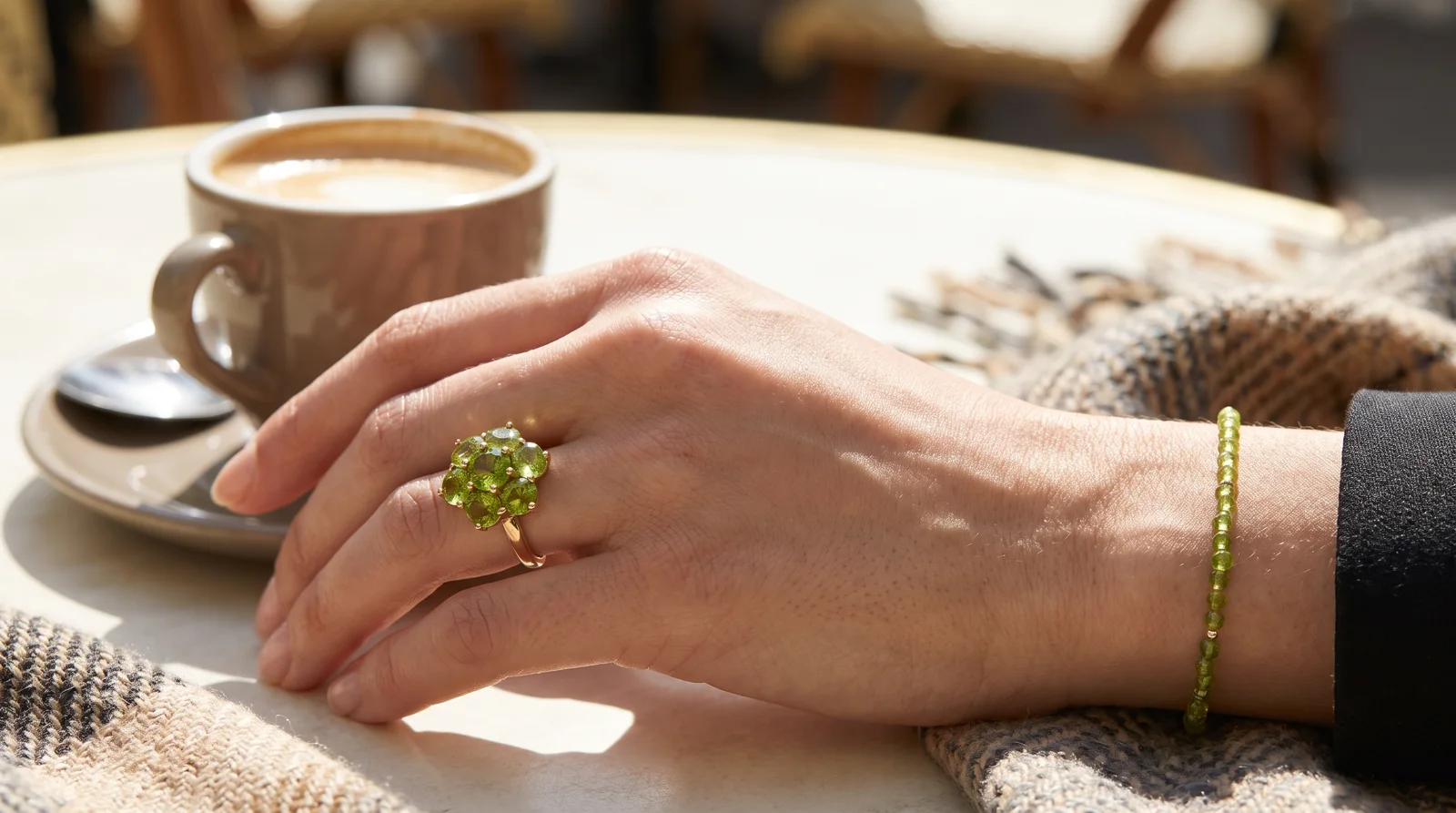
Peridot can survive daily wear, but only in the right setting and only with realistic expectations. At 6.5 to 7 Mohs, it's softer than sapphire, ruby, or spinel, and noticeably softer than a diamond. That doesn't make it fragile. It makes it a stone that needs a thoughtful setting and a bit of common sense from the wearer.
Best Formats for Everyday Peridot
Necklaces and earrings are the safest homes for peridot, since they rarely collide with hard surfaces. A pendant swinging on a chain isn't getting knocked against a countertop the way a ring does forty times a day. Studs and drops face the same low-risk environment. Bracelets fall in the middle. They see more contact than a necklace but less than a ring. A bezel or half-bezel setting helps protect the stone's edges from chipping during normal wear.
Rings Need a Protective Setting
Peridot rings are the highest-risk format. That's worth saying plainly before anyone buys one as a daily piece. A prong setting leaves the stone's edges exposed to countertops, car doors, and gym equipment. A bezel setting, where metal wraps around the stone's perimeter, absorbs a lot of that shock instead of letting it hit the gem directly. If someone on your gift list works with their hands all day, a peridot ring probably isn't the smartest pick. A peridot pendant on a sturdy chain solves the same styling goal without the risk.
Setting choice matters, but so does the metal underneath it. A softer metal band flexes more under pressure and can loosen prongs over time. That puts even more strain on a stone that's already on the softer side. This is one reason the metal question deserves its own look. In several practical ways, 14k gold actually resists daily wear stress better than 18k.
Peridot vs Spinel vs Sardonyx for Toughness
Spinel is the toughest of August's three official birthstones, rated 8 on the Mohs scale. That puts it ahead of both peridot and sardonyx for anyone who refuses to take jewelry off. Spinel was added to the August lineup in 2016. Peridot's fixed green had left no options for people who wanted a different color with real daily durability. Spinel comes in red, pink, blue, purple, and black. The red variety has a long history of being mistaken for ruby in royal collections, including gems set into the British Crown Jewels.
So where does that leave the comparison? Spinel wins on raw hardness. Sardonyx wins on impact resistance relative to its hardness rating. Peridot wins on being instantly recognizable as the August stone. If durability is the only factor that matters, spinel birthstone durability is hard to beat for a ring worn every day without a second thought. If you want the specific green most people associate with August, you're choosing peridot. Just be smarter about the setting and format. Sardonyx sits as a genuinely different aesthetic choice entirely, more graphic and structural than sparkling.
When Sardonyx Makes More Sense Than Peridot
Sardonyx tends to suit signet rings, cufflinks, and flat-cut pendants better than delicate everyday pieces. That's actually an advantage for durability. Ancient Romans carved its banded structure into seals and signet rings. They chose it because it held up to daily handling and repeated pressing into wax. A flat-cut sardonyx also sits lower against the skin than a faceted peridot. That means fewer sharp edges catching on fabric or bumping against hard surfaces. If someone wants an August ring that can genuinely take a beating without needing a bezel setting, sardonyx often outperforms peridot in that specific job.
How to Match the Stone to a Lifestyle
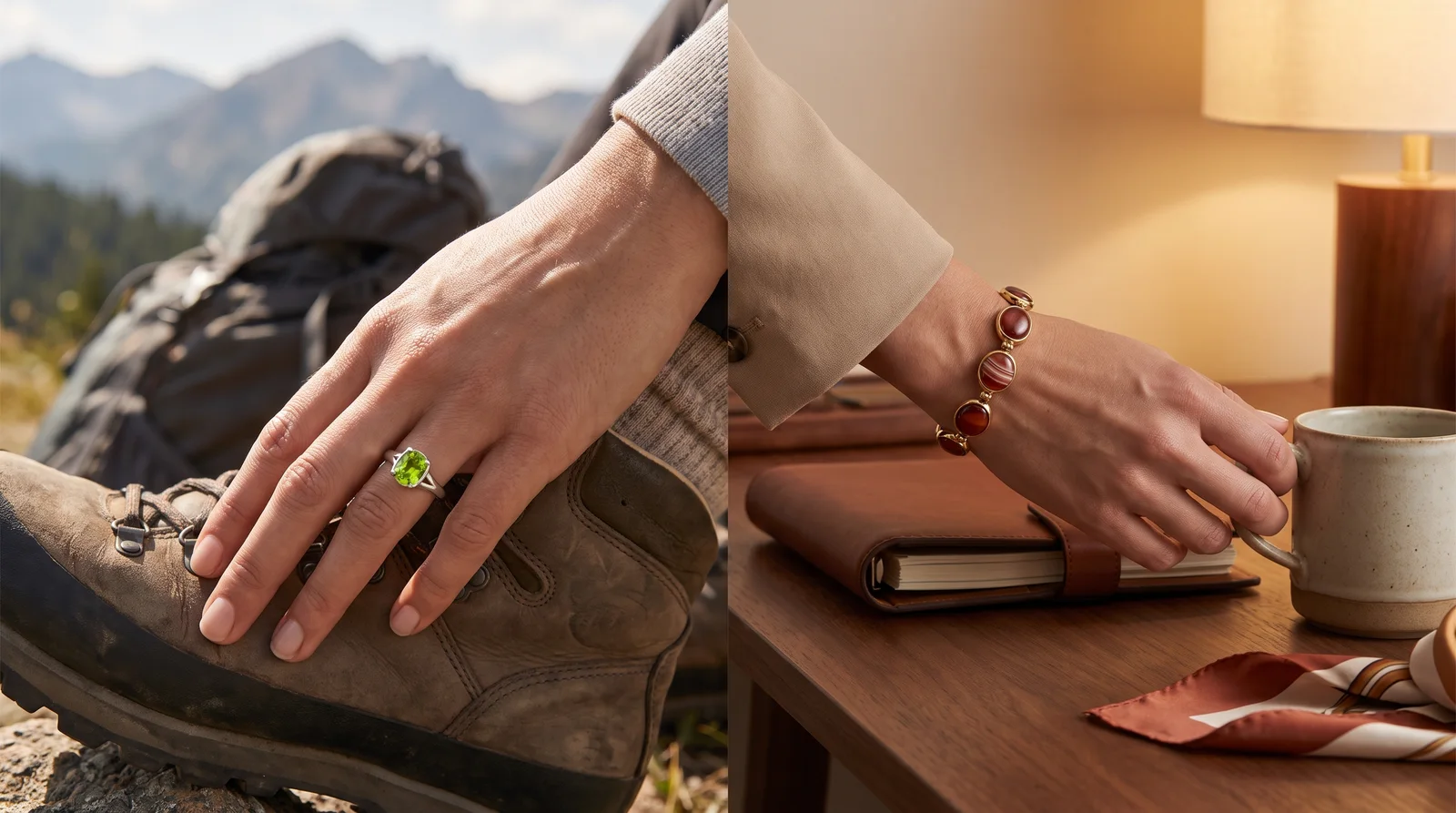
The right August birthstone depends on how active the wearer's hands are during a typical day, more than on which stone they've heard of. Someone who gardens, works out daily, or does physical work needs either a protected setting or a tougher stone altogether. Someone whose hands stay relatively still at a desk has more flexibility. They can choose based on color and meaning instead of pure toughness.
Active Hands, Daily Rings
If a ring is going on and staying on through gym sessions, cooking, and yard work, spinel or a bezel-set sardonyx will hold up better than a prong-set peridot. This mirrors a question jewelers get about ruby all the time, since a 9 Mohs stone still chips if the setting is wrong or the impact is direct enough. Hardness reduces risk. It doesn't eliminate it. A well-built setting matters as much as the stone rating itself, no matter which August birthstone you land on.
Occasional Wear, More Stone Freedom
For a piece worn only for dinners, events, or specific outfits, peridot's durability limits matter less. A statement peridot cocktail ring or a large pendant can lean fully into the stone's bright, sunny green. You don't need to worry as much about daily wear and tear. This is also where sardonyx's carved, historic look shines. It was traditionally an occasional or ceremonial stone rather than a daily one anyway. Rotation protects softer stones automatically, just by giving them fewer chances to get knocked around.
August Birthstone Gift Ideas Based on How They'll Wear It
The best August birthstone gift ideas start with the recipient's daily habits, not just their favorite color. Ask yourself, or the person you're buying for, how often the piece will actually leave the jewelry box. A birthday necklace worn twice a year needs a completely different stone strategy than a ring meant for daily wear starting the moment it's unwrapped.
A peridot pendant or stud earrings make a safe, classic gift for almost anyone. The low-contact format sidesteps most durability concerns entirely. A spinel ring works well for someone who wants a daily piece and doesn't mind skipping the traditional August green for a color that suits them better. A sardonyx signet ring or cufflinks suit someone who appreciates history and wants a piece with real presence on the hand. Still narrowing down the right approach for a birthstone gift? A broader look at how to choose jewelry for a gift walks through the same budget and lifestyle questions in more depth.
Charm and pendant settings deserve a specific mention too, since a birthstone gift often takes that form. The way a stone sits in a charm, and how strong the jump ring and chain are, affects how long that piece lasts under regular wear. It's worth understanding how charm settings hold up before buying one as a birthstone gift, since a weak jump ring can undo an otherwise well-chosen stone.
Peridot Ring Care and Cleaning
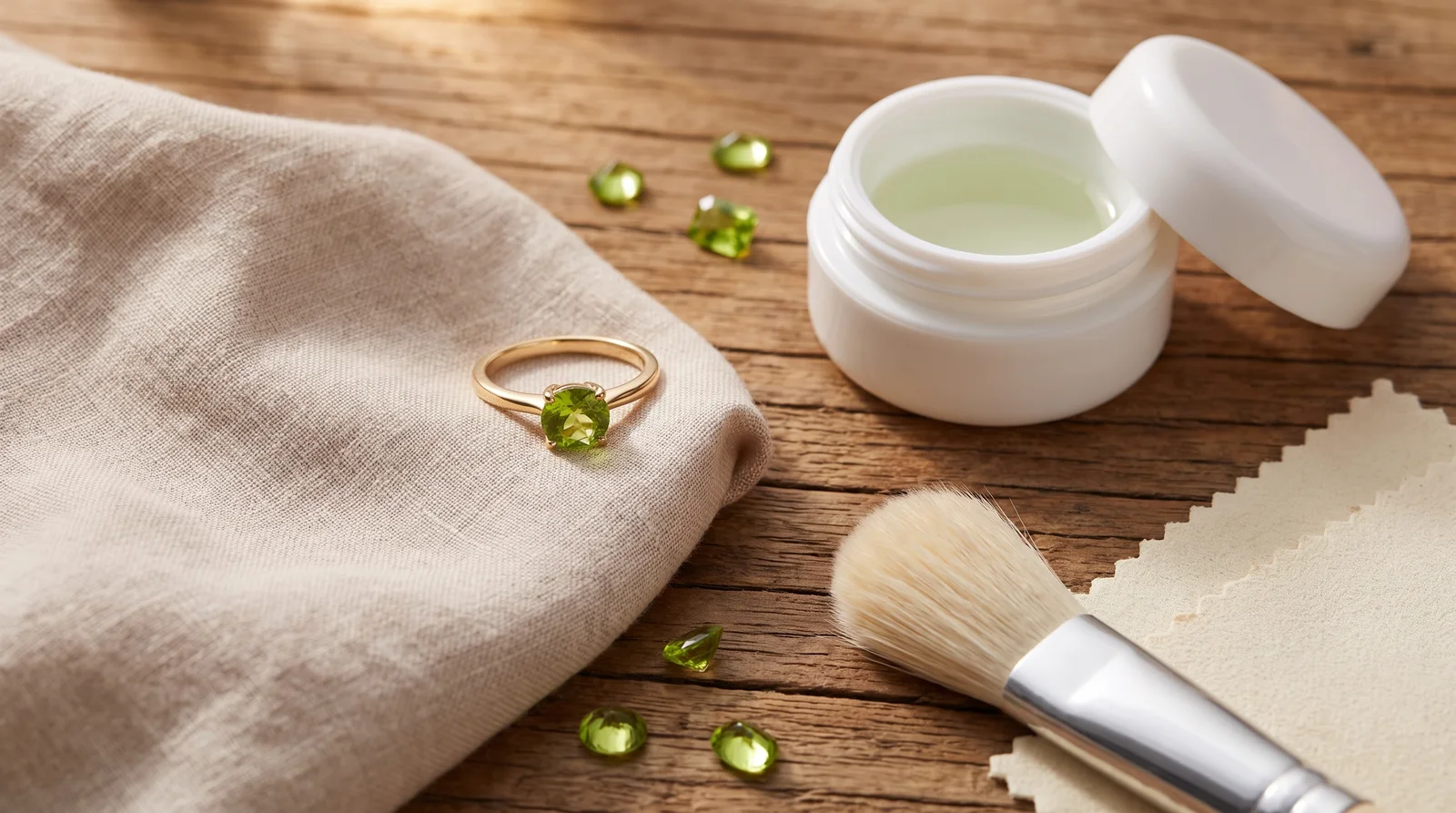
Peridot rings need gentler cleaning than most gemstone jewelry. Skipping this step is the fastest way to dull the stone's color over time. Warm water, a mild dish soap, and a soft-bristle brush handle routine cleaning safely. Avoid ultrasonic and steam cleaners entirely. The vibration and heat can stress a stone that's already on the softer end of the hardness scale.
Sudden temperature changes are another risk worth knowing about. Don't go from a hot shower straight into cold tap water while wearing a peridot ring. That kind of thermal shock can cause internal stress in the crystal. Acids and prolonged contact with sweat or lotion can also affect peridot over time. It's smart to take rings off before workouts or heavy cleaning. Store peridot pieces separately from harder stones like diamonds or sapphires. Even light contact in a jewelry box can leave fine scratches.
Quick Peridot Cleaning Routine
Soak the piece briefly in warm water with a drop of mild soap, then use a soft brush to clear any buildup around the setting. Rinse thoroughly and dry completely with a soft cloth before putting it away. Do this every few weeks, rather than waiting until the stone looks visibly dull. It keeps peridot looking close to how it looked the day you bought it.
Frequently Asked Questions About August Birthstone Jewelry
Can I wear a peridot ring every day?
You can, but a secure bezel setting matters more for peridot than for harder stones like sapphire or spinel. Prong settings leave the edges exposed and raise the odds of chipping over years of daily contact. If daily wear is the plan, ask about setting style before you buy.
Is sardonyx more durable than peridot?
They share a similar hardness rating around 6.5 to 7 Mohs. But sardonyx's banded, fibrous structure resists chipping a little better than peridot's crystal structure. Neither is as tough as spinel, which rates 8 Mohs. For a daily ring, sardonyx's flatter, carved cuts also tend to catch on fewer surfaces than a faceted peridot.
Why does August have more than one birthstone?
Sardonyx is the ancient, traditional stone for August, used by the Romans for seals and cameos thousands of years ago. Peridot became the modern favorite thanks to its bright green color. Spinel was added in 2016 by the American Gem Trade Association to widen the color range available. All three remain official today.
Does peridot scratch easily?
Peridot can scratch if it comes into contact with harder materials like sand, other gemstones, or rough surfaces during daily activities. At 6.5 to 7 Mohs, it's softer than quartz-based sand, which sits around 7. Beach trips and gardening are worth doing without a peridot ring on. Routine care and separate storage go a long way toward preventing this.
What's the toughest August birthstone for a ring worn daily?
Spinel, rated 8 on the Mohs scale, is the toughest of the three official August birthstones. It's the safest bet for a ring that never comes off. Sardonyx comes next, largely thanks to its resistance to chipping despite a similar hardness number to peridot. Peridot can still work as a daily ring, but it needs a protective setting to hold up long term.
Picking the Stone That Actually Fits Your Life
Choosing between peridot and sardonyx, or adding spinel into the mix, comes down to being honest about how you live. Think about how often that piece leaves your jewelry box. A peridot necklace worn a few times a week has an easy life. A peridot ring worn during yard work and gym sessions does not, unless the setting is built to protect it. Sardonyx earns its keep as a tougher daily option with serious history behind it. Spinel simply wins if hardness is your top priority and you don't mind skipping the classic green.
There's no wrong answer here, just a better-informed one. Match the stone and the setting to how the piece will actually be worn, not just to which gem looks best in a photo. That's the difference between jewelry that still looks great in ten years and jewelry that needs repair after one.