18k Gold Bracelet Sizing and Fit: Why It Loosens Faster Than You Think
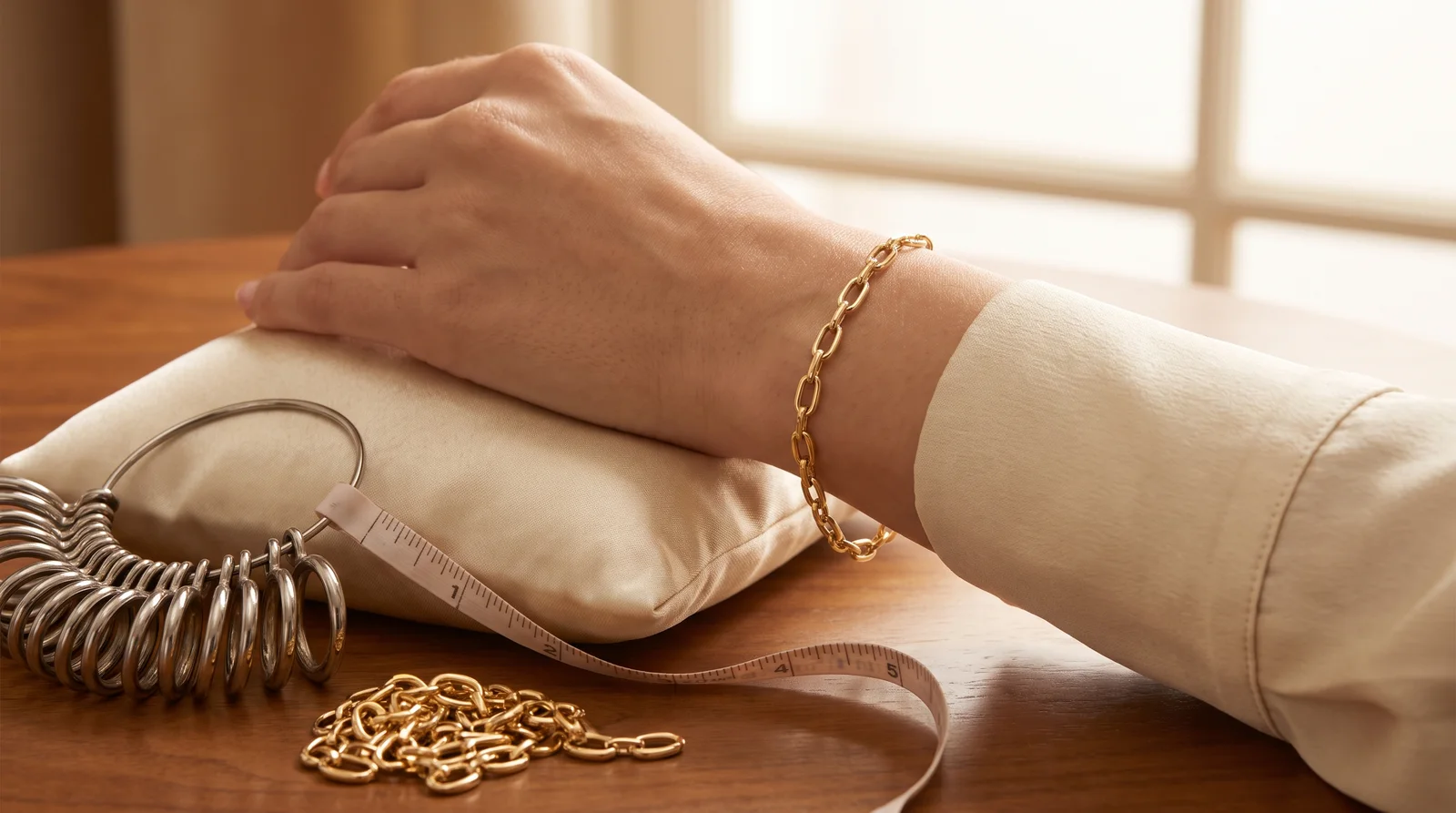
Getting 18k gold bracelet sizing and fit right matters more than most buyers realize, because 18k gold is softer than 14k and stretches or wears differently over years of daily wear. A comfort fit, roughly half an inch to three quarters of an inch longer than your bare wrist measurement, works for most people. But softer metal means clasps and links can loosen or wear down faster, so checking fit periodically matters as much as getting it right on day one.
Why 18k Gold Bracelets Fit Differently Than 14k Over Time
18k gold behaves differently on the wrist because it contains 75% pure gold, compared to about 58% in 14k gold. That extra purity gives it a warmer color and a smoother feel against skin. It also makes the metal noticeably softer. Softer metal flexes more with movement. Over months of daily wear, that flexing can change how a clasp sits. It can also affect how quickly a link wears at its connection points.
This is not a flaw. It is just physics. A 14k bracelet holds its shape a bit longer because the alloy mix is harder. An 18k piece rewards you with better color and skin comfort. But it asks for a little more attention to fit over time. If you already want the richer tone of 18k, it helps to know how it compares to 14k for daily wear before you commit to a style.
What Softness Actually Means for Daily Wear
Softness does not mean fragile. It means the metal deforms slightly under repeated stress instead of snapping. A clasp spring that opens and closes hundreds of times a year will show wear sooner in 18k than in 14k. A link that rubs against a watch face daily will thin slightly faster. None of this happens quickly. But an 18k bracelet that fit snugly two years ago might sit a touch looser today.
Where This Shows Up First on the Bracelet
The clasp mechanism usually shows change before the chain itself does. Spring mechanisms lose a bit of tension. Lobster clasps can develop a slightly looser hinge. Box clasps with safety catches tend to hold their shape longest because the closure relies on a fold rather than a spring. This is one more reason clasp choice matters just as much as bracelet length when you are buying for everyday wear.
Understanding how the metal moves over time sets up the next question every buyer actually has: how do you size it correctly in the first place.
How to Measure Wrist for Bracelet Sizing the Right Way
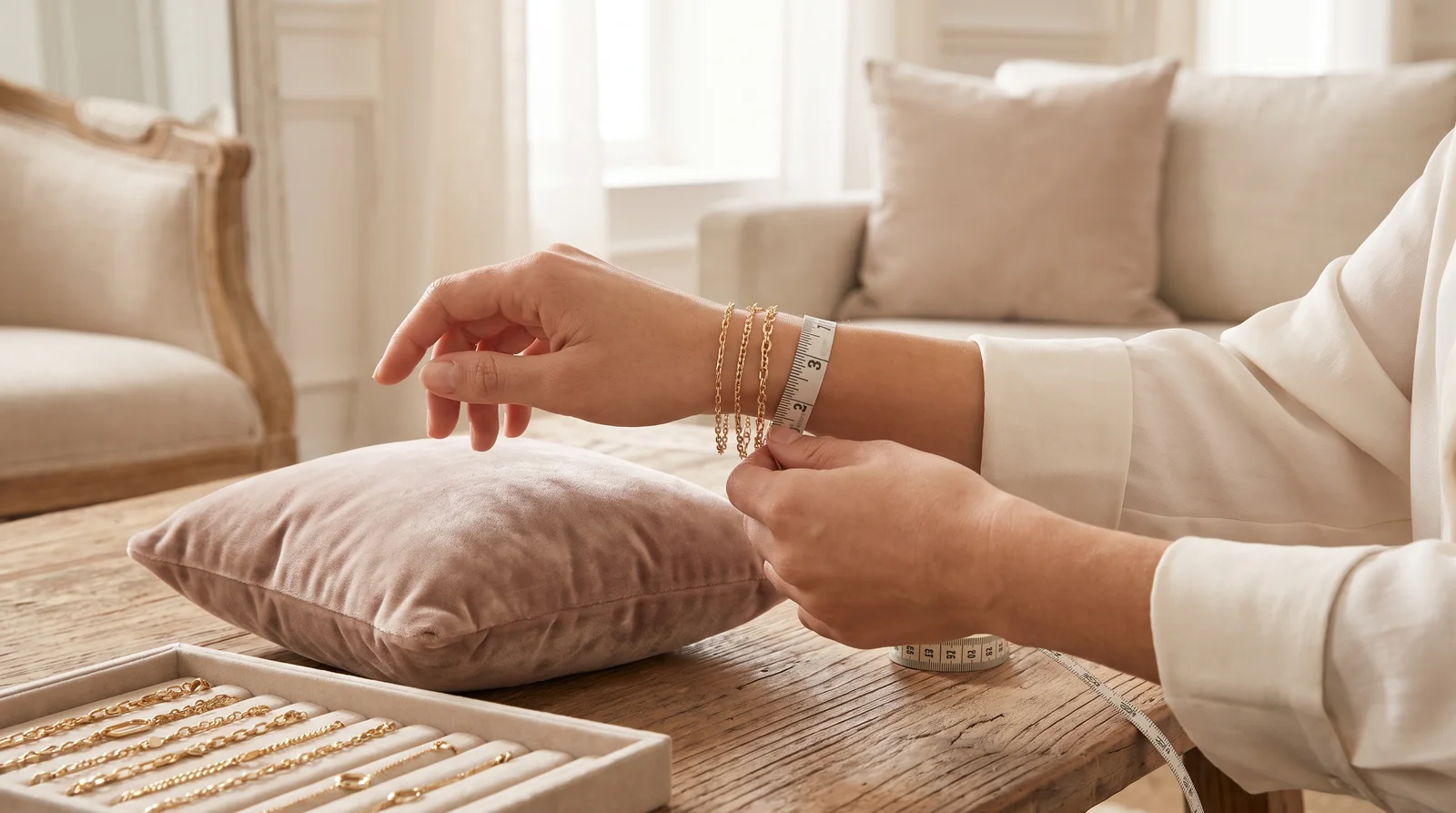
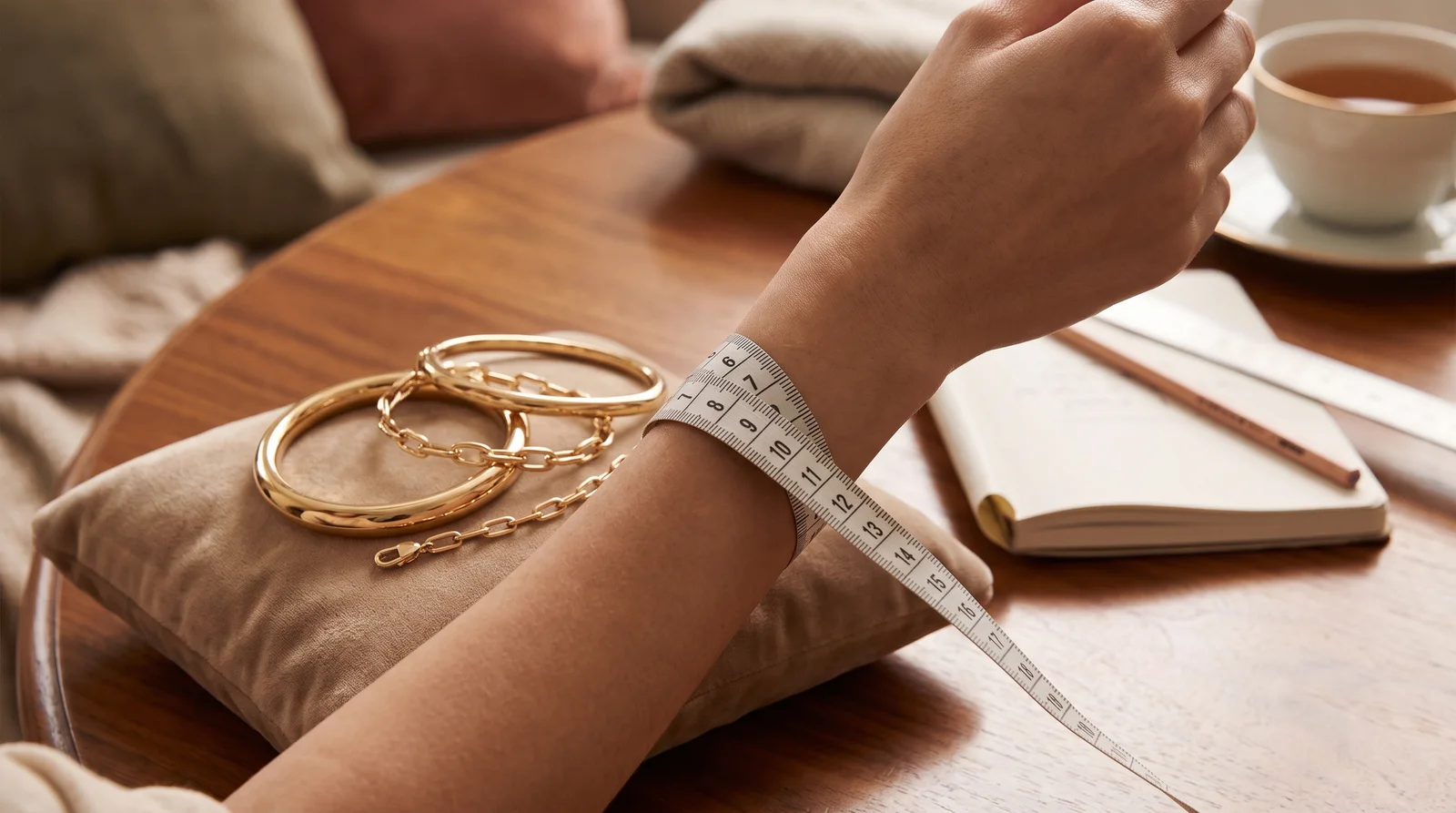
Measuring your wrist correctly is the foundation of good 18k gold bracelet sizing and fit. It takes less than two minutes with a flexible tape measure. Wrap the tape snugly around your wrist, just below the wrist bone, where the bracelet will actually rest. The tape should touch your skin without pressing into it. You should be able to slip one finger underneath comfortably.
If you don't have a tape measure, a strip of paper or a piece of string works just as well. Wrap it around your wrist in the same spot, mark where it overlaps, then lay it flat against a ruler. Either method gets you within a millimeter of accuracy, which is close enough for any bracelet purchase.
Timing Matters More Than People Expect
Measure your wrist at the end of the day, not first thing in the morning. Wrists swell slightly with heat and activity, so an evening measurement gives you a more realistic number. If you measure in the morning and buy based on that, the bracelet may feel tighter later in the day, especially in warm climates where swelling is more noticeable.
Converting Your Wrist Measurement Into Bracelet Length
Once you have your wrist number, add length based on how you like a bracelet to sit. This next section walks through exactly how much to add and why it changes depending on the piece.
Bracelet Length vs Wrist Size: What the Numbers Actually Mean
Bracelet length and wrist size are not the same measurement. Mixing them up is the single most common sizing mistake. Your wrist size is just the circumference of your wrist. Bracelet length is the total length of the piece, clasp included, and it needs extra room to move naturally without falling off.
A general rule works well here. Add about half an inch for a snug fit, three quarters of an inch for a comfort fit, and up to a full inch for a looser, more relaxed drape. So if your wrist measures 6.5 inches, a comfort-fit bracelet would land around 7 to 7.25 inches. That extra length lets the bracelet move with your wrist instead of pulling against it.
Why Comfort Fit Is the Right Default for Everyday Wear
A comfort fit sits at the wrist bone without riding up your forearm or sliding over your hand. It's the fit most people mean when they say a bracelet feels right. For an 18k piece specifically, comfort fit also reduces stress on the clasp, since a snug fit puts constant tension on the closure every time you bend your wrist.
When a Snug Fit Actually Makes Sense
Thin chain bracelets and tennis-style pieces sometimes benefit from a snugger fit, since there's less bulk and less risk of the bracelet catching on things. Wider or heavier link styles need more clearance, or the rigid links won't lay flat against the wrist. Once you know which fit range suits your lifestyle, the next step is picking a bracelet style built for the way you actually use your hands all day.
How to Choose Gold Bracelet for Everyday Wear Without Regretting It
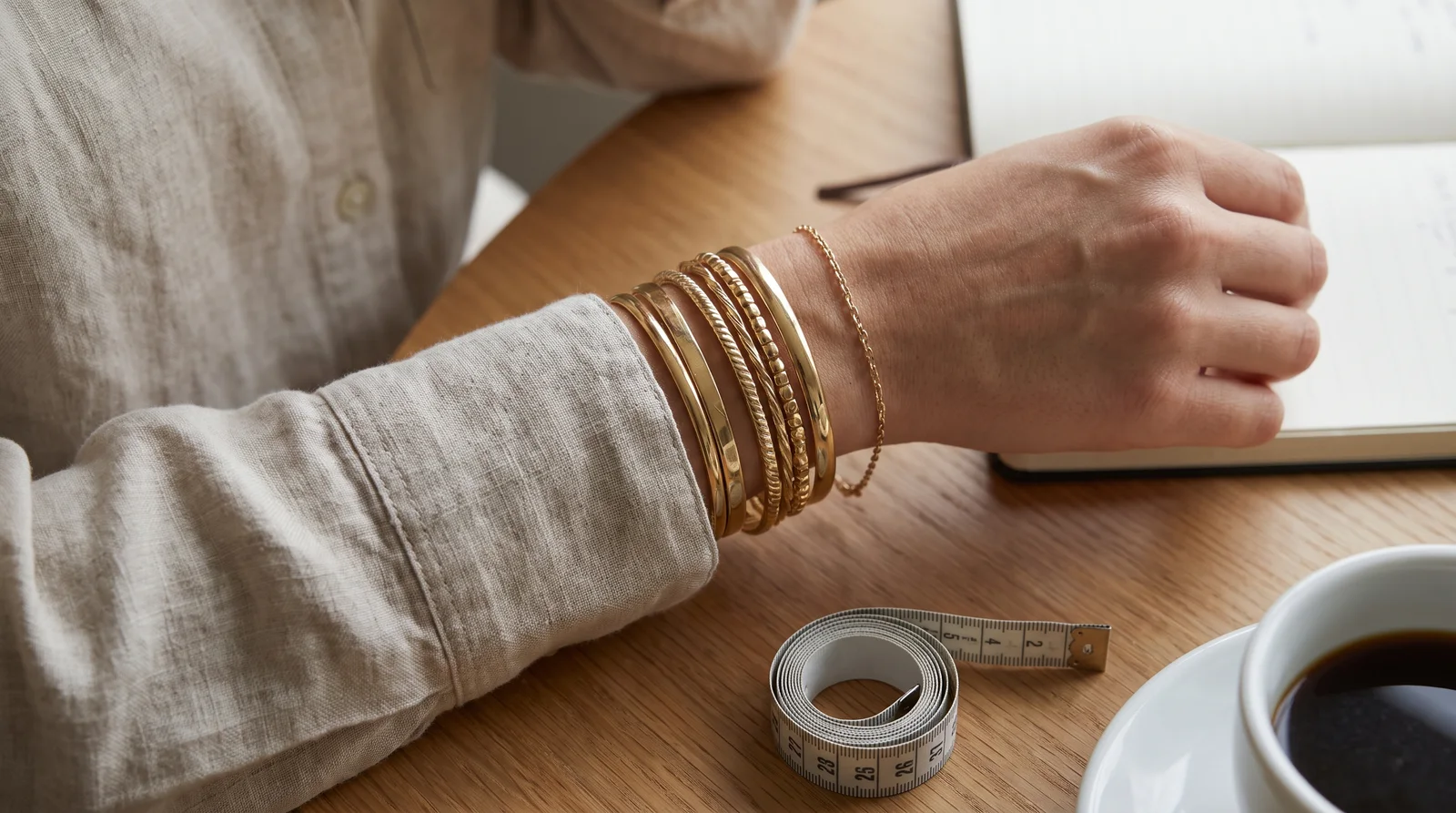
Choosing the right bracelet for daily wear comes down to matching the design to your actual routine, not just how it looks in the display case. A bracelet you'll wear every day needs to survive typing, cooking, gym bags, car doors, and whatever else fills your week. Delicate chains and rigid cuffs both have their place. The right pick depends on how busy your hands are.
Think about your typical Tuesday. If you're at a keyboard most of the day, a low-profile chain that lies flat avoids catching on desk edges or sleeve cuffs. If you're more active, hands-on with kids or physical work, a slightly heavier link with a secure clasp will hold up better than something delicate.
Weight and Comfort Go Together More Than People Assume
A bracelet that's too light can feel flimsy and shift constantly. One that's too heavy announces itself all day, which gets tiring fast. The sweet spot is a piece substantial enough to feel like real 18k gold in your hand, but light enough that you forget it's there by midafternoon. Most everyday bracelets in the 5 to 12 gram range hit that balance well, though this varies by wrist size and design.
Matching Style to Your Actual Wardrobe
If you already wear a watch or stack other jewelry, look for a bracelet that sits comfortably alongside those pieces without competing for space. Metal tone matters here too. Some people rotate a warm yellow gold piece with cooler metal accessories, which is worth thinking through before you commit to one look for daily rotation. Style is only half the equation, though. Even a beautifully designed bracelet fails at daily wear if the clasp can't be trusted, which brings up the next real concern.
18k Gold Bracelet Clasp Security and Why Softness Changes the Equation
Clasp security is the single most important safety factor in daily bracelet wear. It matters even more with 18k gold because the metal's softness affects how closures hold up over time. A lobster clasp with a secondary safety loop, or a box clasp with a fold-over latch, will outlast a basic hook or plain spring ring clasp by years, especially under daily stress.
Here's why this matters specifically for 18k pieces. A spring ring clasp relies on internal tension to stay closed. Since 18k gold is softer, that spring mechanism can weaken slightly faster than it would in a 14k or platinum setting. A box clasp closes through a mechanical fold rather than spring tension. So it holds its security longer even as the surrounding metal softens with wear.
Signs Your Clasp Needs Attention
If your clasp feels looser than it used to, or if it pops open more easily than it did a year ago, that's your cue to get it checked. A jeweler can often tighten or repair a spring mechanism before it fails completely. Waiting until the bracelet actually falls off means risking losing it entirely, which is a frustrating and expensive way to learn this lesson.
Choosing a Clasp Style Built for Daily Wear
When you're shopping, ask specifically about clasp type before you ask about design details. A box clasp with a figure-eight safety, or a lobster clasp paired with a secondary chain loop, gives you two points of security instead of one. This single choice affects your bracelet's lifespan more than almost any other design decision. With clasp security covered, it helps to look at a full sizing chart to see how these fit principles translate into real numbers.
Gold Bracelet Sizing Chart for Common Wrist Measurements
A sizing chart gives you a fast reference point, though it should guide your decision rather than replace an actual wrist measurement. These numbers reflect a comfort fit, which works well for most 18k gold bracelets worn daily.
A 6 inch wrist typically pairs well with a bracelet between 6.5 and 6.75 inches. A 6.5 inch wrist usually fits comfortably at 7 to 7.25 inches. For a 7 inch wrist, look toward 7.5 to 7.75 inches. Wrists closer to 7.5 inches generally do well with an 8 inch bracelet. These ranges assume a standard chain or link style. Wider Cuban link designs or heavier statement pieces may need slightly more length to lay flat instead of pulling tight across the wrist.
Adjusting the Chart for Bracelet Style
Rigid bangles work differently since they need to slide over your hand, not just around your wrist, so they typically require more room than chain styles. Charm bracelets also benefit from a bit of extra length, giving charms space to move without crowding the wrist. Tennis bracelets, on the other hand, are designed to sit close and snug, so they often use the smaller end of the comfort range.
When to Size Up Instead of Down
If you're between two sizes, sizing up is usually the safer choice for 18k pieces specifically, since the softer metal already tends to loosen slightly with wear. A bracelet that starts a touch looser has more room before it becomes uncomfortably tight. One that starts snug has less room to work with as the metal settles in. This chart gives you a solid starting point, but comfort during actual daily movement is the real test, and that's worth walking through directly.
18k Gold Bracelet Comfort Fit Daily Wear: What It Should Actually Feel Like
A properly fitted 18k gold bracelet should feel like it disappears against your skin within the first hour of wearing it. If you're constantly aware of it, twisting it back into place, or feeling it pull when you bend your wrist, something about the fit or design isn't right for your daily routine.
Comfort fit daily wear means the bracelet moves with you instead of against you. When you type, cook, drive, or reach for something on a high shelf, the bracelet should shift slightly on your wrist without catching, pinching, or sliding over your hand. That natural movement is actually a good sign. A bracelet that never moves at all is usually too tight, even if it doesn't hurt outright.
Testing Comfort Before You Commit
If you're buying in person, don't just look at the bracelet on your wrist. Move your hand the way you would during a normal day. Type on your phone. Mimic reaching into a bag. Bend your wrist back and forth a few times. A bracelet that feels fine sitting still can feel completely different once your wrist actually goes to work.
Adjusting for Temperature and Activity
Wrists change size slightly with temperature and activity, more than most people expect. Heat causes mild swelling, while cold weather can make your wrist measure slightly smaller. If you live somewhere with big seasonal swings, or if you're active enough that your wrist size shifts during the day, a slightly more forgiving comfort fit handles those changes better than a snug one. Comfort is only part of the picture, though. Long-term fit stability depends on knowing when a properly sized bracelet needs adjusting years down the line.
When 18k Gold Bracelets Need Resizing and How to Tell
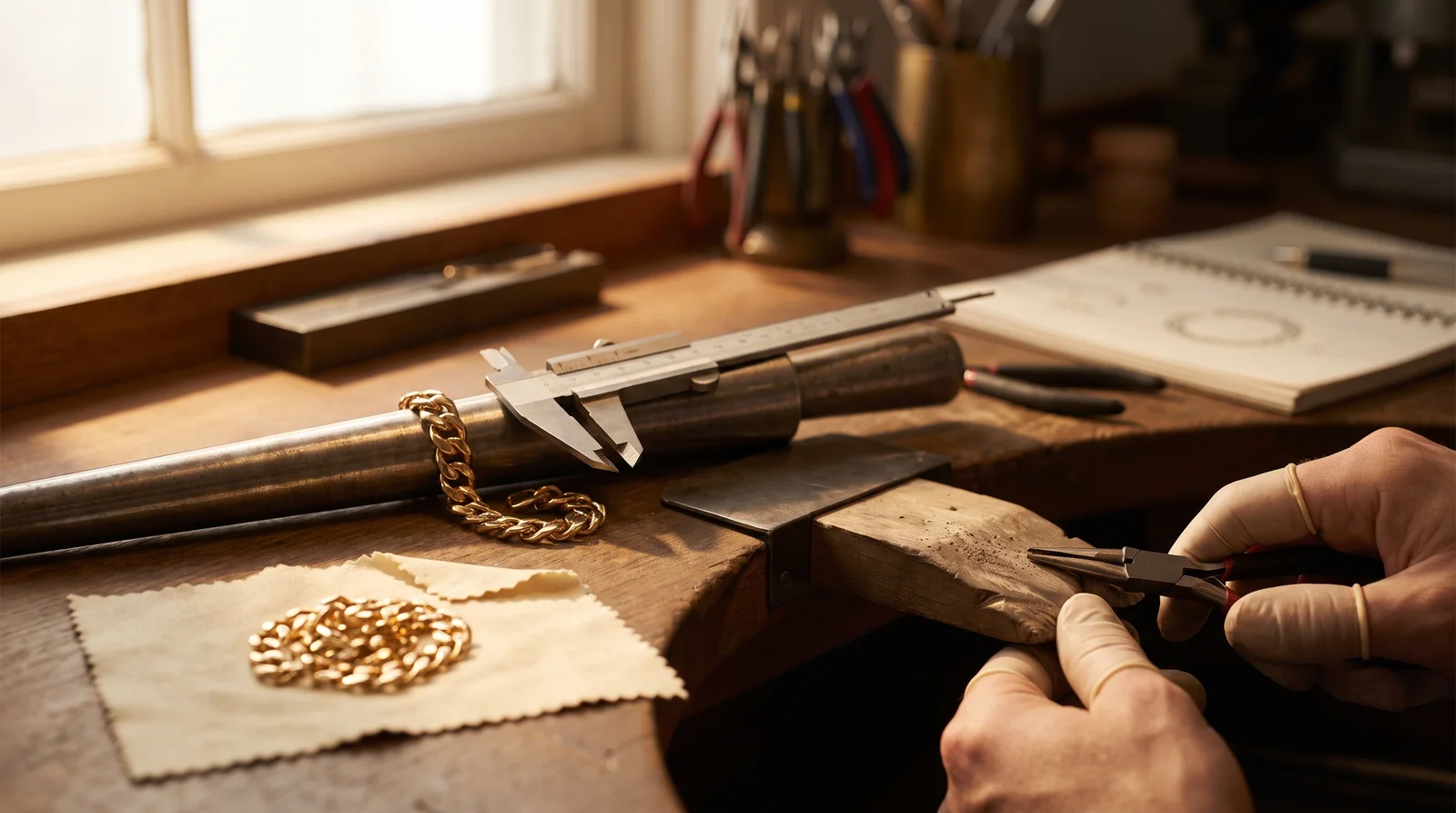
An 18k gold bracelet typically needs resizing when the clasp starts feeling loose, when the bracelet visibly hangs lower on your wrist than it used to, or when you notice it sliding over your hand more easily than it did when new. Because 18k is softer than 14k, this kind of gradual change happens a bit sooner, often within three to five years of regular daily wear, depending on how often the piece is worn.
This doesn't mean something went wrong. It's just the natural behavior of a softer, higher-purity metal responding to years of flexing and friction. A jeweler can usually shorten a chain, tighten a clasp mechanism, or add a small link to correct minor drift in either direction.
Signs It's Time for a Jeweler Visit
Watch for a clasp that pops open more than once a month, links that look visibly thinner at the connection points, or a fit that feels noticeably looser than when you bought it. Catching these signs early usually means a simple, inexpensive fix. Waiting too long can mean a full clasp replacement instead of a small adjustment.
How Resizing Differs From Repair
Resizing usually means adjusting the length, either removing a link or adding one. Repair means fixing a mechanism that's actually failed, like a broken clasp spring or a worn hinge. Both are normal parts of owning fine jewelry long term, the same way a wedding band eventually needs a comfort fit adjustment after years on the finger. Knowing the difference helps you talk to a jeweler clearly, and avoid paying for more work than you actually need.
Frequently Asked Questions About 18k Gold Bracelet Sizing and Fit
How do I know if my bracelet is too big?
If it slides past your wrist bone toward your hand, rotates constantly, or dangles loosely when your arm hangs down, it's too big. A properly sized bracelet stays roughly in the same spot on your wrist throughout the day.
Does 18k gold stretch over time?
Not exactly stretch, but it does soften and flex slightly with repeated wear, which can make links and clasps loosen gradually. This is more noticeable in 18k than in 14k because of the higher pure gold content.
Can I resize an 18k gold bracelet myself?
You shouldn't attempt this yourself, since removing or adding links requires soldering equipment and precision most people don't have at home. A jeweler can usually do this quickly and affordably.
What is the average bracelet size for a woman?
Most women's wrists measure between 6 and 7 inches, which typically translates to a bracelet length of 6.5 to 7.75 inches depending on the desired fit. Measuring your own wrist is always more reliable than relying on averages.
Why does my gold bracelet feel tighter at night?
Wrists tend to swell slightly with heat, activity, and time spent upright during the day. This is completely normal and one more reason a comfort fit, rather than a snug one, tends to work better for daily wear.
Getting Fit Right Is a Long Game, Not a One-Time Decision
Good 18k gold bracelet sizing and fit isn't something you nail once and forget about. It's a relationship between your wrist, your daily habits, and a metal that's going to soften and shift a little over the years you wear it. Measure carefully, choose a clasp you actually trust, and pay attention when something starts to feel different than it used to. That's really the whole system. If you're still deciding between metal purities or thinking through what daily wear actually demands from a piece, it's worth reading through how 14k and 18k compare for everyday use before you buy. A bracelet you'll wear constantly deserves that extra ten minutes of thought.